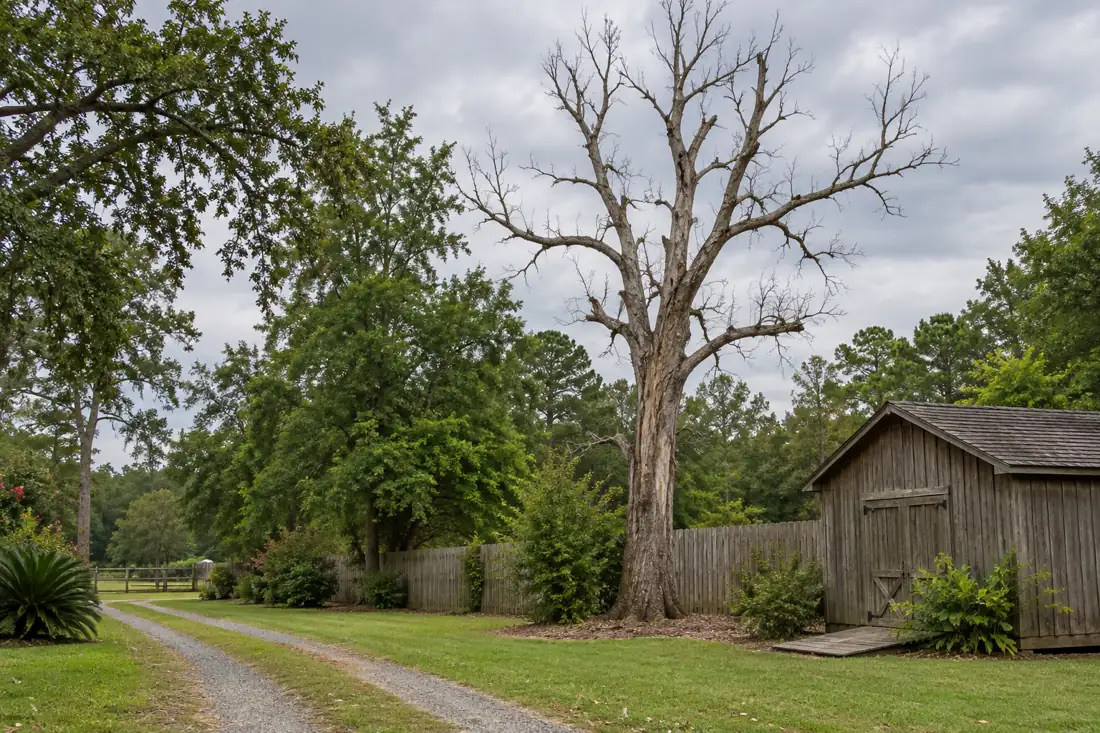
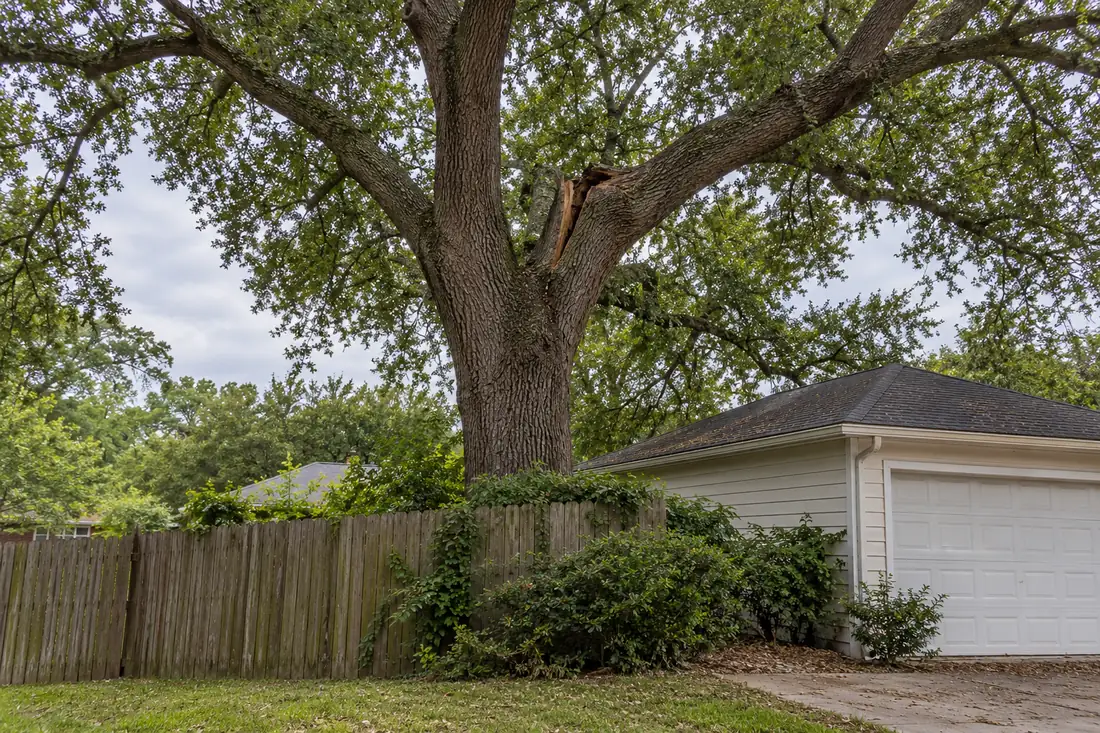
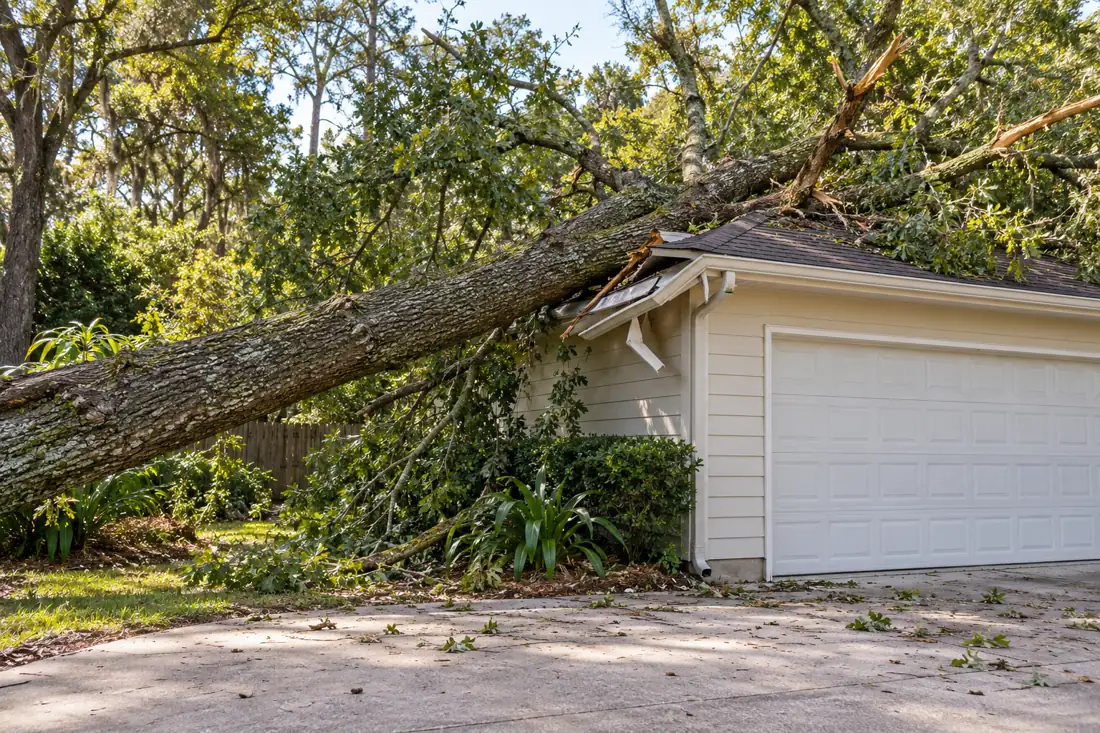
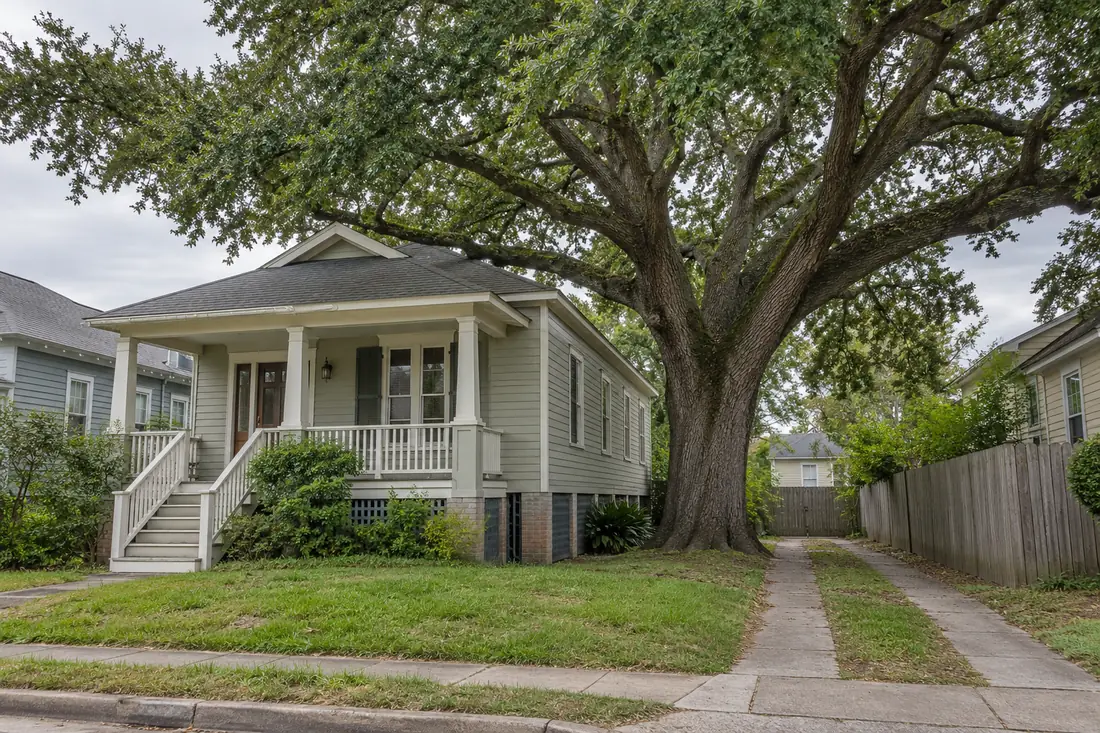
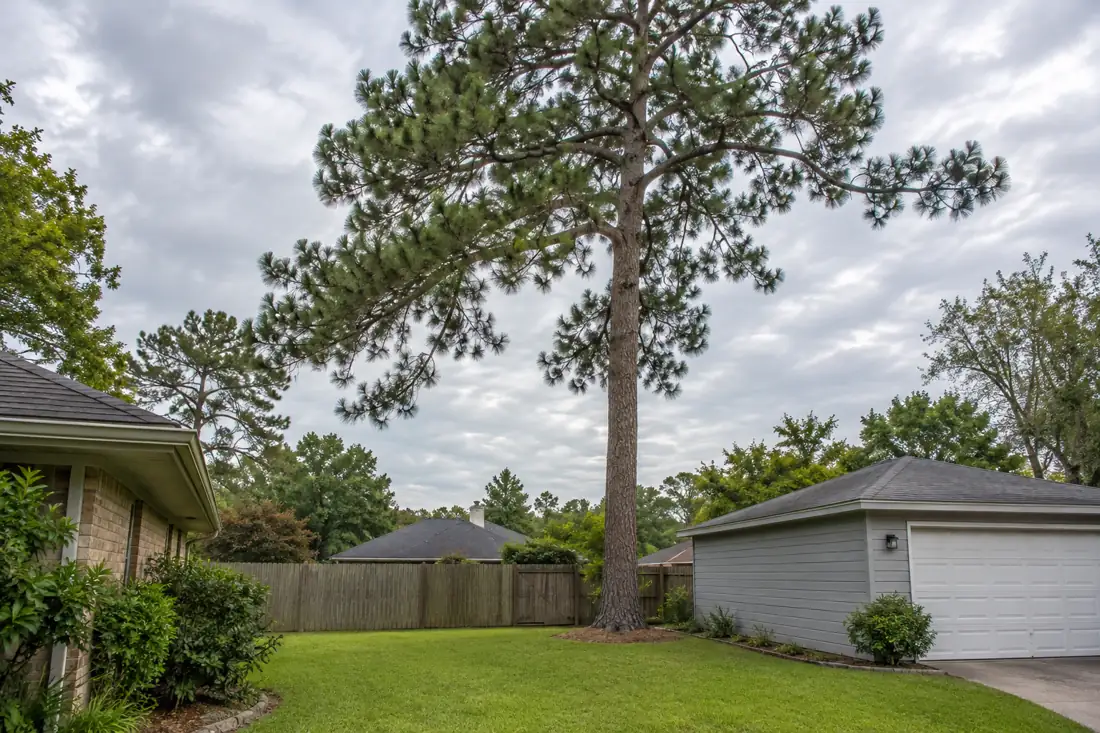
An effective request lets the contractor understand the objective before the site visit. Include the address, marked tree photos, nearby structures, access route and desired finish. Identify whether the job is urgent or planned. If several parties must approve the work, name the person who can arrange access and authorize the final scope.
Use a four-view photo sequence for a safer estimate request
Take one wide view that shows the whole tree in relation to buildings, a second from the normal street or driveway entrance, a third of the ground and equipment path, and a fourth of the specific concern from a safely accessible location. Label which tree appears in each picture, particularly if several trunks or neighboring properties look similar. Never climb, move unstable debris or stand beneath a suspended limb to obtain a better image.
Include a short description of what result you need and what remains undecided: cutting versus assessment, hauling versus retained logs, stump grinding, vehicle entry, utility proximity and restoration. A contractor can use this packet to identify follow-up questions without being asked to diagnose decay or guarantee a price remotely. Avoid sharing images that expose private documents, gate codes or unrelated personal information.
For this project, separate marked tree photos, work objective and approval contact. These details help the contractor understand what must be protected, what information needs confirmation and what result you want from the work. A clear request is more useful than an assumed method or a price based only on tree size.
Identify each tree by its position and provide photos showing the trunk, crown, nearby structures and path toward the street. Describe whether you need removal, pruning, an assessment or a stump finish suitable for another project. Include gate widths, slopes, wet areas, service wires, pools, retaining walls and shared access restrictions. Take photos only from safe positions; do not stand beneath suspended limbs or enter an unstable root zone to improve the angle.
Ask bidders to state how wood and chips will leave, what equipment can reach the site, and which permissions or utility coordination they need. Note whether neighbors must authorize access and who will protect pavers, turf and garden borders. Make the requested final condition explicit, including cleanup and whether any stump remains. A remote inquiry helps plan a visit but cannot establish tree stability or substitute for an on-site evaluation of complex hazards.
What to Include in a Tree Removal Request for Quote
Start with the property’s complete street address, including the city, ZIP code, and any unit, lot, or gate information needed to find the correct entrance. In southeast Louisiana, a mailing address may not make a rural driveway, rear parcel, or shared access road obvious. If the tree is on a different parcel from the billing address, identify both. Give a nearby cross street or recognizable landmark only as a supplement, not a substitute for the address.
Before sending photos or arranging a visit, ask whether the address falls within the company’s current service area and whether the request is for an occupied residence, rental, commercial site, or other property. Mention parish or neighborhood restrictions you already know about, but do not assume a contractor can interpret local rules for you. A clear location lets the company judge travel and access needs, check that it can consider the work, and tell you what information it needs next.

Describe Each Tree Without Guessing
Give a count if you can identify the trees involved, then describe each one separately by its location: for example, the large tree beside the driveway or the smaller tree behind the detached garage. Include a species only if you know it; a confident guess can be less useful than saying the type is unknown. In the region, live oaks, pines, pecans, and cypress may be familiar, but trees can be hard to identify from a distance or in a photograph.
A rough description of height, trunk width, or canopy spread can help distinguish trees, but do not climb, approach an unstable trunk, or stand beneath limbs to measure. If you cannot estimate safely, say so and explain what makes the tree easy to recognize. Note whether you are requesting removal of the whole tree, a particular stem in a cluster, or an assessment of several trees. That distinction helps prevent a quote from addressing the wrong tree or an unclear scope.
Report What You Have Observed
Separate visible facts from conclusions. You might report a fresh split in a major limb, a trunk that appears newly tilted, a hollow visible from the ground, dead branches, exposed roots, or a limb that came down during a storm. Add when you first noticed the change and whether it seems to have worsened. Avoid diagnosing rot, declaring a tree certain to fall, or treating a single sign as proof of the tree’s overall condition.
Tell the company if the tree has already dropped limbs, contacted a roof, or shifted after saturated soil, flooding, or strong wind. If there is immediate danger, keep people away from the area and contact appropriate emergency help rather than waiting for a routine quote. Do not try to cut, climb, brace, or pull a hazardous tree yourself. In your request, make clear whether you want a removal quote, an on-site evaluation, or advice about the next appropriate professional.

Map Nearby People and Property
Describe what could be affected if the tree or a limb moved: homes, sheds, fences, vehicles, neighboring parcels, sidewalks, driveways, pools, livestock areas, or places where people gather. State which side of the tree each feature is on and, if known, whether branches already overhang it. In compact neighborhoods, include nearby homes even when they are not yours. These details help the estimator understand constraints without treating a photograph or owner description as a substitute for an on-site assessment.
Flag overhead electrical lines, service drops, communication cables, and other utilities near the tree, even if you are unsure which kind they are. Treat every power line as energized; do not touch a line, branch, or object in contact with one, and do not approach to investigate.
Keep people clear and contact the appropriate utility when line involvement or a possible utility hazard exists. Tell the tree company what you observed and ask who must coordinate any work near utilities; do not assume ordinary removal procedures apply.
Turn a broad quote request into a comparable removal scope
When describing the tree, separate the immediate reason for the inquiry from the work you want priced. A leaning tree, a roof overhang, storm damage and a routine clearance project require different decisions. Include one wide photograph that shows the entire tree in relation to the home, a second that shows the base and any visible problem, and a third showing where equipment or workers might enter.
Photograph only from safe ground. State whether the tree is yours, shared with a neighbor or part of a managed property. This context lets a contractor identify what must be examined instead of guessing from a close-up of leaves.
For a useful comparison, ask each provider to describe what is included: which tree or stems, whether the stump remains, how brush and logs leave the property, what happens to the work area and whether unusual access or permit arrangements are separate. Keep approval and scheduling questions distinct from the physical scope.
A low number that excludes disposal, stump work or difficult rigging cannot be compared directly with a quote that includes them. If the tree is touching a structure or utility, say that at the outset and avoid treating a quick photo quote as a safety clearance.
Send Photos Only From Safe Positions
Useful images can show the whole tree and its setting, the trunk from a safe distance, and the nearby structures or access route. Take them from a stable place where you do not need to enter a fenced hazard area, stand beneath suspect limbs, cross standing water, or step into traffic.
A view from a window or an existing public path may be safer than walking closer. If you cannot obtain a useful image safely, say that and let the company decide whether a site visit is needed.
Label each image with a simple reference such as Tree A or driveway side, and note when it was taken if a storm or other event changed the situation. Do not climb for a better angle, hold a phone near a power line, or ask another person to stand under a tree for scale. Photos can omit decay, hidden defects, and the far side of a canopy, so describe what they do and do not show. Never present remote images as a definitive safety inspection.

Explain Crew and Equipment Access
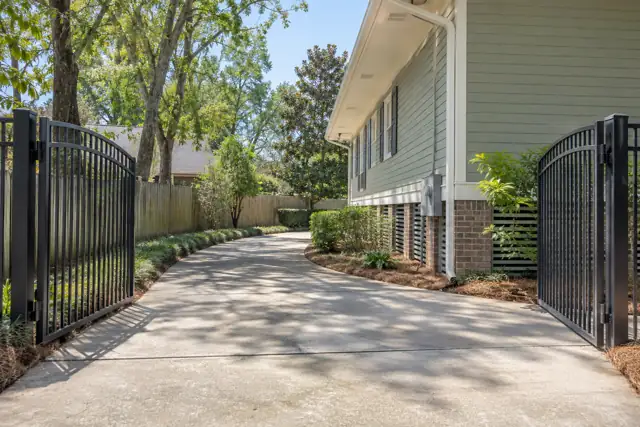
Describe how a crew could reach the tree from the public road or property entrance. Note gate locations and widths if known, narrow driveways, sharp turns, low branches, soft ground, ditches, standing water, steep grades, locked access points, and overhead obstructions. Southeast Louisiana rain can leave yards and unpaved routes soft even when the surface looks passable; report recent flooding or areas that routinely hold water. Do not move a vehicle or open a restricted area unless you have authority and can do so safely.
Mention whether equipment would need to cross a lawn, driveway, shared road, or neighboring land, and whether there are known weight or clearance limits. Say if there is a designated parking area or a time when the route is usually blocked, without assuming a truck or lift can fit.
Ask the estimator what access they need to verify on site and whether any route must be cleared by the owner beforehand. Do not remove branches, fences, or barriers yourself to create access until the scope and permission are agreed.
Build a quote request a contractor can actually evaluate
Start with a wide photo that shows the full tree relative to the house, driveway, fences and street. Then take one ground-level view of the trunk base and another of the nearest building or obstacle, but only when those positions are clearly safe. For a broken or suspended limb, do not stand beneath it to document the damage. Never enter a restricted area, climb, or approach an overhead utility line to obtain a more dramatic photograph.
Describe what prompted the request in plain words: a branch over a roof, storm-damaged wood, a proposed new driveway, or a tree that obstructs a planned project. Give the location of each tree rather than relying on vague labels like the big one. If the property has multiple trees, number them on a simple owner-created sketch or explain their positions relative to fixed features, without guessing height, weight or structural soundness.

Good photos explain access as well as tree condition
Include site logistics that photographs miss. Mention gate width if known, whether a truck can reach the street frontage, parking restrictions, standing water, pets, locked access, and any area that must remain available to customers, children or neighbors. State whether you hope to keep logs or mulch on site. These details are not instructions for equipment selection; they help the estimator decide which questions require an on-site walk-through.
Close with the outcome you want documented: pruning versus removal, brush haul-away, stump grinding, clearance over a path or coordination before construction. Provide a way to arrange a site visit, but keep sensitive personal documents out of general-purpose photo uploads. An estimate should spell out the agreed scope, limitations and site finish rather than relying on assumptions drawn from a handful of images.
Choose Debris and Stump Preferences
State what you want done with the wood and branches: left in a designated spot, chipped, hauled away, or handled another way the company can offer. If you want logs retained for firewood or another use, say where they may be placed and whether you want them cut into manageable lengths.
Identify gardens, drainage areas, gates, or neighboring property where debris must not be left. Ask the company to specify what its quoted cleanup includes, since hauling, chipping, and disposal can be different parts of the scope.
Say whether you want the stump removed, ground down, or left in place, and describe any concern such as a planned walkway, lawn use, visible roots, or nearby planting. Stump work may have separate access and underground-utility considerations, so ask what is included and what would require a separate arrangement.
Do not assume stump grinding removes all roots or restores the surface to a finished landscape. If you do not yet know your preference, request clearly stated options so you can compare the consequences and make a decision before authorizing work.
Confirm Ownership and Permission
Identify who owns the property and who is submitting the request. If you are a tenant, site manager, property agent, or contractor, say so rather than implying you own the tree. Explain who can approve removal and whether that person needs to receive the estimate directly. For a tree near a boundary, shared driveway, common area, or neighboring parcel, describe the uncertainty and avoid presenting disputed ownership as settled. A quote request is not permission to enter land or perform work.
Tell the company about approval steps that could affect scheduling, such as an owner’s written consent, landlord review, association process, or other applicable property rules. Ask what authorization it needs before a site visit and again before work begins. If utility involvement, a permit, or another specialist may be relevant, ask who is responsible for checking and coordinating it rather than assuming the contractor handles every requirement.
Keep written approval and the final agreed scope with your property records, and do not authorize work beyond your authority.
Set Response and Scheduling Expectations
Give a reliable way to reach the person who can answer questions, such as a phone number or email, and note any practical contact window. State whether you prefer a site visit or whether the company may first review the information and advise what is missing.
If the tree’s condition has changed since the request, send an update rather than assuming the original description remains current. For an urgent hazard, use an appropriate urgent channel and keep people away; a routine quote form or inbox may not be monitored promptly.
Explain any timing constraints without demanding a guaranteed completion date: an access window, tenant availability, planned construction, or a date when the property will be occupied. Ask when to expect acknowledgment, whether an on-site visit is needed, and how the written estimate will be delivered.
Ask the company to identify the proposed work, exclusions, cleanup, stump treatment, and any conditions that could change the scope. Weather, ground conditions, and safe access may affect scheduling in this region, so request updates and a contact method rather than assuming conditions will permit a fixed date.

Protect Privacy and Make a Clear Decision
Share only information needed to assess the tree and arrange contact. Avoid including alarm codes, door codes, details about when a home is empty, children’s routines, or unrelated interior photos. If a gate code is necessary for an agreed visit, provide it through an appropriate direct channel and explain when it may be used. Crop photos to the tree and relevant surroundings where practical, while keeping enough context to show hazards and access. Do not post identifying images publicly if that would expose occupants, neighbors, or private areas.
When estimates arrive, compare the described tree, work limits, access assumptions, debris handling, stump choice, and any stated exclusions—not just the headline scope. Ask questions about unclear terms and request revisions in writing before deciding. Confirm who will be on site, how changes or newly discovered conditions will be communicated, and what approval is required before extra work.
A quote is a proposal, not a safety certification or a promise about hidden conditions. Choose a plan you understand, keep the written agreement, and ensure occupants know the agreed work area and access arrangements.
Questions about this project
Which photos should I text first?
Send a wide tree view, the base if safely visible, nearby targets and the equipment route. Add the address, desired work and any recent change. Identify each tree clearly if the request involves several.
Can photos confirm that a damaged tree is stable?
No. Photographs may omit defects, support conditions and other important details. Use them to prepare for the contractor's assessment, and avoid entering hazardous areas to obtain a better view.
What should I compare besides the price?
Compare tree identification, work objectives, access assumptions, hauling, stump treatment, site finish and exclusions. Ask whether permits or other coordination are part of the scope and who can approve changes if conditions differ.
Does an online request book the crew?
No. A request starts the estimate conversation. The company still needs to discuss scope, availability and any site assessment. For a dangerous or urgent condition, call 504-458-8336 rather than relying on a form response.
How should extra work be approved?
Use the agreed approval process and identify the change, reason, scope, price or schedule effect as applicable. Confirm who has authority before treating an additional tree or task as part of the original job.
What completion records are useful?
Keep the agreed scope, tree or area identification, authorized changes, invoice and labeled photos where appropriate. Include unresolved items and a contact. Contract-specific records should follow the buyer's stated requirements.
What access information helps an estimator?
Send the narrowest opening, overhead obstacles, turns and the distance between the tree and the loading area. Include photos of the entire route and identify steps, soft ground or features that must remain protected.
Should I remove a fence before the visit?
First ask the contractor to assess access and agree on any temporary opening. Identify who owns the fence, who can authorize the change and who will reinstall it. Do not assume the opening is necessary or included.
Does cleanup include every root and wood chip?
That depends on the written scope. Tree removal, stump grinding, chip hauling and root excavation are different tasks. Ask what material is removed, what remains and whether soil or landscape restoration is separately included.
What should a final walk-through check?
Compare the identified trees and tasks with the agreement. Check agreed debris handling, stump treatment, access openings and any listed restoration. Record unresolved items clearly instead of relying on a general impression that the property looks finished.
What should I tell Tree Huggers about what to include in a tree removal request for quote?
Explain the property address, the work you want and the specific concerns: marked tree photos, work objective, approval contact. Send safe photos of the tree, surroundings and access route. The contractor can then discuss the assessment and scope needed for this situation.
How do I request an estimate for this work?
Call 504-458-8336, text photos or use the estimate form on this page. Include the address, desired outcome and any timing constraints. The company will need to review scope and availability; an online request does not confirm a price, appointment or emergency dispatch.
Get a scope for your property
For a tree removal quote, identify the exact tree with a safe wide photograph and, if there are several, number them consistently. State why work is being considered, whether stump grinding or debris hauling is needed, and which driveway, fence or neighboring structures constrain access. Include a reachable approval contact but avoid sending sensitive personal documents or entering a hazardous work area for better photos. Ask the estimator to confirm the work boundaries and finish in writing.