A clearer picture of the scope


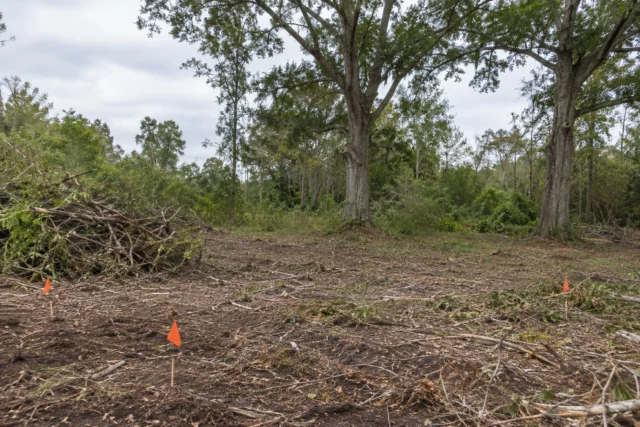
Example: Selective clearing with retained trees
Brush and equipment are cleared while the standing mature trees and root-protection barriers remain.
Clearing should match the next phase of the property
A site being opened for a building pad has different needs than a property that simply needs overgrowth reduced or access restored. Before clearing begins, we identify what should be removed, what should stay, how equipment will move through the site and what happens to logs, brush, chips and stumps.
Practical scope and safety guidance: Land clearing should begin with a boundary and a purpose, not a request to remove everything green. Share a current survey or marked plan showing structures, trees to retain, property edges, drainage features, utility corridors and intended access routes. Distinguish selective removal, brush clearing, grading preparation, stump extraction, grinding and debris disposal; each affects costs and ground disturbance differently. Check local permit, wetland, tree-protection or erosion-control requirements before committing to machinery or a schedule.
An occupied neighboring property, public road or drainage easement may require additional coordination. For a useful estimate, explain target vegetation sizes and density, expected material handling, whether usable timber stays and which surfaces must be protected. Keep roots and grade changes around retained trees in the planning discussion. Clarify who is responsible for hauling, topsoil, final grade and stabilization so those items are not mistakenly implied by a clearing-only quote.
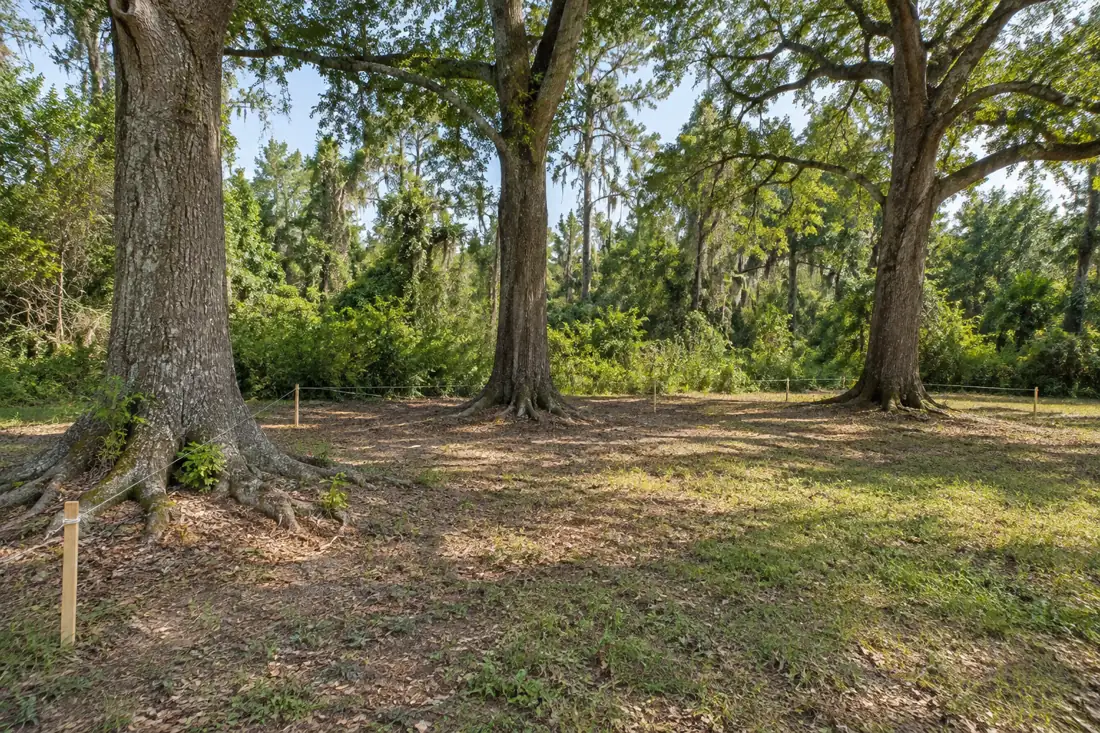
Mark clearing areas, trees to remain, access routes and sensitive boundaries.
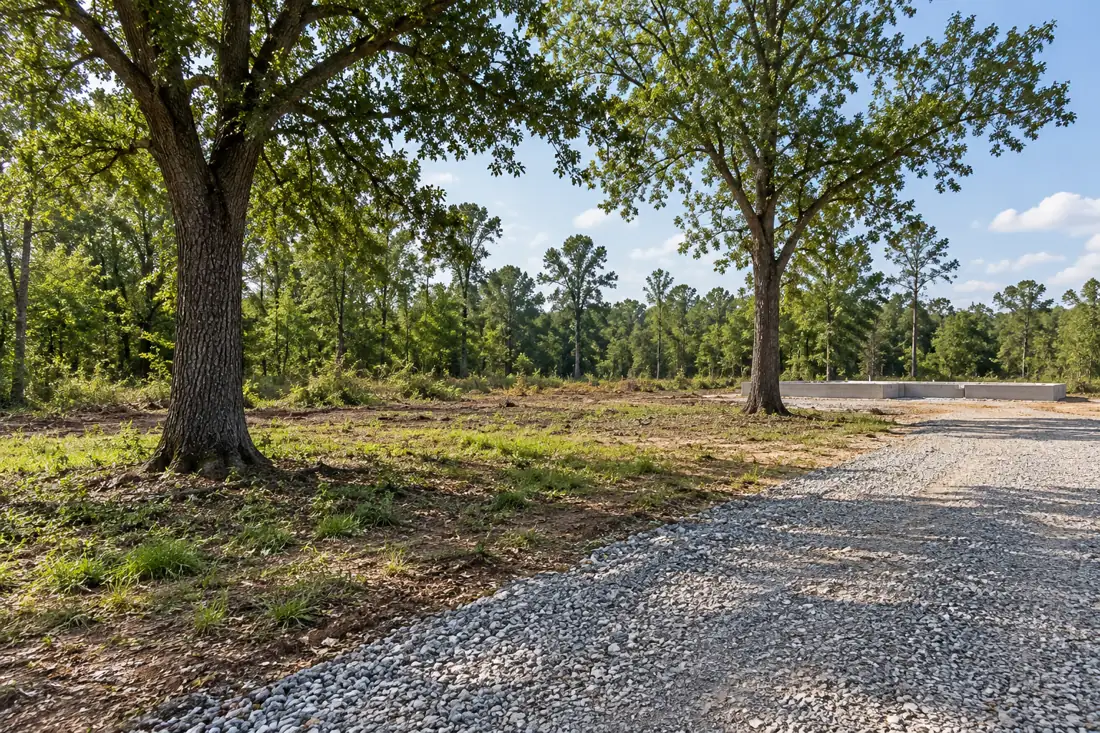
Clear access and work methodically through larger trees and vegetation.
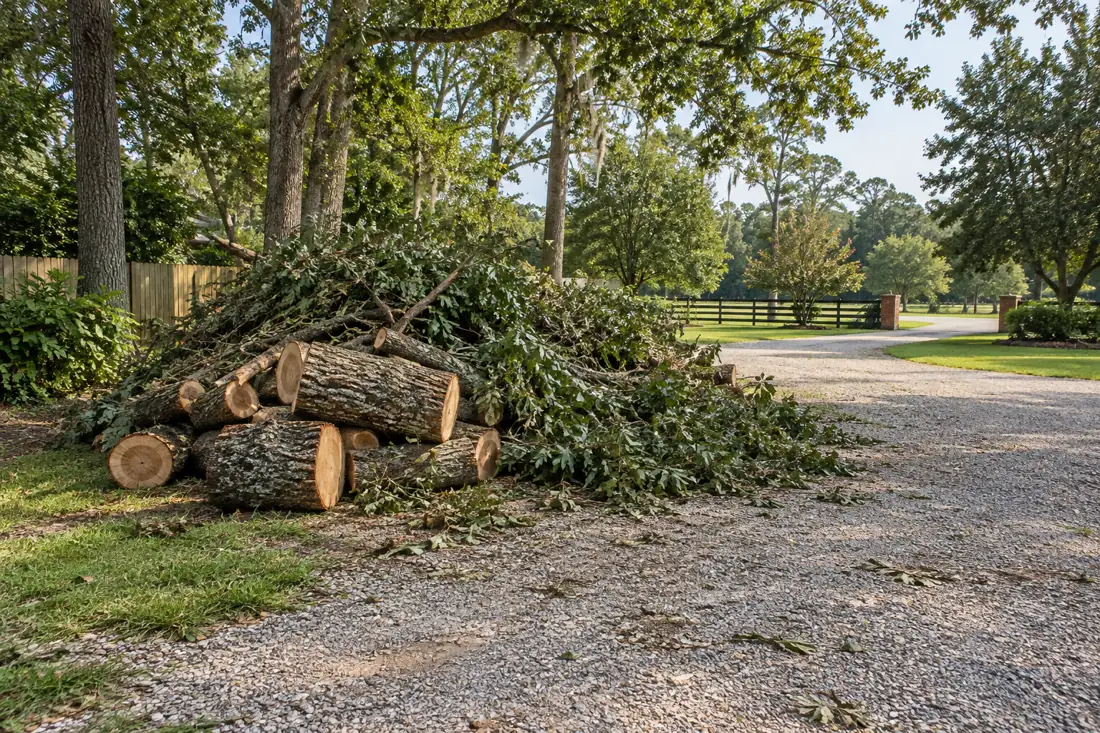
Process, haul or stage material according to the project scope.
Tree work and site production
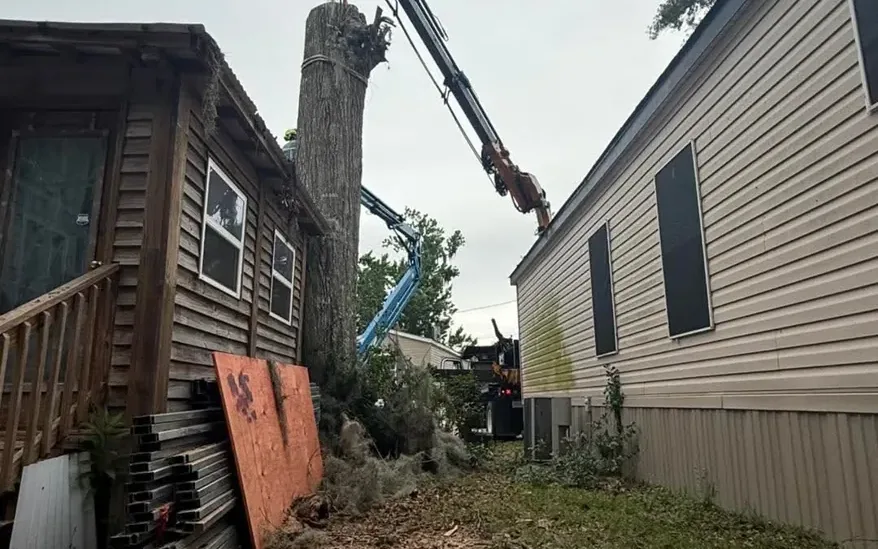
Large trees, tight access and high debris volume can slow a project if they are treated as isolated removals. Mechanized equipment and a production-focused sequence can make clearing more efficient, especially on commercial or contractor-led sites.
Related services
Describe the next use before describing the machine
Explain whether the request is for access, selective vegetation removal, a future construction area or a broader property improvement. The intended use changes the questions that need to be answered. A route for a maintenance vehicle differs from an area that another contractor expects to excavate or build on. Start with that outcome and the property address rather than selecting equipment from a photograph of a different clearing project.
Send a plain description of the proposed area, current vegetation and known constraints. If drawings or site instructions already exist, identify their current version and the person responsible for them. Do not assume that a tree-work contractor is also providing surveying, engineering, drainage design or the complete next phase of construction. The first discussion should connect the clearing request to those other responsibilities so the scope does not depend on an unstated handoff.
Establish what is inside the clearing limits
Identify the proposed work area in a way that can be confirmed on site. An approximate outline can introduce the request, but unclear ownership or boundary questions need appropriate verification before work proceeds. Do not use a neighbor’s fence, a line in an aerial image or an old mowing edge as unquestioned authority for removing vegetation. Explain what is known and what still needs to be resolved by the responsible party.
The accepted scope should make limits understandable to the customer and crew. Include separate zones when the work differs across the property, such as clearing an access lane while retaining a wooded buffer. The clearing planning hub helps organize those decisions. Keep later changes visible and approved rather than allowing a broad request to clear the lot to expand into adjoining vegetation or an area another contractor expected to remain.

Identify retained trees as part of the work
List the trees or wooded areas that should remain, and connect them to clear location information or agreed site markings. Preservation is easier to discuss before equipment routes and material staging are chosen. Explain why an area matters to the project, such as shade, a screen or continuity with an existing landscape, without assuming that keeping the trunk alone defines an adequate protection arrangement.
Discuss roots, ground conditions, access and the work around retained vegetation with the appropriate provider. Construction or grade changes can raise questions beyond the immediate clearing task. The preservation planning guide provides related context. Make sure the clearing scope and the next contractor’s plan use the same retained-tree information. A tree cannot be meaningfully designated to stay if a later work instruction assumes unrestricted excavation or storage around it without further review.
Review the complete access and staging area
Show the entry, turns, surfaces and space available for work and loading. Tell the company about gates, wet areas, overhead features and restrictions that photos may not reveal. Include the route material would take out of the property. A large open area at the rear does not establish a suitable approach from the road, and an existing track does not guarantee it can support the proposed operation under current conditions.
Draw the clearing boundary around what must remain
Land clearing should begin with the next use of the property. A future building pad, driveway, fence corridor or maintenance path has different limits from a full-lot clearance. Mark the intended work boundary and list the trees or natural features to retain before machinery arrives. A property line viewed on a phone is not a substitute for a verified survey where boundaries are disputed or consequential.
Explain how the site will be reached and where material may be staged. Wet ground, a ditch, a narrow entrance or a neighboring improvement can change the safe sequence. Retained trees need attention to soil compaction, root disturbance and storage setbacks even when their trunks remain outside the immediate clearing strip. Drainage and erosion-control responsibilities should be settled with the relevant project professionals rather than casually included in a tree-work estimate.
Define what will be left behind: tall stumps, ground-level cuts, grindings, logs, chipped brush or hauled material. Ask which follow-on contractor receives the site and what measurements or photographs they need. A signed scope that names retained vegetation, exclusions and finish conditions is more useful than describing the work simply as clearing everything.

Equipment choices need to fit the vegetation, task, ground and surrounding property. The equipment planning hub explains useful starting information. If neighboring land or a shared entrance is involved, identify the appropriate access arrangements before relying on it. For contractor-led sites, name the person coordinating deliveries and other trades so clearing, loading and unrelated work do not all assume the same limited space at the same time.
Make hidden conditions and existing features visible
Tell the estimator about known buried features, abandoned material, fencing, drains, structures and other obstacles within or beside the proposed work. Dense vegetation can conceal objects that change handling. Do not enter an unsafe or unstable area simply to create a complete inventory. Explain the limits of available information and identify which checks, locating arrangements or specialist input need to be completed by the responsible parties before the relevant work proceeds.
Avoid presenting an unverified photograph or sketch as a complete underground record. A useful plan makes uncertainty visible instead of assuming the area is empty beneath the vegetation. The construction tree-service page provides related coordination context. If previously unknown material or a conflicting condition is found, the scope may need to be reviewed before continuing that part of the task. Establish who can make that decision rather than relying on improvised approvals.
Separate clearing from stump and ground preparation
Removing visible vegetation does not define the condition below ground. Ask whether stumps remain, are ground or need another form of removal for the next use. Grinding, root excavation, backfill, compaction and grading are different operations. A future building or surface project should obtain the relevant requirements from its responsible provider rather than assuming a general tree-clearing quote creates a construction-ready subgrade.
The stump planning guide explains how intended use affects that conversation. Connect the handoff to a recognizable finish: which material is removed, what remains and who completes the next operation. If tree work is one stage of a larger project, keep the stage boundaries clear in the accepted agreement. This allows the next contractor to plan from an accurate condition rather than discovering unassigned roots or ground work after clearing is complete.
Choose the destination for logs, brush and chips
Discuss whether material is hauled, processed or retained in an agreed location. A broad clearing request does not explain whether the owner wants usable logs left, brush removed or chips kept. Processing and handling need to fit the property and scope; do not assume a particular machine, pile arrangement or disposal option is included. Identify mixed non-vegetative contents separately if they are present or suspected.
The debris removal page helps define that material boundary. Keep retained piles connected to access and the next use so they do not occupy an area another contractor needs. Confirm any permissions or project requirements with the responsible parties instead of assuming the tree-work agreement resolves every site-use question. A clear material plan makes the finished clearing area and the remaining responsibilities easier to recognize during the final walkthrough.
Define the cleared area by future use
Land clearing can mean selective vegetation removal, opening a construction corridor or preparing a larger parcel; those are not interchangeable outcomes. Describe the intended next use and mark the proposed limits on a sketch, alongside property boundaries, trees that must remain and drainage or utility features to protect.
Identify whether brush, standing trees, stumps, logs and off-site disposal are each included. For construction-related clearing, coordinate with the next trade before prescribing final grades or soil treatment. An accurate estimate depends on what the site must look like afterward, how material can exit and which existing features are excluded.
The goal is a checkable clearing boundary, not a blanket instruction to remove all vegetation.
Approve a scope that the next contractor can use
Review limits, retained trees, route, identified obstacles, stump decisions and material handling together. Name the person authorized to change the work if site information develops. A contractor or property manager should keep current instructions available to everyone coordinating the job, especially if different parts of the property have different objectives. The contractor service page provides another starting point for coordinated requests.
For example, clearing undergrowth for access while retaining mature shade trees differs from preparing an area for later excavation. Send the address, safe wide photos, approximate area and intended finished condition to Tree Huggers. Ask what is included now, which inputs are still needed and what remains for the next provider. Those answers turn an open-ended clearing request into an accountable first phase of the property plan.
Write a land-clearing scope that protects what should remain
A clearing request should explain the intended end condition before the contractor chooses a sequence or equipment. Opening a walking route, preparing for a survey, restoring access to a utility line and removing every tree from a development pad are not interchangeable tasks. Mark the removal boundary and individual trees to retain on a plan or plainly labeled photographs.
If a fence or vegetation line is being used as a guide, confirm that it matches the legal property boundary before assuming permission to remove anything along it.
Walk the permitted perimeter first and tell the contractor about known wells, drains, septic fields, irrigation, overhead wires and buried services. Dense brush may hide metal, discarded material, holes or a sharp change in terrain; an estimate based on a distant aerial image can miss these obstacles. Explain what is known, what remains uncertain and what cannot safely be inspected without a controlled first pass. Locating utilities and obtaining any necessary authorization must occur through the responsible parties.

Specify finish level before cutting begins
Decide how logs, brush, chipped material, roots and stumps will be handled. Leaving chips for the owner is a different finish than hauling all woody waste away; grinding a stump is not the same as excavating the root system or preparing soil for a foundation. If grading, erosion protection or land-development work follows, identify which contractor owns each stage so that tree work does not accidentally get described as completed earthwork. Retained trees may need protected root areas before heavy machinery crosses the site.
At handoff, use a marked map of what was opened, what was left and any unexpected obstacles discovered. Some plants will regrow from roots or seeds, so clearing once should not be described as permanent vegetation control. Decide whether selective maintenance, mowing or another approved land-management step is appropriate for the owner’s end use. A clear exclusions list and agreed finish photographs make later changes easier to price and keep the work tied to actual conditions.
Land Clearing questions
Is land clearing always complete removal of every tree?
No. Define the intended open area and the vegetation to retain. Selective clearing and complete removal are different scopes.
What should I send for a clearing estimate?
Provide the address, safe wide photos, approximate area, intended use, access route and known retained trees or constraints.
Can a fence be treated as the verified boundary?
Do not assume it resolves ownership or work limits. Explain known information and arrange appropriate verification through the responsible party.
Should retained trees be identified before work?
Yes. Connect retained areas to agreed instructions before equipment routes, staging and vegetation removal are planned.
Does clearing include engineering or surveying?
Those are separate responsibilities unless expressly arranged with the relevant providers. Identify the required inputs and who supplies them.
Is a cleared site automatically ready for construction?
No. Stumps, roots, soil preparation, grading and project requirements need a defined handoff to the responsible next-phase provider.
Can stumps be left for later work?
Discuss the intended use and specify the stump condition. Do not let that decision remain implicit in a general clearing description.
What happens to logs, brush and chips?
Confirm hauling, processing or retained material and its location in the accepted scope. No single destination is automatic.
How are unknown objects in dense vegetation handled?
Disclose known features and information limits. If a new conflicting condition appears, the relevant scope may need review before that part continues.
Will the largest available machine be the best option?
The approach depends on vegetation, route, setup, ground and retained features. Equipment should follow the actual scope and site review.
Can clearing be coordinated with a general contractor?
Identify the authorized contact, current site instructions, access arrangements and the required finish for the next phase.
What should the final walkthrough confirm?
Review work limits, retained vegetation, material disposition, stump condition, access and the specific items assigned to another provider.
Explain the clearing result and what must remain
Tell us whether the site needs brush reduction, selective tree removal, access opening or a broader lot-clearing scope. Mark retained trees, known boundary limits, utility and drainage features, and any constraints from future construction. Identify the required handling of stumps, logs and chips rather than assuming every clearing job includes hauling and final grading. If a contractor or owner must approve the limits, name that contact before a site plan is acted upon.