A grapple saw combines gripping and cutting functions so a branch or trunk section can be secured before the cut is completed. That changes the way material moves after separation.
Site planning detail: A grapple saw is one controlled-removal method, not a shortcut that makes all tree jobs identical. Its cutting head grips selected material as it cuts, so planning must account for piece weight, boom reach, nearby structures and the sequence of lifts. The supporting carrier or crane needs an appropriate staging location and ground conditions, along with an exclusion zone below suspended loads. A tree with decay, a compromised root plate or branches near electrical conductors may require different precautions or a different approach.
Ask how the crew determines section sizes and handles cut pieces after they reach the ground. Confirm whether stump removal, chipping, trucking and surface protection are part of the scope. It is reasonable to ask why this method was proposed over carefully rigged conventional removal.
Control before cutting
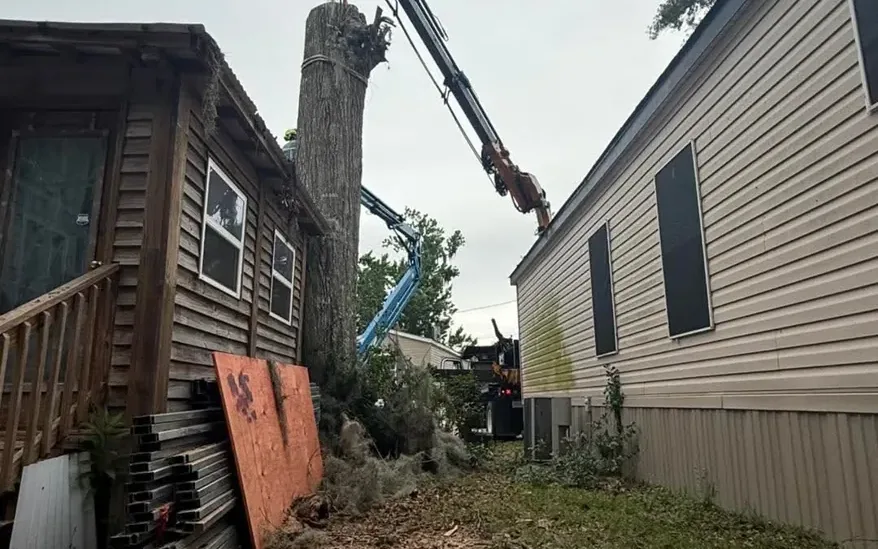
With a grapple saw, the piece can be held and directed toward a landing or processing area. That can be useful around roofs, fences and other targets.
Production benefits
Reducing repeated climbing and handling can improve production on the right tree. The machine still needs proper stabilizer setup, reach and space to work.
Start with the attachment's purpose
A grapple saw combines a gripping component with a cutting unit so suitable tree material can be handled as part of a planned removal. It is an attachment within a larger equipment system, not a stand-alone answer to every tree problem. Ask the contractor what role it is intended to play in the proposed job and what other handling or crew work remains necessary. A clear explanation should connect the attachment to the actual property result.
The Mecanil manufacturer overview shows that grapple-saw models and control arrangements vary. This guide does not assign a model, capacity or operating specification to a Tree Huggers job. The provider needs to confirm the proposed system and its suitability. Customers should use the overview to understand terminology, not to choose operating settings, cutting sequences or a piece size from a picture of an attachment that may differ from the one proposed.
Understand why the base machine matters
The attachment works with a base machine that must be suitable for the complete arrangement. A head’s gripping opening or advertised cutting capability does not establish what the system can handle at every position. Ask the provider to explain feasibility in terms of your tree and property, rather than comparing one isolated measurement from a brochure. Equipment selection and operating limits belong with the qualified people planning and performing the work.
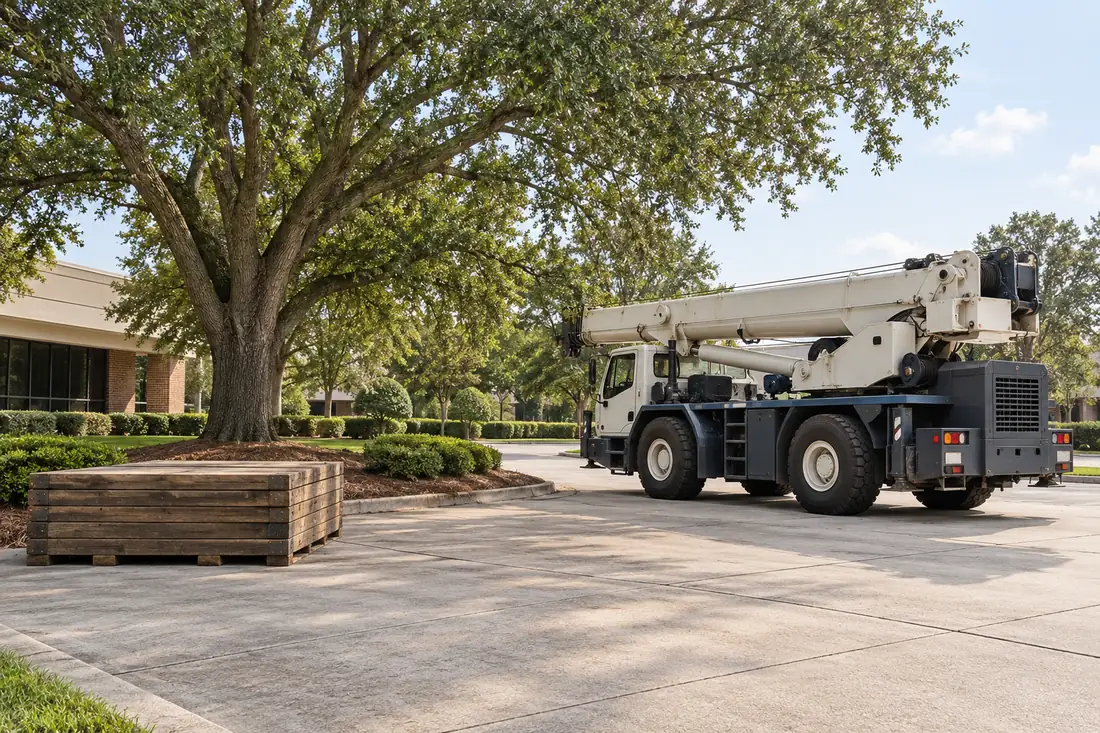
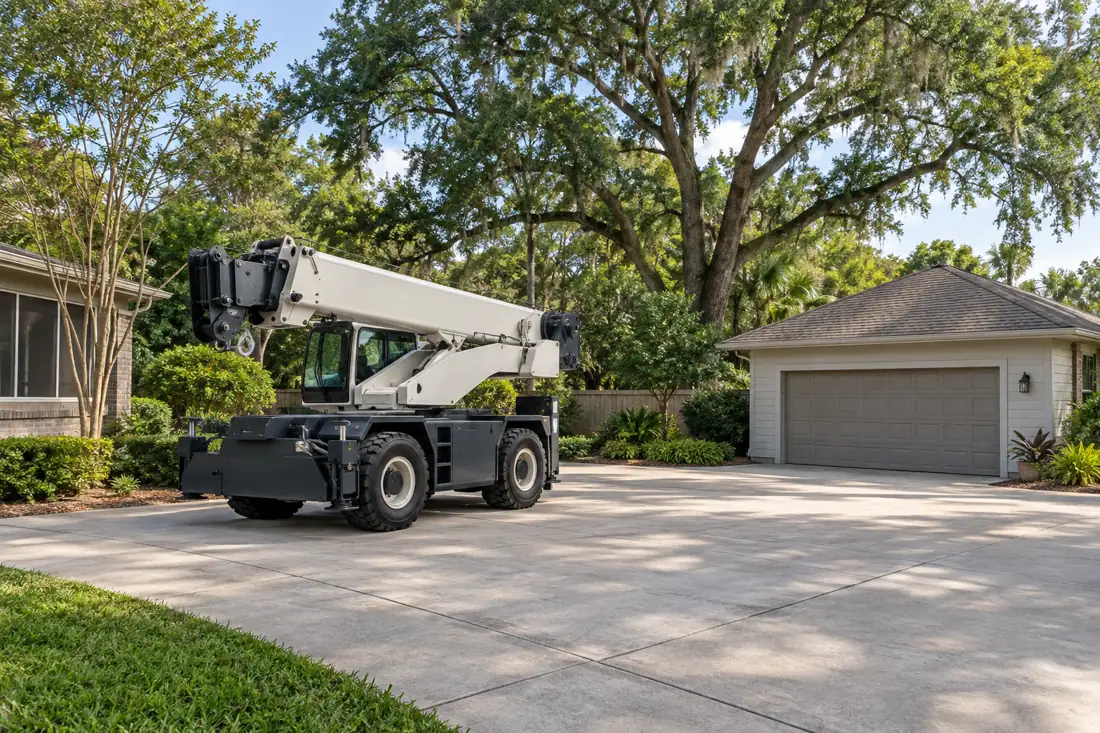
Describe the setup area and the distance or obstacles between it and the tree. Include a roof, garage, neighboring building or other feature that changes the route. The useful customer question is whether the proposed approach fits the whole job, not whether a machine can theoretically reach a point. A provider may need a site visit before answering. It is better to identify that review early than to accept a price based on a capability that was never confirmed for the actual location and conditions.

Show access beyond the front opening
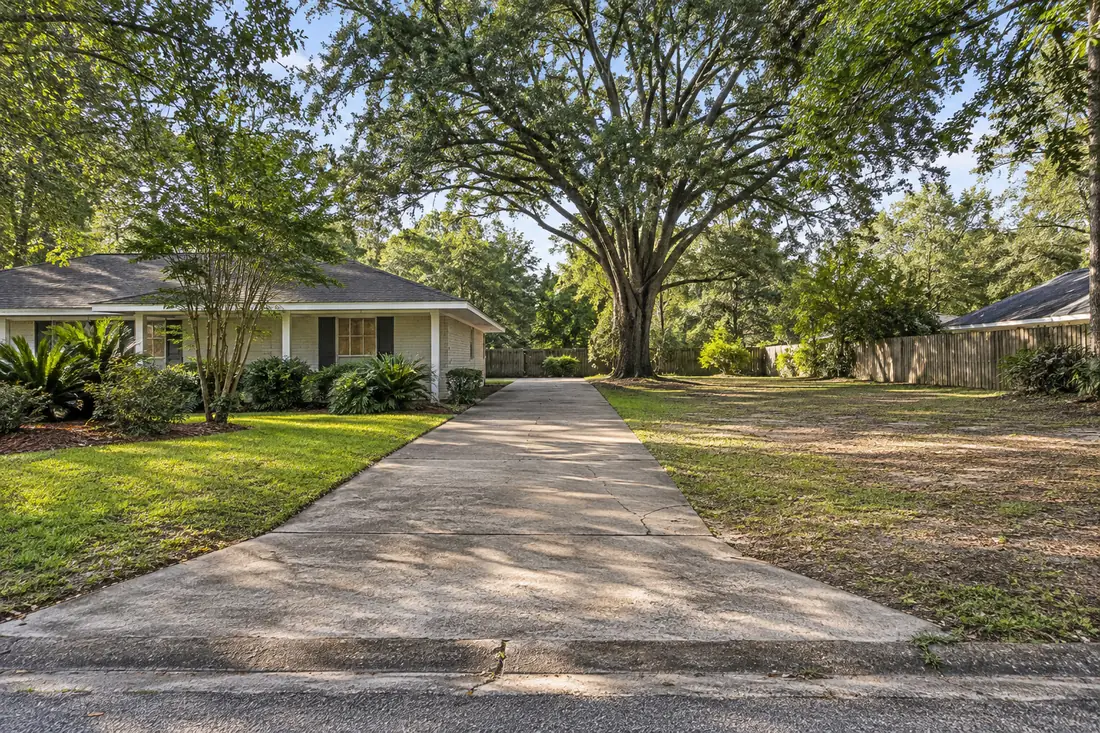
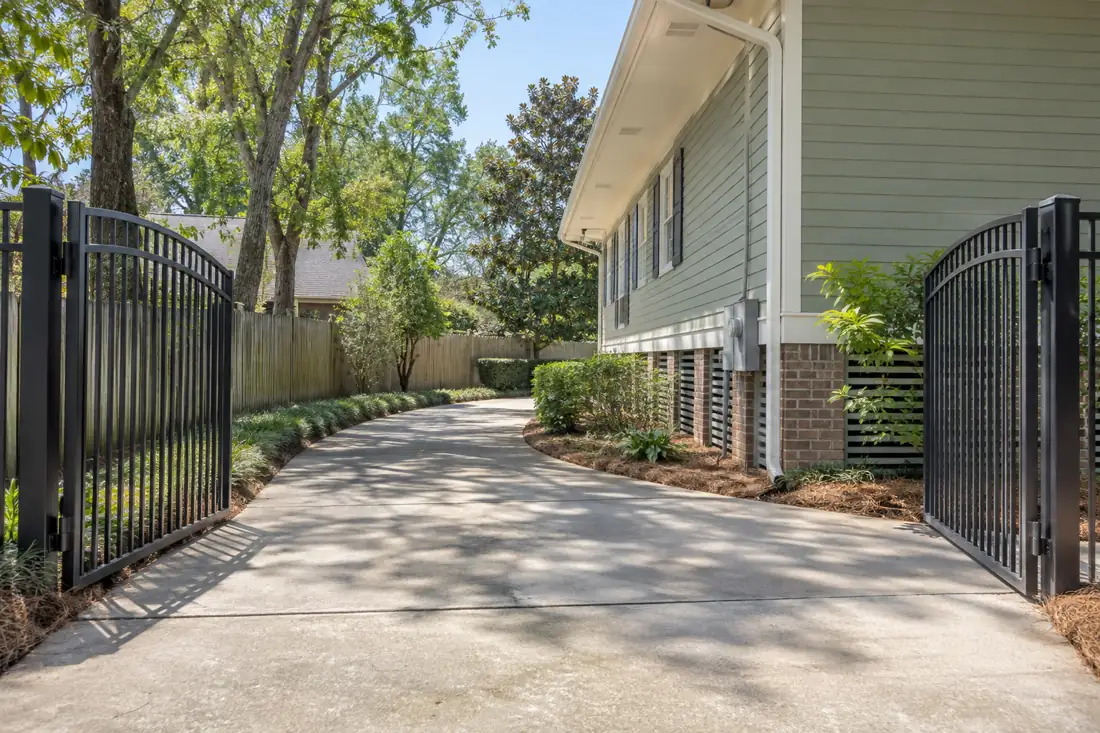
Photograph the full route from the public approach to the planned setup area, using only safe positions. Gates, turns, steps, soft ground and overhead features can matter independently of the tree’s height. Note any fixed obstruction and explain what the owner can move before the visit. If another person controls a shared entrance or parking space, identify that arrangement before a method is treated as available.
Do not widen access or alter the tree in anticipation of a machine unless that preparation is part of the accepted plan. Confirm who handles fence openings, surface protection and restoration. If access changes after the estimate, tell the company before arrival. The handling method may need review even if the tree itself is unchanged. For related customer questions, see grapple-saw access planning. A practical route and clear permission are as important to a dependable estimate as an explanation of how the attachment grips wood.
Explain the material and surroundings together
Tell the provider whether the tree is living, dead, storm-damaged or partly supported by another feature. Identify roofs, fences, occupied rooms, utilities and the space available for material handling. Do not assume that a gripping attachment makes a damaged connection predictable or removes the need to evaluate concealed conditions. Safe photographs can help prepare the visit, while the contractor determines what further assessment the actual tree and site require.
Ask how the proposal addresses the surrounding property without requesting a particular cut based on a video. The owner should describe what must be protected and the result needed. The qualified crew develops suitable procedures for the chosen equipment. If the tree’s condition changes, report it before the work begins. A fresh split, new failure or changed contact with a building may affect the plan. The original estimate should not be treated as permission to proceed unchanged when the facts that supported it are different.
Include space for processing and removal
A mechanized approach needs somewhere for material to be handled after it leaves the tree. Describe parking, gardens, buildings and access routes around the property, not only the area beneath the trunk. Ask where the agreed material will be placed or loaded and how the work area will be managed. If the owner wants some wood retained, identify that request before the handling plan and price are finalized.

The cut-and-hold method still needs a material exit
A grapple saw is a cutting and handling attachment, not a complete description of a tree-removal plan. Ask what base machine and reach are proposed, how the operator will establish a safe working area and how branches will be controlled before they are lowered or placed. A property photograph cannot establish the suitability of a particular attachment.
The important downstream question is where every piece goes after cutting. A narrow side yard, overhead line or soft loading edge may be the limiting factor even when the cutting point is easy to reach. The plan must address processing, staging and hauling as well as the cut itself.
Compare proposed methods against the same scope: which tree sections are included, what areas need exclusion, who coordinates utilities or neighboring access and what remains on the property at handover. Do not assume an attachment guarantees zero ground disturbance, universal reach or a particular number of hours.
Do not assume the contractor can occupy a street, neighboring driveway or public verge simply because the private yard is tight. Confirm the relevant permissions and coordination for the actual location. If another trade needs the area at the same time, discuss the schedule and handoff.
A working-space limitation can change the method or scope even when the equipment reaches the tree. The finished proposal should explain the customer-facing arrangements well enough that occupants and other providers know which areas must remain available and who can approve changes.
Keep remote control and worker roles understandable
Some grapple-saw systems include remote control, but the attachment and control method are separate parts of the description. Ask how the proposed equipment relates to the broader removal plan and who is the site contact. The absence of a climber in one stage does not mean no people are exposed to work-area hazards or that the owner may walk beneath handled material. Follow the crew’s access and communication arrangements throughout the job.
The remote-controlled removal guide covers the operator-control distinction. If you are managing the property remotely, appoint a reachable person who understands the accepted scope and can handle approvals. Keep tenants, visitors and delivery providers informed of the practical site restrictions. A useful equipment explanation makes the work easier to understand without encouraging customers to participate in operation. The system should remain under the control of the qualified people responsible for the work, with the owner’s role focused on accurate information and authorization.
Compare handling efficiency against the complete scope
An attachment may change how material is handled on a suitable job, but equipment alone does not establish the final price or finished condition. Compare the identified tree, site assumptions, cleanup and stump treatment across proposals. Ask what could require a scope revision if a setup or condition limit is found. A company should be able to explain the proposed result without promising that a machine always makes removal faster or cheaper.
Clarify whether hauling, retained logs, scattered debris and any separate grinding are included. If the owner needs a yard restored or another trade will follow, state the required handover condition. A proposal that leaves a stump and wood pile is not equivalent to one that includes their agreed treatment. Keep the equipment discussion connected to the result being purchased. For a wider comparison of methods, use crane, grapple-saw and conventional removal planning rather than selecting solely from the appearance of the equipment.
Request a job review with the right information
Send Tree Huggers the address, safe whole-tree and base views, nearby targets and the complete access route. Explain any dead or broken material, recent changes and features that cannot be moved. Say whether you want removal, selected branch work or an assessment before deciding. Ask which information can be reviewed initially and whether a site visit is necessary before confirming a method and price.
A useful reply may identify missing access information or recommend another handling approach. That is part of matching the scope to the actual property. The goal is a clear agreement about the trees, equipment suitability, work area and finish, not a promise that one attachment will solve every access or condition problem. Keep the accepted proposal and any approved changes so the completed work can be compared with the result you discussed, including the handling and cleanup that follow the cutting stage.
What a grapple saw changes—and what it does not
A grapple saw can alter how a crew controls cut material by gripping and removing sections with a machine rather than dropping them freely. That may be useful above roads, structures or occupied property, but it is not automatically the right method for every tree. The tree’s condition, working radius, clearance from wires and the available setup area remain central to the plan.
This article explains the equipment’s role in handling material. Before selecting it for a site, review the separate grapple-saw access requirements guide for entrance widths, firm setup ground, outriggers, overhead obstructions and traffic or pedestrian exclusion. The useful question is whether the tool improves control for this particular property, not whether a contractor owns it.
Compare grapple-saw handling with conventional lowering
The defining difference in grapple-saw work is that a gripping mechanism may support a selected branch or trunk section while it is severed. Conventional climbing and rigging can also control pieces, but may use different anchor positions, ropes and lowering paths. Neither approach wins automatically. The correct comparison asks which method best handles this particular tree, its structural condition and the objects that must not be struck. Site layout and crew judgment should govern the choice.
Pay attention to what happens immediately after the cut. The section's center of mass, hidden attachments, rotation and path toward a truck or landing area can matter as much as the cut itself. A piece hanging over a roof, fence or narrow road may demand a more conservative sequence than material over unobstructed lawn. It is not enough for a machine to reach the branch; it must also be able to handle and move the section in a controlled way.

Think about the load after the cut
Ask where the equipment will stand, what ground support is required and how the cutting area will be isolated from people and traffic. Narrow gates, saturated ground, overhead utilities and nearby trees can constrain the machine's usable reach. A mixed method may be necessary if part of the crown is inaccessible or if the remaining tree cannot support normal climbing operations. Describe actual obstacles in the estimate request instead of choosing a technique solely from a photograph.
Compare written scopes on equivalent terms: identified trees, number or type of pieces being handled, wood and brush cleanup, stump decisions, protection of nearby property and the finish condition. A reference to a grapple saw should not hide excluded hauling or surface repairs. No piece of machinery guarantees that a heavily damaged tree can be preserved or removed without a site-specific plan. Clear expectations make the equipment discussion useful to the homeowner rather than a marketing slogan.
When a grapple saw changes the order of operations
A grapple saw can grip a section of wood before cutting, helping manage the position of that piece, but the method still depends on branch condition, reach and a safe landing or loading area. Identify the proposed cut sequence and the path from canopy to truck. On a property with a fence, narrow side yard or nearby roof, a section that is manageable in the air may still be difficult to transfer or stage at ground level.
Ask the crew to explain the difference between gripping an intact limb and handling a cracked, decayed or entangled section. Some parts of a crown are poorly suited to a predictable lift because hidden decay, vines or other branches can alter how wood moves. Establish the exclusion zone for the full movement envelope, not just the place where the saw meets the branch.
Do not stand under the canopy to record a close-up during active operations. Nearby utility conductors require the relevant utility and qualified personnel to control that risk.
An estimate should describe the method as a means to achieve a specific removal or pruning objective, not a guarantee of zero disturbance. Confirm truck access, ground protection, temporary closures, debris disposal and what happens if a planned cut proves unsafe. A written contingency and an agreed finish condition are more useful than choosing a service solely because of the equipment's name.
Practical handoff checklist
- Map cut, transfer, staging and truck-loading zones.
- Discuss hidden decay or entanglement before relying on a lift.
- Keep public and neighboring areas outside the active work envelope.
- Include method changes and cleanup limits in the scope review.
For related context, see the remote-controlled removal methods guide. This planning information is not a substitute for an on-site professional assessment.
How a Grapple Saw Changes Tree Removal questions
What is a grapple saw?
It is an attachment combining gripping and cutting functions within a larger equipment system used for suitable tree-handling work.
Does the jaw opening establish lifting capacity?
No. An attachment measurement does not establish the complete system's capability at a particular position or site.
Is every grapple saw remotely controlled?
Control arrangements vary by system. Ask what equipment and control approach are actually proposed.
Does a grapple saw remove the need for site assessment?
No. Tree condition, setup, access, utilities, surroundings and handling space still need review.
What photos should show the access route?
Include the approach, gate, turns, overhead features and ground near the proposed setup area from safe viewpoints.
Should I widen a gate before the estimate?
Only after the accepted access plan, permission and restoration responsibilities are confirmed.
Why does the landing or loading area matter?
The removed material still needs controlled handling and a practical route off the property or to an agreed retention point.
Can a street be used automatically?
No. Confirm applicable permissions and coordination instead of assuming public space is available.
Can I choose cuts from a demonstration video?
No. Describe your objective and constraints; qualified people determine suitable procedures for the actual system and tree.
What if the tree changes before work?
Report new failures, splits or contact changes so the provider can review the original plan.
Will the method always lower the total price?
No guarantee applies. Compare the same tree scope, access, cleanup and finished condition.
What should I ask before accepting the proposal?
Confirm equipment suitability, the work area, tree identification, material handling, exclusions and the process for changes.
Let’s plan your tree work.
Send the property address, safe tree photos and the result you need. Include access restrictions and the person who can approve the work.