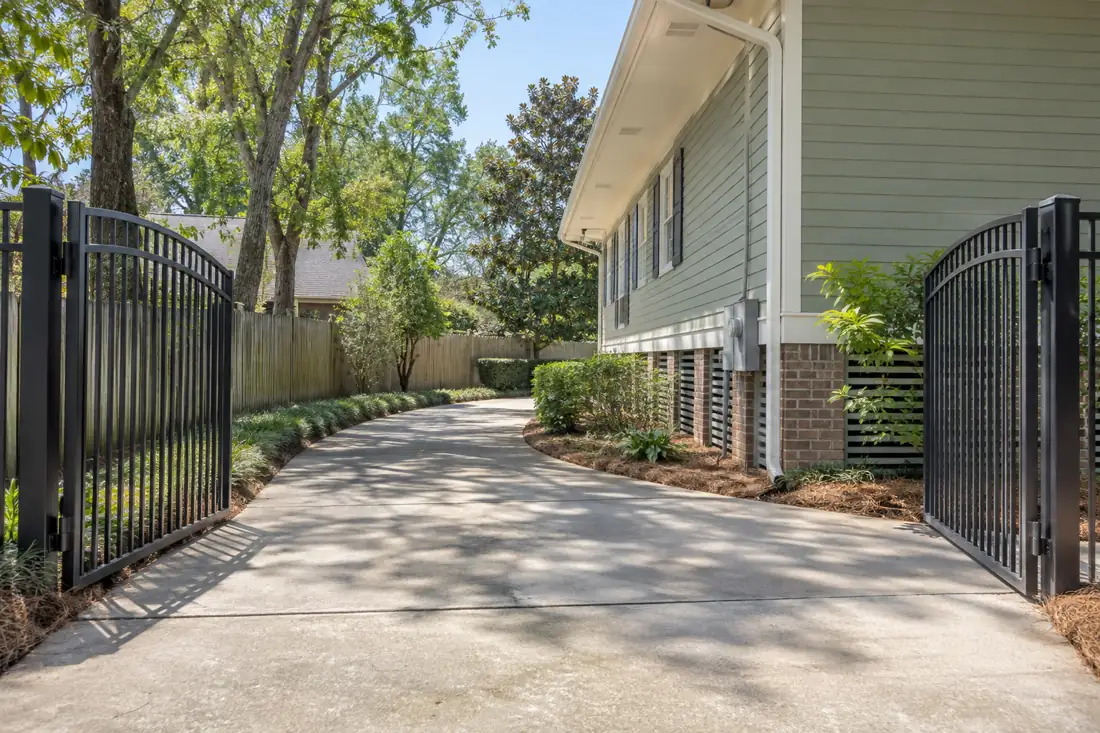
Remote-controlled tree removal uses specialized boom-mounted equipment that lets an operator position a cutting and gripping head from a remote control station. The system can hold a limb, cut it and move it away from the target area.
Evaluate remote equipment by its work envelope and limitations
Remote-controlled equipment may help reduce operator exposure in certain clearing or confined-access tasks, but the term does not mean a machine can handle every unstable tree. A contractor still needs to evaluate reach, material size, slope, ground support, bystander separation and possible rebound or roll of cut wood. Equipment working remotely can transfer risk to a different area, so the plan should explain where people and property must remain clear. Ask what happens if a machine cannot safely reach the final material.
Compare methods using the actual tree and site rather than assuming robotic work is always faster or less expensive. A lift, climber, rigging system or crane may be appropriate for a different portion of the same job. Before agreeing to the scope, clarify debris removal, access restoration and who coordinates overhead wires or nearby structures. A demonstration video is educational, not proof of how a particular customer’s tree will be removed.
Site planning detail: Remote-controlled tree equipment can reduce the need for an operator to stand immediately beside certain hazardous cutting positions, but it does not remove the risks of falling wood, unstable ground or machine travel. A remote machine still needs a suitable footprint, traction, access width, safe exclusion zone and a trained operator. Ask which task the machine would perform and where people, structures and utilities would be during each step.
It may be unsuitable near a steep bank, weak soil, a narrow gate or overhead conductors. Conventional climbers, rigging and cranes may still have roles depending on the site. Request a plan based on the tree’s actual condition rather than assuming a technology makes the entire project safer by default. Hauling and property restoration remain separate scope items.
Robotic terminology does not mean autonomous cutting
In tree work, 'remote controlled' usually describes an operator controlling boom, grapple or saw functions from a designated position. It is not an unattended robot that independently evaluates tree structure or selects safe cuts. The crew still must manage suspended loads, dropped sections, spotters, utilities and areas where people must stay clear. The equipment can reduce certain exposures without eliminating field risks.
Ground support changes the equipment decision
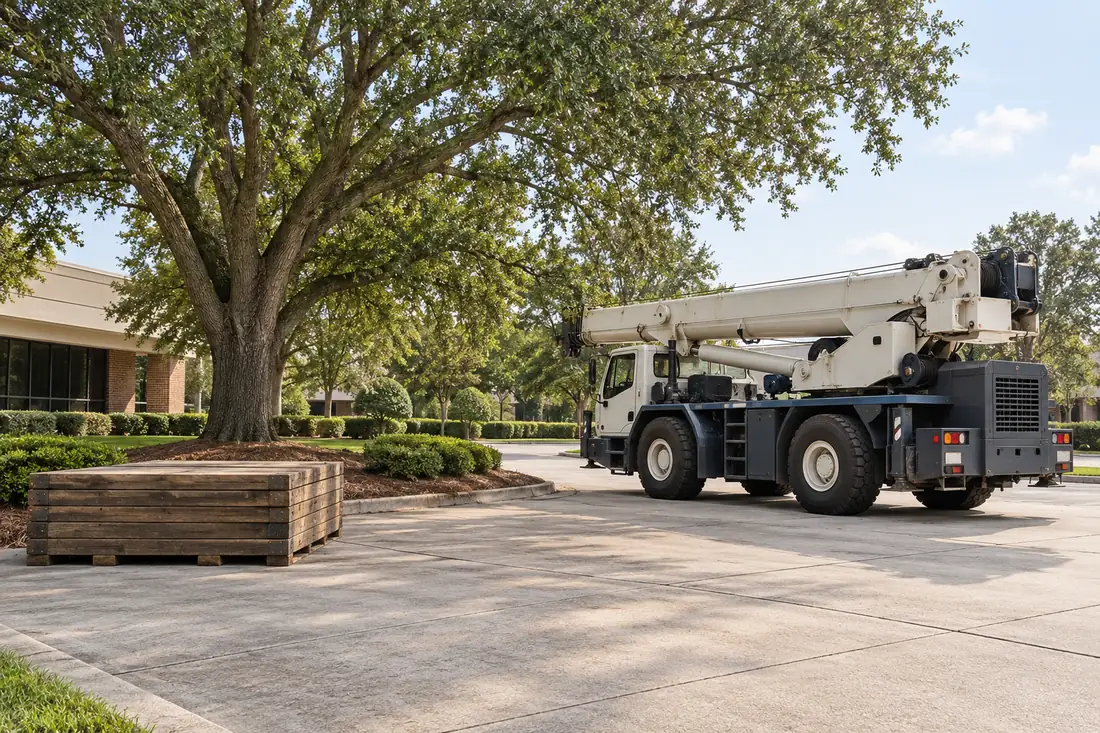
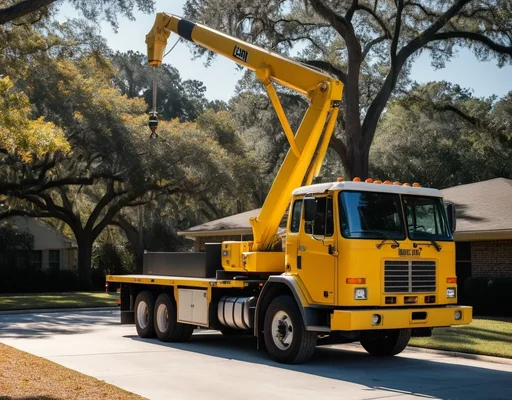
Remote-operated cutting equipment and traditional crane support require different reach and load plans. Ask the contractor to name the machine, its working envelope and a safe staging zone before assuming a machine will fit. A photograph of a boom alone does not identify remote control.
This educational guide helps a property owner understand the tool and ask informed questions without specifying a machine from a marketing description. To request a site-specific estimate involving mechanized removal, the linked service page discusses access, lift or grapple suitability, protection and cleanup. Treat machinery photos as illustrations of a method, not evidence that a particular machine is assigned to a proposed job. Remote-Controlled Tree Removal.
Why use it?
The main advantages are controlled handling and reduced direct worker exposure on suitable jobs. It can be useful for dead trees, storm-damaged trees and large limbs over buildings.
What it does not replace
Machines do not replace judgment. Setup space, reach, utilities and tree geometry still matter. See our remote-controlled tree removal page.
Understand what the word robotic describes
Customers often use robotic tree removal to describe specialized equipment controlled by an operator from a remote station. The term does not mean the machine independently assesses the tree, chooses every cut or manages the property without people. Ask the provider what equipment is proposed and how it fits the work. A clear description of the handling method is more useful than assuming the word robotic identifies one universal machine or a guaranteed result.
The manufacturer’s Tree-Mek overview illustrates one type of articulating-crane and grapple-saw combination. It is background about an equipment category, not a claim that a particular model or specification is assigned to your job. Tree Huggers needs to review the actual tree, property and availability before confirming equipment. Ask which parts of the project the proposed system addresses and which tasks still require other crew activity or a different method.
Separate remote operation from the cutting attachment
Remote control describes the operator’s relationship to equipment functions. A grapple saw describes an attachment with gripping and cutting capabilities. Those ideas can appear together, but they are not interchangeable terms. Ask whether the proposal involves a particular attachment, the base machine, lifting support or a combination. Avoid comparing two quotes solely because both mention robotic work when they may describe different handling arrangements and site requirements.
For a closer explanation of the attachment, see how grapple-saw removal works. Keep the customer discussion at the level of the proposed result and constraints. The operator must determine suitable procedures for the actual equipment and conditions. The owner should not choose a cut sequence from an online demonstration or infer load capacity from how wide a grapple opens. The estimate should explain the intended scope without turning the owner into an equipment designer or operator.

See the whole route before deciding whether a machine fits
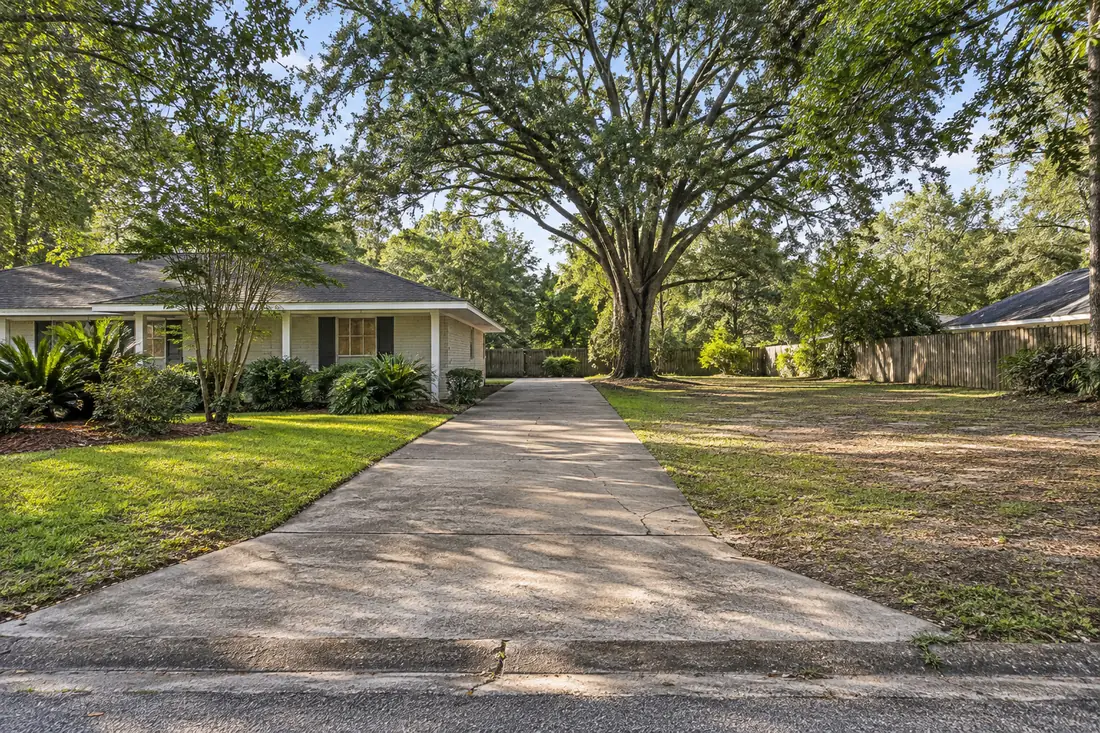
A driveway photograph does not necessarily show the route to a usable setup location. Send views of the street approach, narrowest opening, turns, overhead obstructions and the ground near the proposed work area. Identify gates, steps, soft surfaces and fixed features. State what cannot be moved and who controls shared access. These details help the provider assess suitability before committing to a method based only on the tree’s appearance.
Do not prepare a route by cutting roots, removing limbs or dismantling a fence without an agreed plan. Ask who handles any temporary opening and its restoration. Permission to cross neighboring property needs to be confirmed by the party able to grant it. If a public route may be affected, discuss the required coordination for the location. Equipment that can reach a tree in a video may still be unsuitable for the actual route, ground or permissions at your property.
Explain the machinery before deciding whether it belongs on the property
Remote-controlled and robotic are often used loosely in tree-work conversations. Most equipment still relies on an operator who controls cutting or lifting decisions, and remote control does not make a site hazard-free. This educational article explains what the operator may be able to do at a distance, why a stable equipment position matters and what limitations remain around reach, load, sight lines and ground conditions. A photograph or video of an impressive machine cannot establish that the same method is suitable for a particular yard.
Start by understanding the equipment class and the tree condition. Check whether the job calls for selective cutting, complete removal, limited access or a separate crane and hauling arrangement. The service page is the next step for someone requesting a mechanized-removal scope, while this guide is for terminology and planning. Neither page promises a specific machine on every job. Document the narrowest access, overhead obstacles, underground features, fencing and protected surfaces so a qualified crew can make its own equipment selection.
Explain what the tree condition changes
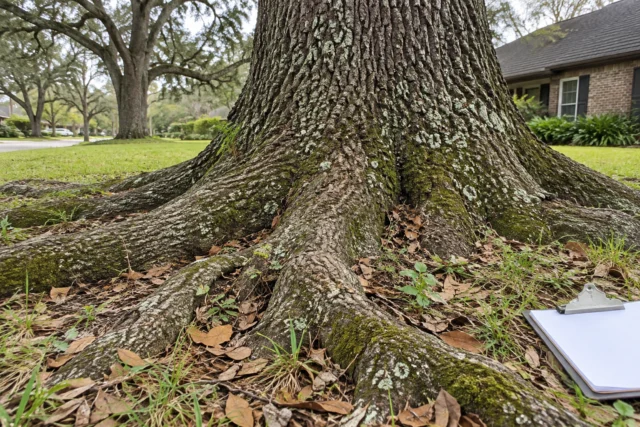
A living tree in open space, a brittle dead tree and a storm-damaged tree resting on another structure present different planning questions. Describe the current condition and any recent change. Include what is under the canopy and what parts have already failed. Safe photographs help prepare a visit, but they do not establish all internal defects, attachment conditions or the complete feasibility of a mechanized approach.
Evaluate the route before choosing remote operation
Remote operation changes where a machine's operator may stand; it does not make a large machine fit through a narrow opening or remove the need for a controlled work area. Confirm usable width, turning room, overhead clearance and the surfaces between the street and the tree. Photographs should show each constrained point rather than only the open space around the trunk.
The equipment plan still needs qualified workers, appropriate cutting methods and a route for the resulting wood. Ground conditions, utilities, slopes and fences can change whether mechanized handling is suitable. A video of a particular machine on another property is not proof that the same approach is right for this address.
When reviewing alternatives, ask how the proposed method affects staging, truck access, lawn protection and the finished condition. The meaningful comparison is between complete work plans, not a label that says robotic or conventional. Keep unknown site constraints visible until they have been assessed.

Ask what assessment is needed before a firm removal recommendation can be made. Do not assume that remote operation removes every concern associated with damaged wood or utilities. OSHA’s tree-care hazard resource identifies the industry’s serious hazards; specialized equipment still needs trained people and an appropriate work plan. If a line or immediate danger is involved, keep clear and contact the appropriate service. Describing urgency accurately is more useful than requesting a particular machine before the condition has been reviewed.
Understand that the crew and work area still matter
A remote station changes some operator positioning, but a job still involves equipment setup, material movement, communication and property access. Ask how entrances, parking and occupied areas will be managed during the work. Identify tenants, delivery schedules, pets and any person who needs access to the property. The contractor should explain the owner-facing arrangements, including who can authorize changes and when the area may be used again.
Do not enter the work zone because you believe the operator is standing elsewhere or no climber is visible. Confirm how you will communicate with the crew from outside the controlled area. If an absent owner appoints a local contact, make that person’s authority and availability clear before the appointment.
A useful mechanized-work proposal includes the practical site arrangement as well as the equipment category. The machine is part of the plan; it does not replace the need for an understandable agreement about people, boundaries and the property’s use during the job.
Compare the complete project rather than the machine label
Ask whether a proposed mechanized method changes the overall scope, handling or cleanup. Equipment may improve the fit of some projects, while another method may suit a different tree and site. A higher equipment component does not automatically mean a higher total project cost, and the presence of a machine does not guarantee a lower total. The comparison needs the same identified trees, access assumptions and finished result on each proposal.
Clarify whether logs, branches, stump work and material retained by the owner are included. Ask what would require a revised estimate if the condition or access differs from the initial information. A quote should not rely on a promotional capability as proof that every part of the property is reachable. For an equipment-related price discussion, use crane-removal cost planning alongside the actual site review. The owner should understand what is being bought without needing to compare unverified machine specifications.
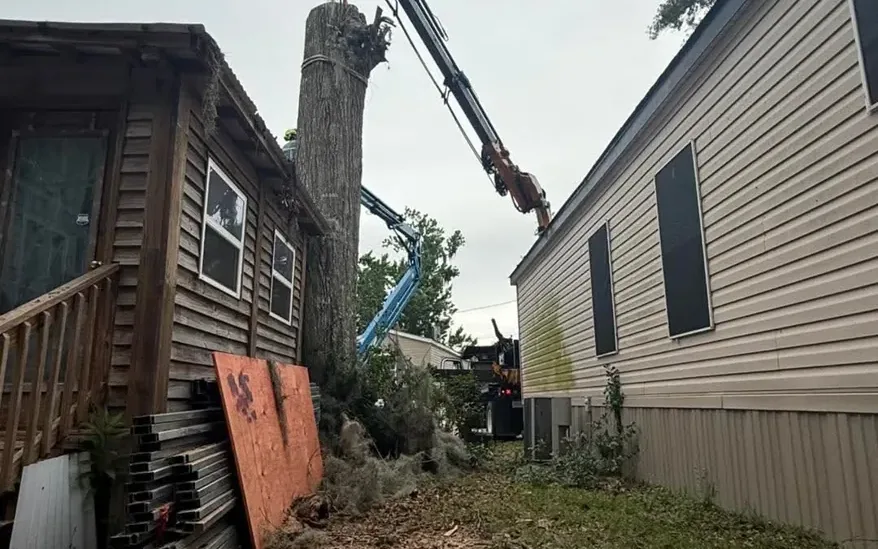
Plan the finish and the handoff to other work
Tell the provider what should happen after removal: a repaired lawn, a new fence, roof work or an area left ready for another contractor. Those outcomes may involve services outside the tree agreement. Identify the handover condition with the relevant providers so equipment access and material handling support the actual next step. A visually impressive removal can still leave an owner surprised if a stump, retained wood or landscape task was never discussed.
Keep the final scope and any authorized change notes. If the method changes after the site visit, ask how that affects the agreement rather than treating the original machine label as a promise that must be followed regardless of conditions. At completion, compare the identified tree work and cleanup with the accepted result. A record of what actually happened is more useful than an invoice that repeats a marketing term without explaining the work, access or finish the customer received.
Send a practical mechanized-removal inquiry
Provide the address, safe whole-tree and base views, the buildings or routes nearby and the full access route. Mention whether the tree is dead, damaged, newly leaning or entangled with another tree, without entering a hazardous position to investigate. Explain the desired result and any real deadline. Ask whether an on-site review is needed before an equipment approach, price or date can be confirmed.
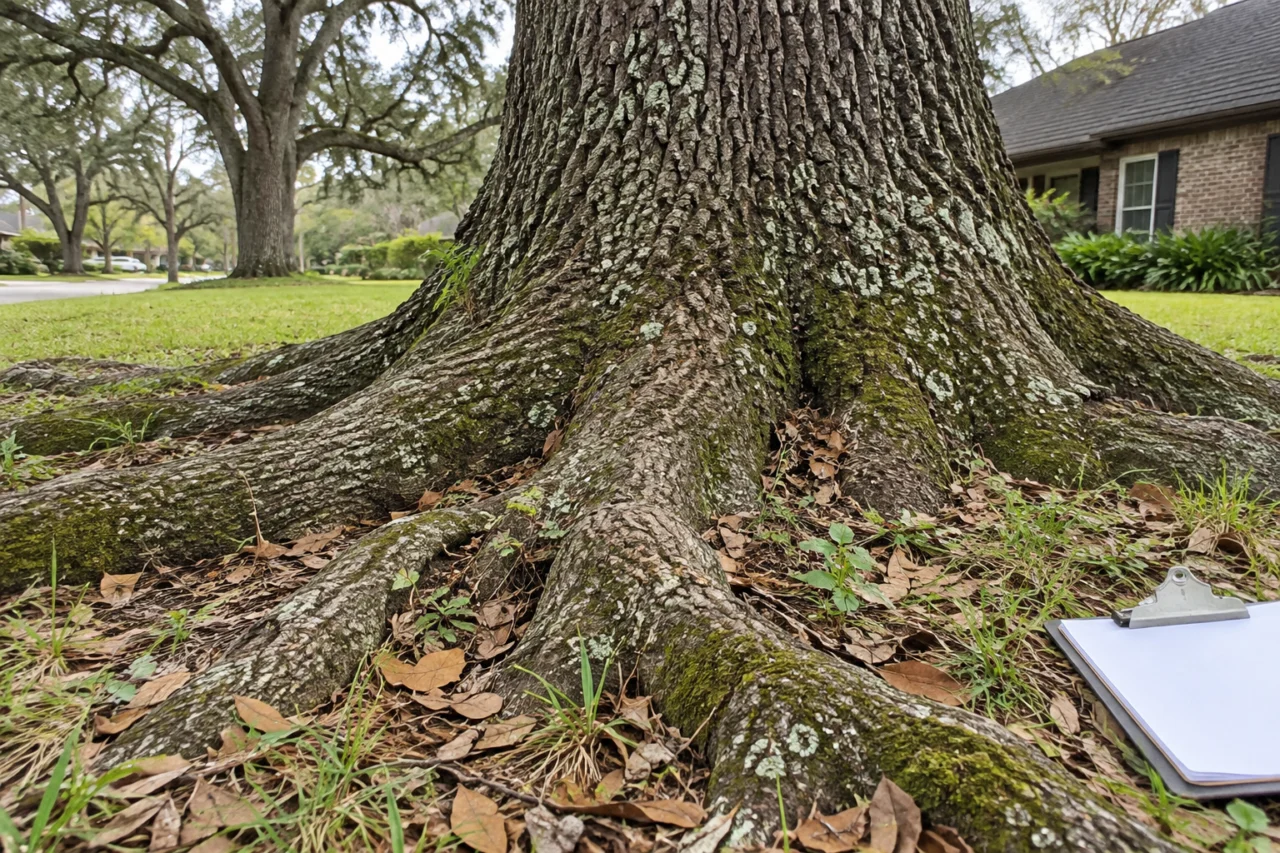
Tree Huggers’ remote-controlled removal service is the starting point for discussing this capability on your property. The goal is a feasible handling plan with qualified people, appropriate equipment and clear owner responsibilities. It is reasonable for the provider to recommend another approach after reviewing the site. What matters is that the recommendation fits the actual tree and surrounding property, with access, authorization and cleanup understood before work is accepted rather than inferred from the word robotic.
Understand where remote-controlled tree equipment helps
Remote-controlled tree equipment allows certain cutting and handling operations to be carried out with the operator at a control position away from the cutting head. That is a tool choice, not a promise that every limb can be reached or that every job is safer by default. The tree's condition, access width, ground-bearing capacity, obstacles and the position of nearby structures still determine what equipment can reasonably be used. A qualified crew must plan the entire work area, not just the machine's reach.
A gripping head can hold or support a selected section while the saw makes a cut, but load behavior changes as wood separates from the parent stem. The operator must understand expected weight, balance and surrounding clearance. A branch touching a roof, connected to another limb or under unusual tension may need a different sequence from a clear limb over open ground. Do not interpret a video demonstration as proof that the exact machine or method fits a particular yard.

Match the machine to targets and access
Ask how the crew expects to get the equipment into position, where trucks and outriggers or tracks can be placed, and how controlled sections will be transferred or lowered. Landscaping, fence openings, buried services, rain-softened ground and access permissions matter. A site may require a mixture of remote equipment, conventional rigging and other methods. What matters is that the proposed method protects people and property within the limits the crew can establish.
An estimate should describe the accepted removals or pruning, debris handling, traffic or pedestrian separation and any stump or lawn work that is separate. A machine operating from a distance does not authorize bystanders to remain beneath a tree or close to swinging loads. If the tree is already unstable or in contact with power lines, report that condition immediately so the contractor can coordinate the appropriate response rather than assume a routine mechanized removal.
Remote equipment still requires a complete exclusion-zone plan
A remote-controlled saw or grapple may allow the operator to stand away from a cutting point, but it does not eliminate the hazards of suspended wood, falling material or equipment motion. A property owner should ask where the base machine will sit, how it gets there and where each cut section will travel. On a narrow New Orleans lot, the route can be constrained by gates, overhead lines, soft ground, underground services and mature roots that must remain protected.
Review the proposed work zone before the crew arrives. Identify neighboring access, fences or landscaping that cannot be assumed available for staging. A machine may reach a tree from one location while still needing a separate route for debris removal. The plan should identify a ground spotter, the controls used to keep bystanders outside the hazard zone and how operations stop when visibility or communications fail.
Equipment selection should follow tree condition and available space, not be treated as proof that a job is automatically safer.
Ask for a defined completion condition: whether the trunk remains, how sections will be lowered or transported, where brush and wood are placed, and what ground restoration is included. Document preexisting surface conditions before heavy equipment enters. The useful question is not whether a machine is 'robotic,' but whether the method reduces exposure for this particular tree while protecting the surrounding property.
Practical handoff checklist
- Verify machine staging and the complete debris path.
- Identify overhead, underground and root-zone restrictions.
- Confirm the exclusion area and stop-work communications.
- Write down cleanup, retained wood and restoration scope.
For related context, see the crane-assisted tree removal guide. This planning information is not a substitute for an on-site professional assessment.
What Is Remote-Controlled or Robotic Tree Removal? questions
Does robotic removal mean an autonomous machine?
No. In this context it describes specialized operator-controlled equipment, not a machine independently making tree-care decisions.
Is remote control the same thing as a grapple saw?
No. Remote control concerns equipment operation; a grapple saw is an attachment combining gripping and cutting functions.
Can the equipment be chosen from one tree photo?
A photo helps explain the request but does not establish setup, ground, reach or every tree-condition constraint.
Does remote operation remove all job hazards?
No. Qualified people, suitable procedures and a controlled work area remain necessary.
What access pictures help?
Show the street approach, gate, turns, overhead restrictions and the ground near the work area from safe positions.
Should I remove a fence before the visit?
Only after the actual access plan, permission and restoration responsibilities are confirmed.
Can the crew use a neighbor's property?
Only with the required permission and arrangements; the owner should not promise access they do not control.
Does a manufacturer's example identify my job's machine?
No. General examples explain the equipment category; the provider must confirm the actual proposed equipment and suitability.
Will the method always cost less?
No guarantee applies. Compare the complete tree scope, access, handling and finish rather than the equipment label alone.
Can I enter because no climber is visible?
No. Stay outside the controlled work area and use the agreed communication arrangement.
What if another method is recommended after inspection?
Ask why it fits the site and how any scope, price or schedule change will be approved.
What should my first request include?
Send the address, safe tree and access views, current condition, desired result and timing constraints.
A visible boom is not proof of a robotic removal system
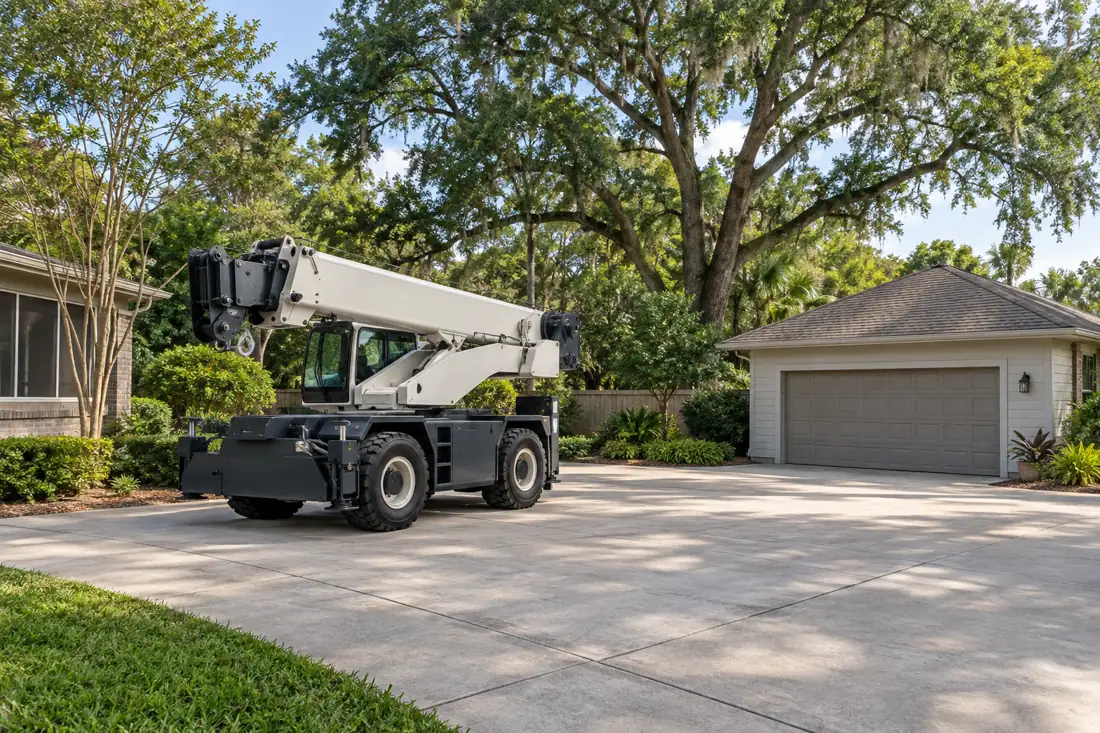
A bucket or knuckleboom in an illustration is not sufficient evidence that the equipment is operated from a remote station or has a grapple-saw attachment. Those are distinct characteristics that need confirmation from the equipment operator and project scope. This page illustrates property access and equipment questions, not a verified make, model, operating procedure or machine deployment.
Ask how the actual workpiece will be supported and handled, what clearances the crew needs, and whether people must remain outside an established exclusion area. Do not use a generated picture to choose cutting methods or infer load ratings.
For a useful quote request, describe the tree location, nearby structures, access width, utility conflicts and desired finish. An on-site equipment plan must come from the contractor, not from visual resemblance to a machine shown here.
Let’s plan your tree work.
Send the property address, safe tree photos and the result you need. Include access restrictions and the person who can approve the work.