For urgent help at one property, use Emergency Tree Service to describe the present hazard and ask about current availability. This hub connects the wider storm, cleanup and regional response planning topics.
Practical scope and safety guidance: After a storm, the first decision is whether anyone can safely approach the affected tree. Keep people and pets outside the drop zone, avoid hanging limbs and stretched or downed lines, and contact the utility provider when electrical equipment may be involved. A photograph taken from a safe distance can help explain whether a trunk blocks a driveway, a roof is carrying a limb, or the only access route has been cut off.
Do not climb onto the structure or attempt to release a limb pinned under tension. For an estimate, identify the address, nearest practical equipment access, any visible structural damage, and whether emergency services or a utility crew have restricted entry. Explain the most urgent access need separately from optional cleanup. A site assessment determines the sequence of stabilization, removal, hauling, and follow-up work; photographs alone cannot establish structural safety or an exact removal method.
Built around Gulf Coast storm reality
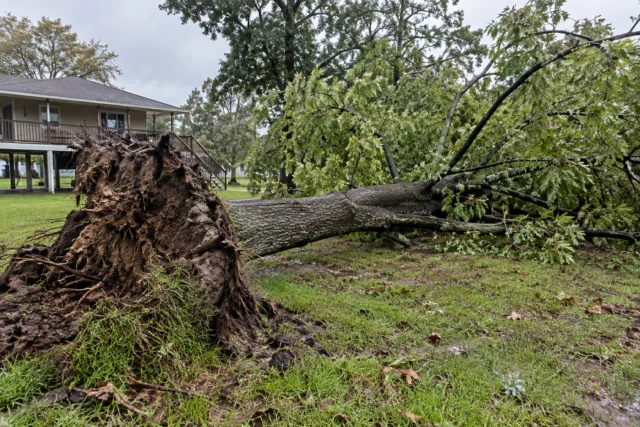
Hurricanes, tropical storms, tornadoes and severe thunderstorms are part of life in Louisiana and the Gulf South. Tree failures during these events create conditions that are very different from a planned removal. Trunks may be partially uprooted, limbs can be twisted under tension, trees may rest on roofs or vehicles, electrical lines can be involved, and access may be limited by flooding or debris. Emergency tree work demands patient assessment even when the customer understandably wants immediate action.
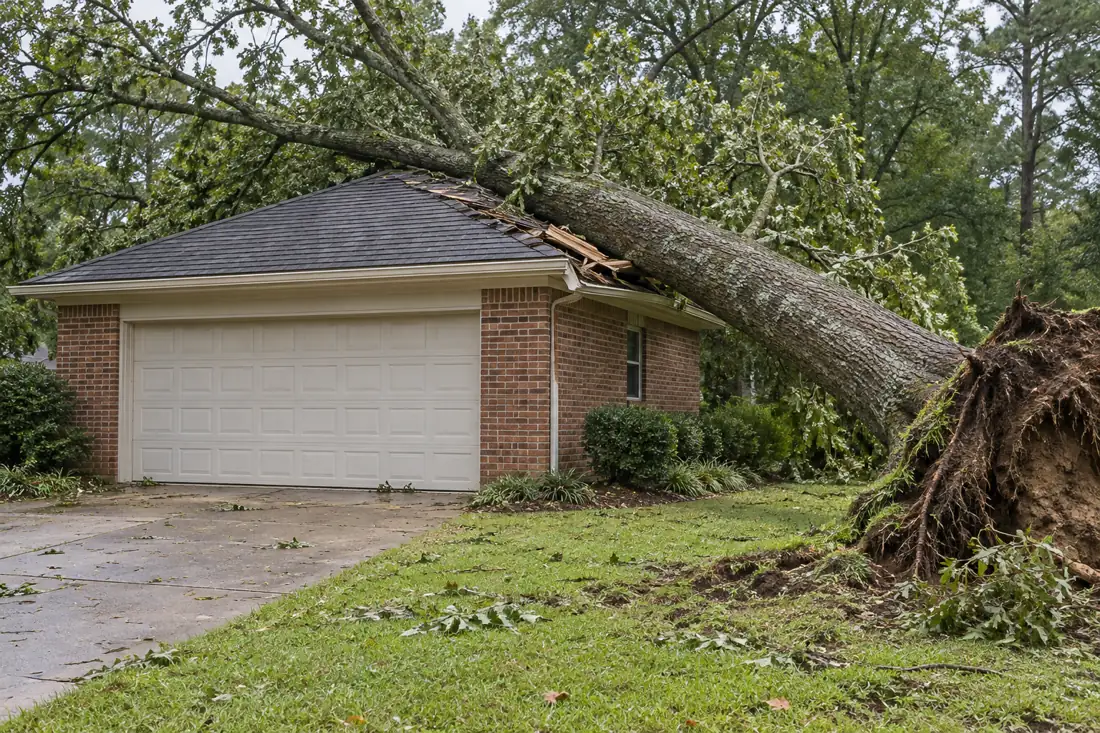
Tree on House
Controlled removal of trees and heavy limbs resting on roofs, garages and other structures.
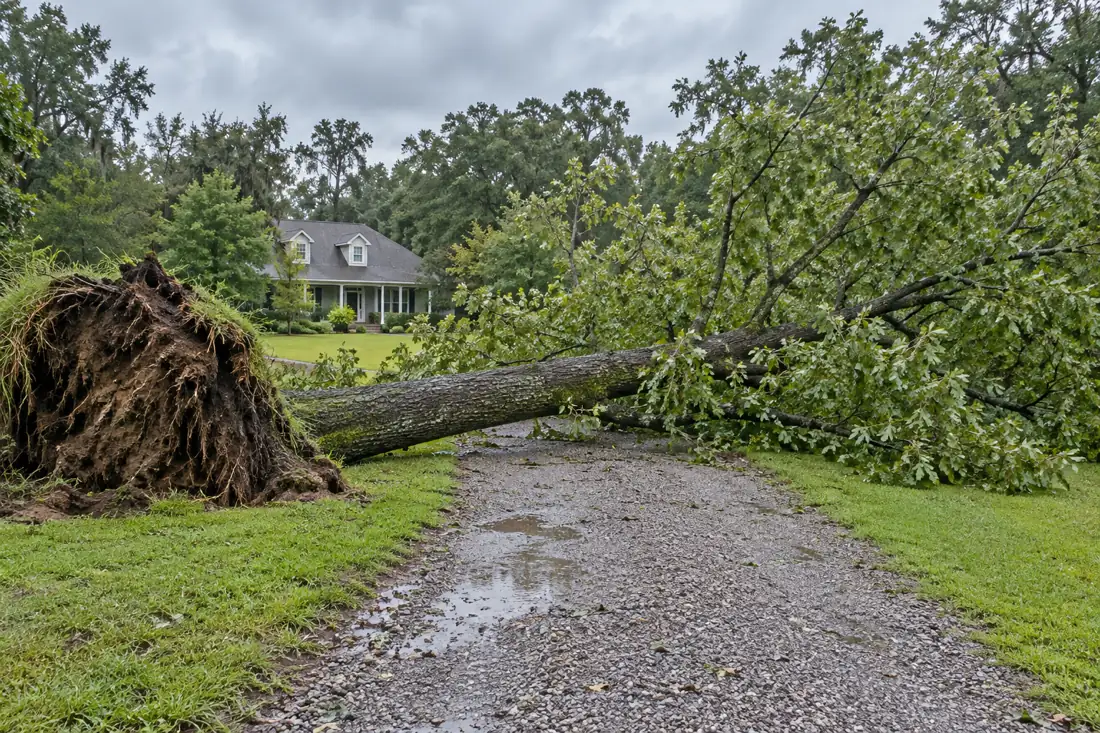
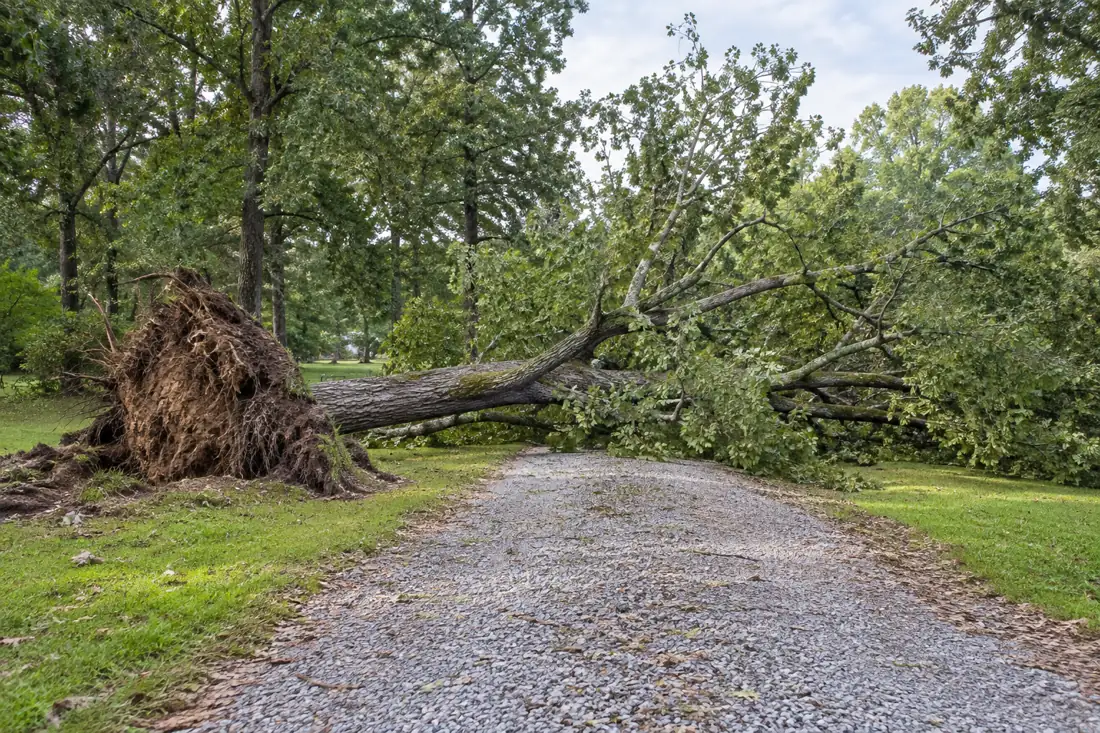
Fallen Tree Removal
Clearing failed trees from yards, roads, driveways and access routes.
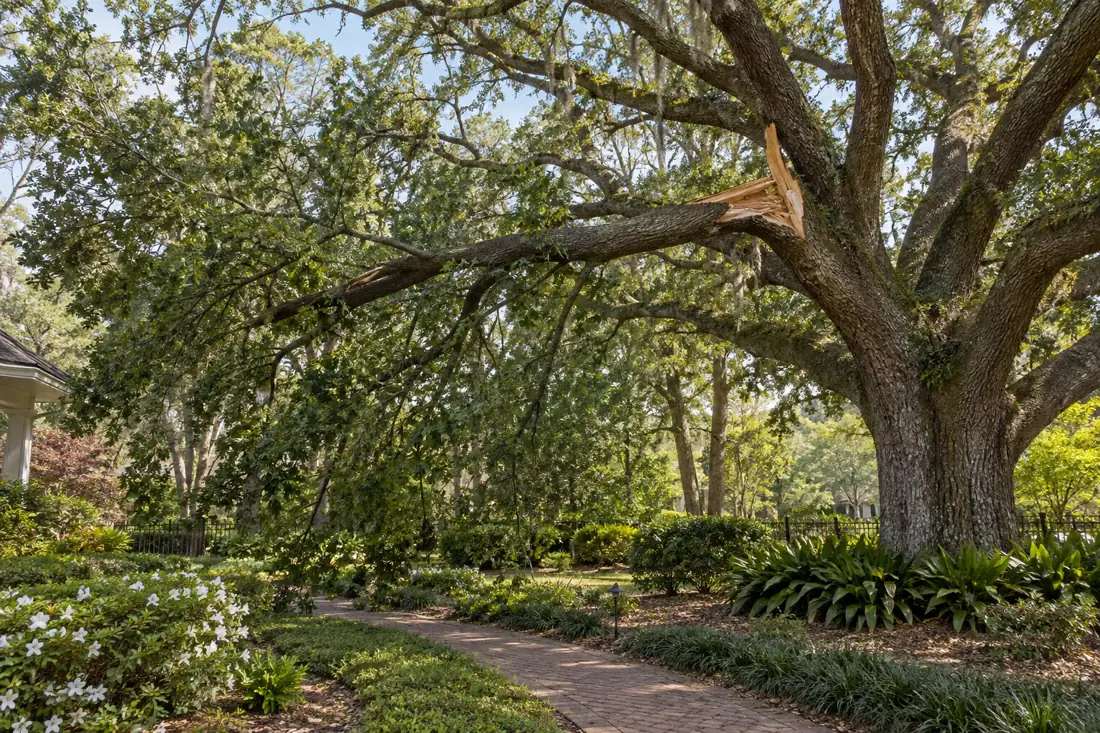
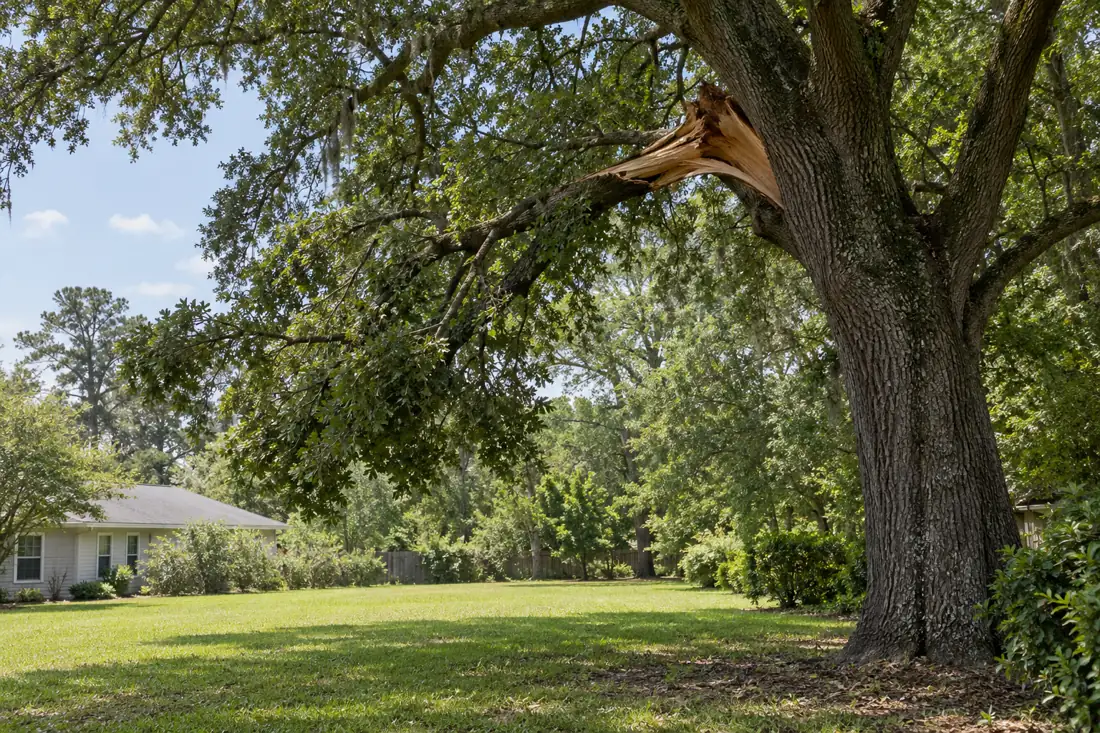
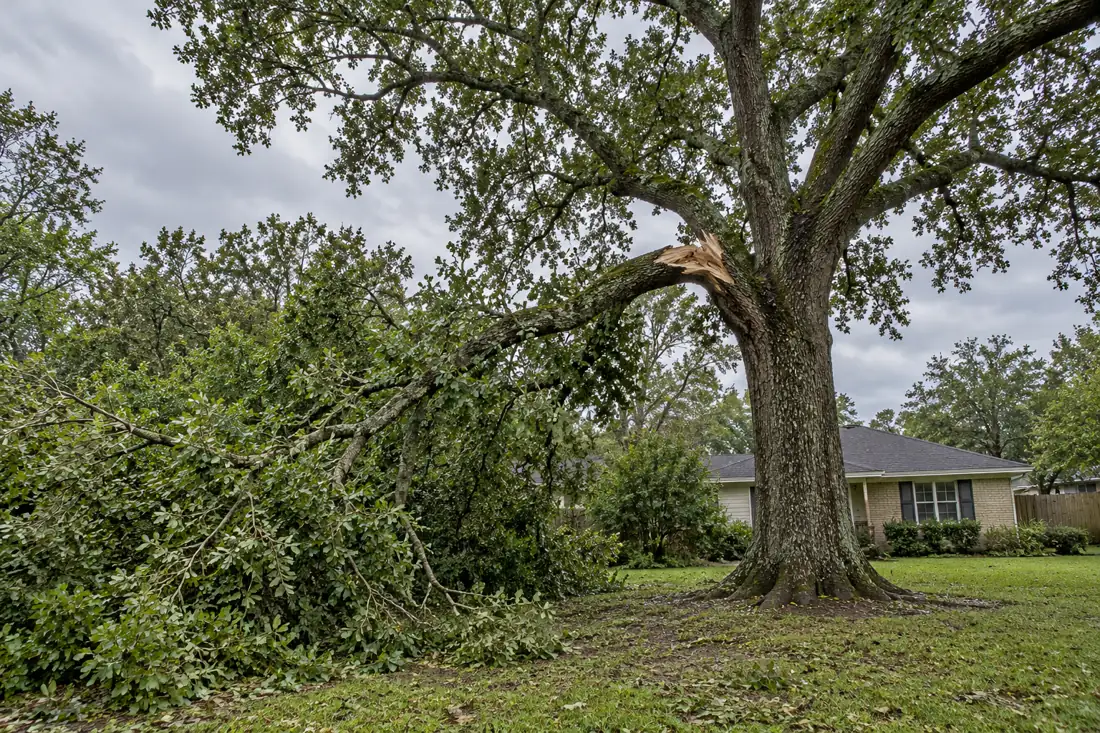
Hanging & Broken Limbs
Removal of suspended or partially attached limbs that can fall without warning.
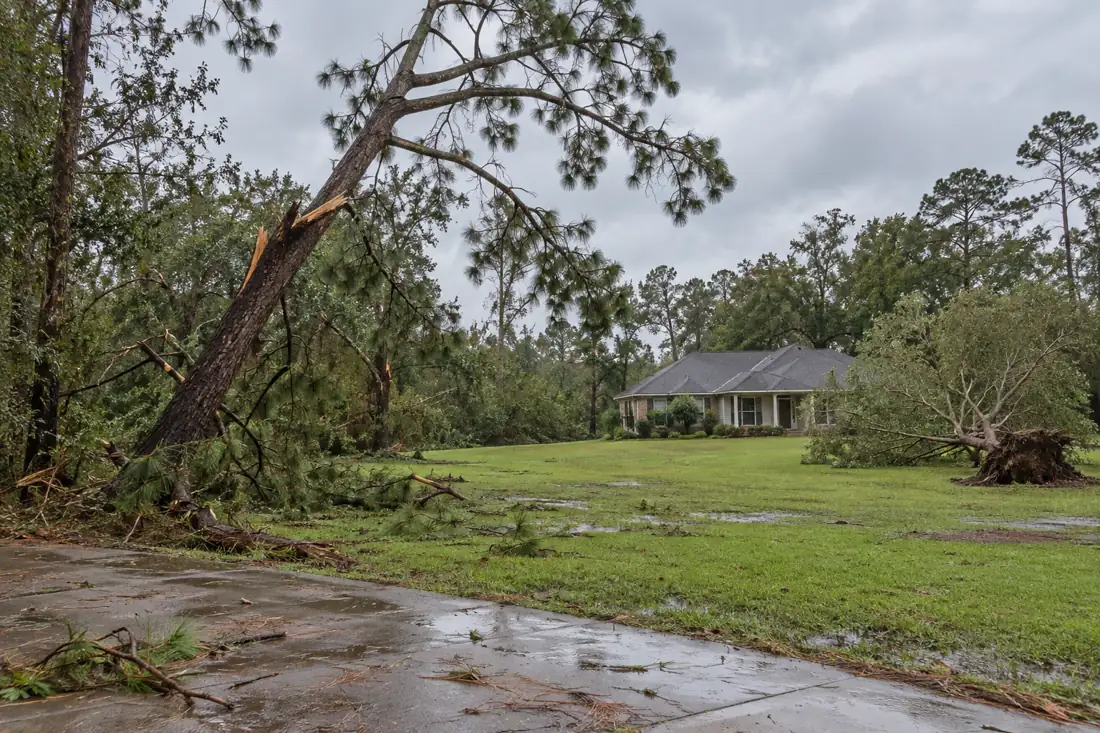
Hurricane Cleanup
Tree cutting, debris reduction and property access restoration following tropical weather.
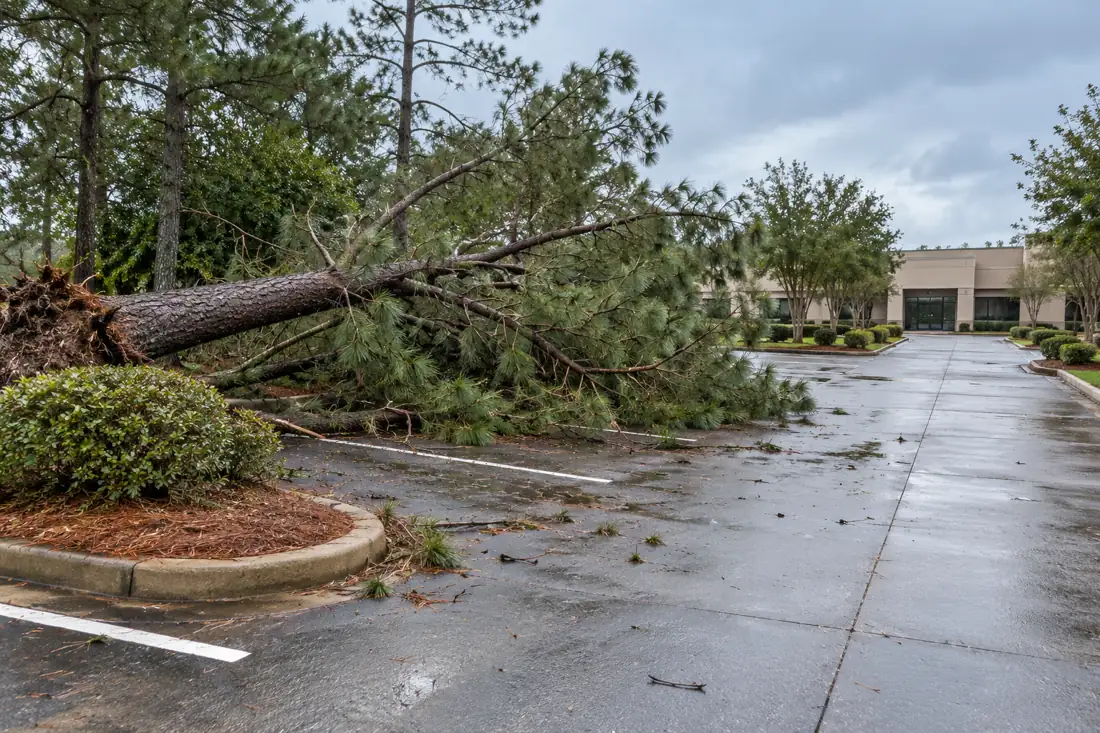
Commercial Storm Response
Priority planning and multi-property response for businesses, campuses, HOAs and managers.
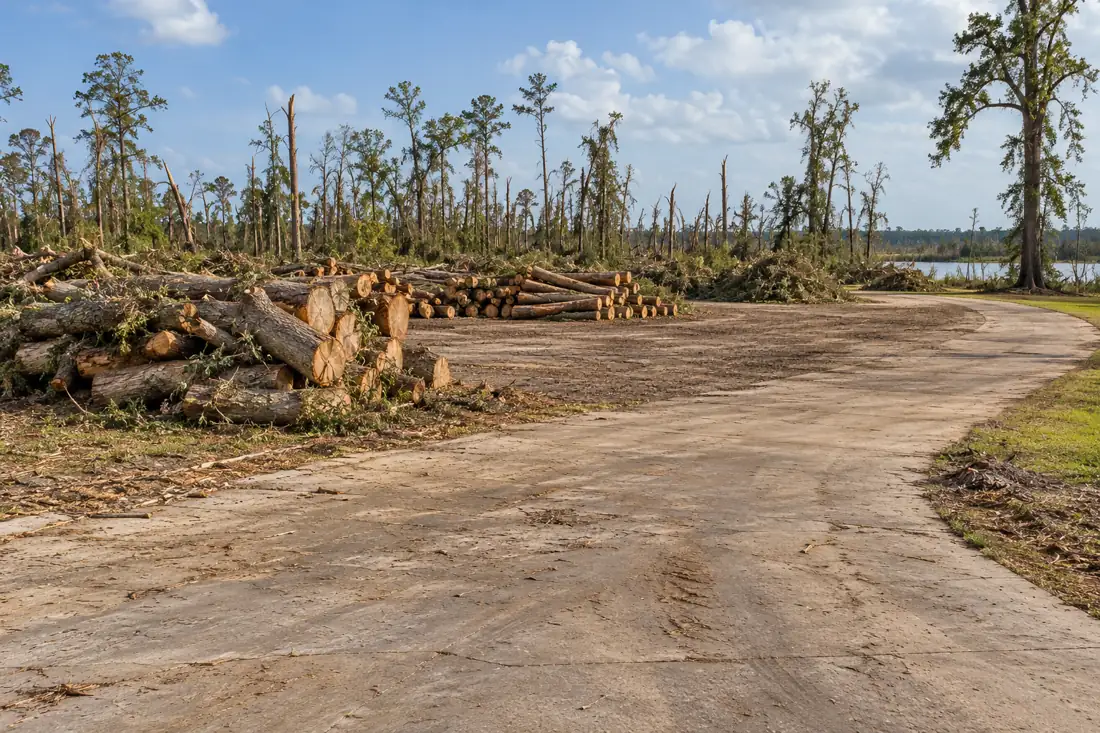
Disaster Mobilization
Equipment and crew deployment for larger Gulf South projects and worthwhile nationwide scopes.
Prioritize safe separation and accurate storm-damage records
After high winds, the first decision is not which company can arrive fastest; it is whether people can safely remain clear of unstable wood, utility contact, and damaged structures. Stay outside a suspected fall zone and do not move branches against power lines or walk under hanging limbs to document them. Photograph only from a safe position, noting the address, approximate time and what has changed. A storm association is not proof of the specific cause of every break.
Separate urgent hazards from cleanup
Distinguish active safety exposure from nonurgent cleanup. A branch blocking an occupied doorway, a hanging section over a walkway, and small debris scattered through a lawn create different needs. If a power line may be involved, contact the utility or emergency service appropriate to the danger before arranging ordinary tree work. Owners should also check whether roads, sidewalks or neighboring property require separate access permissions and should not authorize entry on behalf of another property owner.
What to send with your request
An effective inquiry includes the blocked access point, visible overhead hazards, photos taken without entering the work area, and any instructions already received from utilities or authorities. Ask a contractor to separate immediate stabilization from complete tree removal, debris hauling, stump work and later inspections. Retain dated before-and-after documentation for legitimate insurance discussions without suggesting a claim outcome or guaranteeing an emergency response window.

What to do before we arrive
If a tree is touching utility lines, stay away and contact the appropriate utility or emergency authority. Do not walk under hanging branches, climb on a damaged roof or attempt to cut a bent limb under pressure. From a safe location, take photos that show the whole tree, the point of failure, nearby structures and the access route. Text those photos with the property address and a short description. That lets us triage the call more intelligently.
Storm chasing and out-of-town work
Tree Huggers is not limited to the New Orleans market when a major event creates enough demand to justify mobilization. Our storm strategy focuses first on Louisiana and the Gulf South — including Mississippi, Alabama, the Florida Panhandle and Texas — because those areas can be served efficiently from our home base. For significant commercial, governmental, prime-contractor or disaster-recovery projects, we can evaluate longer-distance deployments.
Out-of-town storm work requires different logistics from a normal local job. Fuel, lodging, staging, equipment security, supply chains, disposal sites, crew rotation, documentation and communication become part of the operation. For large projects, those items are considered before mobilization so the response remains sustainable instead of becoming chaotic after arrival.
Documentation for insurance and property management
When storm work involves an insurance claim or managed property, good documentation helps. Before-and-after photos, written scope descriptions, addresses, dates, equipment notes and cleanup details can make the file easier for owners, managers and adjusters to understand. Tree Huggers can structure larger work with that documentation in mind. We do not determine insurance coverage, but we can provide job information that describes what was present and what work was performed.
Why specialized equipment helps after a storm
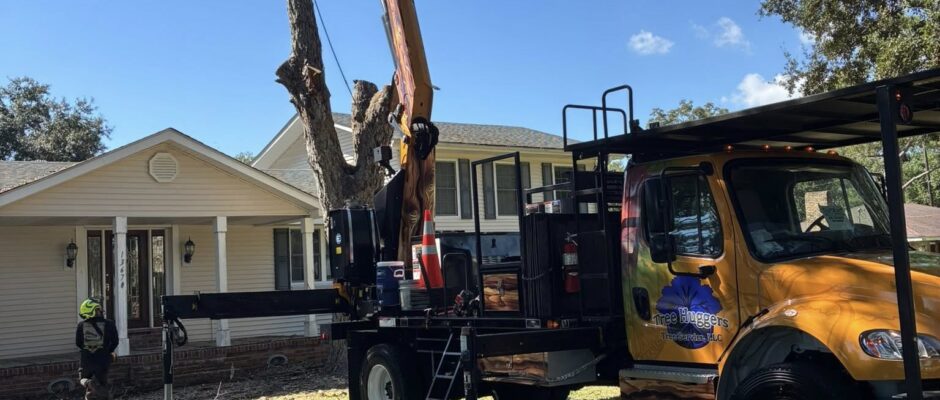
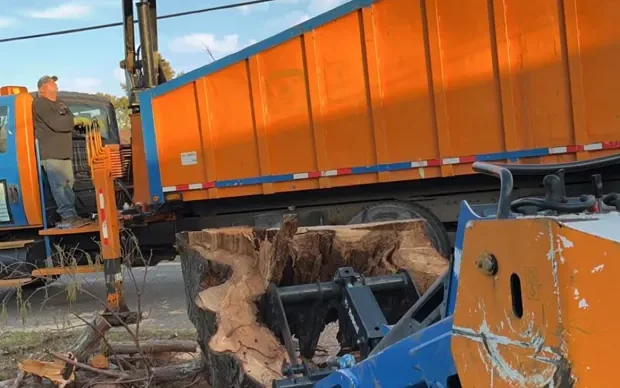
A remote-controlled saw and grapple can reduce the amount of time workers spend directly beneath unstable limbs. Crane-assisted methods can help control heavy pieces when dropping them is not an option. Those capabilities are especially valuable around homes, commercial buildings, fences, vehicles and other targets. Equipment does not eliminate risk; it gives experienced operators more options for managing it.
Make a direct call about the current condition
An urgent tree problem needs a conversation about what is happening now. Tell Tree Huggers the address, what changed, what the tree is contacting and whether a route is blocked. Explain if people are unable to enter or leave safely, but do not approach unstable material to improve the description. Call 504-458-8336 to discuss current availability and the next step.
If someone is in immediate danger or there is an electrical hazard, contact the appropriate emergency service or utility first. A website submission is not a dispatch confirmation, an arrival estimate or a substitute for those contacts. Keep people and pets out of the affected area while the situation is assessed. Do not interpret the absence of visible movement as proof that damaged wood is stable.
Separate the first priority from the whole cleanup
A storm can leave a damaged standing tree, a limb on a roof, a blocked driveway and piles of smaller debris on the same property. Describe those problems separately. The first authorized task may focus on a particular hazard or access need rather than restoring every part of the yard. A clear priority helps the company discuss a practical initial scope.
For a business or managed property, identify the entrance, occupied building or route that matters most. Explain who can authorize the response and who will meet the crew. Reopening an area should be based on the appropriate assessment and coordination, not on a customer assuming that one removed branch settles every remaining concern. Record what work has been completed and what still needs attention.
Share useful photos without entering the damage
Safe wide views can show a tree’s relationship to the house, driveway and surrounding structures. Add the property address and identify the affected tree or area. If you already have photographs from before the event, keep them with the current views, but clearly distinguish when each was taken. The contractor needs to know what the site looks like now.
Explain any missing view rather than taking a risk to obtain it. You do not need to climb onto a roof, pass beneath hanging wood or step into a flooded or obstructed area for an estimate photograph. The purpose is to prepare the response conversation. Photographs alone cannot verify support conditions, hidden damage or the safety of approaching the tree.

A tree on a structure needs coordinated information
Tell Tree Huggers what the tree or limb is resting on and whether another provider is already involved. A tree-removal scope and a building-repair scope are different tasks, even when they relate to the same event. Share the contact responsible for the property and explain any access instructions that have been established by the appropriate authority or provider.
Ask what the tree-work phase includes and what remains for a roofer, builder or other repair contractor. Keep those responsibilities in the record rather than assuming that removing wood also repairs the damage beneath it. The tree-on-structure service information can help organize the discussion, but the actual condition at the property determines the next assessment and proposed method.
Write down the authorized emergency scope
Urgency makes plain-language documentation more useful, not less. Confirm the identified tree or damaged area, the immediate objective, included material handling and the approval contact. If the first phase is limited, record that limit. A direction to “handle the storm damage” can leave different expectations about a remaining standing tree, a stump or debris elsewhere on the property.
If new damage is found or the requested work changes, use the agreed approval process. Keep the change connected to the tree or area involved and discuss any price or schedule effect. On a managed property, make sure the person giving instructions has the necessary authority. The crew should not have to guess whether a tenant, owner, manager or adjuster is approving an additional task.
Keep the insurance file factual and organized
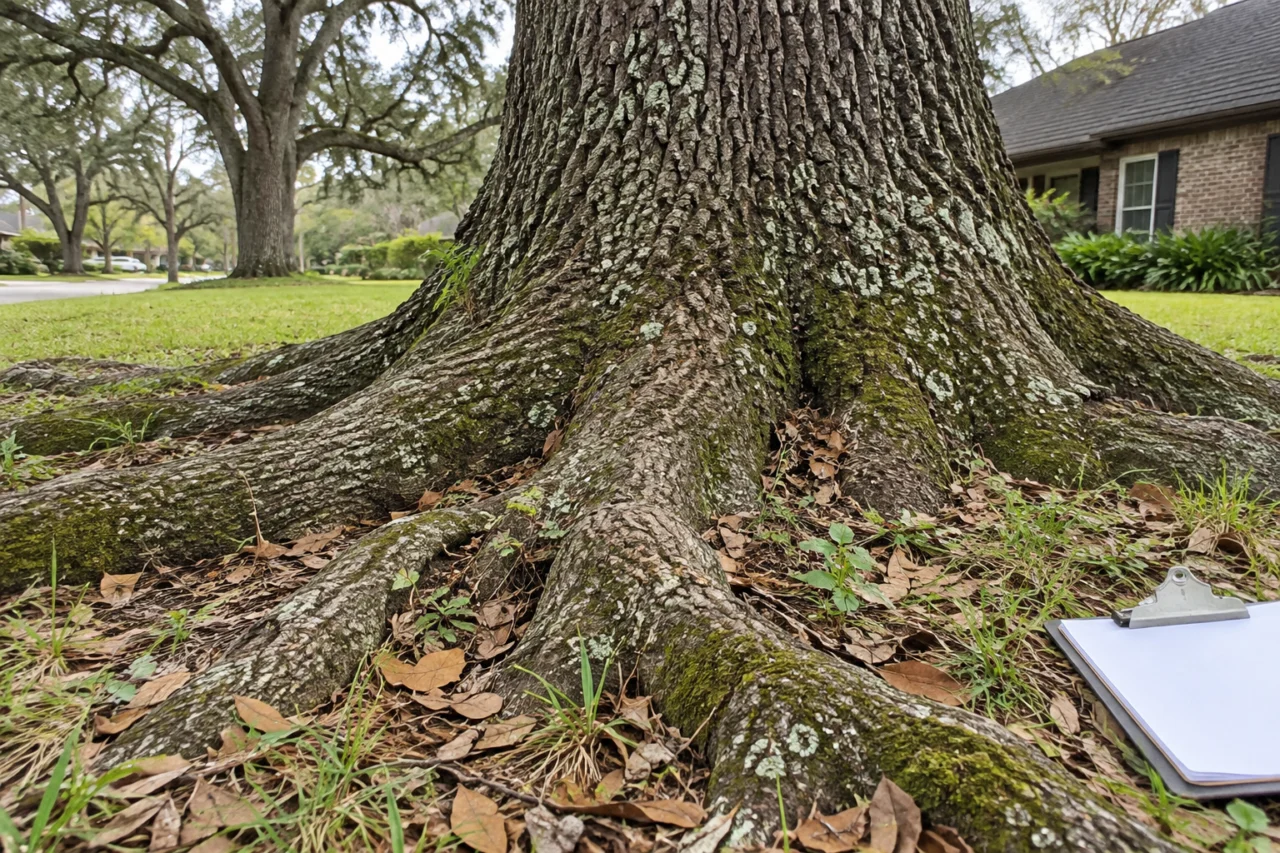
Save photographs, the work description, relevant communications and the invoice together. Identify the property and the work performed so a person who was not on site can understand the record. If an insurer or manager has specific documentation requirements, share them early enough for the contractor to discuss what can be supplied for the tree-work phase.
Tree Huggers does not decide policy coverage through this website. Ask the appropriate insurer about coverage questions and keep that discussion separate from authorizing the contractor’s work. Avoid treating a general service description or someone else’s claim experience as a promise about payment. The useful customer record describes actual conditions, approved tasks and completed work without adding assumptions about a claim outcome.
Follow-up work should have its own clear finish
Once the immediate phase is addressed, the property may still need additional tree assessment, planned removal, stump grinding, hauling or landscape and building repair. Make a remaining-work list with locations. That list gives Tree Huggers and any following contractor something concrete to review, rather than an open-ended expectation that the first visit includes every storm-related task.
Discuss the final debris destination too. A customer may keep wood, need hauling or have a designated staging area on a larger site. Ask what remains after each phase and when the next step will be confirmed. The hurricane cleanup and commercial storm response pages provide related planning context for broader work.
Larger deployments depend on a workable project plan
Tree Huggers can evaluate Gulf South and larger out-of-town opportunities by scope and mobilization needs. A useful inquiry includes the site list, current conditions, access, disposal arrangements, buyer contact and the actual work being requested. For a prime contractor or public buyer, include deadlines and required documentation rather than assuming a general emergency-service request answers the procurement questions.
The company needs to discuss feasibility and availability before a deployment is treated as committed. Equipment movement, staging, communications and the volume of work affect the conversation. A national service ambition is not a promise of immediate arrival at any address. Use the disaster mobilization information to prepare a defined opportunity, then confirm the scope and response directly.
Decide which stage of storm response is needed
A weather event can create three separate tasks: a hazard that must be assessed, cutting or removal, and later material hauling. State which one is urgent, because a broken limb above an occupied building is unlike brush already lying in an open yard. Report power lines or structural contact without moving closer for a photograph.
For a property manager or public buyer, provide a site contact, the access point, operating restrictions, deadline and who can approve changes. Availability and the exact work method still require direct confirmation; a first inquiry is not an authorization to enter a damaged site.
Emergency & Storm Response questions
Does submitting the emergency form dispatch a crew?
No. Call 504-458-8336 to discuss the current condition and availability. A form starts a request; it does not confirm dispatch, an arrival time or the scope of emergency work.
What if a damaged tree involves power lines?
Stay clear and contact the appropriate utility or emergency service. Do not approach the tree or related objects for photographs. Tree-work coordination must account for the electrical hazard before a method is confirmed.
Should I cut a fallen limb to open my driveway?
Do not attempt to make unstable storm material easier for the crew to handle. Explain the blocked route from a safe place and discuss the response with an appropriate professional.
Can emergency work focus only on restoring access?
The agreed first phase may address a specific access or hazard priority. Confirm exactly what it includes and which remaining removal, hauling, stump or repair tasks need follow-up scope.
What information helps with a tree on a roof?
Provide the address, what the tree contacts, safe wide photographs and the property contact. Explain other providers already involved; tree removal and building repair need clearly assigned responsibilities.
Do I need to take photos beneath a hanging branch?
No. Send only views obtainable from a safe position. Explain what you cannot see. Photographs help prepare the conversation but cannot establish whether damaged wood is stable.
Will Tree Huggers determine my insurance coverage?
No. Ask the insurer about coverage. Tree Huggers can discuss factual job documentation, the proposed tree-work scope and completed work without guaranteeing payment or a particular claim result.
What records should I keep after storm tree work?
Keep the identified scope, authorizations, changes, invoice and safely taken photographs together. Follow the actual requirements supplied by the property manager, insurer or buyer when applicable.
Does the first emergency visit include stump grinding?
Only if it is in the authorized scope. Initial hazard or access work may leave a stump and other follow-up tasks, which should be described and scheduled separately as needed.
How do managers prioritize several damaged properties?
Provide a clear site list with current hazards, blocked routes, occupied areas, access contacts and approval authority. Discuss priorities directly rather than sending an undifferentiated request to clean every property.
Can Tree Huggers evaluate out-of-town storm work?
Yes, project-based opportunities can be discussed. Send the locations, work volume, access, disposal and buyer requirements. Mobilization and availability need direct confirmation; immediate nationwide response is not guaranteed.
What if the storm damage changes while I wait?
Keep clear and report the new condition. Explain what changed and update photographs only if safely possible. Contact emergency services or the utility when an immediate danger or electrical hazard requires their response.
Talk to Tree Huggers
Need help after the storm?
Text the address and photos taken from a safe spot. Let us know if a tree is blocking access or resting on a building.