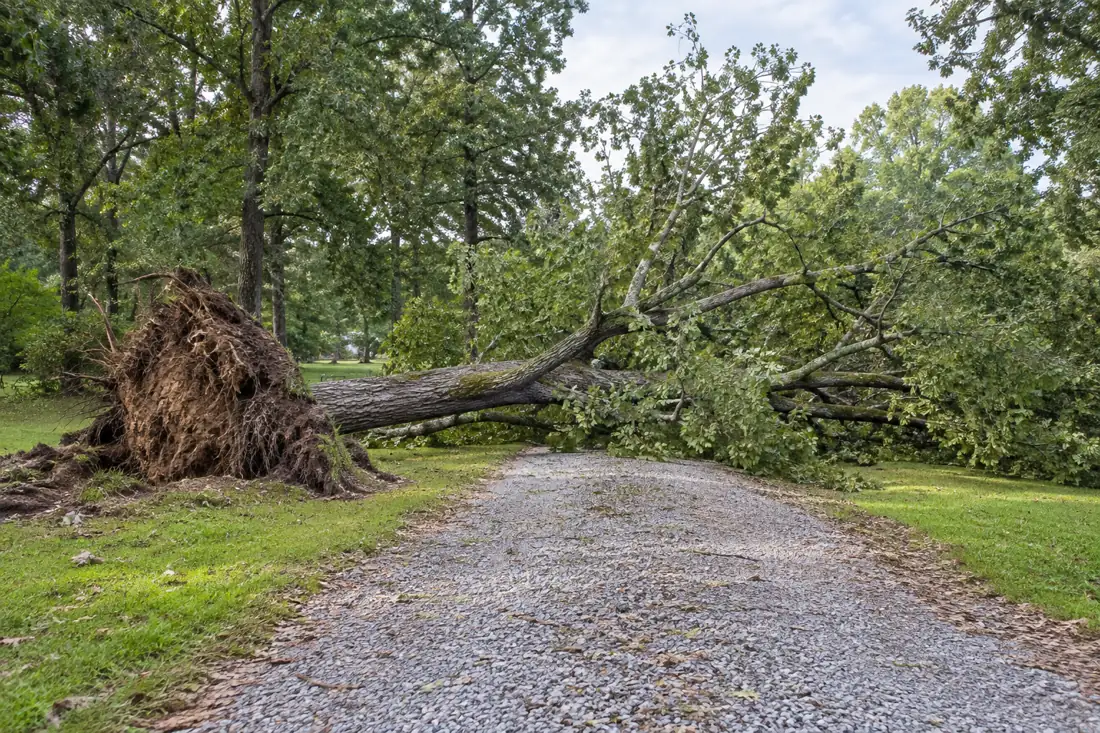
A downed tree can still move suddenly
Look for what supports the trunk
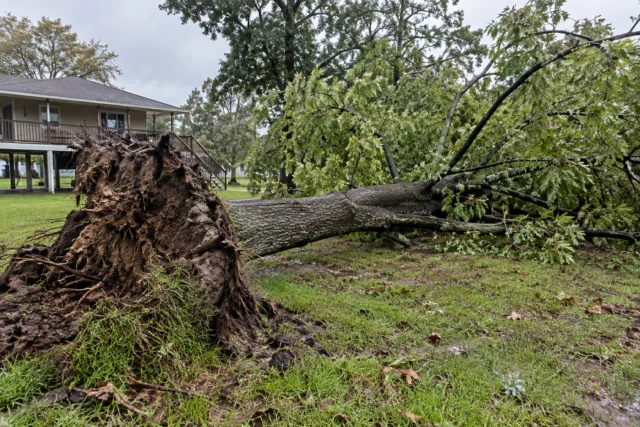
The trunk may rest on a fence, several branches, a slope, a building corner or a partly lifted root plate. That support can shift as material is cut, changing the direction of movement. Describe whether the tree is blocking access, crossing a boundary or pressing against a structure; these details affect the plan more than the trunk diameter alone.
Keep clear of the root plate and bent limbs, even when the tree has been on the ground for days. Do not test the load with a chain, winch or personal vehicle.
Separate extraction from hauling
A fallen-tree job may require securing a route, sectioning wood, controlling heavy pieces and then moving or hauling the debris. Ask which of those operations are included and what surface protection may be needed for a narrow driveway, drainage feature or soft yard. If a trunk is touching an occupied building, the more specific tree-on-house removal guidance applies. If all dangerous pieces have already been dealt with and only cut limbs or logs remain, tree debris removal is the clearer inquiry. Safe wide photographs help distinguish those situations without entering the work zone.
Down does not always mean stable
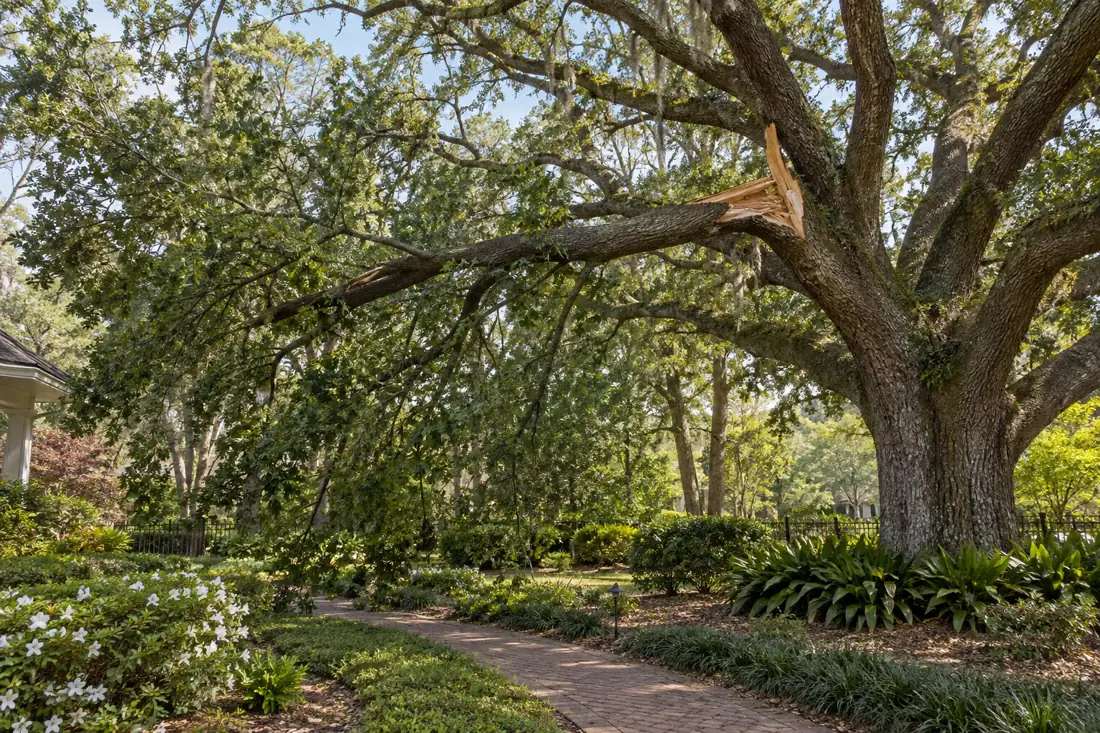
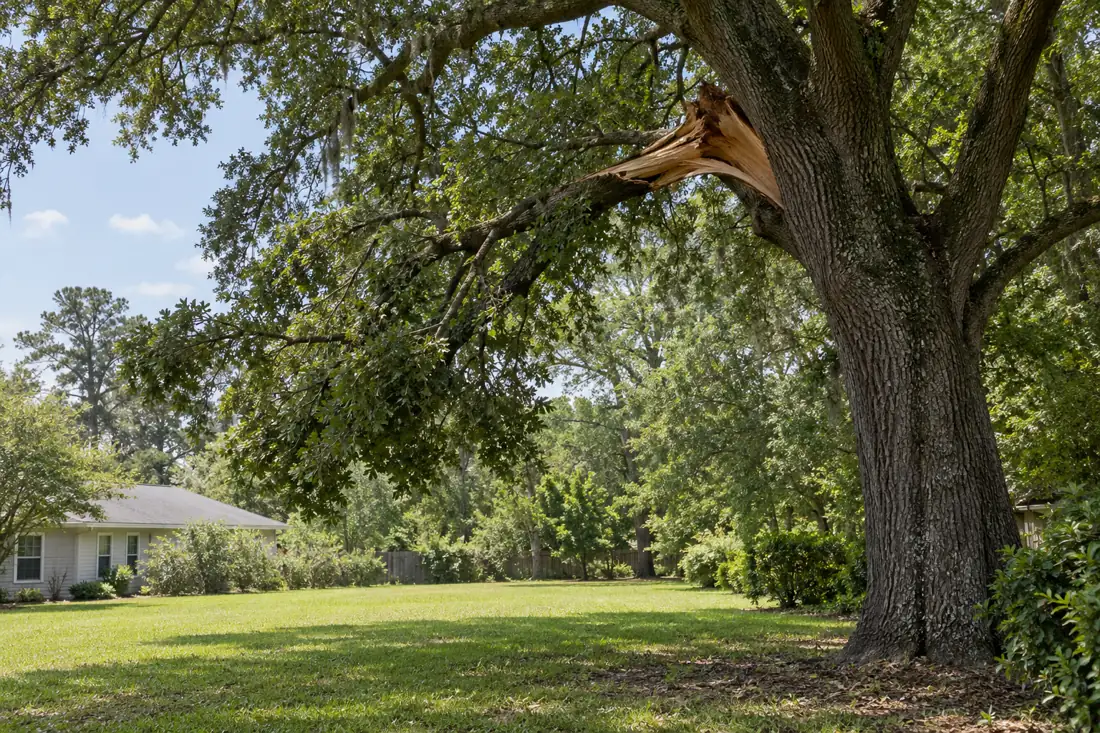
Fallen trees can remain under tension, supported by branches, buildings or neighboring trees. Trunks may roll, root plates may shift and loaded limbs can spring when cut. We evaluate how the tree is supported before processing it.
Practical scope and safety guidance: A fallen tree may still contain dangerous stored force. The visible trunk can pin branches, roofs, fences or other trees, and the remaining root plate may shift when weight is removed. Keep people outside the affected area and away from any power line; only the utility provider should confirm line safety. A safe-distance photograph should show the whole tree, the nearest structure, the route for equipment, and whether the driveway or public sidewalk is blocked.
Avoid trying to saw a limb free or move the root ball with a vehicle. For an estimate, clarify whether the property owner needs emergency stabilization, removal of the downed material, stump and root-plate work, debris hauling, or separate surface restoration. If the tree spans a property boundary, establish authorization before work begins. A written scope should distinguish access, lowering method, what remains on site and what the crew will remove.
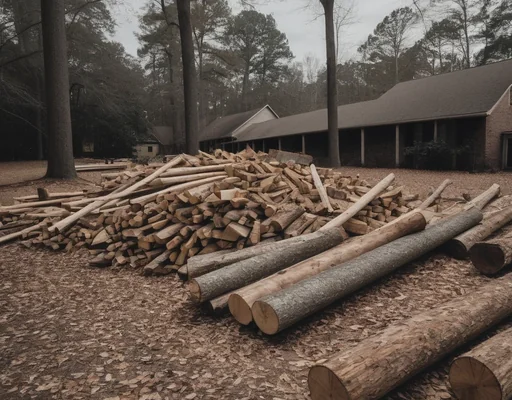
Define where removed wood can go
Before removing a downed trunk, confirm which sections may be processed onsite, where loading can occur, and what driveway or gate access must remain open. Separate potentially unstable wood removal from final chips, turf restoration and hauling. A clean-looking lawn is not proof that all services were included.
Identify tension, compression, suspended limbs and unstable root plates.
Open driveways, entrances or work zones first when practical.
Cut material into manageable sections and complete the agreed cleanup.
Trees on structures require a different sequence
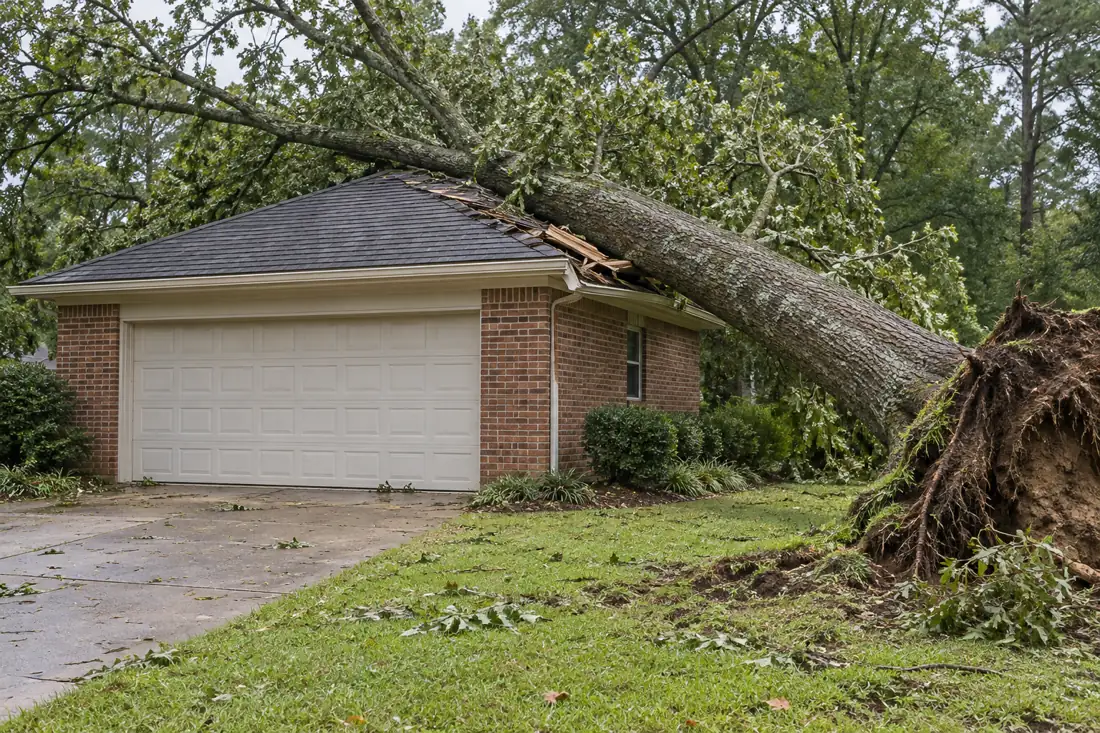
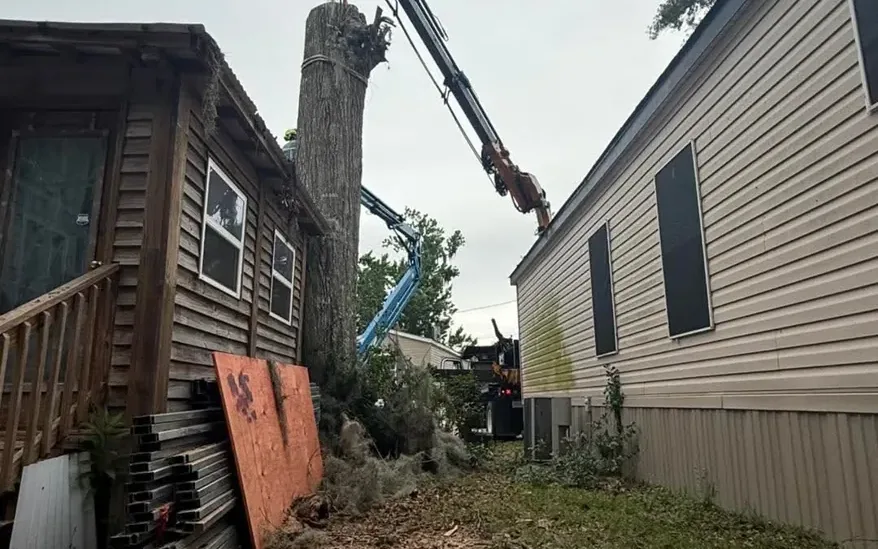
If a fallen tree is resting on a roof or building, weight should be unloaded carefully rather than simply pulled away. Tree-on-structure work may require crane or mechanized assistance depending on the load and access.
Related services
Start with what the fallen tree is resting on
Explain whether the trunk is on open ground, across a fence, against another tree or touching a building. Include anything still suspended above the ground. A photograph showing only the cut end or a section of bark does not describe those relationships. The company needs to understand the whole obstruction before discussing the work, especially when parts of the crown disappear behind a structure or into neighboring vegetation.
Do not move supports, drag branches or cut a small piece to make access easier. Those changes can affect the rest of the tree. If there is an immediate threat to people or electrical involvement, contact the appropriate emergency or utility service and keep clear. Call 504-458-8336 about current tree-work availability. The emergency service page explains the direct-call starting point; sending a form alone does not confirm dispatch.
Identify the access you actually need restored
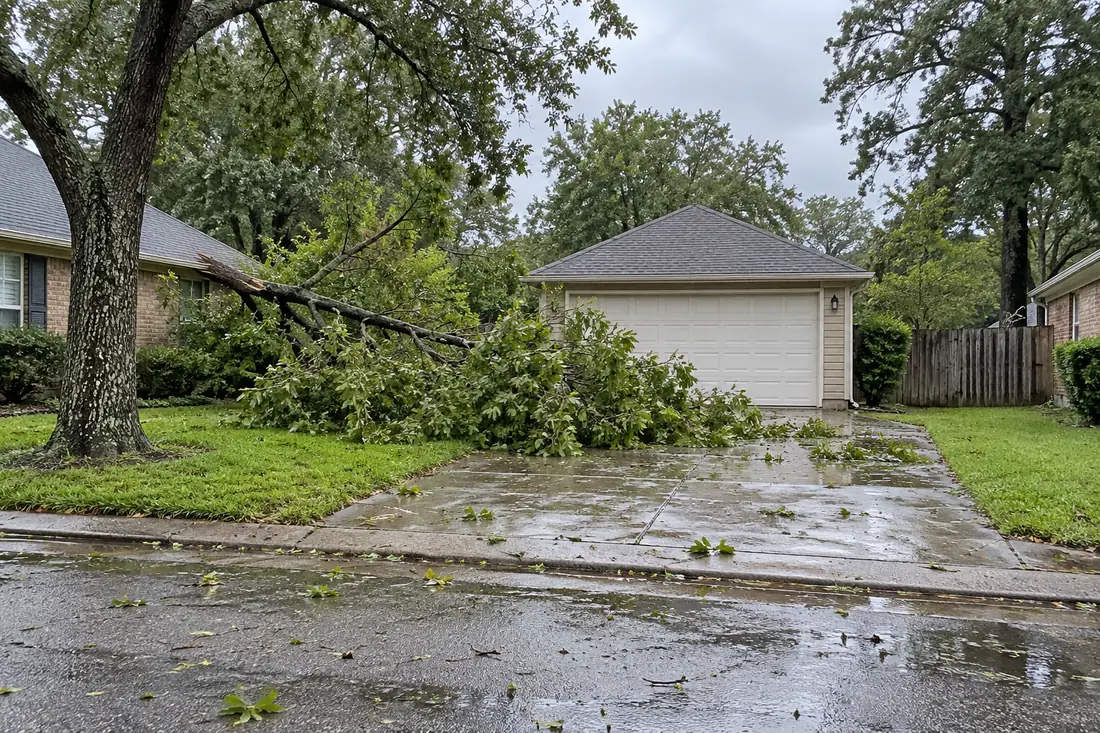
A tree across the only driveway creates a different practical problem from material beside a rear fence. Tell the estimator which route is blocked and whether another entrance remains available. On a larger property, distinguish access to the occupied building from a seldom-used maintenance lane. Those details help define the immediate objective without assuming that every piece of wood must be addressed in the first stage.
Ask whether the proposed scope opens a particular route or removes the complete tree and associated material. Include a gate, parked vehicle or delivery restriction that changes the available working area. Keep people out of the affected route while arrangements are being made; an apparently open gap beneath a supported trunk is not an invitation to pass through. The accepted scope should identify a practical completion point that both the customer and the crew can recognize.

Photograph the tree without entering its damaged area
When safe, use a wide view that includes the root end, crown, contact points and a possible approach. Add the work address and say when the tree fell or when you first noticed it. If an angle cannot be obtained safely, describe the missing information. You do not need to climb onto a fence, step over the trunk or walk beneath supported material to complete the photo set.
For more than one tree, use consistent identifiers such as front drive and rear shed rather than sending an unexplained collection of close-ups. The storm photo guide gives more context. Photos prepare the discussion but do not reveal every concealed support, ground condition or utility conflict. Keep the original wider images available when a cropped detail is sent, so the estimator can connect the concern to the surrounding property.
Separate tree handling from repair work
If the tree is on a roof, garage or other structure, say so at the first contact. The tree-on-house service addresses that different setting. Removing wood and repairing the object beneath it are separate responsibilities. Do not assume a tree-work quote includes roofing, fence replacement, electrical work, structural inspection or protection of an interior after damage. Identify the provider and authorization for each part of the property response.
Tell the tree company if another contractor is planning to enter or alter the damaged area. The current condition needs to be understood before overlapping work begins. Keep insurance documentation and contractor scopes clear, without treating an insurer’s involvement as approval of a particular tree-handling method or payment promise. A useful tree-work agreement describes the material being handled, the approach under consideration and the point at which another contractor takes over.
Review the route for logs and equipment
The tree’s position is only one part of the job. Material also needs a usable path from the work area to processing or loading. Show gates, turns, steps, narrow side passages and surfaces along that route. Mention soft ground, recent rain, buried features or restrictions that the photograph may hide. A wide driveway at the street does not establish that equipment can reach a tree behind the house.
The company will review handling options for the actual tree and property. Equipment-assisted work may fit some situations, while others require a different approach. The equipment planning hub explains the information behind that choice. Discuss retained trees, beds and neighboring property as part of the route. Avoid arranging a machine around a guessed gate width or assuming that access permission extends beyond the property where the work was requested.
Make the stump and root plate an explicit decision
A fallen tree can leave a stump, exposed roots and a disturbed area even after the trunk and crown are removed. Ask what the quote includes at that end of the tree. Grinding, excavation, handling an overturned root mass, backfill and landscape repair are different tasks; one should not be inferred from a general promise to remove the tree. Identify the intended future use of the space before agreeing on the finish.
Do not approach or attempt to reposition an unstable root plate. Describe it from a safe distance and let the company review the condition. The stump planning guide helps organize the later surface decision. If another provider will complete soil work or construction, connect the handoff to the tree scope. A clear boundary prevents the customer from discovering an unassigned root or ground task after the main wood has been hauled away.
Decide which wood leaves and what stays
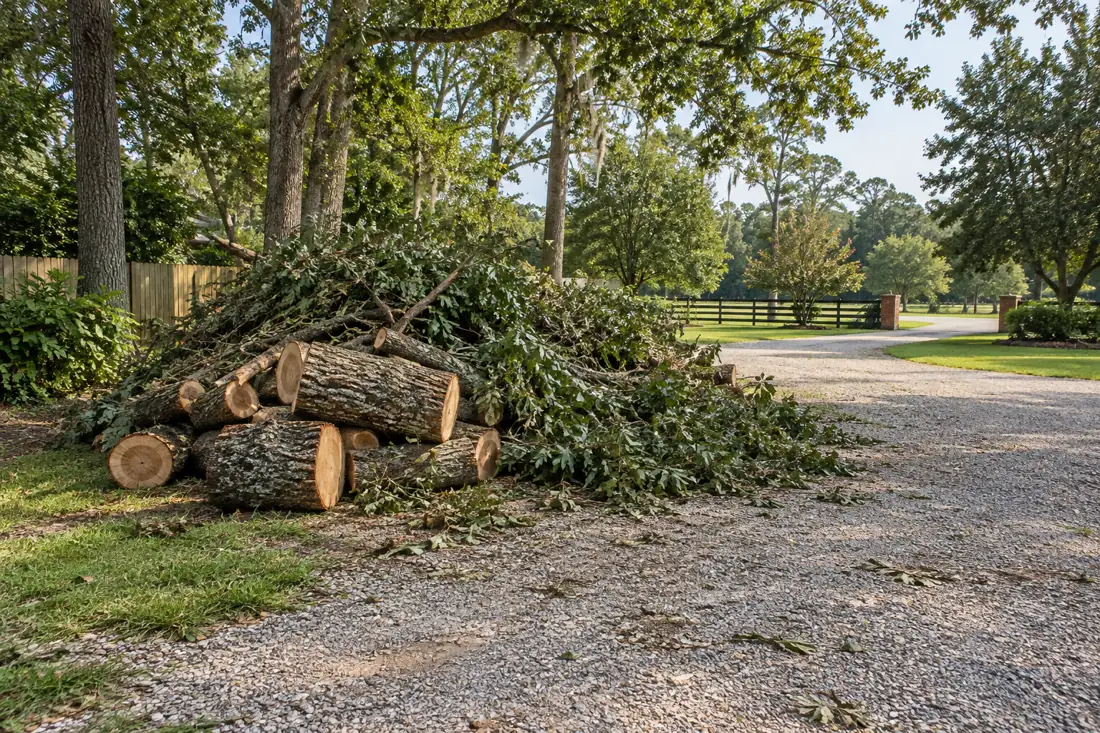
Specify logs, branches, chips and scattered small material. If you want usable wood retained, identify that preference before processing and ask where it can be placed. Do not assume that every log will be cut to a particular length or that hauling includes an unrelated pile elsewhere on the property. Conditions, handling and agreed scope determine what can be offered for the actual job.
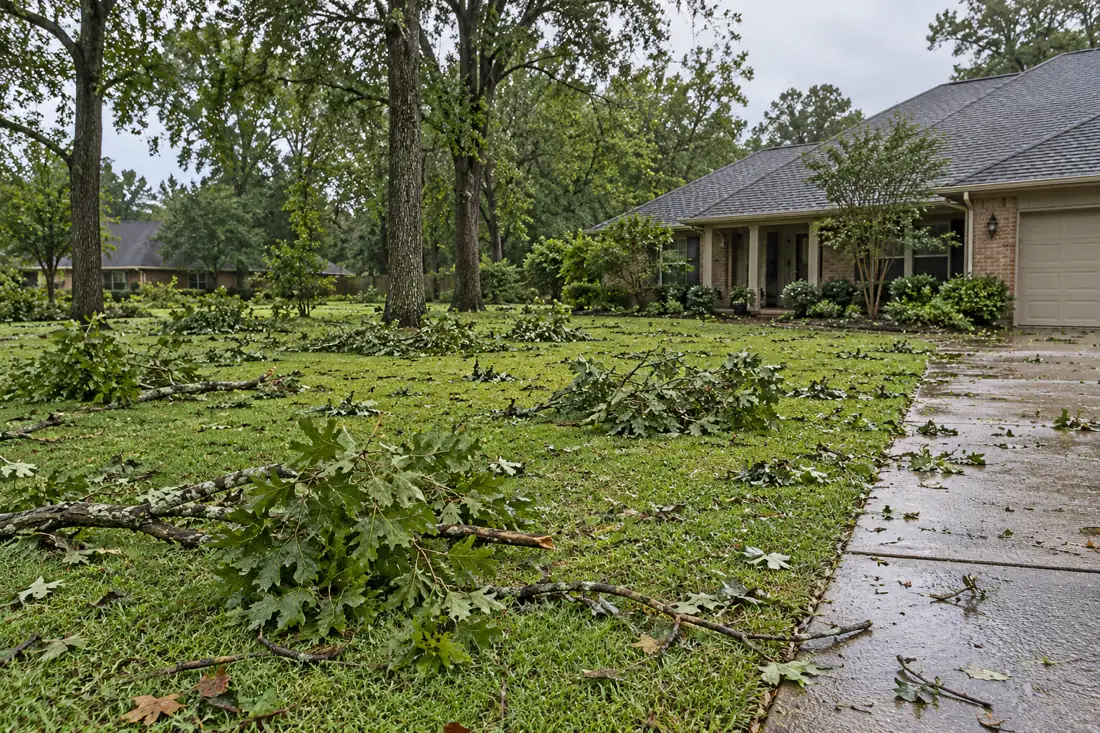
For storm damage, explain any fence wire, roofing or other non-tree material mixed into the tree. The debris removal page distinguishes vegetative hauling from mixed cleanup. Ask about the practical surface finish, including remaining chips and impressions, without assuming full landscaping is part of tree removal. A short list of retained material and accepted hauling areas is more useful than relying on the phrase clean everything when several different kinds of work are involved.
Confirm the result before approving the work
Review the identified tree, access objective, handling boundary, stump decision and debris finish together. For a managed property, name the person who can approve the scope and arrange entry. Keep later additions separate so that another fallen branch or an extra pile does not silently change the accepted work. A current photo set and consistent location labels help connect the written agreement to the actual property.
For example, opening a driveway while retaining cut logs for an owner is a different scope from removing all wood and addressing the remaining stump. That is a planning example, not a claim about a completed customer job. Tell Tree Huggers which result you need and ask what remains for a later visit or another provider. The final review should make those remaining items visible rather than leaving them to assumptions after equipment has departed.
Treat the root plate and resting points as part of the fallen-tree hazard
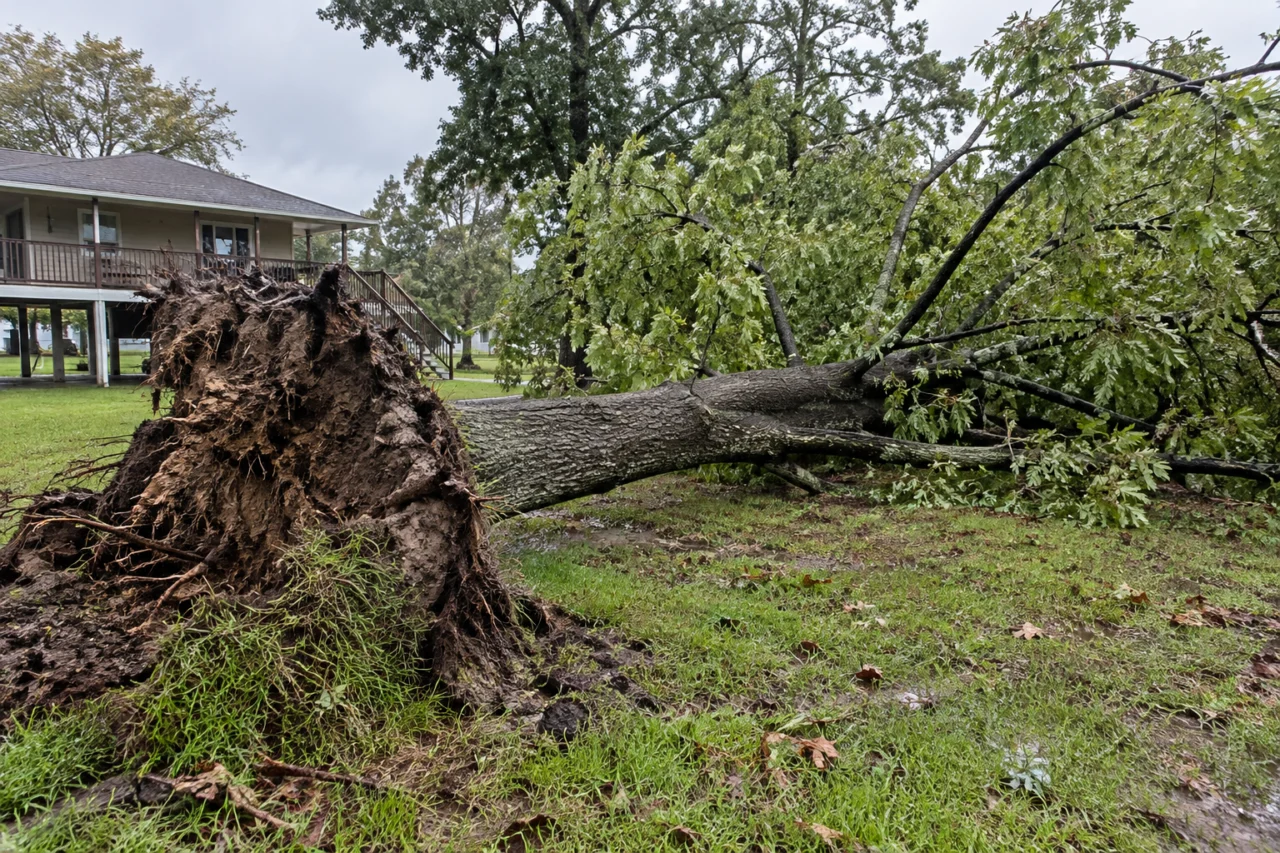
A fallen tree may still be storing force. A lifted root plate can shift, a trunk may be pinned by branches, and a section resting on a fence or roof may move when another piece is cut. Do not climb onto the log, dig around exposed roots, or try to free a trapped part with a vehicle, chain, or rope. Photograph the overall condition only from a safe standing place, and keep people and animals outside the likely movement area until it is assessed.
The work request should identify which opening must be restored first and which tree material can remain temporarily staged. Provide context about gates, driveway width, slopes, wet soil, paving, nearby utilities, and whether logs can be carried to a truck without crossing a neighbor’s property. Ask how the proposed handling method accounts for both wood and root plate. Clearing a driveway does not automatically include grinding roots, filling a hole, removing every log, or repairing a damaged fence.
Compare estimates by the exact tree sections, access and equipment assumptions, hauling limits, and post-work condition rather than the headline phrase fallen-tree removal. Record structural and insurance matters separately with the appropriate specialists. If another storm or settlement changes the situation before work begins, update the company and request a reassessment. A previous photo and quote cannot guarantee the load remains in the same condition.
Fallen Tree Removal questions
Is a fallen tree automatically safe to approach?
No. Supports, loaded branches and root plates can still move. Keep clear and describe the condition from a safe position.
What should I say when I call about a downed tree?
Give the address, what the tree is resting on, whether it blocks access and any visible utility or building involvement.
Can you open the driveway before completing all cleanup?
Discuss the immediate access objective and current availability. A staged scope must be agreed; a particular sequence is not guaranteed.
Should I cut small branches before the crew arrives?
Do not alter damaged or supported material to prepare the job. Explain the obstruction and leave the condition for appropriate review.
What photos help with a fallen tree request?
Safe wide views of the whole tree, root end, supports and access route are useful. Explain views you cannot obtain safely.
Does fallen-tree removal include roof or fence repairs?
Those are separate responsibilities unless expressly arranged. Identify the tree scope and the provider handling property repairs.
Is the exposed root plate included in the quote?
Ask specifically. Trunk removal, root handling, grinding, excavation and ground restoration are different operations.
Can logs remain on the property?
Discuss retained wood, processing and placement before accepting the scope. Do not assume particular lengths or handling are included.
What if the tree contains wire or building debris?
Identify mixed material before work. It can change handling and may require a separate provider or arrangement.
Can equipment reach a tree behind the house?
The company needs the complete route, including gates, turns, surfaces and setup space, before determining an approach.
Does an online request confirm emergency dispatch?
No. Call about urgent tree-work availability; use the appropriate emergency or utility service for immediate threats or electrical involvement.
How do I compare two fallen-tree quotes?
Compare the identified tree, access objective, handling, hauling, stump decision and final surface condition rather than price alone.
Let’s plan your tree work.
Send the property address, safe tree photos and the result you need. Include access restrictions and the person who can approve the work.