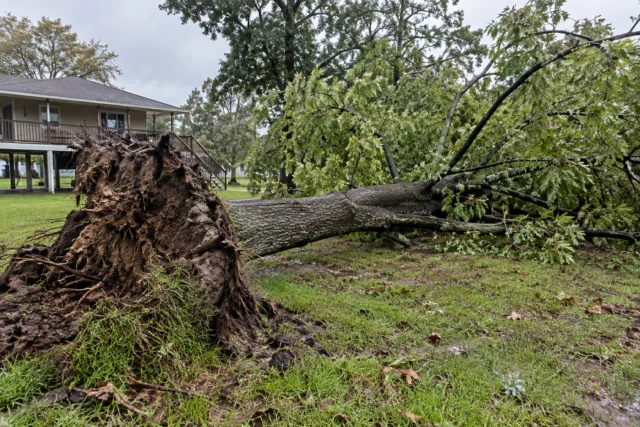
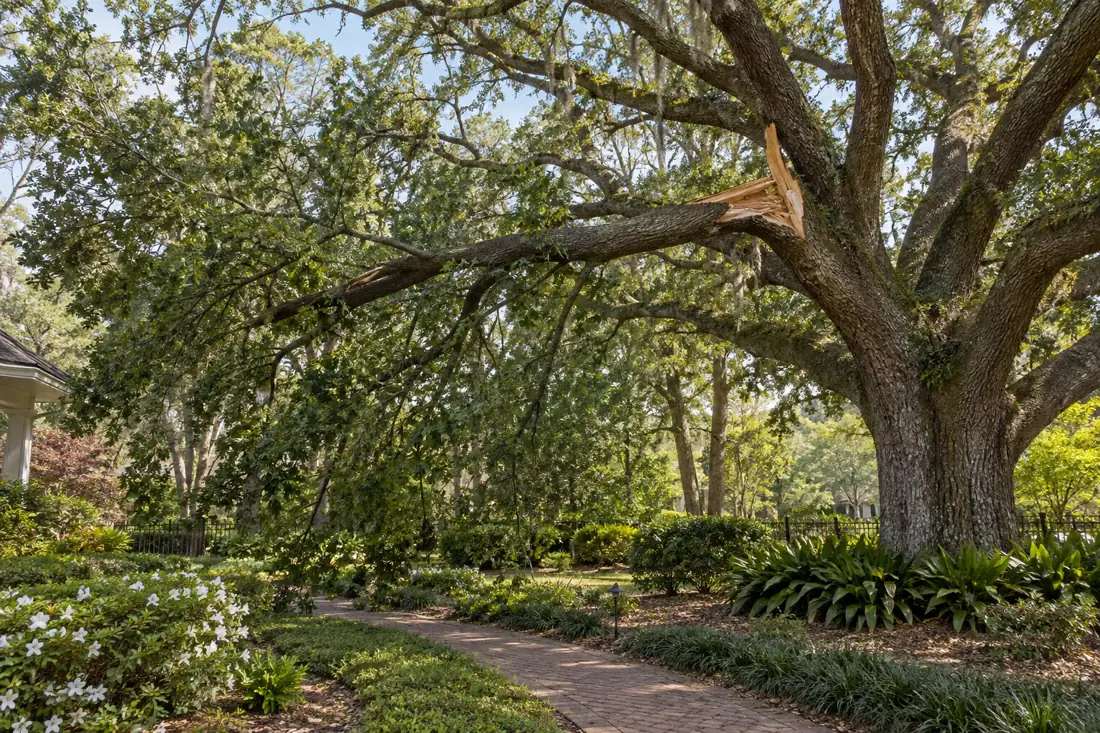
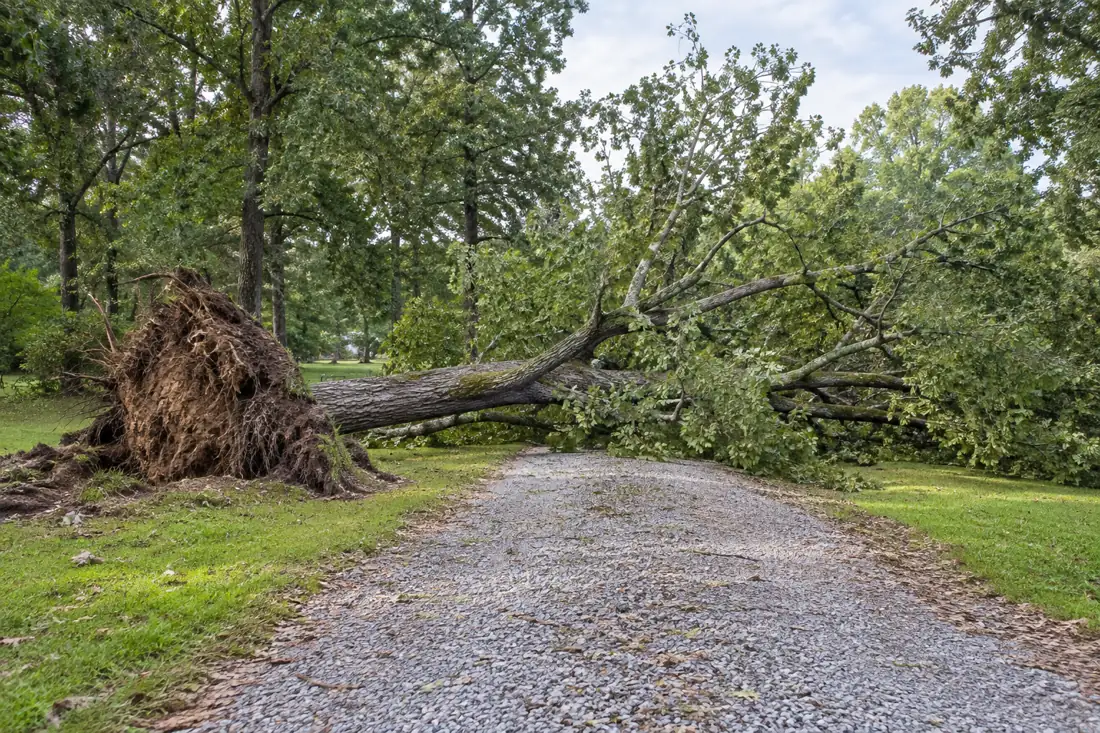
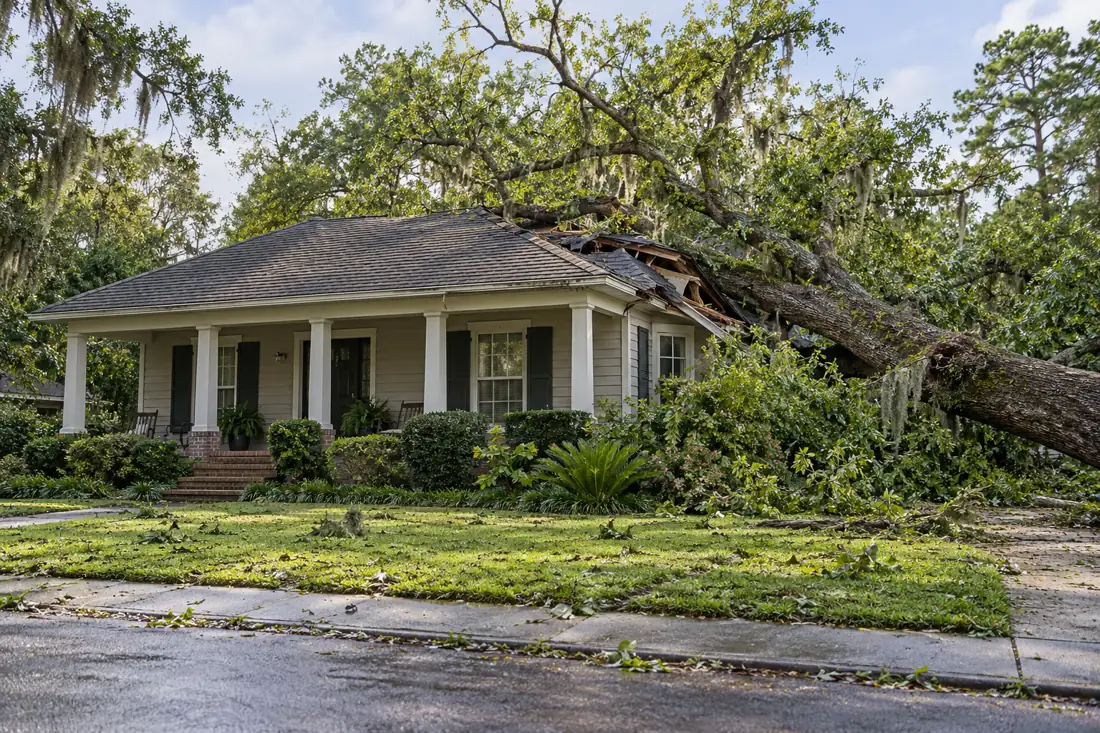
A clearer picture of the scope


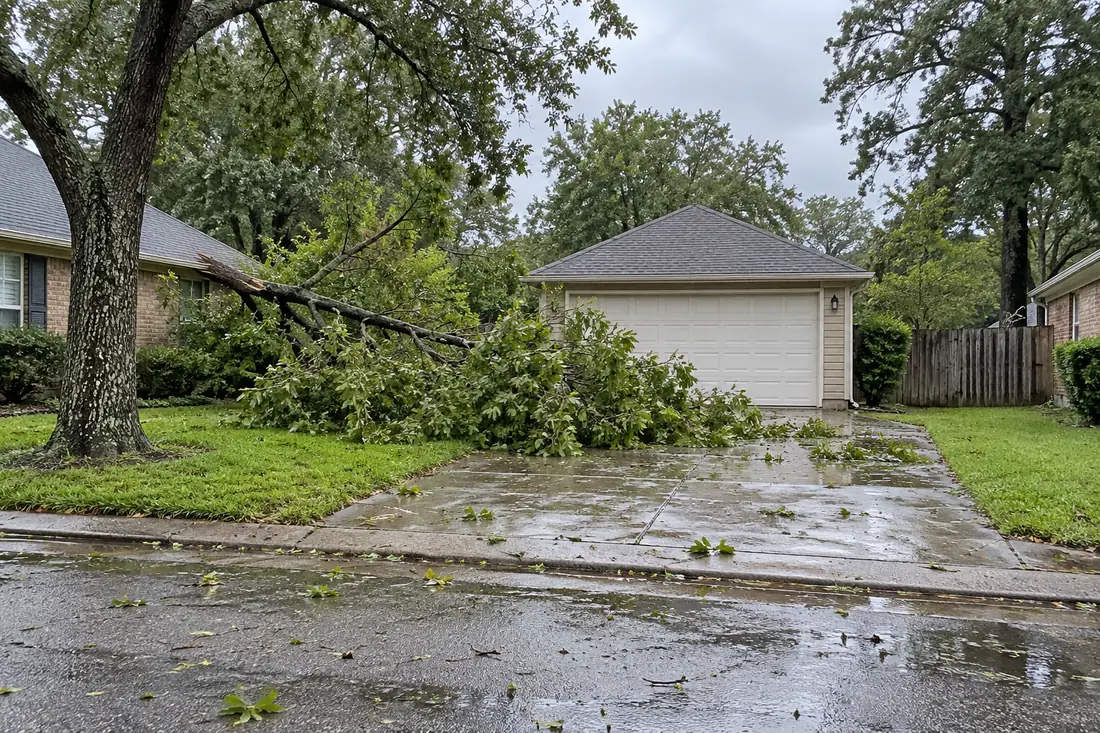
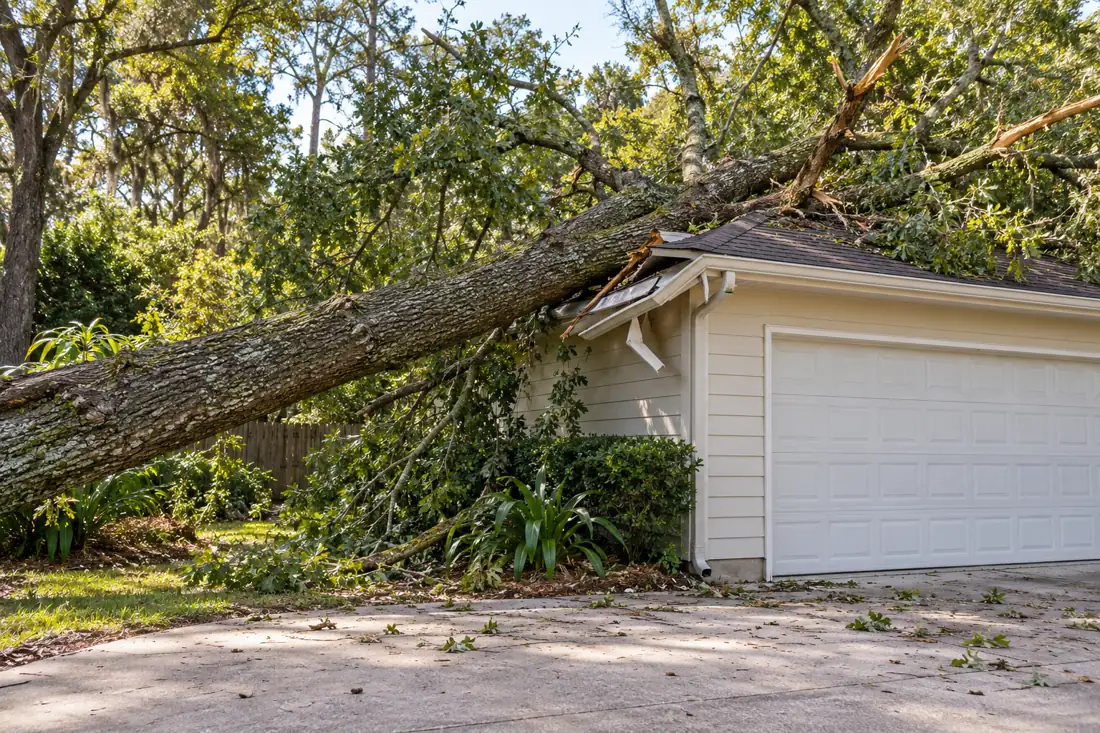
Example: Limb removed from a garage roof
The limb is removed and the roof damage remains visible. Roof repair belongs in a separate repair scope.
A tree resting on a building requires its own plan
Loading is not obvious from the lawn
A trunk or major branch on a roof may have several hidden points of contact. Roof decking, framing, gutters, utility attachments and adjacent limbs can all influence what happens when weight is lifted or cut. Describe where the tree touches the structure and whether anyone remains inside; keep occupants out of exposed areas until the appropriate safety professional has assessed them.
Never pull the trunk with a vehicle or cut a loaded limb from a ladder. The tree-removal crew and the building repair contractor may have different roles, and the scope should distinguish them.
Document damage without entering danger
When it is safe to do so, take a photograph from the street or an unaffected part of the property showing the whole tree and another showing the approach route. Note roof access, fence gates, ground softness and nearby wires without walking under the load. Agree in writing which tree sections, debris and protective measures are part of the tree-work estimate, and which building repairs are not. A general emergency tree-service inquiry can address immediate hazards, while documentation guidance explains records to retain without promising insurance coverage.
Do not create a second failure while solving the first
A tree resting on a structure may be carrying weight in several places at once. Cutting or pulling the wrong section can shift that load and create additional damage. We look at where the tree is supported, what is still suspended, how the structure is loaded, and how each piece can be removed in a controlled sequence.
Practical scope and safety guidance: A tree or large limb against a house can be carrying weight through roof framing, gutters, walls or a neighboring branch. Do not attempt to pull it free with a vehicle, stand below it, or climb the roof to inspect the contact point. If occupants are at risk, leave the affected area and follow emergency guidance. The first useful estimate photographs show the entire tree, roofline, contact location and available ground access from a safe position.
Explain whether utilities, a fence or tight neighboring lots prevent normal equipment placement. The tree-removal contractor can discuss controlled sectioning and lowering, while a qualified building professional must assess hidden structural damage or repair needs. Keep removal, stump work, debris hauling and building restoration as clearly separated scope items. Save before-and-after documentation where it can be collected safely; a photograph cannot replace an inspection.
Keep people out of damaged areas and identify electrical or structural concerns.
Unload branches and trunk sections in a sequence that limits sudden movement.
Complete the agreed debris handling and capture job-related photos as needed.
Insurance documentation and scope clarity
We can provide job-related photos and clearly describe the tree-removal scope. Insurance coverage decisions, deductibles and payment obligations are determined by the carrier and policy. The important part on our end is documenting what tree work was performed and what debris or stump work was included.
Separate roof access from the tree-removal sequence
The first usable photograph is often a wide view that shows the full tree, the roof, and the approach together. A tight image of a branch against shingles may hide whether the remaining canopy is supported by the ground, another limb, or the building. Do not climb onto a roof or enter a damaged room to get a closer angle; a description of what can be seen from a safe location is enough to start the discussion.
Before approving work, distinguish removal of the tree material from temporary roof protection, structural inspection, debris hauling, and later building repairs. Those activities may involve different parties and separate authorizations. Ask how the team expects to prevent further shifting while the material is being reduced, especially when access is narrow or the remaining trunk is still under load.
If an insurer or property manager requests documentation, save existing images with their original dates and keep the actual work description consistent with the approved scope. Only use photos of the actual incident as evidence.

Separate protecting occupants from removing a tree on a building
When a trunk or heavy limb rests on a roof, first keep people away from potentially compromised rooms and the surrounding fall zone. Do not climb onto the roof, enter damaged spaces, cut a loaded limb or approach fallen electrical conductors to obtain better photographs. An emergency call should identify the affected structure, where the tree is supported and any access route that is blocked. If there is immediate danger, involve emergency services or the appropriate utility rather than relying on a website inquiry.
After urgent protection, a tree-work proposal needs a controlled sequence for cutting or lifting, managing supported loads and removing debris. Clarify whether temporary protection, hauling, stump work and permanent roof repair are included or handled by others. Site photographs cannot prove a roof is structurally sound or establish insurance coverage. Ask how the tree crew will coordinate access with the owner, roofer, adjuster or structural professional if necessary. Keep written scopes and invoices separated so no one mistakes tree removal for completion of building repairs.
Related services
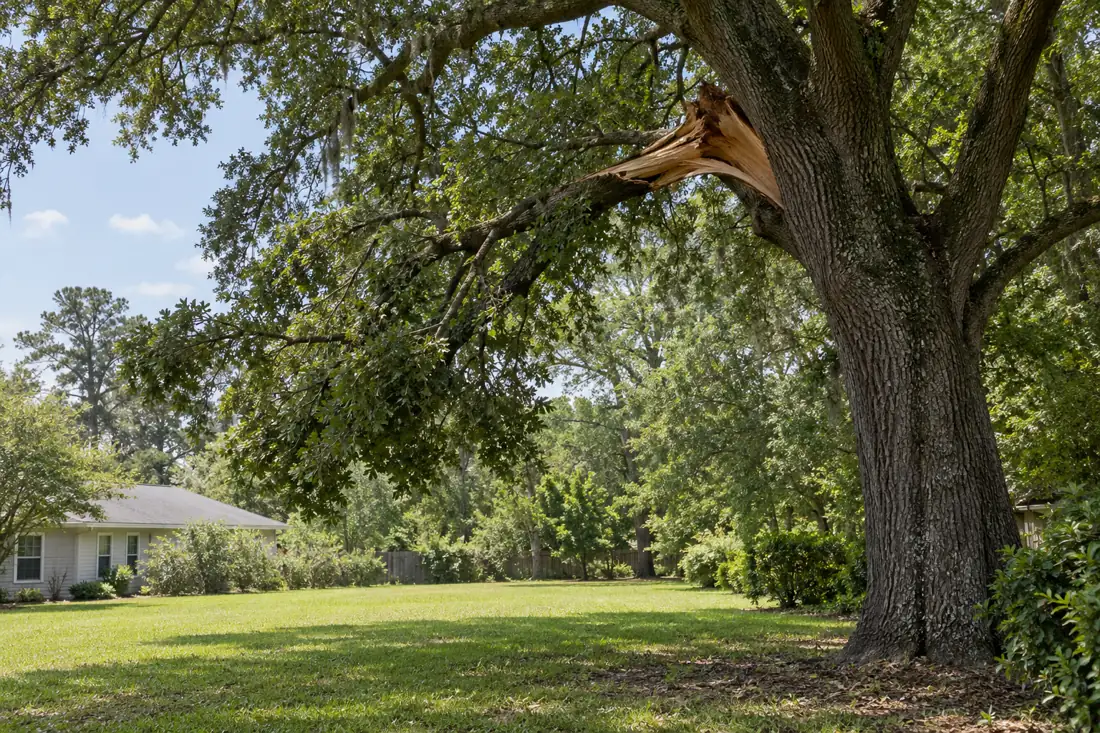
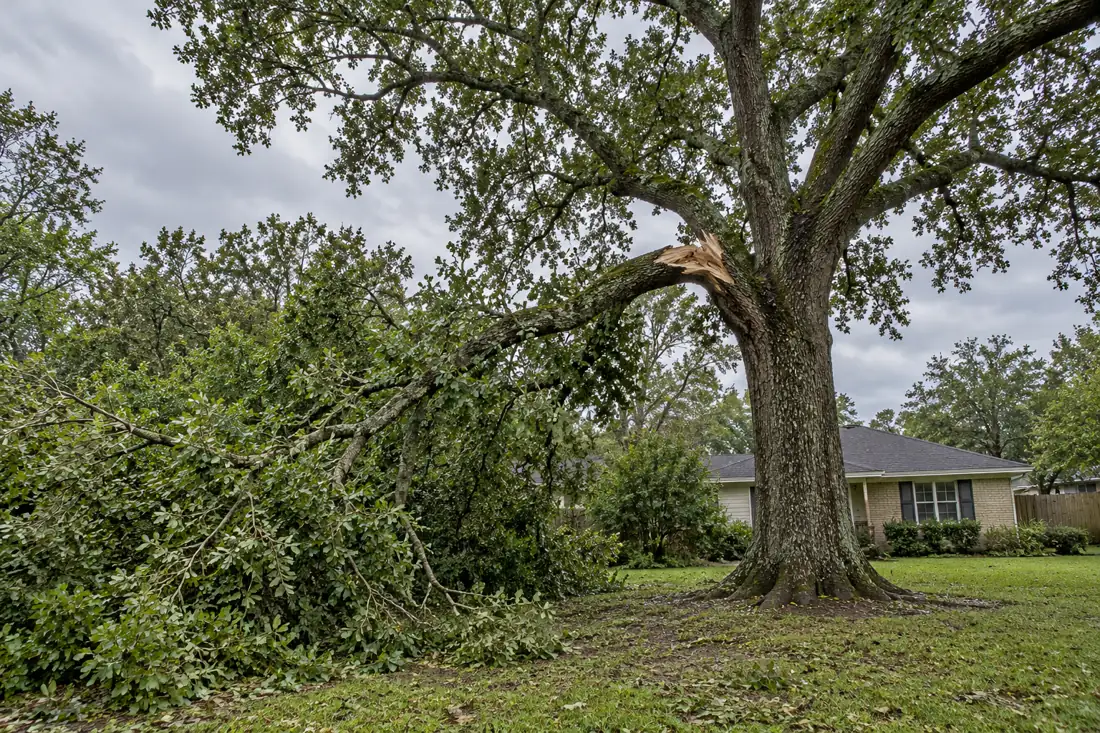
Describe the contact without entering the damage
Tell the company which structure is affected and how the tree appears to be resting. A trunk across a garage roof, a large branch through a porch and a tree leaning against a house are different descriptions. Give the address and identify any occupied area or blocked entrance. You do not need to climb onto the building or approach the contact point to begin the response conversation.
Keep people out of damaged and potentially affected areas. If there is an immediate threat to people, a wire conflict or an unstable structure, involve the appropriate emergency, utility or other qualified provider. Call Tree Huggers at 504-458-8336 about current tree-work availability. An estimate form does not confirm dispatch. Safe, plain information about the tree and building is the starting point; it is not a request for the customer to investigate support conditions directly.
Treat visible support as a planning question
A tree resting on a roof can have weight supported at several points, including another tree, the ground or remaining branches. Do not cut a seemingly convenient section, pull the trunk with a vehicle or attempt to unload the roof yourself. The tree-work method needs to account for the actual condition and surroundings rather than assume the most visible part can be moved independently.
Tell the estimator what can be seen from a safe location and what remains unknown. The high-risk removal page introduces related controlled-handling situations. Equipment assistance may be considered where appropriate, but a crane or grapple label does not itself establish a suitable sequence. The people assessing and carrying out the work need to choose procedures based on this tree, its supports, the property and the available setup.

Make the approach and work area visible
Show the driveway, gates, usable loading area and nearby buildings in safe wide views. A roof-contact tree can be difficult to reach even when it is clearly visible from the street. Identify overhead services, narrow turns, fragile paving and known buried features. Tell the company whether a driveway is shared and which areas require separate access authorization.
If vehicles or furniture can move, explain that during the estimate instead of repositioning them inside the affected area yourself. Do not dismantle a fence or alter a route before a proposed approach is reviewed. Equipment planning connects reach and setup to material handling and loading. The work needs a whole route and work area, including a practical way to remove wood after it has been handled from the structure.
Coordinate tree work with building and utility needs
A tree-removal scope should distinguish the tree task from structural evaluation, electrical work, roof covering and permanent repairs. Those responsibilities may involve other providers. Ask who needs to coordinate which step and keep the relevant contacts available. The tree company’s work description should not be assumed to certify that a damaged building is safe to occupy or that unrelated services can be restored.
If another provider has an assessment or access requirement, share it with the authorized project contacts. Do not issue conflicting instructions to separate crews about moving the same material. The removal-and-repair coordination guide provides related planning context. A practical sequence connects responsibilities without pretending a generic website description can settle the conditions of a damaged structure or replace the professionals reviewing it.
Agree on the first authorized completion point
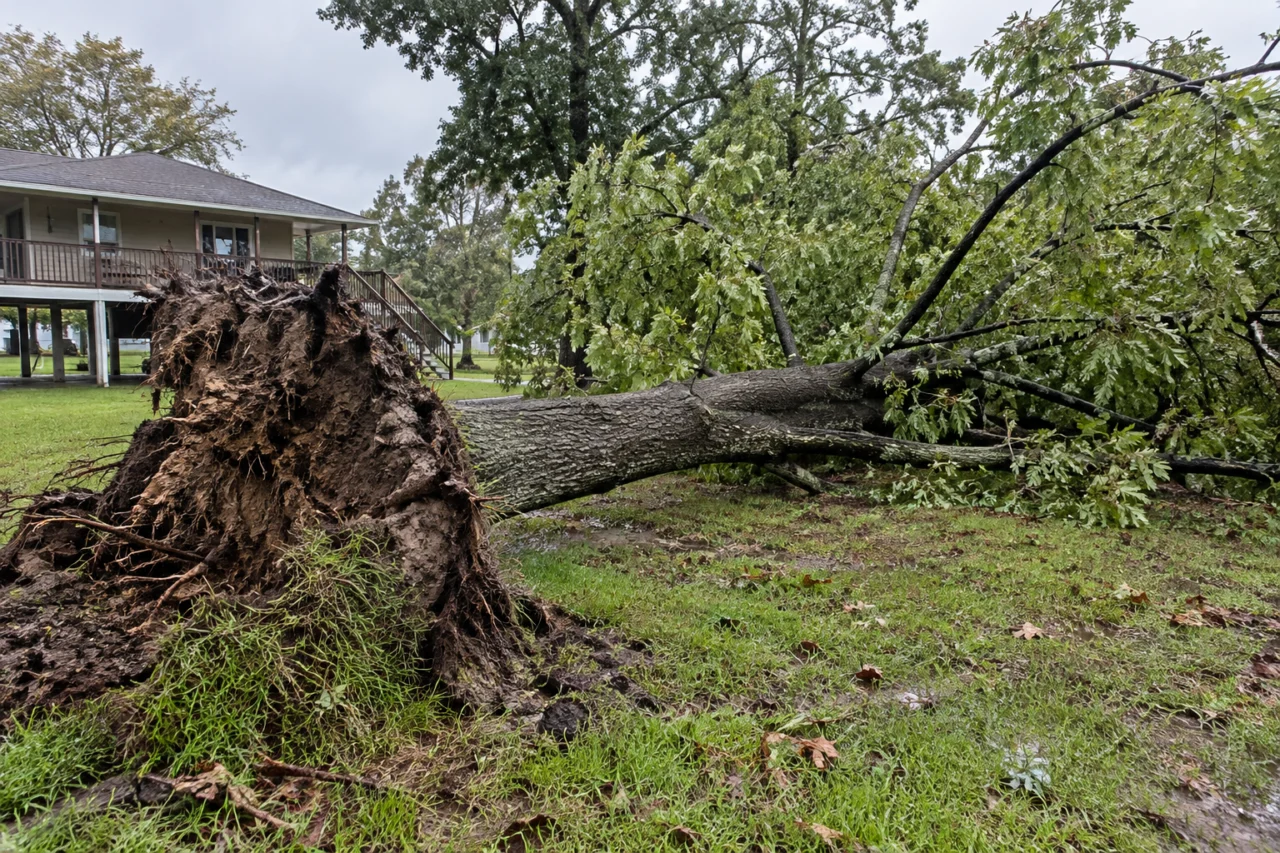
The first tree task may concern a specific trunk or limb, while further material, other damaged trees and the landscape remain for later review. Ask what is included now and what is deferred. A scope should identify the tree or area, handling assumptions, debris arrangement and the person who can approve a change. Avoid relying on a broad instruction to fix everything when several types of work are involved.
For an absent owner, make sure the site contact has the same accepted notes. A neighbor or tenant can supply useful observations without automatically having authority to expand the task. The emergency page explains the availability conversation, while the accepted work still needs direct confirmation. Keeping authorization traceable helps the owner understand the completed tree stage and the separate building or landscape needs that may remain.
Keep photographs useful and factual
When photographs are safe, include the whole tree, structure, surrounding features and approach. Close views may supplement that context but should not require entry into a damaged area. If an important angle is unavailable, say so. Keep original representative images rather than editing out the supports, debris or service conflicts that explain the situation.
Discuss any job-related completion photos or records needed before the work where practical. Label them with the tree or location and actual task. The insurance documentation page introduces the recordkeeping conversation. Coverage, deductibles and reimbursement decisions belong with the appropriate insurance contact. A factual tree-work record should describe what was requested and performed without inventing the cause of a failure or promising that another organization will pay for the work.
Define debris, stumps and restoration separately
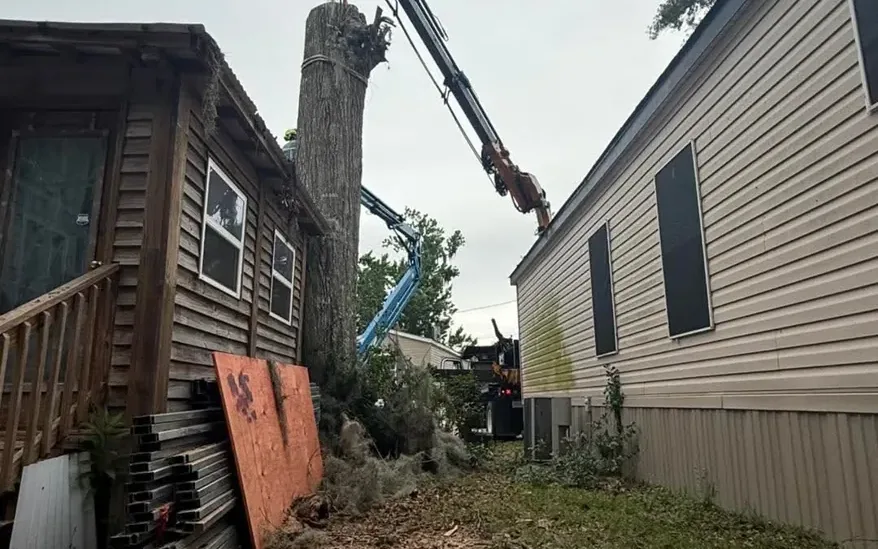
Removing wood from a roof does not automatically describe everything that happens afterward. Clarify which material is hauled, whether wood is retained and how mixed fencing or building debris is handled. Identify concealed or unknown material honestly. Ordinary vegetative cleanup and mixed damaged-building waste may need different arrangements or providers.
Stump grinding, root excavation, soil placement, new turf and landscape repair should be separately identified where relevant. The storm-cleanup service addresses the wider finish conversation. A clear boundary helps the owner plan the next stage without assuming tree removal also completes every visible repair. At handoff, compare the result with the accepted tree scope and note anything intentionally left, deferred or assigned to another provider.
Update the company if the site changes
A new failure, shifting support, utility involvement or altered access should be reported promptly. Keep clear while the next step is reviewed. Do not treat a previous photograph or estimate as confirmation that changed conditions can be handled in the same way. The tree-work plan needs the current tree and property, especially when other response or repair activity is changing the site.
To start, call with the address, affected structure and visible condition. Follow with safe wide photos and access information. Identify the approval contact and any provider already coordinating the building or services. The storm planning hub organizes related decisions. The useful next step is direct discussion of availability and a defined tree-work task, with the customer kept out of the hazardous investigation and the broader restoration responsibilities made clear.
Coordinate the tree operation with the building safety sequence
When a tree contacts a roof or other structure, the apparent point of contact may not show where the load is carried. A damaged trunk, bent limb, roof framing, broken masonry, or root plate can move when another piece is cut. Keep people out of affected rooms and exterior zones as appropriate, use emergency responders for immediate danger, and involve utility professionals when lines or electrical equipment may be affected.
Never direct a contractor to pull the tree free merely because access looks possible from one view.
Identify the property representative who can approve tree work and the separate party responsible for structural assessment, temporary weather protection, or repairs. The first tree-work objective might be relieving or removing a defined section, not restoring the roof or certifying the structure as safe. Ask how the proposed sequence protects workers, neighbors, access routes, and remaining surfaces. Any change discovered once work begins should be documented and approved through the agreed process rather than assumed to be in the initial estimate.
Photograph the condition from safe standing positions and maintain the original dates and context of those images. Record what was already damaged, which tree material was removed, whether debris hauling was included, and what remains for building specialists. Keep insurance questions with the appropriate carrier or adjuster; neither a tree-service invoice nor a job photo establishes policy coverage. A clear scope prevents the urgency of the event from blurring separate responsibilities.
Tree against a building: coordinate tree and structure decisions
A fallen tree resting on a roof involves a tree-handling question and a building-condition question. Do not enter a visibly damaged room, climb onto the roof or move closer to inspect a limb. From a safe position, explain the contact point, affected access and any restrictions already imposed by an appropriate responder.
Confirm who can authorize the tree work and who is responsible for building assessment, weatherproofing or later repair. Tree removal alone does not establish that a structure is safe. The estimate should separate controlled wood handling from temporary protection, repair and debris disposal, with any exclusions documented.
Keep records factual and do not recreate photographs in dangerous conditions. If the scope changes during work, record authorization and what remains incomplete. The emergency tree guide explains urgent escalation; the insurance guide helps organize descriptions and receipts without making a coverage prediction.
Three details to settle before an estimate
- Describe safe access and building contact
- Name separate tree and structural responsibilities
- Record handover and scope changes
Tree on House Removal questions
What should I do when a tree is on my roof?
Keep clear of affected areas and call about the tree condition and availability. Involve appropriate emergency or utility services for immediate threats or wires.
Should I climb onto the roof for photos?
No. Use safe wide views from outside the affected area. Explain any angle you cannot obtain without approaching damage.
Can I pull the trunk away with a vehicle?
Do not pull or cut loaded material yourself. Supports and movement need review as part of an appropriate controlled tree-work plan.
Is every tree resting on a building handled the same way?
No. The tree condition, supports, structure, nearby targets and access can change the required assessment and method.
Does a crane automatically solve the problem?
No. Setup, reach, ground support, handling and the specific tree condition must suit the proposed operation.
What access information should I provide?
Show drives, gates, loading areas, overhead services and nearby structures. Identify shared areas, fragile surfaces and known buried features.
Does tree removal certify that the house is safe?
No. Building evaluation, occupancy and repair questions require the appropriate qualified providers. Keep their responsibilities distinct from tree handling.
Does the scope include roof repair?
Only tasks expressly agreed are included. Tree work, temporary building protection, utilities and permanent repairs may involve separate providers.
Can a tenant authorize additional work?
The company needs the designated approval arrangement. Useful observations or access help do not automatically establish authority for extra tasks.
Does the invoice guarantee insurance payment?
No. Keep factual tree-work records and discuss coverage and reimbursement with the appropriate insurance contact.
Will all debris and the stump be removed?
Clarify those items. Roof-contact tree work, complete hauling, mixed waste, stump treatment and landscape restoration can be different scopes.
What if the tree or access changes while waiting?
Report the change promptly and keep clear. The current assessment, urgency or method may need review before work proceeds.
Let’s plan your tree work.
Send the property address, safe tree photos and the result you need. Include access restrictions and the person who can approve the work.