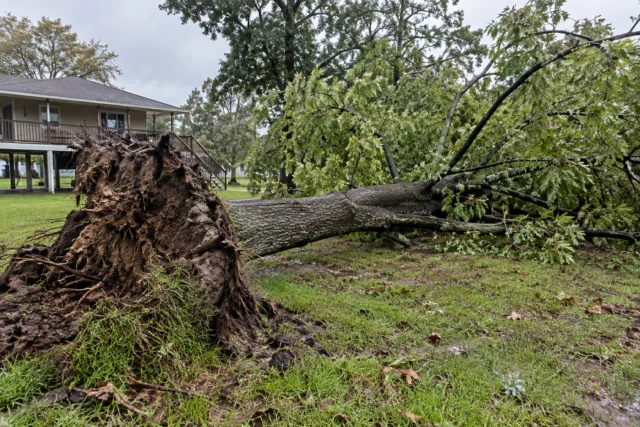
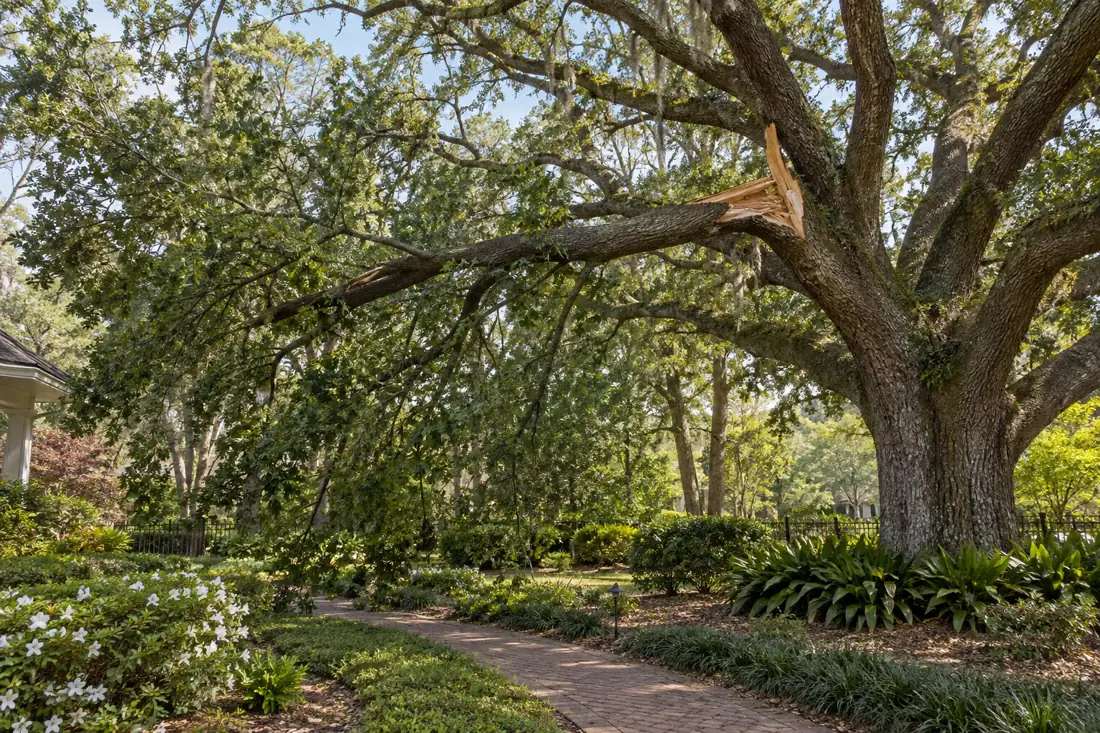
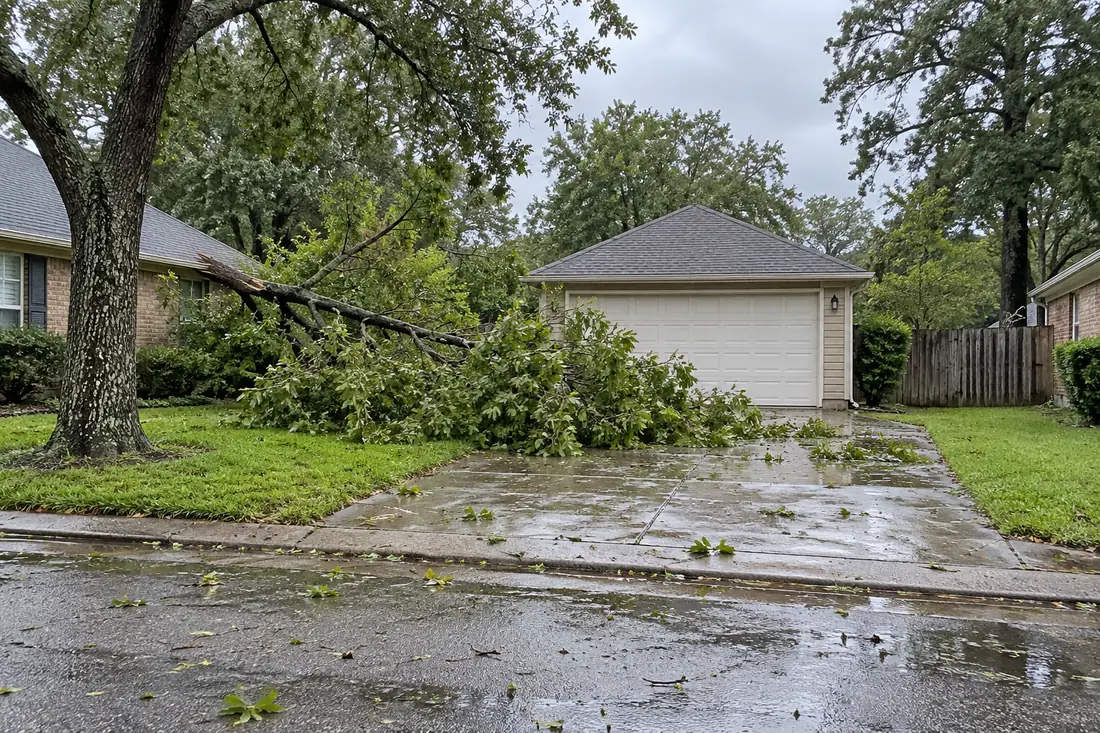
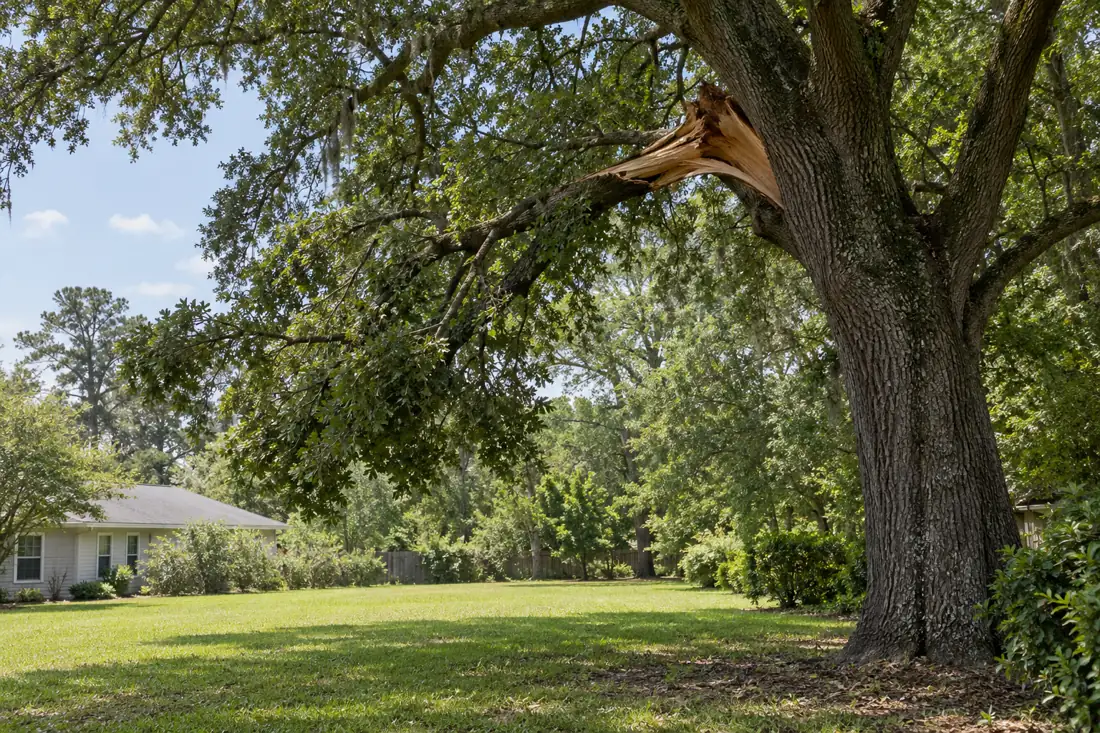
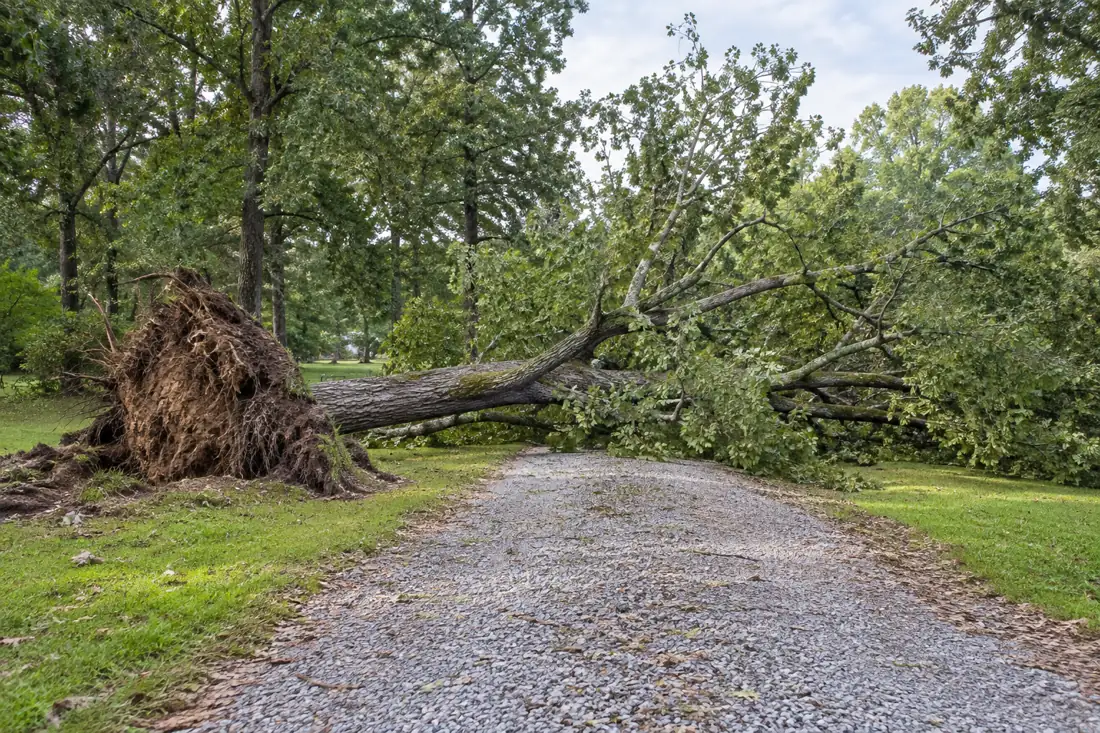
A tree on a house creates both a tree hazard and a structural hazard. Keep people away from the affected area and address immediate life-safety or electrical risks before cleanup.
Separate the building emergency from tree handling
If a tree is bearing on a roof, porch, wall or vehicle, the visible branch may be under compression while unseen limbs carry opposing loads. Do not approach the structure to obtain a better picture, climb onto the roof or move a piece to test whether it is supporting anything. Call emergency services for immediate danger or suspected energized lines, and keep the area clear.
When conditions permit, tell the tree provider what part of the structure is contacted and whether a building professional or insurer is involved. Request a scope that distinguishes controlled load removal, debris disposal and any later building repair; one invoice should not imply that all three have been completed.
Do not start cutting randomly
Branches and trunk sections may be carrying load through damaged framing. Cutting the wrong piece can shift weight or release tension suddenly. If electrical lines are involved, stay away and contact the utility or emergency authority.
Document from a safe location
Take wide photos showing the tree and building, then closer photos only if safe. See Tree Huggers tree-on-house removal.
Begin with a safe place for people
If a tree has struck a house, prioritize people and use emergency services when anyone is injured, trapped or facing an immediate threat. Stay clear of the tree, damaged rooms and any affected utilities. Do not go onto the roof or climb through branches to inspect the impact. Follow instructions from emergency responders and the utility. A tree-service appointment is one part of the response, and should not be treated as clearance to reenter a damaged building.
From a safe place, tell the provider whether the building is occupied and whether all occupants are accounted for. Identify the part of the building affected, any blocked entrance and any known line involvement. If you cannot observe the whole tree safely, say that. There is no need to fill in missing details with assumptions. The first useful outcome is an accurate description and a sensible sequence of contacts, with people kept out of the area while appropriate professionals determine the next steps.
Keep utilities separate from ordinary tree cleanup
Report a fallen or damaged line and any tree touching a line to the utility. Keep people away even if the line is quiet or you believe service is out. Do not lift branches away from cables, drive over them or attempt to identify a safe line by appearance. Tell the tree contractor about the reported hazard and any utility instructions you have received. Utility clearance and tree removal must be coordinated through the appropriate parties.
If you smell gas or suspect another utility emergency, follow emergency-provider instructions from a safe location. Do not enter the building to complete a tree-service form or retrieve paperwork. The Utah State University storm-cleanup guidance identifies damaged utilities as a first safety concern. Your local responders and utility provide the instructions for the actual incident. A neighbor’s restored service or a crew working elsewhere on the street does not establish the condition at your house.

Explain how the tree is resting without disturbing it
A tree may be supported by several parts of the roof, another tree, the ground or a fence. Do not try to move one limb to see whether the trunk shifts. From a safe viewpoint, describe what appears to be in contact with the building and whether part of the tree is still standing. A whole-property photograph can help the contractor understand the setting more than a close image of shingles alone, provided it can be taken without entering the affected area.
Mention any change you have noticed since the impact, such as a new movement or additional material falling, without returning to watch it closely. The contractor must assess the present condition and choose an appropriate handling plan. Avoid requesting a specific cut or lifting method based on an online video. A roof can conceal damage, and a picture does not provide every detail needed for equipment placement or material control. Accurate observations and known limits make the first discussion more useful.
Gather access information from places you can reach safely
Describe the normal route from the street to the work area, including gates, parked vehicles and neighboring buildings. If you already have an access photo, share it. Do not enter a damaged side yard merely to measure a gate while a tree is overhead. Tell the contractor which areas cannot currently be reached safely and who controls any alternate route. Equipment suitability will need to be reviewed against the actual tree, ground and property constraints.
Identify items outside the immediate impact zone that affect access: a shared driveway, pool, detached shed, drainage feature or fragile surface. Confirm any neighbor permission before promising use of another property. If a public street or right-of-way may be involved, ask which coordination is required and who handles it. Access planning should help the crew choose a feasible approach; it should not encourage the owner to remove fences, trim branches or clear debris ahead of an assessment when those tasks could change a hazardous condition.
Let the tree and building providers agree on the sequence
Tree removal may be needed before some building-protection work can proceed. Other precautions or professional evaluations may be necessary first. Ask who is responsible for coordinating the sequence and how the site will be handed from one provider to another. A roofer, structural professional, utility and tree crew have different roles. Do not assume that the presence of one trade means every other concern has been assessed or cleared.

Make the handoff safer before discussing a cleanup finish
A tree reported on a roof can create both a tree-work problem and a building-stability question. Keep residents and visitors away from affected rooms, doors and outdoor areas until the appropriate responders and professionals determine what access is safe. Do not use a photograph as proof that the roof can carry the load or that branches can be moved without changing the structure.
Tell the tree contractor where the material is resting, what access is blocked and whether a utility or emergency service is already involved. Keep structural stabilization, tree removal and building repair responsibilities distinct. The tree crew should not be assumed to certify roof damage or make repairs to the building.
For records, use photographs taken only from accessible positions and keep a timeline of the event, contacts and actions. Confirm whether the tree-work scope includes temporary debris staging, wood hauling or stump work. A completed tree removal is not automatically the completed insurance claim or the finished building restoration.
Keep one reachable owner or manager in the approval role, with a backup contact if needed. Share current information between providers rather than asking each to work from an outdated photo. Tree removal should be described separately from temporary tarping, permanent roof repair and structural decisions unless those services are explicitly included by the appropriate provider. A simple contact list and written scope can prevent a delay caused by each company assuming another is responsible for arranging access, protection or the next inspection.
Contact the insurer and document only what is safe
Notify the insurer or agent about the event and ask how it wants the incident and urgent work documented. Retain actual photographs, contact notes and receipts. The tree contractor can provide records of its work, while the carrier determines coverage under the policy. Do not interpret a tree-removal estimate as approval of an insurance claim. If emergency conditions prevent a complete set of photographs, explain the limitation rather than attempting to recreate the original scene.
For a more detailed job-file checklist, use insurance tree removal documentation. Keep the accepted tree scope and any authorized changes with the final invoice. Label records from the roofer and other providers separately so the work is easy to follow. Avoid sending a full policy or unnecessary private paperwork in the first service inquiry. The contractor needs the property, condition and access details to begin evaluating the tree work; the insurer may separately request information through its own process.
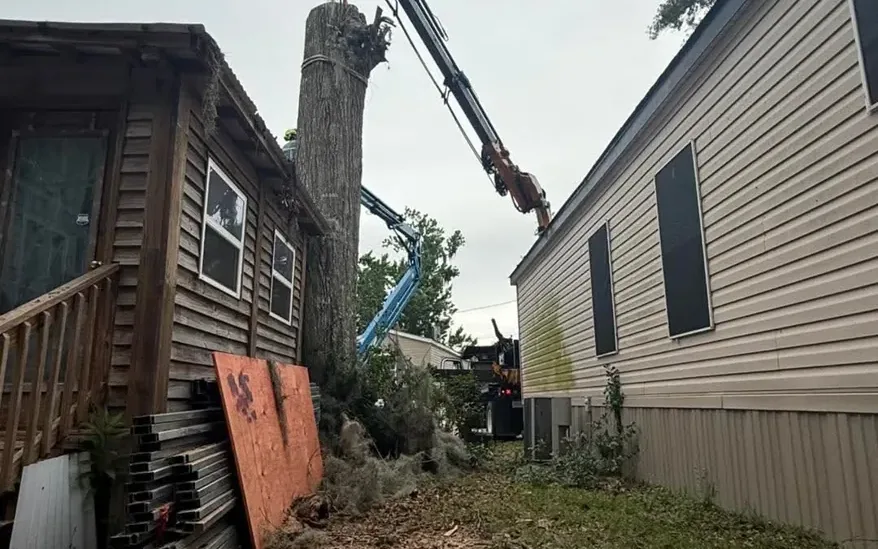
Clarify what remains after the tree is removed
Getting the tree off the building does not automatically finish the entire recovery project. Ask whether the agreement includes cutting, loading, hauling, stump grinding and removal of scattered material. Confirm where any wood being kept will be placed. Identify access restoration and landscape work separately. The owner should understand the handover condition rather than discovering after the crew leaves that a large stump or pile of grindings was outside the accepted removal scope.
Building safety remains a separate determination after the tree work. Do not resume use of damaged rooms solely because branches are no longer on the roof. Follow the appropriate provider’s or authority’s instructions for inspections and repairs. At completion, compare the tree work with the agreement from a permitted safe area and record any unresolved items with a responsible contact. A clear handoff gives the next provider accurate information without implying that the tree contractor has certified the roof, structure or electrical system.
Make the first call short and useful
State the address, that a tree is on the house, whether people are safe, any utility involvement and which building area is affected. Explain whether access is blocked and give the best callback number for the person making decisions. Ask about current availability and the information needed for review. Do not rely on a submitted form as confirmation that a crew is coming. Tree Huggers must review the condition, scope, access and availability before confirming arrangements.
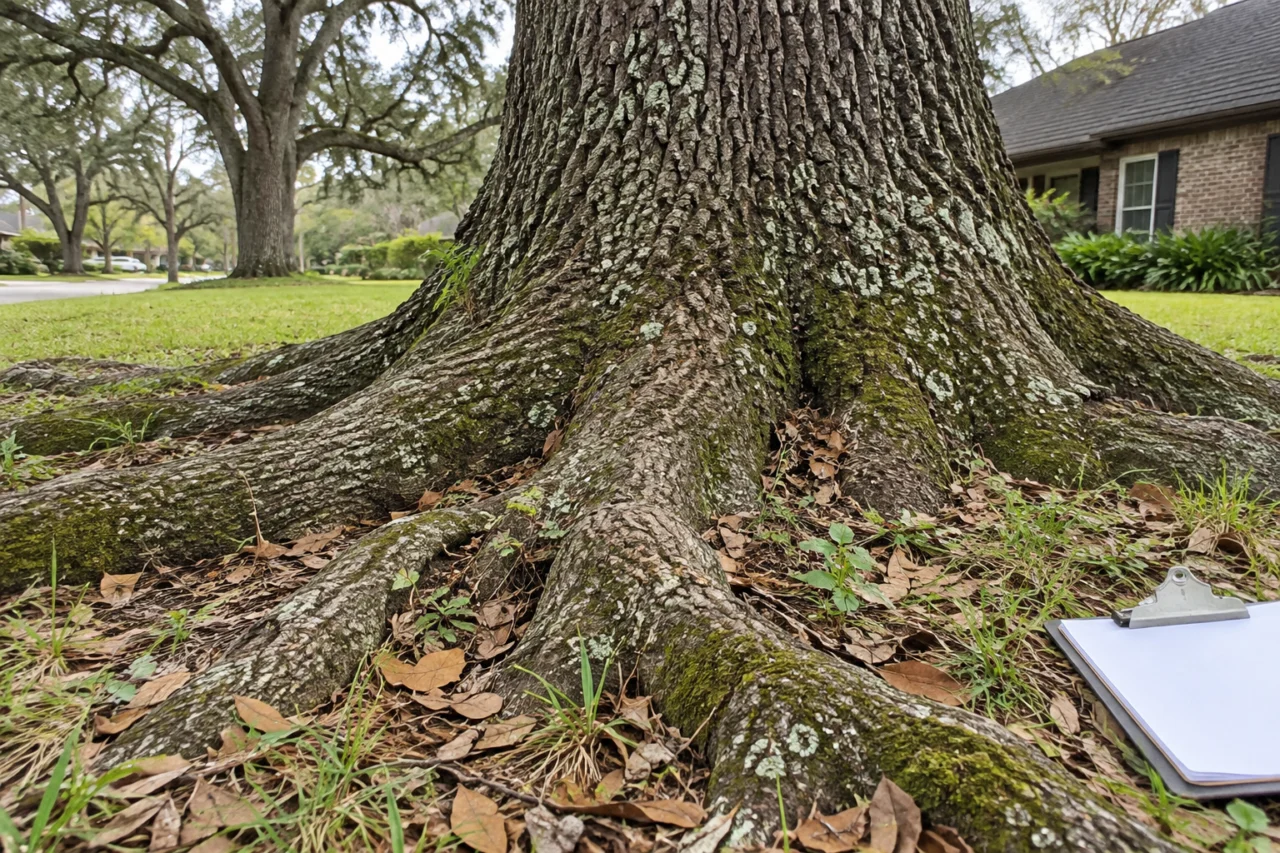
When it is safe, send wide views of the tree and building with a brief description of any change since the impact. The tree-on-house removal service covers the tree-work discussion; emergency tree service can address urgent availability. Continue following emergency and utility instructions as the situation changes. The practical goal is a safe sequence from initial response through removal and repairs, with each provider’s responsibilities understood and no unnecessary exposure just to make an estimate request more detailed.
Coordinate tree removal from a house with structural safety
A tree resting against a house can be supported by parts of the building that were not designed to carry its weight. Before arranging removal, keep people away from damaged rooms, the impact area and nearby utilities. If anyone is injured, trapped or exposed to an immediate threat, emergency services take precedence over an estimate.
Do not enter the roof space to inspect from beneath, climb onto the structure or pull exposed branches away from the building. The position of a limb can change suddenly during cutting.
Tell the tree company whether the material is still suspended, whether access to the property is blocked and whether electrical wires or service drops are involved. Contact the utility for suspected line hazards and do not treat an apparently quiet wire as de-energized. A wide photograph from a safe exterior position helps show the tree's relationship to the roof, while a second view may show where a machine can stand. A close-up taken from a hazardous location is not worth the risk.

Separate emergency stabilization from routine cleanup
Tree removal and building stabilization are different scopes. Depending on the condition, a building professional, emergency responder or other qualified party may need to determine whether the structure can be entered and what temporary support is appropriate. The tree contractor should plan how load will be controlled before pieces are cut or moved. A statement that the branch has been removed is not the same as a structural inspection, a leak repair or authorization to reoccupy damaged space.
Afterward, keep actual work records separate from insurance assumptions. Note which tree sections were removed, what material remains, where debris was staged and whether a follow-up stump or site-repair appointment is still needed. Preserve photographs and invoices for the homeowner's own claim process, but avoid making a promise about coverage or an insurer's decision. If conditions change before a scheduled visit, report the change promptly and reestablish a safe exclusion area.
The first safe decisions after a tree reaches a building
Do not enter a damaged room to inspect the tree from below. Leave the affected space, keep other people away, and call emergency services if anyone is injured or there is immediate danger. Treat the roof, wall and tree as a combined unstable structure: a trunk may be carrying weight or pressing against framing even when little movement is visible. If a line or service drop is involved, avoid contact and notify the utility. No photograph or estimate is worth approaching a shifting tree.
From an uncontested safe location, capture a wide view of the building, the tree's position and visible exterior damage. Do not climb onto the roof, cut load-bearing branches or move the tree to improve the pictures. Contact the insurer to learn its documentation process and any conditions for emergency protection. A qualified contractor may need to coordinate with a structural professional or utility before lifting begins. Describe the emergency stabilization separately from permanent repair so each party understands the scope.
Before debris is moved, confirm who controls the work area, what will be retained for documentation, and the sequence for securing the building. Record dates, contractor names and the agreed removal limit; do not infer that an insurer has approved a price or particular method. After the tree is removed, do not assume the building is safe to reoccupy without the appropriate structural evaluation. Keep the handoff notes with the photos and receipts.
Practical handoff checklist
- Keep out of the impact and collapse zone.
- Escalate injuries, electrical exposure and structural danger appropriately.
- Photograph only from a genuinely safe position.
- Separate stabilization, tree removal and building-repair authorizations.
For related context, see the fallen-tree removal guidance guide. This planning information is not a substitute for an on-site professional assessment.
Tree on Your House: What Should You Do First? questions
Should I enter the damaged room to photograph the tree?
No. Keep clear and follow emergency, utility and building-professional instructions. A service request does not make the building safe to enter.
Who should I call if someone is hurt or trapped?
Use emergency services immediately. Tree-service scheduling does not replace emergency response.
What if the tree touches an overhead line?
Keep clear, report it to the utility and tell the tree contractor. Do not move branches or assume the line is safe because service appears off.
Should I cut small branches off the roof first?
Do not disturb a loaded tree or damaged structure. The contractor needs to assess the condition and handling plan.
What information helps the first call?
Give the address, occupancy and safety status, affected building area, known utility involvement, access limits and decision-maker contact.
Does a form request dispatch a crew?
No. Call about urgent availability and obtain confirmed arrangements after the company reviews the situation.
Can I request a particular crane or cutting method?
Describe the condition and constraints. Equipment and method require professional review of the actual tree and property.
Does tree removal include a roof tarp?
Only if expressly arranged within an appropriate provider's scope. Coordinate tarping, repair and structural review separately.
Will the tree contractor decide insurance coverage?
No. The contractor documents its tree work; your insurer and policy determine coverage.
Can the crew use my neighbor's driveway?
Only after the necessary permission and arrangements are confirmed. Do not promise access you do not control.
Is the house safe once the tree is gone?
That requires the appropriate building, utility and other professional review. Tree removal alone does not certify occupancy.
What should I check at the tree-work handover?
Compare debris handling, stump treatment, retained wood and access arrangements with the written agreement and record unfinished items.
Let’s plan your tree work.
Send the property address, safe tree photos and the result you need. Include access restrictions and the person who can approve the work.