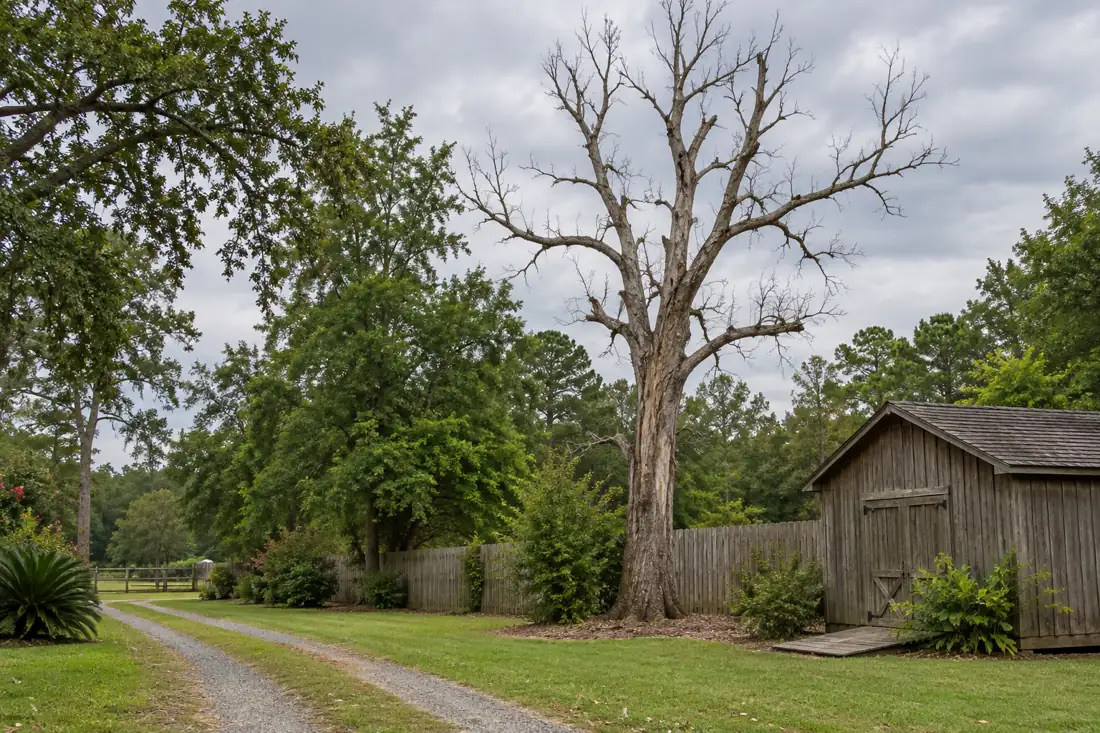
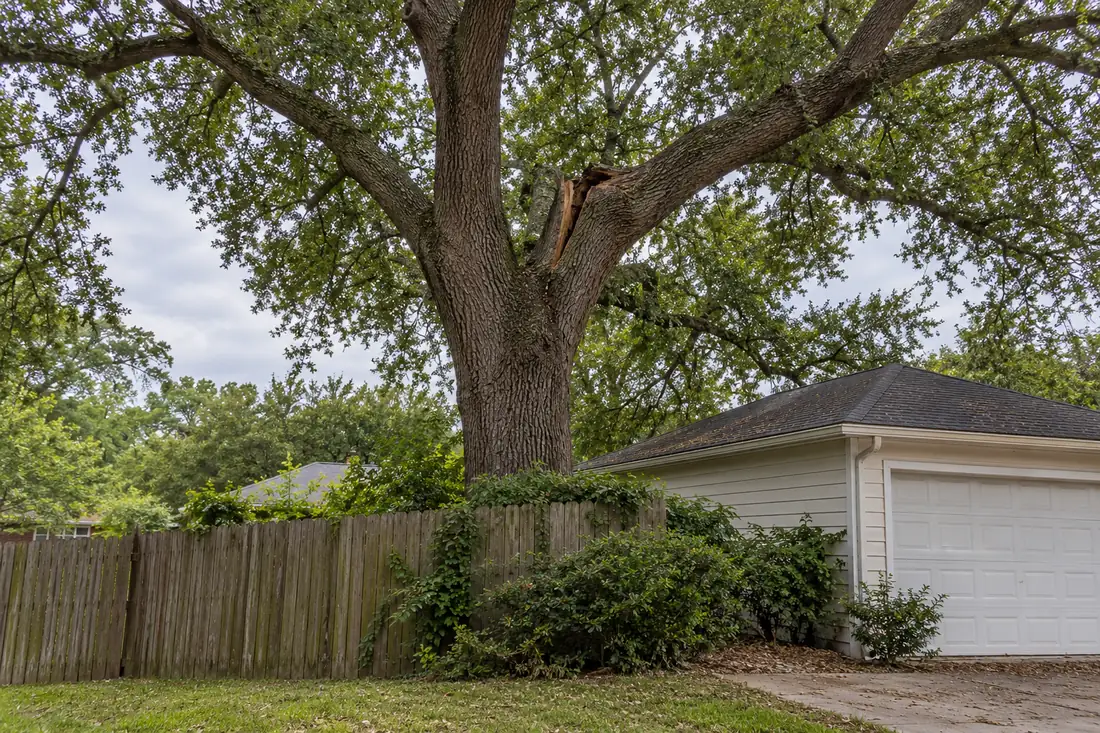
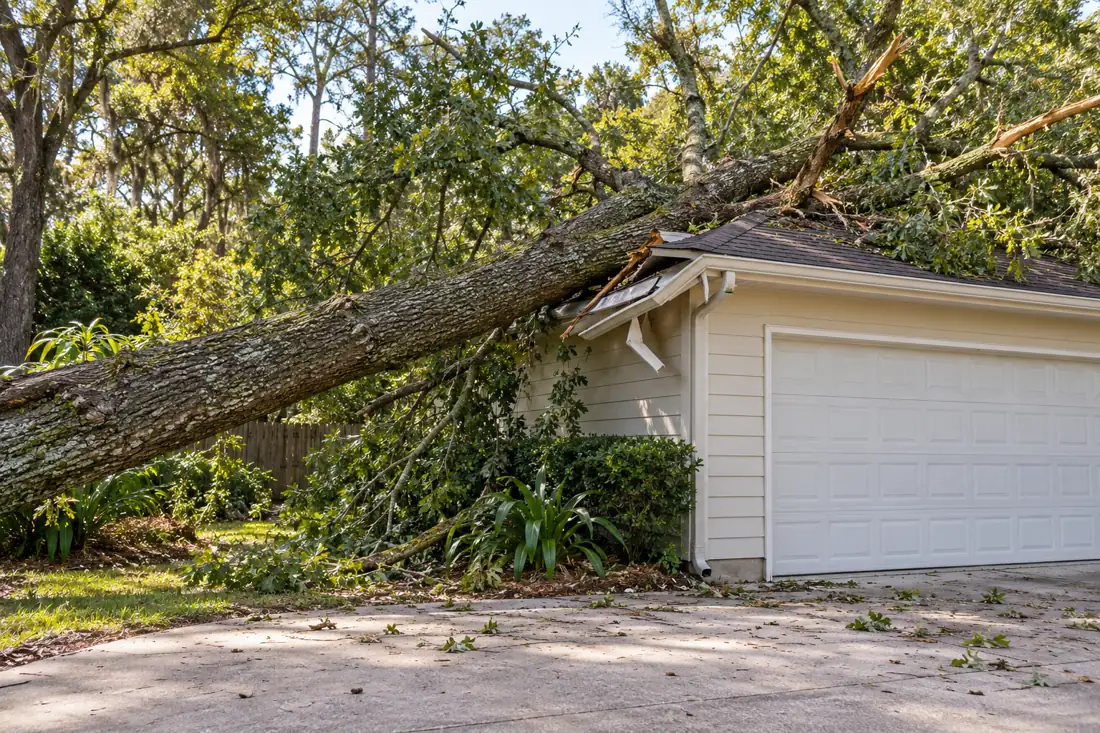
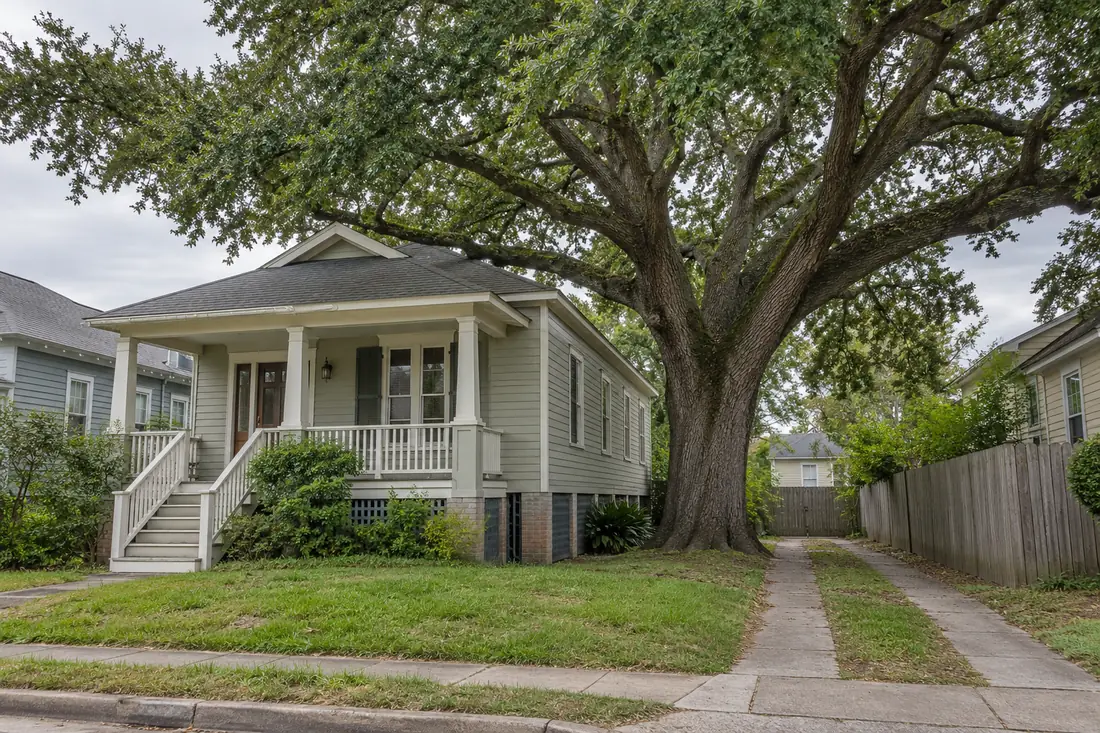
A driveway may serve as access, a staging area or a surface that must be protected. Those uses are not interchangeable. Existing cracks, pavement edges, buried drainage and vehicle clearance should be documented. Ask how the contractor will evaluate the route and what happens if the surface cannot support the proposed setup.
A driveway is an access decision, not an automatic landing pad
Start with photographs showing the driveway from the street, the tree’s base, overhead lines, garage doors and any visible cracks or heaved pavement. A truck’s ability to fit between two objects does not establish that the paving or hidden culverts can safely support its axle load. Ask for the proposed approach, outriggers and protected material-handling route.
The removal plan should distinguish truck access from where limbs can be lowered. If the driveway must stay open for residents or an emergency route, request a clear closure window and identify where vehicles will be staged. Vehicles should not be parked beneath a tree being worked or beside a crane’s operating zone.
Set handoff expectations for sweeping, wood loading and surface inspection. Take before photographs of known cracks and edging so an unrelated existing defect is not confused with work damage. If stump grinding or root removal might disturb pavement, put that separate scope and any restoration responsibility in writing.
Record the driveway material and visible condition before estimating: asphalt, concrete, pavers, loose stone, repaired joints and existing cracks require different planning. Photograph curb transitions, drainage grates, low branches and the turning area between the street and tree. Ask whether equipment would remain on the pavement, cross an edge or need room for stabilizers. A vehicle that fits the driveway does not establish that the pavement can carry every concentrated load.
Set a specific access plan for household cars, deliveries and emergency passage during the work window. Discuss ground protection and traffic management with the contractor, including realistic limits of mats or temporary surfaces; no material guarantees zero marking or settlement. Document how logs will be moved off the driveway and which areas require cleanup. If a public lane or sidewalk may be affected, ask who will handle the applicable permissions and temporary controls.
Inspect asphalt or concrete for prior settlement, edge cracking, drainage inlets and buried service lines. A truck or outrigger that can park on the pavement may still overload an unsupported edge or slab over a void. Ask where heavy equipment would stand, where cut sections will land, and whether vehicles must be moved or a temporary loading area is available. Where access touches the public street, check what permission or traffic protection may be needed. Keep a clear pedestrian route if the driveway is shared.
Photograph existing damage and mark sprinkler heads, shallow pipes, curbs and landscape borders before the job. Agree on protection methods and realistic restoration obligations; ordinary mats do not guarantee that a weak surface will remain intact. Separate cutting and hauling from stump grinding, root removal and pavement repair in the written scope. At handoff, walk the driveway with the crew lead to check for chips, ruts, blocked drains and damage at edges, rather than judging completion from the missing tree alone.

Read the Roots and Pavement Together
Roots beside paving do not automatically mean a tree must come down, and visible roots do not reveal the full root system. Look for lifted joints, a heaved driveway edge, cracked concrete, displaced pavers, or a curb pushed toward the travel lane. In humid Louisiana soils, surface conditions can vary after storms and drainage changes. Ask the assessor to distinguish likely root-related movement from settlement, poor base preparation, or water erosion. That distinction affects both the removal plan and what pavement repair may actually solve.
A tree professional should consider trunk size, species, lean, canopy condition, soil, and the location of major roots before proposing work. Avoid demanding that roots be cut merely to make a vehicle fit; indiscriminate cutting can destabilize a tree that remains standing. If the tree is retained, ask whether a pavement adjustment, root-compatible edging, or monitoring is feasible. If removal is chosen, ask which roots near the driveway are likely to remain and whether stump work or later paving repairs will require a separate assessment.
Document driveway loading and the exit route. Before selecting equipment for a tree beside a driveway, identify the pavement type, any existing cracks, utility covers, drainage edges and the full turn needed to enter and leave. Ask whether mats or a different removal approach are appropriate and who will photograph existing surface conditions before staging. Keep vehicles, pedestrians and overhead lines out of the work area according to the crew's site plan. A driveway that supports passenger cars may still be unsuitable for concentrated equipment loads, particularly near unsupported edges.
Start With the Driveway as a Work Zone
Before choosing a removal method, walk the driveway with a qualified tree-care professional and identify who uses it: residents, deliveries, customers, school transport, or emergency vehicles. Note gates, blind bends, parking habits, and whether a second exit exists. In southeast Louisiana, sudden heavy rain can make a narrow shoulder or lawn access route soft, so mark likely truck and crew paths rather than assuming equipment can leave the pavement. Agree on who will keep occupants and visitors away from the work area.

Keep the driveway usable without treating it as an automatic work platform
Driveways differ in thickness, slope and underlying support, so clear pavement is not automatically adequate for heavy tree equipment. Identify asphalt or concrete edges, settled areas, surface drains and utility covers before discussing where machinery and loaded material might travel. A delivery route that works on a normal day may need to stay clear while cutting or hauling takes place. Coordinate where residents and vehicles will go before the work zone is set.
Ask how the crew expects to protect pavement, control falling material and move cut wood away from doors and parked cars. Compare proposals against the actual pickup and turnaround space rather than assuming all work can occur from the street. If the tree sits on a boundary or roots affect neighboring paving, separate removal decisions from later hardscape repairs. Wide photographs of the driveway approach, tree and overhead clearance give more useful context than isolated pictures of branches.
Record the tree’s position in relation to the driveway edge, garage, roof, fences, drainage features, and neighboring property. Photograph cracks, settled paving, existing curb damage, and low branches before work begins; dated images help distinguish pre-existing conditions from later changes. Ask the contractor to explain the proposed work sequence and which areas must be temporarily closed.
The practical decision at this stage is whether the driveway can remain partly usable or should be closed for the entire operation, with another parking or access arrangement made in advance.
Locate Buried Services Before Digging or Grinding
The visible driveway edge may conceal electric service, gas, water, sewer, communications, landscape lighting, or a private irrigation line. Public utility marking does not necessarily locate privately installed lines, and marking coverage can differ by service and property. Before excavation, stump grinding, or driving heavy equipment over a route, identify who will request public utility locating and who will trace private services.
Give the contractor any site plans, past repair notes, or irrigation diagrams, but treat old drawings as clues rather than proof of exact locations.
Point out sprinkler heads, valve boxes, drip tubing, French drains, low-voltage lighting, and any repaired trenches. Ask how the crew will protect marked lines and what happens if an unrecorded line is exposed. Treat overhead electrical conductors as energized: do not let workers, tools, ropes, or branches approach them, and involve the utility and appropriately qualified specialists when clearance or de-energizing is needed. The work should pause if a service location is uncertain; convenience is not a reason to guess near buried or live infrastructure.
Map Overhead and Building Clearance
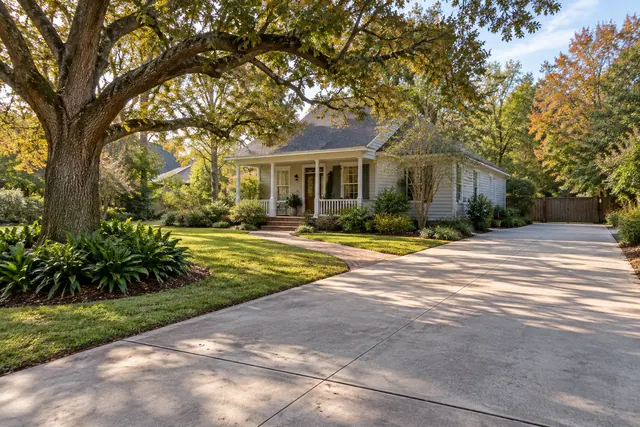
Measure the working envelope, not just the tree’s height. Consider branches over the driveway, garage doors, roof edges, gutters, carports, fences, and nearby structures, along with the space needed to lower wood without swinging it across vehicles. A limb that clears a parked car while standing may strike it as it is cut or controlled. Ask the contractor to identify likely drop zones and any limbs that must be lowered in pieces. Move vehicles and stored items beyond those zones before the crew arrives.
Wind, wet foliage, and changing weather can alter how a crown moves, while saturated ground may affect equipment positioning. Ask what conditions would prompt a pause or a revised plan, especially when a storm is approaching. If limbs extend toward a building or traffic route, the contractor should explain how they will control the pieces and protect the target area; do not accept a vague promise that branches will simply fall clear.
Your decision is whether the proposed work envelope can be kept separate from occupied space and passing vehicles.
Make driveway access a documented load-and-traffic decision
A driveway may appear to offer a convenient truck position, but its edge, thickness, underlying soil and relationship to buried services are often unknown. Photograph existing cracks, joints, drainage inlets, curb transitions and any recently repaired areas before the estimate. Draw the route from the street to the tree and mark the places where a vehicle would have to turn or stop.
A driveway suitable for a passenger car should not be assumed suitable for heavier equipment or an outrigger point. Ask the crew what ground protection or alternate location they would consider, and who decides if conditions are too soft when they arrive. Keep the answer conditional on the actual site and machinery.
Use the driveway schedule to plan vehicle movement and household access. If residents rely on the garage, school pickups, deliveries or mobility access, ask when the pavement must be cleared and whether a safe alternative exists. Keep the road and sidewalk restrictions distinct from the private driveway; work extending into the public right-of-way may require additional permissions.
Once the proposed material-handling method is clear, make sure hauling and staging do not shift unexpectedly onto weak pavers or a covered drain. At completion compare the accessible surface and curb-edge photographs, look for obvious obstructions, and ask for a specific cleanup outcome rather than a vague assurance that everything will look fine.
Choose Felling or Sectional Removal Deliberately
A controlled whole-tree fall may be considered only when a qualified crew can establish a suitable landing area and keep people, buildings, vehicles, and utilities outside it. Beside a driveway, that clear space may be limited by the house, fence, road, or neighboring lot. Ask the contractor to show where the tree would go, how the fall direction would be controlled, and what site conditions could make that option unsuitable.
Homeowners should not attempt hazardous cutting or decide that a tree is safe to fell based on appearance alone.
Sectional removal takes the crown and trunk down in managed pieces, commonly when obstacles leave no appropriate landing zone. It can require climbing or specialized lift equipment, rigging, and a controlled place to lower each piece. Ask how the crew will prevent wood from striking the driveway, curb, roof, or buried services, and whether a lift can reach the tree without crossing weak paving or soft ground.
Method choice should reflect the tree’s condition, clearance, access, and crew expertise—not a preference for the quickest-looking approach.

Driveway Edge and Vehicle Access Decisions
A driveway may offer the only straight access, but it is not automatically a safe equipment platform. The thickness of the slab, condition of the base, age of previous repairs, drainage channels and possible buried pipes all influence whether a machine or loaded truck can use it. A visible crack or lifted corner deserves a separate photograph before any work begins, so later damage discussions have a dependable baseline.
Look at the path of material after it leaves the crown. A large branch lowered beside the tree may still have to cross the driveway to reach the truck. Dragging brush over pavers, metal edging or garage thresholds can create avoidable wear even when the cutting operation is controlled. Discuss whether pieces will be carried, lowered onto protection, reduced in size or moved along a different route.
Control loading where concrete or asphalt is already stressed
Vehicle access belongs in the schedule, not merely in the cleanup checklist. Household members may need to leave for work, emergency services must be able to approach where possible, and neighboring driveways should not be blocked without coordination. A work plan should state where vehicles are relocated, who moves any temporary barriers, and how the crew will communicate when access is temporarily restricted.
After removal, check the pavement joints, curb face, drainage grate and garage approach before equipment departs. A newly visible stump or root may require a separate paving decision: grinding deeper does not automatically solve an uneven slab, and removing roots beside a foundation can change settlement risks. Distinguish the tree contractor's agreed finish from any later driveway rebuilding.

Plan Equipment Parking and Traffic Flow
Discuss the actual equipment footprint: trucks, trailers, chippers, lifts, and any machinery needed for stump work. Confirm where each will park, how the crew will turn around, and whether a truck or chipper will block the public road, a shared drive, or a neighbor’s access. In residential areas, arrange notice for affected neighbors and check any applicable local rules for road occupation or traffic control. Do not assume a vehicle can safely park on a soft verge simply because it appears level when dry.
Ask whether equipment must cross the driveway and how its weight will be spread or routed. Keep household vehicles out of the work zone, and establish a clear pedestrian route that does not pass beneath the tree or through the chipper and loading area. If deliveries or residents need access, set specific closure periods and a contact person who can coordinate entry without approaching active work.
The actionable choice is to provide a genuinely clear staging area or revise the equipment plan before the work date.
Pavement and equipment route review
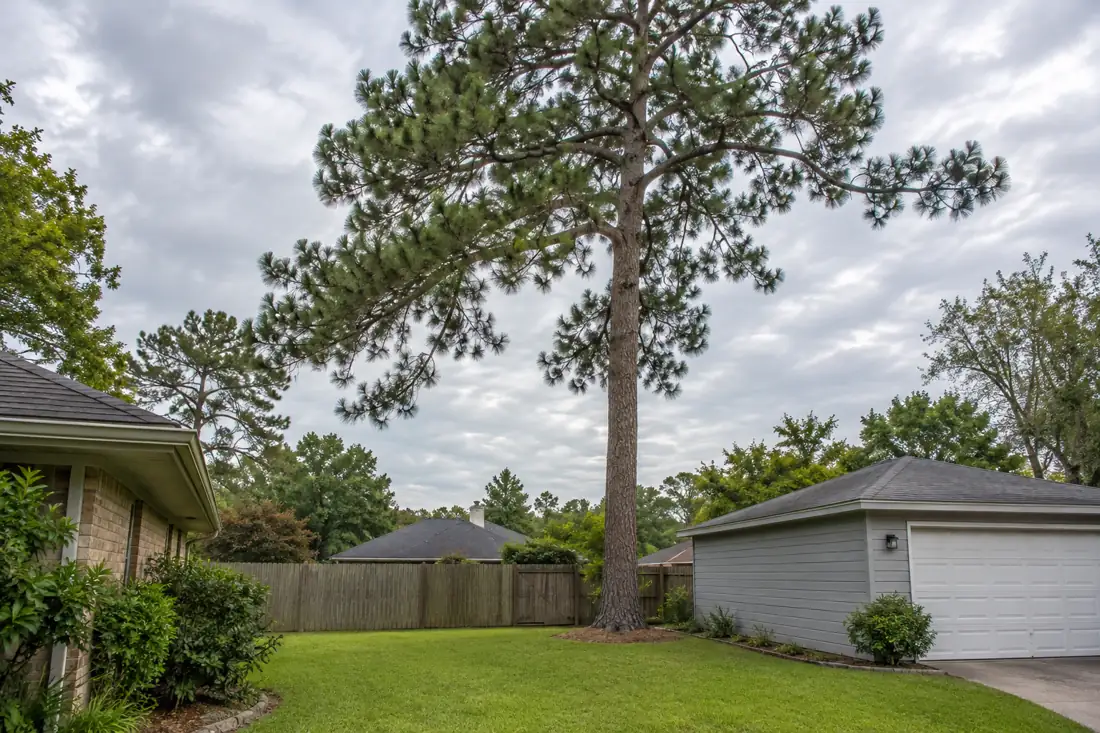
A large tree immediately beside residential paving illustrates why the driveway should be assessed as both a protected surface and a possible staging route. Before equipment arrives, photograph the slab condition, drains, slab edges, gate width and the position of parked vehicles from a safe location. Ask whether the equipment can use the paved route or must stay elsewhere.
A tree’s proximity does not establish that its roots damaged the pavement. Where removal, root work and later driveway repair overlap, separate the responsibilities and confirm the finished condition in writing.

Protect the Paving, Curb, and Drainage
A driveway can be damaged by concentrated wheel loads, tracked equipment, falling wood, or dragging logs, even when the tree itself is removed carefully. Point out decorative borders, thin asphalt edges, concrete aprons, pavers, and any sections that have already settled. Ask what mats, boards, or other load-spreading measures are appropriate for the equipment and ground conditions, and where they will be placed. Protective materials reduce some risks but do not make every surface suitable for every machine; the contractor should explain limits rather than imply damage is impossible.
Protect curb inlets, catch basins, and roadside ditches from chips, soil, and debris that could obstruct drainage during a Louisiana downpour. Keep spoil and stacked wood clear of water flow, and agree who will remove material that reaches a drain. For concrete or pavers, identify edges where a dropped section could cause chipping; for asphalt, note seams that may crumble under turning tires. Photograph vulnerable areas and discuss a response process for new damage, including when an independent paving professional should assess the surface.

Control the Work Area and Lowering Operations
Before cutting begins, confirm how the crew will define and secure the exclusion zone, including the driveway, nearby yard, and any route beneath suspended limbs. Keep children, residents, pets, and visitors outside it; a closed garage or parked vehicle is not a substitute for a controlled work area. Ask who will communicate with the crew lead if someone needs to enter the property. When work borders a public road or shared access, discuss how pedestrians and drivers will be kept away from falling or swinging material.
For sectional work, ask how cut pieces will be attached, lowered, and received, and how the crew will avoid uncontrolled swinging toward the pavement or building. A person on the ground should not stand beneath suspended wood or attempt to steady it by hand. If power conductors are in or near the work envelope, stop and involve the utility and qualified specialists; tree crews must not treat a line as insulated or harmless.
Agree that unexpected movement, uncertain clearance, or a changed hazard triggers a pause and reassessment.
Coordinate Hauling, Stump Work, and Surface Repairs
Clarify what will leave the property and what, if anything, will remain: trunk sections, branches, chips, firewood, and stump grindings need different handling. Confirm the haul route, loading location, and whether debris will be staged on paving or lawn. A full truck may need room to maneuver that the removal equipment did not, so include hauling in the access plan. Ask whether the contractor includes stump grinding, root removal, or cleanup, and identify limits near utilities, curbs, and the driveway edge before authorizing subsurface work.
Grinding a stump does not restore a driveway base or remove every root, and filling the resulting space with loose chips is not a paving repair. Discuss whether the finished area will be left level, filled with suitable material, seeded, or prepared for later hardscape work.
If roots have lifted or cracked pavement, have the surface evaluated after removal and settling before choosing a repair; replacing only the visibly raised strip may not address a weak base or drainage problem. Assign responsibility for each repair so no task is left assumed.

Verify the Site Before Reopening
Do not reopen a closed driveway simply because cutting has stopped. Have the crew lead confirm that tools, ropes, debris, and equipment are clear; that no hanging or unstable material remains; and that the agreed access route is passable. Walk the driveway edge and curb with the contractor, comparing the condition with pre-work photographs. Check gates, garage access, drains, marked utility areas, and any temporary barriers. If something looks newly cracked, depressed, or obstructed, document it and discuss next steps before equipment departs when practical.
Ask what was completed, what was intentionally left in place, and whether any buried service, irrigation line, or drainage feature needs follow-up attention. If paving repair is pending, keep vehicles off any excavated or unsettled area until the responsible professional says it is ready for use.
A site manager should record the reopening time, remaining restrictions, and contact details for the contractor and repair providers. This final check cannot guarantee that no later settlement will occur, but it creates a clear handoff and a safer basis for normal driveway use.
A driveway is a load-bearing route, not merely an open strip
A tree next to concrete or asphalt introduces equipment positioning, vehicle access, curb edges and potential subsurface drainage conflicts. Even when a truck fits the entrance, that does not mean a particular slab or pavement edge can support its load. Existing cracks and soft ground should be documented before work so new damage is not confused with old conditions.
Send a wide driveway view showing the street, turn, parked vehicles and possible loading location; add close views of the pavement edge and exposed services. Ask which surfaces need protection and who decides when the driveway can reopen. If the more important constraint is a property-line fence, gate or shared panel that limits crew access, the fence-side removal guide addresses permissions and dismantling boundaries separately.
- Ask how the crew will enter, turn, stage and haul material.
- Identify drains, irrigation and shallow private systems before ground work.
- Keep vehicle relocation and surface repair as separate scope decisions.
Questions about this project
Can tree equipment use any driveway?
No general assumption should be made. Pavement condition, edges, support, buried infrastructure and the proposed equipment all matter. Ask the contractor to assess the intended setup and route for the particular property.
Do mats guarantee there will be no ground damage?
Ground protection is one part of a site-specific plan. It does not remove every load, soil or access limitation. Discuss the proposed measures and any restoration responsibilities in the written scope.
What access information helps an estimator?
Send the narrowest opening, overhead obstacles, turns and the distance between the tree and the loading area. Include photos of the entire route and identify steps, soft ground or features that must remain protected.
Should I remove a fence before the visit?
First ask the contractor to assess access and agree on any temporary opening. Identify who owns the fence, who can authorize the change and who will reinstall it. Do not assume the opening is necessary or included.
Which property features should I point out?
Identify buildings, vehicles, fences, fixed fixtures, landscape features, utilities and occupied routes. Explain what can move and what must remain. Include existing damage and any buried features you know about along the access route.
Should people remain inside the work area?
The contractor and site contact should establish an exclusion area and access arrangements appropriate to the work. Keep children, pets, visitors and other workers outside the active zone until the responsible parties say it can reopen.
How should extra work be approved?
Use the agreed approval process and identify the change, reason, scope, price or schedule effect as applicable. Confirm who has authority before treating an additional tree or task as part of the original job.
What completion records are useful?
Keep the agreed scope, tree or area identification, authorized changes, invoice and labeled photos where appropriate. Include unresolved items and a contact. Contract-specific records should follow the buyer's stated requirements.
What should I compare besides the price?
Compare tree identification, work objectives, access assumptions, hauling, stump treatment, site finish and exclusions. Ask whether permits or other coordination are part of the scope and who can approve changes if conditions differ.
Does an online request book the crew?
No. A request starts the estimate conversation. The company still needs to discuss scope, availability and any site assessment. For a dangerous or urgent condition, call 504-458-8336 rather than relying on a form response.
What should I tell Tree Huggers about tree removal beside a driveway?
Explain the property address, the work you want and the specific concerns: pavement edges, vehicle clearance, staging footprint. Send safe photos of the tree, surroundings and access route. The contractor can then discuss the assessment and scope needed for this situation.
How do I request an estimate for this work?
Call 504-458-8336, text photos or use the estimate form on this page. Include the address, desired outcome and any timing constraints. The company will need to review scope and availability; an online request does not confirm a price, appointment or emergency dispatch.
Get a scope for your property
Send a photo looking down the full driveway, a close view of the pavement beside the trunk, and the space available for a chip truck without blocking your exit.