A clearer picture of the scope


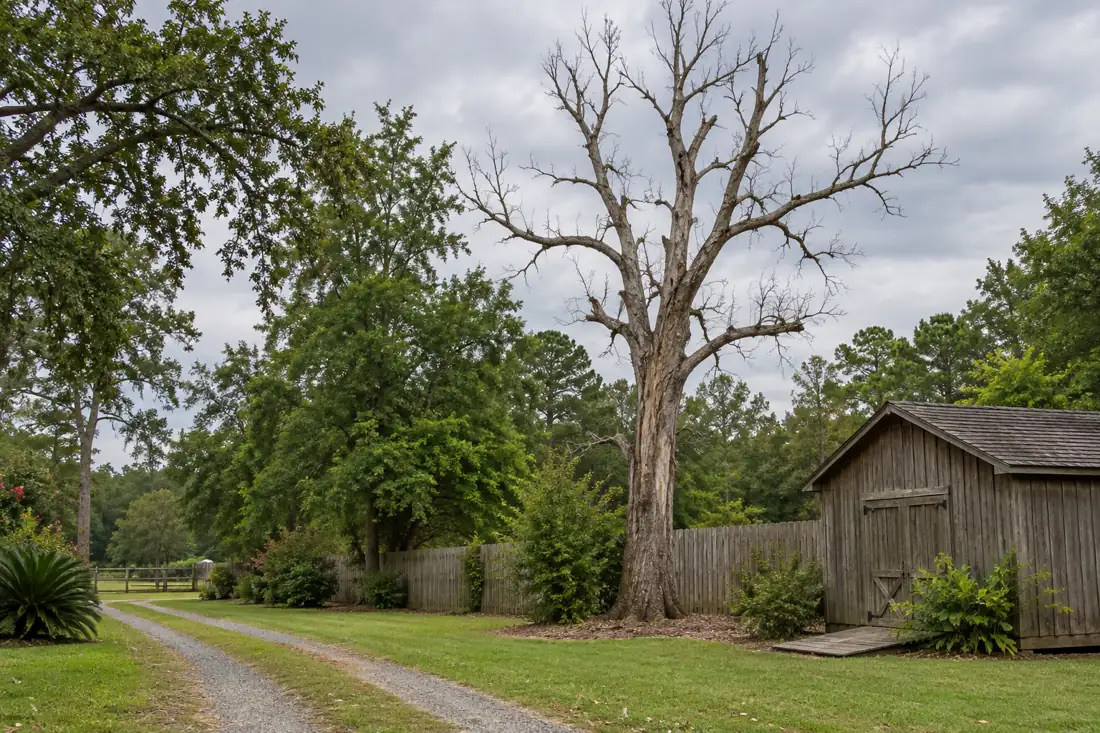
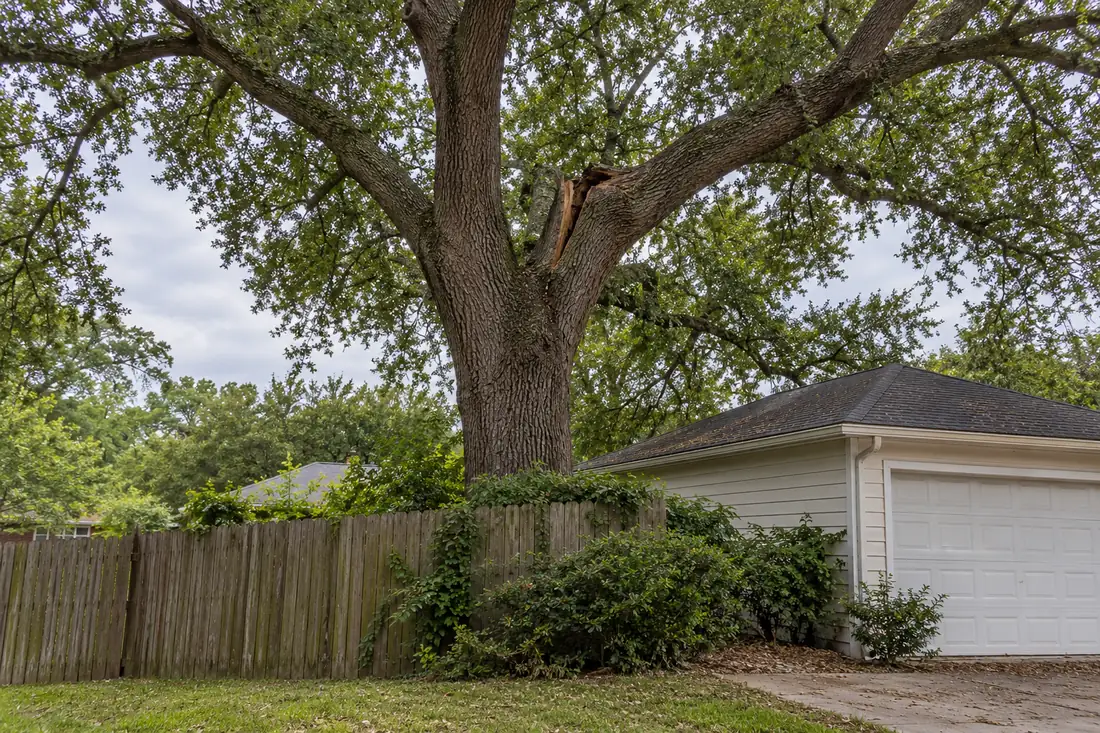
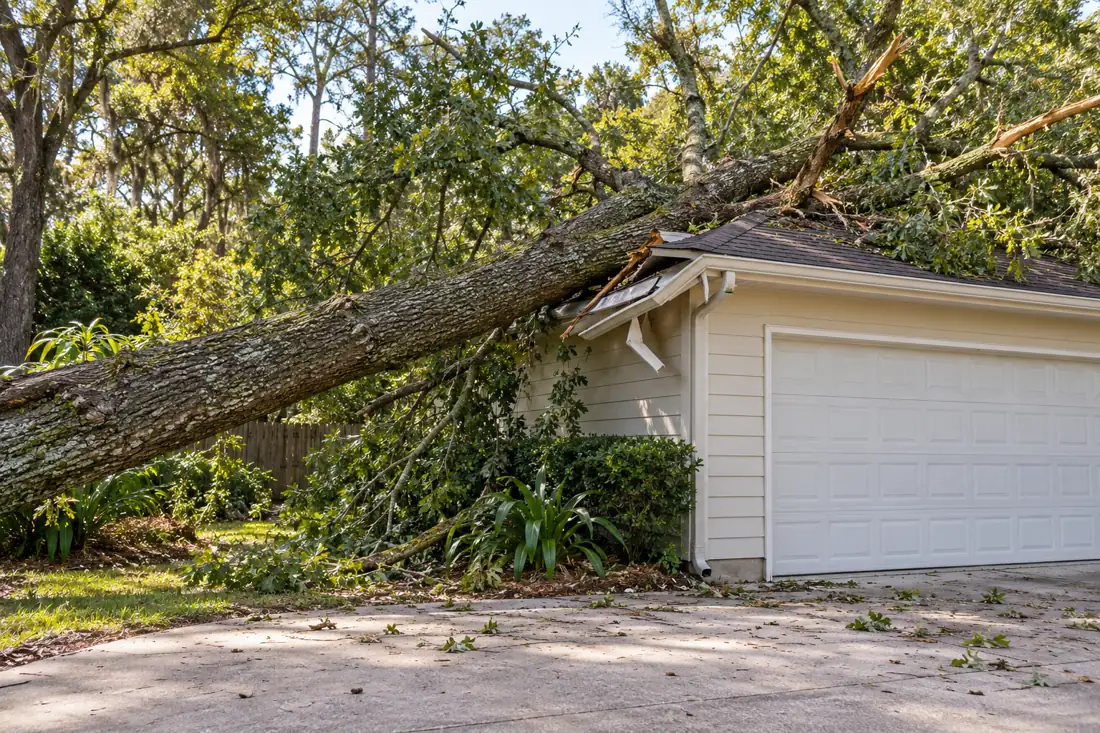
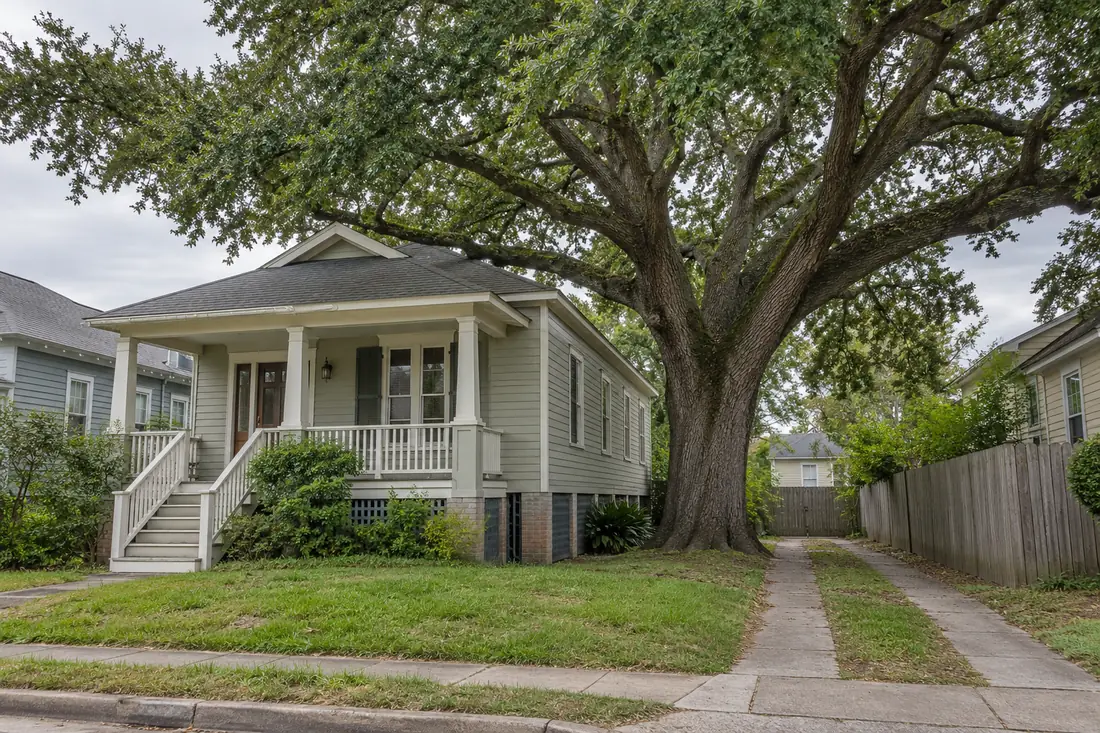
Example: Tree removal in a narrow side yard
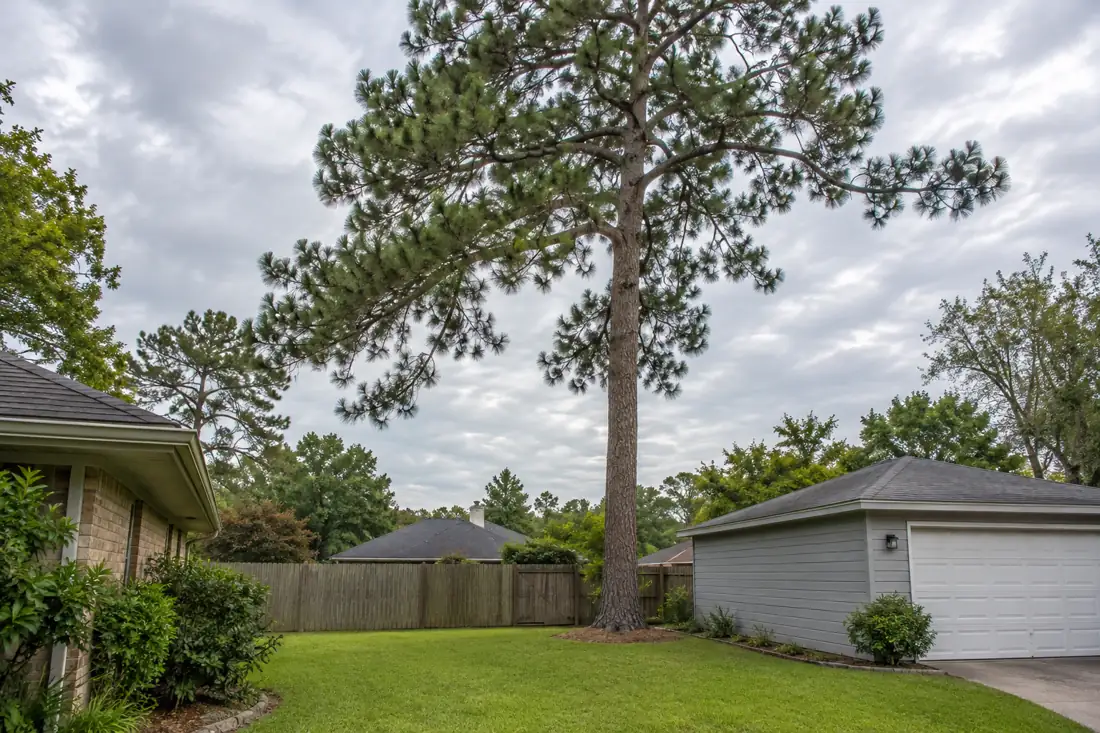
The tree and compact equipment are removed while both houses and the fence remain. Ground restoration should be agreed separately.
Measure the narrowest usable opening rather than the widest point beside the house. Overhanging eaves, meters, corners and steps can reduce clearance. Photos looking in both directions help explain the route. Do not move a fence or promise machinery access until the contractor has checked the actual dimensions and the equipment required for the tree.
For this project, separate usable width, eaves and meters and turning room. These details help the contractor understand what must be protected, what information needs confirmation and what result you want from the work. A clear request is more useful than an assumed method or a price based only on tree size.
The narrowest dimension may occur at a gas meter, downspout, fence latch, porch stair or overhanging eave rather than the gate. Measure each pinch point and the space needed to turn equipment or carry a long section of wood. Map where crew members can stand safely while material is moving and ensure that a resident is not trapped on the far side of a blocked passage. If the route is only suitable for hand removal, the handling plan and cleanup schedule should reflect that constraint.
Before work, mark fragile utilities, buried irrigation and landscape borders along the route. Agree on protection for pavement, lawn and neighboring finishes, and clarify any temporary fence or gate work. Ask the estimator which machines, if any, can actually pass every turn and which portions will be moved manually. Record how chips and logs will be staged without blocking doors or drainage. The written access plan should survive a change of crew leader on the workday.
Measure the entire route, not only the gate
A side yard may be wide enough for a person but not for the equipment, carried sections or turning radius needed during tree removal. Measure the gate's clear opening, the narrowest passage between the wall and fence, any offset corners and the distance from the street to the trunk.
Note projecting meters, hose bibs, window wells and low roof edges. A useful photograph shows the corridor length as well as its tightest point, ideally with a common object that provides scale without blocking the path.
The same passage must be considered in reverse when logs and debris leave the property. A long limb may fit through the gate only after it has been reduced to manageable sections. The wall and fence may be close enough to prevent lifting or turning a load without contact. Share these constraints during the estimate rather than asking the crew to discover them after setup. The route should be planned against the actual material to move, not merely the arrival of people and hand tools.

Draw a route that includes turns, height and staging
A narrow side yard often becomes more restrictive at the bend behind a garage or where the path meets a patio. Measure the narrowest clear width at several points, noting fence posts, corner trim, steps and hose connections. Overhead clearance matters too: eaves, gutters, telephone lines and foliage can prevent passage even when a machine fits between the walls on paper.
A sketch should show where equipment would enter, turn, work and exit, plus where cut material would be staged. Ask the estimator to verify dimensions on site before selecting a method. Measurements help describe the constraint; they do not authorize anyone to squeeze heavy machinery through a route that lacks safe turning room or adequate support underfoot.
Identify who controls the property edges
A narrow corridor often runs alongside a boundary fence, a neighbor's wall or a shared gate. Confirm which structures belong to whom and whether any part of the proposed access route crosses a property line. Permission to work on your tree does not automatically grant permission to remove someone else's fence panel, stage branches on their land or operate in a shared driveway. If a temporary opening is proposed, document who approves it and who restores it after tree work.
Keep boundary arrangements separate from the main removal estimate so a scope change does not quietly become a neighbor dispute. Ask the crew whether everything can remain on your property or whether a different approach would reduce the need for access elsewhere. If an adjoining owner must be contacted, agree on the contact and timing before the job is scheduled. A practical plan protects neighbor relationships while preventing a contractor from relying on access it cannot legally or safely use.

Understand what limited access changes
Equipment selection follows tree condition, terrain and space rather than a simple promise that a narrow side yard requires a crane or hand work. A contractor may need to use smaller tools, controlled lowering or more handling stages to keep material within the available corridor. Ask for an explanation of how the proposed work method responds to the particular pinch points you documented. Avoid insisting on a rigging technique or a large machine based on photographs of another property.
More handling can affect both schedule and the kind of cleanup included. Sections that cannot travel through the side yard intact may need to be processed closer to the tree, increasing the number of trips and locations where small debris accumulates. The estimator should account for those constraints explicitly. Be wary of a quotation that assumes normal driveway access when the only available route includes steps, decorative pavers, a tight dogleg or a narrow gate that cannot be removed.
Treat temporary fence removal as a separate decision
Opening a gate is different from temporarily removing a fence panel, detaching hardware or disturbing a shared boundary. If a proposed access route depends on a change to a fence, ask the contractor to identify the exact section and explain who will seek any necessary owner approval. Photograph the existing alignment, posts, hinges and adjacent planting before anything is moved.
The written estimate should specify whether opening and closing the fence is included, who stores the panels, whether a specialist is required and who restores the boundary after the tree work. Where a neighbor owns or shares a structure, avoid treating silence as consent. An access plan that depends on unapproved removal should not be described as confirmed.

Routing Material Through a Narrow Side Yard
A tape-measured gate opening is only one dimension of access. A long limb section can fit through the gate and still fail to turn past a downspout or an air-conditioning cabinet. Map the smallest horizontal gap, overhead height, threshold steps and each corner. Include where a person could stand clear while brush travels; a route that permits a worker to squeeze through may be unsuitable for loaded equipment.
Neighboring siding, fence caps, window wells and meter pipes are not disposable contact surfaces. Discuss whether the job requires hand carrying, staged cutting, small carts or temporarily removing a gate panel with permission. A contractor should not promise that a fence can be dismantled and rebuilt until ownership, fasteners, condition and responsibility are agreed in writing.

The usable opening changes with every turn
Consider how rain changes the route. A narrow grass strip can become deeply rutted after repeated passes, while pavers or stepping stones may settle under point loads. Boards and mats distribute some loads but do not eliminate the need to assess soil support. The owner can help by moving movable planters and furniture without disturbing utilities or any protected plantings.
At completion, inspect the entire passage rather than only the stump area: fence alignment, gates that latch, drain outlets, meters, hose bibs, paving edges and disturbed soil. Ask for a cleanup endpoint that accounts for small branches and sawdust lodged along the side walls. If paving restoration was never included, the contractor should make that limit explicit.
Keep the household exit and shared spaces usable
If the side passage is also a required route to a door, utility meter or backyard exit, discuss alternative access during work. A work zone must be controlled while cutting and material handling are underway; occupants cannot simply squeeze past active crews because the passage is familiar. Identify children, pets and regular visitors who may use that gate. Before the scheduled window, communicate which door or route will be unavailable and where people should go instead.
The plan should consider emergency access without suggesting that every passage must remain open at all times. A qualified contractor can explain exclusion boundaries, while the household should avoid entering the zone until the crew confirms it is safe. If the property contains a secondary apartment or other occupant, include them in advance coordination. Treat access communication as part of the estimate, not a courtesy left to the morning of cutting. A narrow space offers very little margin for unexpected foot traffic.
Test every pinch point in a narrow passage before naming the equipment
A narrow side yard is not defined by its narrowest tape measurement alone. Materials must also turn past corners, doorsteps, water taps, gas meters, eaves, fences and changes in grade. Make a route drawing with a few dimensioned points rather than a single 'about three feet' estimate.
Photograph both directions, plus a wider image showing where the passage meets the public loading point. The owner should not choose equipment based on an online specification or promise that a machine will fit; the contractor needs to check clearance under real working conditions. Mark areas where vegetation could hide drains or utilities, and do not treat a neighbor's side yard as available without permission.
Ask how each phase moves through the passage: personnel, ropes and tools, then brush, wood and eventually any stump-grinding debris. A path that lets workers enter may not safely accommodate a loaded cart coming back out. If the home's exit, a shared walkway or a pet gate would be blocked, plan a safe alternative rather than leaving occupants to cross the working route.
Distinguish carrying and loading charges from the cutting method when comparing estimates. A written completion standard should cover removal of debris from the whole access route and restoration of any agreed temporary gate or landscape protection. Wet conditions or unforeseen obstructions should trigger reassessment, not unapproved property alterations.
Protect fragile surfaces and concealed services
A side yard may conceal sprinkler tubing, drainage lines, cables and pipework beneath mulch or shallow soil. It may also contain fragile siding, exterior lighting, air-conditioning equipment or a fence that cannot safely carry a load. Tell the estimator about known utilities, recent repairs and surfaces you are especially concerned about. Request a practical protection plan while recognizing that mats or coverings do not make a weak surface suitable for any size of equipment.
Narrow access can concentrate foot traffic and material movements in the same strip of soil. If the ground is soft or recently soaked, the work method and schedule may need to change. Ask what happens if the planned route becomes unusable after rain. Document existing cracks and damage before the crew arrives, preferably in photos with an identifiable location. That baseline supports a fair completion review without implying every old defect is tree-work damage or every new mark can be avoided.

Look beyond the path for overhead and buried conflicts
Meters, service cables, roof drains, irrigation valves, exterior lights and underground piping may line a narrow side yard. People can overlook these elements when focusing only on the tree canopy. Share photographs of the wall and utility connections; ask the crew to establish appropriate exclusion zones and any needed utility coordination before scheduling. Never move a power line, pipe or meter cover yourself to create access.
Where stump grinding, excavation or ground anchors could disturb soil, the appropriate underground-utility locating process may be needed. A surface photograph will not reveal every buried installation. Explain whether the route crosses a drain, recently repaired trench or soft area, and have the contractor verify that any temporary ground protection is suitable for the chosen operation.
Plan where branches and logs will travel
A narrow passage is only one part of the material route. Identify the location where branches will be gathered, reduced, chipped or loaded after reaching the front of the property. Consider whether trucks can park legally and whether the work will affect a sidewalk or driveway. The contractor should describe the handling sequence and any access arrangements needed. Avoid assuming a street can be blocked or a curb area occupied without checking the applicable rules and permission requirements.
Talk through material preferences early. Keeping firewood means deciding where it can be placed without blocking the passage; removing all wood changes the hauling expectation. Stump treatment, chip disposal and landscaping repairs should be identified independently. If a gate will be temporarily lifted, request a defined restoration standard rather than assuming every hinge or post can be returned to its former state without assessment. A well-defined finish is especially important when the route itself is a major part of the job.
Separate the people route from the debris movement plan
A side passage may allow workers to reach a tree while still making it difficult to move long sections out safely. Ask how the crew intends to handle branches, wood rounds and equipment without relying on residents to stand nearby or carry material. Material staging should avoid blocking required exits and should leave a planned route for workers to move away from an unexpected hazard.
If debris must pass near a vehicle, window, outdoor air unit or gate latch, document the exposure before work starts. A proposal can outline whether pieces will be carried out, mechanically moved or left in an agreed area, but the final technique depends on the site assessment. Do not substitute a homeowner's informal idea of cutting smaller pieces for a professional job plan.

Supply photographs that answer access questions
For a useful estimate, photograph the full tree from a safe distance and the route in several consecutive views, beginning at the street. Show the gate fully open, the narrow turn, overhead eaves and the tree's base. Provide dimensions you actually measured rather than guessing from a picture. Explain where parking is normally available and whether the property has stairs, slopes or a locked rear access point. Do not climb, trim or clear around an unstable tree solely to obtain a better photograph.
Ask the contractor to state the assumed access route in the written quote and what changes would trigger a new scope or price. Compare quotations only after confirming they include the same sectioning, removal endpoint, hauling, stump work and property restoration responsibilities. A lower quote may omit the unusually labor-intensive corridor work. Include a reliable contact for gate access and decisions, but keep typed personal details out of analytics events; the estimate form, not click tracking, is where project information belongs.
Plan for vulnerable surfaces and rain
Narrow access concentrates foot traffic and equipment movement in a small strip of soil. Pavers, drip lines, grass edges and foundation drains may be particularly vulnerable when saturated. Explain recent pooling, settling or known buried lines; ask whether mats or another surface-protection strategy is appropriate. Protective equipment can reduce some impacts, but it does not promise that soft soil or delicate paving will be unchanged.
Discuss whether the crew should postpone the job after heavy rain or change the route. Ask what happens if access conditions differ from those seen during the estimate, including how any additional cost or revised date would be approved. A documented pause decision is better than improvising a new route through landscaping without the owner's knowledge.

Confirm the route at handover
Once cutting is complete, walk the side yard after the contractor declares it safe. Check that the passage is clear of logs, loose branches, tools and obvious debris. Review the agreed condition of the fence, latch, gate, plants and surfaces. Photograph any unfinished item with its location and refer to the written scope. If the crew used a temporary access opening, confirm that it was restored as arranged. Do not treat a clean front yard as proof the narrow rear corridor is also finished.
Save the final scope, access photographs, permissions and completion notes together. Those records matter if later fence repair or landscaping is handled by a different provider. A Tree Huggers inquiry can begin a discussion about the specific property constraints but does not itself reserve a date or guarantee a method. The best result is a removal plan that anticipates what the narrow route allows, protects the people who use it and leaves the property in the condition both sides actually agreed upon.
Define the final condition of the route
The end of a removal is not just the tree being down. Compare the gate opening, fence line, walking surface and adjacent planted areas against the starting photographs. Clarify whether the quote includes basic debris pickup, reattaching temporary fence sections or more extensive surface and landscape repair. Stump treatment, soil grading and replacement paving may be separate items rather than implied by a broad cleanup promise.
Request a final walk-through from a safe position after equipment has cleared the area. Note any remaining wood, exposed sharp edges, blocked drains or obstacles to normal access. If something differs from the agreed scope, record the exact condition and seek written clarification before assuming a remedy. This preserves a practical route for future maintenance as well as a clearer project record.
Choose a Material Exit Route Before Equipment
A narrow side yard can make a technically possible removal impractical unless the debris route has been evaluated. Measure not just the gate opening but the full path around utilities, steps, air-conditioning equipment, overhanging eaves and the turning area at each end. A crew might carry smaller wood by hand when equipment cannot pass, but that changes labor, cut sizes, staging and scheduling. A fence panel should not be removed without the responsible owner's consent and a separate restoration agreement.
Keep a clear household or tenant escape route while the job is underway. If the sole side passage must be closed temporarily, identify the alternative route and discuss access with occupants before the crew begins. Photograph fragile paving and garden edges before work. At handover, verify that gates latch, drains are clear and no heavy debris remains in a passage that must carry daily foot traffic; paving or fence repairs should be specifically included rather than assumed.
- Record minimum usable width, overhead clearance and turning room along the entire route.
- Ask for a hand-carry or alternative staging plan if machines cannot safely fit.
- Separate tree removal from any temporary fence work and surface reinstatement.
Compare an access problem where reopening a driveway is urgent
Questions about this project
What access information helps an estimator?
Send the narrowest opening, overhead obstacles, turns and the distance between the tree and the loading area. Include photos of the entire route and identify steps, soft ground or features that must remain protected.
Should I remove a fence before the visit?
First ask the contractor to assess access and agree on any temporary opening. Identify who owns the fence, who can authorize the change and who will reinstall it. Do not assume the opening is necessary or included.
Can I identify a safe wire by looking at it?
No. Do not approach or touch wires, a tree contacting them or connected objects to investigate. Keep clear and contact the utility or emergency services when there is an immediate electrical hazard.
Does a tree estimate include utility disconnection?
Only if the appropriate coordination and responsibilities are explicitly arranged. Utility work may require the service provider or another qualified party. Confirm those arrangements before assuming the tree crew can proceed near affected services.
Can the contractor use my neighbor's yard?
Only after the required permission and suitable access arrangements are in place. Identify the proposed route and who can authorize it. A quote accepted by one owner does not automatically grant access to someone else's land.
Does a tree estimate determine the property boundary?
No. Resolve an uncertain boundary or ownership question using appropriate property information and professionals. The tree contractor needs an authorized scope and access plan, but a visual work estimate is not a survey or legal determination.
Can the removal method be selected from a photo?
Photos help prepare the discussion but may not show defects, ground conditions or usable access. The contractor may need an on-site assessment before confirming the method, equipment and final scope for the property.
What if the tree changes before the appointment?
Tell the contractor about a new split, failed branch, changed lean or other visible change. Keep clear of the affected area. Changed conditions may require a different assessment, priority or work plan before the crew proceeds.
What should I compare besides the price?
Compare tree identification, work objectives, access assumptions, hauling, stump treatment, site finish and exclusions. Ask whether permits or other coordination are part of the scope and who can approve changes if conditions differ.
Does an online request book the crew?
No. A request starts the estimate conversation. The company still needs to discuss scope, availability and any site assessment. For a dangerous or urgent condition, call 504-458-8336 rather than relying on a form response.
What should I tell Tree Huggers about tree removal with a narrow side yard?
Explain the property address, the work you want and the specific concerns: usable width, eaves and meters, turning room. Send safe photos of the tree, surroundings and access route. The contractor can then discuss the assessment and scope needed for this situation.
How do I request an estimate for this work?
Call 504-458-8336, text photos or use the estimate form on this page. Include the address, desired outcome and any timing constraints. The company will need to review scope and availability; an online request does not confirm a price, appointment or emergency dispatch.
Get a scope for your property
Send a photo from the street gate toward the backyard, another looking back toward the street, and the narrowest point near meters, steps or eaves.