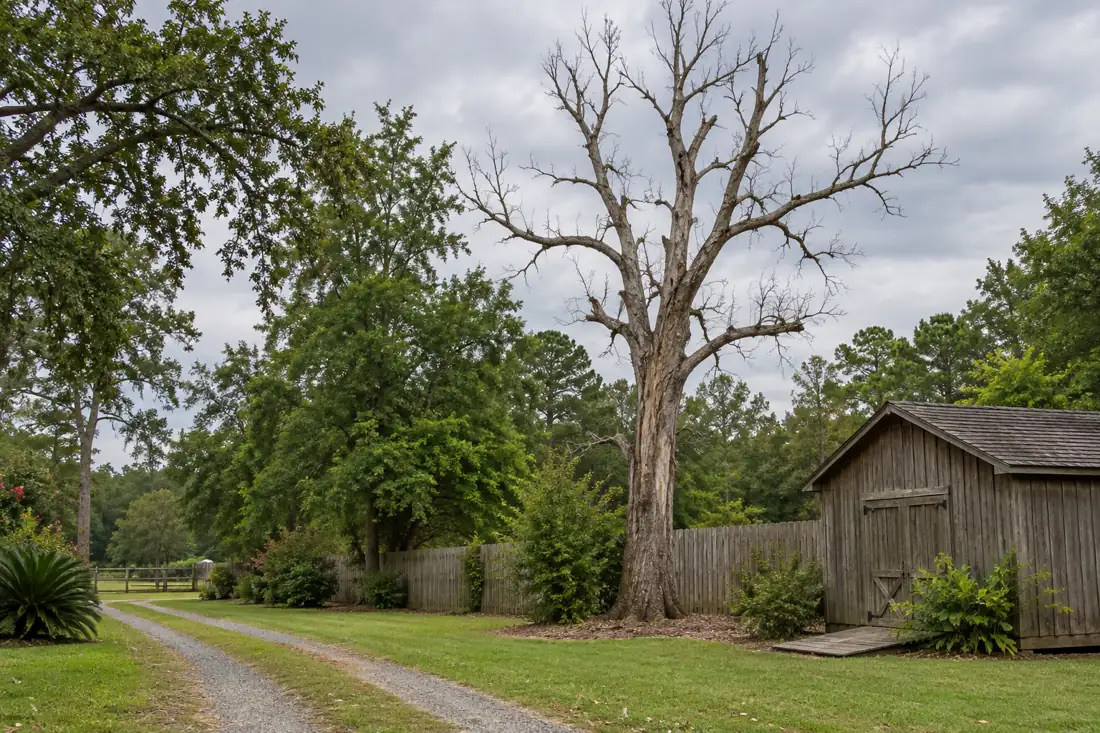
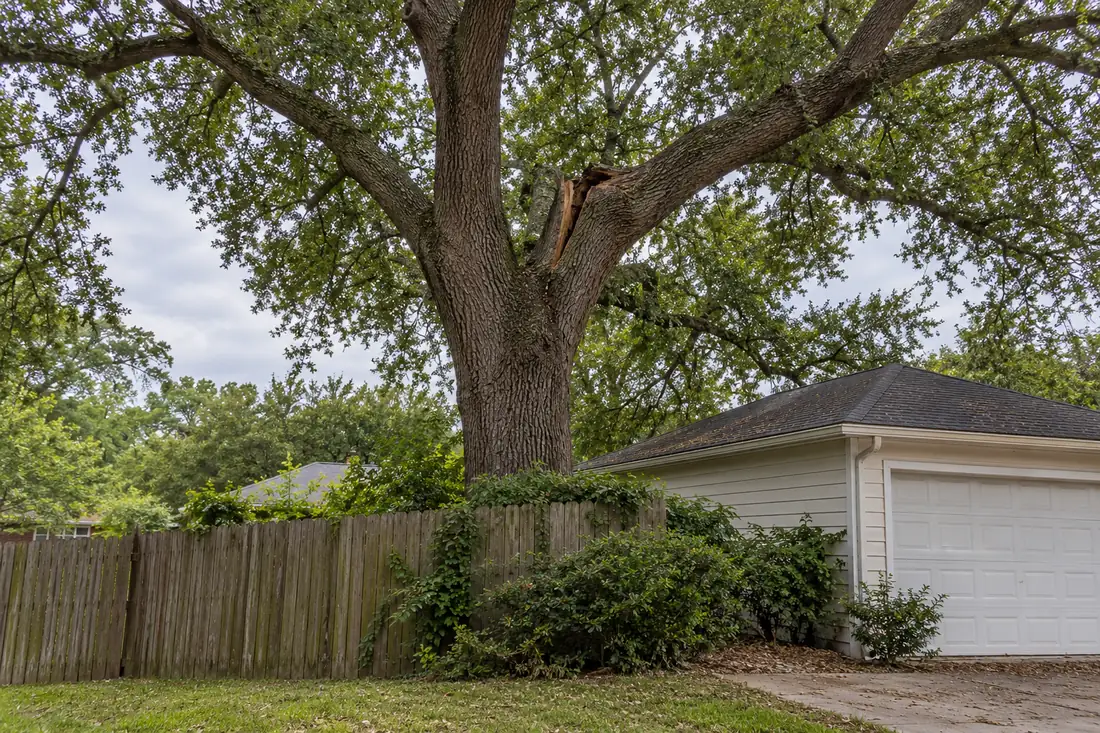
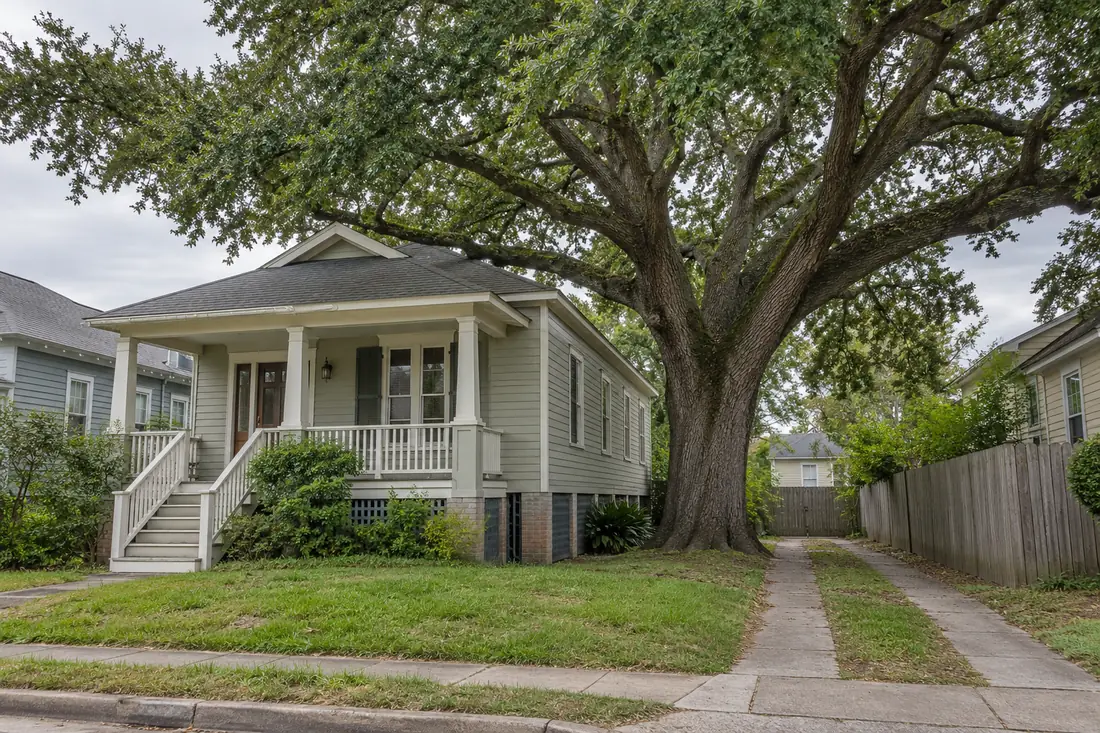
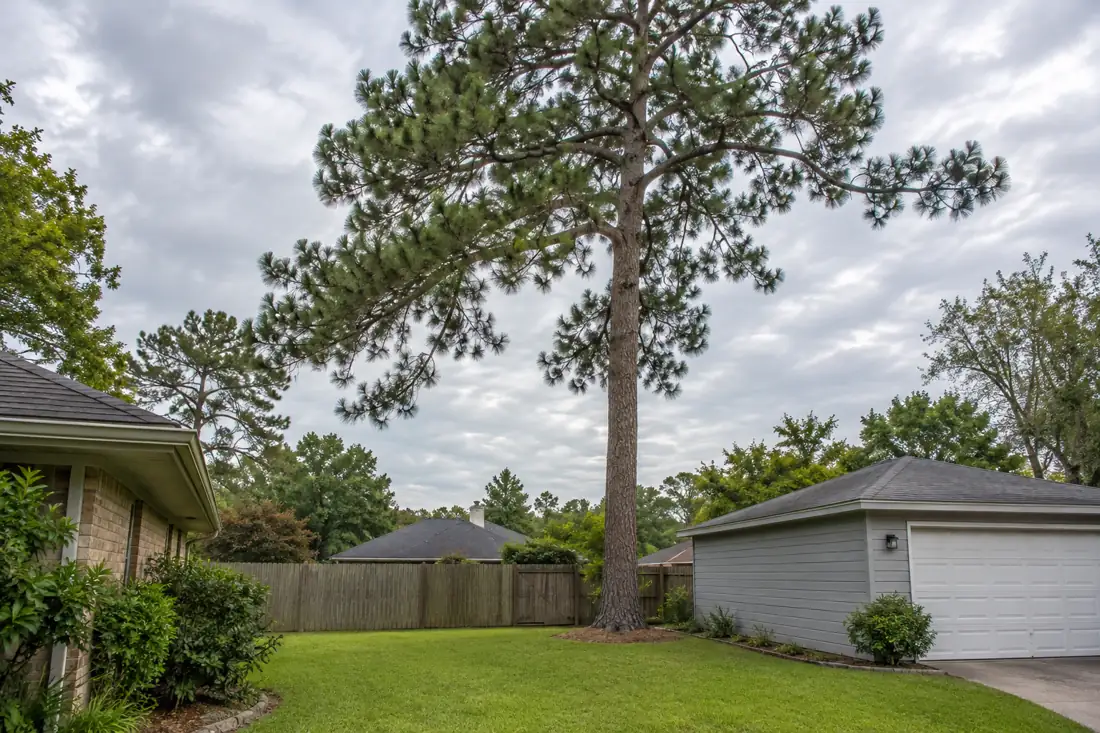
A tree surrounded by buildings, fences or occupied space may need sections controlled throughout the removal. An open patch of grass is not automatically a safe landing area if people, utilities or other property are within reach. Describe every target and ask how the work method will be selected for the site.
A yard without a usable drop zone changes the sequence of removal. Map the places wood must not land: roofs, fences, parking areas, neighbor structures, service lines and occupied paths. Take one photograph that shows the whole crown and another showing the possible loading area. The estimator needs to determine whether controlled rigging, a lift, a crane or another method is appropriate from actual access, reach, support conditions and tree stability.
Ask which areas must remain unoccupied while work occurs and how residents, tenants, visitors or adjacent users will be informed of those limits. Do not select a machine solely from a photograph or require a particular cutting method in the request. Specify whether branches, trunk sections and stump material all need removal, and identify the intended final condition of the site. Controlled piece handling is a planning question, not a promise that no surface will be touched.
When no open drop zone exists, make a labeled site sketch with roofs, parked vehicles, walkways, service lines, fencing, gardens and adjacent property. Distinguish an accessible lowering area from a location where material could fall after an uncontrolled movement. The method may involve sectional work, rigging or specialized access, but the choice requires an actual on-site assessment of tree condition and competent crew planning. No generic equipment claim can establish that a complex removal is safe.
Ask who will maintain the exclusion zone and where people, vehicles and pets should remain. Confirm what happens if weather, hidden decay or restricted access changes the work plan. Identify safe storage and pickup locations for cut wood so removal does not create a second hazard near driveways or exits. Compare estimates using the same protected targets and cleanup boundaries; a lower quote that silently ignores difficult handling is not an equivalent scope. Keep any neighboring access authorization in writing before mobilization.

Discuss controlled handling without prescribing a machine
Depending on the tree and access, a contractor may consider sectional dismantling, rigging, aerial access, crane-assisted handling, or other specialized techniques. None is automatically safer merely because the equipment sounds advanced. The trunk's structural integrity, load paths, setup area, operator qualifications and nearby targets determine feasibility. Even when a machine can reach the crown, it still needs a suitable position and a controlled way to move cut sections. Clients should ask for the plan, not insist on a particular piece of equipment.
Large limbs may need to be divided into manageable pieces, but the details belong to qualified personnel on site. Never ask workers to skip exclusion zones for convenience or suggest catching suspended wood by hand. If the tree is structurally compromised, additional evaluation can change the proposed approach. A written quote should identify which work method is assumed and what conditions might require a revised scope.
A patch of lawn beneath a tree does not automatically provide a safe landing zone. Nearby roofs, fences, patios, occupied pathways and utilities may prevent uncontrolled material from falling. Describe the crown and every surrounding target so the contractor can evaluate handling options rather than assume that open ground exists.
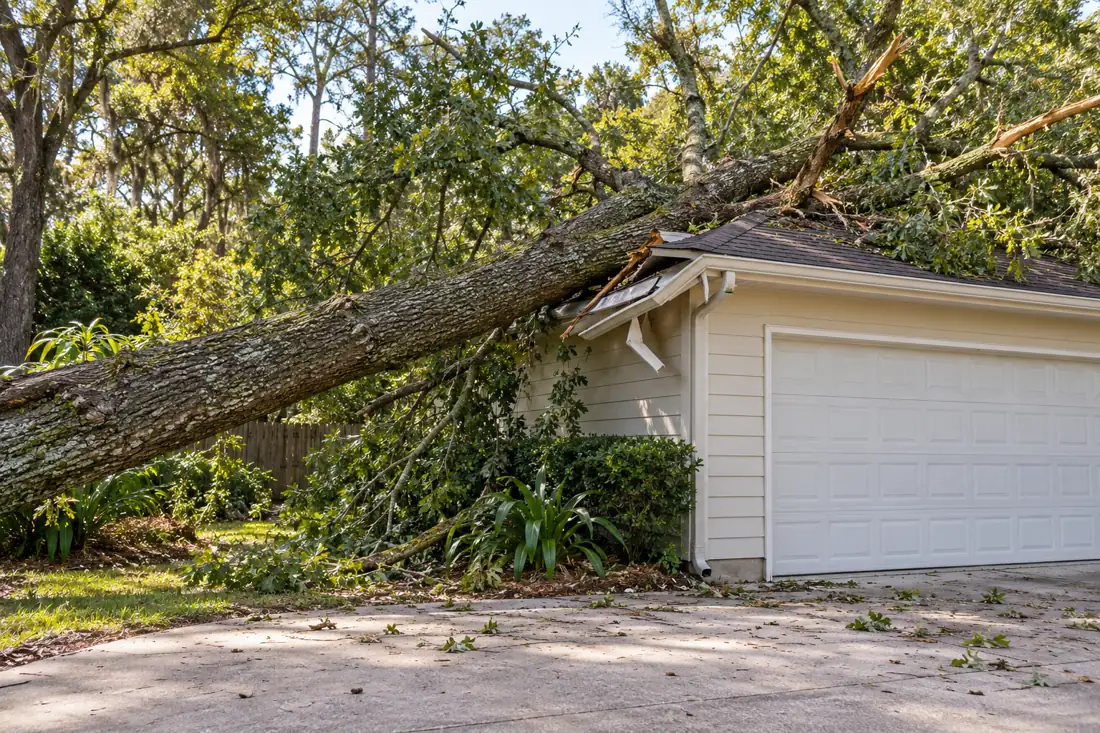
Before work, agree on a practical exclusion area and identify portable objects that may need relocating. Responsibility for access, cleanup and any temporary closures should be clear in the written proposal. A synthetic image is educational only and cannot show hidden services or prove that any particular lowering method is feasible.
Make the controlled-removal sequence explicit. When there is no clear drop zone, a simple direction to take the tree down is not a usable plan. Identify sections requiring lowering, suitable anchor points and the area where lowered material will be handled. Agree on an exclusion area, safe debris route and access restrictions before crews arrive.
Require a controlled-removal plan, not a guessed drop zone
Where branches cannot safely land, identify all nearby targets: windows, roofs, utilities, shared yards, fences, underground surfaces and occupied access routes. A quote should identify how material will be controlled rather than simply label the tree ‘difficult.’ Request photographs from a safe distance that show both the tree and the surrounding constraints.
The proposed method may involve sectional lowering, rigging or specialized lifting after a qualified assessment. A crane is not automatically feasible on a narrow lot; ground bearing, setup access and clearance matter. Agree in writing where heavy material will be processed and hauled and who controls the restricted work area.

Treat a zero-drop-space job as a controlled-handling proposal
When there is no open landing area, the key estimate question is how each section will be restrained and moved without contacting buildings, people, parked vehicles or utilities. Map every protected target, including roofs, fences, sidewalks and equipment that might not appear in a close-up of the trunk. Identify ordinary activity around the site and who can restrict that activity during the work. The homeowner should ask for a method explanation appropriate to the tree's condition without dictating a rigging system. Standing trees, split trunks and limbs already resting on structures can require different decisions. A small-looking patch of grass does not prove it is a suitable landing area or support location.
Compare quotes by the work constraints they actually address: dismantling method, material handling, equipment access, safety exclusion area, debris hauling and cleanup. A proposal that describes only the tree's height or estimated hours may leave the most important risks unexplained. If a crane or other specialized approach is considered, ask who evaluates where it can stand and what access approvals are needed; a homeowner should not assume the street or neighboring drive can be occupied.
Require a clear stop-and-reassess process if site conditions change, particularly near occupied property. The final outcome should say what happens to the trunk, brush, logs and stump, plus how access and surfaces are returned after the work.
Recognize why ordinary open-ground removal may not fit
A property can lack a clear landing zone even when there is a lawn beneath the tree. A small backyard may be surrounded by roofs, fences, swimming pools, utility drops, neighboring gardens and busy access routes. The height of the tree does not reveal whether a whole section may move safely through that space.
A tree with an uneven canopy or damaged structure can create additional concerns when its parts are released from the trunk. The site needs a controlled work plan rather than a rough instruction to drop the tree “toward the open side.”
Take wide ground-level views showing all sides of the tree and the nearby structures. Identify who uses the yard and whether traffic passes close to the work. Never stand beneath a compromised limb or approach electrical conductors to improve a photo. The estimator should explain what makes the available area unsuitable for ordinary felling and what alternatives merit evaluation.
Locate the actual protected targets and access boundaries
A no-drop-zone job often includes objects outside the tree's immediate footprint. A branch might pass above an adjoining roof, while logs must move through a gate beside an air conditioning unit. Map structures, vehicles, fences, windows, pool equipment, landscaping and overhead lines. Include underground concerns such as septic components, irrigation or decorative paving where known. A seemingly empty area may be unavailable for machinery because the ground cannot carry the load or the route is too narrow.
Ask where equipment could be set up, where personnel must be excluded, and where wood can be transferred for hauling. If the work zone crosses a property line, do not assume that neighboring land is available. If a public road or sidewalk is affected, approvals and traffic management may be necessary. Separate the legal and logistical boundaries from the tree's biological condition when comparing proposals.
Make room for the people and vehicles affected by the operation
The controlled zone can include the yard, parts of a driveway, a neighboring side path or an area used by deliveries. A property owner should identify who needs access during normal hours and which routes can be temporarily closed. Pets, children and visitors must remain outside the exclusion area; a closed gate alone may not prevent accidental entry. If a tenant or business operates nearby, coordinate access expectations in advance rather than relying on a last-minute verbal warning.
Emergency egress and utility access cannot be casually blocked to make room for equipment. Discuss alternative parking, pickup and delivery arrangements before scheduling. If a neighbor's roof is directly beneath the work, agree on the communication and permissions process. Do not promise a particular work duration that has not been confirmed. Safe sequencing is part of the service scope and may require more time than an open-field removal.
Evaluate the tree condition separately from the access challenge
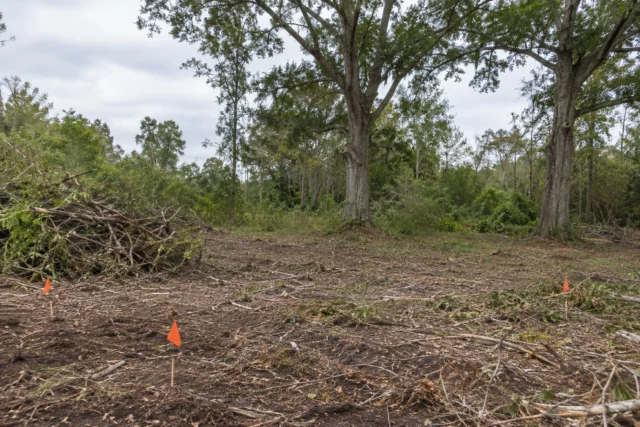
A confined site does not by itself mean a tree is unhealthy or must be removed. Some requests arise because the canopy causes clearance problems that could potentially be addressed by appropriate pruning. Other requests concern visible cracks, dead sections, severe storm damage, or a tree that the owner has decided to remove. The professional should distinguish the reason for removal from the physical restrictions that make it challenging. A green canopy cannot rule out internal defects, and a narrow yard cannot establish a defect.
If deterioration is suspected, share the history of storms, construction, drainage changes and previous failures. Ask whether an assessment is necessary to choose a method safely. Do not assume that a rigging line can rely on every remaining branch or that a damaged trunk can support ordinary climbing. The proposed approach should account for what is known and identify what remains uncertain before the crew begins.
Identify targets when nothing can fall freely
A tree surrounded by a fence, roof and patio requires a different conversation from a tree with an open landing area. Mark every fixed target, occupied route and protected plant before comparing methods. The size of a limb is only one factor: available clearance and how sections are controlled matter just as much. This hypothetical scene is a planning aid, not evidence of a verified safe rigging method for a real property.

Tree Removal With No Safe Drop Zone
The phrase no drop zone is useful shorthand, but it should start a site-specific conversation rather than dictate equipment. Even a compact tree may overhang roofs, fences, stored vehicles or neighboring property. The first step is to identify possible targets and the space available to workers, material handling and exclusion areas; a property-line drawing and wide-angle photos may be more helpful than a single trunk measurement.
Controlled sectional removal can involve rigging, specialized equipment or carefully selected cutting sequences, but none should be prescribed from an online photograph. Whether a crane is practical depends on its feasible position, reach, ground support, utilities and the tree's condition. A professional needs to choose and explain the method after evaluating these constraints.

Identify every affected target and possible exclusion boundary
Neighbors should know about access or temporary restrictions that could affect them, but no one should promise use of adjoining property without proper permission. If the tree is visibly unstable, avoid standing beneath it or approaching an apparent split to take pictures. Report warning signs from a safe location and ask how urgency changes the inspection and scheduling process.
The written scope should describe material removal, debris staging, any special surface protection and what finish is included. Explicitly ask whether stump work is a separate step and who will address damaged fencing or landscaping should the plan need alteration. Comparing estimates is easier when each addresses the same targets, access assumptions and debris outcome.
Require a written material-handling and cleanup plan
When there is no clear landing zone, the trip from the canopy to the truck matters as much as the cut. Ask whether wood will be lowered, moved in stages, processed on the property, or carried out through a limited passage. Establish where branches may temporarily sit and how site surfaces will be protected.
A quote for trunk removal may exclude stump grinding, wood hauling or debris disposal; identify those line items explicitly. A neat end result is easier to evaluate when the contract states what happens to chips, logs and ground stump material.
The route may run near delicate pavers, drain covers, fences or mature plants. Protection measures have limits and should be described accurately. If neighbors have to move vehicles or grant access, document the permissions and timing before work. If an unforeseen obstruction forces a change, the contractor should stop to obtain appropriate authorization rather than improvising a path through unapproved property.

Compare bids based on constraints rather than tree height
Two companies may quote very different amounts for what appears to be the same tree because one has included specialized access, controlled sections, hauling and site coordination while another assumes an open landing area. Ask each bidder to identify the tree, setup position, equipment assumptions, exclusion zone, disposal plan and any areas excluded from responsibility. Compare whether the scope includes temporary fence removal, traffic controls, stump grinding or separate restoration. Price cannot be meaningfully compared without those details.
Do not treat the largest machine or the shortest promised timeline as proof of suitability. Request an explanation of how proposed equipment fits through the actual access route and how sections will move clear of roofs and pedestrians. Ask what would change the plan if hidden decay or unsuitable ground is discovered. A qualified provider should be able to identify uncertainty without manufacturing a guarantee of zero damage or risk.
Document conditions and verify an observable finish
Before work, photograph the tree and surrounding fixed features from safe positions. Mark the agreed removal tree if several similar trunks occupy the site. Record existing fence damage, paving cracks or landscape conditions that could otherwise become disputed. The contract should identify who can authorize changes, who moves vehicles and who handles a temporary access opening. Do not include private household information in analytics tracking or public reviews when sharing an estimate request.
After the crew releases the area, compare the completed removal and debris disposition with the scope. Check that intended entrances are usable and any separately authorized repairs have been communicated. Do not approach suspended wood or enter an equipment zone just to take a final photograph. Keep project records for future work, particularly if a retained tree still hangs over the same constrained space. A documented finish reduces confusion but cannot guarantee that other trees will never create hazards.
Know when an ordinary photo estimate is insufficient
Photographs can establish that a yard is confined, yet they do not reveal every ground condition, load path or hidden defect. A site visit may be required to inspect the tree, confirm distances and determine whether the proposed equipment can be positioned safely. If there is visible instability or contact with energized electrical equipment, avoid the area and seek the appropriate professional or utility response rather than waiting for a routine online quote.
When contacting Tree Huggers, describe the intended result, show the whole tree and the surrounding structures, and identify which entrances or neighboring spaces cannot be used. Ask for the proposed handling approach, cleanup standard and exclusions in writing. That makes a complex removal understandable to the owner and allows the crew to plan without sacrificing the protection of people or property.
Questions about this project
Can the removal method be selected from a photo?
Photos help prepare the discussion but may not show defects, ground conditions or usable access. The contractor may need an on-site assessment before confirming the method, equipment and final scope for the property.
What if the tree changes before the appointment?
Tell the contractor about a new split, failed branch, changed lean or other visible change. Keep clear of the affected area. Changed conditions may require a different assessment, priority or work plan before the crew proceeds.
Which property features should I point out?
Identify buildings, vehicles, fences, fixed fixtures, landscape features, utilities and occupied routes. Explain what can move and what must remain. Include existing damage and any buried features you know about along the access route.
Should people remain inside the work area?
The contractor and site contact should establish an exclusion area and access arrangements appropriate to the work. Keep children, pets, visitors and other workers outside the active zone until the responsible parties say it can reopen.
Should I tell the contractor where to attach ropes?
No. Those decisions belong with qualified people assessing and performing the operation. Identify the targets, restrictions and desired outcome so they can develop an appropriate method for the tree and site.
What should I ask about controlled handling?
Ask how the work area will be managed, what property needs protection, where material will be handled and how it leaves the site. Confirm those practical expectations along with access and cleanup.
Does a machine's maximum reach prove it can do my job?
No. Loaded reach, configuration, section handling, obstacles and setup conditions all affect suitability. A contractor needs to evaluate the particular tree and property before confirming an equipment plan.
Can specialized equipment replace a site assessment?
It does not remove the need to assess tree condition, targets, access and support conditions. Ask how the contractor will confirm that the proposed machine and method fit the actual scope.
What should I compare besides the price?
Compare tree identification, work objectives, access assumptions, hauling, stump treatment, site finish and exclusions. Ask whether permits or other coordination are part of the scope and who can approve changes if conditions differ.
Does an online request book the crew?
No. A request starts the estimate conversation. The company still needs to discuss scope, availability and any site assessment. For a dangerous or urgent condition, call 504-458-8336 rather than relying on a form response.
What should I tell Tree Huggers about tree removal with no safe drop zone?
Explain the property address, the work you want and the specific concerns: controlled handling, nearby targets, exclusion area. Send safe photos of the tree, surroundings and access route. The contractor can then discuss the assessment and scope needed for this situation.
How do I request an estimate for this work?
Call 504-458-8336, text photos or use the estimate form on this page. Include the address, desired outcome and any timing constraints. The company will need to review scope and availability; an online request does not confirm a price, appointment or emergency dispatch.
Get a scope for your property
For a tree with no apparent safe drop zone, send multiple ground-level photographs from different directions showing neighboring structures, utility lines, yard entrances and the complete crown. Ask how the chosen method and exclusion area will be established after an on-site assessment.