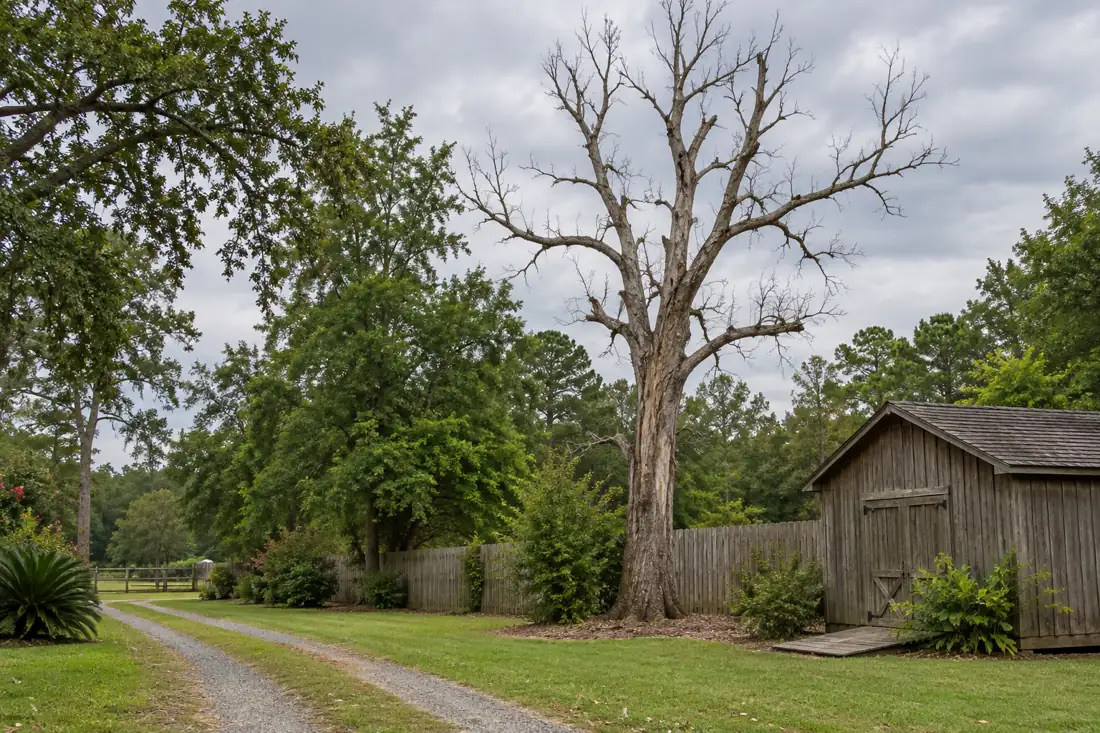
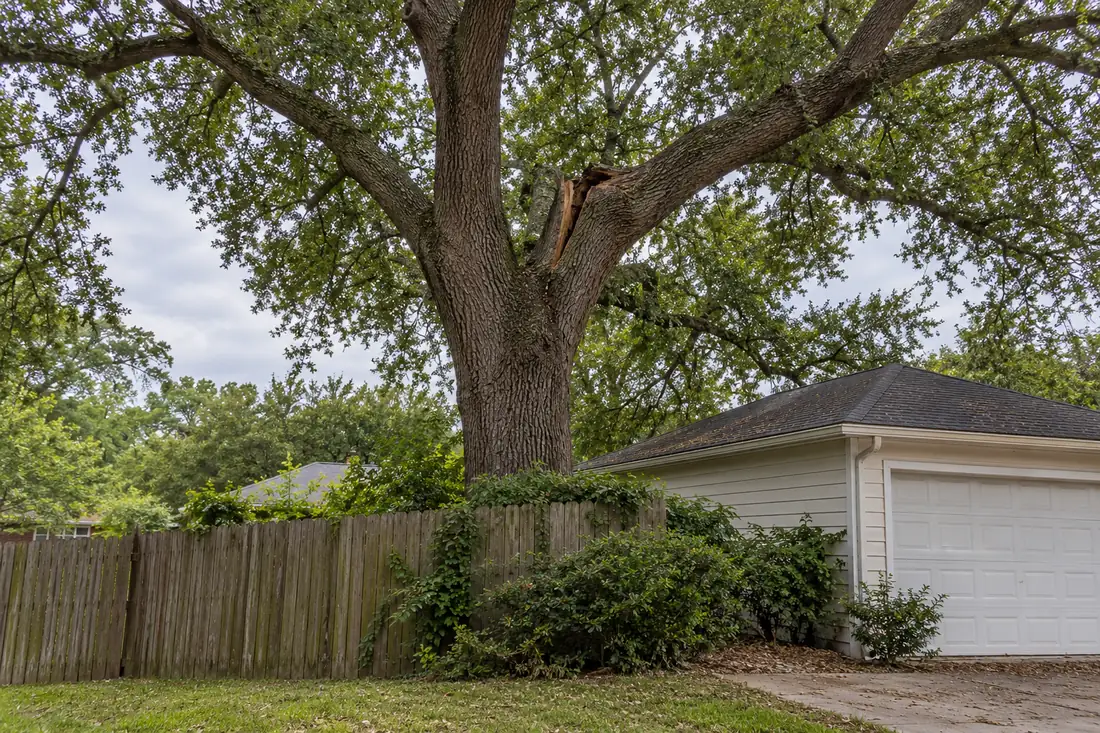
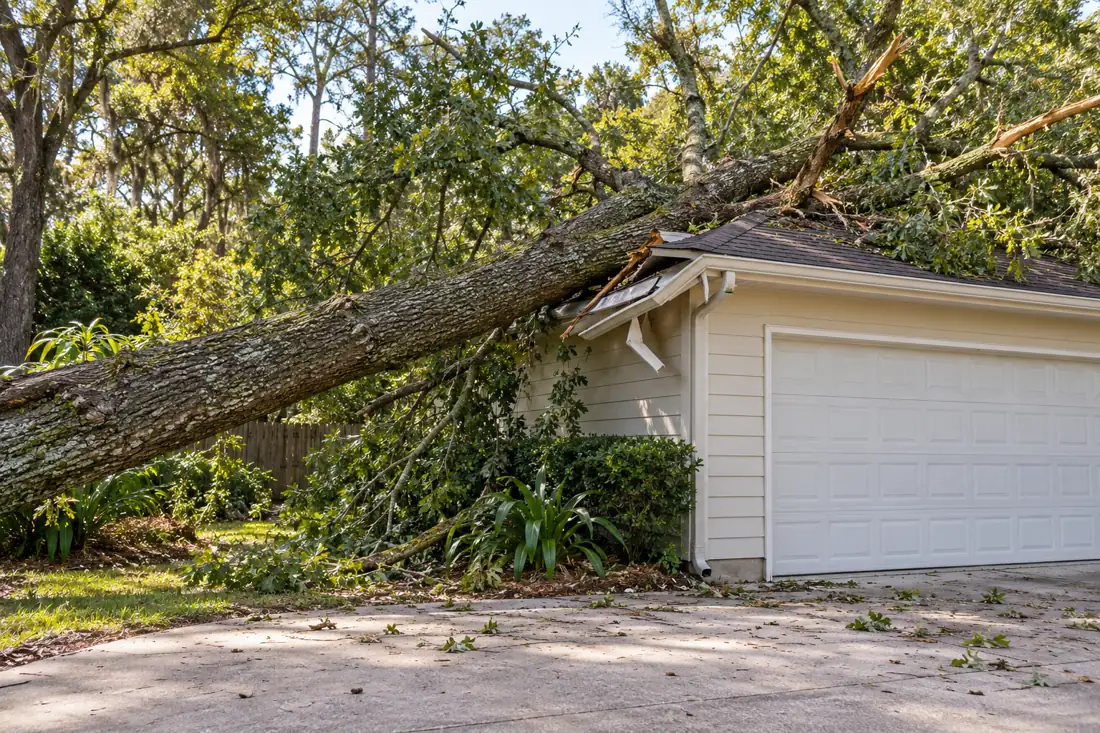
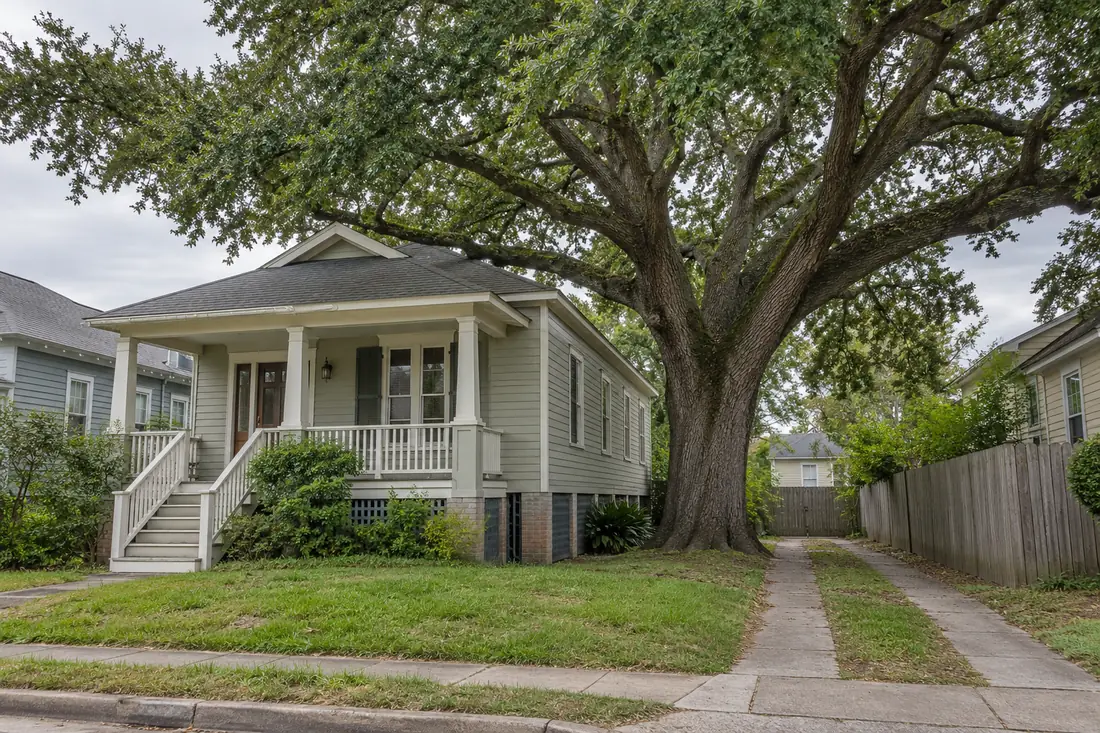
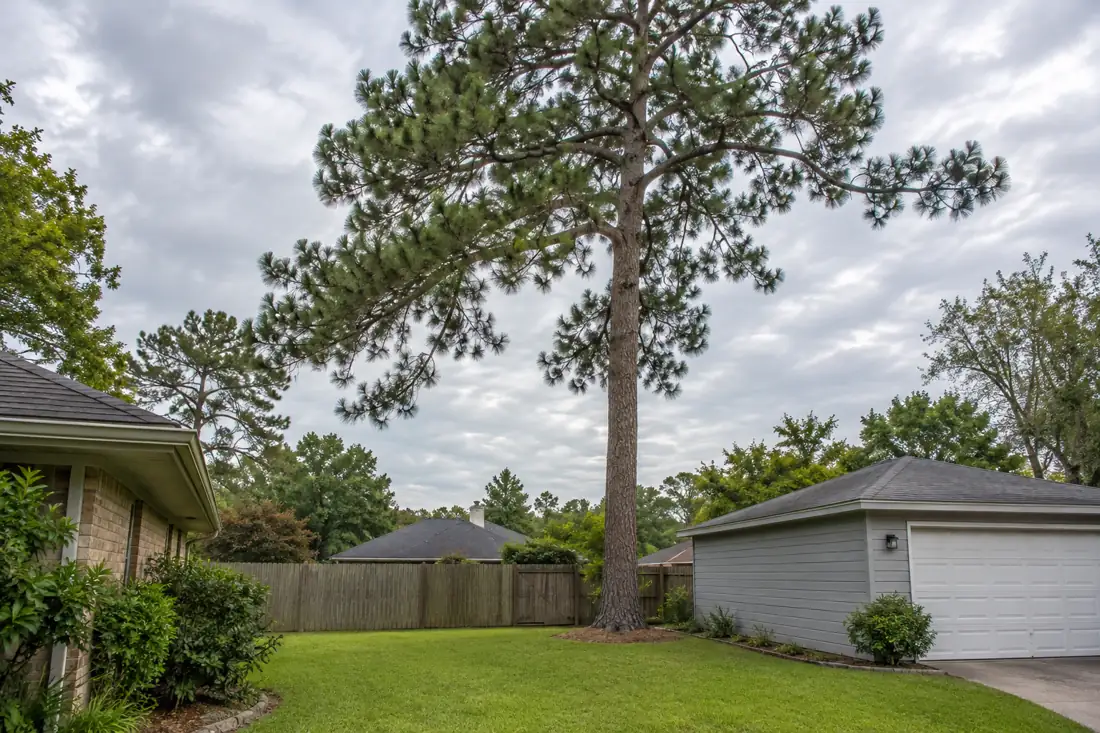
A tree above a garage may leave little usable drop space even when the rest of the yard looks open. The roof, door opening, stored vehicles and electrical service all influence the work sequence. The estimate should explain whether the tree is standing clear of the building or already resting on it; those are different conditions with different preparation needs.
Plan overhead removal and garage protection as separate tasks
Photograph the garage’s roof pitch, gutters, overhead door, wall-mounted fixtures and utility service line in the same frame as the tree. A detached garage can be structurally different from the house, so it should not be treated as an interchangeable drop target. Identify any vehicles or stored equipment that will need relocating.
Ask the estimator to describe how large wood will be controlled over the garage: rigging, smaller sections or another approved method. The sequence should account for the point where a piece changes direction as it swings, not merely the vertical clearance. Electrical service conductors require utility-specific precautions rather than improvised branch pushing.
Agree on the workday use of the driveway and door before arrival. Final checks should cover cleared gutters, unobstructed access and removal of loose debris from reachable roof surfaces within the agreed safe work scope. Repairs to existing roof defects should not silently be included in tree-removal promises.
Take a wide photograph showing the whole garage roof and the part of the canopy above it, then note whether any branches are already resting on shingles, gutters or framing. The roof covering, eaves, overhead wires, narrow setback and ability to stage lifting or lowering equipment all affect how a crew can control each section. A close-up of a broken branch cannot communicate the available clearance or the route that material must follow to the truck.
If the garage has an existing leak, loose gutter or damaged roof edge, document that condition before removal planning. Ask how the garage will be isolated from the work area and whether roofing inspection or repair requires a separate qualified contractor. Do not assume workers can safely walk on the garage or that its roof can support rigging loads. Clarify how roof contact, debris collection and final cleanup will be checked at the end of the job.
A garage is more than the area directly beneath a branch. Map the roof edge, ridge, gutters, doors, light fixtures, overhead electrical service and any breezeway or attached structure. A light-looking limb can still damage a roof or door track if it pivots unexpectedly. Record whether the tree is sound enough for a climber's approved work positioning or whether an independent access method is required.
Ask the estimator to explain how each large section will be supported, lowered and transferred away from the structure without using the roof for staging.
Move vehicles and stored valuables only where safe and practical, and verify how the garage will remain accessible during and after work. If the door needs to stay closed, identify another exit route; if it must open for access, verify that no branch or rigging enters its travel path. Compare the estimate's cleanup scope with the actual roof, gutter and driveway footprints. Any roofing, electrical or door-system repair should be separately assigned instead of silently assumed in the tree removal price.
Map overhead lines and roof service connections
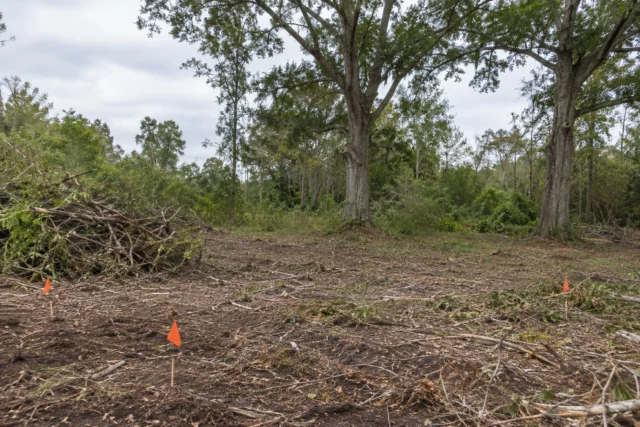
Garages often have electrical supply lines, security lights, cable routing, service drops, and equipment mounted near the roofline. The location of power infrastructure can limit where workers and machinery operate. If a tree or branch is near energized lines, contact the responsible utility and do not treat the work as ordinary residential trimming. Appropriately qualified personnel and coordination may be required; a homeowner should not decide safe electrical clearances by eye.
Identify garage door openers, ventilation equipment, solar equipment, or rooftop systems that might be affected by debris or work access. Tell the estimator where these features are visible, but do not ask the crew to disconnect or relocate them without the appropriate trade. A useful quote separates tree work from electrical, roofing, and building repair tasks instead of quietly assuming they are included.
Treat the garage as a separate protection zone. A garage roof is not a staging platform for cut limbs or rigging equipment. Describe the roof material, gutter location, door access, overhead cables and gap between the trunk and structure. Ask how sections will be guided away from the garage and document any existing roof or gutter damage before work.
Treat the garage as a separate protection and access zone
A garage roof, door track, gutter and driveway approach can all be exposed to different parts of a removal operation. A useful assessment records the distance from trunk and limbs to the building, the direction of existing lean, overhead utilities, and whether the garage needs to be cleared. Keep vehicles and stored items outside the potential work zone. Do not use the structure itself to support wood unless a qualified plan explicitly addresses those loads.
Ask that the written scope distinguish controlled lowering from protection and final cleaning. A proposal should state whether the driveway is an equipment route, whether ground mats are expected, and who documents conditions already present before work. Where access depends on a shared alley or a neighbor’s driveway, identify permission needs before scheduling. A safe ground-level photograph showing roof, trunk and driveway together is more valuable than an unsafe close-up above the garage.

Separate garage roof exposure from vehicle and stored-property exposure
A garage creates different risks above, inside and alongside the structure. Before anyone quotes a controlled removal, photograph the branch-to-roof relationship, the door opening, gutters, service drops and any visible existing damage. Note whether the garage is attached to the home and whether vehicles, equipment or belongings can actually be moved out. A contractor may need a protected work zone even when no section is intended to touch the roof; the homeowner should not treat a closed door or thin roof covering as impact protection. Where a limb is already resting on roofing, report that fact directly instead of requesting an ordinary pruning price. That condition can change the inspection, support and removal sequence.
During the estimate, ask how the proposed section-handling method keeps cut material away from the garage and how ordinary household access will be interrupted. Temporary parking elsewhere may be necessary, but it should be coordinated before the workday. Electrical equipment, an overhead service wire or a solar installation on the garage calls for specialist coordination rather than an assumption that the tree crew can move connections.
Put any separate roof inspection or repairs outside the tree-removal scope unless actually contracted. At completion, use the original roof-edge and door-area photographs to review visible conditions from a safe location, then verify brush removal and driveway clearance. Do not climb onto a potentially damaged roof simply to inspect the result.
Identify the whole garage footprint and adjoining targets
A garage roof beneath a tree can have vulnerable eaves, gutters, doors, skylights, vents, power feeds, and adjacent living spaces. The material above it may be much heavier than the visible branch tips suggest. Begin with safe wide photographs showing the full trunk, canopy, roof, driveway and the surrounding trees. Note whether the garage is attached to the house and whether people regularly use the side or rear entrance underneath the canopy.
A close-up of one overhanging limb is insufficient for planning. The provider needs to understand the roof geometry, where material could be handled, and whether access is available from the street or another part of the lot. Do not climb onto the roof or position a ladder below a suspect limb for photos. Report visible damage and use an appropriate professional inspection when roofing or structural issues may be involved.
Separate clearance, defect management, and whole-tree removal
Some owners want branches moved away from gutters or roof shingles. Others report a crack, storm damage, a leaning trunk, or a tree that may obstruct a planned garage addition. These requests call for different evaluations. Pruning for ordinary clearance should not automatically become whole-tree removal, while a structural concern should not be dismissed as a cosmetic problem. The contractor or assessor should explain what the proposed treatment is intended to accomplish.
A tree's proximity to a garage is an exposure factor, not proof that the tree is hazardous. A professional review considers condition, likely forces and the targets below. If there is a hanging limb or a new major split, restrict the affected access area and seek prompt guidance. Do not stand beneath it to measure the branch or remove it with household equipment.
Account for the garage's contents and usable driveway
Vehicles, stored tools, and household goods may be inside the garage while heavy tree sections are controlled above it. Ask whether the space should be cleared or whether vehicles should be moved before work starts. A closed garage door is not a protective barrier against every tree-work hazard. The driveway may be the best equipment approach but also the only route for occupants or deliveries. Coordinate access before the work date.
Discuss where a truck, lift, chipper, or debris container could stand and what pavement or underground services lie beneath the approach. Do not assume that a driveway designed for ordinary passenger vehicles automatically supports all equipment loads. A professional can evaluate available options, including sectional handling or different staging positions, based on the actual tree and property.

Consider controlled cuts and material travel
A branch above a garage may need to be handled in smaller sections so that wood is not simply dropped onto the roof. The method may involve rigging or specialized equipment, but no particular machine should be promised before the tree and site are reviewed. The contractor must consider possible landing areas, anchors, overhead space, and the condition of connected limbs. A large apparently open front yard does not help if the tree cannot be reached from that position.
If a tree has been damaged by wind, tension and hidden fractures may complicate a sequence that would otherwise be routine. Do not try to direct the cutting process from beneath the canopy or copy techniques seen online. Ask the provider to explain its plan and the major site assumptions in plain language, including what might cause a change after inspection.
Tree Removal Over a Garage
A garage roof can create the impression that all space near the tree is unusable, but the relevant limits depend on the position of the trunk, branch geometry, roof pitch and equipment route. A detached garage may also conceal an overhead service line, an open vent, a skylight or an attached storage area. Record what is visible before asking for a method or a price.
A safe evaluation should distinguish the structural condition of the tree from the vulnerability of the garage. Rotten wood, splits or partially attached limbs can change what controls are appropriate, while a sound tree may require a different conversation about long-term clearance. Owners should not climb onto the roof or try to push branches away from a gutter to improve a photograph.

Separate overhead risks from the actual access plan
Ask the estimator to explain how roof-edge protection, branch movement and debris staging would be handled. An available driveway does not automatically create a safe drop zone, and the garage framing should not be treated as a rigging support without a qualified assessment. Where clearance is limited, the crew's sequence of work matters as much as the final height of the remaining tree.
After the tree work, identify what inspection or cleanup is included around gutters, roof valleys and garage entrances. Roof repairs and concealed preexisting defects should not be implied to be included without agreement. Capture a general view from across the driveway, a ground-level view of eaves and overhead connections, and any existing roof problems that should be documented before access is granted.
Keep roof and building inspection responsibilities clear
A tree limb may contact roof shingles or gutters without proving that hidden framing has been damaged. Conversely, a roof can have damage that is not visible from the ground. Tree contractors can report observed conditions and provide photos of actual work when appropriate, but they should not be portrayed as certifying the building structure unless they have that separate role and qualification. Roofers or building professionals may need to inspect or repair contact areas.
Before authorizing tree work, note known roof leaks, loose fascia, old storm damage, and existing gutter problems. This helps distinguish pre-existing conditions from observations made during the project. If a separate roofer is scheduled, coordinate work order and access so trades do not occupy the same hazardous area. Do not promise that removing the tree will automatically repair or prevent every roof issue.
Include the stump and material finish in the agreement
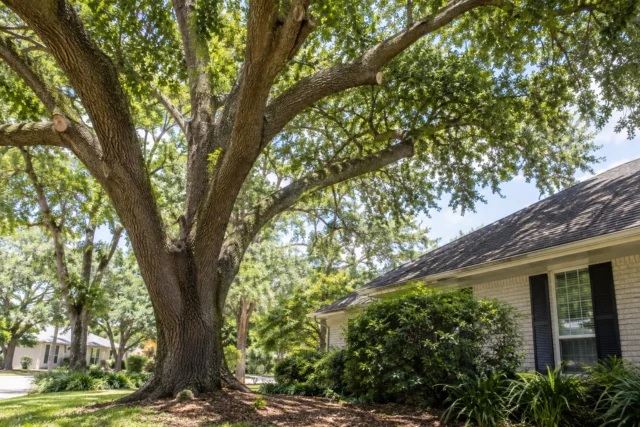
When whole-tree removal is chosen, decide whether the desired result includes cutting close to ground, grinding, wood hauling, and handling the grindings. A stump beside a garage slab may be difficult to access or may sit near buried utilities. Removing the standing tree does not automatically solve roots beneath paving or justify cutting them without assessment. The contract should describe the intended stump work and any limitations plainly.
Branches and logs may need to pass along the driveway where vehicles ordinarily park. Identify a staging area, whether the owner wants to retain wood, and which surfaces need cleanup. Replacing damaged asphalt, restoring landscape beds, or repairing unrelated building items should be separately assigned if required. A broad statement that debris will be removed can conceal important finish differences between estimates.
Arrange an exclusion zone that fits a working household
Garages are frequently used for school departures, tool storage, laundry access, and deliveries. During tree work, the household may need to avoid the garage, driveway and adjacent walkway entirely. Establish alternative routes before the crew arrives. Tell residents, guests, and delivery personnel where not to enter. If a nearby neighbor's access is affected, coordinate through the appropriate property owner rather than assuming the work can proceed across a shared drive.
Weather and hidden site conditions can change the time required. Do not promise that the garage can be used again at a particular hour until the crew has released the work area. If a roofing or electrical trade must complete an additional task, keep that responsibility separate. Effective planning means the occupants can follow a clear access plan without entering active operations.
Request a garage-specific estimate with defensible assumptions
For a Tree Huggers inquiry, include the tree's full size in relation to the garage, photographs of overhanging limbs from safe ground, driveway access, any utility conflicts, and the goal of the proposed work. State whether there is reported damage, an inspection concern, or a plan for construction. Ask what can be determined from the photos and what requires a site visit or qualified assessment before a final scope is developed.
Compare quotes on removal extent, handling method, hauling, stump treatment, equipment assumptions, and building-related exclusions. Save the actual scope and factual completion record. A credible result is a defined tree task with clear responsibilities; it is not a manufactured before-and-after claim, a guaranteed roof inspection, or a promise that an overhead tree can never create another problem.
Questions about this project
Which property features should I point out?
Identify buildings, vehicles, fences, fixed fixtures, landscape features, utilities and occupied routes. Explain what can move and what must remain. Include existing damage and any buried features you know about along the access route.
Should people remain inside the work area?
The contractor and site contact should establish an exclusion area and access arrangements appropriate to the work. Keep children, pets, visitors and other workers outside the active zone until the responsible parties say it can reopen.
Can the removal method be selected from a photo?
Photos help prepare the discussion but may not show defects, ground conditions or usable access. The contractor may need an on-site assessment before confirming the method, equipment and final scope for the property.
What if the tree changes before the appointment?
Tell the contractor about a new split, failed branch, changed lean or other visible change. Keep clear of the affected area. Changed conditions may require a different assessment, priority or work plan before the crew proceeds.
What access information helps an estimator?
Send the narrowest opening, overhead obstacles, turns and the distance between the tree and the loading area. Include photos of the entire route and identify steps, soft ground or features that must remain protected.
Should I remove a fence before the visit?
First ask the contractor to assess access and agree on any temporary opening. Identify who owns the fence, who can authorize the change and who will reinstall it. Do not assume the opening is necessary or included.
How should extra work be approved?
Use the agreed approval process and identify the change, reason, scope, price or schedule effect as applicable. Confirm who has authority before treating an additional tree or task as part of the original job.
What completion records are useful?
Keep the agreed scope, tree or area identification, authorized changes, invoice and labeled photos where appropriate. Include unresolved items and a contact. Contract-specific records should follow the buyer's stated requirements.
What should I compare besides the price?
Compare tree identification, work objectives, access assumptions, hauling, stump treatment, site finish and exclusions. Ask whether permits or other coordination are part of the scope and who can approve changes if conditions differ.
Does an online request book the crew?
No. A request starts the estimate conversation. The company still needs to discuss scope, availability and any site assessment. For a dangerous or urgent condition, call 504-458-8336 rather than relying on a form response.
What should I tell Tree Huggers about tree removal over a garage?
Explain the property address, the work you want and the specific concerns: roof clearance, garage access, existing structural contact. Send safe photos of the tree, surroundings and access route. The contractor can then discuss the assessment and scope needed for this situation.
How do I request an estimate for this work?
Call 504-458-8336, text photos or use the estimate form on this page. Include the address, desired outcome and any timing constraints. The company will need to review scope and availability; an online request does not confirm a price, appointment or emergency dispatch.
Get a scope for your property
When a tree stands over a garage, include photos showing the entire roof slope, eaves, utility connections and available approach from the driveway. Specify whether the garage is occupied, contains stored items, and whether the goal is removal or selective work around the structure.