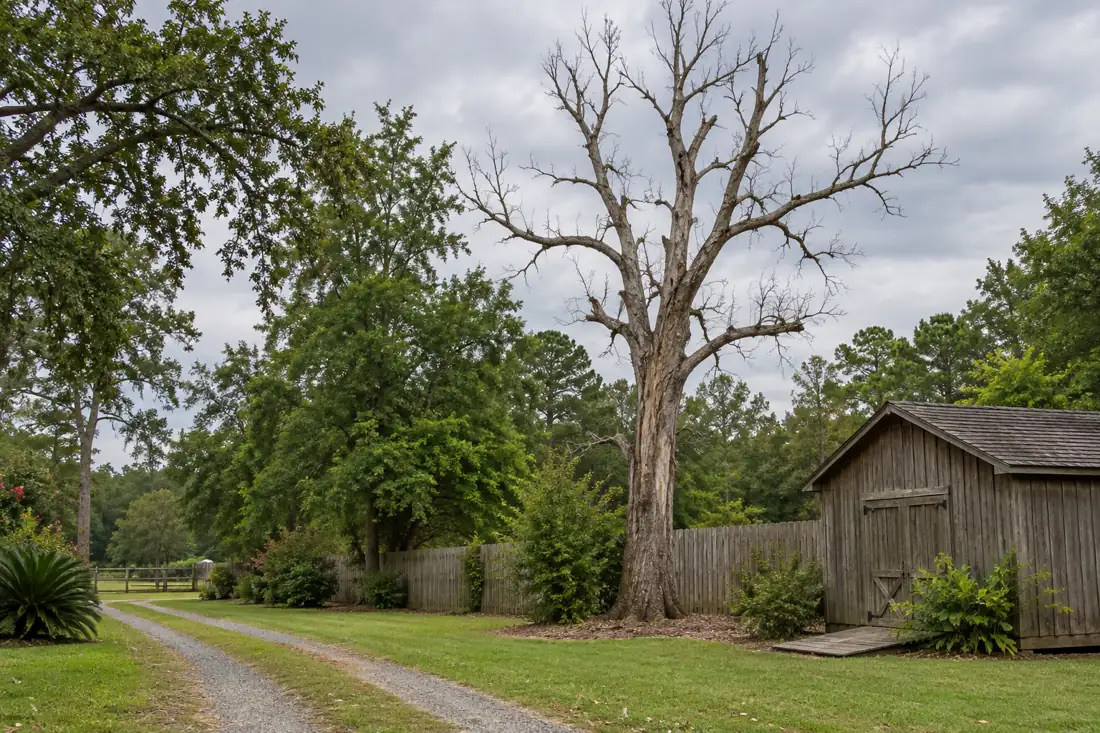
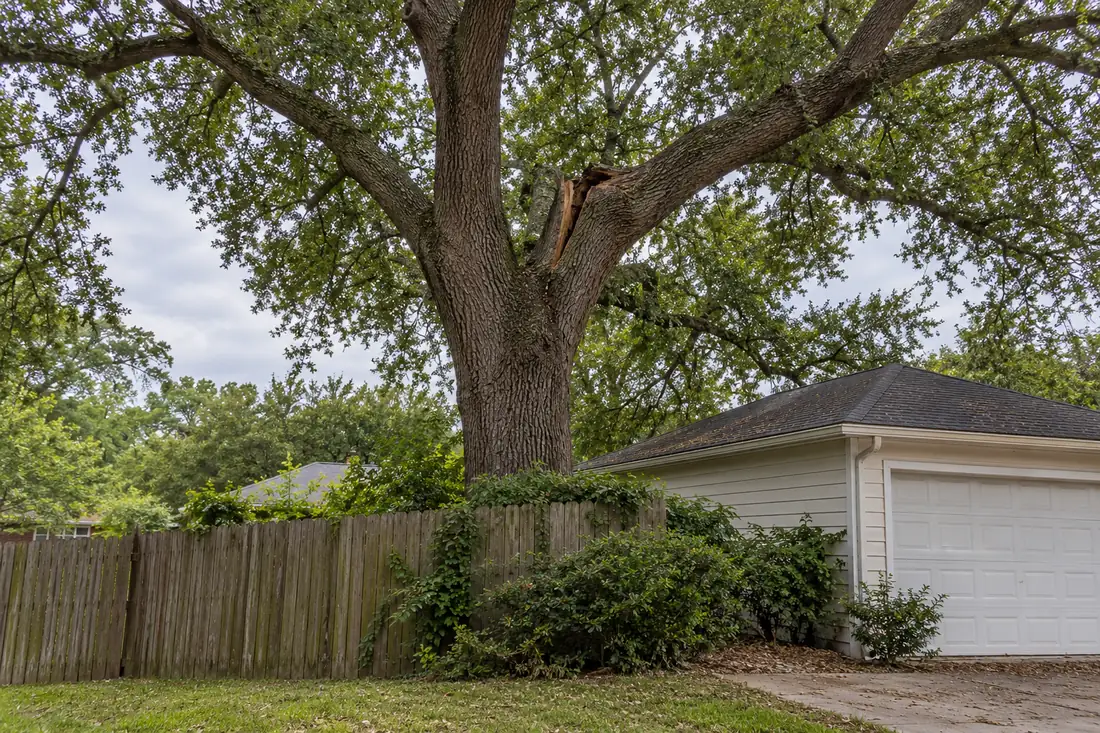
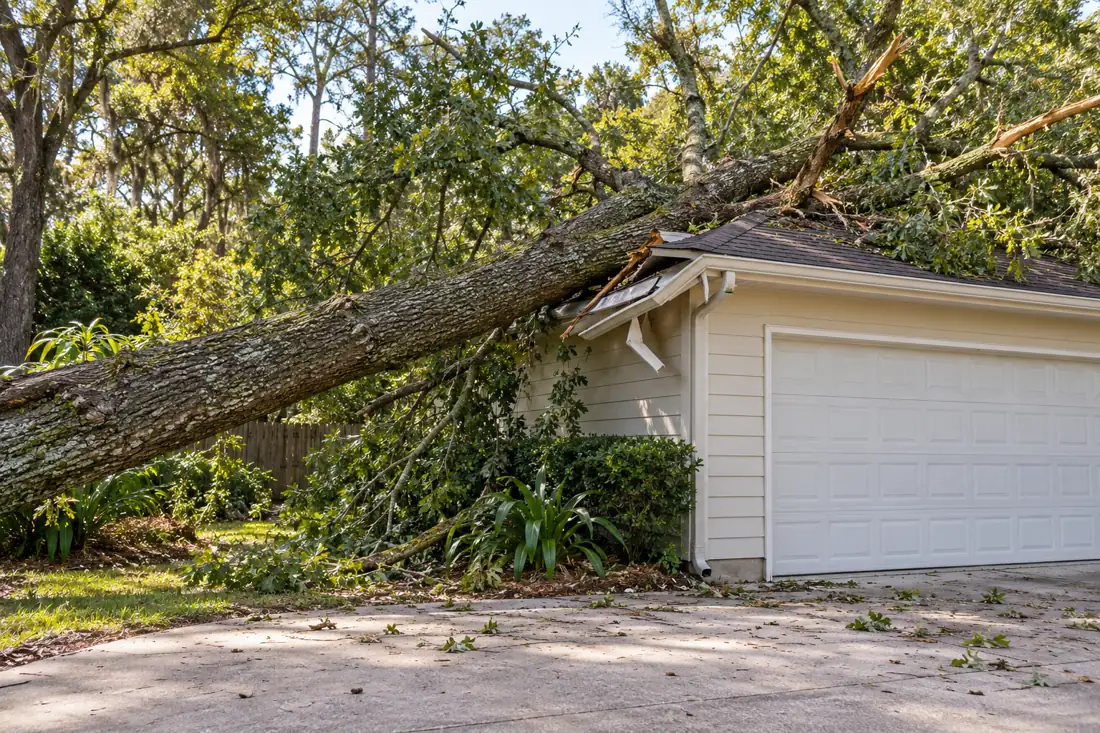
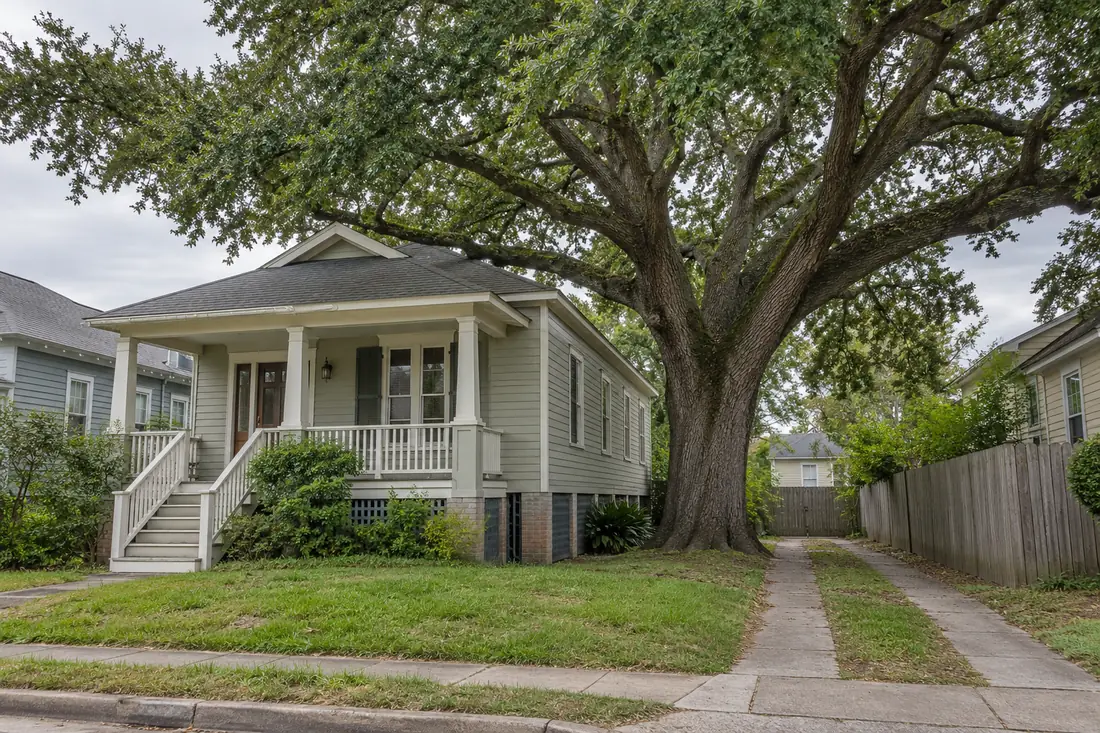
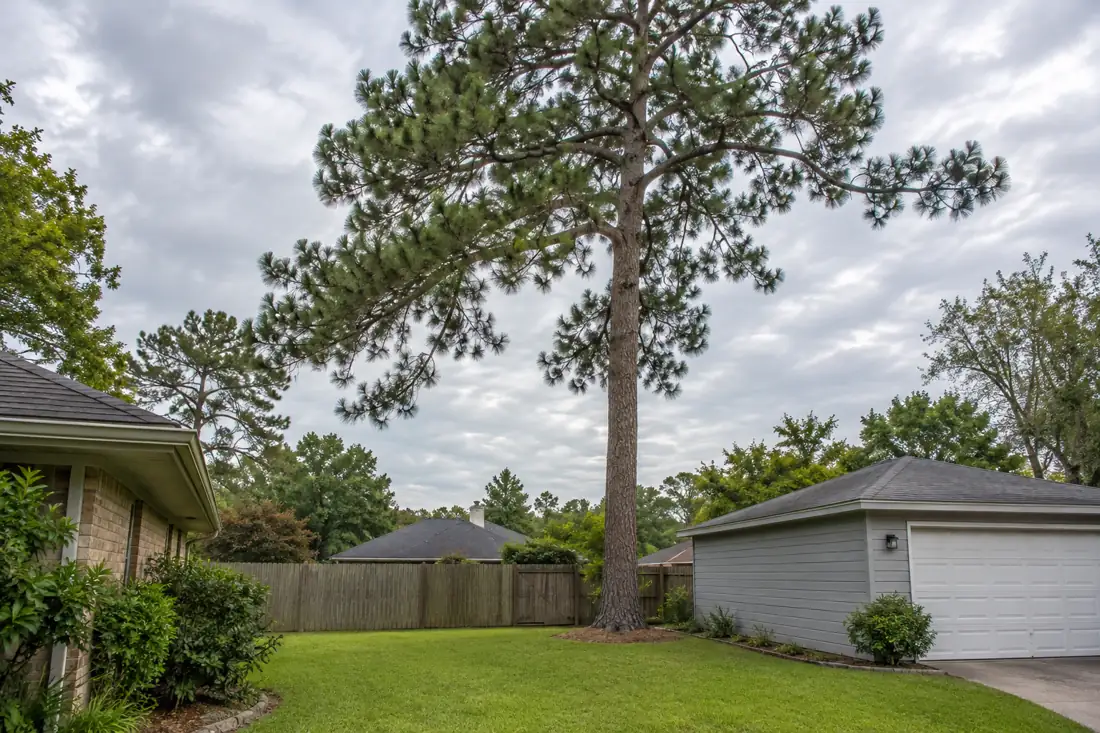
Completing tree and stump work before a fence is installed can preserve equipment access and prevent damage to new panels. Mark the intended fence line and discuss roots, post holes and the finish needed for the installer. Tree removal and stump grinding should be coordinated with the fence scope rather than treated as unrelated appointments.
For this project, separate future fence line, post locations and stump finish. These details help the contractor understand what must be protected, what information needs confirmation and what result you want from the work. A clear request is more useful than an assumed method or a price based only on tree size.
Mark the proposed fence line with the installer, including corners, gates and post-hole locations. A trunk close to the line is not the only conflict: roots can extend beyond the stump and grinding chips can leave ground that is unsuitable for a structural post without further preparation. Discuss the exact desired stump finish with the tree estimator, but let the fence contractor specify post foundations. Verify boundary questions with the owner and appropriate records rather than assuming the existing fence marks the legal line.
Confirm who removes chips, fills holes, checks buried irrigation and restores disturbed landscaping. Stage tree removal before new panels obstruct the log-hauling route, and photograph fragile edging, shrubs and pavement. If the fence route must change because of roots or utilities, record the agreed revision before drilling. Tree removal, grinding, root excavation and fence construction are distinct scopes; a quote for one should never silently promise the others.
Tree Removal Before Installing a New Fence: Start With the Proposed Line
Before anyone cuts or digs, put the fence route on the ground in a way everyone can inspect. Walk the intended alignment with the fence contractor and mark corners, gates, grade changes, and any offset around trees. In southeast Louisiana, a line that looks clear on a plan can cross a broad, low limb, a buttressed trunk, or a shallow root flare. Record which trees appear to conflict with the fence itself and which may only affect access, future maintenance, or the fence’s appearance.
Do not treat every tree near the route as a removal candidate. A trunk can stand outside the fence line while its branches, roots, or lean affect a post location; conversely, a tree close to a planned fence may be retained with a modest alignment adjustment.
Ask the fence contractor to identify actual post and gate locations rather than describing a broad “clear zone.” Decide which trees need evaluation, which might be worked around, and what measurements or specialist opinions are needed before choosing a removal scope.

Confirm the Boundary Before Marking Trees for Removal
A fence is a lasting boundary feature, so establish the property line before marking trees as yours to remove or placing posts. Review available survey documents, but check whether they show current boundary markers and the exact line relevant to the proposed work. Old fences, landscape edges, and neighbors’ assumptions are useful clues, not conclusive boundary evidence. If corners or line positions are unclear, ask a qualified land surveyor what survey work is appropriate and have the intended fence alignment related to that information.
This check matters particularly where mature trunks sit close to a shared line or roots cross it. A tree may be wholly on one parcel, partly on another, or subject to an ownership disagreement; do not infer ownership from the direction of its branches. Before authorizing removal near a neighbor’s property, clarify the boundary and communicate the proposed work. Make a written record of the agreed tree locations and fence route, and pause the affected work if the boundary remains disputed.
Survey the Whole Work Area, Not Just the Fence Centerline
A useful site survey includes the work space a crew and its equipment will actually occupy. Walk the route with the tree professional and fence contractor, noting trunks, canopy spread, slopes, drainage paths, buildings, pavement, sheds, and places where branches could land. Include the space needed to lower sections safely and move cut material away. In wet or uneven parts of southeast Louisiana, a narrow route beside a ditch or soft yard may limit equipment choices even when the fence line itself appears unobstructed.
Ask the tree professional to identify the trees’ condition, lean, structure, and likely work method, then ask the fence contractor to flag post centers and any clearance needs. These are different assessments: a tree can be removable yet difficult to fell in a confined yard, while a fence post can conflict with roots even after the trunk is gone. Photograph marked locations and note uncertain areas. Use the combined walk-through to settle the order of work before scheduling either crew.

Resolve Utility Conflicts Before Tree or Ground Work
Look for overhead conductors, service drops, meters, buried service routes, drainage lines, and other visible utility features along the tree and fence corridors. A tree’s branches can reach a line even when its trunk is some distance away, and proposed equipment may need to operate near overhead wires. Treat every power line as energized; neither a property owner nor an ordinary tree crew should assume a line is harmless or safe to approach. Stop planning work in the affected area until the appropriate utility and qualified specialists have advised on it.
Before stump grinding, excavation, or post-hole work, arrange for the applicable utility-location process and confirm what it does and does not identify. Private lines serving features such as lighting, irrigation, gates, or outbuildings may need separate identification by an appropriate specialist. Ask each contractor how marked routes will be protected and what happens if an unmarked line or unexpected obstruction appears.
Keep the work area clear of occupants while utility questions are unresolved; never use a marked line as a reason to dig casually beside it.
Fence construction can expose roots and boundary questions
A new fence line often runs through the same strip of ground occupied by roots, an old stump and established landscaping. Determine whether the actual property line is known before assuming a tree belongs entirely to one owner. Existing fence boards or a visual line in the grass are not a substitute for a survey if ownership is uncertain.
Show the planned gate width and post locations to the tree estimator. Roots from a retained tree may cross the new alignment even where no trunk stands on the fence line. Cutting major roots without evaluating consequences can harm a tree that the homeowner intended to save.
The tree crew and fence installer should agree on sequence: removing material before new panels are installed can preserve access, but leaving a stump under a future post can create another excavation problem. Ask whether grinding is part of the tree scope, what depth is feasible and who will dispose of the chips or soil.
Consider irrigation lines, nearby electric services and plant beds when equipment is staged. If workers need to enter adjoining property or temporarily open an existing fence, obtain that permission and define restoration in writing. Separate brush clearing, tree removal, stump work and grading rather than treating them as a single unspecified service.
Choose Removal Methods That Fit the Site and the Fence Plan
Removal method depends on tree size, condition, available landing space, nearby structures, overhead hazards, and access—not just distance from the fence. A qualified tree professional can explain whether controlled dismantling or another approach suits the location and what equipment or crew positioning it requires. On tight lots, lowering branches in sections may be more suitable than letting material fall freely, but the specific plan must come from the professional assessing the tree. Do not attempt hazardous cutting, climbing, or rigging yourself.
Before approving the work, ask how the crew will protect the house, fence materials, neighboring property, and the ground they need to cross. Clarify whether brush and trunk wood will be removed, left in agreed locations, or handled separately, and whether the stump is included in the scope.
Request a clear description of limits, cleanup, and any conditions that could change the method. These questions let the owner coordinate tree work with the fence schedule without assuming a particular result or making safety or insurance promises.

Sequence Tree Work Before a Fence Is Built
A fence installer needs more than a promise that a tree will be removed. They need a stable line, space for post holes, gate swing clearance and a realistic understanding of buried roots. If the stump is directly where a post must go, a shallow cosmetic grind may not be enough. Conversely, grinding deeply near utilities or retained trees can create unnecessary hazards without solving the installation problem.

Boundary uncertainty should be settled before clearing. A visually straight old fence may not match a surveyed property line, especially on older lots or where panels have been replaced over time. The tree contractor should not be asked to settle legal ownership by choosing which trunks or limbs appear to cross the fence. Keep ownership, permission and any required survey separate from removal technique.
The post layout determines the proper stump finish
Agree on which trade removes the existing fence, whether reusable panels will be stacked, and who provides temporary security if the yard is left open. Pets, children and neighbors may be affected by a gap between removal and new installation. A permit or utility-locate dependency can stretch that gap, so the project plan needs a safe interim condition rather than an assumed next-day fence delivery.
After stump work, use measurements and photographs to confirm that the agreed area is clear of visible debris. Do not guarantee the ground is free of buried roots, rock or old concrete. The fence installer should inspect post positions before the tree crew demobilizes when possible; that avoids returning to cut a root or move a pile without a clearly authorized scope.

Plan Stump Grinding Around Post Locations and Root Flare
Removing the trunk does not automatically clear a reliable post location. A stump and major roots can occupy the exact ground where the fence contractor needs to dig, while grinding can leave a cavity filled with chips and loosened material. Locate proposed post centers in relation to the stump, visible root flare, and likely root paths before selecting a grinding extent. Ask the tree professional and fence contractor to discuss how much root and stump material must be addressed for their separate tasks, rather than assuming the stump can simply be ground flush.
Grinding close to a future post can disturb soil beyond the visible stump, and cutting large roots may affect a retained tree or nearby surface features. Ask what equipment can reach the stump, what material will remain, and how the resulting area should be filled or allowed to settle before post installation.
The fence contractor should decide whether a post needs relocation or a different installation detail. Mark agreed post centers after that discussion, and do not direct an operator to grind blindly where buried utilities or uncertain roots may be present.
Protect Soil and Drainage While Clearing
Ground conditions can change quickly in southeast Louisiana after rain, particularly in low spots, clay-rich soils, and areas with poor drainage. Heavy equipment traveling over saturated ground can rut the yard, compact soil, damage lawn edges, or redirect water toward a building or neighboring parcel.
Ask the tree professional where machines and log loads will travel and whether the route can avoid soft ground, drainage swales, septic features, or other sensitive areas. Establish a practical stop point if the ground becomes too wet to support the planned access.
After removal and grinding, inspect the disturbed route and stump areas before the fence crew begins. Chips, loose fill, deep ruts, or a soft void may not support stable post installation or a clean grade. Agree who will remove grindings, supply suitable fill, restore drainage, and allow settlement where needed; do not leave those responsibilities implicit between contractors.
The right correction depends on the actual soil and fence design. Keep surface water moving as it did before the work, and have the relevant contractor assess any persistent soft or sinking area.

Arrange Equipment Access and Neighbor Coordination
A tree crew may need more room than the fence crew, including a path for a lift, chipper, truck, or material removal. Measure gates and narrow passages, identify overhead clearance and turning limits, and note paving, lawn, drainage structures, and shared driveways along the route. Ask the tree professional what access is necessary and what ground protection is practical for the equipment proposed. If the only workable route crosses another person’s land or shared space, obtain clear permission before scheduling; do not assume past informal access authorizes this project.
Tell affected neighbors what work is planned, when access or noise may occur, and which trees or branches are close to the shared line. Invite them to raise boundary, access, or property concerns before the crew arrives, and record any permission or agreed limits in writing.
Keep children, pets, and other occupants away from the active work area according to the crew’s instructions. If a neighbor objects to removal or access, pause the disputed part and resolve the issue before equipment is positioned or a tree is cut.
Stage Clearing Before the Fence Contractor Arrives
Sequence the work so the fence contractor is not forced to work around active tree removal or unstable ground. First confirm the boundary, route, utilities, access, and marked trees; then complete approved tree removal and the agreed stump work. Allow time for haul-out, cleanup, and any necessary ground repair before the fence crew lays out posts. Share the final tree-work limits and site notes with the fence contractor, including areas deliberately left untouched and any locations where roots, utilities, or soft ground remain uncertain.
Do not treat a calendar gap alone as proof that a disturbed site is ready. Before fence installation, walk the alignment with the contractor and check that post centers remain clear, access is available, debris is removed as agreed, and drainage has not been blocked.
Ask the contractor whether any stump area needs more settling or preparation before holes are dug. If the marked route has shifted or a newly exposed obstruction changes the plan, agree on the revision before work proceeds rather than allowing crews to improvise against different assumptions.

Make a Final Go-or-Adjust Decision Before Digging Posts
At the final walkthrough, compare the intended fence line with the boundary information, utility marks, remaining trees, and finished clearing. Confirm gate swings, corner positions, post centers, and any planned offsets around retained trees. Ask the fence contractor which locations are ready for installation and which need further evaluation because of a stump, root mass, buried service, or unsettled soil. A small alignment adjustment may avoid damaging a retained tree or digging into a problematic area, but the change should be checked against the boundary and the fence design.
Record the decisions that affect both crews: who is responsible for additional clearing or fill, which areas must remain undisturbed, and whom to contact if an unexpected condition appears. Keep occupants away from excavation and equipment, and have workers stop if they encounter an unidentified utility, unstable ground, or an unanticipated hazard. Proceed only when the owner or site manager and relevant contractors share the same marked plan. This deliberate handoff reduces avoidable rework while leaving technical judgments to the qualified people doing the work.
A fence build needs a post-line handoff, not an undefined stump finish
Tree removal for a new fence should start with the intended alignment, gate openings and the actual locations of posts or foundations. An old fence line is not a verified property boundary. The installer should describe which roots, buried wood or equipment routes conflict with the new build before the tree crew selects a grinding or cleanup finish.
Ask both trades to agree on what the finished strip must look like, whether machine access must stay open until hauling is complete, and who will decide if a root obstruction changes the planned post positions. A lawn-ready grinding finish may not satisfy post-hole clearance. A pool excavation is a different project with a deeper and wider construction footprint, so the pool-specific guide should be used if the main new work is a swimming pool.
- Bring the proposed fence plan and actual installer dimensions.
- Keep retained trees and private services marked separately.
- Request a handoff inspection before the fence contractor starts.
Questions about this project
Does stump grinding remove the entire root system?
Grinding normally addresses an agreed stump area and depth. It should not be assumed to extract every underground root. Describe your future use of the site and ask what additional work or coordination is needed.
Can the area be paved or planted immediately afterward?
That depends on the intended project and the agreed finish. Chips, remaining roots, excavation and soil preparation may need separate attention. Coordinate the grinding scope with the installer who is responsible for the next phase.
What access information helps an estimator?
Send the narrowest opening, overhead obstacles, turns and the distance between the tree and the loading area. Include photos of the entire route and identify steps, soft ground or features that must remain protected.
Should I remove a fence before the visit?
First ask the contractor to assess access and agree on any temporary opening. Identify who owns the fence, who can authorize the change and who will reinstall it. Do not assume the opening is necessary or included.
Can the contractor use my neighbor's yard?
Only after the required permission and suitable access arrangements are in place. Identify the proposed route and who can authorize it. A quote accepted by one owner does not automatically grant access to someone else's land.
Does a tree estimate determine the property boundary?
No. Resolve an uncertain boundary or ownership question using appropriate property information and professionals. The tree contractor needs an authorized scope and access plan, but a visual work estimate is not a survey or legal determination.
When should tree work be discussed on a building project?
As early as practical, while the footprint, access, excavation and staging can still be coordinated. Identify retained trees and share drawings before clearing or other site activity creates avoidable conflicts.
Does stump grinding complete construction site preparation?
Not necessarily. Excavation, root removal, base preparation, compaction and grading may require separate work and acceptance criteria. Coordinate the tree scope with the contractor responsible for the next construction phase.
What should I compare besides the price?
Compare tree identification, work objectives, access assumptions, hauling, stump treatment, site finish and exclusions. Ask whether permits or other coordination are part of the scope and who can approve changes if conditions differ.
Does an online request book the crew?
No. A request starts the estimate conversation. The company still needs to discuss scope, availability and any site assessment. For a dangerous or urgent condition, call 504-458-8336 rather than relying on a form response.
What should I tell Tree Huggers about tree removal before installing a new fence?
Explain the property address, the work you want and the specific concerns: future fence line, post locations, stump finish. Send safe photos of the tree, surroundings and access route. The contractor can then discuss the assessment and scope needed for this situation.
How do I request an estimate for this work?
Call 504-458-8336, text photos or use the estimate form on this page. Include the address, desired outcome and any timing constraints. The company will need to review scope and availability; an online request does not confirm a price, appointment or emergency dispatch.
Resolve the fence-contractor handoff before the tree crew leaves
Tree work ahead of a new fence is a sequencing problem as much as a removal problem. Ask the fence installer to mark the intended alignment and approximate post positions, then identify trunks, root flares and stumps that may obstruct that work. A property sketch helps everyone discuss the route, but it is not a survey.
Confirm who is responsible for determining the legal boundary, locating underground services and approving any change to the fence design. Keep equipment access available until stump and material handling is complete.
The broader lot-clearing planning guide is useful if many shrubs and trees must be evaluated across a larger area. The selective-oak clearing guide is important when a mature tree should remain next to the proposed line. For a single obstructing stump, the stump-grinding service explains equipment and chip handling; ask the fence installer what actual post-hole or footing clearance is required rather than assuming surface grinding is enough. Have the two contractors agree on a visible final handoff condition before scheduling the fence build.
Related decisions: Lot Clearing and Retained Tree Planning · Selective Lot Clearing Around Mature Oaks · Stump Grinding
Get a scope for your property
Show the proposed fence alignment, any survey pins identified by the proper professional, and photos of trunks and stumps near intended posts.