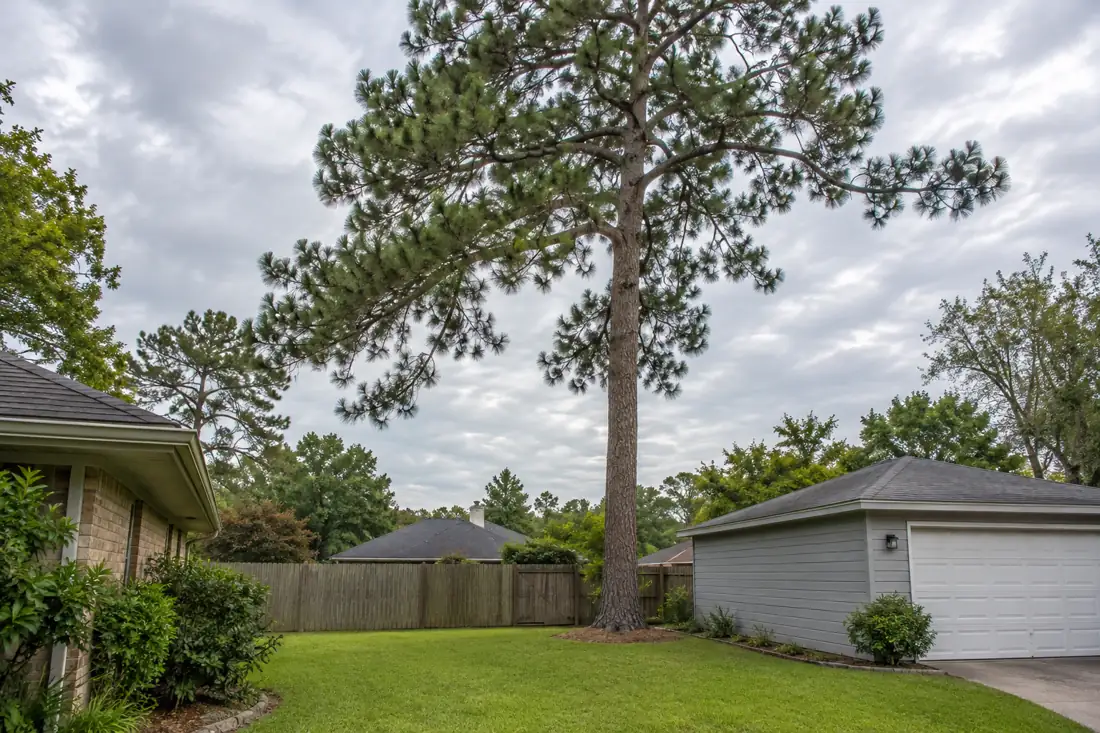
A future pool footprint may conflict with a trunk, root zone or access corridor. Share the planned excavation and machinery routes before selecting trees for removal. Trees that remain may need protection from construction traffic. The estimate should distinguish tree removal, stump work and the pool contractor’s excavation responsibilities.
For this project, separate pool footprint, excavation route and retained roots. These details help the contractor understand what must be protected, what information needs confirmation and what result you want from the work. A clear request is more useful than an assumed method or a price based only on tree size.
Overlay the planned pool shell, deck, plumbing trench and machinery route on a sketch of the existing tree and root zone. Clearing the canopy may be necessary for construction, but cutting the trunk and grinding its stump does not establish whether the pool foundation has suitable soil or whether all obstructing roots are gone. Ask the pool designer what conditions must be verified before excavation and whether any retained trees require root-zone protection. Identify electrical feeds, drainage lines and neighboring fences before scheduling heavy equipment.
Compare the sequence for hauling large wood, clearing stumps, excavation and final landscaping. Equipment that fits the yard now may have no exit after fencing or decking is built. Ask both contractors to identify responsibility for grinding debris, backfill, settling soil and protection of existing paving. Keep any permit or utility work with the responsible trade. The handoff should show the exact tree work completed and the areas the pool installer still needs to inspect.
Start with the proposed pool footprint and excavation limits
A pool project changes far more ground than the rectangle occupied by the finished water. Excavation, utility trenches, deck edges, temporary spoil piles, deliveries and equipment access may all affect nearby trees. Before asking for removal, obtain the current pool concept or site plan and mark the proposed excavation area on photographs of the yard.
If dimensions or alignment are still approximate, say so. A tree contractor cannot responsibly infer the final construction footprint from a casual description that a pool will go somewhere behind the house.
The planning conversation should include the pool builder and the tree professional early enough to avoid work based on a superseded layout. Moving the pool a few feet may alter which trees can be retained and which roots are likely to be disturbed. Conversely, removing a tree may make no sense if the final pool position changes. Establish who approves the site plan and when that approval becomes stable enough for tree work to be priced. Keep preliminary options distinct from an authorized construction sequence.

Coordinate the tree plan with the pool drawings
A proposed pool changes not only the excavation area but also access for digging equipment, material delivery, spoil storage, utilities and decking. Provide the tree estimator with the latest site sketch showing the pool shell, surrounding hardscape and temporary work zones. If the layout is still changing, say so explicitly rather than treating a rough drawing as the final boundary.
Mark each tree proposed for removal and every tree meant to remain. The tree contractor can then explain the removal scope in terms the pool builder can compare with the excavation sequence. Neither company should assume the other will handle stump grinding, protection fencing, surface repair or debris hauling unless those items are specifically assigned.
Consider root zones and trees you hope to retain
A mature tree can have important roots well beyond the visible trunk flare, including roots running through the area proposed for excavation or new decking. Cutting roots may affect stability and health even when the crown remains untouched. Ask for a qualified assessment of retained trees when the excavation, grading or material storage approaches their root zones. Do not rely solely on distance from trunk to waterline or assume an ornamental tree has a harmless root system because its canopy looks small.
If a tree is to remain, discuss protective boundaries with the pool builder before heavy equipment arrives. Those boundaries may affect the location of excavation spoils, temporary fencing and delivery routes. Tree care and pool engineering are related but different professional decisions. The tree professional cannot certify the pool design, and the builder should not casually prescribe root cutting as though it were routine landscaping. Record which party is responsible for any specialized assessment or design change.

Establish the removal endpoint before excavation
Pool contractors need a known starting condition. Define whether the tree will be cut to a specified stump height, ground below an agreed depth or have a separate root treatment included. Grinding a stump does not automatically remove the broader root network or prepare soil for a structural pool component. Ask the pool builder what clearance and excavation condition it actually requires, then translate that into the tree-removal scope without promising work beyond the tree contractor's capabilities.
Where a large stump overlaps the pool excavation, ordinary grinding may be inefficient or unsuitable compared with excavation by the appropriate construction contractor. That choice depends on the site and design, not a blanket rule. Clarify who handles chips, remaining roots, backfill and soil compaction. Do not assume material left after grinding is suitable structural fill. Written scope boundaries prevent a handoff problem where the tree crew believes it finished removal but the excavation team cannot safely proceed.
Treat retained tree roots as part of the design
Roots commonly extend beyond the visible canopy and may occupy parts of the yard scheduled for excavation or traffic. The relevant question is not simply whether a trunk stands outside the future pool fence. Ask a qualified arborist to evaluate whether planned excavation, trenching, grade changes or repeated equipment travel may jeopardize a retained tree.
If design changes could reduce damage, discuss them before work is booked. A barrier around a trunk alone may not protect the soil where roots actually grow. Record the agreed protected area on the project sketch and share it with the pool builder, tree contractor and any landscape contractor. Do not promise that a retained tree will survive significant root disruption.

Tree Removal Before a Pool Excavation
A pool drawing usually shows the water's final outline, but construction requires additional width for excavation, soil storage, machines, plumbing, drainage and access. A tree that appears outside the pool edge may still stand in the dig route or lose a significant part of its root zone. Review the construction footprint, not only a rendering or approximate backyard sketch.
Removal and retained-tree protection should be decided together. Trenching on one side of a mature oak can compromise stability or health without any cutting at the trunk. If the project keeps a neighboring tree, discuss root-zone protection with the pool designer and an appropriate arboricultural professional. A contractor should not promise that a tree will tolerate excavation simply because its canopy does not cross the pool.

Compare the dig footprint to the tree-protection plan
The stump specification belongs to the pool contractor's plans. Ordinary stump grinding is often intended to remove the visible stump, not to leave a fully excavated, compacted structural base. Identify who removes buried wood, who hauls grindings and who handles soil replacement and compaction. Unexpected roots or utilities should cause a documented change in scope rather than improvisation beneath a future deck.
A shared site walk between the contractors can prevent conflicting commitments. Confirm temporary fence removal, equipment staging, neighbors' access, drainage and where wood will leave the lot. Once the tree crew is done, capture photographs with fixed features and mark any remaining obstacles for the pool builder. Keep tree removal and pool construction warranties distinct.
Coordinate gates, fencing and delivery routes
Tree removal is usually easiest to plan before a pool project fills the yard with machinery, forms and temporary fencing, but timing needs to follow actual site access. Measure the gate, side path and turning space that both contractors expect to use. Show the tree crew where equipment may stage and where future pool materials will be delivered. If a fence panel must be removed, specify authorization and restoration responsibilities; never assume a contractor can use the neighboring lot or a shared driveway without permission.
A pool project can close the normal backyard entrance for an extended period. Discuss safe occupant and pet routes for the tree-work window, as well as parking and sidewalk use for debris hauling. A narrow lane that accommodates workers might not accommodate logs, loaders or a chipper setup. Ask each contractor to describe their own access needs, then identify conflicts before either one is scheduled. Coordinating the route avoids last-minute requests to move a structure or undo newly installed work.
Locate services before either project starts
Pool construction may add electrical runs, water lines, drainage and equipment pads, while the existing yard may already contain irrigation, gas or other buried services. Provide known locations and arrange the applicable utility-locating process before digging or grinding. A tree-removal estimate is not permission to excavate unknown lines. If overhead utilities or service drops also affect the tree, keep people clear and coordinate with the appropriate utility rather than attempting to move conductors or branches yourself.
The contractor needs to understand which services remain active during tree removal and which project party has responsibility for isolation or relocation. A pool electrician, utility provider or other specialist may need to be involved in particular circumstances. Avoid letting the tree crew assume that everything inside a planned construction zone is already de-energized or abandoned. A written handoff should distinguish current services, planned new services and any arrangements that must occur before equipment is brought into the yard.

Identify utility and permit dependencies early
Pool construction can involve underground electrical service, plumbing, drains and utility relocations. Before digging, the relevant contractors should arrange required utility locating and review any separate permits that apply to the property and project. A tree worker's preliminary estimate does not certify where buried services lie or authorize excavation near them.
In New Orleans, work on a City tree follows different rules from ordinary private-lot work and requires City authorization. Verify tree ownership and the applicable requirements with the City rather than assuming every tree visible from the yard belongs to the homeowner. The schedule should account for approvals, utility coordination and any specialist evaluation before either the tree removal or pool excavation begins.
Agree on the pool footprint before removing trees
A proposed pool requires more than locating the basin on a yard sketch. The excavation, spoil route, machinery movement, utilities, deck and future drainage may affect trees well beyond the finished waterline. Ask the pool designer for the current layout and construction access needs, then distinguish trees scheduled for removal from those intended to remain.
Record visible roots and surface changes without trenching to investigate them yourself. Confirm whether stump grinding, root removal, hauling and backfill are separate scopes. Tree work that precedes pool construction should end with a documented handoff so the next contractor knows what has been cleared and what ground or vegetation still needs protection.
Pool preparation calls for a coordinated removal handoff
Before excavation, a pool project may need tree removal, selective pruning and protected access for digging machines. Look beyond the distance from trunk to pool wall: a new deck, equipment pad, construction fence and spoil pile all change the available work space. Show the tree crew the current pool layout, planned access route and any trees to be retained.
Do not assume an unseen root system can be removed without affecting adjacent vegetation or structures. Have utilities and irrigation conditions reviewed under the relevant local procedures before anyone digs, and avoid claiming that a tree is unsafe simply because it is near a proposed pool.
A tree quote should distinguish tree removal from site preparation for the pool contractor. Ordinary grinding leaves chips and loosened material that should not be mistaken for engineered fill under concrete or a pool foundation. If the builder needs a deeper excavation, that requirement must be clearly specified and evaluated.
Confirm whether trucks can reach the property before temporary barriers are placed, and decide where wood and mulch can be staged. If an important shade tree remains, discuss its root protection, drainage changes and future maintenance rather than treating it as an obstacle. Finish with a documented turnover condition so the pool builder knows exactly which tree-work items are complete.
Pool layout and tree scope must share one revision
A pool drawing can move several feet before the contractor begins excavating. That movement can put a different tree, root system, fence gate or access route into the work zone. Date the proposed pool footprint and place the tree-to-remove list beside the same drawing. Confirm with the pool builder which grading and equipment movements are planned before scheduling irreversible removal.
A removal estimate should not silently become a promise that the excavation pit is ready for a pool foundation.

Decide where tree work ends and pool excavation begins
A swimming pool plan should distinguish trees to retain, trees to remove and roots that may cross the proposed excavation. Share an actual measured sketch showing the pool shell, deck, equipment route, spoil pile, delivery path and changes to ground elevation. Pool setback drawings and tree protection boundaries should be checked together; a green lawn is not evidence that substantial roots are absent below it. If a retained tree's roots could be affected, bring the design and qualified assessment together before the excavation contract becomes fixed.
Write the tree contractor's endpoint separately from the pool builder's: removal and hauling, stump grinding versus deeper extraction, chips and fill, fence restoration, cleanup, and utility coordination. Clarify who may authorize an unexpected change if significant roots or buried services appear. The same contractor may not be responsible for pool structure or later drainage. A planning scene demonstrates spatial relationships, but neither an illustration nor a preliminary quote proves an exact construction footprint.
Record who orders and approves the tree scope, who verifies the excavation footprint, when the pool crew takes possession of the work area and how unexpected utilities or remaining roots change the work. Tree removal for the pool and pool construction are separate agreements; neither contractor should imply the other’s unverified responsibility.
For an estimate: Give only safe, owner-authorized photos and describe the finished condition you want. A request is not a confirmed visit or price.
Create a two-contractor pool handoff
Before a pool builder excavates, place the proposed pool edge, access lane, spoil area, buried utility locations and any tree-to-remain protection area on the same plan. A fence or a painted mark is not proof that roots end at that boundary. The tree contractor needs to know the final surface elevation and whether stump material, grinding chips or substantial roots will interfere with later digging.
Keep construction protection and cleanup explicit
Heavy sections, falling chips and repeated transport can affect existing patio surfaces, drainage structures, landscaping and the portion of the lawn that will remain after pool installation. Photograph those areas before work. Identify which portions of the yard are intended for excavation and which require protection. Being inside a future construction zone does not mean unplanned damage is irrelevant; the builder may still need safe access, stable staging and predictable ground conditions when its work begins.
Agree on handling of branches, logs, chips and stump debris. The pool builder may not want tree waste mixed into excavation material or left where it obstructs layout. If the homeowner wants firewood, choose a storage spot outside the delivery and excavation routes. State any surface restoration separately from removal. There may be no need to lay new sod where excavation will happen, but that does not justify leaving an adjacent retained area obstructed or unsafe.
Define stump and buried-root treatment in the handoff
Removing a trunk to ground level does not necessarily remove the stump or all roots beneath the future excavation. Ask the pool builder what clearance its design requires and the tree contractor what stump handling it proposes. Grinding, excavation and hauling are different services with different effects on soil and future construction; the plans must say who is responsible for each.
Avoid requiring an arbitrary stump depth in advance. The required outcome depends on finished grades, structural design, utilities and whether roots from retained trees are intertwined. Keep a simple handoff document showing the exact tree, agreed stump endpoint, spoil disposition and inspection responsibility. This can prevent a gap between two otherwise acceptable quotes.

Compare estimates against the build schedule
Give tree contractors the same current site plan, removal list, access restrictions and requested finish condition. Ask what is included for hauling, stump work, cutting around nearby trees and cleanup. Clarify whether the quotation assumes an empty yard before construction or must accommodate existing pool structures. A price that looks attractive may leave stump or access work to the builder without making that exclusion clear. Compare the total handoff the pool project needs rather than only a tree count.
Timing should include time for any necessary permits, utility coordination, qualified assessment and cleanup before excavation begins. A submitted request is not a reserved work date. If the pool builder moves the construction schedule, tell the tree contractor while there is time to confirm availability and adjust the sequence. Changes to the footprint or retained-tree plan should be reviewed before removing more trees than required. Clear approvals help prevent irreversible landscape decisions based on a preliminary drawing.
Sequence the two contractors without inventing a schedule
The pool contractor may need the yard open before excavation, while the tree contractor may need that same area for equipment and staging. Agree on who will release the site to the next trade and what condition it must be in. Weather, utility verification, permits and tree stability can change the sequence, so a proposed date should be treated as provisional until confirmed.
Ask which party removes temporary protection, checks access gates and handles any new site constraint. If the pool design changes after the removal estimate, request a scope review rather than assuming the original price covers a different tree or route. Clear responsibility matters more than a fast promise that no two crews can reasonably guarantee.

Confirm the handoff to the pool contractor
After removal, review the job from the perspective of the next trade. Verify that agreed trees are removed, remaining stumps are treated to the stated endpoint, logs and chips are managed as specified and the delivery route is clear. Photograph any unresolved roots or debris locations and communicate them to the pool builder without assuming the tree crew has certified the excavation subgrade. The tree scope should be closed on its own terms before the construction team begins digging.
Save the final pool plan version, tree estimate, utility-locate notes, before-and-after photographs and completion record together. If the pool layout later changes, revisit the effect on retained trees rather than continuing under obsolete assumptions. Tree Huggers can discuss the tree-removal component and necessary site preparation, but a quote request does not promise pool engineering, excavation or a guaranteed construction schedule. The goal is a clean, traceable transition between two specialized phases of work.
Protect drainage and landscape recovery after the work
Stump cavities, exposed roots and equipment traffic can alter how water moves through a yard that is about to be excavated. Photograph existing low areas, drains and nearby foundations before either contractor begins. Ask the pool builder how its grading plan handles surface runoff and which contractor will remove temporary debris before the next construction stage.
The finished landscaping may need a separate plan for replacement shade, appropriate tree selection and long-term clearance from the pool. Avoid replanting directly over infrastructure without professional guidance. Keep the tree removal invoice, site photos and design revisions together so later contractors understand what was removed, what remained and which restoration tasks are still open.
A pool excavation changes root and equipment decisions across the yard
Before removing a tree for a planned pool, obtain the builder's actual pool footprint, excavation limits, spoil route and machinery access. A marked rectangle for the water alone may miss the room needed for digging, plumbing, coping and equipment. Trees intended to remain need a separate root-zone protection plan; roots can extend beyond the visible canopy.
Discuss stump treatment and buried wood with both contractors rather than assuming routine lawn-grade grinding clears the excavation. Establish whether the tree crew must finish before excavation and who will check soil and access conditions between trades. If the project instead involves a perimeter fence with post spacing and a narrow alignment, the fence-specific guide focuses on survey, posts and panel access rather than deep excavation.
- Request the pool contractor's dated site plan before pricing tree work.
- Identify roots and trees that must remain protected.
- Separate excavation access from tree-hauling and stump-finishing tasks.
Questions about this project
When should tree work be discussed on a building project?
As early as practical, while the footprint, access, excavation and staging can still be coordinated. Identify retained trees and share drawings before clearing or other site activity creates avoidable conflicts.
Does stump grinding complete construction site preparation?
Not necessarily. Excavation, root removal, base preparation, compaction and grading may require separate work and acceptance criteria. Coordinate the tree scope with the contractor responsible for the next construction phase.
Is leaving the trunk untouched enough to protect a tree?
No. Roots, soil conditions and nearby work can matter even when the trunk is not cut. Identify retained trees before planning access, excavation and storage, and ask what site-specific protection is appropriate.
Can pruning undo construction-related root damage?
Do not assume it can. Share the work history and ask for an assessment of the current tree and site. Pruning, monitoring or other recommendations should address an identified need rather than substitute for protection planning.
Does stump grinding remove the entire root system?
Grinding normally addresses an agreed stump area and depth. It should not be assumed to extract every underground root. Describe your future use of the site and ask what additional work or coordination is needed.
Can the area be paved or planted immediately afterward?
That depends on the intended project and the agreed finish. Chips, remaining roots, excavation and soil preparation may need separate attention. Coordinate the grinding scope with the installer who is responsible for the next phase.
Will a utility locate show every private line?
Do not assume it will identify all irrigation, pet-fence, drainage or other customer-owned systems. Provide available plans and ask what additional locating or coordination is needed for the actual work and access area.
Who should arrange utility-related preparation?
Set that responsibility before scheduling. The property contact, contractor and relevant providers need to identify who handles locating, disconnection, relocation or separate repair work. Uncertain utility information should be resolved rather than guessed.
What should I compare besides the price?
Compare tree identification, work objectives, access assumptions, hauling, stump treatment, site finish and exclusions. Ask whether permits or other coordination are part of the scope and who can approve changes if conditions differ.
Does an online request book the crew?
No. A request starts the estimate conversation. The company still needs to discuss scope, availability and any site assessment. For a dangerous or urgent condition, call 504-458-8336 rather than relying on a form response.
What should I tell Tree Huggers about tree removal before installing a pool?
Explain the property address, the work you want and the specific concerns: pool footprint, excavation route, retained roots. Send safe photos of the tree, surroundings and access route. The contractor can then discuss the assessment and scope needed for this situation.
How do I request an estimate for this work?
Call 504-458-8336, text photos or use the estimate form on this page. Include the address, desired outcome and any timing constraints. The company will need to review scope and availability; an online request does not confirm a price, appointment or emergency dispatch.
Get a scope for your property
Ask the pool builder for the actual dig and equipment access footprint. Share that plan with the tree contractor before choosing stump depth or scheduling removal.