A new split can leave connected sections under load. Keep people away and explain whether any part is over a building, walkway or utility. The response may involve assessment, stabilization or removal depending on the tree and the site. Do not assume a cable or strap makes the condition safe without an appropriate professional evaluation.
Splitting tree: isolate the hazard before planning cleanup
A tree split during a thunderstorm can retain branches or trunk sections under tension. Do not approach the opening, pull loose wood, or try to bind the two halves with household rope. The split can change suddenly even when the storm has passed. From a sheltered position, photograph the full tree, the split if visible, adjacent structures and any areas where people normally pass. Report whether the damage is new and whether portions remain suspended.
Urgent work may have to be limited to stabilizing a dangerous condition or removing material that blocks access. That is not the same as a complete landscaping cleanup. A professional assessment should consider the remaining stem, attachment points, root condition and space available for controlled lowering, but a photo alone cannot establish a safe load or rigging plan.
Ask that the quote identify the immediate hazard work, any later removal of remaining tree sections, hauling and stump work separately. Note fences, roofs, pavement and utilities in the possible drop zone. Keep children, pets and vehicles outside the affected area until qualified personnel determine it is safe to return.
For this project, separate new split, connected stems and nearby targets. These details help the contractor understand what must be protected, what information needs confirmation and what result you want from the work. A clear request is more useful than an assumed method or a price based only on tree size.
A trunk or major union split during a thunderstorm can hold stored tension even when the damaged stems are motionless. Keep people, pets and vehicles away from both sides and do not use a strap or rope to pull the crack closed. Observe from beyond the possible fall zone whether a stem touches a roof, line or neighboring tree and whether the ground has shifted. Contact the utility or emergency responders if electrical or occupancy hazards are present.
Share safe-distance photographs and the event timeline with a qualified tree assessor. Ask for separate conclusions about immediate hazard control, potential retention, support-system evaluation and removal. If one portion is to remain, have its changed loading and future inspection needs considered explicitly. Arrange for controlled handling and debris collection rather than instructing a crew to cut at a specific point. Neither a cable nor a green canopy alone proves long-term structural safety.
Tree Split During a Thunderstorm: Make the First Decisions From a Safe Place
A split tree after a southeast Louisiana thunderstorm can look still while a stem or major limb remains under strain. Do not approach to inspect the crack, pull away hanging branches, or start a saw. Move people, pets, and vehicles away from the tree and any area a damaged part could reach. Tell everyone not to walk beneath the canopy, even if rain has stopped and the tree is no longer moving.
From indoors or another sheltered location, note whether the tree touches a building, blocks an exit, leans newly, or has limbs hanging over a public route. If there is immediate danger to people or a structure, contact emergency services as appropriate; for other urgent hazards, arrange a qualified tree professional’s assessment. Keep children and neighbors out of the area. Wind and rain can resume, and a second gust may shift a damaged crown without warning.

Set an Exclusion Zone Before Anyone Approaches
Use distance rather than a close look to control access. A conservative initial boundary is at least the tree’s approximate height from the damaged tree, extended where a suspended limb, leaning stem, or nearby building creates a larger possible fall area. This is not a guarantee of safety: split wood can fail unpredictably, and branches may travel or rebound. Close gates, use a responsible person to redirect foot traffic from a safe location, and keep the boundary in place until a professional evaluates the hazard.
Include the area around the trunk, the projected path of a leaning stem, and access routes beneath hanging material. Do not stand on the opposite side of the trunk to take photographs or measure the crack. If the tree is near a road, sidewalk, school, or shared driveway, notify the responsible site manager and arrange safe public access control. Workers should not enter the zone to move cars or retrieve belongings; ask the responder or arborist how those needs can be handled safely.
A visible split is different from ordinary bark texture
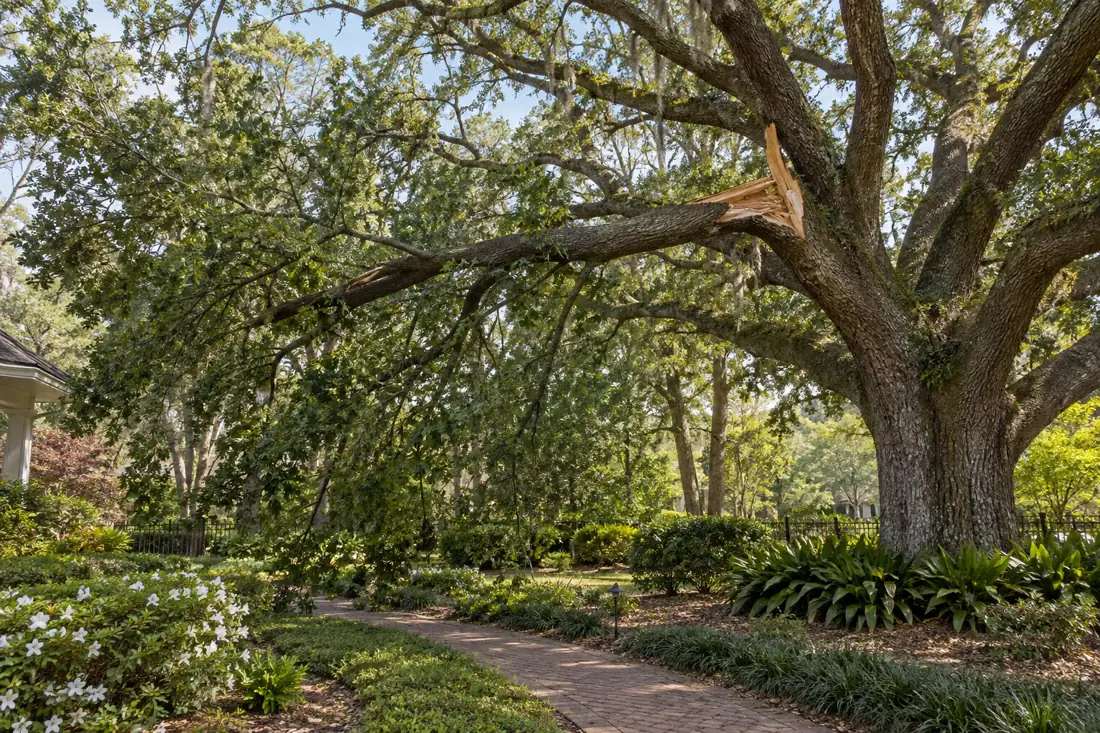
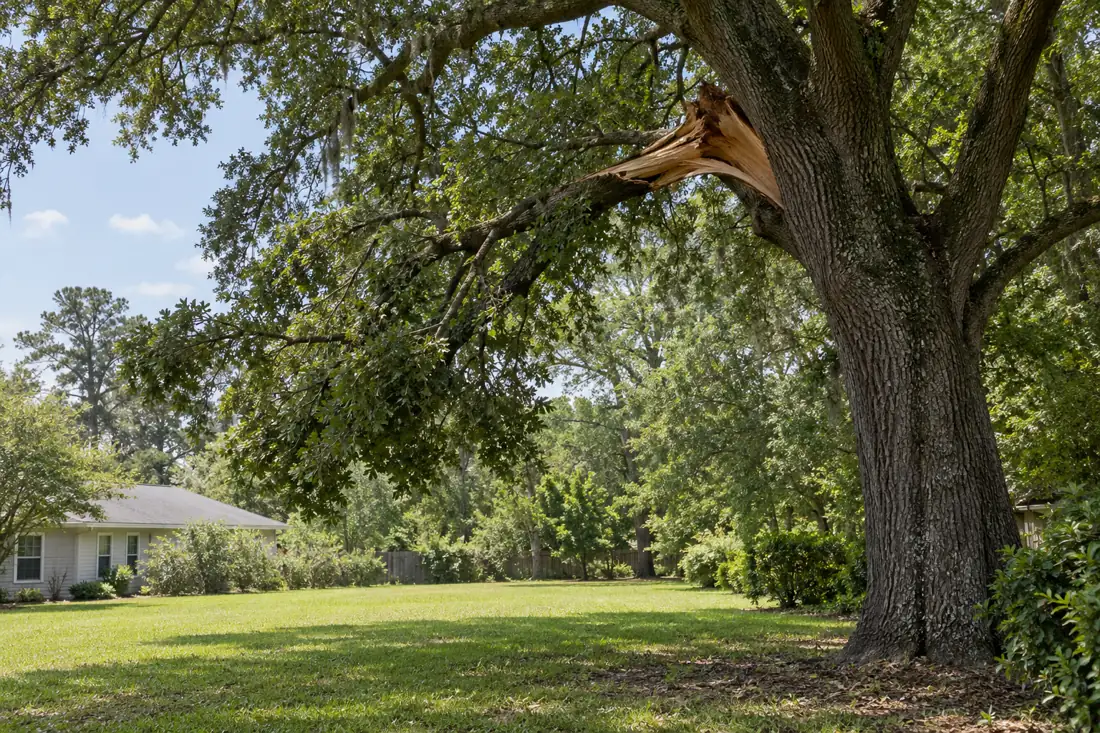
The existing educational imagery is not evidence of an actual newly split trunk at this property. A meaningful report distinguishes a fresh opening at a major fork, exposed splintered wood and newly displaced stems from old bark seams that have been present for years. Use earlier photos if available, describe when the change was first noticed and identify what lies below the affected crown. Do not touch the gap, insert a tool, tie the stems together or stand beneath the fork to photograph the inside.
The presence of a crack does not tell a reader how much load the remaining wood carries or whether another branch is suspended in the crown. The professional review should consider the structure of the fork, movement, connected limbs, root condition and the people or buildings below. Ask for the proposed exclusion area and a written explanation of any pruning, support or removal recommendation. Do not treat an attractive illustration or a quick remote view as a diagnosis.
Record Storm Observations Without Treating Them as a Diagnosis
Once occupants are protected, write down what was observed from a safe place: when the crack was first noticed, whether the crown struck a roof, and whether the tree or a major limb moved during the storm. Note visible fresh wood, hanging branches, or a new lean, but do not touch the tree to check whether a crack is wet or loose.
If taking a photograph is possible from outside the exclusion zone, use a zoom lens and avoid standing beneath other trees or near overhead wires.

Distinguish a broken union from ground movement
A trunk or branch union opening after a thunderstorm and fresh lifting of ground around the root base are different structural events. From outside the fall zone, note whether separation is visible above ground between stems or near the root collar with disturbed soil. Include the direction of changed lean and nearby targets without approaching the damaged area.
Do not climb, tension a rope or shake a suspect stem to learn whether it moves. Keep people clear and contact the utility first if conductors could be involved. A written request should separate immediate isolation, unstable-limb work, removal of debris and any longer-term assessment of the remaining tree.
In southeast Louisiana, intense gusts, saturated ground, repeated rain bands, and lightning can occur in the same storm. A trunk split discovered afterward does not by itself show which force caused it. Rain-softened soil or previous decay may have contributed, while a lightning channel may leave signs that are not obvious from the ground. Record the storm timing and any witnessed strike as clues, not conclusions. Accurate observations help an arborist compare the event with the tree’s prior condition and current structure.

Understand What a Split Union Can Mean
A union is the point where stems or large limbs meet. Some unions have strong, continuous wood; others have narrow angles, included bark, or a seam that limits sound attachment. A crack at a union may show that the two sides have begun separating, but its appearance alone cannot establish how much sound wood remains or when further failure might occur. Do not wedge the opening, bind the stems, or test movement by pushing or pulling on a branch.
Tell the assessor which stems were present before the storm and whether the tree has previously been pruned, cabled, or damaged. A mature live oak with a broad crown, a water oak with a history of limb loss, and a pine with a tall exposed stem present different structural questions; species alone does not settle the decision. The professional should inspect the union and connected stems from safe positions, explain any access limits, and identify what evidence supports the proposed level of concern.
Record what is connected before discussing removal
Trees split by wind can have sections that remain attached under considerable tension. A crack between co-dominant stems is different from a broken branch lodged in a neighboring crown, and neither can be safely diagnosed through a close-up alone. Keep people out of the possible fall and swing zones.
From a safe location, show the whole tree, both sides of the split, the ground under it and nearby structures. Avoid tugging on hanging wood or treating a ratchet strap as a repair method. A new split beside a doorway or power service needs immediate professional attention.
When arranging an evaluation, ask whether the provider is assessing the possibility of retention, proposing temporary risk control or pricing removal. Those are different decisions with different qualifications and timelines. If work proceeds, clarify where sections may be lowered and whether the second stem or remaining tree requires additional evaluation afterward. Do not equate a clear photo with proof of internal wood condition. The record should capture visible damage, when it appeared and the agreed next action, without declaring the tree safe by assumption.
Treat Loaded or Suspended Stems as Unstable
A stem caught in another branch, resting on a roof, or held partly upright after a split can store considerable force. It may drop, rotate, spring away, or pull another part of the tree with it as support changes. The absence of movement while you watch does not mean the piece is stable.
Keep people out from beneath and beside the suspended material, and do not climb, shake, cut, or attach a rope to it. Such work requires planning by trained tree workers with suitable equipment.
When requesting help, describe where the piece is supported, what it is touching, and whether it crosses a fence, driveway, utility corridor, or occupied room. Ask the contractor how the crew will establish and maintain the exclusion zone, control movement, and keep workers out of likely fall paths. If the piece is resting on a structure, avoid entering that structure if damage or shifting is suspected. A qualified responder may need to coordinate with a building professional before tree work begins.

Read Bark Cracks and Lightning Signs With Caution
A fresh bark crack may expose pale wood, run down a trunk, or continue into a union. A lightning strike can split bark or damage tissues along a path, but storms also create wind failures that resemble strike damage. Scorching, loosened bark, or a sudden crown change may be useful observations, not proof of cause. Avoid peeling bark to follow a suspected channel; disturbing damaged material can worsen the wound and puts a person close to an unstable trunk.
Keep clear of electrical hazards. Treat every overhead wire as energized, even if it appears down, quiet, or insulated. Do not touch a tree, branch, fence, or vehicle that may contact a line. Contact the electric utility or emergency responders according to the situation, and wait for their direction before tree work near the line. A tree contractor should identify utility conflicts and use appropriately qualified line-clearance specialists where required; an ordinary tree crew should not improvise around electrical conductors.
Arrange a Qualified Structural Assessment
Seek an arborist experienced in tree risk assessment and storm-damaged mature trees, and ask about relevant qualifications, training, and experience rather than relying on a title alone. The assessor should review the whole tree, the damaged union, the crown, trunk, root flare, and surrounding targets, while respecting the exclusion zone. Wet soil can conceal root-plate movement, so the inspection may need to be limited until conditions improve. Ask what could not be inspected and whether a follow-up visit is warranted.
Request a plain-language explanation of the observed defects, the parts that could fail, likely targets, and the reasons for any proposed urgency. Ask whether the opinion is based on a ground inspection or requires additional access or testing, and what uncertainty remains. A responsible assessment distinguishes observed facts from assumptions about storm cause. It should also address nearby trees and site conditions without turning every damaged branch into a removal recommendation. Obtain written scope and recommendations before authorizing non-emergency work.

Choose Between Reduction, Removal, and Limited Stabilization
The decision depends on the severity and position of the split, the remaining sound structure, the tree’s condition, and what lies within reach—not simply on whether the tree is valuable or mature. A targeted reduction may lessen selected end weight when sound attachment and suitable branch structure remain. Removal may be the more appropriate choice when a critical stem is irreparably separated or cannot be managed acceptably. Ask the arborist to explain why each feasible option does or does not address the identified risk.
Be cautious about promises that a cable, brace, or heavy cut will make a split tree safe. Stabilization systems have limits, require suitable attachment points, and may call for inspection and maintenance; they do not repair damaged wood. Poorly planned topping or indiscriminate crown thinning can create new problems and is not a substitute for structural judgment. Before approving work, confirm which stems will be retained, what will be removed, how nearby property will be protected, and who will explain future monitoring needs.
Treat connected split stems as a loaded system
Multiple-stem trees can contain weak unions, included bark or old decay, but an observer cannot determine the remaining strength by sight alone. After a thunderstorm, a fresh split may leave one stem leaning against another or supporting a branch under tension. Never stand below the crown to look into the split, test a moving stem, climb the tree or cut exposed wood. Keep neighbors and pets clear of possible fall paths. If public access or utilities are endangered, use the appropriate emergency channels.
Record what changed during the storm: a new crack, dropped limb, unusual canopy shape, shifted fence or impact on a roof. From a sheltered, safe viewpoint, photograph the whole tree and the objects around it. Include the size and location of neighboring trees and the available equipment approach. Do not assume that removing a visibly damaged stem makes the remaining stem safe; the junction and load distribution may be altered. A qualified tree professional must assess the entire tree.

Describe the failure and nearby targets without inspecting the crack up close
Ask the estimator to distinguish immediate hazard reduction from the longer-term decision to retain or remove the remaining tree. If preservation is being considered, understand what type of further assessment is appropriate and who is qualified to make that recommendation. A cable or brace is not a universal solution to a major new split, and an online photograph is insufficient to prescribe one. Specify whether the estimate includes handling hanging limbs, protecting roofs and fences, and removing logs and debris.
Prepare for the possibility of a changed scope after the on-site assessment. Access constraints, newly discovered decay or unstable portions may change how the wood can be controlled. The written proposal should identify exclusions and any steps needing separate professional coordination. Save safe before-and-after photographs for the property record, but avoid saying the company guaranteed an undamaged retained tree or a particular storm response time.
Plan Rigging Carefully Near Buildings and Site Features
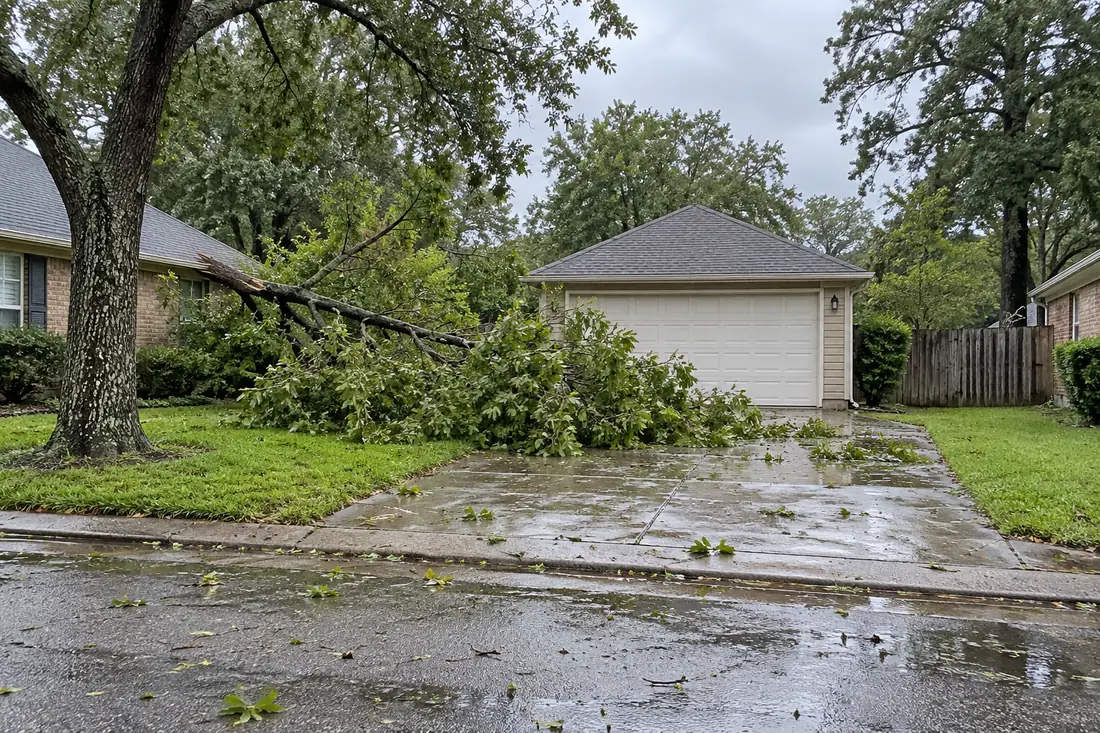
When a damaged crown is beside a house, shop, fence, parked vehicle, or narrow access lane, removal is a controlled operation rather than simply cutting and letting pieces fall. Ask how the crew will manage each section’s weight and travel path, protect roofs and paved surfaces, and prevent a cut piece from swinging into the remaining tree.
The plan should account for unstable attachments and limited anchor options. Do not accept a request for an owner or site employee to hold a rope or enter the hazard zone.
Clarify equipment access, work-zone boundaries, vehicle placement, and how occupants will be kept clear while the tree is being handled. Discuss fragile landscaping, drainage features, septic components, or other site constraints before work starts. If a lift, crane, or rigging line could approach utility conductors, stop planning until the proper utility coordination and qualified specialists are in place. Ask who may pause work when wind, rain, visibility, or ground conditions become unsafe. A sound plan allows the crew to change methods or defer work.

Monitor the Retained Canopy and Close Out the Project
If part or all of the tree remains, ask for a written description of retained stems, completed cuts, any installed support system, and signs that should prompt a new assessment. Follow the arborist’s recommended inspection interval, with an earlier review after another severe storm or a noticeable change in lean, cracking, or crown movement. Keep people and vehicles away if fresh damage appears. Do not assume that a clean-looking cut or quiet period means a previously split union has regained strength.
Record the work date and keep the assessment and scope where future property managers can find them. When arranging maintenance, ask the same provider or another qualified arborist to review the retained structure rather than repeating a blanket pruning schedule. Avoid adding soil, paving, trenching, or heavy storage beneath the remaining root area without considering tree impacts.
If a concern involves a power line, contact the utility rather than monitoring from close range. Continued observation supports timely decisions; it cannot eliminate the uncertainty of future storms.
Record a trunk split without approaching suspended wood
A fresh structural split often follows the grain at a fork or main stem and can involve unequal movement of two heavily loaded sides. From a safe distance, the useful evidence is a view of the entire crown and union, the direction in which each side is leaning, and whether a branch is already resting on another tree or structure.
Do not pull bark away to expose a crack, drive a vehicle beneath the canopy, or assume that the intact-looking side can carry the damaged side. A decorative bark seam can resemble a crack in a small photograph; photographs are not a substitute for an onsite structural assessment.
Before requesting a scope, note nearby paths, doors, utility spans and locations that must remain closed. Ask the qualified arborist to identify whether any work would transfer tension to the remaining stem and whether a separate exclusion area is needed during equipment setup. If a tree is retained, request a written description of the limitations and inspection schedule rather than an implied guarantee that the union is secure.
Site-specific information to include with your request
- Show the fork and the whole tree from a location outside the branch fall area.
- Mention fresh noises, visibly changing separation or recent branch movement without investigating the tree up close.
- Separate the immediate safety decision from any later choice about preservation, cabling, reduction or removal.
Show the split and the targets without standing below it
A split at a trunk fork can involve an attached leader, hidden internal decay, or material under tension. Do not look upward while standing beneath the affected crown. A safe photo set should distinguish the overall tree from the location of the crack while leaving the stability assessment to a qualified professional.
- Photograph the whole tree and both main leaders from outside the potential falling area.
- Use zoom from that safe spot to show any visible separation, torn wood or hanging branch; never pull bark aside.
- Include structures, paths, vehicles or other targets under the affected side of the crown.
- Describe whether the split appeared during the storm and whether you heard movement; avoid testing it by shaking or climbing.
Keep the area below the split closed to ordinary use. If the damaged leader is moving or threatening a frequently used route, contact the appropriate emergency response or tree service directly rather than relying on a form submission. Record the safe viewing location and any barriers already in place.
Questions about this project
Should I wait for a form reply about a dangerous tree?
For an urgent condition, call to discuss availability and the next step. A form does not confirm dispatch. Keep clear, and contact emergency services or the utility when there is immediate danger or an electrical hazard.
Does emergency work always include full cleanup?
The initial authorized work may focus on stabilization or restoring access. Ask what is included and what follow-up removal, hauling or repairs need a separate scope. Confirm the plan directly with the contractor.
Does healthy-looking foliage mean a tree is structurally safe?
No. Leaves do not establish the condition of roots, trunk or branch connections. Explain visible defects and recent changes, and ask for an assessment appropriate to the tree and nearby targets.
Should I test a cracked branch or trunk?
Do not pull, shake, climb or cut damaged material to test it. Keep clear of the affected area and describe the condition from a safe location. Qualified assessment and an appropriate work plan are needed.
Is a free work estimate the same as a written risk assessment?
Not necessarily. Explain whether you need pricing, condition advice, a documented assessment or a combination. Ask what the visit includes, who provides it and what limitations apply to any findings or recommendations.
What history should I share?
Share known storm damage, prior failures, construction, root disturbance, flooding, pruning and recent changes. Include the timing and nearby property use. Useful history supports the evaluation without replacing inspection of the current tree and site.
How should several storm-damaged trees be described?
Use marked photos or a simple tree list showing locations, affected targets and access problems. Identify urgent routes or buildings separately from later cleanup. The contractor can then discuss assessment and a practical work sequence.
Can restoration be handled in phases?
Yes, when the parties agree on clear scopes. Initial hazard or access work, planned removal, hauling and building or landscape repairs may involve different stages and providers. Record the responsibilities and completion requirements for each.
Which photos should I text first?
Send a wide tree view, the base if safely visible, nearby targets and the equipment route. Add the address, desired work and any recent change. Identify each tree clearly if the request involves several.
Can photos confirm that a damaged tree is stable?
No. Photographs may omit defects, support conditions and other important details. Use them to prepare for the contractor's assessment, and avoid entering hazardous areas to obtain a better view.
What should I tell Tree Huggers about tree split during a thunderstorm?
Explain the property address, the work you want and the specific concerns: new split, connected stems, nearby targets. Send safe photos of the tree, surroundings and access route. The contractor can then discuss the assessment and scope needed for this situation.
How do I request an estimate for this work?
Call 504-458-8336, text photos or use the estimate form on this page. Include the address, desired outcome and any timing constraints. The company will need to review scope and availability; an online request does not confirm a price, appointment or emergency dispatch.
Get a scope for your property
After a tree splits during a thunderstorm, do not approach the junction or stand under either stem. From a safe location, report whether the split is new, whether the stems remain connected, and which roofs, drives or pathways are below. Safe photos may help the crew understand the loading and access problem, but cannot replace an onsite assessment. Ask what can be stabilized or removed safely and what debris or remaining tree material is included.
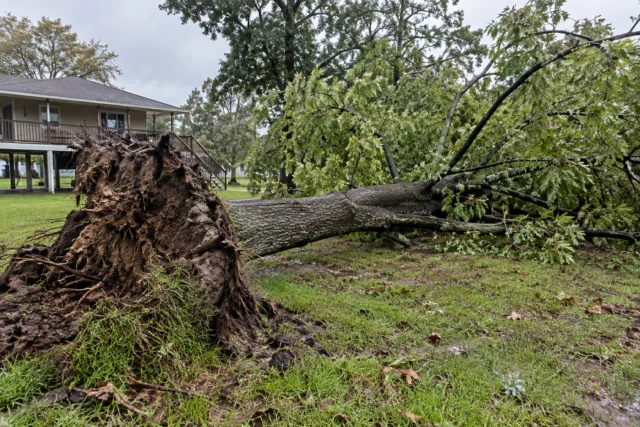
A split union needs different planning than uprooting
A split crotch or trunk can leave attached sections under substantial tension even when the roots appear stable. Report whether the stems have shifted, where the fracture begins, and what lies beneath the connected wood. Do not put a strap around the stems, prune them yourself or enter the area to inspect the crack. Photos from outside the risk zone cannot verify load paths.
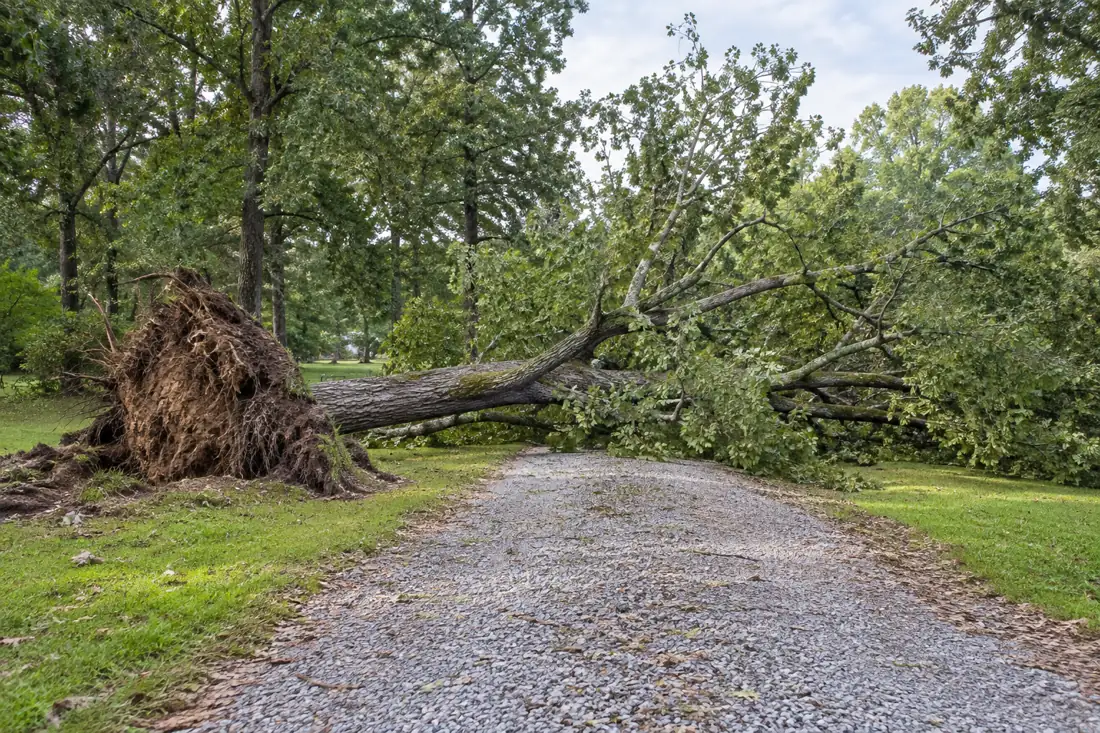
If the soil itself has risen and the entire tree angle changed, consult the partially uprooted tree guide instead. For deciding whether a storm-damaged tree can be retained or should be removed, use the save-or-remove decision guide as a framework for questions to ask a qualified professional.