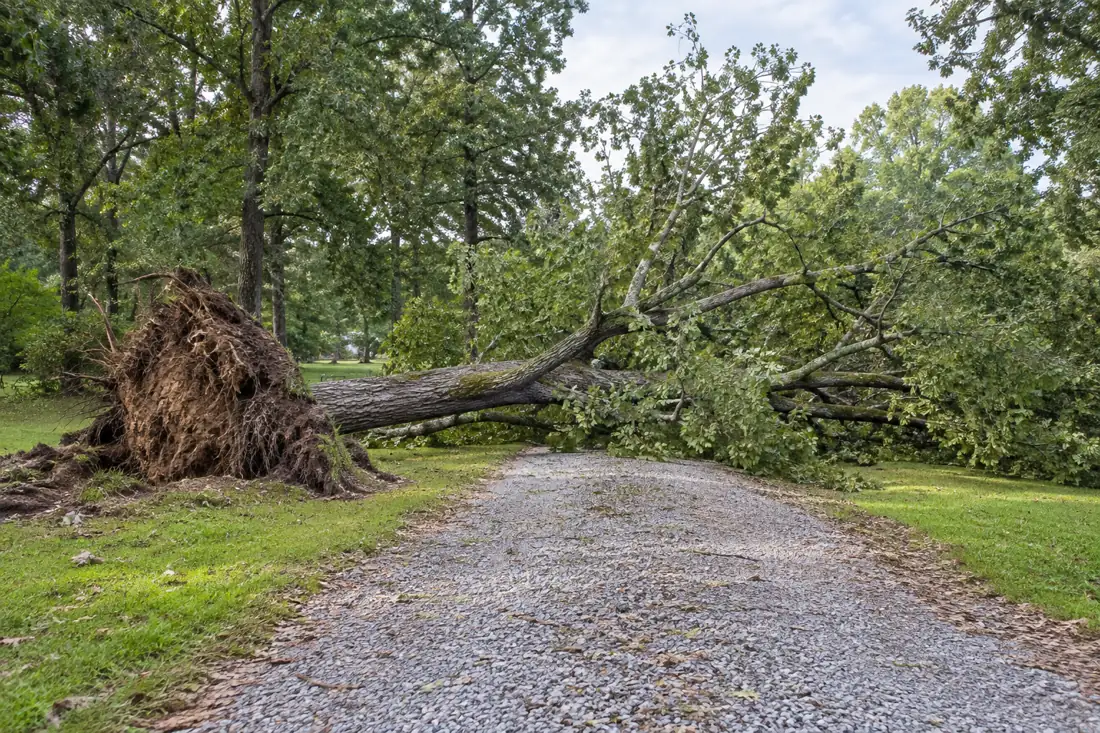
Signs a tree may still be worth saving
No major root plate movement or uprooting, and the trunk remains reasonably anchored.
Save, support, monitor or remove?
A tree retaining foliage after a storm can still have a serious structural defect. Describe root movement, trunk splits, hanging limbs, canopy loss and the distance to occupied areas. Do not enter the fall zone to measure a wound.
Ask the evaluator what evidence supports pruning, supplemental support, monitoring or removal, and what cannot be judged from photos. Root-plate displacement is different from minor branch loss. Neither a green crown nor an old cable is a universal assurance of stability.
Have the written decision identify any access restriction, responsible party and follow-up interval. If removal is chosen, confirm whether the quote includes the trunk, attached brush, stump grinding, hauling and restoration. These are different work items.
Site planning detail: Deciding whether a storm-damaged tree can remain starts with understanding what actually failed. A broken small branch, major split union, uprooted base and newly leaning trunk have different consequences. Document the tree and its target area from a safe position; do not approach a suspended limb or attempt to push a partly uprooted tree upright. Consider how much live crown remains, whether the trunk or main unions are compromised, and how the remaining structure would respond to future loading.
A qualified assessment may recommend monitoring, limited corrective pruning, support evaluation or removal. Ask what uncertainty remains because some internal defects are not visible in photographs. Explain any sentimental or shade value, but do not let that substitute for an honest discussion of residual risk. Obtain a written scope identifying the planned outcome and material handling, then keep follow-up inspection expectations with the record.
Enough healthy crown remains for the tree to recover without severe imbalance.
Broken limbs or limited structural concerns can be addressed through pruning or support.
Signs removal may be more practical
Major root failure, severe trunk splitting, catastrophic loss of the primary crown, a new dangerous lean, or multiple defects directed toward important targets can make preservation unrealistic. The tree should be judged by its remaining structure, not by how much green foliage is still visible.
Think about the future tree, not just today
A heavily damaged tree may survive biologically but require repeated intervention or develop poor structure. The right question is whether it can remain a reasonable, maintainable tree in that location.
Related resources
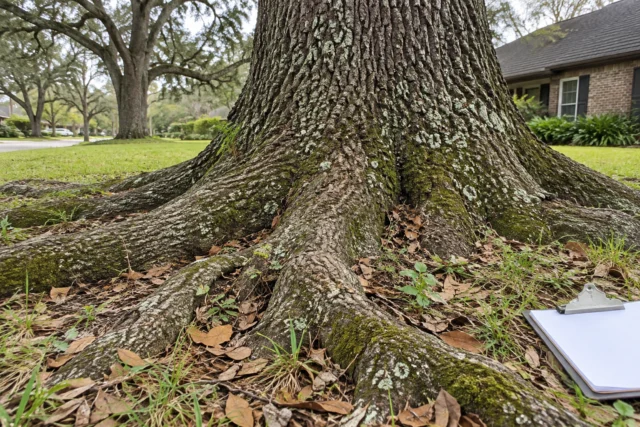
Tree Health
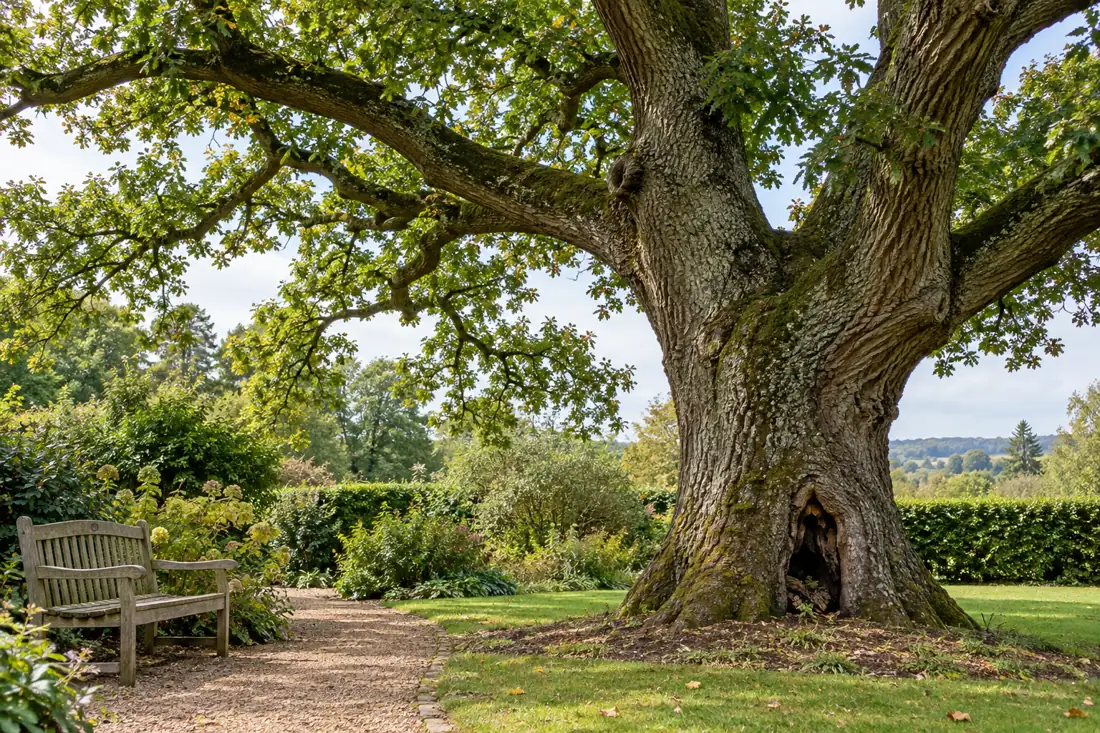
Tree Risk Assessment
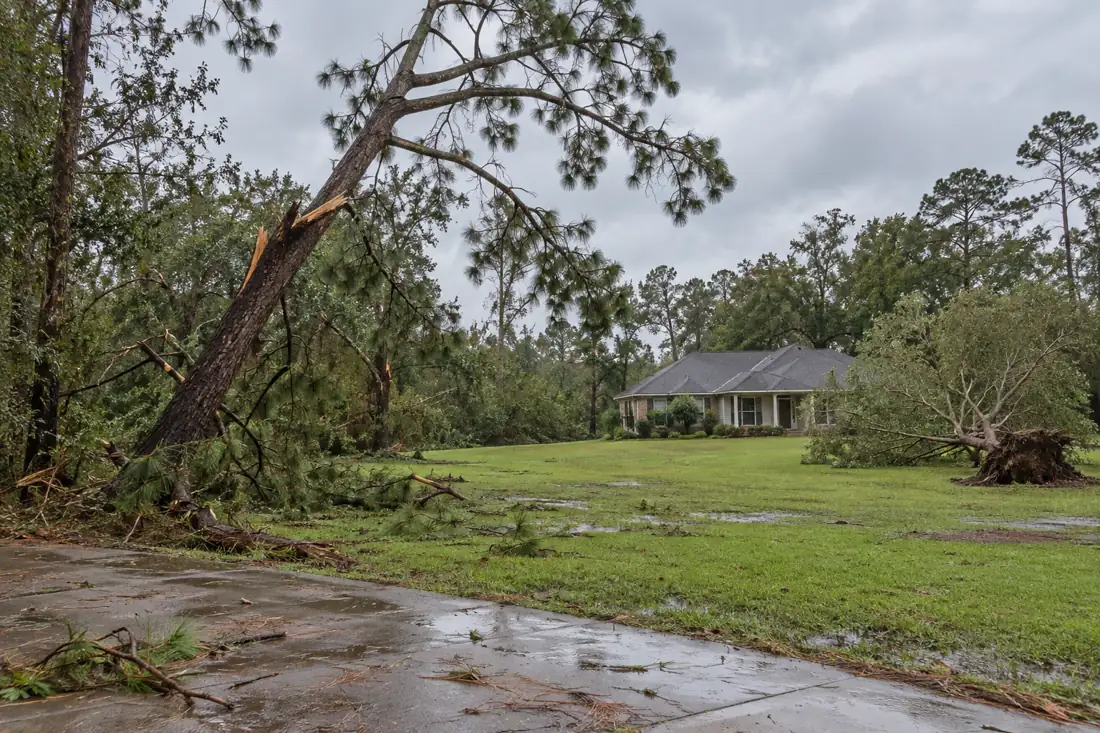
Hurricane Tree Removal
Begin with stability and exposure, not emotion
A storm-damaged tree may be a valued part of a property, but deciding whether to retain it requires more than counting broken branches. The most important questions concern the trunk, major branch unions, root anchorage and what could be struck if another failure occurs. A tree that lost several small limbs may remain structurally sound.
Another with a relatively intact canopy may have a newly lifted root plate that makes it dangerous near a home. Start from a safe distance and arrange professional evaluation when the damage involves major supporting wood.
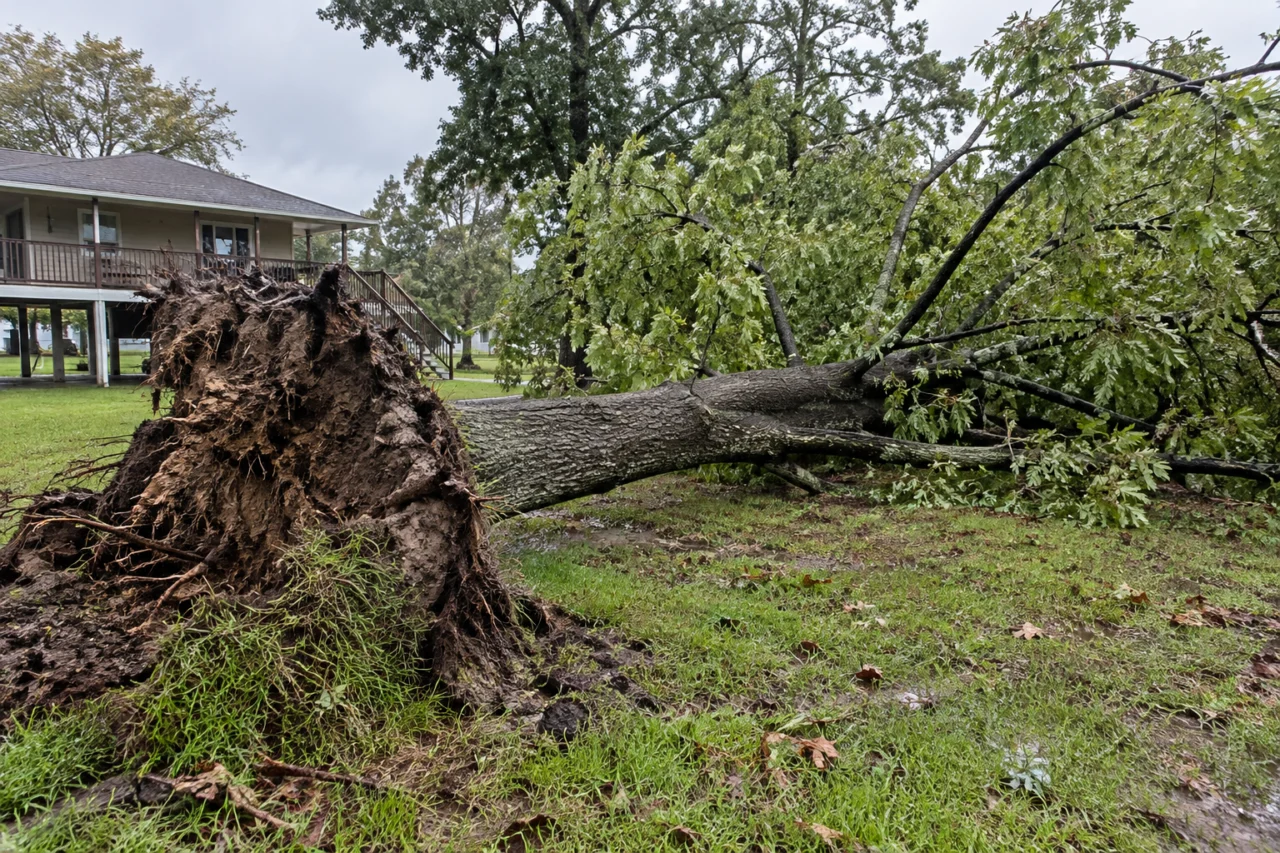
Value and risk are not opposites. A mature live oak can provide shade, habitat, cooling and substantial character, and those benefits are worth considering when retention is realistic. Yet a tree leaning onto occupied rooms may present unacceptable risk even when it was healthy before the storm.
Ask what makes the damaged tree stable enough to monitor, and what findings would change that decision. No one can guarantee performance in a future hurricane. The goal is a reasoned choice based on observable conditions, qualified assessment and the consequences of possible failure.
Evaluate the root system before treating the crown
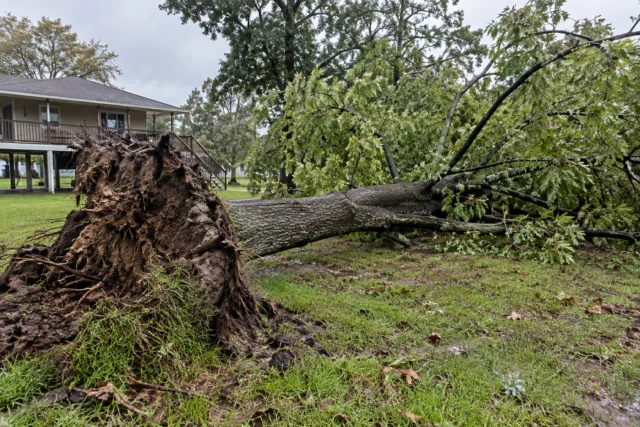
Large trees depend on roots and surrounding soil for anchorage. Fresh ground heave, a tilted root plate, severed major roots or sudden movement at the base can signal a serious change after high winds. Saturated soils may complicate the situation, especially where erosion or construction has already disturbed the site.
Do not step onto lifted roots to inspect them or try to pull a tree back into place. A partially uprooted tree can move abruptly when another branch breaks or a crew begins cutting away weight.
An intact-looking root zone is encouraging but not conclusive. Internal decay, prior trenching and root loss may be hidden. An arborist can compare current conditions with old photographs, look for soil movement and assess whether further investigation is necessary. A tree with stable anchorage and limited crown damage may have a better recovery outlook than one with substantial root displacement.
Where roots are compromised near a high-value target, removal may be recommended even when the leaves still appear green. Ask what supporting evidence informs the conclusion.

One broken limb does not settle the retention decision
A storm-damaged tree may have localized crown damage while its trunk and root system remain viable, or it may have less visible defects requiring assessment. The proportion and position of lost branches, attachment condition, root disturbance and nearby targets all influence possible next steps.
Ask what evidence supports retention, reduction, temporary exclusion or removal. Do not infer that a fresh green canopy guarantees stability, and do not assume every tree with storm damage must be cut down.
Distinguish recoverable crown loss from lost anchorage
A tree may lose foliage and minor limbs yet keep a stable trunk and root system. Conversely, a tree with a green crown can still have severe root-plate movement or a fractured major attachment. The appropriate decision weighs species response, remaining crown, stem defects, soil and root conditions, nearby targets and the owner’s long-term goals. A single photograph cannot resolve all of these factors.
Some decisions legitimately remain uncertain pending observation or testing. A transparent recommendation should explain that uncertainty and the conditions that would trigger a new inspection rather than promising recovery or insisting every damaged tree must go.
Separate recoverable branch damage from structural failure
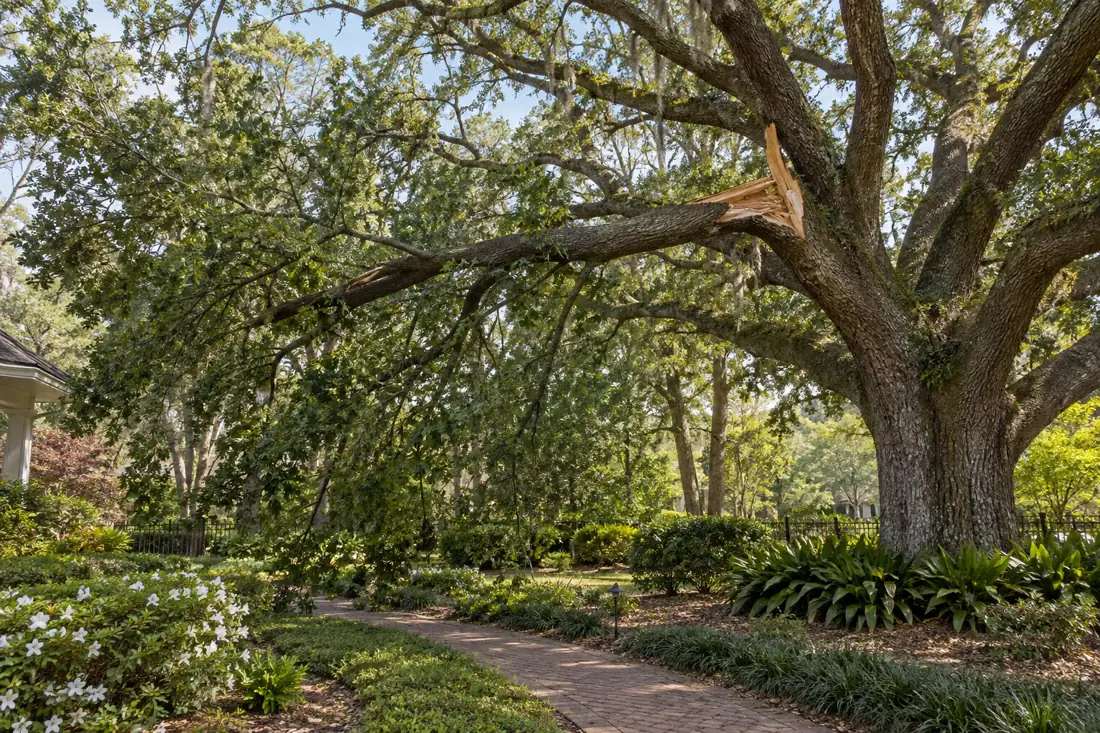
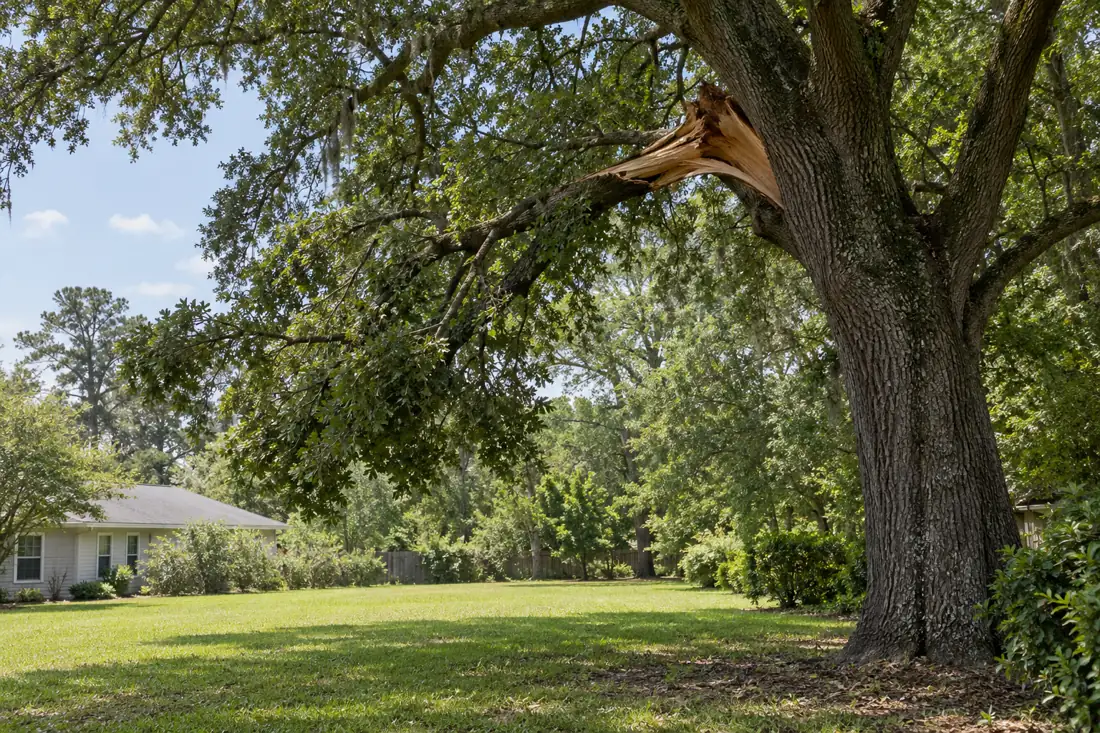
A broken small limb can often be managed by appropriate pruning, while a split through a large trunk or a major codominant union is a different problem. Look for the size of the damaged wood, the location of the break and whether remaining branches are soundly attached.
Avoid making the final decision from the amount of green foliage still present. Leaves may remain attached for some time after an important supporting part has failed. Do not stand below broken limbs or use a ladder to inspect a hanging branch.
The professional may recommend selective removal of a damaged branch, controlled reduction of a remaining limb, monitoring or full removal. Support systems such as cables or braces are specialized interventions with limits; they do not turn a fundamentally unsafe tree into a guaranteed safe one.
Their suitability depends on the actual defect and anticipated loading. Ask whether the proposed treatment changes the risk sufficiently for the tree’s location. If the tree is close to a house, ask how the work will be performed without transferring loads into the structure.
Consider the species and the tree’s capacity to recover
Species differ in compartmentalization, growth rate, natural form, branch attachment and tolerance of damage. Some trees can rebuild a practical crown after a limited break; others respond poorly to heavy injury or develop decay around major wounds. Age, vitality and prior maintenance also affect recovery. A vigorous tree with enough healthy crown remaining may offer options that a declining tree with several decayed leaders does not. Avoid one-size-fits-all rules such as removing every tree that has lost a fixed percentage of foliage.
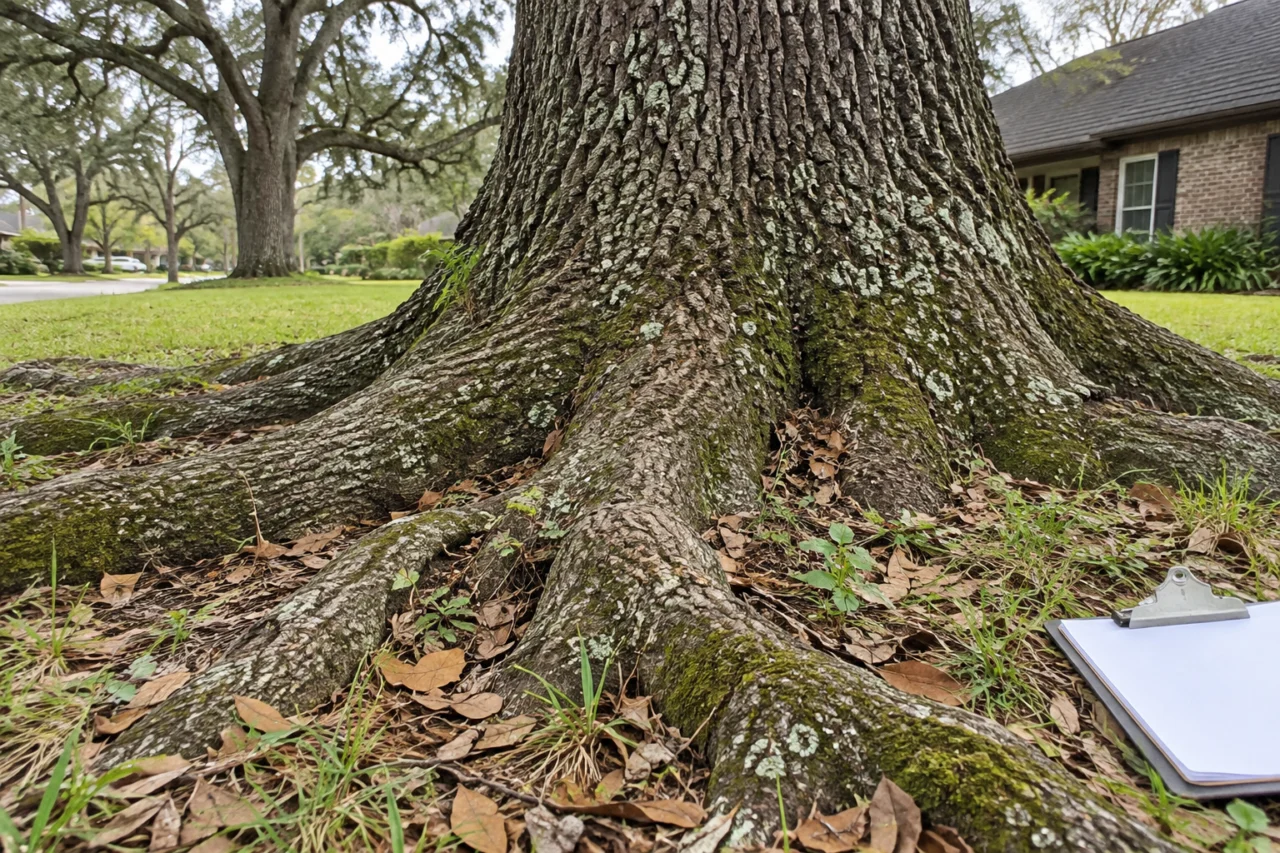
Louisiana’s live oaks, water oaks, bald cypress, pecans and magnolias differ markedly in structure and site preference. Identify the species accurately if possible, and tell the assessor about recurring dieback, previous storm damage or past topping. A species guide may help with background, but tree-specific decisions require an individual inspection. The Louisiana tree guide discusses common types. If the site has historic or regulated trees, check applicable approvals before a non-emergency removal rather than assuming storm damage removes all restrictions.
What supports a save-or-remove decision after storm damage
A storm-damaged tree may be repairable when injury is limited and the remaining structure can reasonably be managed. A broken peripheral limb is different from a newly split main stem, severe root movement, or extensive loss of load-bearing crown. Record where the failure occurred and which structures or occupied spaces are exposed. Do not attempt to decide based only on how much green foliage remains.
Root stability is one of the most important unanswered questions after a wind event. New heaving soil, a shifted trunk angle, or obvious separation near the base merits immediate caution and professional assessment. A tree growing in wet ground is not automatically unstable, and visible surface roots are common in some species. The relevant issue is evidence of change and its relationship to the whole tree.
Document the decision for future comparison
If a tree is retained, record the reason, any completed work, observable conditions that merit attention and a sensible reassessment trigger. A dated baseline can be compared with later changes without creating a false claim that the tree is permanently safe.
If removal is selected, distinguish the tree-removal work from stump handling, site repairs and disposition of logs or chips. The owner should know exactly which outcome has been accepted before equipment mobilizes.

Consider roots, structure, crown, and people nearby
Species, age, prior pruning, previous decay, and planned future use of the property all affect realistic management choices. When a large limb was lost, ask whether pruning the remaining structure is possible without removing an excessive portion of the crown. Some losses may justify monitoring, while others leave unacceptable exposures near homes or public access.
Request an estimate that separates evaluation from the work authorized afterward. If preservation is possible, ask what follow-up observation or maintenance may be needed. If removal is proposed, identify the access route, protective measures, stump options, and debris plan. Neither outcome should be presented as certain without examining the tree and the surrounding conditions.
Measure risk by the targets that could be struck
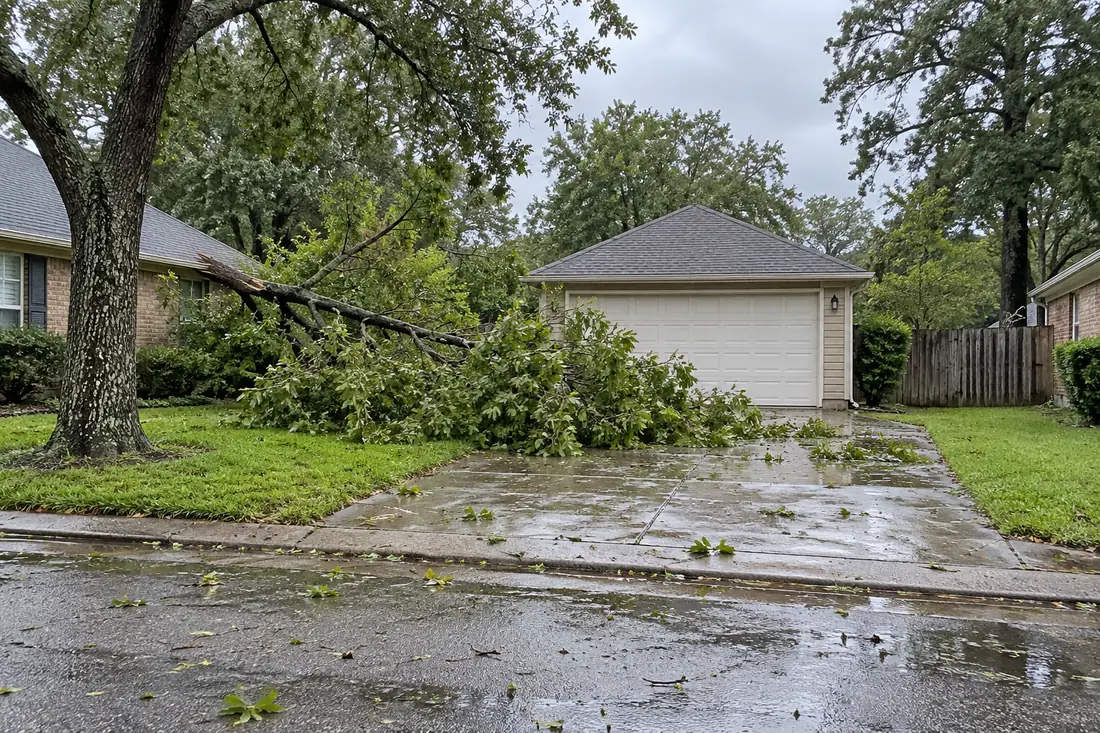
A damaged limb over an open field presents a different level of exposure from the same limb above a sleeping area, daycare entrance or busy sidewalk. Record occupied rooms, footpaths, parking, nearby homes and utility services. Consider how often the target area is used and whether access can be restricted while a specialist evaluates the tree. Exclusion can be a temporary risk-management step, but it may not be practical indefinitely for a primary driveway or small urban yard.
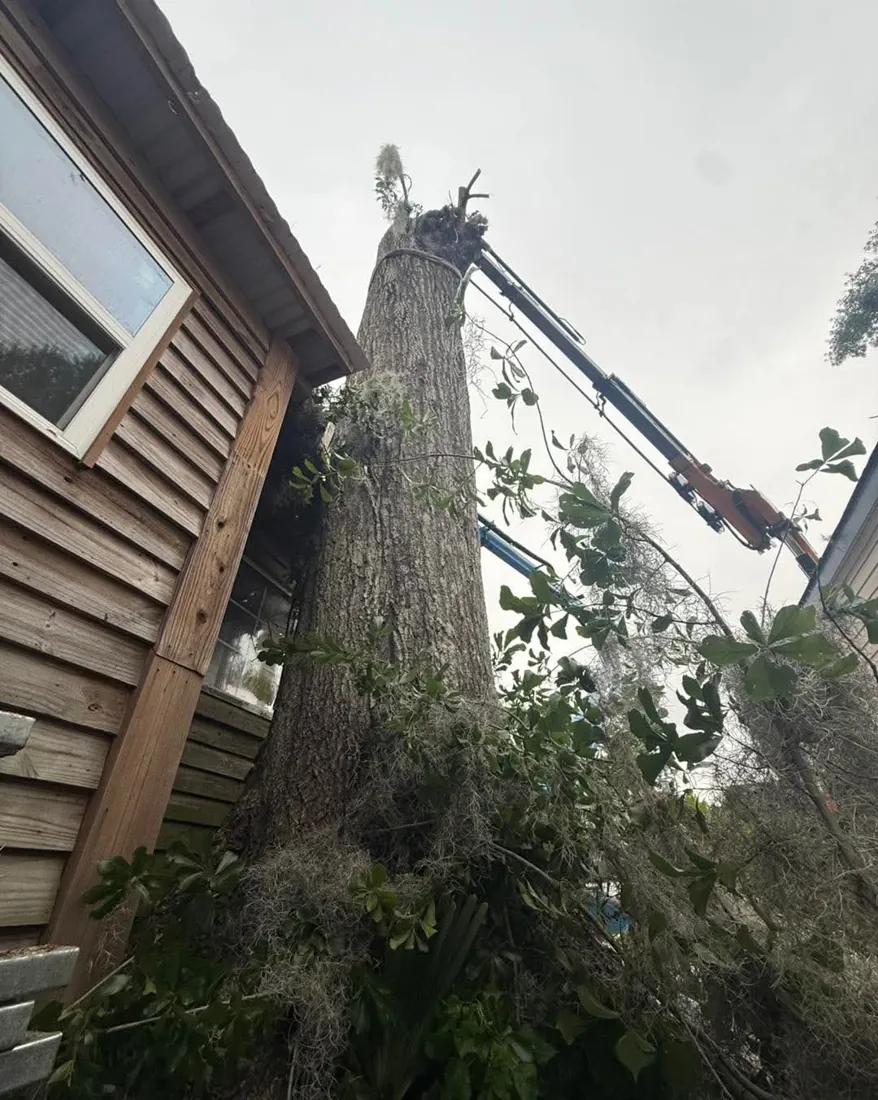
Nearby structures can affect the removal method as much as the retain-or-remove decision. A tree leaning on a house may be supporting or loading damaged roof components, so tree and building work must be coordinated. A crew may need rigging, a crane or specialized equipment to avoid uncontrolled movement. Do not choose a treatment solely because one technique sounds cheaper or more dramatic. The safe method depends on actual access, material condition and how weight will move during cutting.
Recognize cases where retention may not be reasonable
Extensive root-plate failure, a newly split main stem, major decay combined with fresh structural damage or a tree that has fallen onto an occupied building may leave limited options for safe retention. A professional can determine whether stabilization is realistic or removal is the prudent course. The decision may be urgent when there is an imminent threat to people or critical access. Do not stand near a tree showing these conditions while seeking additional photographs or a second estimate.
Even serious damage does not justify unsafe do-it-yourself removal. Storm-bent wood can be under enormous tension and compression, and cutting a loaded trunk can release it violently. Entangled utility lines add electrical hazards. Keep the area clear and explain the situation when calling emergency responders or an appropriately equipped contractor. If a public road is blocked, coordinate with the relevant authority. The post-storm inspection guide outlines what can be documented safely from a distance.
Ask whether corrective pruning preserves useful structure
When the roots and main stem are sound, removing a fractured limb and making proper pruning cuts may allow a tree to recover. The work should be selective and should preserve enough healthy canopy to sustain growth. Large wounds cannot be erased, and the tree may need monitoring as new shoots develop. Avoid topping the remaining crown to create superficial symmetry. It can produce many vigorous sprouts near large wounds, creating new long-term structural concerns rather than resolving the original storm damage.
Ask the contractor to identify exactly which limbs will be removed, what will remain and what further inspection may be required. A follow-up plan could include monitoring a wound, checking crown dieback, reassessing a branch union or evaluating the tree after another significant weather event.
A realistic retention plan also acknowledges the possibility that conditions may deteriorate. Keep records so future work is based on documented change rather than an endless cycle of guesswork. Proper care can preserve valuable trees, but preservation should not be treated as an obligation regardless of risk.
Include site constraints, cleanup and stump decisions
If removal is recommended, the full scope matters. A large trunk may need to be dismantled in sections, lowered by rigging or handled with machinery. Ask about access from the street, protection of roofs and landscaping, neighboring property rights, logs, chips, hauling and debris disposal. Stump grinding is a separate decision and may not be included in a removal estimate. A tree with extensive exposed roots or a stump near buried utilities can require a different plan from an open-lot tree.
Removal also creates a replacement opportunity, but replanting should not repeat the conditions that contributed to the problem. Choose a species and location appropriate for mature height, crown spread, root space, drainage and nearby infrastructure. Avoid automatically replanting a large tree into the same constricted spot without checking underground utilities and future clearance needs. If the removed tree previously shaded the home, discuss how smaller trees or appropriate placement might restore benefits over time. Recovery should consider both immediate safety and the property’s longer-term landscape.
Document the decision and plan for reassessment
Request a written summary of the observed damage, the risk considerations and the recommended treatment. Photographs should show the whole tree and specific defects from safe vantage points. Record whether the recommendation is urgent, conditional or for planned maintenance. If an insurance question arises, avoid assuming the policy will pay for either retention work or removal. Preserve original documentation, ask the insurer directly and consult the insurance guide for the questions to raise.
When retaining the tree, agree on monitoring intervals and specific signs that should trigger a new visit: fresh cracks, soil movement, branch dieback, fungal fruiting bodies or further storm damage. When removing it, confirm the cleanup and site-protection scope before work starts. A second opinion may be useful if conditions are not urgent and the first recommendation lacks clear reasons.
The strongest decision is not necessarily the fastest or the least expensive; it is one that weighs the tree’s value, structural condition and realistic risk to people and property.
Questions about Storm-Damaged Tree: Save It or Remove It?
Can a tree survive losing large branches in a hurricane?
Sometimes. Recovery depends on species, vitality, remaining crown and whether trunk and root support remain sound.
When does root damage make removal more likely?
Substantial root-plate displacement, major root severance or ongoing movement near occupied targets may make safe retention unrealistic.
Should a split trunk always be removed?
A major fresh split requires professional evaluation. Severity, loading, other defects and target exposure determine options.
Can a tree with green leaves still be structurally unsafe?
Yes. Leaves may remain green after important supporting wood or roots are damaged. Foliage alone does not establish stability.
Is a storm-damaged live oak always worth saving?
Its value matters, but retention should depend on structural condition, risk and feasible management rather than species reputation alone.
Can cables or braces make any damaged tree safe?
No. Support systems are specialized tools with limits and do not guarantee safety or replace evaluation of severely compromised structure.
Does pruning fix a partially uprooted tree?
Pruning cannot restore lost root anchorage. A specialist should assess the root plate and consequences of future movement.
Why does a tree’s location affect the decision?
A limb over an occupied home creates greater consequence than a similar limb over unused ground. Target exposure is central to risk.
Can I cut a bent trunk myself?
Do not attempt loaded storm-tree cutting. Stored tension and compression can make material spring or roll violently.
What should be included if removal is necessary?
Clarify dismantling, equipment access, ground protection, log and debris hauling, stump treatment and cleanup.
Should I replant in the same spot after removal?
First review mature size, utilities, root space, drainage and the reason the old location failed. Replanting may be better elsewhere.
What records support a retention decision?
Keep dated photos, assessment findings, treatment scope and reinspection triggers such as new cracking, root movement or further dieback.
Get a scope for your property
Describe the broken or displaced part of the tree, any movement at the base, and the nearest occupied targets. Ask what observations support preservation, further assessment, or removal. This is more useful than a decision based on foliage color alone and helps keep follow-up maintenance distinct from immediate storm cleanup.
Stabilization, removal, and the danger of assuming recovery
A storm-damaged tree may have a partially intact canopy yet have lost critical root support. Conversely, a split at a major union can place weight on separate stems. These are not interchangeable failures and should not be reduced to a single yes-or-no photo diagnosis. Keep people outside the potential fall area and report recent changes without moving material.
The root-plate movement guide addresses lifted soil and a sudden lean; the split-trunk guide addresses connected wood under tension. Ask the assessor to explain what can actually be examined, what remains uncertain, and whether any proposed stabilization is appropriate for the specific defect.