Lightning damage can be obvious in bark and difficult to interpret elsewhere in the tree. Keep away from damaged sections and report any electrical or building hazards through the appropriate channels. Ask for a condition assessment rather than assuming every struck tree must be removed or can safely remain.
After lightning damage near a house, check both tree and property hazards
A lightning strike does not always produce a dramatic visible scar, and visible bark damage does not show the full condition of wood or roots. Note split bark, scorched strips, fresh branch loss, changes in lean, and anything that now reaches toward the house. Keep clear of hanging limbs and damaged electrical equipment. A tree that looks green immediately after a strike may still need follow-up as symptoms develop.
Separate the tree assessment from checks of house wiring, appliances, roof penetrations and utility infrastructure. An arborist should not be expected to certify electrical systems, and an electrical contractor should not diagnose internal tree decay. If wires or a service drop are involved, contact the utility and do not touch the tree or nearby metal fencing. Do not remove a branch merely because it appears blackened without evaluating its structural role.
Provide photographs from safe ground positions showing the whole tree, the suspected strike area and nearby structures. Record the storm date and subsequent symptoms. The work plan should distinguish urgent hazard management from continued monitoring or later removal. Avoid statements that every lightning-struck tree must die or that a single topical treatment can reverse the impact; the response depends on the condition found.
For this project, separate visible damage, delayed decline and nearby structures. These details help the contractor understand what must be protected, what information needs confirmation and what result you want from the work. A clear request is more useful than an assumed method or a price based only on tree size.
A lightning strike can leave visible bark strips, split wood, scorched sections or damaged branches, but some effects may not be apparent immediately. A tree near a home needs a careful assessment of crown condition, trunk integrity, root-zone changes and nearby conductors. Keep away from detached or hanging branches after a storm and contact the utility for any wire involvement. Do not assume that one scar proves the tree must be removed, or that green leaves guarantee its structure is sound.
Document the strike date if known, photograph changes from a safe location and note where people, cars or structures could be exposed if a limb fails. Ask the tree professional what observations support monitoring, selective pruning, additional inspection or removal, and what uncertainty remains. Discuss equipment access and protections for siding, gutters, paving and neighboring planting beds before work begins. Retain the assessment and agreed scope, especially if the condition evolves over subsequent weeks; observations should not be presented as a laboratory diagnosis.
Recognize what lightning can change without guessing the outcome
A lightning strike can leave a dramatic strip of missing bark, a split branch or an apparently unchanged canopy. The visible wound is important, but its size alone does not tell the owner whether the tree can remain safely. A strike may affect conducting tissues and branches along a path that is not obvious from the ground.
The proximity of a house also changes the consequences of a failure and the practical options for inspecting the tree. Begin with a safe description of the change rather than assuming every struck tree must be removed.
Record the date or approximate storm period if known, which parts of the canopy show new damage, and whether bark or branches landed near the residence. Take wide photographs from an area outside any suspected fall zone. Note damaged gutters, fencing, glass or roof surfaces without climbing to examine them. If the tree was struck before anyone noticed the injury, describe the uncertainty rather than inventing a definite strike time. The aim is to give an assessor a reliable starting history.
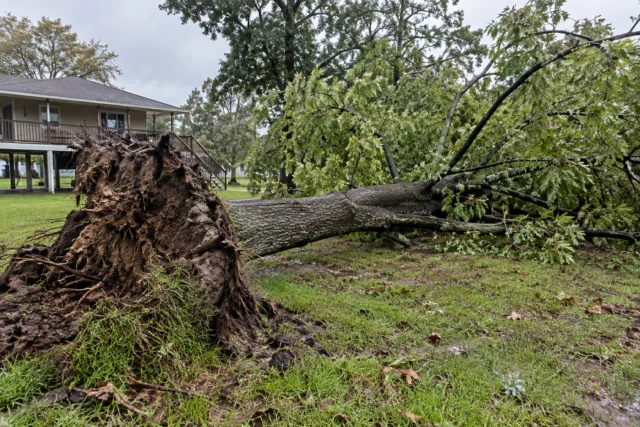
Keep household access away from uncertain overhead conditions
Freshly separated wood, fractured limbs and hanging fragments may be difficult to see against the crown of a large tree. Keep children, pets, vehicles and visitors away from the suspected drop area while the condition is being evaluated. Do not tug on loose bark, pull hanging branches with a rope or stand under the tree for photographs. If material has reached the house, avoid entering a potentially damaged area until the relevant building or emergency professionals have addressed the situation.
Tell the tree contractor whether the front door, driveway, garage or a required exit falls within the concern. A household may need an alternate route for a period of time. That determination should be based on actual conditions and competent advice, not a blanket claim that the entire lot is unusable. If there is an immediate threat to people or a damaged electrical service, use emergency or utility reporting channels. An online inquiry does not replace that response.
Bark damage after a storm is not proof of lightning
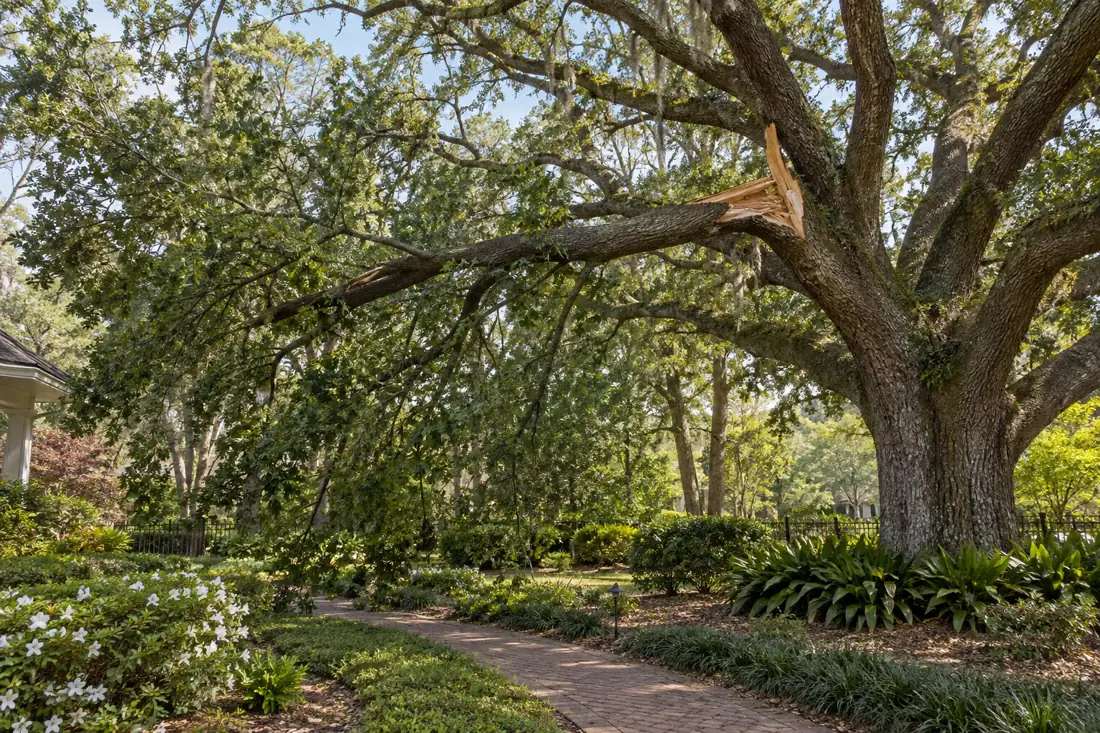
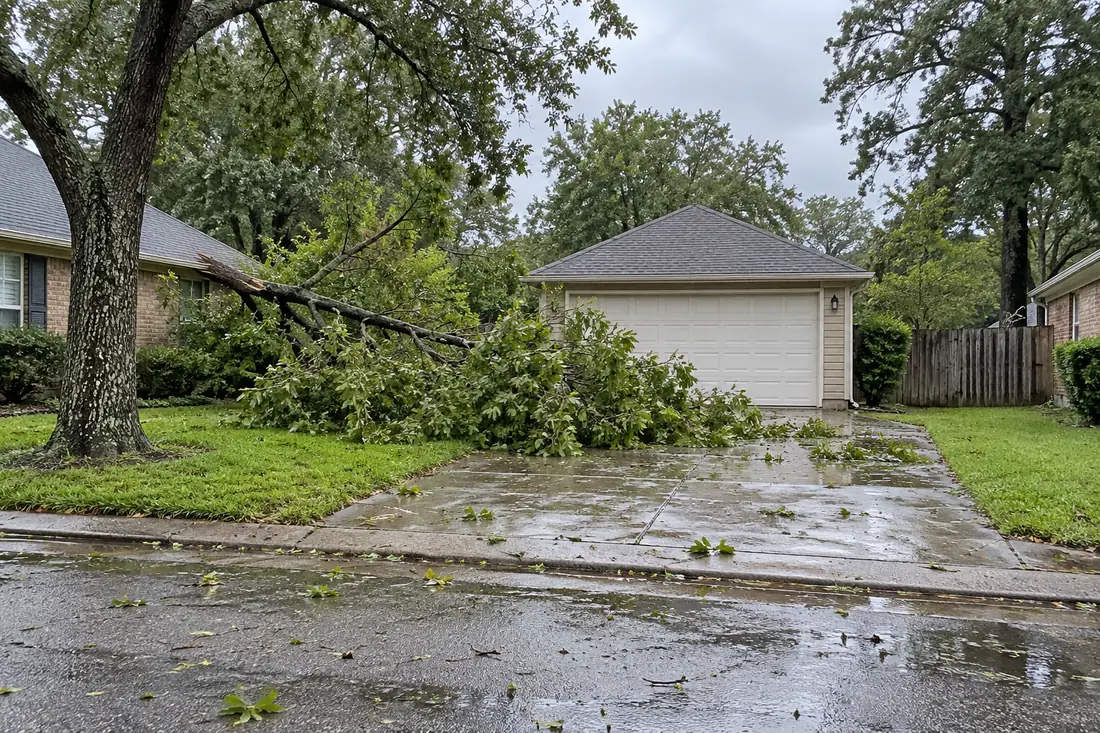
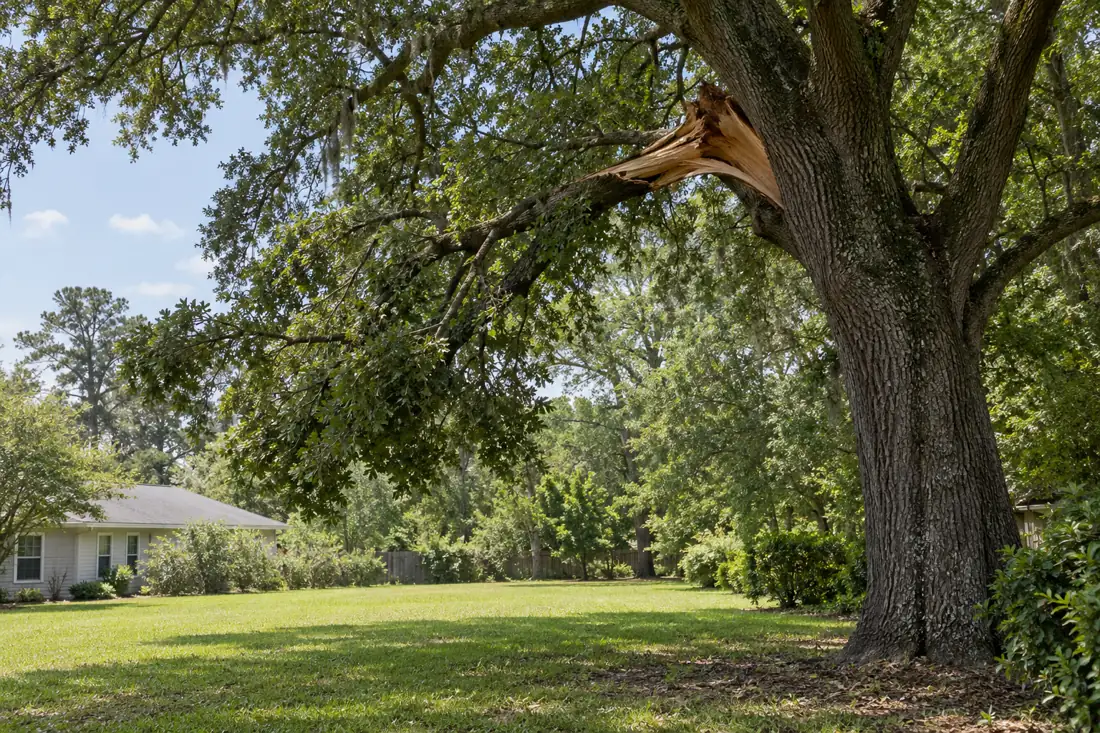
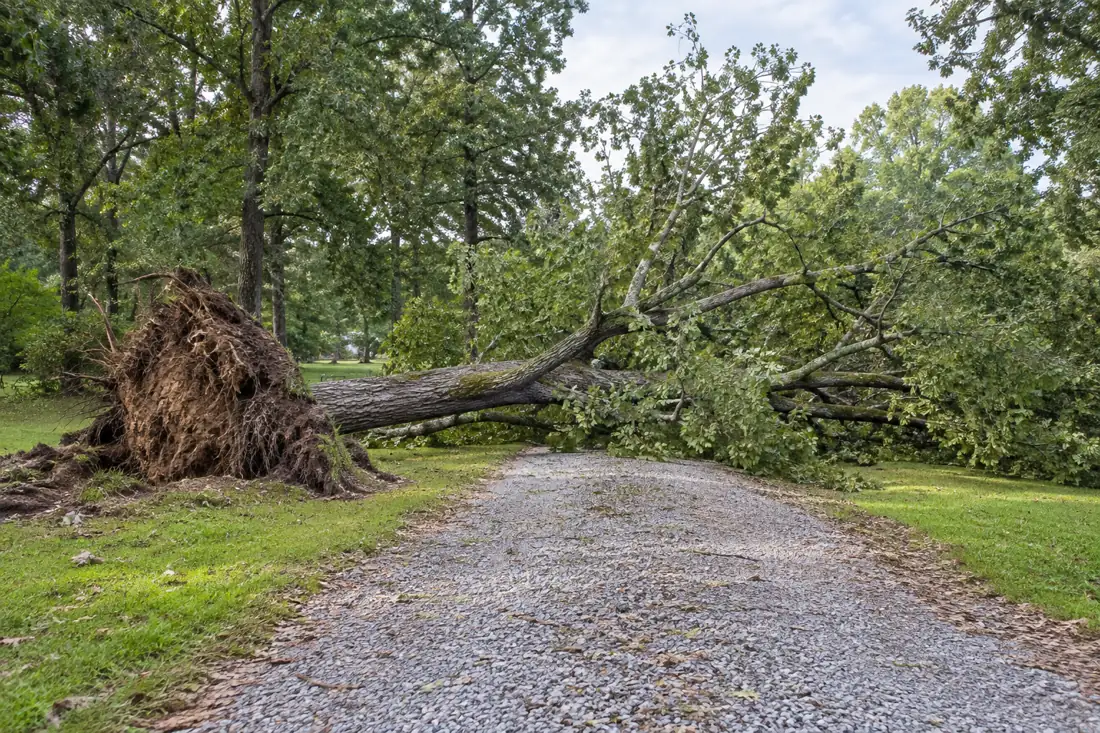
A missing strip of bark may be consistent with several kinds of injury; a photograph by itself does not diagnose a lightning strike. The illustrations on this page show general tree and property context, not verified lightning evidence. Record when a wound appeared, whether bark or wood was found on the ground, visible crown dieback or broken branches, and whether a structure or utility lies nearby. Stay clear of hanging wood and any damaged conductors, and never climb to probe the wound.
An appropriate assessment may need to examine tissue damage, secondary decay, structural condition, roots and the tree's targets over time. A recommendation to prune, monitor or remove should follow those findings, not the word 'lightning' in an estimate request. For the handoff, distinguish tree assessment and necessary debris control from any separate building or electrical repair. If the property is occupied, explain which routes are currently restricted without guessing at injury severity or a guaranteed outcome.

A bark scar does not establish lightning as the cause
When a strip of bark appears after a storm, note whether splinters, branches or fresh wood fragments were found nearby, and whether the injury was already visible in older pictures. A lightning-like mark is not a diagnosis; mechanical injury, decay and other causes can look similar at a distance.
Document crown condition and new hanging limbs from outside the possible fall zone. Any damaged service wires require utility or emergency coordination before tree work. The professional decision should address stability, live tissue and the exposed people or structures, not merely the presumed cause of a scar. This is educational imagery, not an incident photograph.
Separate visible lightning damage from professional diagnosis
A darkened bark strip or fresh branch loss can follow lightning, but a photograph alone does not establish how much internal tissue or root anchorage was damaged. Avoid touching a tree that may still be near downed electrical conductors, and do not stand beneath cracked limbs to inspect scars.
Record the location of any visible trunk opening, canopy dieback and nearby targets from a safe distance, including the date of the storm if known. A qualified arborist can assess whether monitoring, hazard reduction or removal is appropriate; immediate removal should not be assumed solely because lightning occurred.
If the tree is beside a house, describe service drops, roof clearance and access limits separately. Follow-up observations may be important because some responses develop over time.
Describe the bark, branch and crown symptoms precisely
Lightning can create bark separation, grooves, cracks or local branch injury, but similar appearances can occur after other stresses. Ask a qualified professional to distinguish observed defects from the presumed cause. Fresh wood exposure, detached branch ends, a new lean and large split unions deserve different attention than ordinary leaf drop. A green canopy is not proof that internal tissues or attachments are intact, and a brown patch alone does not prove the trunk is structurally unsound.
Photographs can show the location of damage on the trunk and its relation to the roofline, but they cannot reveal all hidden defects. Provide prior photos if available to illustrate changes. Tell the assessor about earlier pruning, storm failures, root disturbance, construction and preexisting cracks. These details may matter when interpreting the new condition. Avoid treating an online symptom checklist as a substitute for an on-site inspection, especially where a substantial limb could reach occupied rooms.

Understand why conditions may change after the first inspection
Some effects of a lightning event become more apparent over weeks or months as foliage changes and damaged tissues respond. Delayed browning, twig dieback or worsening cracks are reasons for follow-up, not necessarily evidence that the original assessment was wrong. A tree may have multiple stressors, including drought, saturated soil or previous root injury, that influence the outcome. Ask what observations should prompt another visit and what timeframe makes sense for the species and damage actually present.
A monitoring plan should name practical observations rather than asking the owner to become an arborist. Photographs from the same safe location may help show canopy change. Do not climb, drill into the trunk or scrape bark to look for new injury. If a branch begins moving or a split appears larger, keep the area clear and seek new guidance. For a tree close to bedrooms or frequent pedestrian routes, discuss how target exposure changes the acceptable management options.
Lightning-struck trees require condition review, not automatic conclusions
A lightning strike may split bark, damage branches or leave little visible evidence of internal injury. A tree with intact-looking foliage is not necessarily proven safe, and bark wounds alone do not establish that it must be removed. If a strike may have affected a service entrance, power line or building, contact the utility or appropriate emergency service before approaching.
Take safe-distance photographs of the trunk and crown from outside any falling-limb zone, noting when the strike occurred and what changed afterward. Avoid probing wounds or standing under visibly damaged limbs.
An arborist's assessment may distinguish immediate hazards from signs that need observation and follow-up. Discuss the consequences of the tree's position near the house, driveway or neighboring structure and whether the current condition supports pruning, retained monitoring or removal. A sales estimate should not be misrepresented as an instrumented tree-risk assessment.
For the homeowner's file, record identified visible defects, the work actually recommended, what was not inspected and any future review date suggested by the qualified professional. Preserve truthful photos instead of staging damage illustrations as actual strike evidence.
Separate tree damage from electrical and structural repairs
Lightning can coincide with electrical surges, damaged conductors and building concerns. A tree-service estimate does not certify that the home's electrical system, roof framing or lightning protection components are safe. Tell the utility about downed or suspect wires and engage the appropriate electrician or building professional for related repairs. Do not touch a branch or fence that could be in contact with an energized service line. The responsibilities of each provider should be explicit.
When an estimator visits, point out the location of service drops, nearby meters, exterior equipment and access restrictions from a safe position. If a line must be handled or de-energized, qualified utility coordination may determine the schedule. A branch lying against a roof may also require a removal sequence different from ordinary open-yard pruning. Keep a record of which party is handling tree cutting, building repairs, temporary protection and debris disposal so work is not assumed to be included twice.
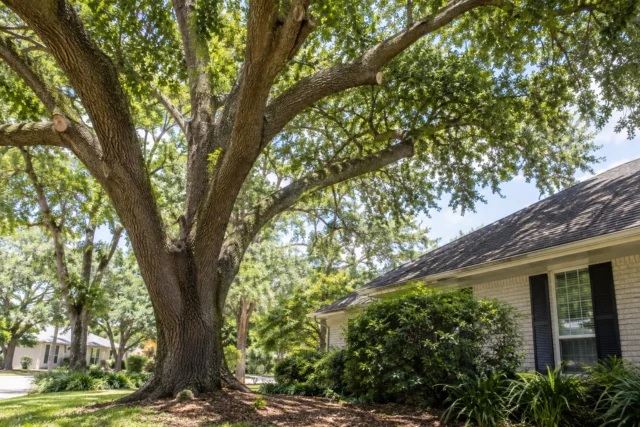
Ask for a decision-focused tree assessment
The owner may need to choose between monitoring, targeted pruning and removal; those are different outcomes with different costs and consequences. Explain which decision must be made, and ask the assessor to identify visible findings, uncertainties and any recommended further investigation. A tree risk assessment should consider the condition of the tree and potential targets, not only the strike mark. If the service offered is a removal estimate rather than a formal assessment, understand that distinction before relying on it.
Ask why a proposed intervention matches the observed condition. Removing an affected limb may address a localized defect but cannot guarantee the remaining tree will never fail. Conversely, wholesale removal has permanent landscape effects and should not be presented as inevitable solely because lightning was reported. A clear written recommendation can help an owner understand the basis of a decision and compare quotes that otherwise use very different scopes.
Plan a removal carefully if it becomes the chosen option
A lightning-affected tree beside a house may leave limited room for free-falling wood. The contractor may need to consider sectioning, controlled lowering, an aerial lift or another technique after examining the actual tree and site. Do not prescribe crane use from a photograph or accept a rigging plan based solely on trunk diameter. The relevant questions include remaining structural strength, usable anchor points, slope, access and the position of protected property.
Give the estimator the location of the driveway, gates, septic components, landscaping and any roof overhangs. Describe parking or neighbor access that may be needed to position equipment, without promising permission that has not been obtained. Ask how branches and trunk sections will be removed from the lot and whether the stump is part of the quote. If the damaged tree is unstable, crew safety considerations may require a different sequence or equipment than ordinary routine removal.

Define cleanup and documentation for household records
After tree work, clarify whether brush, logs, chips and smaller debris will leave the property or whether some material will remain in an agreed place. Stump grinding, soil replacement, grass repair and roof repairs should not be presumed included unless identified in the written scope. Where equipment must cross an established driveway or landscape bed, document its condition and discuss protection and any restoration responsibilities before the job.
Owners sometimes need photographs, invoices or a clear description of storm-related work for property maintenance or an insurance discussion. Keep records factual: dates, observed damage, the agreed work and the contractor's actual findings. Do not describe hypothetical damage as an insured event or assume a policy will cover removal. Coverage questions belong with the insurer and policy documents. A well-defined job record is useful even when no claim is involved.
Document suspected lightning damage without drawing a diagnosis
A loud strike nearby does not by itself establish that a particular tree was hit. Look only from ground level for fresh bark strips, unusual limb damage, canopy browning or exposed wood, and distinguish observations you made before the storm from changes you noticed afterward. A narrow vertical wound may be significant, but it cannot establish whether living tissue, roots or structural stability have been compromised.
Keep people away from hanging branches, newly split trunks, damaged electrical service and areas where debris can still fall. Do not approach a tree to touch a suspected electrical path or inspect the bark at close range while utilities may be involved. If a house, roof, meter or overhead line was also affected, the proper electrical and structural specialists should evaluate their systems separately from the tree.

Visible bark changes are only one part of the assessment
Photograph the whole crown, trunk and nearby structures from several safe positions, rather than using a tight close-up alone. Note the approximate storm date and changes in leaves or branch condition during subsequent days if you can observe them safely. A retained tree may require professional inspection or monitoring, while other conditions may justify work. The choice should not be made from a generated image or a single photograph.
Ask that a site visit address the suspected strike history, observed defects, targets beneath the crown, and whether additional evaluation is needed. If removal is proposed, request an explanation of safe access, wood handling, debris removal and the desired stump finish. Avoid assuming that storm damage automatically establishes an insurance claim; coverage questions belong with the policy and insurer.
Prepare a useful request and a sensible follow-up plan
When contacting Tree Huggers, give the location, the tree's position relative to the house, the approximate time damage was noticed, safe photographs and any immediate access or wire concerns. Explain whether you want an assessment, a removal estimate or help defining both paths. A nonemergency online request is a request for review, not a confirmed dispatch or arrival guarantee. If the situation is actively dangerous, use the appropriate emergency and utility contacts first.
Before authorizing work, check that the written scope states exactly which tree or limbs are involved, what debris handling and stump work are included, and whether any utility or building contractor coordination is assumed. Ask who will make decisions if unexpected damage is exposed. If the tree remains, retain the professional's monitoring recommendations and note who will arrange follow-up. That approach turns an uncertain lightning event into a documented, property-specific decision.
Describe a suspected strike without overstating the evidence
Record the storm date if known, where bark changed, whether a split or hanging limb is visible, and what portion of the crown appears affected. Photograph from a safe distance with the house in one frame for scale. A long bark scar can have more than one explanation, and an intact-looking crown does not rule out unseen damage. Avoid describing the tree as lightning-struck in insurance or contractor notes unless the cause has actually been established.
If a damaged branch is over the roof or there may be contact with a service line, keep people clear and ask the appropriate utility or qualified professional to assess the hazard. Tree work, roofing repair and electrical service restoration require separate authorization and safe sequencing. Request a written decision about immediate risk, further inspection and follow-up rather than assuming removal is always required.
Structure protection changes the post-lightning decision
When a suspected lightning strike affects a tree next to a house, the work zone matters as much as the visible injury. An unstable limb may reach roofing, gutters, electrical service, windows or an occupied path. Do not enter a damaged area to photograph the strike or attempt cutting. Describe the tree’s position, any visible movement and the route a qualified crew could use without crossing known hazards.
This guide is about potential removal and structural protection once a serious concern is established. The broader damage-assessment guide helps distinguish symptoms from conclusions, while tree lightning protection concerns prevention rather than emergency response. An inquiry should identify whether the immediate need is an assessment, a controlled removal or coordination with utilities and a building contractor.
Questions about this project
Is a free work estimate the same as a written risk assessment?
Not necessarily. Explain whether you need pricing, condition advice, a documented assessment or a combination. Ask what the visit includes, who provides it and what limitations apply to any findings or recommendations.
What history should I share?
Share known storm damage, prior failures, construction, root disturbance, flooding, pruning and recent changes. Include the timing and nearby property use. Useful history supports the evaluation without replacing inspection of the current tree and site.
Does healthy-looking foliage mean a tree is structurally safe?
No. Leaves do not establish the condition of roots, trunk or branch connections. Explain visible defects and recent changes, and ask for an assessment appropriate to the tree and nearby targets.
Should I test a cracked branch or trunk?
Do not pull, shake, climb or cut damaged material to test it. Keep clear of the affected area and describe the condition from a safe location. Qualified assessment and an appropriate work plan are needed.
Can I identify a safe wire by looking at it?
No. Do not approach or touch wires, a tree contacting them or connected objects to investigate. Keep clear and contact the utility or emergency services when there is an immediate electrical hazard.
Does a tree estimate include utility disconnection?
Only if the appropriate coordination and responsibilities are explicitly arranged. Utility work may require the service provider or another qualified party. Confirm those arrangements before assuming the tree crew can proceed near affected services.
How should several storm-damaged trees be described?
Use marked photos or a simple tree list showing locations, affected targets and access problems. Identify urgent routes or buildings separately from later cleanup. The contractor can then discuss assessment and a practical work sequence.
Can restoration be handled in phases?
Yes, when the parties agree on clear scopes. Initial hazard or access work, planned removal, hauling and building or landscape repairs may involve different stages and providers. Record the responsibilities and completion requirements for each.
How should extra work be approved?
Use the agreed approval process and identify the change, reason, scope, price or schedule effect as applicable. Confirm who has authority before treating an additional tree or task as part of the original job.
What completion records are useful?
Keep the agreed scope, tree or area identification, authorized changes, invoice and labeled photos where appropriate. Include unresolved items and a contact. Contract-specific records should follow the buyer's stated requirements.
What should I tell Tree Huggers about tree removal after lightning damage near a house?
Explain the property address, the work you want and the specific concerns: visible damage, delayed decline, nearby structures. Send safe photos of the tree, surroundings and access route. The contractor can then discuss the assessment and scope needed for this situation.
How do I request an estimate for this work?
Call 504-458-8336, text photos or use the estimate form on this page. Include the address, desired outcome and any timing constraints. The company will need to review scope and availability; an online request does not confirm a price, appointment or emergency dispatch.
Get a scope for your property
After suspected lightning damage near a house, take wide photographs of the tree and structure from a safe distance and describe when the strike or storm was observed. Visible split bark, hanging wood or abrupt canopy change should be reported, but a mark alone cannot establish the full internal condition.
Avoid touching downed conductors or approaching a tree that may be unstable; involve the appropriate utility where electrical equipment is affected. Ask for an assessment that distinguishes observable injury from uncertainty and explains monitoring, limited pruning or removal choices. Keep any roof, electrical or building repairs separately identified in the written scope.