Playground work needs coordination around children, staff and the equipment below the canopy. Identify the use schedule and the areas that must be closed. The scope should distinguish clearance, deadwood and other condition concerns. Reopening and final cleanup should be agreed with the property contact.
Plan the safe reopening before scheduling playground pruning
The site contact should map occupied play structures, fall zones, walkways, gates and the hours when children or visitors are present. Pruning objectives may differ from tree to tree: deadwood above equipment, clearance from a fence or a concern at a branch union. Choose access and exclusion areas before work begins, not as children arrive.
The work order should identify who authorizes closure and who confirms debris, tools and barriers are removed before reopening. Photos may help document the work zone and final cleanup, but they must not replace an on-site clearance decision by the responsible property operator.
Identify every play structure, shaded seating area, entry, fence and path that falls beneath or near the canopy. Record when children, families and maintenance staff use the space. A playground cannot be treated like an empty yard with occasional foot traffic: branches and equipment must be handled within a reliably secured work zone, and children cannot be expected to respect an informal warning. Photograph tree defects and the full play layout from outside any potentially hazardous area.
Coordinate the proposed schedule with the property operator and ask who has authority to close and reopen the playground. The estimate should distinguish removal of deadwood or specific compromised limbs from general shaping, explain access limits and include cleanup of small debris around play surfaces. Confirm that gates, walkways and play equipment will be checked before reopening. If risk cannot be assessed from the ground, request appropriate professional inspection rather than ordering indiscriminate canopy reduction.
Start with the people who use the playground
A playground has users who may not understand work-zone boundaries, including children, caregivers and maintenance staff. Tree pruning plans must account for the times the area is occupied, the entrances people use, and places where visitors may gather under shade. The objective may be removal of identified deadwood, clearance from structures, or appropriate care of a retained tree. It should not be described simply as making the entire site “safe,” because living trees and outdoor play spaces have ongoing conditions that require management.
Identify the responsible property operator and the person authorized to approve work. Photograph affected trees from outside any suspect hazard area, showing play equipment and pathways as context. If there is a recent branch failure or visible defect, isolate the affected space and seek appropriate professional evaluation. The condition of the tree and the potential consequences around children should guide the urgency, not the appearance of the canopy alone.
Specify the pruning objective on each identified tree
A good scope distinguishes deadwood removal above an active play area from clearance around lighting, a slide, or a neighboring structure. Number or name each tree on a site map so the crew, estimator and facilities manager refer to the same location. Describe the observed concern and desired outcome without dictating every cut. For structural pruning, a qualified provider should evaluate branch attachments and long-term tree form. For clearance, identify the structure or route that requires space.
Heavy reduction of the entire crown is not a substitute for a site-specific evaluation. Inappropriate topping or indiscriminate removal of large limbs can create poor structure in a tree intended to be retained for shade. If a defect appears significant, ask whether additional assessment or removal should be considered rather than assuming that ordinary pruning addresses it. Written work limits help prevent a crew from cutting adjacent shade trees that were not part of the request.
Use playground clearance goals rather than indiscriminate canopy cutting. Before pruning a tree near play equipment, identify which branch creates a documented clearance or safety concern and which part of the canopy should remain. Coordinate the work with the school's responsible contact so the play area is closed, drop zones are excluded and surface protection is agreed upon. An onsite assessment should determine appropriate cuts while respecting the tree's health. Ask who will collect small twigs and chips from mulch or synthetic surfacing and who approves reopening. Do not treat severe crown reduction as routine maintenance.
Do not reopen a play area until the work zone is cleared
An occupied playground requires more than setting a start time for tree pruning. Mark play equipment, fall surfaces, gates, circulation paths and any branches above waiting areas. Coordinate a closure period when children and caregivers cannot enter the work zone, including through side gates. The written scope should address protection of resilient surfaces, exclusion of dropped material and cleanup of twigs, chips, hardware and other debris that could remain near play equipment.
The person responsible for reopening the area should know what visible completion checks are expected and whether additional inspection is needed.

Coordinate pruning with the hours a play area is actually used
The tree work plan for a playground is incomplete until the site operator knows which gates, paths and play surfaces must be closed. Schedule work around child arrivals, pickups and other pedestrian movements, and define who is responsible for keeping the exclusion area empty. A canopy above a swing or climbing structure needs careful assessment, not casual cutting from the equipment below.
After pruning, the operator should check for branches, sawdust, equipment tracks and displaced surfacing before reopening the area. Include the condition of accessible routes and drainage edges in the closeout discussion. If pruning cannot resolve the identified concern, describe that limitation and request a separate assessment rather than promising a risk-free play area.
Playground pruning: treat exclusion and reopening as distinct decisions
Children's play equipment places people beneath trees in predictable locations. Map swings, slides, fall zones, shaded seating, gates and paths, and list which branches overhang each. A dead branch, a rubbing limb and a low healthy branch are not equivalent hazards. Ask the responsible school or property representative when areas are occupied and who has authority to close and reopen them.
Photograph the tree from outside the affected zone; do not ask staff or children to stand beneath a suspected defect to show its scale. Trees with suspected structural concerns may require specialist review beyond routine pruning.
Arrange the work so equipment, falling material and debris movement stay separate from children and public access. Playground surfacing, fixtures and irrigation require protection that ordinary lawn cleanup does not cover. A contractor may report its own work complete, but the site operator must decide when children return; any remaining tree concern should be plainly communicated.
Specify disposal and final debris inspection, including small twigs or cut pieces trapped beneath equipment. No tree-care provider can certify all future risk away, so the handoff should document specific completed scope, open issues and any planned follow-up.
Map every access point and likely exclusion zone
A tree crew may need more room than the footprint of one swing set or the area directly under the canopy. The controlled zone can extend across sidewalks, bicycle parking, shade structures and vehicle drop-off lanes. Work with the site operator to identify where visitors can be redirected and whether an alternate entrance remains accessible. A playground should not be partially opened while overhead operations continue nearby simply because most equipment sits outside the fence.
Mark gates, vehicle routes, soft surfacing, underground utilities and nearby structures. If the playground is part of a school or childcare site, coordinate with the relevant administrator rather than relying on a contractor to direct children. Establish how closures will be communicated and who confirms the site is released for use after work. Do not promise a fixed reopening time before the method, conditions and cleanup needs are understood.
Consider play equipment, surfacing and utilities as protected assets
Rubber safety surfacing, mulch beds, embedded anchors, nets, shade sails and drainage features may be vulnerable to heavy loads or falling debris. Tell the contractor which equipment can be moved and which parts are fixed. A compact machine may enter a gate yet be unsuitable for crossing a soft play surface or passing under an overhead structure. Photograph utilities, irrigation zones, fence panels and landscaping along the proposed access route.
Ask how brush and wood will be controlled and where they will be staged. Do not allow material piles to block a required exit or remain where children can reach them. Protection measures have limits; describe any surface or equipment restrictions explicitly. If the site manager expects a specialist to remove or reinstall a play feature, that task should be arranged and documented separately rather than assumed to be included in pruning.

Put the playground operating plan beside the tree-work scope
At a playground, the central question is where children, caregivers and staff could be while tree work takes place. Make a site map marking gates, benches, play structures, swing zones, shaded gathering areas and any adjacent school or park circulation route. The work area should not be judged solely by where a branch will be cut: pieces may need rigging, equipment may move through a different corridor, and debris removal can create a separate hazard. The site operator must approve an actual closure period and communicate access restrictions. Do not assume a quiet hour is safe if neighbors can enter through another gate or use the playground informally.
Ask the tree professional to identify the purpose for pruning each tree rather than clearing an entire canopy just because it extends over play equipment. Deadwood, structural concerns, shading and equipment clearance deserve different assessments. Note rubber surfacing, benches, buried irrigation, fixed play structures and overhead services that the crew needs to protect.
If an observed defect creates an immediate concern, the responsible site manager may need to restrict access pending qualified evaluation. A visual inspection should never be described as a guarantee that every hidden defect has been found or that a tree can never shed a branch.
Write a handoff plan for the facility contact: which gates stay secured, where equipment may stage, who can authorize a schedule change and who will verify cleanup before the area reopens. Include checks for small twigs, sharp debris, chips, displaced border material and disturbed play surfaces, not just major log removal.
Use photographs of trees and the empty work zone without identifying children or sharing school security details. The completed scope can document which trees were addressed and which concerns remain for future inspection. Facility reopening is an operational decision made by the authorized operator, not an automatic promise in a tree-service estimate.
Public sites also need a plan for unexpected conditions discovered mid-job. A damaged limb, restricted access or a sudden change in weather may require the authorized manager to extend a closure. Staff should know who to contact and which areas remain off limits until reviewed.
Do not advertise a guaranteed reopening date based only on an initial estimate. A written checklist and a clear handover point are more useful than a general statement that the playground will be left spotless. Facility-specific operating rules remain the operator's responsibility.

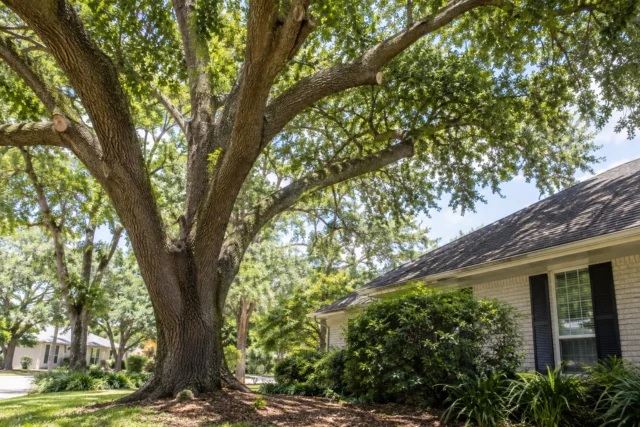
Coordinate closure with school or public operating hours
For a school, park or community site, the work plan may involve staff notices, temporary fencing, an alternate play schedule and coordination with maintenance or security teams. Identify who is responsible for those arrangements and who can stop use of the affected area. Do not depend on a simple cone or warning tape alone where small children can enter accidentally. Any required public-space permissions, road controls or utility work should be resolved before the crew arrives.
A scheduling window should allow for realistic work and cleanup, not just the period when saws are operating. If weather, unexpected decay or equipment access changes the plan, the operator needs to know when the closure must continue. Do not promise a same-day return to service if a broken branch, damaged surface or incomplete cleanup remains. The final release should come from the appropriate site and work supervisors.
Define thorough but realistic cleanup and site release
Playground cleanup has a different practical standard from stacking logs in an unused corner of a rural lot. Specify removal of the contracted brush, larger wood and visible cutting debris from the play area and access routes. The contractor should identify whether chips are removed, where they may be deposited, and which areas must be inspected before children return. If rubber surfacing, a fence or a play component needs separate repair, document that responsibility rather than treating it as ordinary tree cleanup.
Site staff should inspect accessible equipment, pathways and surfacing after the crew releases the area, following their own maintenance procedures. A completed pruning invoice does not replace routine play-equipment inspection or guarantee that other tree limbs cannot fail. Keep any unresolved tree concern or damaged surface closed off until the appropriate next step is taken. Clear, documented handoff responsibilities reduce risk of premature reopening.

Compare bids using the same site-specific constraints
An estimate for “prune playground trees” may omit tree identifiers, closure coordination, disposal or equipment protection. Ask each bidder to specify the same trees, objectives, access route, work-zone limits and finished condition. Some providers may recommend additional tree assessment before heavy cutting; that recommendation should be understood rather than dismissed simply because it adds a step. A low price based on unrestricted equipment access may not be realistic for an occupied playground.
Check the qualifications and arrangements relevant to the actual work, and obtain necessary documentation through the site operator's procurement process. Do not invent safety certifications, insurance details or previous school projects in the website content. Establish who authorizes changed work if a different defect is found after operations begin. Keeping the project scope separate from routine ongoing inspections makes bids easier to compare.
Retain useful evidence for maintenance and future planning
Record the location of each treated tree, the observed concern, the approved work, completion date and remaining recommendations. Before and after photographs from safe ground can help a future manager understand what clearance was intended. If a tree is retained, note that its future condition and surrounding use may change; today's work does not establish indefinite safety. Large branch reduction should be documented so later contractors do not repeat unnecessary cutting.
A site map can also show high-occupancy spots where tree inspections and maintenance planning need attention. Do not turn an ordinary project log into a public record of children's photographs or personal information. Keep communications between the operator and service provider appropriately limited. The value of the record is that the next manager can make a grounded decision, not that it claims every risk has been removed.

Make a focused request for Tree Huggers
Provide the playground type, affected tree identifiers, safe photographs, relevant closures and the contact authorized to arrange a visit. State whether the request is routine pruning, a response to a specific observed condition, or evaluation after damage. Include any operating schedule that must be considered, but do not assume a crew can work safely during public use. Ask for a clear scope including debris disposition, site protection and the point at which the area may be handed back.
If a visibly unstable tree or limb affects an active play area, keep people away and seek an appropriate response rather than waiting for routine maintenance. For ordinary planning, early coordination allows the operator to organize notice, access and documentation without rushing. The goal is appropriate tree care in a high-use space, with restrictions people can actually follow and a finish standard the site manager can verify.
Pruning objectives and school-site logistics are separate
Pruning around a playground should begin with the tree’s condition and the exact concern: deadwood, branch conflicts, clearance or a structure issue. Do not prescribe heavy cutting merely to create the appearance of safety. Children, staff and visitors must be excluded from the work area, and the scope should make clear which branches are affected and how the playground equipment will be protected.
When the same job occurs on a school campus, scheduling and access authority add another layer beyond pruning technique. Read school playground work planning for arrival gates, student circulation, contractor check-in, emergency contacts and reopening coordination. Site management and appropriate tree care should be decided together, without confusing a maintenance plan with a guarantee of safety.
Questions about this project
Can a business stay open during tree work?
That depends on the site and scope. Discuss occupied routes, exclusion areas, loading and work windows with the contractor and property representative. Do not assume normal access can continue through the active work zone.
Who should communicate with tenants or visitors?
Agree on that responsibility with the property representative. The contractor needs a clear site contact, while the owner or manager should use the property's established process to communicate access changes and work windows.
How should I describe the pruning I want?
Explain the objective: clearance for a route or building, deadwood, a damaged branch or structural development. Ask for suitable tree-specific work rather than requiring an arbitrary shape or amount of canopy to be removed.
Will pruning resolve every tree concern?
No. Root, trunk and major structural problems may need a different assessment or response. State the full concern so pruning is not used as a substitute for evaluating the condition that prompted the call.
Which property features should I point out?
Identify buildings, vehicles, fences, fixed fixtures, landscape features, utilities and occupied routes. Explain what can move and what must remain. Include existing damage and any buried features you know about along the access route.
Should people remain inside the work area?
The contractor and site contact should establish an exclusion area and access arrangements appropriate to the work. Keep children, pets, visitors and other workers outside the active zone until the responsible parties say it can reopen.
How should extra work be approved?
Use the agreed approval process and identify the change, reason, scope, price or schedule effect as applicable. Confirm who has authority before treating an additional tree or task as part of the original job.
What completion records are useful?
Keep the agreed scope, tree or area identification, authorized changes, invoice and labeled photos where appropriate. Include unresolved items and a contact. Contract-specific records should follow the buyer's stated requirements.
What should I compare besides the price?
Compare tree identification, work objectives, access assumptions, hauling, stump treatment, site finish and exclusions. Ask whether permits or other coordination are part of the scope and who can approve changes if conditions differ.
Does an online request book the crew?
No. A request starts the estimate conversation. The company still needs to discuss scope, availability and any site assessment. For a dangerous or urgent condition, call 504-458-8336 rather than relying on a form response.
What should I tell Tree Huggers about pruning trees around a playground?
Explain the property address, the work you want and the specific concerns: child access, exclusion area, final cleanup. Send safe photos of the tree, surroundings and access route. The contractor can then discuss the assessment and scope needed for this situation.
How do I request an estimate for this work?
Call 504-458-8336, text photos or use the estimate form on this page. Include the address, desired outcome and any timing constraints. The company will need to review scope and availability; an online request does not confirm a price, appointment or emergency dispatch.
Get a scope for your property
Playground pruning must account for where children line up, which equipment sits below the canopy, and how staff close off the play surface. In your inquiry, identify the trees by their position relative to swings, slides, shade structures and perimeter fencing. Include photographs taken from outside the tree's drop zone, plus any visible dead limbs, rubbing branches or low clearance.
Tell us whether the play area has one entrance or several, and whether the site can be closed during a scheduled visit. A photograph cannot establish structural safety; it helps prepare an appropriate assessment.
Ask for a written scope that identifies the specific trees and pruning objectives, the method of keeping children and staff out of the work zone, and whether the playground surface or equipment needs protection. Clarify whether brush will be removed from inside the fence and who will inspect the site before reopening.
A risk concern, damaged branch union or changed tree lean should be described separately from routine canopy clearance. Do not move children beneath suspect limbs to take better pictures, and do not assume pruning alone will correct a structural defect.