A storm can change the condition of a tree that already has support hardware. New splits, movement or failed branches should be assessed rather than assumed to be contained by the system. Keep clear of the affected area and share the known history. Support, pruning and removal are different possible recommendations.
Existing tree cables require inspection
A cable that remains attached is not automatically reliable. Record installation dates if known, visible slack, broken components and new movement. Never climb or tension a cable to test it.
Ask whether the original defect still exists and if the system is appropriately positioned as the tree grows. Adjustment, replacement, monitoring or removal may be recommended after inspection; support hardware does not eliminate risk.
Save inspection records and photographs. Identify occupied buildings and public paths beneath the supported limbs so the assessment considers actual exposure, not just the hardware itself.
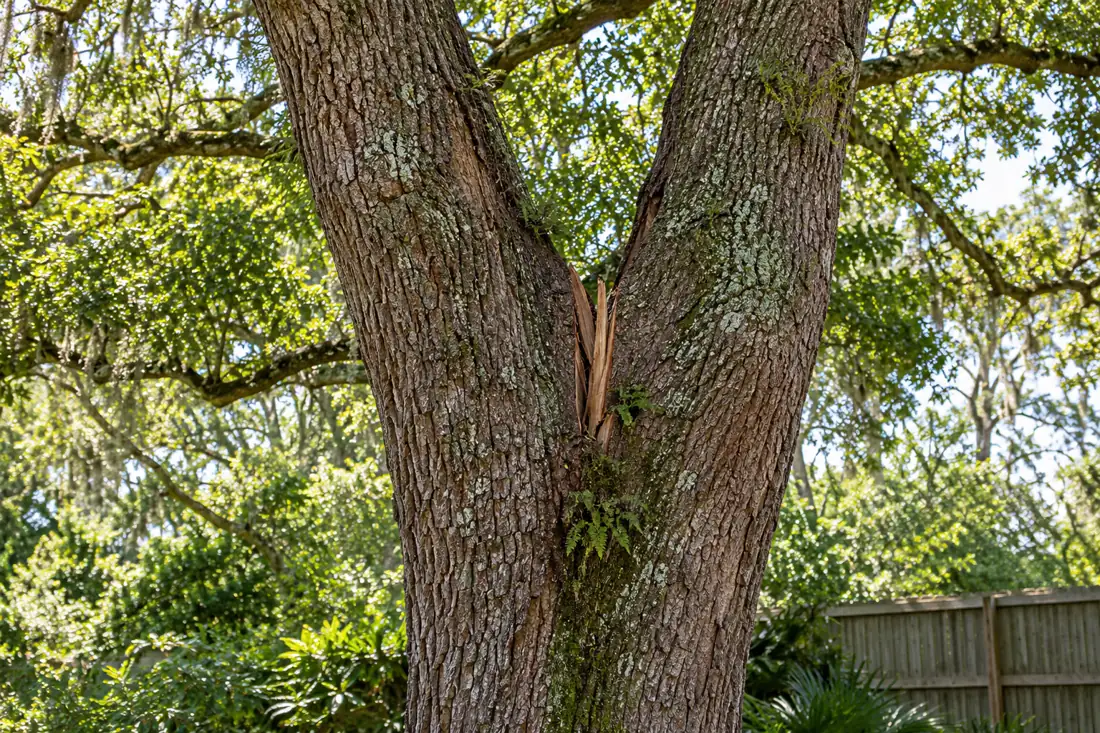
After a storm, distinguish a hanging limb or cracked union from any movement at the root plate or base. Photograph the damage from a safe distance, noting whether soil lifted, the trunk leaned or the tree struck a structure. A support cable can sometimes address a narrowly defined branch or stem issue, but it cannot be assumed to stabilize a compromised root system or make a damaged tree safe. Do not climb into the crown or pull on broken limbs to test whether they move.
Have the assessor explain the structural condition being addressed and whether additional inspection is necessary before any support proposal. Ask what temporary access restrictions should remain until the tree is evaluated, how loads on remaining limbs affect the plan, and which options—careful pruning, monitoring, support or removal—are realistically suitable. Written documentation should separate emergency hazard mitigation from longer-term care. Avoid marketing claims that cabling will storm-proof a tree or eliminate future inspection needs.
Secure the storm-damaged area before considering hardware
After wind damage, the urge to stabilize a tree quickly can lead to premature support proposals. First establish whether hanging branches, cracked stems, leaning wood, damaged structures or electrical hazards make the area unsafe. Keep people away from the likely fall zone and contact appropriate emergency or utility services when warranted. A cable installed without understanding the damage may conceal risk rather than reduce it.
Owners should not climb into the canopy, pull dangling limbs with vehicles or try to brace a moving trunk with improvised materials. Take broad photographs only from safe positions. Identify whether the tree blocks an entrance, threatens a regularly occupied space or has already fallen onto a building. Those facts help a qualified tree professional prioritize assessment and determine whether stabilizing the tree is even a reasonable option.

Document what changed during the weather event
Record when the damage was first observed, what branches or stems moved and whether previous defects were known. A photograph from before the event can help show changes but is not required for an initial inquiry. Note if the tree now leans differently or if the soil is visibly lifted around the root plate. Avoid assigning an exact wind speed or claiming a lightning strike without evidence that supports it.
Compare the whole crown with the immediate area of failure. A broken limb on one side can alter balance, yet removing all growth from the opposite side is not automatically appropriate. If debris has been moved for access, explain what was already cleared and by whom. A focused timeline allows the professional to assess the remaining structure rather than treating every damaged tree as a candidate for the same support system.
Separate immediate storm hazards from long-term support decisions
After a storm, first identify suspended limbs, fresh branch cracks, movement at the base and places where people or vehicles may pass beneath damaged wood. Keep a safe distance and document conditions from the ground. Do not use a rope, ladder or improvised strap to hold a damaged limb while waiting for help. A temporary area closure can be appropriate while a professional assesses the tree; it is different from authorizing a permanent cable or brace.
Support hardware should be evaluated in relation to the defect it might address. A large split union, loss of a major limb and root movement may require very different responses. The availability of a cable does not mean every damaged tree is retainable. Ask how the proposed system would transfer forces, what inspections it would need and what signs could make retention unsuitable.
Distinguish broken limbs from compromised primary structure
A snapped outer branch may require selective removal and a health assessment, while a split main stem or displaced root plate can be a fundamentally different problem. Cables and braces cannot restore severed roots or replace missing structural wood. The assessor should identify which connections still carry load, what portions are damaged and whether any proposed reduction can improve conditions without further weakening the tree.
A canopy that remains green after the storm does not prove the trunk and roots are sound. Conversely, a tree with one lost limb is not automatically beyond retention. The professional may recommend further evaluation of hidden damage when a visual inspection cannot establish the extent of injury. A responsible decision compares expected recovery, remaining exposure and the owner's ability to monitor the tree rather than looking for a convenient piece of hardware.

Separate post-storm support questions from emergency access decisions
A branch that split in strong wind may leave a tree standing but change its load distribution and attachment integrity. First identify whether people or vehicles need to be kept away from an affected area; do not enter beneath hanging wood to photograph it. From a safe distance, take a whole-tree image and note visible damage, leaning changes and proximity to a house, road or overhead wires. Fallen energized conductors require the utility's emergency procedures. A property owner should not try to install a rope or temporary cable to hold a damaged limb.
Not every damaged tree should automatically receive a support system. The decision depends on tree species, defect severity, remaining structure, access, use of the area below and likely consequences of failure. Some situations may justify targeted pruning and monitoring, others a specialist evaluation or removal. Cabling is not a cure for decay and cannot guarantee performance in future storms. Make clear whether the requested visit is for temporary risk management, detailed inspection or a permanent plan, because those involve different work and expectations.
Coordinate a written plan for the damaged tree and the property around it. If access remains restricted, identify who can authorize reopening after qualified review. Ask whether the proposal includes inspection of additional stressed branches, lowering and disposal of broken material, impact on roofs and fences, and documentation of any recommended future monitoring. Insurance photographs may be useful, but the tree-service estimate should not imply coverage or legal responsibility. Avoid moving damaged furniture or entering unsafe zones merely to stage a more dramatic photograph.
After the immediate conditions are addressed, maintain records of observed damage, recommendations, completed work and dates. Discuss with the assessor whether future follow-up is appropriate, especially where a support system is considered or installed. Distinguish changes actually observed in the tree from assumptions made about an entire neighborhood after a storm. A carefully limited recommendation can preserve a viable tree, but continuing uncertainty should be openly described instead of hidden behind language promising that support equipment makes it safe.
Separate immediate storm hazards from later support decisions
After storm damage, mark where broken branches, fresh splits, power conductors, unstable stems or lifting soil make entry unsafe. Do not climb, pull a lodged limb with a vehicle or install improvised braces. An inspection request should identify prior support hardware, changes in lean, the occupied areas beneath the tree and any damage to nearby structures.
Ask which areas need temporary restriction and whether the whole tree requires evaluation before considering cabling, pruning or removal. A support system is not a substitute for evaluating a compromised root plate or trunk.

Understand what dynamic and static support can do
Different systems can be designed for different amounts of movement and different structural defects. Some flexible systems aim to limit the consequences of excessive branch movement, while rigid bracing may address a particular union. The choice depends on load paths, defect geometry, tree condition and the manufacturer's and professional standards. Asking for 'one strong cable' is not a design specification.
Support is not a replacement for sound anchorage, appropriate pruning or risk assessment. A system may reduce certain movements without preventing all failure, especially in extreme weather or if another part of the tree is compromised. Ask what the proposed hardware would connect, what defect it addresses and how it would be inspected later. If the professional cannot explain those points clearly, the owner should not assume that adding metal makes the tree safer.
Evaluate post-storm support options without assuming stability
A bent limb, split union, or partially attached branch following a storm can remain under unpredictable load. First keep people and vehicles away from the affected area; do not pull, rope, brace, or cut a suspended section from the ground. Photographs from a safe distance can show how much of the canopy remains attached, the position of nearby structures, and the location of visible separation.
They cannot establish the forces held by a leaning limb or whether a root plate has lost support. Tree support systems may have a role in some professionally evaluated conditions, but they should not be sold as an instant substitute for hazard isolation and assessment.
Ask the assessing arborist to separate immediate stabilization or removal decisions from longer-term preservation options. The condition of supporting wood, branch architecture, the root system, target occupancy, and access route all matter. If a cable or brace is recommended, request its purpose, installation limitations, expected inspection needs, and the residual risk—not merely a parts list.
If a previously installed system was exposed to high wind or impact, it may require reinspection even without an obvious broken component. Coordinate with roofing or fencing contractors only after the tree-work exclusion zone is understood, and document changes in the agreed work scope.
Build the follow-up plan into the storm repair record
Photograph the tree and nearby targets after the hazardous area is secured, noting when the damage was first seen and whether additional weather has occurred. Collect any prior pruning, cabling or risk-assessment records. A contractor reviewing the site should distinguish immediate debris removal from tree-preservation recommendations. If another crew is repairing roofs, fences or utilities, coordinate work areas so no one enters beneath unstable branches.
When a retention plan is selected, document follow-up checks, expected limitations, and who is responsible for future assessments. A change in lean, bark separation or another failed limb should trigger renewed evaluation rather than waiting for a routine inspection. The plan should state what remains uncertain. Do not advertise a supported tree as storm-proof or use a decorative before-and-after illustration as evidence of a successful installation.
Review professional pruning and structural tree-care options
Examine whether the tree can reasonably recover
Storm damage changes both immediate safety and long-term tree health. Evaluate the amount of living crown remaining, the condition of branch attachments, the species' response to injury, root disturbance and repeated prior damage. A tree with a small clean break may continue growing well, while a large torn wound in a critical union can leave lasting structural limitations. Recovery prospects should be discussed candidly, not promised.
If preservation is feasible, the plan may combine selective pruning, protection from further soil compaction and monitoring. Support might be one component, not the first or only step. If damage is extensive or located above frequently occupied targets, removal may be the more appropriate option. The written recommendation should explain which observed facts drive the choice and what uncertainty remains after any proposed intervention.

Plan pruning without making the damage worse
Storm cleanup often requires removing broken or hanging material, but cutting large live limbs simply to make the canopy look symmetrical can introduce new problems. A qualified crew should plan safe rigging around compromised wood and identify which limbs can be retained. The equipment and access required to remove a hanging limb over a roof may differ substantially from a normal ground-access pruning visit.
Do not top the tree to compensate for one damaged side. Heavy indiscriminate pruning may remove needed leaf area, create large wounds and encourage weak regrowth without correcting the original defect. Discuss the purpose of each major cut and whether a staged plan would be more responsible. If the storm exposed a cracked union or weak anchor location, the professional may need to revisit the support decision after debris and unstable wood have been addressed.
Review the consequences for buildings, routes and neighbors
A support decision cannot be separated from what could be struck if part of the tree fails. Identify occupied rooms, driveways, sidewalks, public routes, neighboring fences and places where children play. Temporary access restrictions or moving vehicles may help while assessment proceeds, but they require coordination with whoever controls the property. A site with limited alternative access may warrant a different response than a private low-use area.
When a tree extends over a neighbor's property, clarify permissions and communication before equipment is placed or branches are lowered. Utility infrastructure and municipal property may require separate coordination. A support proposal should explain whether the remaining exposure is tolerable in context and what ongoing responsibilities follow. Do not use hardware as a shortcut to avoid a difficult conversation about risk and removal.

Include attachment location and future growth in the design
The placement of anchors, bracing and cables affects how forces travel through the tree. A storm-damaged union may lack suitable wood for the attachment envisioned by a quick estimate. The professional should determine where components can be installed without creating avoidable injuries and whether the connected branches are healthy enough for the intended system. Tree growth and future branch movement also affect the choice.
Owners should not specify bolt size or attachment height from internet diagrams and then ask a crew merely to install it. Design needs to follow the actual condition and current professional practice. Request documentation of the components, installation location and inspection responsibilities. If future pruning or construction is anticipated, identify those plans so the system is not immediately made unsuitable by another project.
Budget for monitoring as well as installation
A support system is not a one-time substitute for tree management. It may need periodic professional inspection, especially after substantial storms or visible changes. Establish who will maintain the records, who can commission follow-up and what observations should trigger early review. If the owner cannot realistically support ongoing inspections or site restrictions, that limitation belongs in the decision before hardware is purchased.
Compare the full cost and responsibility of retention with alternatives such as targeted pruning, changes to site use or removal. A proposal should separate assessment, immediate debris work, hardware installation, cleanup and any later follow-up. Avoid accepting a 'permanent fix' description for an inherently changing living system. Clear scope and realistic maintenance are important parts of protecting the people who use the property.

Request a documented, site-specific recovery decision
For an estimate, provide a wide photograph, views of damage from a safe location, the tree's relation to buildings and a concise account of the storm and prior problems. Note barriers, narrow gates, vulnerable pavement and any debris already moved. The professional can then explain whether the next step is emergency access control, a more detailed assessment, pruning, specialized support, removal or a combination.
Keep the recommendation, genuine site photos and the resulting scope together. Distinguish observed damage from unknown hidden conditions, and do not represent educational illustrations as actual completed Tree Huggers projects. If the site cannot be entered safely, say so rather than attempting a close-up. The desired outcome is a defensible plan for the damaged tree and affected property, not a guarantee that future storms will cause no further harm.
Questions about this project
Does a cable make a tree permanently safe?
No support system should be treated as a guarantee against failure. The tree and hardware need appropriate review, and new damage or changed conditions should be assessed rather than assumed to be contained.
What should I ask about a proposed support system?
Ask what condition it addresses, why the tree is suitable, what limitations apply and what inspection or follow-up is recommended. Keep those recommendations with the tree's work and maintenance records.
How should several storm-damaged trees be described?
Use marked photos or a simple tree list showing locations, affected targets and access problems. Identify urgent routes or buildings separately from later cleanup. The contractor can then discuss assessment and a practical work sequence.
Can restoration be handled in phases?
Yes, when the parties agree on clear scopes. Initial hazard or access work, planned removal, hauling and building or landscape repairs may involve different stages and providers. Record the responsibilities and completion requirements for each.
Does healthy-looking foliage mean a tree is structurally safe?
No. Leaves do not establish the condition of roots, trunk or branch connections. Explain visible defects and recent changes, and ask for an assessment appropriate to the tree and nearby targets.
Should I test a cracked branch or trunk?
Do not pull, shake, climb or cut damaged material to test it. Keep clear of the affected area and describe the condition from a safe location. Qualified assessment and an appropriate work plan are needed.
Is a free work estimate the same as a written risk assessment?
Not necessarily. Explain whether you need pricing, condition advice, a documented assessment or a combination. Ask what the visit includes, who provides it and what limitations apply to any findings or recommendations.
What history should I share?
Share known storm damage, prior failures, construction, root disturbance, flooding, pruning and recent changes. Include the timing and nearby property use. Useful history supports the evaluation without replacing inspection of the current tree and site.
Is leaving the trunk untouched enough to protect a tree?
No. Roots, soil conditions and nearby work can matter even when the trunk is not cut. Identify retained trees before planning access, excavation and storage, and ask what site-specific protection is appropriate.
Can pruning undo construction-related root damage?
Do not assume it can. Share the work history and ask for an assessment of the current tree and site. Pruning, monitoring or other recommendations should address an identified need rather than substitute for protection planning.
What should I tell Tree Huggers about tree support systems after storm damage?
Explain the property address, the work you want and the specific concerns: new damage, existing support, changed loading. Send safe photos of the tree, surroundings and access route. The contractor can then discuss the assessment and scope needed for this situation.
How do I request an estimate for this work?
Call 504-458-8336, text photos or use the estimate form on this page. Include the address, desired outcome and any timing constraints. The company will need to review scope and availability; an online request does not confirm a price, appointment or emergency dispatch.
Get a scope for your property
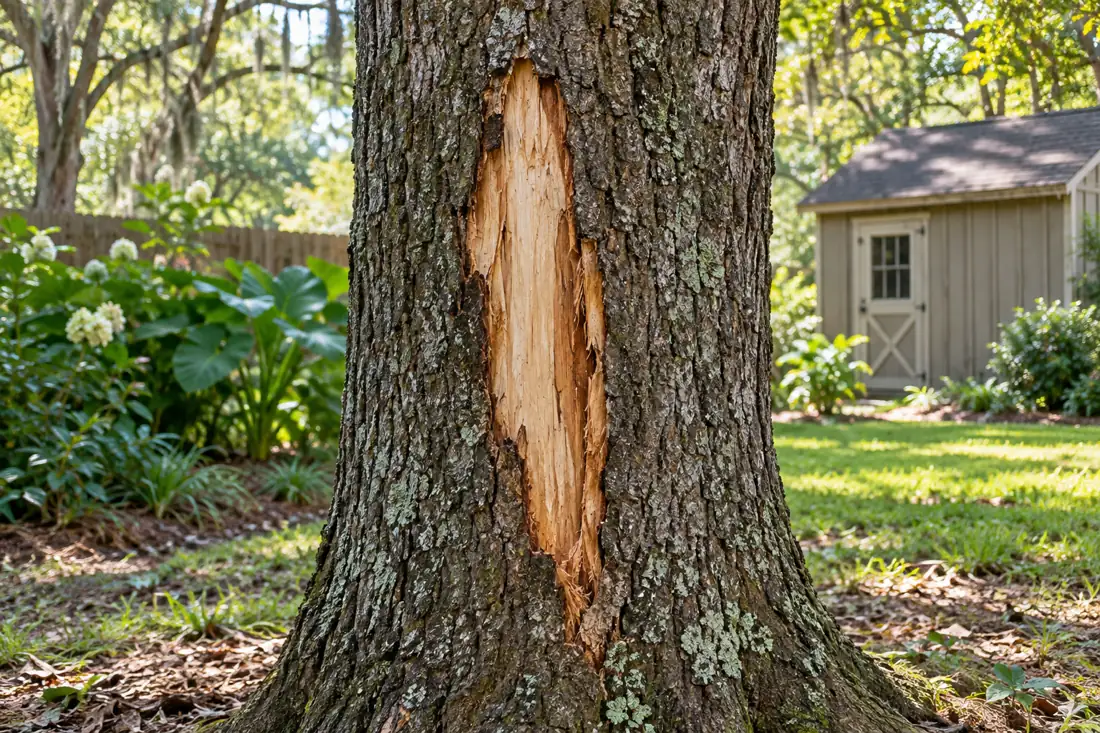
Storm damage can change the loads on a tree that already has cables or braces. In your request, describe any branch failure, shifted crown, fresh bark tearing, slack or displaced hardware, and whether the tree now leans differently from before the storm. Photograph the entire tree and affected areas from outside a potential fall zone; never go beneath damaged limbs to inspect attachments. Include the approximate storm date, any prior support documentation and the buildings, paths or parking spaces that could be affected.
The next step should be a qualified condition assessment, not an assumption that the old support system will hold under a new configuration. Ask what areas need isolation, whether a replacement support strategy is technically appropriate, and which damaged wood or hazardous targets must be addressed first. The estimate should separate emergency stabilization or removal decisions from longer-term maintenance. Do not tug cables or remove broken branches to expose a better view; those actions can change the remaining load and increase risk.