Treatment and removal solve different problems. Choose neither from a symptom photograph alone; start with the diagnosis, the tree's structure and the actual consequences for people and property.
Site planning detail: Before accepting either a treatment recommendation or a removal proposal, ask what specific condition is being treated and which evidence supports that diagnosis. A fungicide, fertilizer, or pruning cut does not solve every structural defect; conversely, a tree with cosmetic damage is not automatically a removal candidate. A useful decision record separates vitality, stability, site targets, realistic treatment options, likely monitoring needs, and the consequences of doing nothing.
Note constraints such as access, neighboring branches, utilities and replacement planting space. Where the assessment is uncertain or the tree has high landscape value, a separate qualified opinion can help. The final proposal should name what is included, what outcomes cannot be guaranteed, and the conditions that would trigger reassessment rather than implying that any treatment guarantees survival.
Write down the problem without deciding the solution
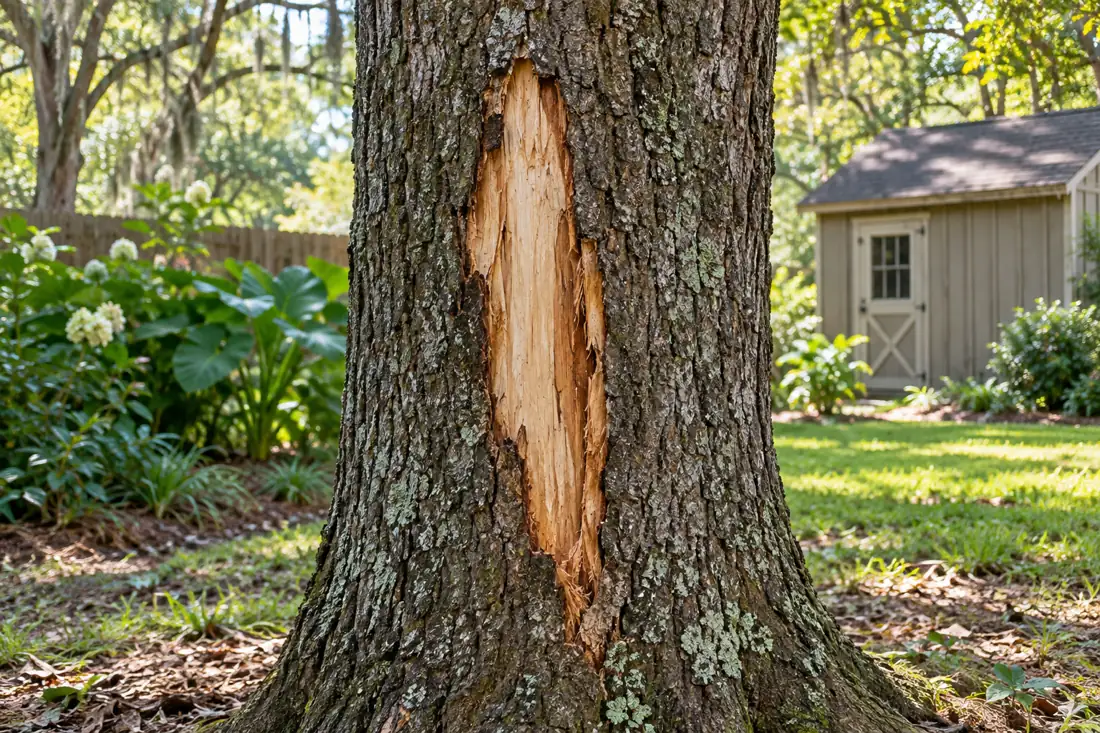
Begin by describing the specific observation: sparse leaves on one side, recent branch dieback, a suspected pest, damaged bark, cracked wood, root disturbance or a repeated clearance problem. Record when it began, whether it changed after a storm and what part of the tree is affected.
A request that says 'save this tree at all costs' or 'remove this ugly tree' can obscure the information a qualified professional needs. The purpose of the assessment is to determine the concern and reasonable options, not simply to validate the first remedy suggested.
Take safe wide photographs of the whole tree relative to buildings, occupied routes and surrounding ground. Detail photographs can supplement but not replace context. Never climb, pull unstable limbs, peel bark or approach power lines to get closer. Keep previous treatment records, construction history and inspection notes available. Distinguish the owner's personal preference for shade or appearance from technical observations. A meaningful recommendation can then address actual condition and site use rather than an imagined diagnosis.

Separate health concerns from structural questions
A tree may show leaf discoloration or pest symptoms without an obvious structural defect, while another tree with a green crown may have a serious structural concern. Health and risk are related but not interchangeable. Qualified arboricultural evaluation may consider roots, trunk, branch structure, site conditions and the targets beneath the canopy. Do not assume a foliar treatment can correct a major split or that removal is automatically necessary for every discolored leaf. The diagnosis determines which treatment categories are relevant, if any.
Document who occupies the area beneath the tree. A dead branch above an active sidewalk may warrant a different response from similar material over an unused corner. Temporary access controls may be appropriate while a serious concern is reviewed. Avoid assigning a homemade numerical risk percentage or promising that pruning guarantees no future branch failure. A professional should explain the limitations of available evidence and whether further assessment is warranted before major treatment or removal decisions.
Ask what a proposed treatment actually targets
Tree injections, soil interventions, pest management, pruning, cabling and irrigation adjustments are different types of work. A proposal should identify the condition or objective it is intended to address. Ask what evidence supports the recommendation and whether the issue can reasonably respond to that method.
An injection suitable for a specific pest or disorder is not a universal tree-vigor booster. Fertilization does not automatically solve compacted soil, major root severance or an unstable trunk. Avoid purchasing a treatment solely because it is offered as the lower-cost alternative to removal.
Clarify expected benefits, limitations, retreatment considerations and how progress would be measured. A qualified professional may recommend monitoring instead of immediate treatment when the evidence does not support an intervention. If there is uncertainty about disease or pest identification, ask whether appropriate diagnostic steps are needed. The owner should understand what the treatment does not address as clearly as what it may address. Make sure any chemicals and applications follow applicable requirements and are performed by appropriately qualified personnel.

Compare the reason for treatment with the consequences of waiting
Ask for a clearly identified problem before discussing products or removal equipment. A pest or nutrient concern, a damaged main stem, a compromised root plate and an inconvenient low branch are different decisions. Treatment that improves leaf appearance cannot restore a severe structural defect, while removing a tree to address a pipe leak may not correct the leak. Request written findings that distinguish health, stability and property use. If the diagnosis is tentative, identify what further observation or testing could materially change it.
Put the proposed timeline into the comparison. A treatment may need follow-up, watering changes or repeat application, and its outcome can depend on species, season and the actual condition. If branches overhang an occupied entrance, determine whether temporary access restrictions or targeted risk reduction are needed while that longer process unfolds. When removal is recommended, confirm access, disposal, stump handling and any permit or ownership responsibility. Neither option should rely on a guaranteed cure or a claim of zero remaining risk.
Compare the alternatives using the same property facts: people and structures near the tree, roots affected by recent projects, available equipment access, owner priorities and consequences of postponement. Ask each contractor or assessor what observations support their recommendation, where uncertainty remains and which costs are outside the quoted scope. A less expensive immediate treatment may be sensible in one situation and merely delay unavoidable work in another. The meaningful comparison is the expected decision path, not just the first invoice.
Keep the final decision traceable. Save the diagnosis, photos, selected scope, any recommended monitoring intervals and the reasons alternatives were not chosen. If the tree stays, define who will watch for worsening cracks, new lean, major dieback or changes after storms. If it is removed, confirm what will happen to the stump and nearby landscaping and whether access must be restored. This record helps future owners or managers avoid starting the same debate without the facts already collected.
Compare treatment and removal against clearly stated goals
Yellowing leaves or a thin canopy can reflect drought, soil disturbance, drainage changes, pests or multiple stresses. A photograph alone cannot establish the underlying cause or guarantee that treatment will work. Ask what observations support a diagnosis, which tests would change the plan and how progress would be monitored. Treatment and major structural repair are different promises.
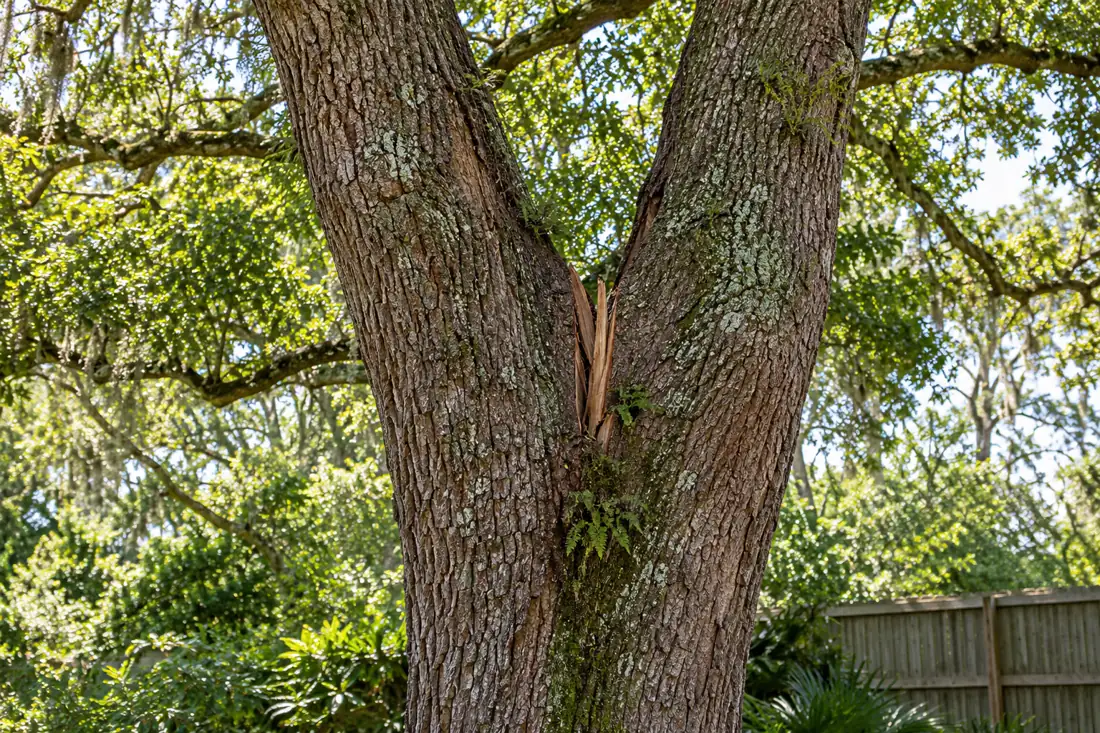
If the concern is a split trunk or unstable root plate near occupied areas, addressing the risk is separate from restoring vigor. Compare the risks, care commitments, effects on shade and drainage, and permission requirements. Request a written rationale for recommending retention or removal, including remaining uncertainty.

Review whether the structure can support the desired use
A treatment that improves foliage does not necessarily resolve structural exposure over a home, play area or heavily used entrance. Review observable defects, site conditions and the qualified assessment of possible consequences. Some trees can remain with appropriate pruning, support-system inspection, access changes or monitoring; others may require removal after a defensible evaluation. No remote photograph can determine the answer for every tree. If the professional recommends a restriction, record what area is affected and who maintains the restriction.
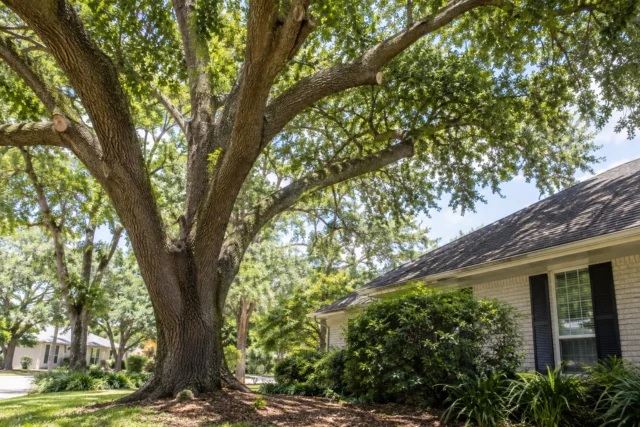
Support systems such as cabling and bracing are not substitutes for unlimited structural capacity or permanent guarantees. They require appropriate design, installation and periodic evaluation. Do not order hardware because a large fork looks dramatic from the driveway. Likewise, indiscriminate crown topping can create new long-term issues rather than solve risk. The treatment-versus-removal choice should consider the tree's actual structure, the site's targets and whether the proposed management plan is realistic for the owner.
Consider root damage and other site constraints
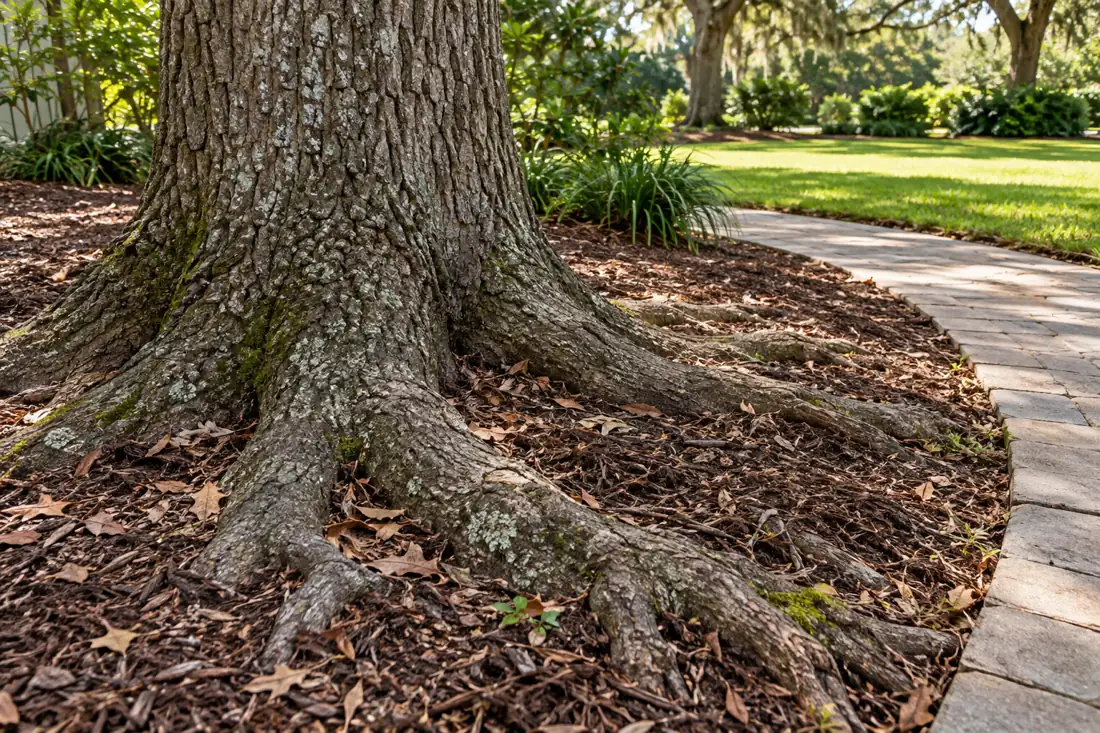
Prior excavation, driveway replacement, heavy traffic, altered drainage or fill soil can affect what treatment options are practical. Tell the assessor about the timing and location of these changes. A root environment that continues to be disturbed may undermine treatment efforts unless the cause is addressed.
Do not cover exposed roots, add large amounts of soil or sever remaining roots without advice. Tree condition may reflect several interacting influences, so an apparent treatment failure does not always mean the original diagnosis was wrong or that removal was the only alternative.
Discuss whether infrastructure improvements can be made while retaining the tree. Sometimes shifting a walkway or limiting vehicle access preserves root space; in other cases essential construction cannot reasonably avoid significant disturbance. The property designer or engineer must make decisions about structures and drainage, while the tree professional advises on tree implications. Keep those responsibilities explicit. A tree can be valuable to retain, but the preservation plan must fit real site use, access and professional recommendations.

Compare realistic time horizons and maintenance obligations
A proposed treatment may require observation or follow-up, and a retained tree may continue needing routine care. Ask whether the owner can support that plan and what events would trigger reassessment. Do not demand a fixed guarantee of recovery by the next holiday or assume one injection makes a tree permanently healthy. A mature tree can respond slowly and external conditions may change. Make the decision with an understanding of uncertainty rather than an oversimplified promise to 'save' or 'remove' immediately.
Removal is also not the end of responsibility. Wood handling, stump grinding, soil, drainage, landscape replacement and future planting may be separate decisions and costs. Compare the complete practical outcomes rather than only the initial treatment price versus cutting price. If an owner elects monitoring, assign a responsible contact and document professional advice. If removal is selected, record the scope and necessary permissions rather than presenting the outcome as proof that every other treatment would have failed.
Include property ownership and permits in the choice
Tree ownership, common-area authority and municipal requirements can affect what work is allowed. An HOA board or rental-property manager may need approvals before invasive treatment or removal. A boundary tree or public right-of-way tree may involve additional parties. Identify the controlling authority and relevant rules early. A contractor's estimate does not create permission to cut. Where conditions appear urgent, use appropriate safety measures and the applicable emergency decision process without bypassing legal or site responsibilities casually.
Treatment also may require access beyond the trunk location, especially if equipment or soil interventions are planned near neighboring property. Confirm practical route permissions and known utility constraints. Keep private owner details within the appropriate intake or management workflow. If a line-related hazard exists, stay clear and coordinate with the responsible utility or qualified responders. Never treat electrical conductors as another branch that a general tree service may simply move aside.
Ask for comparable, written alternatives
If multiple options are reasonable, request a plain-language explanation of each option's objective, limitations, scope, debris handling and anticipated follow-up. Do not make comparisons based on vague 'treat tree' versus 'take down tree' labels. A monitoring option should identify what is monitored; a pruning option should identify the target; a removal option should specify wood and stump treatment. Clarify which alternative addresses any immediate access restriction. An appropriate qualified recommendation may conclude that only one option fits the observed condition.
Keep financial comparisons grounded in actual quotes. No universal per-inch treatment price or removal price applies to every species, size, access arrangement or risk context. A lower upfront option may involve future monitoring or repeated treatments, while removal can involve separate landscape rehabilitation. Consider the tree's value to shade and property use without assuming it overrides every concern. Record the reasoning and who authorizes the choice so a later owner can understand what was known.
Document the decision and request the correct next step
After the professional evaluation, save the identified tree, findings, selected scope, known limitations and any recommended follow-up. If treatment is approved, record what was actually applied or performed and who will review its effect. If removal is authorized, specify debris, stump and site finish. If no immediate work is recommended, document that decision as an assessment outcome rather than an incomplete sale. Future changes should be compared with this record, not with an unverified memory of how the tree used to look.
To begin with Tree Huggers, describe the observed concern, the tree's location, relevant site history and affected entrances or structures. Include safe current photographs and previous reports when available. Do not try to diagnose decay by drilling, cutting or climbing. The native estimate form can receive contact details and optional context, while anonymous measurement events remain free of typed personal information. Keep inquiry, qualified evaluation, written options, authorization, service and follow-up as separate stages. That is the basis for a responsible treatment-versus-removal decision.
Questions about Choosing Between Tree Treatment and Removal
Does yellowing foliage mean a tree should be removed?
Not by itself. A qualified assessment should identify the cause and broader condition.
Can treatment repair a major structural split?
Not automatically. Structural concerns require separate professional evaluation.
Are tree injections useful for every declining tree?
No. They should target an appropriately identified condition and be applied under qualified guidance.
Can a healthy-looking canopy hide structural concerns?
Yes. Leaf appearance alone cannot establish structural safety.
When might monitoring be appropriate?
When qualified assessment supports it and responsibilities and follow-up triggers are clear.
Does cabling guarantee a tree will never fail?
No. Support systems have limitations and require appropriate professional review.
Should I remove a tree after one pest observation?
Not automatically. The pest, tree condition and reasonable management options need evaluation.
What if construction damaged roots?
Report the actual disturbance and seek assessment before choosing treatment or removal.
Does removal include stump grinding and new planting?
Only if those items are expressly included; landscape restoration may be separate.
Can an HOA or tenant authorize removal?
Authority depends on ownership and governing documents; confirm permission before work.
What should competing proposals explain?
The intended outcome, evidence, practical limitations, work scope and follow-up obligations.
What photos help an assessment?
Safe wide views of the tree, surroundings and observed issue, with dated prior records if available.
Get a scope for your property
Treatment and removal are not interchangeable shortcuts. A declining canopy may reflect disease, root injury, drought, saturated soil, structural defects or several factors at once. An informed decision starts with the tree's actual condition, expected benefit of a proposed treatment, safety exposure and the property owner's goals. Take safe photographs of crown changes, trunk defects, root-zone disturbance and nearby targets. Avoid assuming a product application can reverse severe structural failure or that removing the tree automatically solves a related drainage or construction problem.
Ask the assessor which diagnosis is supported, what remains uncertain, what monitoring or treatment would involve and when removal becomes the safer or more practical alternative. If treatment is proposed, request the objective and follow-up criteria without assuming a guaranteed response. If removal is chosen, separate access, controlled dismantling, material handling and stump choices in the estimate. When an independent opinion is important, keep the diagnostic findings distinct from the sale of particular work.