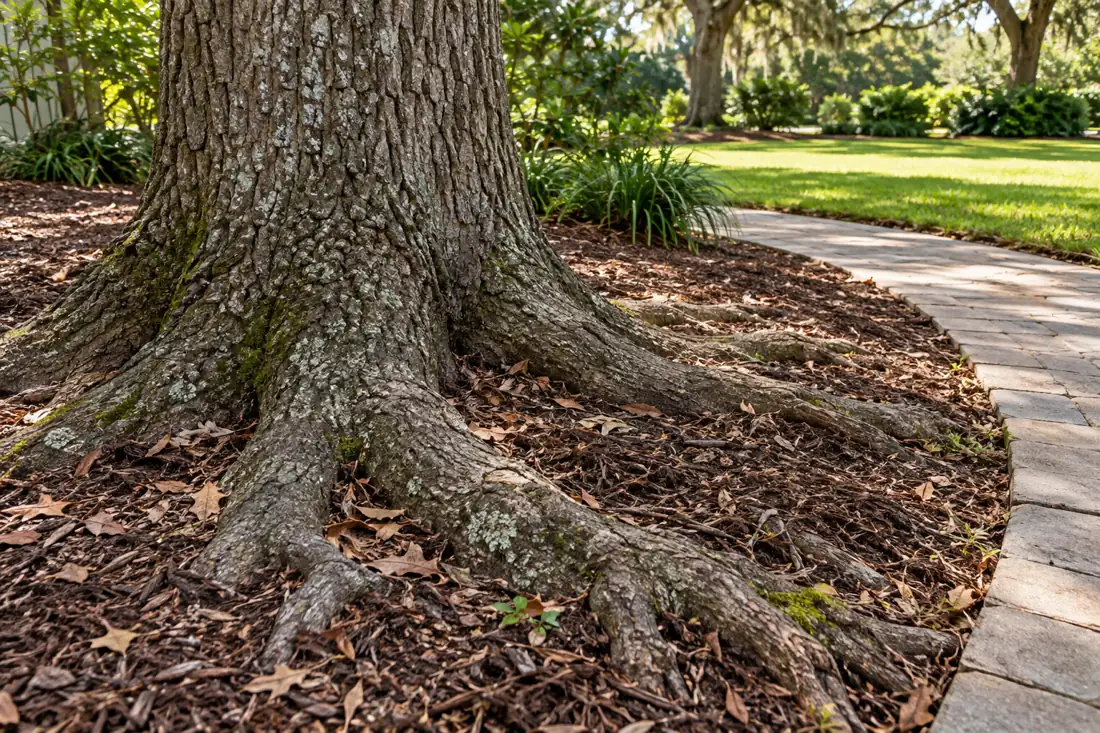
Repeated damage near the base can affect a tree even when the canopy initially looks normal. Describe the equipment contact and photograph the injury without removing bark to inspect it. Preventing further contact and assessing the damage are separate from cosmetic treatment. Ask for a practical care recommendation based on the current condition.
Site planning detail: Repeated mower or trimmer strikes can turn a small maintenance habit into a long-term injury at the root flare. Document the height and distribution of the damage, whether bark has been removed around the circumference, and whether new shoots or canopy changes followed. Do not carve away loose bark to make the wound look neat, paint it with ordinary sealant, or pile soil and mulch against the damaged stem.
Instead, create a clearly defined no-mow zone that protects the trunk from the next equipment pass while leaving the root flare visible. The right diameter and material for that protective area depend on the landscape and drainage. If the injury is deep or extensive, request a professional examination rather than assuming wound closure means the internal structure is unaffected.
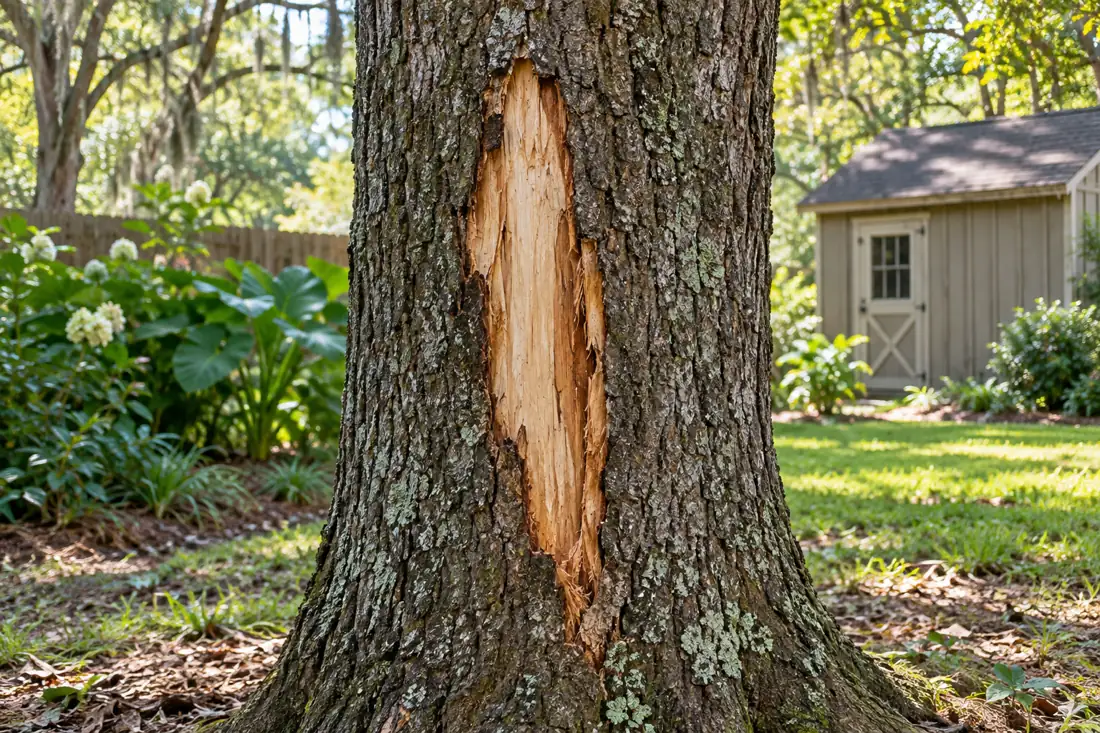
A mower or string-trimmer wound should first prompt a look at what keeps striking the trunk. Photograph the injury with its height above soil and the surrounding lawn edge visible; note whether damage is superficial, repeated around the entire circumference or extends into the root flare.
Do not paint the wound, wrap it tightly or apply a sealant without qualified guidance. Trees can compartmentalize some injuries, but repeated cuts near the base can expose tissue to decay and further mechanical stress. The true remedy may involve changing the maintenance pattern.
Ask for an assessment of wound extent and site conditions rather than a cosmetic repair promise. Discuss a practical equipment-free buffer, appropriate mulch distance from bark, exposed roots and any drainage issue that makes mowing awkward. Where landscapers or tenants perform regular maintenance, specify who will maintain the protection area after tree work.
If the wound accompanies canopy decline, fungal growth or movement at the base, report those facts separately. A useful quote should explain necessary corrective work and whether monitoring is more justified than removing sound living tissue.
Recognize the pattern at the trunk flare
A mower strike is usually visible where a wheel or deck repeatedly passes close to the trunk, while string-trimmer injuries often make narrow bands or scattered cuts around the base. Photograph the entire trunk flare and several close views with a ruler nearby only when you can do so safely. Record whether the wound appeared after a single accident or built up over several mowing seasons. Those details help distinguish a fresh impact from chronic contact.
The thin living tissues just beneath the outer bark carry water and sugars between the roots and canopy. Repeated abrasion can destroy this tissue across a wider area than the exposed surface suggests. A green canopy today does not establish that the trunk has escaped damage; delayed decline is possible. Ask for an assessment of the injury's location, depth and extent rather than judging seriousness by the brown color of exposed wood alone.

Make the equipment route safer before the next mowing
The immediate priority is to prevent the next strike. Walk the actual mowing path and look for a turning point, narrow strip, raised root or edging that forces an operator toward the trunk. Move the mowing boundary outward, modify the route or use hand maintenance farther from the bark. This is a site-management change, not a medical treatment, and it can be made without touching the wound itself.
A mulch ring can create useful separation where appropriate, but it should not be piled against the trunk or conceal the root flare. Keep the mulch layer even and leave a clear space around the base. If the yard is maintained by a crew, mark the protected radius and communicate it rather than assuming the same person will return each week. Check the result after the next cutting cycle to confirm that equipment is staying away.
Separate bark injury from overall stability. A mower scrape at the base does not automatically require removal, but repeated wounds can invite further damage. Record the injury's size, location and any associated decay. Keep equipment away from the root flare; a maintained mulch ring can prevent new strikes. Do not pile mulch against the trunk or cover wounds with sealant.
Identify the type and location of the injury
A string trimmer that repeatedly strikes the same trunk can damage bark and living tissue beneath it, particularly on a young tree with thin bark. A mower can also bruise roots that rise near grade or scrape the flare at the base. Record where the wound sits, whether the damaged band wraps partway around the stem, and whether the injury is fresh or already weathered.
Take a close photograph and another showing the entire tree, but do not cut away additional bark to reveal the edge. Discolored wood, resin or callus tissue may be visible for different reasons; an image alone does not prove a particular organism or whether the tree can recover.
Reduce repeated contact before adding treatments
Moving turf-maintenance equipment away from the trunk is often more important than applying an unproven coating. Consider a maintained mulched area with the root flare left visible, so wheels and trimmer line do not reach the bark during normal mowing. Do not pile mulch into a cone against the stem or bury exposed roots beneath deep fresh soil.
If a temporary guard is used, it should not rub, trap moisture tightly against the tree or restrict growth. Avoid drilling or wrapping the wound with unsuitable material. For a severe injury, a qualified arboricultural evaluation can help determine whether structural or health concerns require action beyond ordinary protection.
Document the wound without opening it further
Photographs can show the overall setting, the wound height, its width around the circumference, and whether roots or soil cover the lower trunk. Take images from several angles, including one showing nearby pavement and the mowing route. Note when the last injury occurred if genuinely known. Avoid scraping, peeling or probing attached bark to reveal more wood; this can enlarge a living injury while contributing little reliable information.
Use the photos to explain what has changed: a newly exposed strip, a loose flap following a specific strike, oozing or a gradual widening of older damage. Tell the evaluator about recent grading, mulch changes and landscaping work because those events can alter root-flare conditions. If a wound runs almost around the trunk, or the tree leans or changes suddenly, prioritize professional assessment and keep people away from any suspected failure zone.

Stop repeated equipment contact before treating a trunk wound
Identify the equipment route that keeps recreating the damage. A mower deck may contact a root flare on a tight turn while a string trimmer repeatedly strips bark because grass grows directly to the trunk. Photograph the wound and the available clearance from a safe standing position. Do not peel back intact bark to estimate depth or scrape the wound for a cleaner-looking picture. The first maintenance change is often a wider, clearly marked no-equipment zone around the trunk.
Coordinate that zone with whoever actually maintains the property. A shallow mulch ring set back from the bark, a revised edging line or a change to the mowing pattern may reduce future impacts without building a raised bed against the trunk. If an HOA or commercial crew rotates personnel, add the tree-protection instruction to the service scope rather than relying on one employee remembering it. Ask crew supervisors to report new contact instead of concealing the mark with paint or soil.
Assess the wound in context. The amount of trunk circumference affected, whether live tissues remain exposed, the tree's prior stress, and any root disturbance all influence what a professional may recommend. Cosmetic wound sealants are not a universal repair, and fertilizer is not a substitute for protecting the injured base. Some trees compensate over time, but no observation made from a phone photo can guarantee recovery. Compare the actual damage with broader tree condition and site use.
Use dated photos from one marked viewing spot to document whether the injury expands or additional equipment strikes appear. Record the preventive action and who is responsible for maintaining it. If the wound accompanies new canopy decline, decay symptoms or a visible structural problem near an occupied area, request a qualified review rather than assuming the mower mark explains everything. A useful scope combines injury assessment with a durable maintenance change so the same damage is not repeated.

Separate cosmetic appearance from actual tree condition
An injured trunk may produce callus-like woundwood around its edges over time. This does not mean the wood beneath has become identical to its original structure, and there is no practical way to promise healing by a certain date. Evaluate whether the wound is progressing and whether the tree is maintaining adequate canopy growth. Species, size, moisture conditions and repeated injury affect the outlook, so one photograph seldom supports a confident prognosis.
A dark patch is not automatically a reason to paint or seal the trunk. Routine wound dressings are not a substitute for diagnosis and may make later observation harder. The useful questions concern living tissue, decay signs, root stability and exposure to people or structures. Ask the professional what can be monitored, what might require closer inspection and which observations should trigger another call. Recommendations should follow an actual evaluation, not a generic product claim.
Reduce mower and string-trimmer injuries at the tree base
Repeated equipment contact can damage living bark and tissues near the root flare. One old shallow abrasion is not the same as a widening wound with declining foliage or fungal growth. Document the full base and the mowing route, and note whether mulch or soil has been piled against the trunk. Do not remove healthy bark to make the damage easier to photograph.
A maintained buffer that keeps equipment away from the bark may prevent further strikes. Wound paint or a decorative cover does not restore damaged living tissue. If symptoms extend into the crown or roots, ask for an assessment rather than assuming a cosmetic remedy is enough.
Check the roots and soil around the damaged base
Mower damage sometimes occurs alongside a second problem: a root flare hidden by excess soil, a trench cut near the trunk or persistent wetness around a low spot. Look at the ground from a safe distance and record recent landscaping changes. Do not use a shovel to uncover roots just to improve a photo, particularly beside a large tree. Excavation and root exposure can add new injuries when the original concern is already significant.
Where a raised root makes mowing difficult, cutting it flush is not a harmless lawn fix. Roots supply water and nutrients and may contribute to anchorage. A professional can help weigh lawn alternatives, changes to mulch or bed layout, and the consequences of any root intervention. If irrigation spray or drainage concentrates water at the wound, share that information as well. The evaluation should address the whole base rather than treating the exposed bark as an isolated surface defect.

Consider how much trunk circumference is affected
The width of an injury matters, but its position around the trunk also matters because functional tissues form a connected band. Tell the evaluator whether the wound is confined to one side or appears to circle a significant portion of the base. Multiple narrow cuts on different sides can be important together. A vertical strip and a nearly continuous ring are not equivalent problems, even if their visible surface areas seem similar.
Do not assume a percentage threshold can be applied accurately from a phone image. Irregular trunks, buttress roots, older wounds and dead outer bark complicate measurement. The assessor may need a closer examination and might recommend monitoring rather than immediate removal, or further investigation when stability is in doubt. Ask for the reasons behind that recommendation and the conditions that could change it, especially where the canopy extends over a home, driveway or regular gathering area.
Prevent preventable stress while the tree responds
A damaged tree benefits from avoiding additional avoidable stresses, not from a complicated schedule of unverified treatments. Keep heavy equipment off the surrounding root area when practical, avoid unnecessary trenching and prevent new bark contact. Watering decisions should reflect the species, site drainage and actual moisture rather than an automatic daily schedule. Overwatering a poorly drained yard can create a different problem from the original mechanical injury.
Do not fertilize aggressively to force a quick flush of growth after a trunk strike. Extra growth does not reconstruct damaged wood and fertilizer may be inappropriate without a reason to apply it. A useful care plan identifies specific actions, who will perform them and what observable change would indicate progress or concern. Retain dated photographs in the same positions if monitoring is recommended, so comparisons rely on evidence instead of memory.

Know when a more urgent evaluation makes sense
Fresh splitting, a new lean, substantial cracking, exposed decay, hanging limbs or noticeable movement at the root plate deserve more caution than an old stable mower scar. These signs do not establish the exact cause, but they change the safety question. Keep people and vehicles outside the area that could be affected and contact a qualified professional for assessment. Never attempt to pull, brace or climb a potentially unstable tree.
If the tree is near an electrical line, treat the line as energized and contact the utility through the appropriate channel. Do not approach a damaged branch to take a better photograph. For an ordinary small bark nick without other warning signs, document it and arrange a routine discussion; not every injury is an emergency. The purpose of triage is to match the response to observed risk while avoiding both complacency and unnecessary alarm.
Plan the conversation with the property owner and crew
A useful estimate request says what equipment caused the injury, which tree was affected, whether the problem repeats and what outcome the owner wants. Include an overview photograph of the whole tree, a close view of the damaged base and one showing the mowing route. If there are multiple trees, label each image so the professional does not confuse wounds. Explain any restrictions on access, pets or shared property before a site visit is arranged.
Ask the evaluator to distinguish assessment, prevention work and any separately recommended tree service. You may need a landscape maintenance change rather than pruning or removal. If the owner and the lawn contractor are different people, agree who will move the mowing boundary and how it will be communicated. Keep the agreed recommendations in writing, including exclusions and follow-up observations, so the same injury is not created again next season.

Review progress with dated observations, not promises
If monitoring is recommended, choose repeatable photographs from the same side and distance. Record visible changes in the wound edges, canopy density, dieback and any new cracks without peeling bark or disturbing soil. Seasonal changes can alter the appearance of leaves and bark, so compare similar conditions where possible. Ask the assessor what interval is appropriate to the actual finding rather than selecting one universal schedule for every species.
Completion for this project means more than a wound that looks tidy. It means the source of equipment contact has been addressed, the tree's condition has been considered, and the owner understands what should be watched. A professional assessment may still recommend additional work, or it may find that monitoring is reasonable. An inquiry through Tree Huggers begins that conversation; it does not confirm a diagnosis, an appointment, a price or emergency dispatch.
Observe the tree over time without misreading the wound
A scar may remain visible long after new growth begins forming around its edges. Look for changes in crown vigor, dieback, expanding cracks, loose bark and decay symptoms, while recognizing that appearance changes can have other causes. Compare dated photos from consistent positions rather than scraping away healing tissue to check progress.
A wound that encircles much of a small trunk can pose a different concern than a shallow abrasion on one side of a large tree, but the specific significance depends on actual living tissue affected. If a nearby root was severed or the trunk now leans, include those observations in the request and keep people away from a clearly unstable tree.
Ask for an assessment instead of a cosmetic quick fix
Tell Tree Huggers whether the main concern is declining leaves, structural safety, a repeated landscaping problem or preparation for future maintenance. Include the type of equipment normally used around the trunk and any recent grading or soil changes. A written scope should identify what the provider observed, the limits of any proposed pruning or removal, and when further assessment is advisable.
Avoid assuming that paint, sealant or immediate fertilization will reverse tissue already lost. If the tree is retained, ask about a realistic protection plan and what signs merit another look. The goal is to prevent further mechanical injury and make a decision supported by the actual tree, not by a product promise.
Questions about this project
Is a free work estimate the same as a written risk assessment?
Not necessarily. Explain whether you need pricing, condition advice, a documented assessment or a combination. Ask what the visit includes, who provides it and what limitations apply to any findings or recommendations.
What history should I share?
Share known storm damage, prior failures, construction, root disturbance, flooding, pruning and recent changes. Include the timing and nearby property use. Useful history supports the evaluation without replacing inspection of the current tree and site.
Should mulch be used to hide a damaged trunk base?
No. Explain the injury or concern and ask for an assessment. Added material can obscure the area rather than resolve the problem. Care recommendations should address the actual condition and site.
Why does the tree-care discussion include mowing?
Repeated contact from mowers or trimmers can injure the base. Share how the area is maintained so the professional can consider protection and site care along with any pruning or treatment needs.
Is leaving the trunk untouched enough to protect a tree?
No. Roots, soil conditions and nearby work can matter even when the trunk is not cut. Identify retained trees before planning access, excavation and storage, and ask what site-specific protection is appropriate.
Can pruning undo construction-related root damage?
Do not assume it can. Share the work history and ask for an assessment of the current tree and site. Pruning, monitoring or other recommendations should address an identified need rather than substitute for protection planning.
Should every declining tree receive an injection?
No general treatment fits every cause of decline. Ask what problem has been identified, why the treatment is appropriate and how results will be reviewed. Site or structural concerns may require a different response.
What information helps with a treatment discussion?
Provide symptom timing, the parts affected, watering or site history, recent construction and previous treatments. The provider should explain the basis, limits and follow-up for any recommended care.
How should extra work be approved?
Use the agreed approval process and identify the change, reason, scope, price or schedule effect as applicable. Confirm who has authority before treating an additional tree or task as part of the original job.
What completion records are useful?
Keep the agreed scope, tree or area identification, authorized changes, invoice and labeled photos where appropriate. Include unresolved items and a contact. Contract-specific records should follow the buyer's stated requirements.
What should I tell Tree Huggers about bark damage from mowers or trimmers?
Explain the property address, the work you want and the specific concerns: trunk injury, repeated contact, prevention. Send safe photos of the tree, surroundings and access route. The contractor can then discuss the assessment and scope needed for this situation.
How do I request an estimate for this work?
Call 504-458-8336, text photos or use the estimate form on this page. Include the address, desired outcome and any timing constraints. The company will need to review scope and availability; an online request does not confirm a price, appointment or emergency dispatch.
Get a scope for your property
Damage from a string trimmer or mower usually begins at the trunk base, where repeated impact can remove bark or injure living tissue. For a useful inquiry, photograph the injury from a safe standing position with a second wider view showing the surrounding turf, bed edge and equipment route.
Note whether the wound is fresh, expanding, wet, discolored or already closing around the edges. Share whether irrigation spray strikes the trunk, and whether routine mowing continues close to the same area. Avoid scraping the wound or applying sealants before the condition is evaluated.
Ask for a written plan that treats the existing wound separately from prevention of future contact. Depending on the condition, the conversation may include reasonable monitoring, proper mulch clearance and a defined maintenance buffer rather than cutting healthy tissue. A protective ring must not bury the root flare or damage roots during installation. Include who maintains the buffer after any service and what changes should trigger another look. Visible bark loss does not by itself establish how much internal tissue or root function is affected.