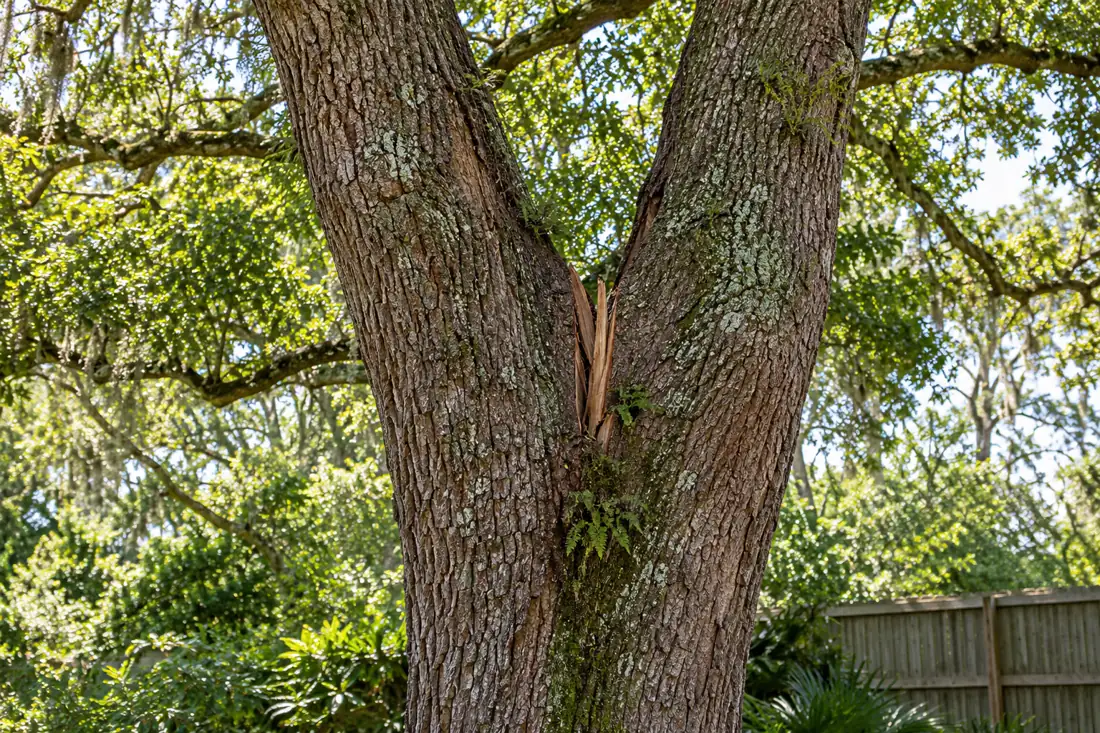
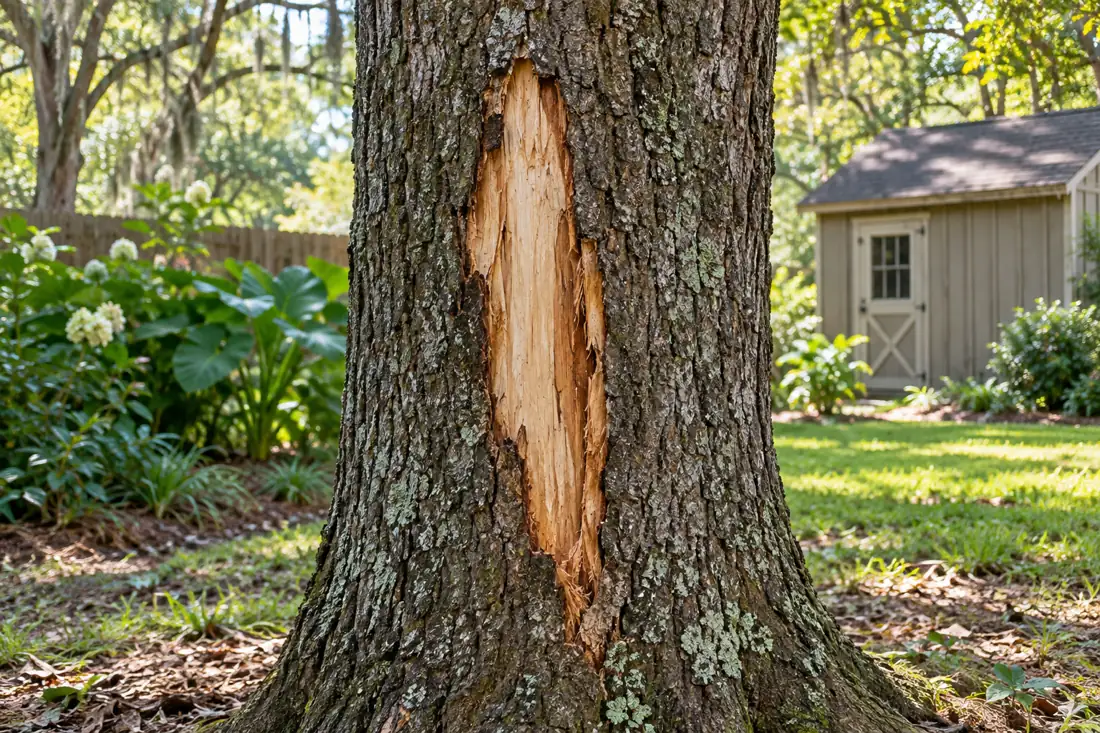
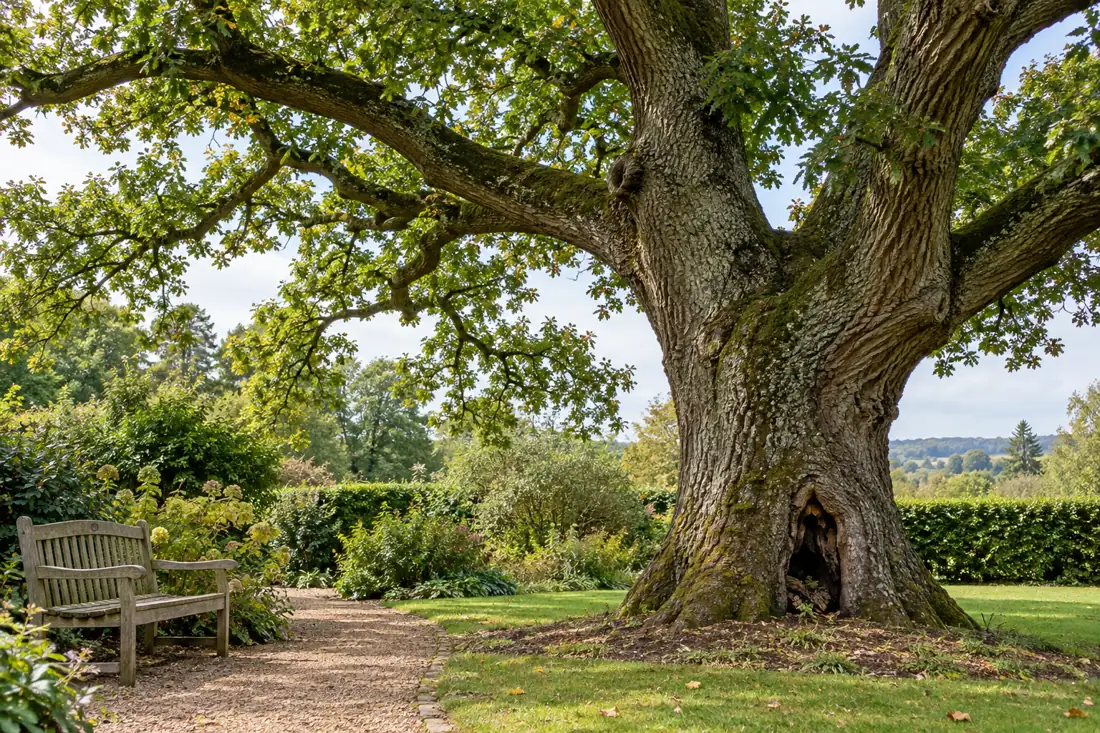
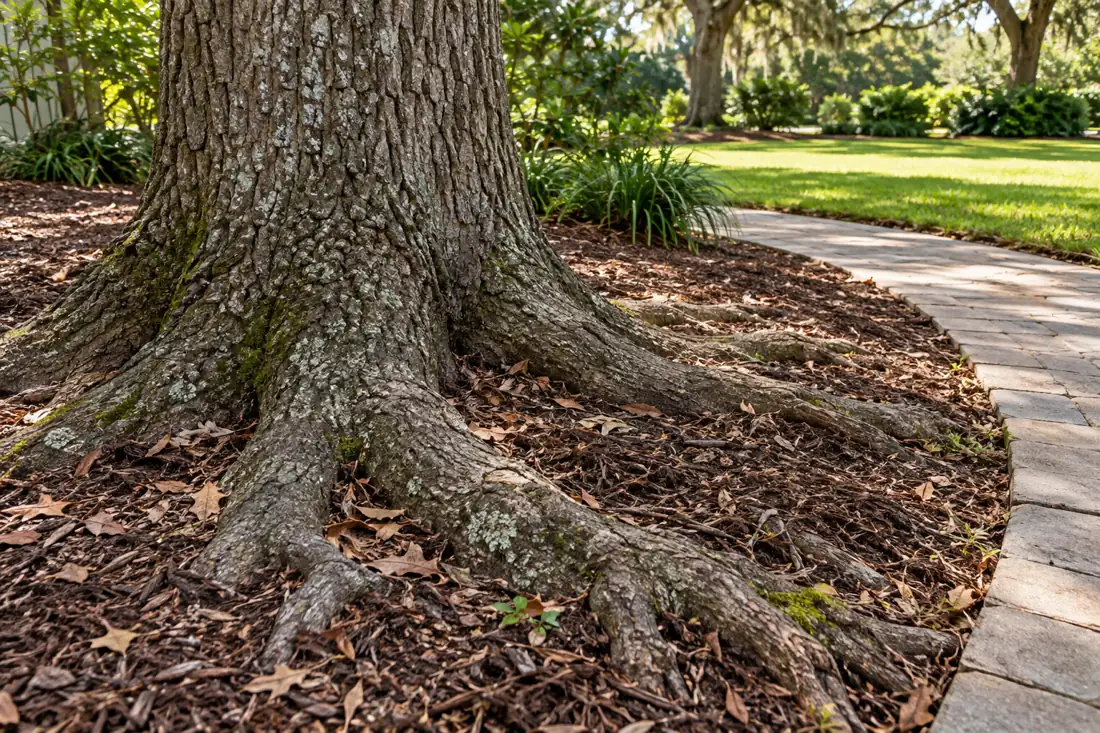
A cavity raises a structural question that depends on location, extent and the rest of the tree. The opening visible from the ground may not represent the entire condition. Explain nearby targets and any changes you have noticed. Do not fill the cavity or assume it is safe because the tree still produces leaves.
Site planning detail: The size of an opening in a trunk is not the same thing as a measurement of remaining sound wood. Useful photographs show the cavity, its elevation, the entire trunk, primary unions, and the targets within falling distance. Note recent changes, mushrooms or decay symptoms, storm injuries, and whether the opening appears connected to a crack. Do not drill, fill, burn, or plug the cavity as a do-it-yourself structural repair.
An arborist can determine whether further inspection tools or an independent risk assessment are appropriate, and whether pruning, target management, ongoing monitoring, or removal is the proportionate response. The decision should explain both the tree condition and what people or property could be affected. A cavity in a low-value isolated area is not the same risk situation as one above an occupied play area.
Describe where the opening sits: trunk base, upper trunk, old branch wound or a major union. Photograph it at ground level with the whole tree and nearby targets in view. Note visible changes such as loose bark, fresh cracking, fungal growth or a newly broken limb, but do not insert tools, fill the opening or enlarge it to estimate depth.
A cavity can remain in a living tree for years; its outward dimensions do not reveal how much supporting wood exists throughout the structure. The remaining shell, crown load and location of the opening are important.
Ask a qualified evaluator to explain how the condition affects the particular tree and the exposed area around it. A cavity above an unused garden is a different exposure problem from a cavity supporting limbs over a bedroom or busy path. If mitigation is recommended, request the specific objective, such as restricting access, reducing selected loading, monitoring a defect or removing the tree.
Keep the written rationale with photographs so future assessments can compare changes instead of repeating a judgment from memory. Never use a remote image alone as proof that the tree is safe.
Understand what a cavity can and cannot reveal
A hollow or open area in a mature trunk may follow an old branch loss, injury or internal decay. Its visible size does not reliably measure the amount of sound wood remaining around it. A tree can continue growing with a cavity, and some trees with relatively small external openings may have extensive concealed changes. A photograph is useful background but not a complete structural assessment.
Start by documenting the opening's height, direction and relationship to major stems or the root flare. Photograph the full tree and its surroundings from a safe position. Do not climb, reach inside or enlarge the hole to estimate depth. Ask a qualified assessor to evaluate the visible features alongside crown structure, species, site use and any related wounds or fungal growth.

Record the cavity's location and history
A cavity close to the base raises different questions from one in an old lateral limb or a retired branch stub. Note whether the opening faces a common walkway, building or driveway, and whether the tree has multiple trunks. Prior photos can show whether the opening enlarged, whether bark fell away or whether surrounding wood changed after a storm. If no older images exist, avoid guessing when the cavity began.
Past pruning, construction, fire or mechanical damage may be relevant, but not every cavity has an obvious cause. Share records of work that affected the tree, including soil excavation near roots. The professional can determine which historical details matter to the present condition. An accurate timeline helps distinguish a long-standing feature from new deterioration, without claiming that a stable appearance alone proves safety.
Look beyond the visible cavity. A hollow-looking opening calls for evaluation, not an automatic removal decision. Consider its position, associated decay, sound surrounding wood, crown load and nearby targets. Filling a cavity with concrete or foam does not resolve structural questions. Record changes and obtain a qualified assessment if cracks, fresh movement or other warning signs accompany it.
Identify the cavity without turning a photograph into a verdict
Record whether the opening is on the trunk, a branch union, a broken limb stub or near the root flare. Photograph it from the ground in enough context to show the surrounding tree and nearby targets. Avoid inserting tools into the opening, chiseling out loose material, applying sealants or filling a hollow with concrete.
The visible size of a cavity does not directly measure the strength of the remaining wood. Its location, the continuity of sound wood, loading of the crown, signs of active decay and the tree species matter. A mature tree can have an old opening and still retain useful structure, but the opposite can also be true.
Consider the target area and consequences of failure
The question is not simply whether a hollow exists; it is what part of the tree might fail and what lies within reach. A cavity facing an unused corner of a large yard calls for a different exposure discussion than one over a bedroom, busy sidewalk or shared parking area.
Note when those areas are occupied, whether a branch could strike utility lines, and whether temporary access restrictions are practical. Do not move people beneath cracked limbs to obtain better photos. If fresh movement, splitting, fallen pieces or an abnormal lean is present, describe those changes when requesting urgent evaluation. No remote image review can certify that a hollow tree is safe.
Separate an entrance hole from hidden decay
Wood visible at the edge of a cavity may be dry, wet, firm, soft or partly concealed. Those appearances can guide an inspection but do not disclose the full internal pattern. Decay is rarely a simple perfect cylinder extending behind a round opening. Attempts to estimate safety by inserting a stick or measuring with a household tool can mislead and risk damaging living tissues.
Ask whether visual inspection is sufficient for the decision at hand. Where conditions warrant it, the assessor may consider additional examination, but no single method provides certainty about future performance. The value of testing depends on whether the results would alter pruning, target management or removal decisions. Keep the investigation appropriate to the tree and site rather than assuming every cavity requires a costly procedure.

Evaluate what remains around a cavity, not just the size of the opening
Locate the opening carefully in your notes: trunk base, mid-trunk, or a major limb, and the direction it faces toward nearby occupied areas. Photograph it with a familiar object at a distance for scale, not by putting a hand into the cavity. Ask whether an older photograph shows the same opening years ago. A large-looking hole from one angle can represent a different condition from an opening surrounded by sound remaining wood; neither appearance alone provides a complete strength calculation.
Do not fill a cavity with concrete, spray foam or paint to create the impression of a repaired trunk. Such materials do not restore structural wood and can interfere with later assessment. Keep drainage and root flare conditions in view and do not excavate aggressively to find a hidden continuation of the cavity.
A qualified assessor may rely on visual examination and, when warranted, additional diagnostic methods. Ask what a test can show, where its limitations begin and how the results affect the actual property decision.
Connect the assessment to who uses the space below the crown. A tree over a quiet unused corner creates a different exposure from one over a school entrance or a busy parking aisle, even if the visible opening is similar. Possible recommendations include managing access, targeted pruning, periodic review or removal when condition and consequences justify it. Ask for the rationale and any limits on proposed support systems; cabling or bracing is not a replacement for adequate wood structure.
Keep the recommendation practical. Record the cavity's position, any measured changes, the assessor's qualifications, next inspection triggers and what the owner should avoid doing near the trunk. Compare future photographs taken from the same distance rather than relying on a fresh phone zoom that makes the opening look larger. If a change in lean, new fracture or hanging limb creates immediate concern, restrict access while qualified help is arranged rather than waiting for a routine appointment.

Look for load-bearing structure around the opening
The surrounding trunk, branch unions and remaining crown influence how a tree carries loads. A cavity on a heavily loaded stem may need closer attention than an opening on a low, dead branch that can be removed independently. Note significant cracks, unusual swelling, large branch leverage or recent movement from a safe distance. These findings help the assessor decide which parts require detailed review.
Do not calculate a universal safe wall thickness from a photograph or online chart. Species, wood properties, defect shape and load distribution vary too widely for that shortcut. Ask the professional how observed structure and site exposure affect the recommendation. A decision to retain a tree should have a reasoned explanation of the evidence and remaining uncertainty, especially when valuable targets are within its potential reach.
Treat a mature-tree cavity as a finding that needs context
A hollow opening does not measure the strength of all remaining wood. Some mature trees persist with cavities while others have associated cracks, root movement or weakened scaffold attachments. Photograph the opening together with the entire tree and occupied targets. Do not scrape away bark, enlarge the cavity or fill it with concrete in an attempt to repair lost wood.
Ask what a qualified assessment can verify visually and whether additional testing would change the recommendation. The outcome could be monitoring, targeted pruning, further investigation or removal depending on risk and uncertainty. The written rationale should explain the observed defect and the limitations of the inspection.
Consider water, animals and debris without filling the hole
Cavities sometimes collect leaves, rainwater or wildlife nesting material. This does not mean they should be filled with concrete, foam or other substances to make the tree solid. Such treatments can hide conditions, interfere with normal processes and do not replace structural wood. Do not attempt to seal an opening simply because it looks unsightly. Ask the professional whether any intervention has a defensible purpose.
Avoid reaching into cavities because they may contain wildlife or hazards. Where habitat is present, mention it before work is scheduled so the crew can consider applicable protections and timing. Managing a cavity should balance tree condition, public safety and lawful wildlife considerations. Any proposed work should be clearly scoped instead of improvising a cosmetic repair that makes later assessment harder.

Evaluate the crown and root environment together
A cavity is one observation within a living system. Photograph the crown for dieback, broken limbs or uneven growth and note changes in soil level, paving or drainage near the roots. Recent excavation, heavy equipment or grade changes can be important even when the cavity is high above ground. The assessor should consider whether multiple issues interact rather than focusing on one dramatic opening.
If the tree is near a building or a frequently used area, explain those uses accurately. A tree with the same physical defect may lead to a different management decision where exposure can be reduced. Don't remove roots to improve a view of the base or prune large limbs without an agreed plan. Unplanned work can create additional stresses and complicate evaluation of the original problem.
Review the actual alternatives to removal
A cavity does not automatically require removal. Depending on the findings, options may include retaining and monitoring, targeted pruning, reducing occupancy beneath a particular area or other risk-management work. The assessor should explain what each option addresses and what it cannot solve. Ask whether the proposed cuts would materially reduce exposure while retaining valued shade and structure.
Some defects may be severe enough that removal is the supported recommendation, especially when practical alternatives cannot manage risk. If so, request the reasons and a scope for access, controlled dismantling and debris handling. Avoid assuming topping or severe pruning is a compromise that preserves the tree; indiscriminate cuts can cause new problems. The aim is to choose a justified response to the actual condition.

Know which changes call for prompt reassessment
A new split extending from a cavity, a sudden change in lean, fresh root-plate movement or a large failure overhead can alter the safety picture. Restrict access to potentially affected ground and contact a qualified professional. Treat lines nearby as energized and involve the utility where required. Do not remain beneath an unstable stem to photograph a new crack closely.
Where an opening has existed for many years without visible change, routine documentation may still be appropriate if recommended by an assessor. Green leaves alone are not a structural warranty, and a cavity alone is not a countdown. Ask for site-specific monitoring triggers that the property owner or manager can observe safely. This helps avoid both unnecessary emergency claims and prolonged neglect of meaningful change.
Prepare photos and questions for a focused site visit
Send images of the entire tree, the cavity at a safe distance and the surroundings that could be affected. Label the tree if several similar specimens share the yard. Include known history, prior reports and any planned construction. Ask whether the proposed service is a diagnostic assessment, a tree-work estimate or both, because those deliverables can have different standards and charges.
An evaluator should identify the inspection limitations and describe any recommended next step in understandable terms. If the owner wants a second opinion, share the earlier findings and specify the disputed conclusion. A focused consultation is more productive than asking an estimator to guarantee that a hollow tree is safe. No online form or photograph alone confirms an appointment or establishes a diagnosis.

Retain a usable record after the decision
Keep dated photographs, a written condition summary, chosen work scope and any agreed monitoring plan together. After pruning or removal, review the completed tasks and note what remains outside the contract, including stump work and surface restoration if relevant. If the tree is retained, document changes after future storms or construction activity instead of relying on memory of how the cavity used to look.
The goal is transparent stewardship of a valuable tree and the property around it. There may be a defensible reason to preserve the tree or a clear reason to remove it; neither should be assumed before the evidence is reviewed. Tree Huggers can discuss practical service needs after assessment, while the owner retains responsibility for approving the work and any follow-up. A request for an estimate begins that discussion.
Ask what evidence supports the recommended action
A visual inspection may be sufficient to identify an obvious defect, while other situations call for more detailed investigation by a qualified tree-risk professional. Ask whether the concern is decay extent, an attachment, root stability or loading, and which observations led to the recommendation. Avoid assuming that a numerical percent of hollow trunk area is a universal removal rule.
If specialized testing is proposed, request an explanation of its limits and why it is relevant here. If pruning is considered, discuss whether reducing certain loads would help without stripping the canopy or creating large new wounds. Retention should be a reasoned plan with follow-up, not a declaration that the cavity is harmless.
Scope a decision that can be revisited
For an estimate, specify whether you want a condition review, targeted pruning, monitoring or complete removal, and whether the cavity is changing. Include the location, any previous limb failures and what access is available for equipment. If removal becomes the selected scope, ask how nearby surfaces, fences and existing landscaping will be protected and where wood will be staged.
If the tree is retained, preserve photographs and written observations for later comparison, especially after severe weather. No single treatment reverses extensive internal decay, and closing an opening cosmetically is not a substitute for managing risk. The written scope should say what will happen, what is excluded and what triggers a new assessment.
Questions about this project
Does a cavity automatically mean removal is required?
The appropriate response depends on the cavity, remaining structure, tree condition and nearby targets. Arrange an assessment rather than deciding from the opening alone. Keep clear if the condition appears unstable.
Can I fill a hollow to strengthen the tree?
Do not assume filling a cavity repairs the structural condition. Describe the concern and ask for an appropriate evaluation. The recommendation should address the actual tree and the limits of what can be established.
Does healthy-looking foliage mean a tree is structurally safe?
No. Leaves do not establish the condition of roots, trunk or branch connections. Explain visible defects and recent changes, and ask for an assessment appropriate to the tree and nearby targets.
Should I test a cracked branch or trunk?
Do not pull, shake, climb or cut damaged material to test it. Keep clear of the affected area and describe the condition from a safe location. Qualified assessment and an appropriate work plan are needed.
Is a free work estimate the same as a written risk assessment?
Not necessarily. Explain whether you need pricing, condition advice, a documented assessment or a combination. Ask what the visit includes, who provides it and what limitations apply to any findings or recommendations.
What history should I share?
Share known storm damage, prior failures, construction, root disturbance, flooding, pruning and recent changes. Include the timing and nearby property use. Useful history supports the evaluation without replacing inspection of the current tree and site.
Is leaving the trunk untouched enough to protect a tree?
No. Roots, soil conditions and nearby work can matter even when the trunk is not cut. Identify retained trees before planning access, excavation and storage, and ask what site-specific protection is appropriate.
Can pruning undo construction-related root damage?
Do not assume it can. Share the work history and ask for an assessment of the current tree and site. Pruning, monitoring or other recommendations should address an identified need rather than substitute for protection planning.
How should extra work be approved?
Use the agreed approval process and identify the change, reason, scope, price or schedule effect as applicable. Confirm who has authority before treating an additional tree or task as part of the original job.
What completion records are useful?
Keep the agreed scope, tree or area identification, authorized changes, invoice and labeled photos where appropriate. Include unresolved items and a contact. Contract-specific records should follow the buyer's stated requirements.
What should I tell Tree Huggers about cavities in a mature tree?
Explain the property address, the work you want and the specific concerns: cavity location, remaining structure, nearby targets. Send safe photos of the tree, surroundings and access route. The contractor can then discuss the assessment and scope needed for this situation.
How do I request an estimate for this work?
Call 504-458-8336, text photos or use the estimate form on this page. Include the address, desired outcome and any timing constraints. The company will need to review scope and availability; an online request does not confirm a price, appointment or emergency dispatch.
Get a scope for your property
A visible cavity in a mature tree raises questions about remaining wood and load paths, but a photo of the hole cannot establish how much sound structure remains. In your request, show the entire tree and the location of the opening relative to major limbs and the trunk base.
Note whether the cavity has changed, whether there are cracks, loose bark, fungal growth or previous pruning wounds, and what occupied spaces or structures are nearby. Photograph from the ground and never reach inside or climb for a clearer view.
The estimate should begin with a condition-based assessment and identify any uncertainty that requires closer inspection or testing by a qualified professional. Avoid filling the cavity or cutting large branches on the assumption that either action will restore strength. Ask whether the recommended scope includes observation, access control, selective work or another risk-management decision, with a clear explanation of limits. A mature tree may still offer ecological and landscape value, so the goal is an informed decision rather than automatic removal or reassurance.