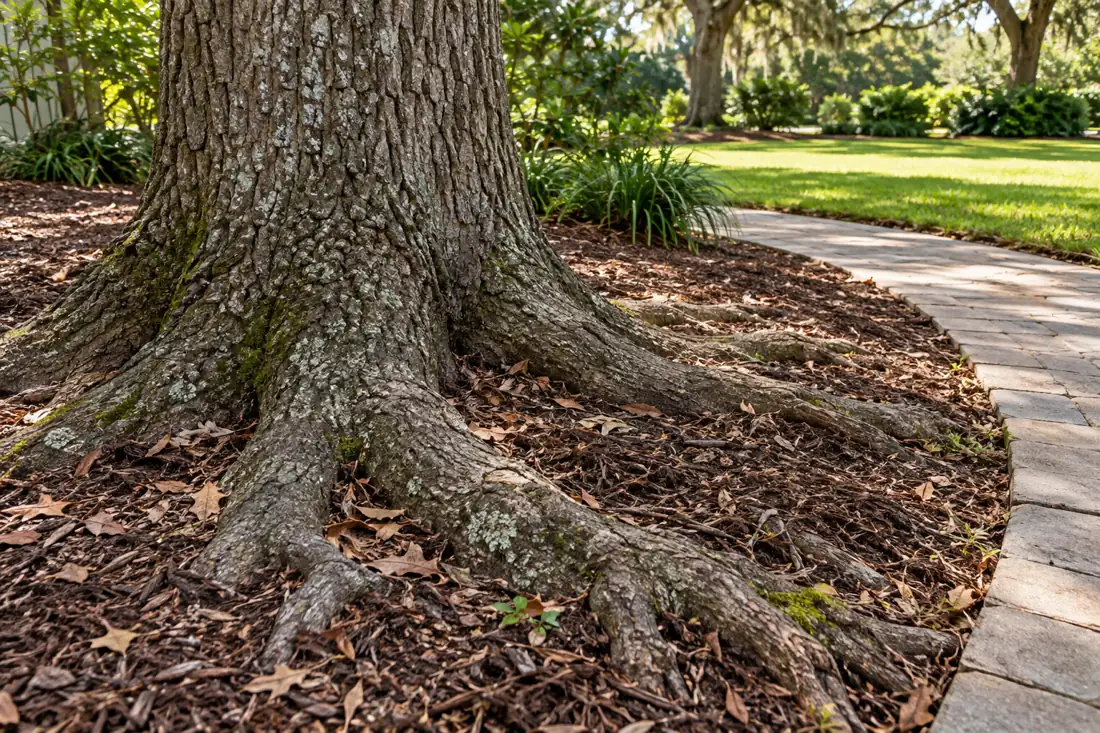
Driveway demolition can disturb roots that extend well beyond the visible trunk. Plan the route, excavation and tree assessment before the pavement comes up.
Site planning detail: A driveway contractor and tree assessor need to agree on the proposed pavement footprint before the old surface comes up. The useful drawing shows the tree trunk and flare, excavation limits, proposed base thickness, equipment approach, drainage changes, and which roots are already visible. Do not assume roots end at the drip line or that a narrow trench is harmless simply because it misses the trunk.
If excavation unexpectedly reveals substantial roots, stop that part of the work and reassess the method rather than letting equipment sever them to stay on schedule. Photograph existing pavement movement and drainage before demolition. The written scope should say who can approve an altered alignment, grade, or construction detail, and who will inspect tree condition afterward. A tree-health recommendation is not a structural engineering sign-off for the driveway.
Place the retained trees on the driveway design
Before a paving contractor schedules demolition, mark each retained tree on the proposed site plan and identify where the new driveway, widened turn or parking pad will be built. Show the trunk and existing pavement edge along with curbs, gates and known utility routes. Roots do not stop at the edge of the visible canopy, and an older driveway may already cover a portion of the growing area.
Ask a qualified arboricultural professional to review the likely root disturbance and the design team to explain excavation needs. Neither a sketch nor an aerial photograph can establish what lies beneath concrete.
Note the present condition of the tree without assigning a diagnosis. Save available inspections, prior construction history and safe wide photographs. A tree that survived the original driveway installation may have less tolerance for additional root disturbance decades later. Avoid assuming that removing only the top slab leaves the soil untouched; subbase excavation, grading, compaction and equipment travel can affect roots.
The goal is to understand each construction step early enough to consider alternatives, not discover the conflict when a backhoe is already working beside the trunk.

Ask whether the proposed footprint is truly necessary
A replacement project may include widening the drive, straightening a curve, adding parking or improving drainage. Separate essential functionality from optional expansion. Where the new footprint approaches significant roots, discuss whether the edge can shift, the grade can change or the construction system can use a different foundation detail. The paving designer must assess structural performance; the tree professional advises on the tree's likely response to site changes. Do not treat an arborist as the pavement engineer or ask a concrete crew to make technical judgments about retained tree roots.
Document why an alternative was accepted or rejected. A narrower paving edge might preserve meaningful root space, but it still must meet the user's access needs and applicable requirements. A porous pavement option or suspended system may be considered in some situations, yet none is universally safe or appropriate. Local soil, drainage, vehicle loads and maintenance all matter. Seek site-specific design rather than advertising one material as a guaranteed fix for trees under driveways.
Understand what demolition may expose
Breaking old concrete can reveal roots near the base material or even roots embedded around irregular slab edges. Workers may need to remove asphalt, concrete, subbase and compacted fill. Agree how suspected roots will be handled before excavation begins. A hurried saw cut through an exposed large root can affect stability or future condition.
The contractor should be able to stop in the affected area and request qualified review without improvising a damaging fix. Do not instruct workers to excavate deeply around the trunk merely to see how many roots are present.
Describe any known past repairs, previous root heave or recurring pavement cracks, but avoid attributing all movement to trees without investigation. Expansive soils, drainage, settlement and poor subbase can also affect a drive. A root that appears near a lifted slab may not be the sole cause of damage. Relevant professionals should establish the actual repair design. The tree-care plan can provide information about protecting the existing tree, not guarantee the new slab will never crack or shift.

Driveway demolition makes a root-zone protection plan essential
A concrete driveway may sit close to structural and absorbing roots even when no roots are visible above ground. Before demolition, map the mature tree, its trunk flare, the slab edges, utilities, equipment route and any space for construction materials. Provide the tree professional with the proposed footprint and the contractor's sequence of work. Do not assume that a root can be cut simply because it is beneath old paving. The size, depth, location and health of roots require site-specific evaluation, not a generic rule that every root beyond a fixed distance is expendable.
Ask the driveway contractor to identify equipment staging, excavation depth, forms, base preparation and drainage changes. Heavy equipment, spoil piles and repeated traffic can compact soil beyond the new pavement footprint, so protection may need to extend to areas that will not be excavated. Exposed roots should not be left unnecessarily damaged or drying while trades debate responsibility.
A qualified tree professional can advise where the proposed work affects the tree, and the construction team remains responsible for its own structural and paving design. Utilities must be located through appropriate procedures.
Write the project scope so that discoveries during removal do not trigger unapproved root cutting. Specify who stops work for a newly exposed major root, who assesses it, and who approves a change to driveway alignment or construction detail. A modified route, root-friendly design or narrower work area may sometimes avoid damage; that possibility needs engineering and site review where applicable.
Document boundaries of protected soil and restrictions on stockpiling, fueling or washing concrete equipment near the tree. A general instruction to 'be careful' is hard to inspect or enforce.
After paving, record what was excavated and any important decisions made about roots. Observe the tree over time for changes in canopy condition, but avoid claiming that all later decline was necessarily caused by this project without evidence. A planting or irrigation adjustment is not a universal remedy for mechanical root loss.
Keeping the tree assessor's recommendations and contractor's as-built information together makes future maintenance more useful. The best plan reduces avoidable impacts before the first slab is broken rather than relying on a cosmetic cleanup afterward.


Establish protection zones before equipment arrives
Identify where loaders, concrete trucks, debris bins and delivery vehicles will travel. A mature tree's root environment can be affected by compaction even outside the excavation line. Ask whether temporary fencing or ground protection is appropriate to exclude unnecessary traffic and material storage. The protected zone should be established from qualified site assessment, not simply a decorative ring around the trunk. Plan where contractors will stage forms, gravel, tools and removed concrete so they do not pile loads against the tree or its exposed root area.
Site logistics can be difficult on narrow New Orleans-area lots, especially where residents still need an entrance. A contractor may need to close parking or use a different route while the drive is demolished. Mark existing drainage, irrigation, septic components, steps and nearby structures. Provide known access dimensions, and identify uncertain ground-bearing conditions honestly. Temporary mats and fencing need to be compatible with the actual paving work; do not promise they eliminate all compaction or root disturbance without the professional's evaluation.
Plan driveway reconstruction around roots before excavation
Driveway replacement often changes grade, drainage, soil compaction, and root access at the same time. Before demolition, identify nearby trees and where their major surface roots appear to run relative to the slab or asphalt. Do not equate a raised driveway panel with proof that every nearby root should be cut.
Root cutting near a mature tree can impair stability or long-term health, and the consequences depend on root size, species, condition, and distance from the trunk. A contractor measuring only the new paving thickness may overlook the root protection and drainage design that determines whether the tree can remain.
Discuss layout and construction methods with the driveway designer and a qualified arboricultural professional early enough to change the plan. Options might include moving an edge, altering a slab detail, bridging a root zone, using a more permeable surface, or redesigning drainage where site conditions permit.
Avoid claiming one technique works everywhere; utilities, accessibility and local requirements still control. Establish machinery routes and staging locations that keep repeated truck traffic off protected soil. If excavation exposes important roots, pause work for review rather than making irreversible cuts on the spot. Record the agreed protection zone, changed elevations, restoration steps and the responsible decision maker.
Driveway demolition: authorize the root-zone hold point
Before a sawcut reaches the projected root zone, put the actual driveway outline, demolition depth and planned stormwater outlet on the same marked plan. Identify whether the owner wants to protect the mature tree even if the paving layout must change. A drive crew should not infer permission to cut supporting roots from permission to remove concrete.
If excavation reveals an unanticipated major root, stop work in that area while the project lead coordinates an appropriate tree assessment and paving revision. Record the root location and the date without peeling bark or widening the trench for photographs.
Coordinate underground utilities and drainage
Driveway reconstruction may uncover buried electrical service, water, sewer, communication, gas, irrigation or drainage lines. Obtain appropriate utility-locating and contractor records before digging and acknowledge where information is incomplete. A homeowner should not cut a root that crosses a suspected line or attempt to pry a pipe loose. Utility owners and relevant specialists must address their own systems. Root and utility conflicts are not a reason to guess which component is expendable. A safe work plan often depends on multiple qualified parties sharing current information.
Consider how the proposed driveway slope affects runoff around the tree and property. Regrading that directs water toward a trunk, foundation or neighbor may create a problem beyond tree care. A tree professional can discuss root-zone implications, while the civil or paving specialist evaluates grade and drainage. Avoid treating crown thinning or fertilization as a substitute for correcting damaged drainage. If a storm recently saturated the site, postpone or revise equipment assumptions rather than using a dry-day photograph to justify heavy loading.
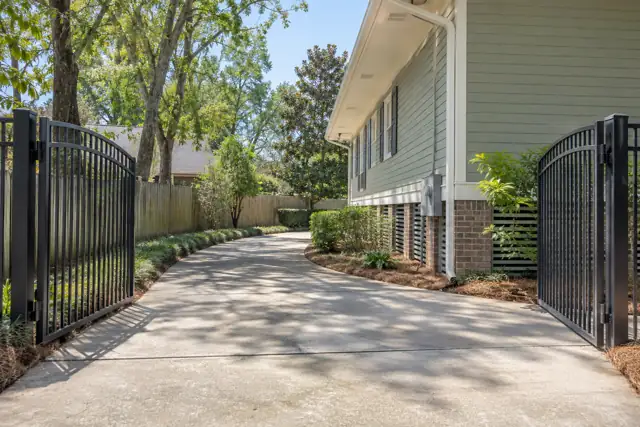
Protect exposed roots and minimize unnecessary delay
If demolition exposes significant living roots, the work sequence should permit prompt professional evaluation and appropriate protection. Leaving roots exposed to sun, wind or repeated traffic while design decisions wait can add stress. Workers should not peel bark, wash away soil or apply sealants based on informal internet instructions. Qualified guidance can address whether a root can be retained, what protection is suitable and whether the pavement design must change. Document the actual decision before proceeding with the affected section of excavation.
Schedule the tree review at a useful point in the construction sequence, ideally before irreversible cuts or excavation reach a known conflict. Do not promise that the tree can be saved in every case or that minor root disturbance will have no consequence. Where significant damage has already happened, describe it accurately and seek assessment instead of immediately ordering fertilizer. Tree responses can be delayed, so records of exposure and treatment help interpret future condition changes.
Review the new pavement detail beside the tree
The final surface should meet vehicle and pedestrian needs without creating a preventable new conflict with retained roots. Discuss expansion joints, subbase, depth, edging and drainage with the paving professional and root constraints with the tree specialist. No single slab thickness or gap dimension can be recommended remotely for every property. A driveway on soft Louisiana ground may require special design attention unrelated to tree presence. Clarify whose drawings govern each detail and which trade owns the final surface condition.
Think about future maintenance. If the tree continues to grow, will the property owner be able to inspect or repair the driveway without cutting substantial roots again? A design may need flexible edges, accessible utility routing or a preserved planting area. Preserve the tree's appropriate soil and water environment rather than sealing every square foot simply for convenient parking. These decisions should be recorded before installation so a future contractor does not mistake intentional root-protection details for defective workmanship.
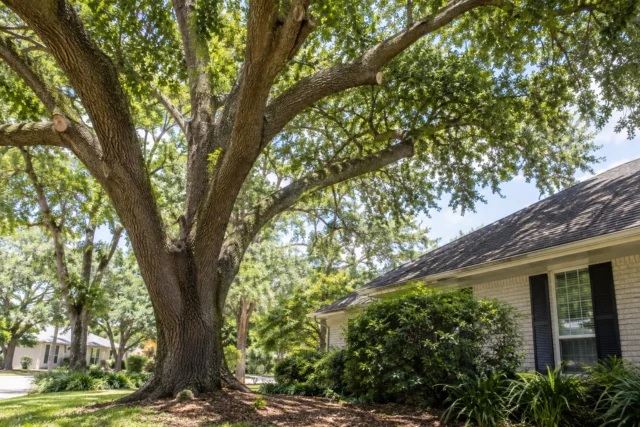
Establish handoffs and realistic follow-up
At completion of demolition and paving, record the tree's observed condition, significant roots retained or affected, protection measures actually used and any recommendations for subsequent assessment. Keep photographs of real work with true dates and permission; do not use hypothetical generated images as evidence of completed root care. If irrigation or landscape restoration remains, assign it to the responsible trade. A paving invoice does not prove an arboricultural assessment happened, and an arborist's note does not certify the new concrete.
Monitor the tree according to qualified advice and any observed changes. Do not prescribe a universal one-year guarantee after root disturbance. New branch dieback, unusual movement or other concerning symptoms warrant appropriate evaluation, especially when occupied routes are nearby. Record changes rather than making a quick diagnosis from a single leaf or small twig. A useful follow-up plan states who will review the site and when concerns should trigger a new professional visit.
Hold the design decision before the root-zone cut
Before removing pavement, compare whether the replacement must occupy the exact same footprint. A change in slope, edge position, elevation or surface detail may affect roots, drainage and access differently. Ask the designer and tree assessor to discuss alternatives while the work can still be changed, rather than after the old slab has been lifted.
Mark areas where machinery and debris will move, who is authorized to adjust the design and what must stop work for review. Hidden utilities and old irrigation complicate any decision about cutting near the trunk. Do not rely on a tree photograph to decide which roots can be severed.
Keep the final drawing, arborist findings and construction change log together. The contractor responsible for pavement needs to understand any agreed protective limits, while the tree professional should know about later grading or drainage revisions. Distinguish tree-care work from engineering or permitting decisions.

Request an assessment before making the next cut
When contacting Tree Huggers, explain the planned driveway footprint, whether demolition has begun, the tree's location and the specific root question. Include wide, safe ground-level photos showing the existing drive, trunk and access route; plans or construction drawings can supply additional context. Do not dig to expose roots for photography or enter an unsafe work zone. If major roots are already exposed, communicate that condition promptly to appropriate professionals. The tree assessment should inform construction decisions without pretending to replace pavement engineering.
Ask for a clearly described tree-related scope, required site coordination, access needs and any follow-up recommendations. Confirm who makes final decisions about excavation, pavement installation and permitting. Use the native inquiry form for private contact information and optional photo intake; page analytics should not record typed details. Track assessment, design revision, tree work authorization, paving work and follow-up as distinct stages. The right outcome is a functional driveway with informed choices about the mature trees that remain.
A decision gate before the driveway slab comes up
The best point to resolve a root-versus-driveway conflict is before a crew commits to demolition and base excavation. Mark the retained tree, driveway footprint, underground-service information, proposed machinery route and any areas where roots are already visible. Decide who can pause cutting if unexpectedly large roots appear. That does not mean a tree professional designs the pavement; it means the owner can ask the relevant trades for coordinated decisions before an irreversible cut.
After the construction sequence is agreed, record which protection measures are included and who inspects the tree-related concerns if field conditions differ. Later photographs of the final surface and the tree's condition help distinguish observed changes from guesses about their cause. A single appearance immediately after paving should not be represented as a warranty of future tree health.
Questions about Tree Root Damage During Driveway Replacement
Can driveway replacement damage a mature tree?
Yes. Excavation, root cutting, soil compaction and drainage changes can affect tree condition and stability.
Do tree roots stop at the canopy edge?
No. Root distribution can extend beyond the visible crown and depends on site conditions.
Can a paving crew cut exposed roots?
Seek appropriate tree-professional evaluation before substantial root disturbance.
Should an arborist design my new driveway?
No. The tree professional advises on tree impacts; qualified paving or design specialists handle the driveway.
Could an altered driveway footprint protect roots?
Possibly. Review feasible alternatives with the tree and construction professionals.
Does root damage always show in the canopy immediately?
No. Effects may appear later, making documentation and appropriate follow-up important.
What if the old slab is lifted near roots?
The cause needs investigation; do not automatically attribute all pavement movement to a tree.
Should equipment park beneath a retained tree?
Avoid unnecessary root-area compaction and follow site-specific protection planning.
What about buried irrigation or utility pipes?
Use appropriate locating and qualified coordination before ground disturbance.
Does fertilizing fix construction root damage?
Not automatically. First assess the actual cause and appropriate management.
What photos help an estimate?
Safe wide views of the tree, pavement edge, planned construction footprint and access.
What records should be kept after paving?
Actual root observations, approved modifications, protection measures and professional follow-up notes.
Get a scope for your property
A driveway replacement can expose or cut structural roots near the pavement edge, even if a tree looked healthy before demolition. Before excavation, map the retained trees, proposed slab or paver limits, drainage, utilities and likely traffic routes. Ask the paving contractor where grade changes, base removal and equipment staging will occur. Do not authorize root cutting based on a paving sketch alone. A qualified tree professional may need to evaluate the affected roots while a designer or engineer handles the pavement and drainage requirements.
Photograph the current root flare, visible roots and hardscape conflicts before work begins, then document any unexpected conditions uncovered by excavation without entering an unsafe trench. A coordinated scope should identify excavation limits, root protection, soil-compaction controls and who may approve changes to the driveway layout. The tree-work estimate should not promise that the new surface will never lift or that every root can safely be retained. Make responsibility for debris, protection and final surface restoration explicit among trades.