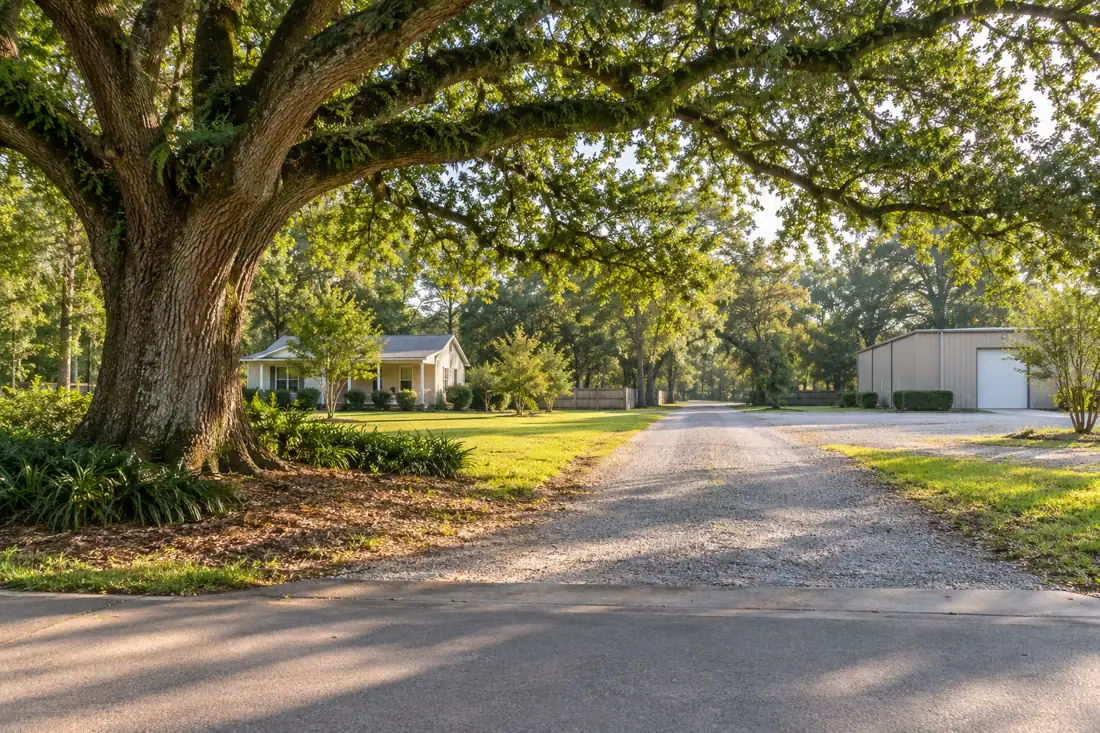
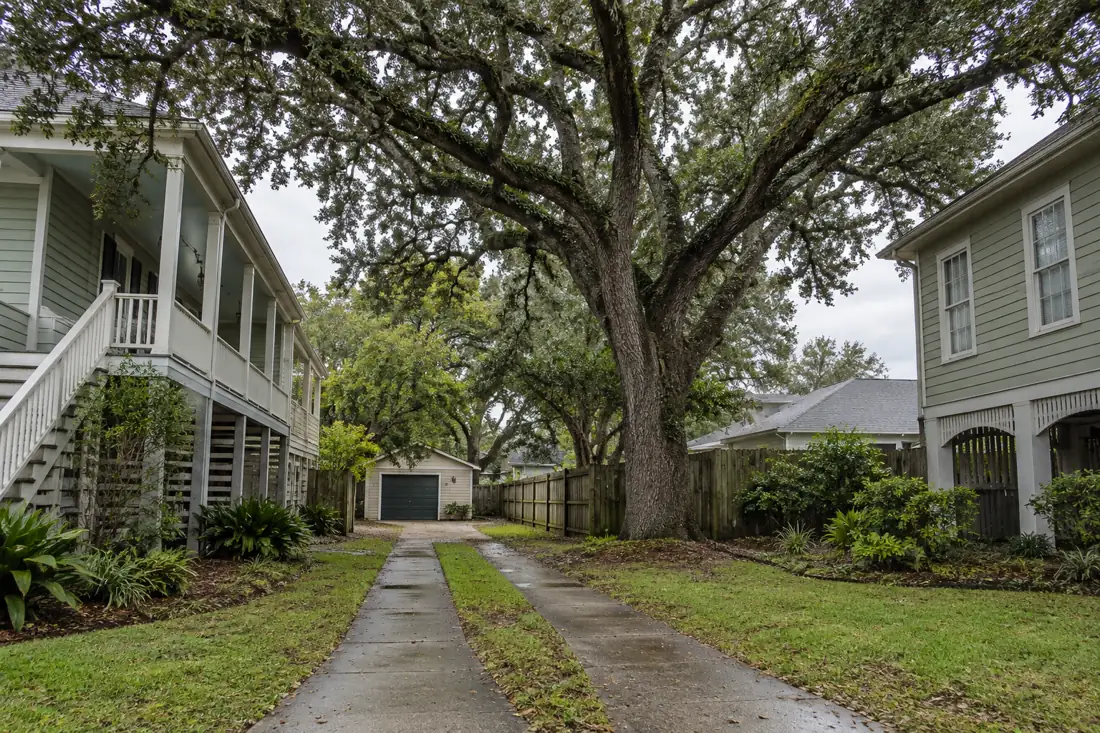
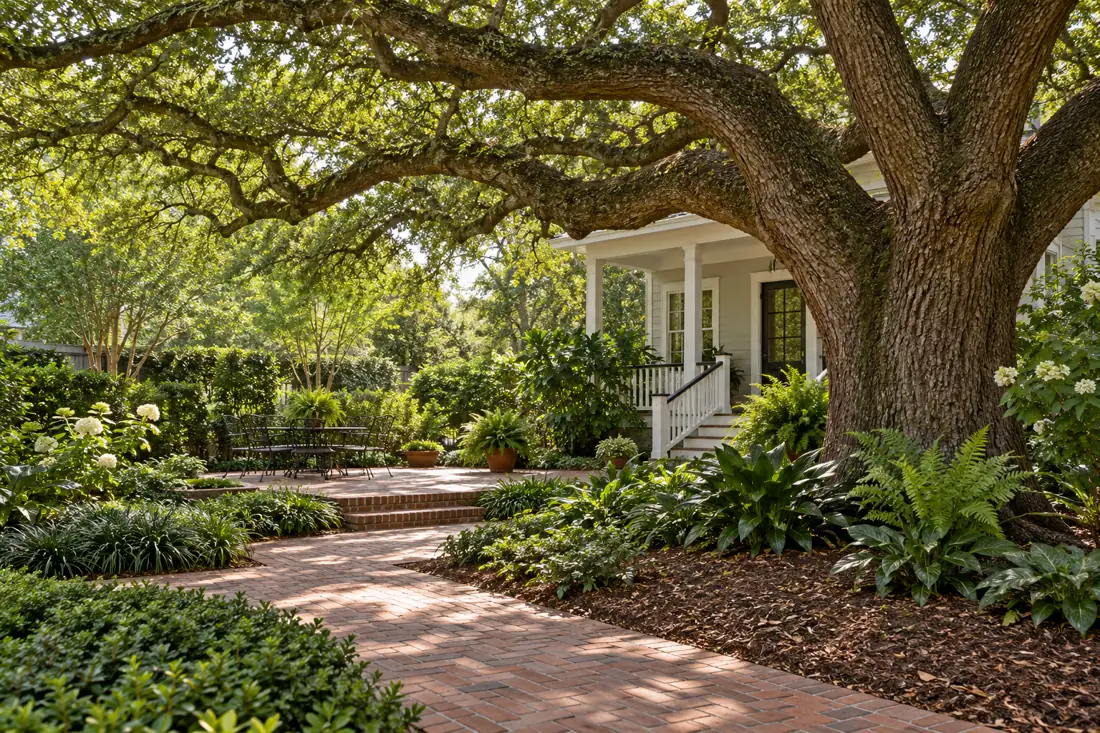
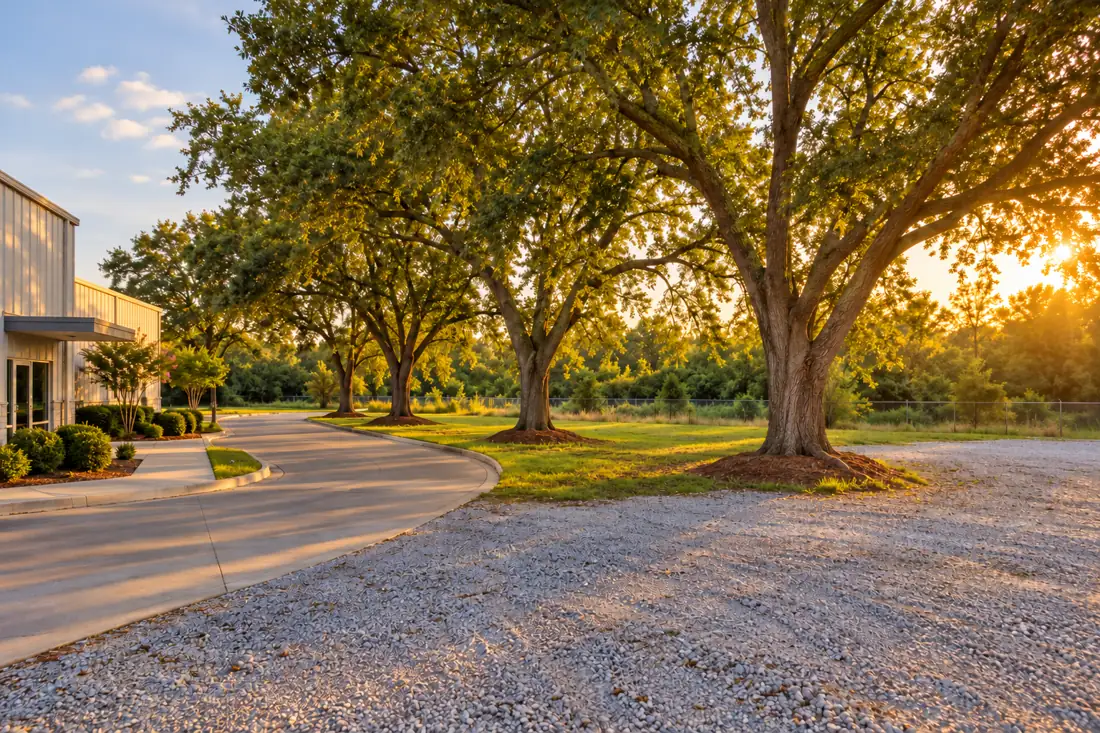
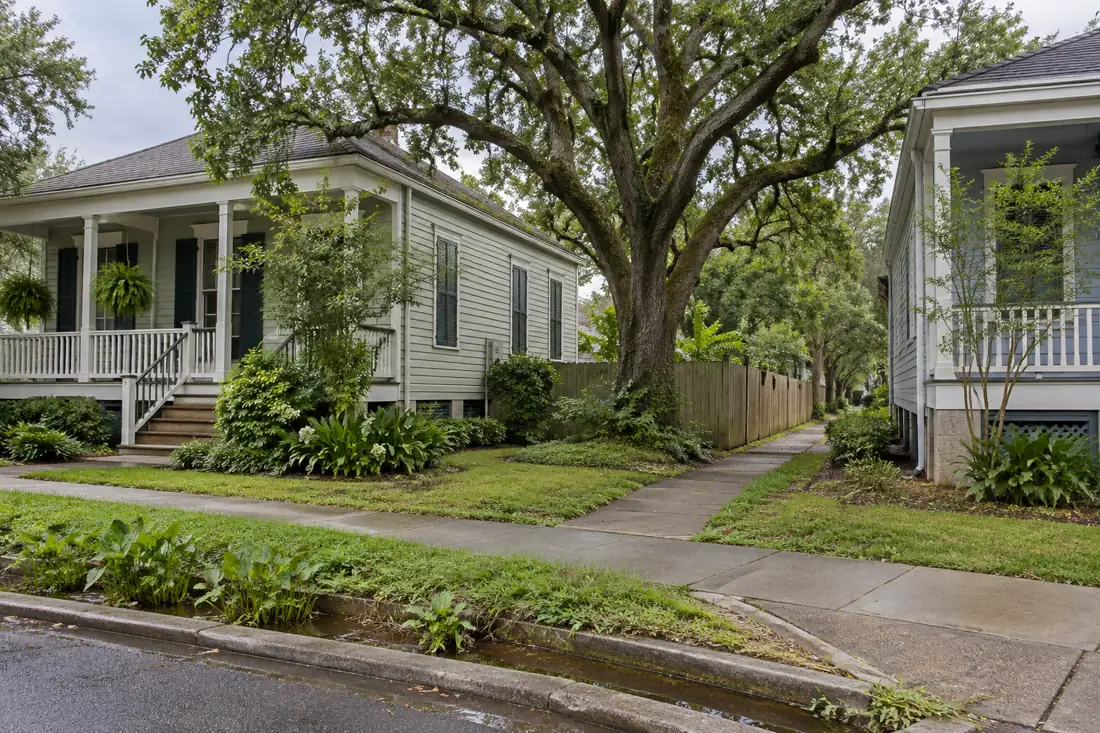
High-visibility tree work needs careful site control
Mature trees along and near St. Charles can interact with historic homes, sidewalks, traffic, transit corridors and dense landscaping. Tree work should account for public exposure, controlled lowering, debris staging and protection of surrounding property.
Tree Huggers provides pruning, removal, stump grinding and high-risk tree service with methods selected for the actual site.
Place the tree on the property before selecting the task
Send the full address and a view that connects the intended tree with the building, frontage and route into the property. Explain whether the request concerns selected pruning, removal, an observed defect or a tree affected by weather. A broad photograph of an avenue canopy can contain several separately controlled trees. Identify the particular tree and decision so an inquiry does not become an assumed authorization to work across the entire visible streetscape.
State who owns or is authorized to manage the property and who can approve changes. The assessment overview helps distinguish a defined condition review from work pricing. If the owner needs written findings for another party, say so before arranging a visit. A general estimate request should not be interpreted as a formal assessment, a property-boundary determination or permission to use surrounding public space for the work.
Treat the transit interface as its own planning question
Describe any relationship between the proposed tree work, equipment or material route and the streetcar corridor. The RTA’s official streetcar right-of-way page provides the current route for reviewing work near its tracks. Bring that interface to the responsible coordinator before assuming the work can be organized like an ordinary private driveway task. This page does not authorize access to tracks or establish a transit operating arrangement.
Share applicable project instructions and identify who handles the necessary coordination. Do not ask household staff or residents to enter the corridor, measure near electrical features or investigate a possible work position. Safe views from the property can help describe the relationship. The accepted tree scope should make unresolved interfaces visible so a preferred date or handling method is not treated as committed while relevant arrangements still need review by the responsible parties.

Map pedestrian access and property entry together
Show the sidewalk, gates, building entrances and regular routes used by residents, visitors or deliveries. Explain which of those areas you control and who coordinates any arrangement outside that control. A quiet frontage photograph does not establish an available work area for the duration of setup, tree handling and loading. Describe actual property use so the estimator understands where the work and ordinary activity would interact.
For public-tree questions, City tree information identifies the appropriate official starting point. Confirm ownership and current requirements for the particular tree and task. Do not treat a customer’s preference or the location of a fence as a complete authority determination. Keep relevant approvals and public-space responsibilities connected to the tree identifier so the work brief, quotation and completion review all refer to the same accepted task and boundary.
If a proposed work window cannot accommodate the relevant public route or property-use arrangements, bring that conflict back to the coordinating contacts before relying on the date. A customer cannot resolve the interface merely by describing the frontage as quiet. Keep the pending item attached to the scope so an estimator, owner and site contact understand the same constraint. A revised sequence should follow a confirmed arrangement rather than assume that an unresolved route can be used temporarily.
Give pruning a purpose beyond a shorter canopy
Explain the specific clearance, deadwood or other care objective and features you want retained. Photographs should show branches in relation to roofs, porches, garden structures and other nearby use. The pruning page provides related service context. A prominent tree can have several visible branches without every branch being part of the requested work. Ask how the proposed objective will be recognized at completion rather than using the amount of foliage removed as the measure of success.
St. Charles frontage: distinguish public and private routes
Frontage tree work affects people who may not be connected with the property owner. Establish which pedestrian route must remain open, whether pieces can be lowered inside the lot, and where wood can be staged without obstructing public movement.
Tree ownership, the property line and any required permission for street or sidewalk use are separate questions. Owner approval alone does not automatically authorize work in a public right-of-way. When authority is unclear, identify the responsible agency or property manager before finalizing the approach.
For limbs extending toward a public walkway, name the affected side and intended clearance objective. Document temporary access arrangements and conditions for reopening the route without implying guarantees about future branch growth.

If a visible split, new movement or previous failure raises a condition concern, describe that separately and provide the timing if known. A leaf-filled crown does not answer every structural question. The preservation guide helps connect retention with the actual tree and site. Discuss the review needed before assuming a particular care operation can supply both the desired appearance and every condition finding the owner may require.
Show a practical route for setup and material handling
Include the property entry, turns, ground, overhead restrictions and the available loading area. Identify retained garden features, known relevant buried features and any route shared with another owner. The equipment guide explains why method selection follows the accepted task and actual access. A broad frontage does not mean every part of it can support a proposed setup or be treated as available storage and staging space.
Describe the route between the tree and the material destination as carefully as the space near the trunk. A proposal should make important access assumptions visible, including any arrangement the owner or another party must confirm. If conditions change after pricing, update the company before the visit depends on the old plan. Do not assume a machine seen in a company photo is the required or available approach for every tree near the avenue.
Separate removal from stump and surface restoration
For a proposed removal, identify the intended tree and ask what happens to branches, logs, chips and the stump. The removal service provides broader scope context. Explain any request to keep material and the exact placement or processing expected. Cutting the standing tree does not automatically establish firewood preparation, below-ground excavation or a finished surface suitable for every later use the owner has in mind.
Use the stump guide to frame future use and the next provider’s requirements. Grinding, removing grindings, backfill, grading and repairs to paths or other surfaces are separate operations. Where public or separately controlled areas are involved, identify the responsible contact before assuming the tree-work quote includes their restoration. A practical handoff describes the condition left for the next task and keeps unassigned work visible instead of hiding it inside a broad cleanup label.
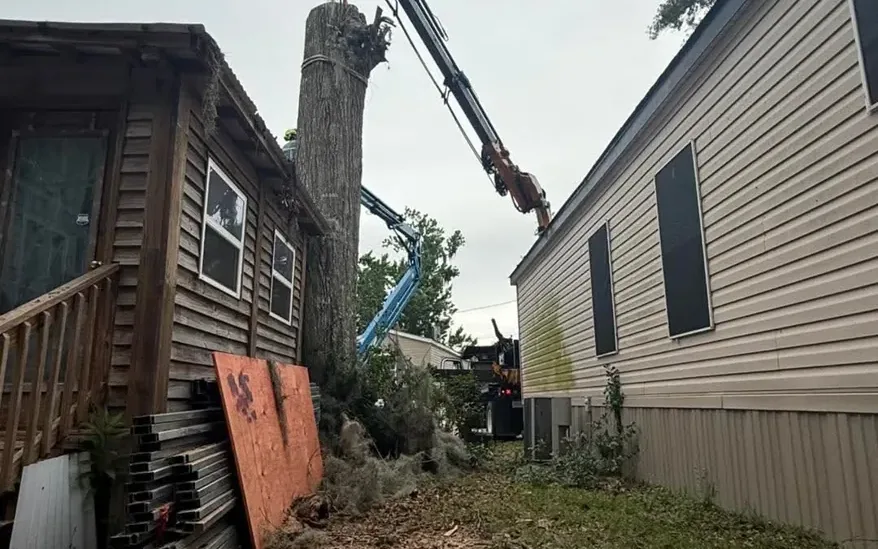
Update the work picture after weather or site changes
Report newly hanging wood, fallen material, a changed lean or visible damage from a safe place. Keep people clear of affected areas and call 504-458-8336 about current availability. Immediate threats to people or electrical involvement need the appropriate emergency or utility response. A form or text message cannot confirm dispatch, establish arrival time or certify that the surrounding space is safe for ordinary use again.
The storm overview connects related response services. Explain affected entrances or routes and the authorized property contact. An urgent report may change the original pruning or removal question, so keep the information current rather than relying on a proposal made before the weather. Separate the first accepted tree task from wider hauling, building repairs and later landscape or surface work when discussing the requested sequence.
Close out against the authorized frontage scope
Keep the identified tree, accepted objective, access arrangements, material handling and required finish together. Name the person who can approve additional work and accept completed tasks. Where photographs or a particular reporting format are needed, arrange that before the visit. Completion records should describe actual work and remaining items without implying an uncommissioned assessment of the avenue canopy or approval from a public or transit authority that was not obtained.
A planning example is selective pruning on a privately controlled frontage tree with a separately coordinated public-route interface and later garden work by the owner. Each element has its own responsibility even if the project is discussed as one request. Charles Avenue job. Send safe tree and frontage photos, the work objective and the approval contact to begin the appropriate project review with Tree Huggers.
Plan St. Charles Avenue tree work around shared streetscape constraints
On a street with mature shade trees, narrow landscape strips and older building fronts, the first question is which tree and which work area are actually controlled by the requester. A canopy seen over a private roof may extend across a sidewalk or another parcel.
Before any work is agreed, verify ownership and appropriate public, utility or transit coordination where relevant. Do not assume a homeowner's permission settles every frontage or right-of-way issue, and do not assume an avenue location makes every tree publicly maintained.
A full-width photo from the property side helps establish the tree's relationship to a porch, overhead lines, pavement and nearby plantings without identifying unrelated residents. Ask the tree service to consider practical lowering and debris movement instead of assuming limbs can be dropped into an open yard. Keep pedestrians away from active work zones and identify the route used by deliveries or emergency access. The plan should leave enough detail for property managers and neighbors to understand the real boundaries of the job.

Verify control, access and the tree's setting
Preserving a mature shade tree may require a narrower intervention than clearing every branch that extends toward a building. Define whether the concern is deadwood, seasonal clearance, a changed trunk condition or root disturbance associated with construction. A proposed pruning scope should state the objective and avoid drastic topping. When the question concerns structural soundness rather than a requested cut, arrange an appropriately qualified assessment rather than treating an ordinary work estimate as proof of safety.
Document which materials will be removed, what must be protected and whether the site needs separate sidewalk or garden repair afterward. If a public interface or local review is required, confirm the responsible authority and required permissions before work begins; do not imply that a permit has already been issued. The finished record should accurately reflect work to the identified tree and the accepted property scope. This is particularly important when multiple mature trees form one continuous streetscape.
Tree Service St. Charles Avenue questions
What should a St. Charles Avenue inquiry identify first?
Provide the address, intended tree, work objective and person authorized to direct the property work.
Does a streetscape photo authorize work on every visible tree?
No. Identify the actual tree, boundary and accepted tasks.
What if the project interacts with streetcar space?
Use RTA's official work-review route and identify the responsible project coordinator before assuming an arrangement.
Should residents investigate possible trackside setup positions?
No. Do not enter the corridor or approach electrical features to prepare an inquiry.
How should public-tree questions be handled?
Confirm ownership and applicable requirements through the responsible City process for the actual work.
Why describe sidewalk and entrance use?
Tree handling, setup and loading need coordination with actual property access and nearby routes.
What should a pruning request explain?
State the selected clearance, deadwood or care objective and the canopy features to retain.
Does a broad frontage guarantee equipment suitability?
No. Review the complete route, ground, setup, loading and relevant permissions.
Does removal include sidewalk or surface reconstruction?
Do not assume it. Clarify stump work, material handling and separately assigned restoration.
What should happen when conditions change after pricing?
Update the company so accepted assumptions and arrangements can be reviewed.
Does a form confirm urgent dispatch?
No. Call about availability and involve emergency or utility services for immediate threats or electrical involvement.
What should completion records establish?
The actual authorized tree tasks, approved changes, agreed finish and remaining responsibilities.
Let’s plan your tree work.
Send the property address, safe tree photos and the result you need. Include access restrictions and the person who can approve the work.