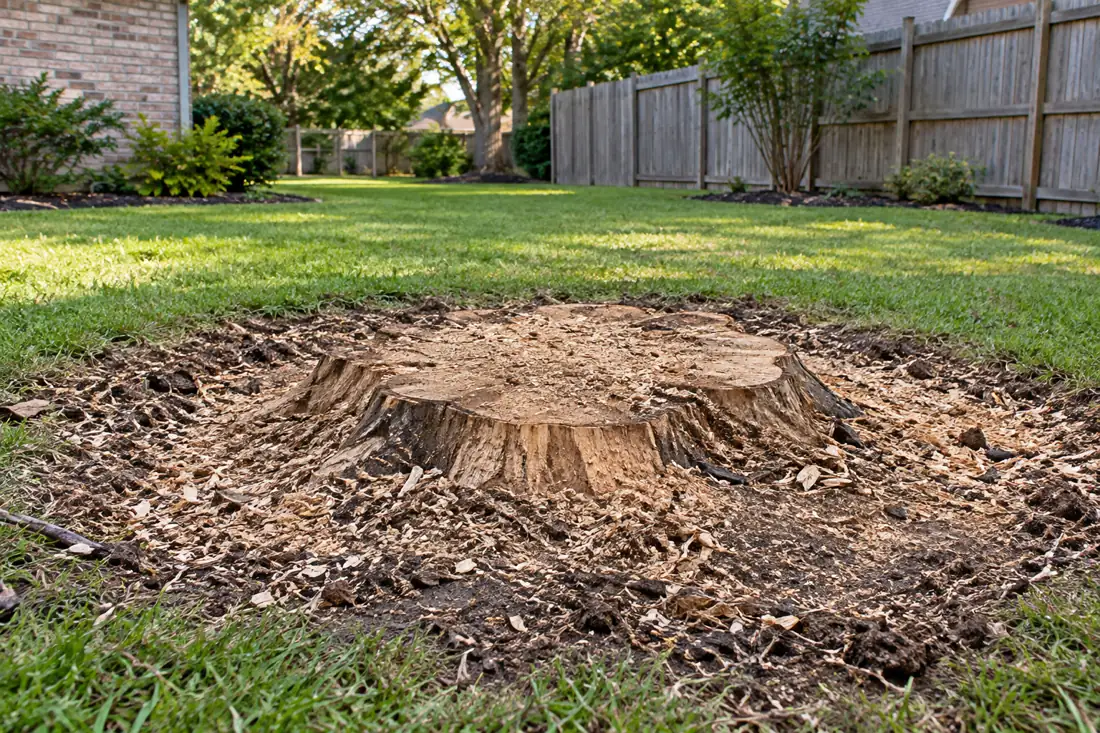
A future slab or driveway may require more preparation than ordinary stump grinding. Share the concrete footprint and the installer’s requirements. The tree scope should clearly identify what is ground or removed and who handles excavation, compaction and base preparation. Structural work needs its own design and acceptance criteria.
Keep structural subgrade acceptance with the concrete contractor
Grinding accessible wood from a stump is different from preparing a driveway or slab base. Before machinery arrives, provide the proposed concrete footprint and the engineer or contractor’s excavation requirements. Note which residual roots, chips and unsuitable soil fall within the construction zone, and whether nearby retained trees limit excavation.
The concrete contractor must determine acceptable fill, compaction, drainage and base thickness. A stump-grinding invoice does not certify those conditions. Specify who removes wood debris and who verifies the exposed subgrade before placing material that would hide the unfinished ground.
Concrete work makes stump-grinding limits especially important. Supply both the grinder and paving contractor with the proposed slab or walkway footprint, finished elevation and expected excavation depth. Grinding below the current grass line does not remove all lateral roots, create compacted subgrade or establish a stable concrete base. Confirm who excavates remaining wood when necessary, locates utilities, removes chips and unsuitable soil, and verifies base preparation before placement.
Photograph curbs, drainage routes and neighboring foundations. Where roots run beneath protected improvements or living trees, revise the scope rather than cutting indiscriminately. Treat grinding completion, soil preparation and paving acceptance as separate documented steps.
Concrete preparation has a different acceptance test
The concrete contractor needs to know the intended slab or driveway footprint, required subgrade preparation and any remaining organic material, not merely the diameter of the original stump. Ordinary grinding can leave lateral roots beyond the cut area, while loose chips and wood fragments should not be assumed to be engineered fill. Ask the concrete installer to specify excavation, material removal, fill, compaction and inspection responsibilities. Do not let a generic tree-work invoice substitute for concrete-base acceptance.
Share a dimensioned sketch of the proposed pavement boundary and nearby utilities with each contractor before establishing the final work sequence. Separate who performs stump reduction from who exposes, evaluates and prepares the ground for the new slab. Sidewalk-adjacent work also requires a pedestrian access plan and may involve public right-of-way permissions; those considerations belong in the sidewalk guide rather than being hidden inside the concrete-preparation price. For the related but distinct decision, see Stump Grinding Near a Sidewalk.
A concrete footprint needs its own acceptance criteria
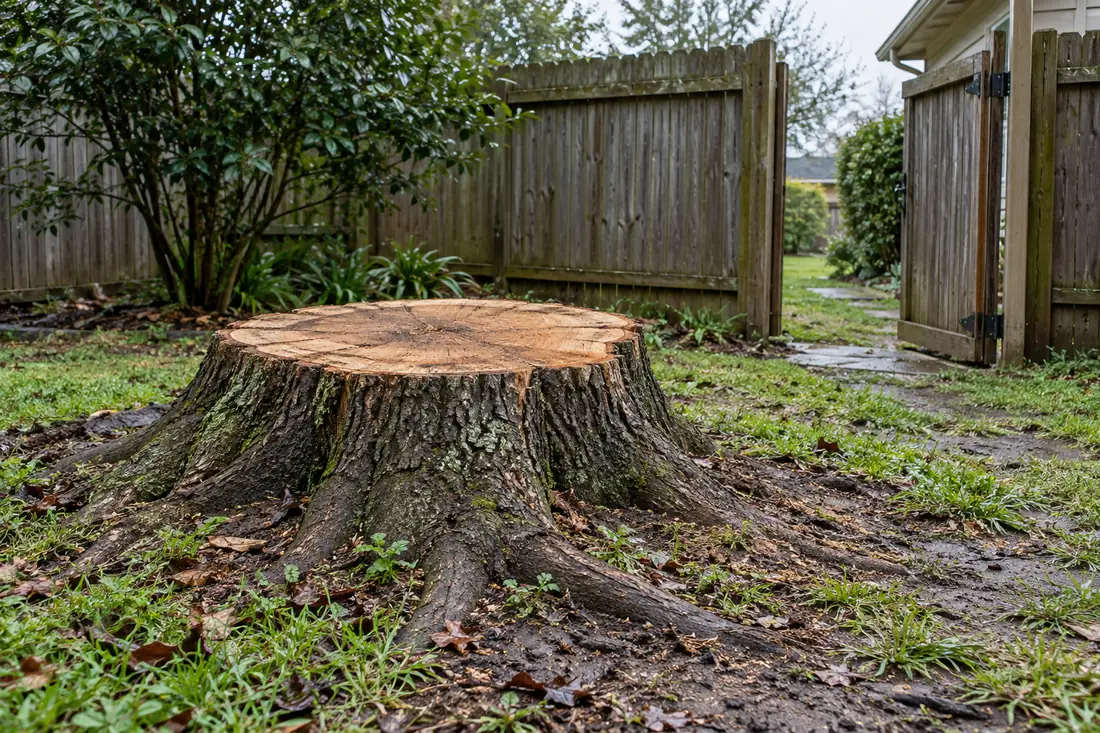
Share the proposed slab, path or driveway outline with the tree contractor and the concrete installer before cutting starts. Mark nearby utilities, retained trees and any existing footings or pavement. Photograph both the stump’s visible buttress roots and the intended concrete boundary so each contractor can describe the part of the work they will perform.
Specify depth and lateral limits in measurable terms
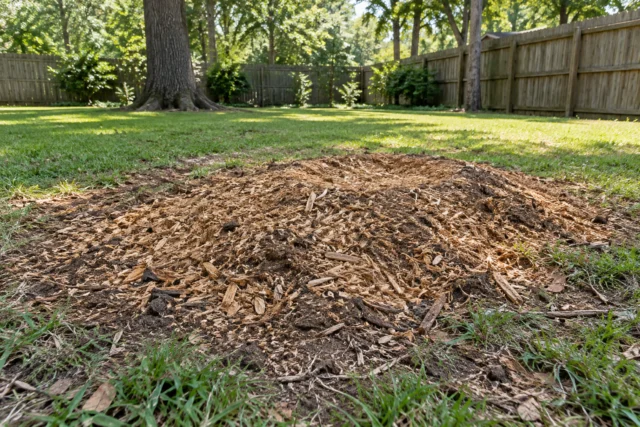
A stump grinder reduces wood within an agreed area, but it does not necessarily excavate the full root system or create a uniformly compacted trench. The visible stump may extend laterally through buttress roots outside the cut face. A useful quote describes the stump diameter, accessible working area, intended grinding depth, lateral reach and handling of the resulting chips. When the specification is linked to a future concrete project, ask the concrete installer to provide the depth and dimensions that actually matter.
Clarify whether roots under the proposed slab are part of the tree-work assignment. Grinding every root across a lot would be a very different operation from removing the visible stump. Large buried roots can also encounter utilities and tree-protection concerns. Mark the proposed concrete edges before the estimator visits so everyone is talking about the same footprint. If design details are not final, say which dimensions remain provisional rather than guessing a grind depth and treating it as a construction guarantee.
Coordinate stump depth with the concrete design. A concrete installer needs more than a stump that looks level. Have the designer specify excavation and base requirements, then confirm what the grinder can safely reach around utilities and foundations. Chips and decaying roots cannot replace properly prepared base material. The paving contractor should verify soil conditions and compaction before placing concrete.
Grinding the stump and preparing a structural base are distinct operations. The concrete professional must determine excavation, unsuitable-material removal, subgrade requirements, compaction and reinforcement as appropriate to the project. Do not describe ordinary grinding depth as a guarantee that concrete can be poured; the written handoff should record what remains and what must be inspected.
If work adjoins an existing sidewalk, first identify pavement ownership and access.
Start with the slab or driveway footprint, not the visible stump
The future concrete installer needs a prepared area that meets the project's own requirements. That is not the same outcome as an ordinary lawn-ready stump grind. Share a simple sketch showing the planned slab, sidewalk or driveway boundaries relative to the stump and exposed surface roots. Include any planned thickened edges, footings, drainage work or future vehicle loading that the concrete professional has identified. A stump that sits just beyond the pour area may still have large roots reaching beneath it.
Ask the installer what must be removed and what ground conditions it expects before forms or base material are placed. Do not ask a tree contractor to guarantee a structural foundation based on stump height alone. The tree-work scope should describe which woody material will be processed and where, while the installer or qualified design professional retains responsibility for construction design and acceptance. Early coordination avoids an avoidable second visit after excavation reveals material the first quote did not address.
Address buried utilities before any machinery reaches the ground
Irrigation lines, landscape lighting, private drainage, water services and other features may lie beneath apparently clear soil near a stump. Give the contractor any drawings, photographs or recollections of prior utility work. Arrange the appropriate public utility location process before excavation where required, and separately identify private lines that a public locator may not mark. Do not treat a cleared lawn or previously removed tree as proof that the soil contains no infrastructure.
Tree roots can grow around or near lines, making the operation more complicated when the stump sits next to a meter, valve, fence or structure. An accurate work plan distinguishes what is known from what requires field confirmation. The contractor should identify exclusions and what happens if an unexpected obstruction appears. If utility information is incomplete, the schedule or method may need to change. A lower stump-grinding price is not useful if the actual construction footprint requires a separate excavation and coordination effort.

Give the concrete contractor an honest map of residual wood and soft soil
Before grinding, ask the paving or concrete contractor to identify the planned slab limits, footings, trench lines and compaction requirements. Mark them on the site together with the stump's widest root flare. A stump located just outside the intended slab can still have wood below a thickened edge or path. The grinder should not guess the excavation depth required for structural support, and the concrete contractor should not assume that a ground-level stump cut produces a sound subgrade. Keep their scopes coordinated but distinct.
Discuss how far the grinder can safely work around existing utilities, fence footings and nearby established tree roots. If a root belongs to a different living tree, removing it may affect that tree and should be reviewed by an appropriately qualified person. Complete removal of all buried woody material may require controlled excavation by another trade, not simply a deeper pass with a grinding wheel. When a construction plan calls for soil bearing capacity, obtain that determination from the responsible design or construction professional.
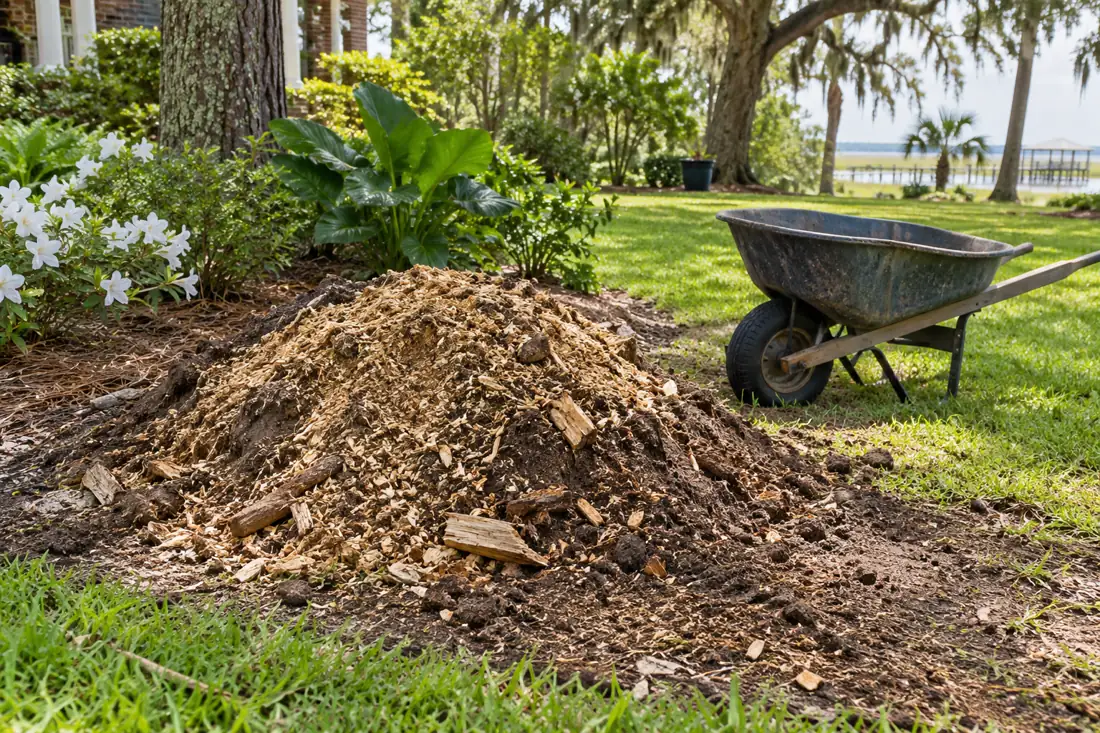
Specify what happens to chips and disturbed soil before any concrete is placed. Coarse wood residue can decay and create voids or variable support. The concrete crew should approve the material used to rebuild the excavated area and the method of compaction or other subgrade preparation. A tree crew may be responsible only for grinding and chip handling. Do not combine those responsibilities into an assumed warranty against future cracking; many independent factors can influence a slab's performance.
Use a pre-pour walkthrough to confirm the former stump footprint is marked, accessible for inspection and prepared as required by the concrete plan. Photograph any exposed woody material and the rebuilt soil layers before they are hidden. Record whether the final project includes patio grading, drainage correction and utility protection. If an unforeseen deep root or old footing is discovered, stop to revise the scope rather than pouring around an unresolved condition. Clear written handoffs protect both the owner and the contractors.

Decide who removes chips and prepares replacement fill
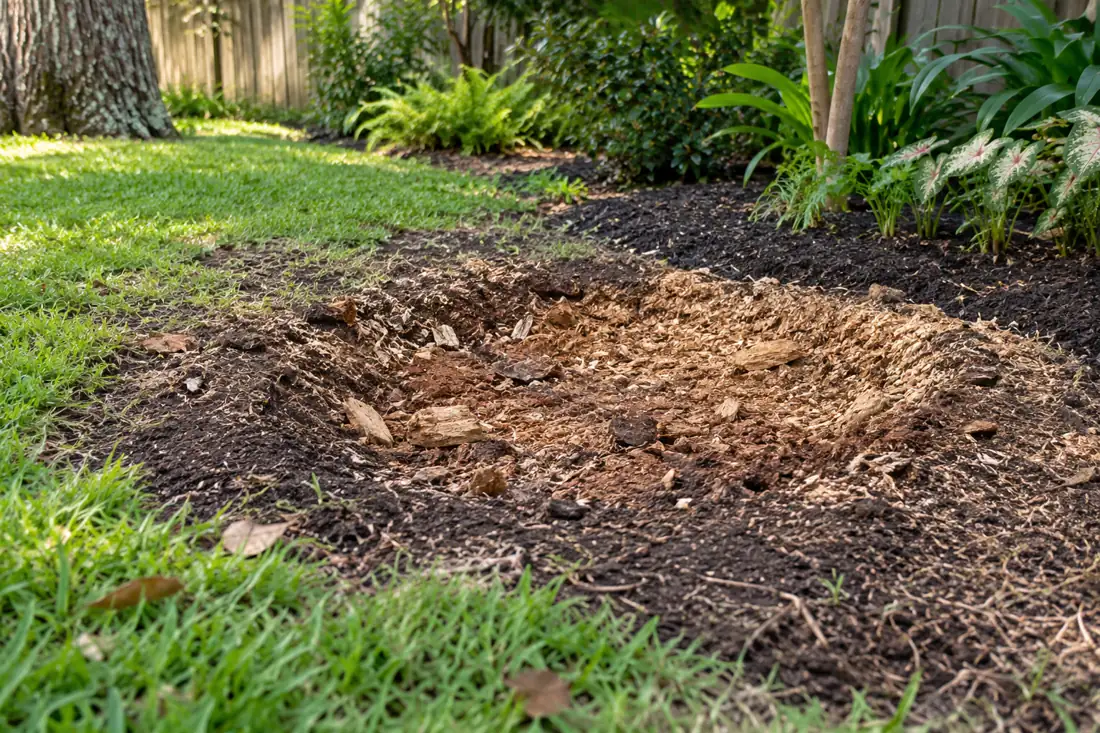
Grinding produces a mixture of wood chips and soil. That residue may be acceptable under some planting or landscape finishes, but it does not automatically satisfy the subgrade requirements of a new concrete slab. Ask whether the grindings will be removed, left in a designated pile or blended into the surrounding area. Specify who supplies clean fill, handles excavation to the specified level and compacts the replacement material. These are distinct tasks that should appear on the respective contractor scopes.
If the concrete crew expects a clean excavation, discuss whether the tree contractor can provide that service or whether another trade will do so. Do not assume that filling a shallow visible depression means the deeper ground has been prepared or tested. The installer may require particular aggregate, lift thickness or compaction procedures. Only the responsible design and construction parties can set those criteria for their project. A written handoff prevents organic debris from becoming an unseen condition beneath finished paving.
Understand settlement risks from wood left in the work zone
Buried woody material can decay over time, potentially leaving voids or altered soil structure. The significance depends on size, location, ground conditions and the proposed construction. A few small roots away from the slab edge should not be treated identically to a large buried stump directly below a loaded driveway. Rather than making a universal claim that every root must disappear, have the concrete installer state what removal or treatment the design requires.
Stump grinding also disturbs surrounding soil, and the machine may not reach every piece of wood to the same depth. The exposed pit can be irregular, making it important for the responsible installer to inspect and prepare the actual area before placing a base. If a trench exposes extensive roots or unsuitable material, record the change and obtain approval for any additional work. Stating those possibilities during estimating is more useful than promising that a ground-off stump will never cause settlement.
Coordinate the excavation and concrete sequence
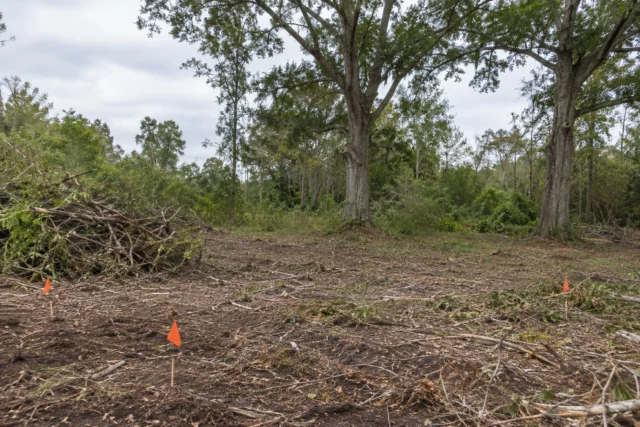
A practical sequence generally involves confirming the pour limits, identifying underground conflicts, completing authorized tree and stump work, removing specified residue, then letting the responsible construction crew inspect and prepare the base. The precise order can change when drainage, utilities or access are involved. Ask who is responsible for marking the edges and verifying the finished excavation before the next trade starts. Avoid scheduling a pour immediately after grinding without allowing for inspection and any required correction.
Concrete forms or temporary fences can prevent stump equipment from reaching the necessary area, so access requirements should be discussed early. At the same time, do not bring heavy equipment over newly prepared grades without understanding their limits. A project manager or homeowner can help by arranging a single plan shared among the tree contractor, excavator and concrete installer. A dated, agreed drawing is more reliable than separate verbal descriptions of the same stump.
Check equipment access and nearby surfaces
Stump machines vary in width, weight and maneuvering needs. A backyard stump behind a narrow gate may require a different setup from one beside an open driveway. Photograph gates, steps, slopes, soft ground and nearby structures so the estimator can assess practical access. Tell the contractor whether vehicles can use the driveway and whether the intended route crosses irrigation, pavers or a drain line. Access limitations affect price and scope independently of stump diameter.
Ground that carries a passenger car does not necessarily suit the proposed equipment, and protective mats do not remove every risk to paving or buried services. If the work takes place on a neighbor's property, secure appropriate permission before scheduling. Ask which surfaces will be protected, which will be disturbed and what restoration is included. These questions matter especially when a new slab will cover evidence of the earlier work and later trades may not know where equipment operated.

Keep retained trees and future drainage in the discussion
Removing a stump before concrete work can affect nearby living trees, especially when large roots from retained trees cross the excavation footprint. Identify which trees are to remain and the approximate location of their trunks and root zones. Excavating or cutting roots near a mature tree can have health and stability implications. A separate assessment may be appropriate before changing the grade or constructing close to significant retained trees. Do not assume that all underground woody material belongs to the removed stump.
Concrete also changes how water moves through a yard. The installer should consider drainage, runoff and the finished grade; a stump grinder cannot resolve those design questions merely by making the site level. If the project replaces permeable soil with pavement, communicate drainage intentions before the grinding depth is finalized. Clarify who handles any trenching, subsurface drainage or landscape regrading outside the defined stump-work area.
Confirm written acceptance before concrete covers the area
The stump-work quote should identify the stump, measured work limits, chip removal and any exclusions. The construction scope should separately describe excavation, base material, compaction and inspection responsibility. If the installer discovers remaining wood, buried obstacles or unsuitable soil, the parties need a clear way to approve a change rather than treating it as an argument over an ambiguous original promise. Keep progress photographs showing the area before it is covered, with the necessary site permissions.
When contacting Tree Huggers, share the proposed slab dimensions, the stump location, access constraints and the concrete contractor's requested preparation. Ask for a precise stump-work estimate, not a guarantee about concrete performance outside that scope. The form can capture photographs and the intended project; submission does not reserve a crew or set an arrival time. Once the woody material work is accepted, the responsible construction professional should inspect the actual site and approve its readiness for the next stage.
Questions about this project
Is a standard stump-grinding finish ready for concrete?
Not necessarily. A concrete installer may require additional excavation, removal of organic material, engineered fill or other base preparation. Define the tree contractor’s grinding limits and obtain the installer’s acceptance requirements before scheduling the pour.
Who handles roots and voids under a future driveway?
That should be agreed between the owner, tree contractor and concrete professional. Remaining roots, cavities, utilities and subgrade suitability may require separate evaluation and work. A stump estimate alone does not establish structural bearing or design compliance.
When should tree work be discussed on a building project?
As early as practical, while the footprint, access, excavation and staging can still be coordinated. Identify retained trees and share drawings before clearing or other site activity creates avoidable conflicts.
Does stump grinding complete construction site preparation?
Not necessarily. Excavation, root removal, base preparation, compaction and grading may require separate work and acceptance criteria. Coordinate the tree scope with the contractor responsible for the next construction phase.
Can tree equipment use any driveway?
No general assumption should be made. Pavement condition, edges, support, buried infrastructure and the proposed equipment all matter. Ask the contractor to assess the intended setup and route for the particular property.
Do mats guarantee there will be no ground damage?
Ground protection is one part of a site-specific plan. It does not remove every load, soil or access limitation. Discuss the proposed measures and any restoration responsibilities in the written scope.
Will a utility locate show every private line?
Do not assume it will identify all irrigation, pet-fence, drainage or other customer-owned systems. Provide available plans and ask what additional locating or coordination is needed for the actual work and access area.
Who should arrange utility-related preparation?
Set that responsibility before scheduling. The property contact, contractor and relevant providers need to identify who handles locating, disconnection, relocation or separate repair work. Uncertain utility information should be resolved rather than guessed.
How should extra work be approved?
Use the agreed approval process and identify the change, reason, scope, price or schedule effect as applicable. Confirm who has authority before treating an additional tree or task as part of the original job.
What completion records are useful?
Keep the agreed scope, tree or area identification, authorized changes, invoice and labeled photos where appropriate. Include unresolved items and a contact. Contract-specific records should follow the buyer's stated requirements.
What should I tell Tree Huggers about stump grinding before concrete work?
Explain the property address, the work you want and the specific concerns: concrete footprint, excavation responsibility, base preparation. Send safe photos of the tree, surroundings and access route. The contractor can then discuss the assessment and scope needed for this situation.
How do I request an estimate for this work?
Call 504-458-8336, text photos or use the estimate form on this page. Include the address, desired outcome and any timing constraints. The company will need to review scope and availability; an online request does not confirm a price, appointment or emergency dispatch.
Get a scope for your property
Concrete work has tighter preparation requirements than ordinary landscape cleanup. Identify whether the future slab is a walkway, patio, driveway or equipment pad, and provide the planned footprint rather than only a photograph of the stump. Show existing concrete, drainage features, nearby building edges and any utility corridors.
Explain whether the concrete contractor has given a required excavation depth or base design, and whether the stump lies under the slab or close to an edge. Never excavate or mark utilities based solely on guesswork from a photo.
Request a written distinction between the stump-grinding contractor's limits and the concrete contractor's responsibility for root removal, excavation, soil preparation, compaction and structural support. Grinding a visible stump does not establish bearing capacity, eliminate voids or guarantee that roots will not remain below a planned slab.
Agree on the disposal of woody debris and on which trade signs off before forms or base material are installed. The desired result is a coordinated sequence, not an undocumented assumption that a ground stump is automatically build-ready.
Do not borrow planting specifications for a concrete base
The correct finish beneath a planned walkway, driveway or slab is established by the concrete installer or project design, not by a stump-grinder depth alone. Residual roots, voids, organic chips and disturbed soil can influence later settlement. Confirm who excavates, who provides suitable base material and who verifies compaction and final elevation before any concrete placement.
If the goal is a replacement tree instead, the replanting guide addresses light, drainage, remaining roots and suitable planting location. Where the planned result is turf, the new-sod guide addresses surface grading and organic debris. State the intended finish so the tree crew and next trade do not assume each other completed the preparation.