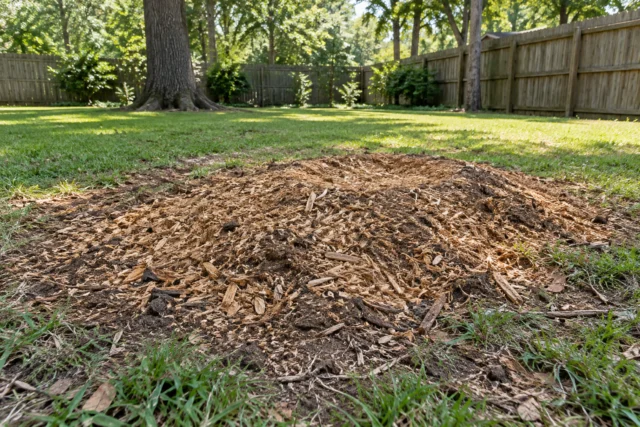
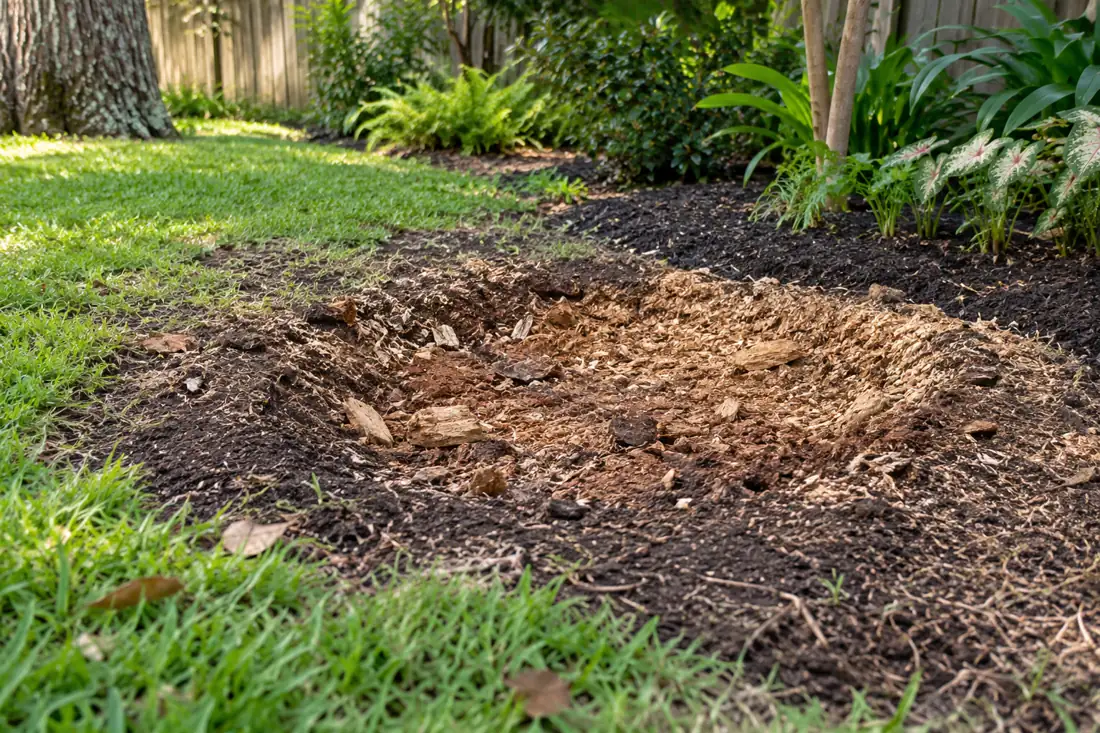
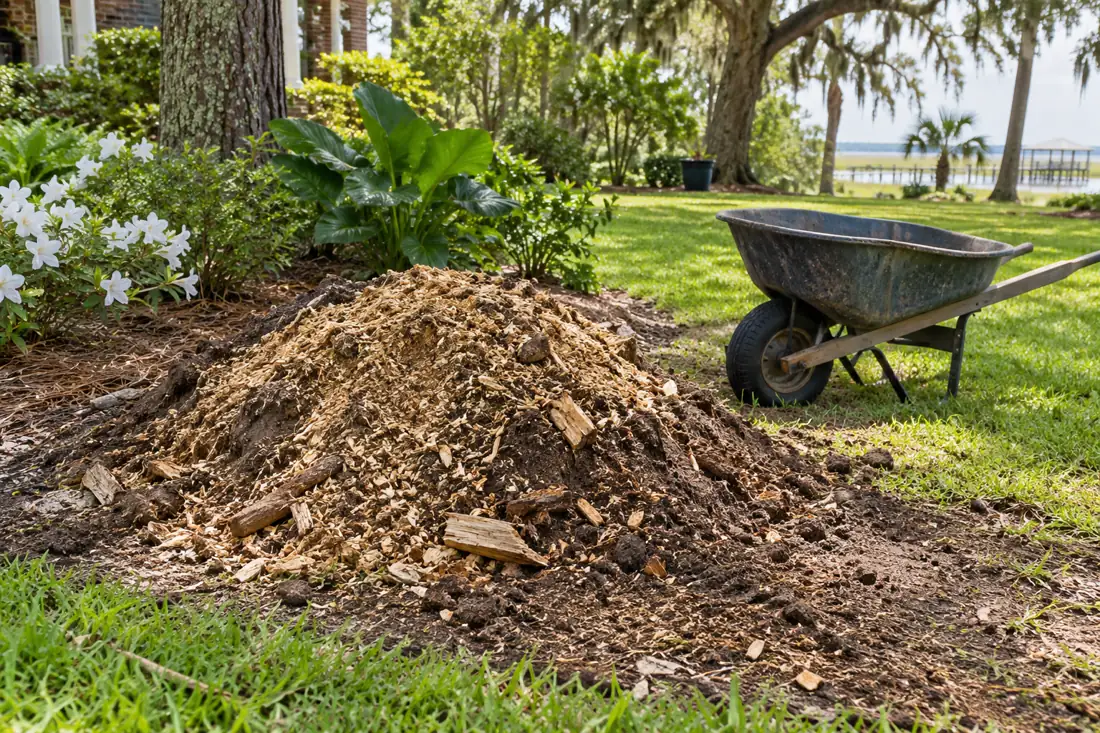
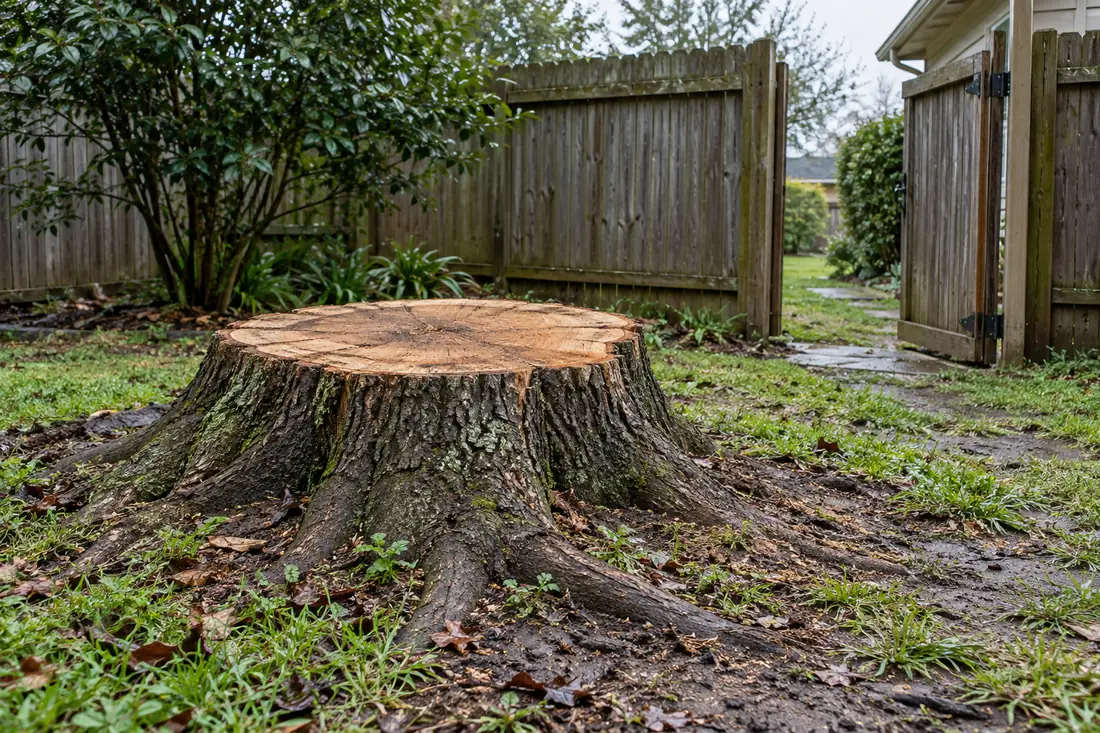
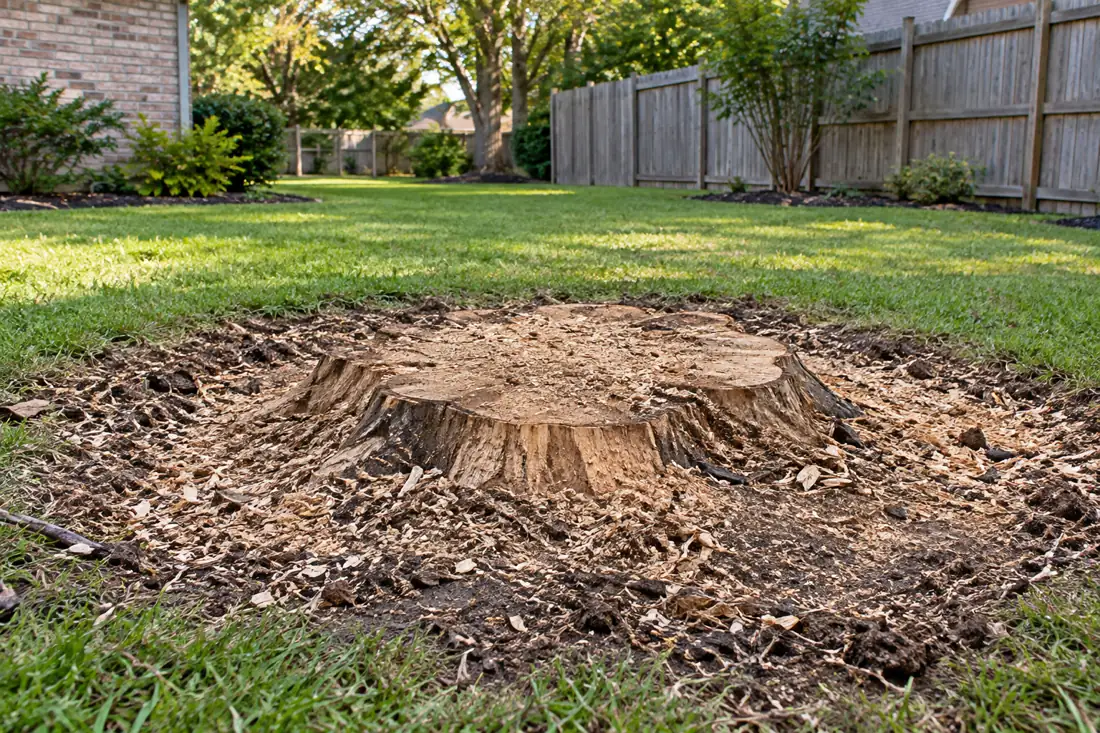
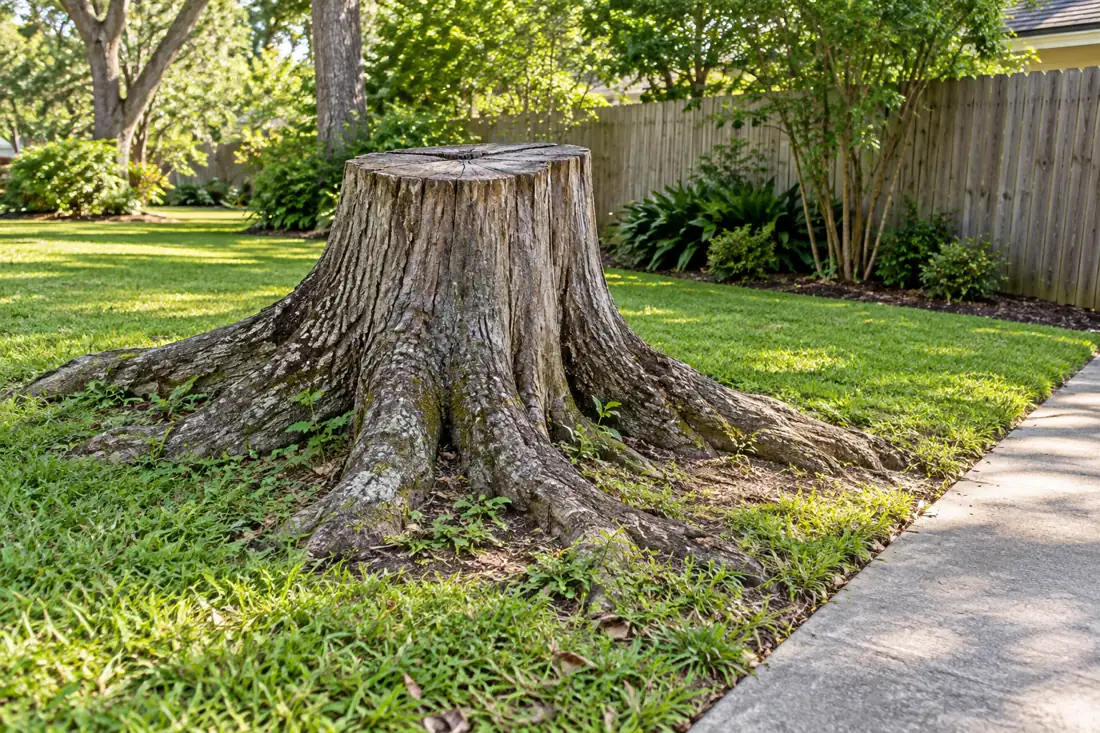
Installing sod over an unfinished stump area can leave settlement and material problems. Agree on the grinding scope, chip removal and the soil work needed before sod arrives. The tree contractor and landscape provider should understand the same finish. Do not assume a standard grinding visit includes imported soil or lawn installation.
Treat the sod installer’s finish grade as a separate requirement
A stump can disappear visually while a mix of chips, roots and loose soil remains under the intended lawn. Before sod arrives, agree on how far the work area extends, who removes concentrated grindings and who checks for settlement and surface drainage. A finished grade must fit adjoining grass, paving and irrigation heads rather than simply cover the old stump outline.
Ask the sod installer what soil preparation and compaction are appropriate for turf establishment. Neither stump grinding nor a photograph of level chips substitutes for that acceptance. Keep irrigation lines and surviving tree roots protected during the handoff.
Sod needs a consistent planting surface, and fresh stump chips are not a substitute for soil. Before grinding, show both contractors the area to be re-sodded and establish who removes excess wood, supplies soil, manages drainage and sets final grade. A stump operator may finish after accessible wood is reduced; that does not make the lawn ready for sod.
Plan for remaining buried wood and potential settlement, especially after removal of a large tree. Identify sprinklers, surface drains, edging and ground that equipment could compact when wet. Set a clear handoff between grinding cleanup and sod-bed preparation so neither crew inherits unexpected unpriced work.
Sod delivery depends on the ground, not just the calendar
A finished appearance immediately after stump grinding can conceal loose chips, voids and a stump footprint that settles differently from the surrounding lawn. The sod installer should be told where old wood was removed, what loose material remains and who will supply and grade planting soil.
Do not schedule sod solely because the visible stump is gone; coordinate any needed material removal, drainage corrections and irrigation repairs before the grass arrives. The grinding contractor should not be represented as the sod installer unless that is in the agreed scope.
For quote comparison, request separate line items for grind depth, chipped material disposition, final grade and restoration access. Include photos of the surrounding lawn and any sprinkler heads that need protection or later testing. A future patio or slab has different acceptance criteria because its base and compaction work are structural site-preparation tasks; the concrete guide is the appropriate next reference when hardscape rather than turf is planned. For the related but distinct decision, see Stump Grinding Before Concrete Work.
Hand off a stable grade to the sod installer
Give the sod contractor the planned lawn elevation and where runoff should travel before agreeing to grinding and restoration. Photograph the stump relative to adjacent grass, edging, drainage inlets and irrigation heads. A grinder may leave wood chips and a depression, while a sod contractor may require a different soil profile and final grade.

Measure the whole stump footprint
The cut face is not always the full area that needs attention. Large roots can flare outward from the trunk, and older stumps may be partly concealed under soil or vegetation. Photograph the cut surface, the adjoining lawn and any raised roots that affect the planned sod boundary. Use an ordinary tape measure only where safe, and note uncertain dimensions rather than claiming exact underground reach.
Provide an overhead or wide view showing sprinklers, paving, plant beds and grade changes. Those details affect where machinery can operate and how the grindings can be collected. Agree whether the scope includes the surrounding buttress roots and how the contractor will verify completion at the specified depth. The objective is a reproducible work limit, not simply a lower-looking mound after the machine leaves.
Plan the finished soil level before laying new sod. Stump grinding leaves a mixture of chips, roots and loose soil that can settle differently from the surrounding lawn. Specify the grinding depth and the area that must be cleared of woody material before anyone brings in sod. Discuss whether the area needs clean soil, gentle compaction and grading for drainage, and decide who handles those steps. Avoid covering a mound of chips with turf and assuming it will remain level after rain.
Separate chip collection, residual-wood removal, clean fill, compaction where appropriate and fine grading in the written responsibilities. Ask who checks for settlement before turf installation, particularly if the stump was large. The tree-work crew should not be assumed to supply new soil or guarantee the later sod result unless those services are explicitly included.
Know what remains beneath the new lawn
Grinding the visible stump does not remove every lateral root under the yard. A sod installer needs a reasonably stable, properly prepared planting surface, not a promise that all wood has disappeared underground. Ask what grinding depth is proposed and whether the installer needs remaining chips removed, clean topsoil placed, or the grade adjusted before the sod arrives.
Watering plans and equipment access matter as much as the day of grinding. Keep heavy machines off prepared soil when feasible, locate irrigation lines before work, and clarify who restores rutting or disturbed edging. Where buried wood may settle later, the landscape contractor should assess the finish rather than assuming fresh sod can conceal an unresolved depression.

Unlike replanting a tree, sod preparation focuses on broad, even surface grade.
Decide what the finished lawn should look like
Sod installation starts with a prepared growing surface, not merely the absence of a visible stump. Tell the grinding contractor where the new lawn will extend, how the finished elevation should meet walks and patios, and who is responsible for soil preparation. A stump that appears flush may still contain wood below grade that interferes with a smooth, adequately prepared root zone. Explain the desired result before choosing grinding depth.
Ask the sod installer to describe the soil depth, grading, compaction and drainage conditions needed for the particular site. The tree contractor can then quote a defined grinding area rather than guessing what lawn installation requires. If the installer expects all chips to be removed and clean soil supplied, include those as separate tasks. A single vague instruction to make it ready for grass invites avoidable gaps between contractors.
Coordinate grinding depth with the landscape plan
Different future uses require different preparation. Sod normally needs a reasonably even, suitable soil layer, while paving, planting a new tree or constructing a footing may require distinct excavation and engineering decisions. Do not assume a standard stump-grinding depth prepares a site for every purpose. Share the sod provider's written soil and grading requirements so the tree work can be matched to the next step.
Depth below an existing grade is also different from depth below the intended finished grade. Where the site will be lowered or reshaped, agree on a common elevation reference before work starts. If hidden roots or utilities limit grinding, discuss the effect on the lawn plan instead of concealing the uncertainty. A clear handoff between trades can prevent sod being laid over remaining wood or an irregular layer of coarse chips.
Settle the chip-removal and grade decisions before the sod delivery
Confirm the desired finished lawn elevation with the sod installer before grinding begins. Measure the old stump's height relative to nearby walkways, drains and low spots. If the final goal is a consistent turf surface, the grinder may need to reduce wood below the future soil profile, but the equipment's safe operating depth depends on buried obstacles.
Ask the installer what clean soil depth is required for root contact and which grades must remain unchanged to keep runoff moving away from buildings. Do not make up that depth from a generic stump quote.

Specify the Finished Ground Level Before Sod Delivery
Sod installation and stump grinding should not be treated as the same finish task. Ask the grinding contractor to document the depth and width of the work and whether the service includes removing chips, adding suitable soil or grading. If a later landscaper is responsible, make that handoff explicit.
The area may contain wood chips, voids or remaining lateral roots even after the visible stump disappears. Clarify what material will remain beneath the proposed soil layer and whether settling is anticipated. New sod should not be used to conceal an unresolved stump or grade condition.
Photograph the finished area before soil and sod cover it. Include a wider view for drainage relationships, plus a safe close view showing the surface material. Record the agreed destination for excess chips and who will restore surrounding turf, edging or irrigation disrupted by access.
Treat grindings as a separate material stream from the soil that will support turf. A depression packed with coarse wood chips may settle or drain differently from adjacent ground as the chips decompose. Specify whether chips are hauled away, used elsewhere as mulch or left for the owner's decision. The landscaping contractor should determine whether a portion of soil must be excavated and replaced with suitable material. A promise that turf will cover the area is not the same as a documented soil-preparation scope.
Plan access and timing across contractors. Grinding equipment may create ruts on saturated ground, while a turf crew needs a reasonably stable, graded surface for installation. Arrange utility and irrigation checks before machinery enters and confirm any existing lawn sprinklers are functioning afterward. If sod is scheduled immediately after grinding, leave enough time for chip removal, soil correction and an inspection of the grade. Avoid having delivered sod sit uninstalled because the ground is still a pile of woody debris.
At completion, check the slope with a straightedge or reference stakes rather than relying only on how fresh green turf looks. Record where the stump was, what backfill material was added and whether any lateral roots remain close to the surface. The sod contractor should provide species-specific watering and establishment guidance suited to the site. Turf failure could involve shade, compaction or irrigation rather than the grinding work alone; keeping each contractor's written scope and photographs makes future troubleshooting more objective.
[/fusion_text][/fusion_builder_column_inner]

Choose what happens to the wood chips
Stump grindings are a blend of shredded wood and soil, not the same material as screened topsoil. They may settle or decompose over time and can leave an uneven area if spread thickly under new sod. Ask whether the quote includes hauling chips, leaving them in a designated location or partially removing them. If another contractor will excavate and import soil, make that responsibility explicit.
The exact amount of material can be difficult to predict from the stump diameter alone. An extensive root flare may produce a larger pile than anticipated. Decide where any retained material can sit without blocking a walkway, damaging plants or washing into a drain. The sod installer should determine what soil mix and preparation are suitable rather than being left to cover a loose mound simply because the tree crew completed its contracted grinding.
Keep irrigation lines and buried services visible in the plan
Before machinery enters, identify known irrigation heads, shallow drip tubing, valve boxes, lighting cables and any visible utilities around the stump. Share available site plans and arrange the appropriate utility-location process where excavation risk exists. Marking a sprinkler head is useful, but it does not guarantee the route of every buried pipe. Do not probe blindly into the ground around roots to confirm locations.
Discuss who can turn off irrigation and who will repair a preexisting leak or a line damaged during permitted work. These are not automatically included in grinding. If the irrigation system must be moved before sod, coordinate that sequence in writing. The goal is to prevent the new lawn from being installed before the underlying watering layout is ready, and to prevent equipment from entering a work area with unresolved buried-line hazards.

Check drainage and settlement before covering the area
A newly ground stump pocket may have different soil density from undisturbed lawn, especially where coarse wood is mixed into the fill. If sod is installed immediately over poorly prepared material, uneven settlement or wet spots can emerge later. Ask the landscape provider how it will backfill and compact the area appropriately without damaging nearby retained roots or creating an artificially hard layer.
Look at where water goes after rain. If the old stump lies in a natural low spot, grinding alone will not correct the site drainage. The lawn plan may need grading, soil amendment or separate drainage work. Distinguish those trades from the tree contractor's tasks. Do not promise that a neat finish on grinding day guarantees a permanently level lawn; document the handoff condition and who accepts responsibility for the next phase.
Protect the adjoining grass and retained trees
The shortest machine route across a lawn is not always the best route. Locate the narrowest gate, paving edges, soft ground and irrigation components before scheduling equipment. Discuss whether protective mats or another approach are appropriate for the actual conditions. If the yard is saturated, ask whether the work should be postponed or handled differently rather than assuming the machine can cross without creating ruts.
Where other trees remain, define their protection areas and avoid casually cutting roots to improve access. The sod project should not exchange one stump for new damage to living trees nearby. Ask which portions of existing turf must be disturbed and how any separately agreed restoration will be handled. Photograph vulnerable surfaces before the work so the owner and contractor share a practical understanding of the starting condition.

Sequence the tree and landscape contractors
A useful schedule puts utility checks, site access, grinding, chip removal and soil preparation in an order that prevents one trade undoing another's work. The sod contractor should inspect the finished stump area before ordering or laying perishable material where possible. If heavy rain interrupts the sequence, revisit soil moisture and grading rather than forcing work simply because the sod has already been delivered.
Confirm who is the decision-maker if the grinding crew encounters buried stones, an unusually broad root system or limited access. An added task should be described and approved before it changes the price or finish. If different companies are handling different stages, exchange a simple marked photo and scope, not only verbal assurances. That prevents the common disagreement over whether a job included clean soil, chip hauling or final lawn grading.
Inspect the completed grinding area before sod arrives
After grinding and any contracted chip handling, compare the actual cleared footprint and depth with the agreement. Check the visible area for large woody pieces that would interfere with the landscape provider's planned preparation. Do not dig deeply around roots or concealed services to conduct an informal inspection. If more excavation is required, have the responsible contractor assess and perform it safely.
Review the grade at surrounding paths and beds, the condition of adjacent turf, and the designated location of any retained grindings. Photograph the site from the same viewpoints used at the estimate. Give the sod installer the record of what was removed and what is still known to remain. This supports an orderly handoff rather than treating the tree contractor's departure as proof that the entire yard is ready for planting.

Establish realistic aftercare responsibilities
New sod needs species- and season-appropriate watering, soil contact and traffic control, but those are landscape installation responsibilities. Do not confuse stump grinding with a complete lawn establishment service. Ask the sod provider for written care guidance based on the installed grass and local site conditions, and monitor any settlement in the former stump area through the establishment period.
Keep the grinding scope, photos and invoice separate from the sod-installation record so later questions can be traced to the right phase. If an uneven depression develops, document when it appeared and arrange an appropriate review rather than assuming a particular contractor caused it. Tree Huggers can discuss the stump-work portion and site access, but an online estimate request alone does not establish a firm date, finished elevation or promise of lawn success.
The acceptance test belongs to the sod installer
A stump can be ground while the future lawn is still unready. A sod installer may need a continuous soil layer, a consistent surface grade and an area free of concentrated wood grindings that can settle as they decompose. Ask the landscape contractor what finished elevation, soil preparation and drainage transition it needs before scheduling delivery. Grinding depth should follow that work requirement, not an arbitrary number passed between trades.
Before sod arrives, document the ground immediately around the former stump, the adjacent lawn and nearby irrigation heads. The grinding contractor may finish at the agreed cutting limit while the landscaper remains responsible for importing and compacting appropriate soil, correcting the grade, and laying sod. Do not assume a smooth-looking pile of chips proves that an installation is ready. This guide addresses the turf handoff; the stump-grinding service page covers requesting the machine work.
- Identify the sod installer’s desired grade relative to nearby paving and drains.
- Record whether chips leave the site, remain for reuse, or need separate removal.
- Ask who accepts the final soil surface and who returns if the prepared area settles.
For the related but different decision, see Stump Grinding. Confirm the work required for this property before relying on a general example.
Questions about this project
Can sod go straight over a freshly ground stump?
Do not assume so. The area may contain chips, organic wood and voids that settle as material decomposes. Have the sod installer specify the necessary cleanup, soil depth and finished grade, and identify who will perform each task.
Who should fix a low spot after stump grinding?
Set that responsibility in writing before work. The grinding scope may stop at an agreed depth and chip finish, while another provider handles clean fill, surface grading and sod. Ask how future settlement will be evaluated rather than relying on an unwritten promise.
Does cleanup include every root and wood chip?
That depends on the written scope. Tree removal, stump grinding, chip hauling and root excavation are different tasks. Ask what material is removed, what remains and whether soil or landscape restoration is separately included.
What should a final walk-through check?
Compare the identified trees and tasks with the agreement. Check agreed debris handling, stump treatment, access openings and any listed restoration. Record unresolved items clearly instead of relying on a general impression that the property looks finished.
Can tree equipment use any driveway?
No general assumption should be made. Pavement condition, edges, support, buried infrastructure and the proposed equipment all matter. Ask the contractor to assess the intended setup and route for the particular property.
Do mats guarantee there will be no ground damage?
Ground protection is one part of a site-specific plan. It does not remove every load, soil or access limitation. Discuss the proposed measures and any restoration responsibilities in the written scope.
When should tree work be discussed on a building project?
As early as practical, while the footprint, access, excavation and staging can still be coordinated. Identify retained trees and share drawings before clearing or other site activity creates avoidable conflicts.
Does stump grinding complete construction site preparation?
Not necessarily. Excavation, root removal, base preparation, compaction and grading may require separate work and acceptance criteria. Coordinate the tree scope with the contractor responsible for the next construction phase.
What should I compare besides the price?
Compare tree identification, work objectives, access assumptions, hauling, stump treatment, site finish and exclusions. Ask whether permits or other coordination are part of the scope and who can approve changes if conditions differ.
Does an online request book the crew?
No. A request starts the estimate conversation. The company still needs to discuss scope, availability and any site assessment. For a dangerous or urgent condition, call 504-458-8336 rather than relying on a form response.
What should I tell Tree Huggers about stump grinding before new sod?
Explain the property address, the work you want and the specific concerns: chip removal, settlement, finished grade. Send safe photos of the tree, surroundings and access route. The contractor can then discuss the assessment and scope needed for this situation.
How do I request an estimate for this work?
Call 504-458-8336, text photos or use the estimate form on this page. Include the address, desired outcome and any timing constraints. The company will need to review scope and availability; an online request does not confirm a price, appointment or emergency dispatch.
Coordinate sod installation with the grinding finish
New sod needs an agreed finished surface, not simply a stump that is no longer visible. Before choosing dates, have the landscaper identify the proposed final grade and the area that will receive replacement soil. A mound of wood chips mixed with soil may settle or perform differently from a properly prepared growing layer. Ask which contractor will take away chips, provide suitable fill, correct surface depressions and prepare the bed; do not presume that a tree crew's grinding scope includes turf installation.
Give the grinding estimator a photo of the full stump footprint, an overview of the lawn and the route for equipment. Note irrigation heads and lines without exposing them yourself. Agree how the site will be left for the sod contractor to inspect. The main stump-grinding service explains equipment access and chip options; the broader planning guide addresses alternate outcomes such as replanting, a path or a fence.
This page is specifically about the tree-to-turf handoff, so align the two vendors' responsibilities before booking either visit.
Related decisions: Stump Grinding · Stump Grinding Project Planning
Get a scope for your property
Sod installation needs a uniform, stable surface, whereas stump grinding normally leaves loose woody material and an irregular depression. When asking about grinding before new sod, show how large the stump is, where the surrounding lawn drains, and how the future sod area connects to walks, patios and beds.
Note whether the site has sprinkler heads or shallow irrigation lines. If several stumps are scattered through one lawn, provide a simple count and map so the finished grading can be planned as one surface rather than disconnected patches.
Ask for clarity about grinding depth, removal of chips, use of suitable soil, compaction appropriate for turf preparation and allowance for later settlement. Define whether the stump contractor restores grade or the sod installer will perform that work, and who checks drainage before sod is placed. Wood chips left concentrated beneath turf may interfere with a consistent root zone. Do not interpret a visually level mound as a finished sod-ready base; settling and underground obstacles can change the surface after equipment leaves.