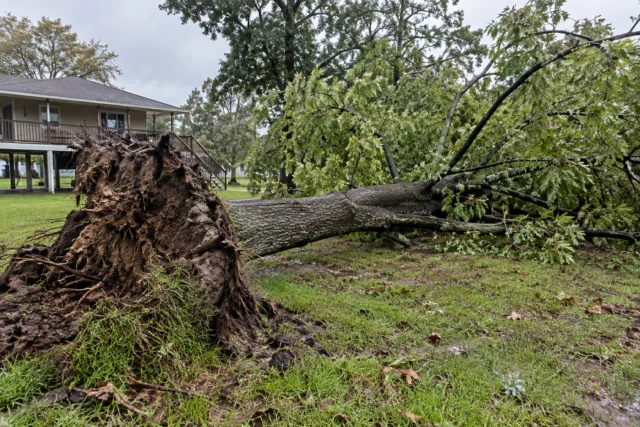
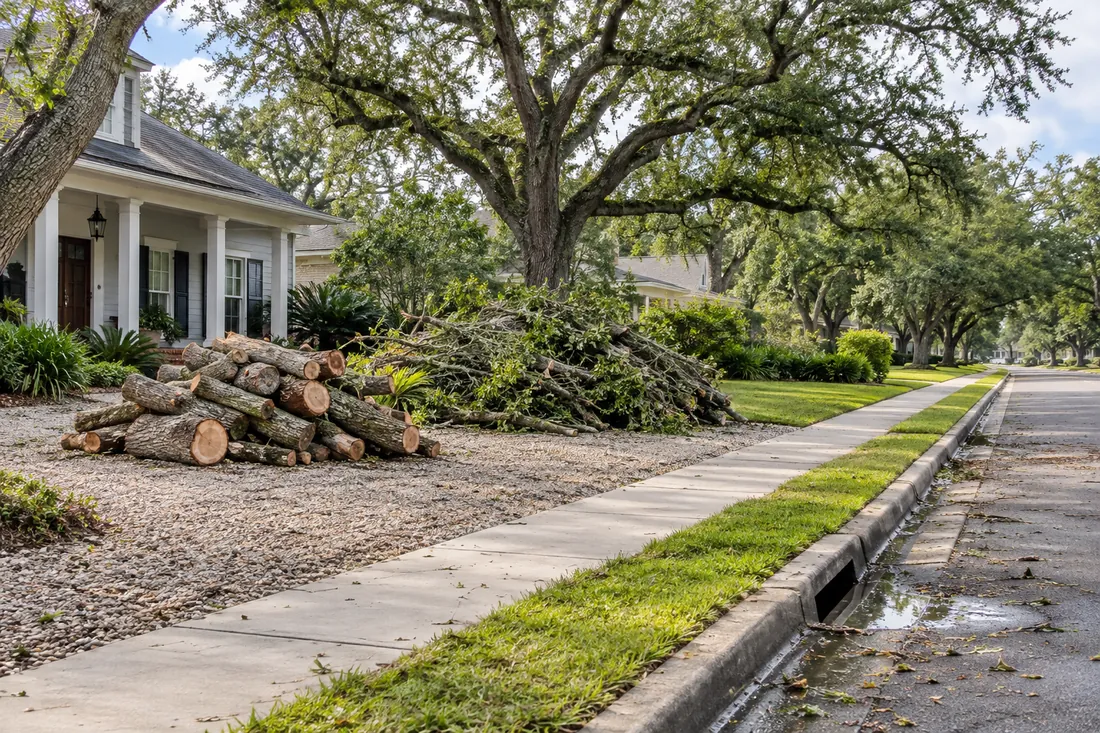
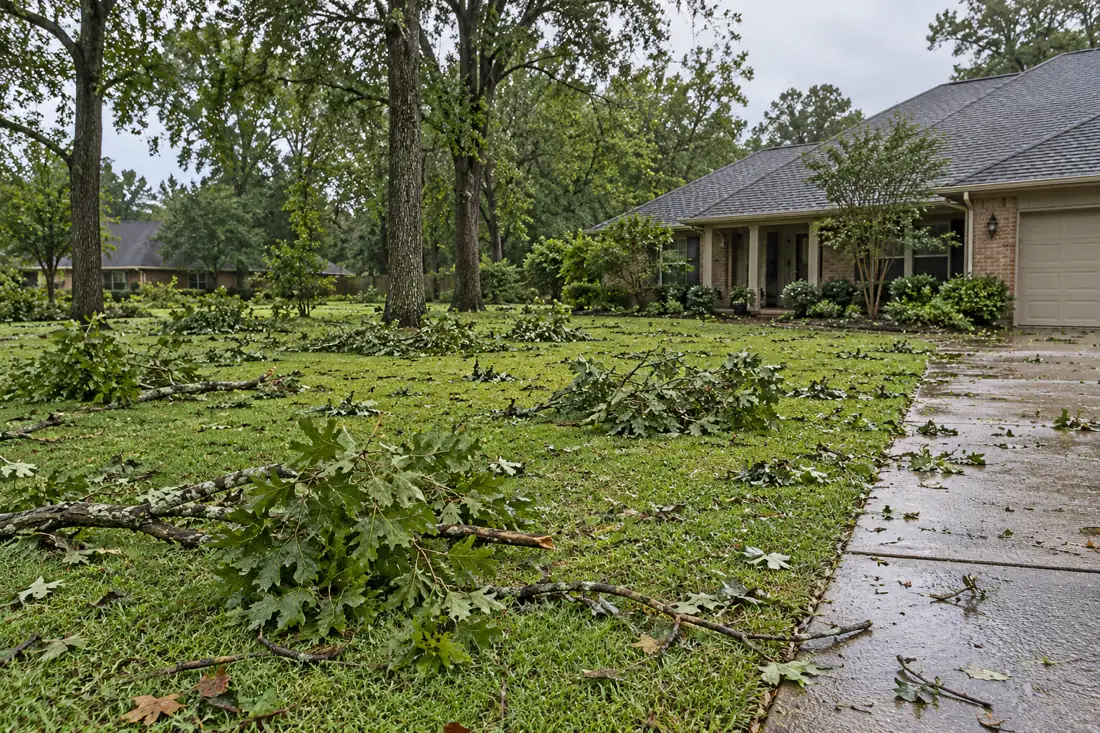
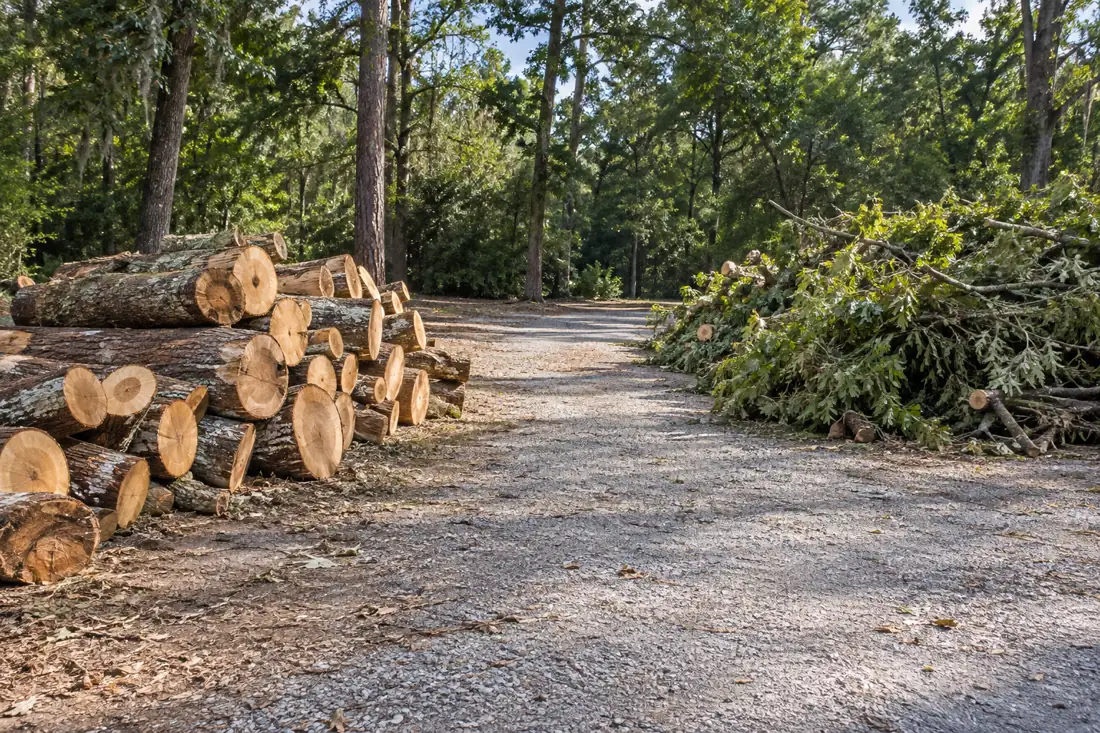
Irrigation equipment may be hidden under turf and landscape beds. Identify the available system information and mark known features before machinery or stump work is planned. Discuss responsibility for preparation and repairs rather than assuming all buried lines will be located automatically. The agreed access route should be included in the conversation.
Site planning detail: Sprinkler systems have more vulnerable components than the visible heads in a lawn. Mark the irrigation valves, drip tubing, controller lines and known pipe routes around stump work or equipment travel. Share existing site plans where available, and record pre-existing leaks or broken sprinkler heads before the job. A quick visual inspection cannot establish the exact location of every buried pipe. Agree who can shut off irrigation and who will test affected zones afterward.
Where equipment or log sections must cross an irrigated bed, discuss protective routes and the possibility of discovering unexpected lines. Make clear whether repairing an accidental break is included or separately handled. Do not interpret a visually clean finish as proof that irrigation still operates correctly.
Identify visible sprinkler heads, valve boxes, drip lines, controllers and landscape zones that may cross an equipment route or staging area. If drawings exist, share them with the estimator but verify that surface clues match the actual property. Concealed irrigation can be shallow, relocated or undocumented, so do not treat an old drawing as proof that every pipe is in a safe location.
Mark known components in the field and discuss mats, hand clearing or alternative access where practical. Do not ask a crew to drive over an unverified buried line simply because the grass looks level.
Before work starts, decide whether the irrigation will be isolated and who can operate the system. Take baseline photographs and note any leaks or malfunctioning zones already present. After the job, conduct a safe functional check if appropriate and clarify how discovered damage will be documented and handled.
Restoration of piping, wiring or turf should have an explicit scope instead of relying on a general cleanup clause. These details matter especially where stump grinding, crane setup or heavy debris movement may reach below the visible surface.
Locate irrigation zones before work starts
An irrigation system may cross the exact path that tree crews need for logs, machinery, and brush removal. Before an estimate, walk the property with the controller map if one exists and mark visible spray heads, drip lines, valve boxes, backflow devices, and shallow service routes. Zone diagrams are helpful but may not reflect repairs or additions made over the years. Identify uncertain areas instead of assuming every buried component is accurately documented.
Run the system from a safe control point before tree work when conditions allow, observing which zones serve the affected beds and lawn. Photograph exposed heads and valve covers so they can be found again after debris is moved. Do not ask workers to probe, dig, or drive equipment over an unknown buried line just because the controller plan shows it elsewhere. Where excavation is involved, follow applicable utility-location processes and identify private irrigation separately.

Discuss tree roots and irrigation together
Tree roots often occupy the same shallow soil layers as sprinkler lines and drip tubing. A crew preparing to grind a stump or remove a root obstruction should know that cutting into the soil can encounter plastic pipe, wiring, or a buried emitter. Likewise, a mature tree may depend on moisture patterns established by the current irrigation layout. Treat root management and pipe protection as linked site conditions, not separate afterthoughts.
Explain whether tree removal will leave an exposed, sunlit area that receives more water than before. The irrigation schedule may need reassessment after canopy loss, but avoid immediately increasing or decreasing every zone without checking soil response. A qualified irrigation specialist can evaluate coverage and repair requirements while the tree professional addresses root hazards. Neither should assume that visible sprinkler heads reveal the entire buried network.
Choose an equipment route that avoids vulnerable features
Identify where tracked machines, chip carts, lift equipment, or vehicles might travel. Even when equipment has a relatively low ground pressure, turns and concentrated loads can break shallow fittings or compress soft soil around pipes. Narrow strips between beds and paving may conceal lateral lines that were installed at unpredictable depth. Discuss alternative hauling paths, temporary mats, and whether smaller tools can access the work position.
If a route must cross a known pipe, the contractor should evaluate a protective crossing plan rather than accepting a blanket statement that the line will be fine. Keep valve boxes and backflow assemblies accessible, and do not pile heavy logs over them. Tell the crew whether the lawn was recently soaked or irrigated, since waterlogged ground may be more prone to rutting and settlement. Route choices should reflect actual site conditions.

Keep sprinkler heads visible during staging
Leaves, chips, and logs can conceal spray heads only a few inches above grade. Mark heads within the work area with temporary flags placed where they will not become trip hazards or interfere with moving equipment. Identify adjustable drip risers, flexible hoses, and low-voltage wires attached to edging. A visible marker is a communication aid, not a guarantee that a buried line cannot be struck.
Ask where brush and wood will be collected before loading. A repeated drop zone over a sprinkler head can damage it even if no machine wheel crosses the spot. When temporary protection must be removed to perform the work, record what was moved and who will reinstall it. Avoid making employees responsible for guessing how your irrigation controller is programmed; assign that task to someone who knows the system.
Map irrigation before heavy equipment enters
An irrigation line can be shallow and difficult to see, especially where sod hides heads and control wiring. Stump grinding, tracked equipment and log dragging can damage components even when the work stays away from the main trunk. Photograph visible sprinkler heads, valve boxes and controller locations and mark known paths using existing plans. Do not dig around buried services or assume a pipe location from a sprinkler head alone.
Clarify who can safely isolate irrigation before work and who is responsible for locating private lines. The tree contractor may not be the person qualified to repair an irrigation system. If access mats or protected travel corridors are proposed, record their limits. Before the crew leaves, a responsible person should check for visible damage and coordinate any needed irrigation test with the proper contractor. Unknown subsurface damage cannot be ruled out by photographs alone.
Address stump grinding and buried lines explicitly
Stump grinding is a separate operation from taking down the trunk, and the rotating cutter works below the visible grade. Irrigation piping, valve wires, and older repairs may sit in the anticipated grinding zone. Do not authorize a depth simply because you plan to place sod over the area. Provide known utility information and arrange appropriate locating or specialist review before ground disturbance.
If a line cannot be confidently located, the crew may need to modify the depth, exclude part of the stump, or delay grinding until the hazard is resolved. The scope should say what happens to grindings, whether the hole is backfilled, and who will restore irrigation and lawn afterward. Do not conceal uncertain services beneath a new layer of mulch and assume a damaged line will reveal itself immediately.

Check the system after falling debris is removed
After the crew leaves the affected area, inspect visible sprinkler heads, drip tubing, valve boxes, and the controller before resuming normal watering. Look for newly tilted risers, broken caps, disconnected emitters, or debris packed around moving parts. Compare photographs made before work. A line damaged underground may not leak visibly until the affected zone runs, so a visual inspection alone is not complete.
When safe and appropriate, operate each relevant zone long enough to observe its coverage and look for pressure changes or pooling. Do not walk beneath unstable remaining limbs to test a head. If the controller reports faults or a valve behaves unusually, refer the issue to a qualified irrigation professional. Record findings by zone and location instead of asserting that all pipes are intact solely because the surface looks normal.
Locate irrigation vulnerabilities before tree and stump work
An irrigation system may cross a work area even if no sprinkler head is visible. Gather a controller zone map, prior service notes and known valve locations before selecting equipment routes. Do not excavate around an unstable root plate to trace pipes. Show the contractor any observed boxes, sprinkler heads and drip tubing, and explain whether a tree section might be lowered onto the planting bed. A plan based only on the visible lawn misses shallow buried components.
Confirm who will mark known lines, temporarily shut down zones, move delicate fittings or call an irrigation specialist. The tree crew still decides how to protect the site during its work. Soft soil over a valve box may settle under repeated wheelbarrow travel, while a tarp does not make it load bearing. If stump grinding is planned, discuss the proposed depth and boundaries with the appropriate professional responsible for locating buried services.

Preparation and post-job function testing are different tasks
After the tree work, arrange a controlled irrigation check where wiring and system condition allow. Inspect the surface for damaged heads, leaks, pooling and pressure problems without approaching remaining tree hazards. Note the affected zone and the observed symptom instead of guessing who caused it. A large canopy change may alter future watering needs, and a landscape or irrigation contractor may need to review scheduling.
Ask the written estimate to distinguish care around identified equipment, any necessary removal or resetting of landscape features, stump treatment and responsibility for repairs. Photograph visible features from safe areas before work and document what was tested afterward. A map of known heads is helpful but does not prove that every buried line has been found.
Handle water shutoffs and leaks responsibly
Identify the irrigation isolation valve, any backflow assembly, and the person permitted to operate them before the job. A leak during tree work can rapidly soften soil near equipment and change safety conditions. The crew should know how to communicate an observed problem without improvising an electrical or plumbing repair outside its competence. Not every system has a convenient separate shutoff, so verify the actual arrangement.
If a pipe is struck, keep machinery clear of the compromised area and coordinate with the property owner and appropriate repair professional. Document the affected zone and visible condition for repair planning. Do not bury a temporary patch under new fill and treat the system as restored without testing. Soil saturation may require a delay or different equipment route before tree operations can safely continue.

Protect delicate drip and micro-irrigation systems
Drip tubing is often laid near the soil surface beneath mulch, around shrubs, or within raised beds. It can be cut by dragging a branch or moving a log even when heavy machinery stays on a driveway. Show the crew the actual routing around the tree and remove movable hoses only where doing so is safe and authorized. Keep irrigation components separate from chip piles and cut vegetation that will be hauled away.
After cleanup, lift mulch gently in targeted places to confirm that emitters are not trapped under branches or disconnected from tubing. Restore their intended orientation and check for leaks under operating pressure. Avoid aggressively pulling tubing from around living roots, because that can damage plants and the system. If the tree work changed bed shapes, plan a thoughtful irrigation redesign instead of stretching old tubing into a new arrangement without checking coverage.
Plan irrigation changes after canopy removal
Removing a large shade tree can increase sunlight, wind exposure, and evaporation across a lawn or planting bed. Existing sprinkler patterns may also be blocked by a remaining stump pile or a new planting area. A system designed for a shaded landscape should be reevaluated once the final tree configuration is known. That does not mean the right response is to water more automatically; soil type, plant demand, and drainage still matter.
Track how quickly the soil dries, which plants remain, and whether runoff appears along hard surfaces. In a low-lying area, excessive irrigation after tree removal can worsen soft-ground access and root problems. Ask an irrigation specialist to adjust zones if coverage no longer matches the landscape. Coordinate any planting or grading work with that adjustment so pipes are not moved repeatedly during the same project.

Record protections and responsibilities in the estimate
Provide the contractor with a site sketch marking visible heads, controller location, valve boxes, known lateral routes, and proposed equipment access. Ask the estimate to distinguish normal tree work from locating, disconnecting, repairing, or redesigning irrigation. If a fragile zone cannot be protected with available methods, discuss a different work sequence before approval. A useful quote acknowledges uncertainty without inventing a damage-free guarantee.
At completion, compare the protected-feature checklist with the actual site, inspect accessible components, and arrange zone testing as appropriate. Keep photos and repair records in your own job file; never label generic illustrative images as photographs of your property's work. The practical outcome is a safely completed tree operation with known irrigation conditions documented, not an unsupported assumption that underground lines were unaffected.
Irrigation protection starts with a system map
Sprinkler heads are often visible, but buried supply lines, valves, wiring, and drip tubing may run through a tree-work access route. Before equipment enters the yard, mark known components and share any installation sketch, controller-zone notes, or recent repair locations. Do not rely on a technician to infer a pipe route from a few spray heads.
If protective mats are proposed, ask where the machine will turn and whether the soil is already saturated. Confirm how the parties will document preexisting leaks, verify zones afterward when appropriate, and address a newly discovered problem. A photo of the controller alone is not enough: useful images show irrigation heads alongside the intended access lane and the tree being worked on.
Questions about this project
Will a utility locate show every private line?
Do not assume it will identify all irrigation, pet-fence, drainage or other customer-owned systems. Provide available plans and ask what additional locating or coordination is needed for the actual work and access area.
Who should arrange utility-related preparation?
Set that responsibility before scheduling. The property contact, contractor and relevant providers need to identify who handles locating, disconnection, relocation or separate repair work. Uncertain utility information should be resolved rather than guessed.
Can tree equipment use any driveway?
No general assumption should be made. Pavement condition, edges, support, buried infrastructure and the proposed equipment all matter. Ask the contractor to assess the intended setup and route for the particular property.
Do mats guarantee there will be no ground damage?
Ground protection is one part of a site-specific plan. It does not remove every load, soil or access limitation. Discuss the proposed measures and any restoration responsibilities in the written scope.
Which property features should I point out?
Identify buildings, vehicles, fences, fixed fixtures, landscape features, utilities and occupied routes. Explain what can move and what must remain. Include existing damage and any buried features you know about along the access route.
Should people remain inside the work area?
The contractor and site contact should establish an exclusion area and access arrangements appropriate to the work. Keep children, pets, visitors and other workers outside the active zone until the responsible parties say it can reopen.
What access information helps an estimator?
Send the narrowest opening, overhead obstacles, turns and the distance between the tree and the loading area. Include photos of the entire route and identify steps, soft ground or features that must remain protected.
Should I remove a fence before the visit?
First ask the contractor to assess access and agree on any temporary opening. Identify who owns the fence, who can authorize the change and who will reinstall it. Do not assume the opening is necessary or included.
What should I compare besides the price?
Compare tree identification, work objectives, access assumptions, hauling, stump treatment, site finish and exclusions. Ask whether permits or other coordination are part of the scope and who can approve changes if conditions differ.
Does an online request book the crew?
No. A request starts the estimate conversation. The company still needs to discuss scope, availability and any site assessment. For a dangerous or urgent condition, call 504-458-8336 rather than relying on a form response.
What should I tell Tree Huggers about tree work and protecting an irrigation system?
Explain the property address, the work you want and the specific concerns: system map, buried lines, repair responsibility. Send safe photos of the tree, surroundings and access route. The contractor can then discuss the assessment and scope needed for this situation.
How do I request an estimate for this work?
Call 504-458-8336, text photos or use the estimate form on this page. Include the address, desired outcome and any timing constraints. The company will need to review scope and availability; an online request does not confirm a price, appointment or emergency dispatch.
Get a scope for your property
Irrigation damage can occur during ground protection, stump grinding or log handling even when sprinkler heads are not visible. If you have an irrigation plan, mark the likely pipe runs, valve boxes, controller and any shallow tubing near the tree. Photograph visible heads and the intended equipment route from a safe location.
Mention recent repairs, drip lines in planting beds and whether the system currently leaks. Aerial photos and a homeowner sketch can start the conversation, but they do not constitute utility locating or proof of exact pipe depth.
Request a written protection and verification sequence: which areas must be identified before work, who arranges professional locating when appropriate, whether temporary shutdown is needed and what equipment may cross the lawn. Clarify how discovered lines could change the scope and who is responsible for repair and post-work testing if damage occurs. Keeping a sprinkler head out of the direct cutting zone does not establish that underground piping is clear. The final handoff should explain how disturbed areas and any exposed components will be addressed.