A shorter tree can require a complicated method when it is damaged or surrounded by targets. A taller tree in open space may have a different set of constraints. Explain the condition, access and surroundings along with approximate height. Equipment selection should fit the complete job rather than a single measurement.
Equipment choices depend on reach, loads and the route
Tree height is only one input when choosing equipment. A shorter tree behind a building may be more difficult to reach than a taller tree beside an open lot. A useful assessment considers distance from the road, canopy spread, trunk condition, whether wood can be lowered in pieces, nearby structures, overhead wires and the amount of room for a safe work zone. A distant photo cannot establish a crane capacity or lift configuration.
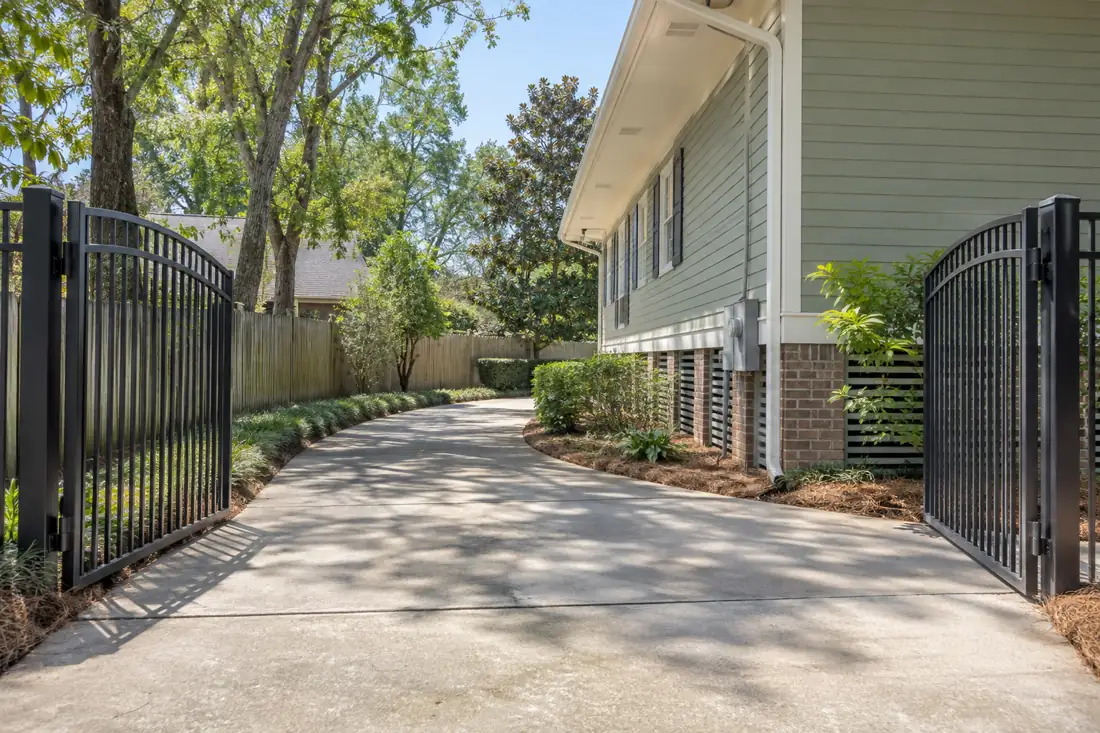
Site access often determines what is practical. Tell the estimator about gate width, slope, pavement edges, soft soil, irrigation, buried tanks and overhead obstructions. Do not assume a truck-mounted lift can park on a lawn or that a crane can lift over a roof without an engineered plan. Any required traffic control, utility clearance or neighboring permission should be addressed separately from the tree’s measured height.
The written estimate should explain the intended operation in terms the customer can understand and identify exclusions and alternatives. Ask what debris handling and ground protection are included, whether a site visit is needed before final equipment selection and how the plan changes if conditions differ on arrival. Avoid a price or equipment promise based only on a height category.
Site planning detail: Height is only one characteristic in equipment selection. A shorter tree can be difficult if its crown crosses a building or its only access passes through a narrow gate; a taller one may have ample open space. Supply photos showing branch spread, trunk condition, power lines, nearby targets, slope, street approach and possible loading zones. The contractor should evaluate species, structural defects, work sequence and available machinery rather than recommend a crane based on a single measurement.
Ask which pieces of the project need independent permission, such as street space or neighboring access. Distinguish the equipment method from hauling, traffic management and property restoration so the estimate covers the whole job. Do not promise a machine can be used until the site assessment confirms it.
Two trees of similar height can require very different equipment. One may have an open landing zone and sound stems; another may overhang a roof and be reached only through a narrow driveway. Record crown spread, branch lean, suspected defects, nearby targets, gate width, overhead clearance, soil firmness and whether access remains usable in wet weather.
A tape measure at the gate is not enough when a truck has to turn, stabilize and leave with heavy wood. Take wide photos looking both into and out of the route, and identify any service drops or buried utilities that should be verified before work.
Ask what usable reach and capacity the proposed machine has at the actual setup position, not its brochure maximum under ideal conditions. A lift, crane, grapple saw or climbing crew may solve different parts of the job; the safest feasible combination is a site-specific decision for the qualified contractor.
Compare bids using equal assumptions about traffic control, removing limbs versus the whole tree, stump work, surface protection and debris hauling. If a large machine is ruled out, request an explanation of whether the issue is access, loading, utilities, nearby people or the tree's structural condition. That explanation is more valuable than equipment names alone.
Height describes only one dimension of the job
A forty-foot tree in a large open yard may present a different equipment problem from a shorter tree positioned between a house and overhead utilities. Height affects potential reach, but it does not reveal the shape of the crown, the mass of limbs, trunk condition, access width or places where material must travel. A useful equipment discussion starts with the specific tree and site, not an advertised maximum reach number. The tallest available machine is not automatically the right one.

Measure access width, turning space and setup position
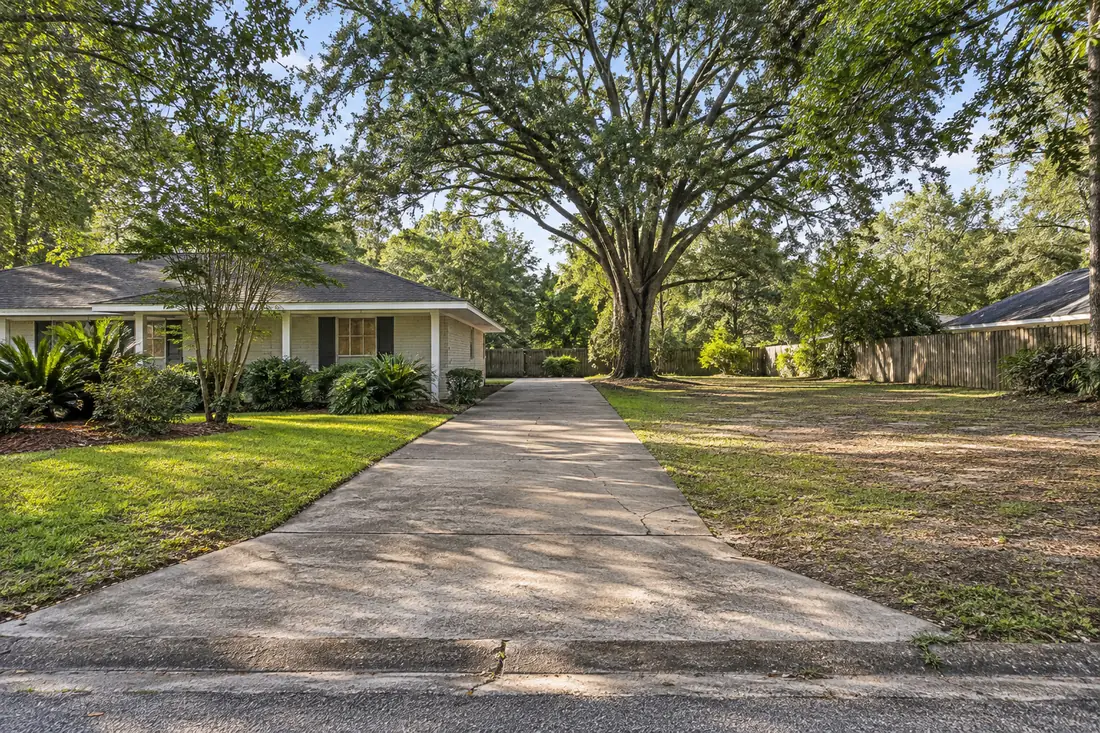
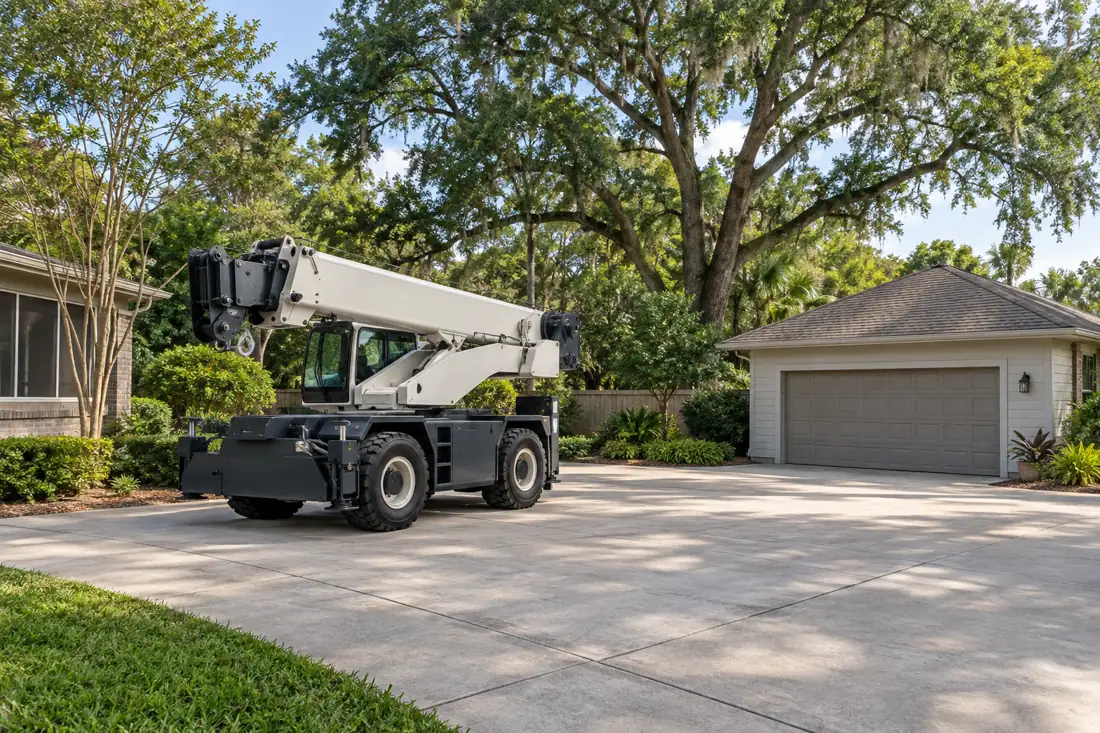
A compact machine may fit through a gate but still lack a stable position to operate once inside. A large truck may have enough reach from the street yet be unable to park safely without obstructing a lane or crossing unsuitable ground. Ask where a machine would enter, turn, stabilize, work, and leave. Show gate openings, driveways, overhead eaves, fences, retaining walls and pavement edges. A straight-line distance on a map cannot replace that physical route.
Underground irrigation, septic components, drains and soft soil deserve attention even if they are not visible in pictures. The service provider should consider ground conditions, setup loads and nearby structures before selecting equipment. Do not assume that protective mats eliminate every risk or that a neighbor's driveway is available. If an alternate setup requires public access or utility coordination, those arrangements should be documented before a work date is promised.
A tall tree standing in open ground and a shorter tree enclosed by buildings present very different work constraints. Record gate width, overhead obstructions, turning space, soil conditions, the path for brush and logs, and any occupied areas. The height estimate is context, not a substitute for identifying the route and allowable working space.
Ask bidders to explain how their proposed method handles material and protects retained property. If a lift or specialized machine is contemplated, the contractor must still verify access and site conditions. Confirm equipment reach and working room on site before committing to a method.
Evaluate equipment against access, loads and ground conditions. Tree height is only one input into equipment selection. The location of the trunk, weight and direction of limbs, overhead conductors, available rigging anchors, road width and soil bearing conditions all matter. A compact machine might fit through a gate yet still be unsuitable for the planned load or travel route. Ask the crew to explain its access and lowering strategy, how sensitive surfaces will be protected and what alternative methods are available if site conditions change.
Photograph the tree from a safe distance, including the trunk base, neighboring structures and the route from the street. Note whether branches extend over roofs, pools or a roadway. The provider should evaluate what tasks must be done aloft, where equipment can be positioned and how brush or logs will be transported. A quote based on height alone can omit the very constraints that determine whether the proposed approach is practical.
Account for crown spread, branch structure and wood condition
Two trees of equal height may have completely different canopy geometry. One may have a narrow upright crown with small branches; another may have huge lateral limbs over several targets. Multiple leaders, included bark, decay, old storm damage and a changed lean affect how a qualified crew evaluates the task. Cutting equipment and support systems must be selected with the tree's actual condition in mind. A green canopy cannot prove that all load-bearing wood is sound.
Ask the estimator to describe relevant visible structure and any uncertainties that require closer review. Avoid assuming that every branch can safely hold a climber or rigging line, especially if a crack or major decay is suspected. A ground-level photograph may support preliminary planning but cannot disclose every hidden defect. If the tree appears unstable, isolate the affected area and seek appropriate professional advice instead of requesting a routine equipment quote.
Understand the difference between reach and useful capacity
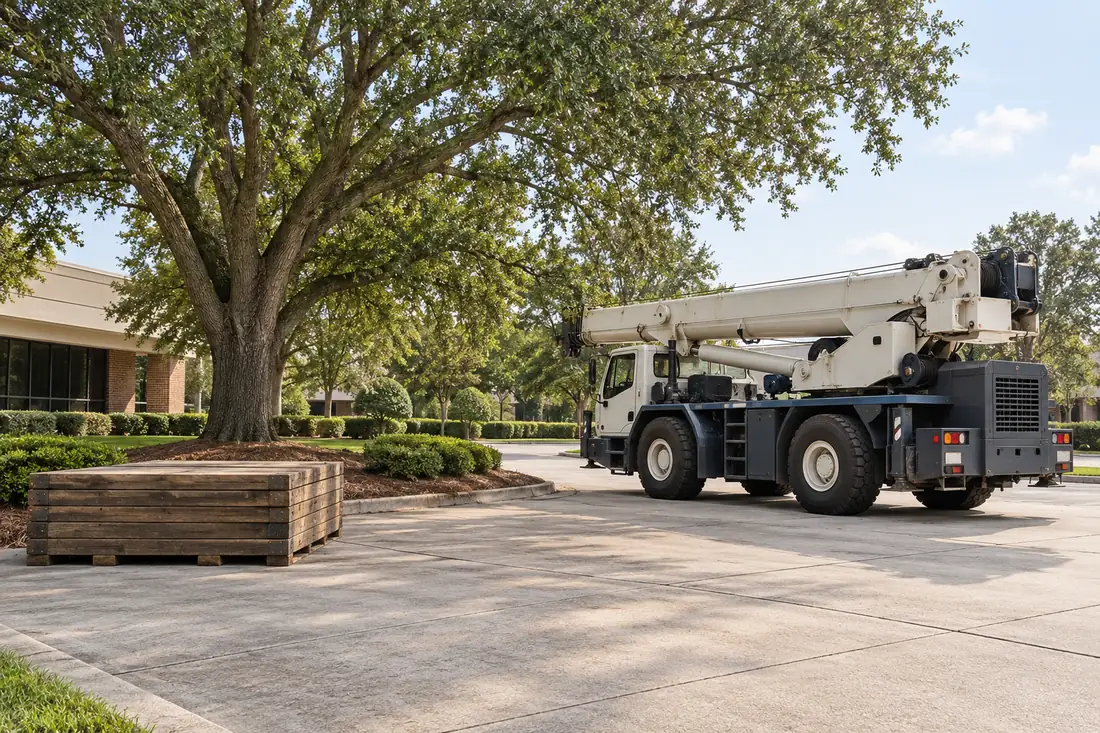
A boom or crane may be capable of reaching a point in the air but not of handling every load at that extension. Effective lifting and working capacity depends on configuration, setup, load radius, machine limits and operating conditions. Homeowners do not need to perform those calculations; qualified operators and the contractor are responsible for deciding whether a particular equipment plan is suitable. Marketing claims about maximum reach should not be treated as a guarantee for a specific tree.
Similarly, a compact grapple saw may improve access to some branches but may not be able to take very large pieces or operate in every angle. Conventional climbing and rigging can remain appropriate on certain sites, while others call for mechanized handling. Ask bidders to explain the proposed sequence and setup constraints rather than demanding a named machine. A safe plan must account for both the work aloft and the place each section will go afterward.

Consider the surrounding targets and people
The space beneath a tree may contain a roof, electric service drop, parking lot, pool, school path, or customer entrance. Equipment choice must reflect how those areas can be kept clear while work proceeds. A machine that can reach over a building still needs a safe way to control cut material and prevent exposure to people. Identify busy times and entrances that cannot be closed casually. For commercial work, discuss tenant notices and any temporary changes to deliveries.
The crew should define an exclusion zone and safe material route appropriate to the site. Do not use a rope, ladder or vehicle to move a hazardous limb yourself while waiting for an estimate. If energized conductors are involved, coordination with the appropriate utility or qualified specialists may be necessary. These constraints can dominate the method even when the tree itself is not unusually tall.
Choose methods using constraints other than tree height
A tall, straight tree with open landing space may be simpler than a shorter, broad tree tightly surrounded by roofs, power lines and fences. Equipment needs depend on canopy spread, health of the wood, ground support, working radius, hauling route and neighboring activity. A full-tree photo showing the building provides more useful context than guessing a height in feet. Do not climb, fly close to wires or improvise measurements in a hazardous area for a quote.
Ask the estimator why climbing, crane lifting, compact equipment or a staged combination fits the actual site. A safe method may change after closer inspection reveals decay or inadequate support. Compare bids using the same cleanup outcome, not the tallest boom or largest machine on offer. Identify whether one price includes haul-off, stump grinding, landscape protection and access restoration while another does not. Request written assumptions so any necessary change is understood before equipment arrives.
Measure the entire route, not just the gate
A gate photograph helps explain a narrow approach but cannot confirm equipment access. Measure the clear opening and document turns, slope, pavement strength, low limbs and the available staging area beyond the opening. A smaller machine may solve one obstacle but introduce a different handling or hauling method. The choice should follow the actual work requirements and site assessment, not the tree's height or a machine photo alone.

Include debris handling and stump access in the equipment plan
The main cutting tool is only part of the operation. A crew may need a chipper, loading device, truck, saws, protective mats or other equipment to process and remove the material. A crane-assisted cut can still leave large wood that must be transported through a narrow side yard. Ask whether the equipment route for cleanup is the same as the route for tree access, and whether the final wood and brush disposition is included.
Stump grinding presents a separate access question. A large removal truck does not mean a grinder can pass the same gate or safely work near buried utilities and foundations. If the stump must be removed for a planned fence, driveway or landscaping project, specify the intended finish early. This helps the estimator account for actual site geometry instead of offering a tree-only price that leaves the next project blocked.
Compare proposals by method assumptions and included work
A bid using a lift, a crane or a climbing crew can be reasonable for different reasons. Compare the identified tree, the proposed work, equipment setup, access requirements, protection measures, hauling, cleanup and exclusions. One company may have included an approved road closure or ground protection while another assumes the owner will arrange it. A cheaper quote that relies on an impossible access route is not an equivalent option.
Ask what would cause the proposed method to change after a detailed inspection. Hidden decay, soft ground, blocked access or an unexpected utility conflict can affect feasibility. The contractor should explain qualifications and safety controls relevant to its selected equipment without guaranteeing that a living tree or property will be risk-free forever. Keep the accepted plan and any change authorization in writing so the finished project can be evaluated against an agreed result.
Ask about the working load, not only the tallest point
A narrow palm and a broad live oak of similar height present very different wood distribution, limb geometry and landing-area questions. Height is a useful starting description, but it says little about the weight and shape of individual sections, hidden defects, or where a cut piece must move. An estimator needs to see the crown, trunk, drop zone, retained branches and the nearest obstacles before choosing a handling method.
Equipment selection also depends on the ground underneath it. Soft turf, drainage pipes, septic components, pavers and steep or uneven access can restrict where heavy machines may operate. A driveway that looks wide enough in a photo may have load limits, slope or overhead clearance issues. Gate width, turning radius and the route out for brush and logs often control the practical sequence of work.

Two equally tall trees can demand different plans
A useful written scope explains the work method in terms of constraints rather than announcing that a particular machine is always best. Conventional climbing and controlled rigging, a crane, or specialized cutting equipment can each be appropriate in different settings. Avoid requesting machinery simply because it appeared in a video. Ask what the plan assumes about site access, utility coordination, neighboring property and the area beneath the canopy.
Send a wide safe view of the full tree, a ground-level picture of the trunk and another view of access, while staying clear of unstable wood. State the needed final result and whether the stump or logs must be handled. Do not measure a tree by climbing or approaching overhead service. The crew's equipment plan must be assessed at the property, not guaranteed from tree height alone.
Use an estimator's site visit to resolve the unknowns
Provide the tree location, desired outcome, safe photographs of the whole canopy, and visible access restrictions. When several trees are involved, label each one separately. Explain whether the work is pruning, removal, storm response or a condition assessment. A qualified provider may need to measure access, review the work zone, and choose a sequence before giving a firm price. That is more responsible than selecting a machine solely from a height estimate sent by text.
Do not take measurements under unstable limbs or next to power lines for the sake of a quote. If a service provider identifies an additional risk or constraint, ask how that changes the scope, timing and protection plan. Tree Huggers can use the property information to plan an appropriate inquiry, but no general website guide can establish the correct machine for every individual tree. The tree, surrounding targets and accessible setup locations ultimately determine the useful choice.
Recognize where the equipment decision belongs
Customers can give valuable information about gates, soft ground, underground features, permitted work hours, shared driveways and known structural concerns. They should not be expected to calculate machine loading or design rigging systems. The contractor and qualified operators must determine whether their tools, personnel and methods fit the specific site. Good planning separates facts supplied by the property owner from technical decisions made by the people performing the work.
Ask for a clear explanation of what will happen, where vehicles will operate and which areas need to be clear. Require any extra permissions or coordination to be resolved before work begins. When an estimator cannot verify a critical condition safely, a site assessment or revised plan is a legitimate outcome. A properly selected approach is measured by suitability for the whole project, not by how impressive the equipment looks in photographs.
Questions about this project
Does a machine's maximum reach prove it can do my job?
No. Loaded reach, configuration, section handling, obstacles and setup conditions all affect suitability. A contractor needs to evaluate the particular tree and property before confirming an equipment plan.
Can specialized equipment replace a site assessment?
It does not remove the need to assess tree condition, targets, access and support conditions. Ask how the contractor will confirm that the proposed machine and method fit the actual scope.
Is a free work estimate the same as a written risk assessment?
Not necessarily. Explain whether you need pricing, condition advice, a documented assessment or a combination. Ask what the visit includes, who provides it and what limitations apply to any findings or recommendations.
What history should I share?
Share known storm damage, prior failures, construction, root disturbance, flooding, pruning and recent changes. Include the timing and nearby property use. Useful history supports the evaluation without replacing inspection of the current tree and site.
Can the removal method be selected from a photo?
Photos help prepare the discussion but may not show defects, ground conditions or usable access. The contractor may need an on-site assessment before confirming the method, equipment and final scope for the property.
What if the tree changes before the appointment?
Tell the contractor about a new split, failed branch, changed lean or other visible change. Keep clear of the affected area. Changed conditions may require a different assessment, priority or work plan before the crew proceeds.
Which property features should I point out?
Identify buildings, vehicles, fences, fixed fixtures, landscape features, utilities and occupied routes. Explain what can move and what must remain. Include existing damage and any buried features you know about along the access route.
Should people remain inside the work area?
The contractor and site contact should establish an exclusion area and access arrangements appropriate to the work. Keep children, pets, visitors and other workers outside the active zone until the responsible parties say it can reopen.
What should I compare besides the price?
Compare tree identification, work objectives, access assumptions, hauling, stump treatment, site finish and exclusions. Ask whether permits or other coordination are part of the scope and who can approve changes if conditions differ.
Does an online request book the crew?
No. A request starts the estimate conversation. The company still needs to discuss scope, availability and any site assessment. For a dangerous or urgent condition, call 504-458-8336 rather than relying on a form response.
What should I tell Tree Huggers about why tree height alone does not determine equipment choice?
Explain the property address, the work you want and the specific concerns: condition, targets, access. Send safe photos of the tree, surroundings and access route. The contractor can then discuss the assessment and scope needed for this situation.
How do I request an estimate for this work?
Call 504-458-8336, text photos or use the estimate form on this page. Include the address, desired outcome and any timing constraints. The company will need to review scope and availability; an online request does not confirm a price, appointment or emergency dispatch.
Get a scope for your property
Tree height is one observation, not a complete equipment specification. A shorter tree behind a house, next to a utility line or across saturated lawn may present more access constraints than a taller tree beside a clear drive. Send safe site-wide views that include the canopy, trunk, nearby structures, possible machine position and removal route.
Explain whether the main objective is selective pruning, risk reduction or full removal. Ask for a proposal describing why the chosen method fits the tree condition, working radius, ground bearing and access route, and whether hand rigging, climbing or other controlled alternatives should be considered.