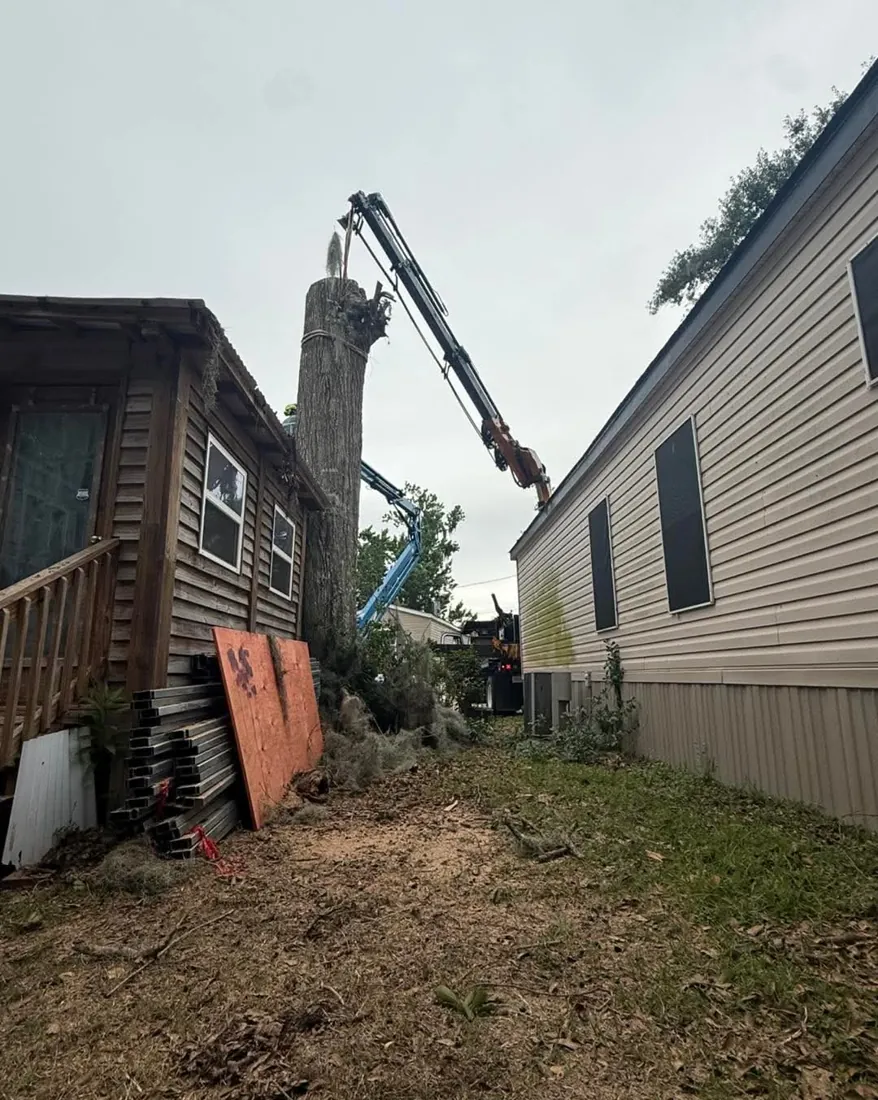
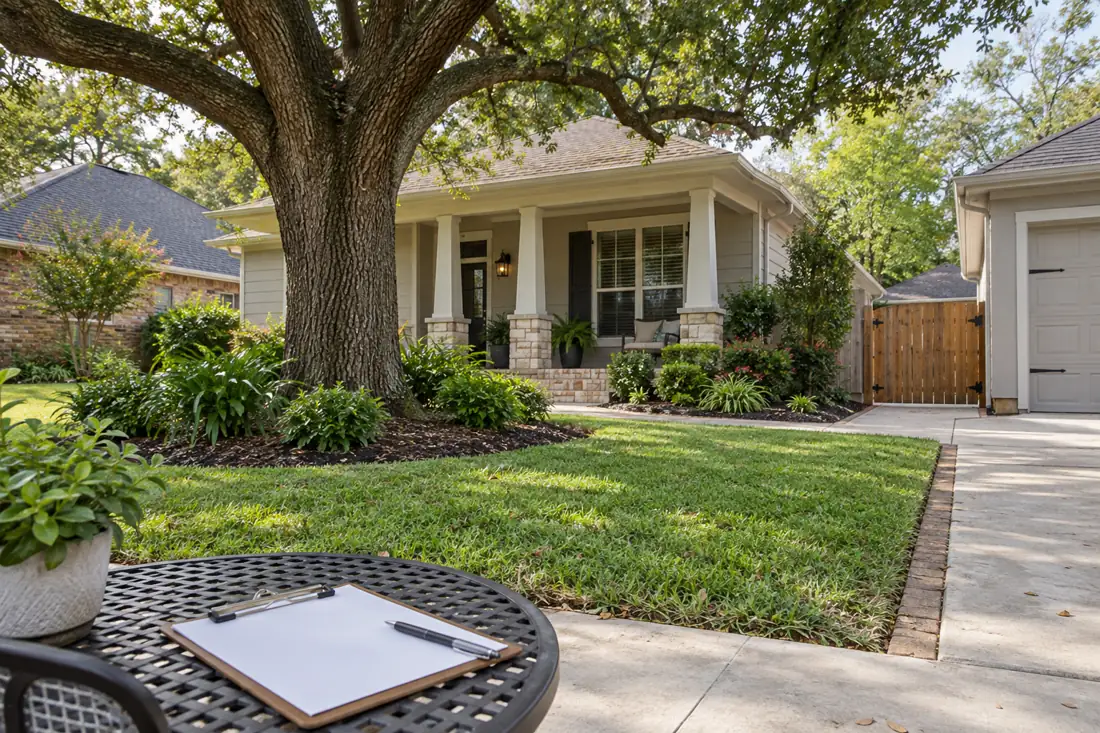
A site visit should connect the customer’s objective with the tree, targets, access and desired finish. Share relevant history and point out hidden utilities or property restrictions. Ask the contractor to identify assumptions that affect pricing or method. The visit should leave both parties clearer about the proposed scope and next steps.
Site planning detail: A useful tree-work site visit answers more than how big the tree is. Show the estimator the tree from several safe ground-level angles, its relationship to roofs, fences, sidewalks and utility service, and the route equipment or debris would need to follow. Explain locked gates, pets, tenant schedules, underground irrigation and any surfaces that cannot support heavy machinery. Ask which observations call for a closer inspection and which work methods are being proposed; an estimate and a formal tree risk assessment are not interchangeable.
Discuss whether the written scope includes pruning objectives, branch or trunk removal, stump treatment, chip handling and final cleanup. Request clarification about who coordinates utility work or access permissions. Before the visit ends, agree on which trees are included, what measurements or photographs are being used for the proposal, and which questions remain contingent on conditions discovered during work.
Site-specific planning checkpoint: A proper tree-work site visit should clarify both the work requested and the uncertainties that remain. Identify tree location, structure and visible condition alongside nearby houses, overhead lines, drainage, access routes and ground bearing limitations. Discuss whether the objective is storm response, pruning, full removal, stump service or diagnosis. Include debris placement, possible equipment staging and any surfaces requiring protection. Record observations that need a closer qualified inspection rather than converting every concern into a sales claim. The written estimate should distinguish confirmed items from exclusions and assumptions about access, cleanup and scheduling. Document who can authorize modifications if conditions differ after mobilization. A useful assessment is specific enough to prevent surprises without inventing risk ratings from a brief look.
Tell the visiting professional what you need the appointment to resolve: a price for clearly described work, a discussion of safer access, or a formal assessment of a tree's condition. An ordinary estimate and a documented risk assessment are different deliverables. Share relevant history such as new cracks, past storm damage, drainage changes or earlier pruning, noting what you observed rather than presenting guesses as diagnoses.
Walk only areas that are safe to enter. Point out gates, utilities, irrigation, neighboring roofs, overhead lines, septic components and any surfaces that equipment cannot use. If a hazard makes the area unsafe, stop short and describe it from a protected position. Ask the contractor what needs confirmation before choosing equipment or scheduling.
At the end, request a concise written description of proposed work, access assumptions, debris handling and any separate professional evaluation. Keep an agreed follow-up contact method and ask who will approve a change if conditions differ once work begins.
Agree on the decision the visit must support
Before the crew arrives, explain whether you need an estimate for a known task, an evaluation of a tree's condition, or help comparing possible approaches. Those are related but not interchangeable services. A bid visit may establish price and access while a detailed risk assessment can require additional professional examination. State the concern in plain language and ask whether the requested inspection is within the provider's scope.
Send the address and a concise description of the trees or work area. Include access restrictions, any recent storm damage and whether the property is occupied. Do not send a speculative diagnosis as though it were established fact. A useful first conversation identifies the question to be answered, who can authorize work and whether there is a present danger requiring an appropriate emergency response.
For a complex property, bring a second person who understands everyday access needs, such as a facilities representative or resident familiar with where rainwater accumulates. That person can explain constraints without walking into hazardous areas or overruling the qualified crew. Ask the estimator to label any unverified dimensions or assumptions on the notes rather than entering them as confirmed facts.
If a specialist inspection is recommended, record its purpose and the decision that depends on it. This protects everyone from treating a preliminary estimate as a complete engineering, arboricultural or electrical clearance, and it makes subsequent professional advice easier to apply to the correct tree.

Turn an on-site tree inspection into a useful written scope
Before the visit, identify which tree or group of trees prompted the call, what has changed recently, and where people or structures could be exposed. Have a few broad photographs ready, but allow the professional to examine the site directly. A narrow close-up does not reveal overhead conductors, buried services, delivery routes, soft ground, protected planting or the targets below the canopy.
During the walk, distinguish the observed condition from the work being proposed. Ask whether the concern is structural, seasonal, access-related or primarily a clearance preference. The contractor should be able to explain the recommended work boundary and what additional assessment, if any, would be needed before a confident decision. If the whole tree cannot be viewed safely, document that limitation rather than treating the visit as a complete diagnosis.
Afterward, compare the written description with the property: tree identification, removal or pruning limits, equipment route, debris destination, surface protection and exclusions. Record who can approve changes and whether a second visit is needed after a storm. A site walk produces a planning basis; it does not automatically authorize work or guarantee an unseen condition.
Turn a site visit into an accountable decision log
Bring a short issue register to the visit rather than relying on an informal walk-around. One column should name the tree or work area; a second should record the question being answered; a third should identify the person responsible for the next decision. For example, a tight side gate may require a measured equipment route, while a suspected structural defect may require a qualified tree assessment. Those are different follow-ups and should not be grouped under a vague instruction to proceed.
Have the estimator explain which assumptions affect method, access and removal of material. Record any feature that was not examined, including private utility lines, concealed irrigation, neighboring property or inaccessible canopy areas. A site visit is not evidence that hidden conditions are harmless, and an approximate verbal cost is not a complete authorization to begin work.
After the visit, request a concise written scope that names the included trees, agreed work result, protection areas, debris disposition, exclusions, possible changes and authorized contact. Keep open questions visible until resolved. If a quote differs from the recorded scope, reconcile the discrepancy before paying a deposit or scheduling equipment.

Walk the site in the order work would occur
Start at the arrival and parking location, then follow the likely equipment approach to the trees and the proposed debris exit. This sequence reveals limitations that may be missed when the discussion begins beneath the canopy. Note narrow turns, gates, overhead obstructions, pavement edges, steps and surfaces that become soft during rain. The route can influence labor and protection costs as much as tree size.
Ask the estimator to distinguish observed facts from assumptions that need confirmation. Aerial imagery may suggest an access route that has since been fenced or planted. If the proposed staging area belongs to someone else, do not treat it as available. Mark alternate locations for wood handling and confirm what must remain accessible for residents, deliveries and emergency vehicles while the work is underway.
Discuss health symptoms and structural questions separately
Yellowing foliage, sparse growth and dead limbs can have multiple causes. A split union, hanging branch or shifting root plate may raise different immediate concerns than general decline. Point out what you have noticed and when it appeared, but let a qualified professional determine what can be concluded from the inspection. Photographs can document change; they cannot establish hidden root condition on their own.
Ask what limitations apply to the visual assessment and whether further testing or an appropriately credentialed specialist is recommended. Avoid demanding a guarantee that a tree cannot fail during a storm. A responsible site visit explains uncertainty and available management choices. It may conclude that monitoring, pruning, additional evaluation or removal merits discussion rather than treating every symptom as a reason to cut the tree down.

Clarify exactly which trunks and branches are included
Use a numbered sketch or photographs to distinguish several trees that grow close together. Confirm whether the estimate covers a complete removal, a specific pruning objective, a hanging limb or only debris already on the ground. If the request is to create clearance, show the roof, road or other target and let the arborist determine the sound pruning approach.
Do not rely on phrases such as trim everything or make it safe. Those words can hide differences in scope and expectations. Ask the estimator to identify any retained trees, limits on access to neighboring property and work that will not be performed. A clearly bounded service description helps protect healthy trees from unnecessary cuts and gives the crew an understandable work order.
Evaluate equipment, rigging and pedestrian protection
Tree work beside structures may require sectional dismantling, mechanical assistance or equipment positioned away from the trunk. The customer does not need to calculate rope loads or direct rigging. Instead, ask how the contractor determines safe work zones, where people and vehicles must stay, and what preparation is expected from the property owner before arrival.
Look for conflicts with utility lines, roofs, fences, glass, play equipment and outdoor seating. A narrow yard may call for more controlled handling and longer debris movement than an open field. If the crew proposes using a neighboring parcel or closing a shared route, request the relevant permissions and coordination. A site visit should reveal those dependencies before they become rushed workday decisions.

Make a Tree Work Site Visit Useful
A good tree-work visit begins with the reason you called: dead branches, sunlight, roof clearance, storm damage, a removal plan or an unfamiliar tree condition. Have photographs and a short list of questions ready, but expect the estimator to inspect the property context rather than quote only from a single closeup. Explain who can authorize work, which trees are included and what outcome matters most. Make a clear distinction between a preliminary discussion and a completed risk assessment.
Walk the equipment route from the street to the tree if the area is safely accessible. Measure or show gates, tight turns, steps, overhead clearance, soft ground and surfaces that must be protected. Mention buried irrigation, septic features, dog-fence wire and other utilities you know about; the contractor still needs appropriate location information before digging or driving equipment. If someone else controls a passage or driveway, identify that as an approval issue rather than treating it as guaranteed access.

Check the constraints that photographs cannot show
Ask the estimator to explain the proposed work in observable terms. Which limbs would be pruned, where would the trunk be sectioned, what would happen to the stump and how would the wood leave the site? A useful site visit also considers the space needed to lower material and whether people, pets and vehicles can remain outside that zone. If the plan depends on a separate arborist, utility provider or permit review, record that dependency instead of assuming it is included.
Afterward, request a written scope that separates included labor, debris treatment, stump services, access assumptions and any restoration exclusions. Keep the quote attached to the correct address and tree identifiers. If something changes between inspection and scheduling, share updated photos before mobilization. A useful visit should leave you knowing what is proposed, what remains uncertain and which party must resolve those questions before any tree work is authorized.
Make the debris and stump finish unambiguous
Ask whether branches will be chipped, hauled intact, stacked for the owner or left for another contractor. For trunk sections, clarify whether logs are removed and whether the cutting size matters. Stump grinding is not the same as excavating the root system; the estimate should describe approximate depth, working limits and how grindings or the resulting hole will be handled.
Also discuss where the crew may stage temporary brush piles and how the lawn or garden will be protected. An attractive cleanup picture in a portfolio is not a scope specification. List practical closeout items such as clearing walkways, removing loose material from drainage inlets and checking the agreed access route. Avoid promising restoration services that have not been explicitly included.
What the site walk must establish
A useful tree-work site visit connects the requested outcome to the actual route for carrying it out. The tree's location is only one part of that picture. Walkable access, fences, surface protection, slopes, drainage, parked cars, buried utility clues, overhead service lines and neighboring structures can all influence the method.
It helps to start with a wide property view, then move systematically from the access gate to the tree and finally to the place where branches or logs would be staged. If several trees are involved, confirm each one against a labeled photo or simple map before discussing a total scope.
Ask the estimator to distinguish observations from commitments. A proposed pruning objective, removal sequence, debris handling choice or stump-grinding depth should be written down at the level needed to avoid surprises, but no responsible site visit can guarantee a future tree will never fail. Verify which material is to leave, what stays, and what level of surface cleanup is included.
If the access route depends on permission from a neighbor or property manager, resolve that before scheduling equipment. The inquiry should end with enough shared information to prepare a specific written scope, not a vague instruction to 'handle the tree'.
Check underground systems and surface conditions
Point out irrigation, private lighting, buried pet fencing, septic features, wells and drainage components that may lie beneath a proposed route or grinding location. Public utility marking does not necessarily identify privately installed systems. If the alignment is uncertain, ask which qualified locator or owner record is needed before intrusive work. Do not assume a clear-looking lawn means the ground is empty.
Observe slopes, wet areas, unstable retaining walls and recently disturbed soil from safe locations. The crew can decide whether ground protection is sufficient or a different work method is needed. A site visit is the right point to discuss potential rutting, existing cracked paving and any restoration expectations. Record pre-existing conditions accurately so the completed project can be assessed fairly.

Discuss access, timing and communication constraints
Tree work may affect school arrivals, businesses, tenants, caregivers or neighbors using a shared lane. Tell the estimator about periods when people need unobstructed access and any local restrictions on equipment or noise. The contractor can then propose a realistic work window instead of promising completion before understanding the limits. Weather, additional hazards and ground conditions may change the sequence.
Agree on a contact person who can answer questions and authorize a scope change. Ask how you will learn about a postponement, unexpected condition or needed permission, but do not treat a preferred callback time as a contractual guarantee unless it appears in the written agreement. Clear communication responsibilities are especially important when the owner is off site or several parties share the property.
Compare proposals on the same assumptions
A short price without a precise scope is difficult to compare with a detailed estimate. Request the same tree identifiers, pruning objectives, debris handling, stump finish, protection needs and access assumptions from each bidder. If one contractor includes equipment mobilization and another assumes a clear open yard, the numbers are not equivalent. Ask whether required approvals or traffic controls are included.
Review the schedule assumptions and any conditions that would require another visit or separate assessment. An estimate should distinguish firm commitments from provisional observations. Avoid selecting a provider based solely on a claimed ability to eliminate every future hazard. The visit should give you a reasoned scope, transparent exclusions and a practical basis for a decision.

Leave the visit with a traceable action list
Write down the proposed service, important exclusions, materials that would remain on site and any steps the owner must complete. Examples include moving vehicles, arranging gate access, confirming a property boundary or having a private line located. Assign each unresolved item to a responsible person rather than allowing it to disappear into general notes. Retain the site sketch with the estimate.
After work, compare the completed area with the written scope from safe ground-level viewpoints. Report remaining debris, damaged access surfaces or differences in tree identifiers promptly through the agreed channel. A good site visit is successful when the resulting plan can be understood by the estimator, crew and customer alike, not when every question is answered with unsupported certainty.
Turn a Site Visit Into a Decision Record
A good tree-work site visit should leave both the property owner and estimator with the same understanding of the problem. Record the requested result, tree identifiers, visible safety concerns and proposed method, then separate that description from conditions that require further assessment. For example, a visit may establish that a large limb needs clearance, yet not resolve whether a root defect threatens a structure. Ask what evidence supports each recommendation and what cannot be determined from a routine estimate.
The walkthrough should also settle practical constraints: gate width, crane or lift feasibility, safe work zone, material disposal, irrigation, surfaces to protect and whether public space must be controlled. If the final price depends on permission from a neighbor, utility coordination or unexpected debris volume, write the assumption plainly. The resulting checklist helps the crew plan and gives the customer a fair basis to compare proposals without treating an estimate as a formal risk assessment or a promise about hidden conditions.
- Record the exact trees and proposed treatments by number or fixed landmark.
- Ask which observations require a separate qualified inspection or specialist.
- Specify access, staging, surface protection, haul-off and stump finish independently.
- List unresolved permissions and scope assumptions before approving the proposal.
Understand where an estimate ends and a tree-risk assessment begins
Questions about this project
Is a free work estimate the same as a written risk assessment?
Not necessarily. Explain whether you need pricing, condition advice, a documented assessment or a combination. Ask what the visit includes, who provides it and what limitations apply to any findings or recommendations.
What history should I share?
Share known storm damage, prior failures, construction, root disturbance, flooding, pruning and recent changes. Include the timing and nearby property use. Useful history supports the evaluation without replacing inspection of the current tree and site.
What should I compare besides the price?
Compare tree identification, work objectives, access assumptions, hauling, stump treatment, site finish and exclusions. Ask whether permits or other coordination are part of the scope and who can approve changes if conditions differ.
Does an online request book the crew?
No. A request starts the estimate conversation. The company still needs to discuss scope, availability and any site assessment. For a dangerous or urgent condition, call 504-458-8336 rather than relying on a form response.
What access information helps an estimator?
Send the narrowest opening, overhead obstacles, turns and the distance between the tree and the loading area. Include photos of the entire route and identify steps, soft ground or features that must remain protected.
Should I remove a fence before the visit?
First ask the contractor to assess access and agree on any temporary opening. Identify who owns the fence, who can authorize the change and who will reinstall it. Do not assume the opening is necessary or included.
Does cleanup include every root and wood chip?
That depends on the written scope. Tree removal, stump grinding, chip hauling and root excavation are different tasks. Ask what material is removed, what remains and whether soil or landscape restoration is separately included.
What should a final walk-through check?
Compare the identified trees and tasks with the agreement. Check agreed debris handling, stump treatment, access openings and any listed restoration. Record unresolved items clearly instead of relying on a general impression that the property looks finished.
How should extra work be approved?
Use the agreed approval process and identify the change, reason, scope, price or schedule effect as applicable. Confirm who has authority before treating an additional tree or task as part of the original job.
What completion records are useful?
Keep the agreed scope, tree or area identification, authorized changes, invoice and labeled photos where appropriate. Include unresolved items and a contact. Contract-specific records should follow the buyer's stated requirements.
What should I tell Tree Huggers about what a tree work site visit should cover?
Explain the property address, the work you want and the specific concerns: work objective, access, scope assumptions. Send safe photos of the tree, surroundings and access route. The contractor can then discuss the assessment and scope needed for this situation.
How do I request an estimate for this work?
Call 504-458-8336, text photos or use the estimate form on this page. Include the address, desired outcome and any timing constraints. The company will need to review scope and availability; an online request does not confirm a price, appointment or emergency dispatch.
Get a scope for your property
For a site visit, provide the address, tree locations, safe photos and known driveway, gate or utility restrictions.