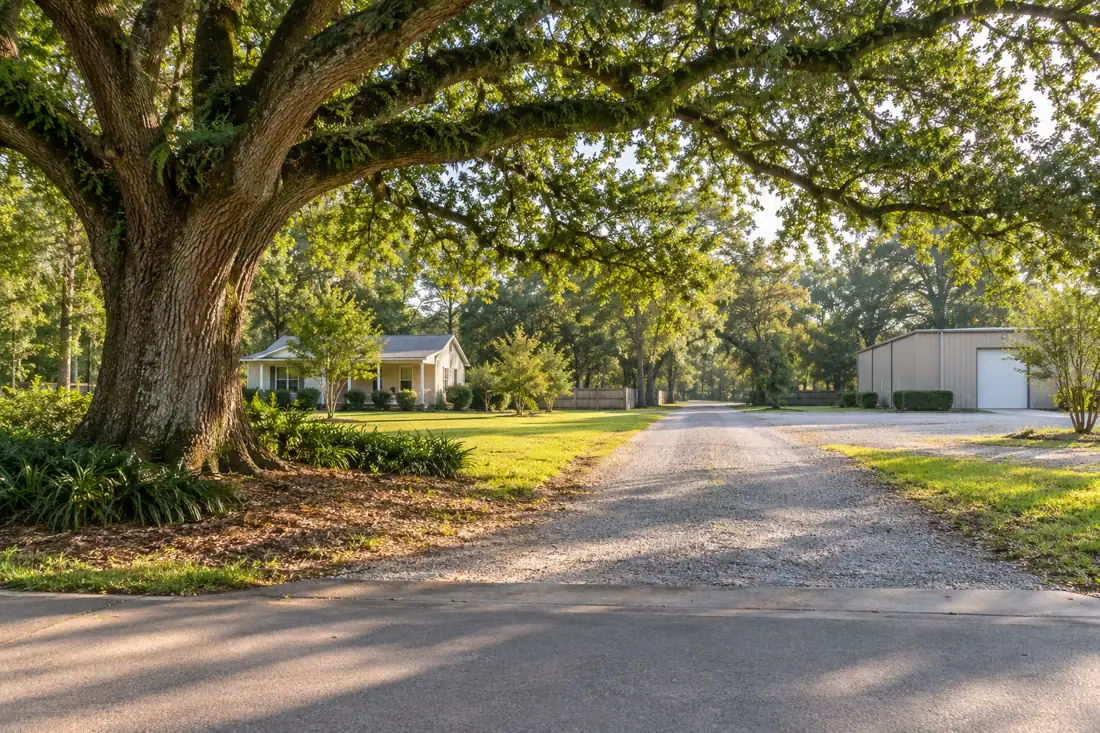
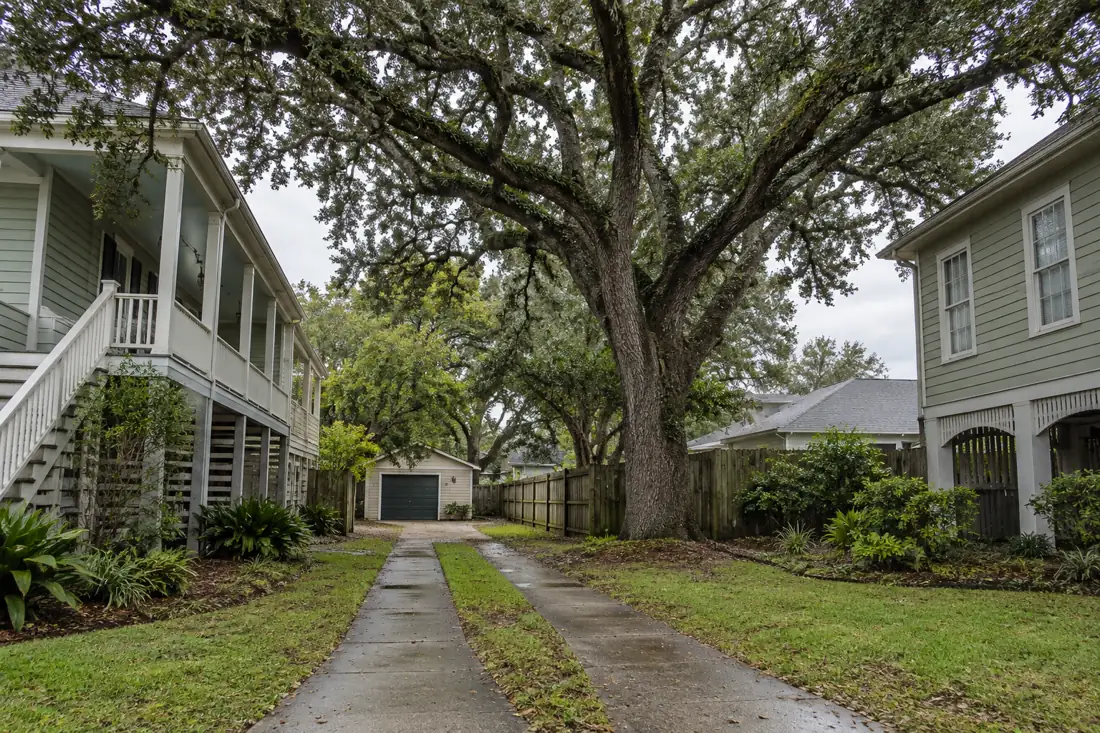
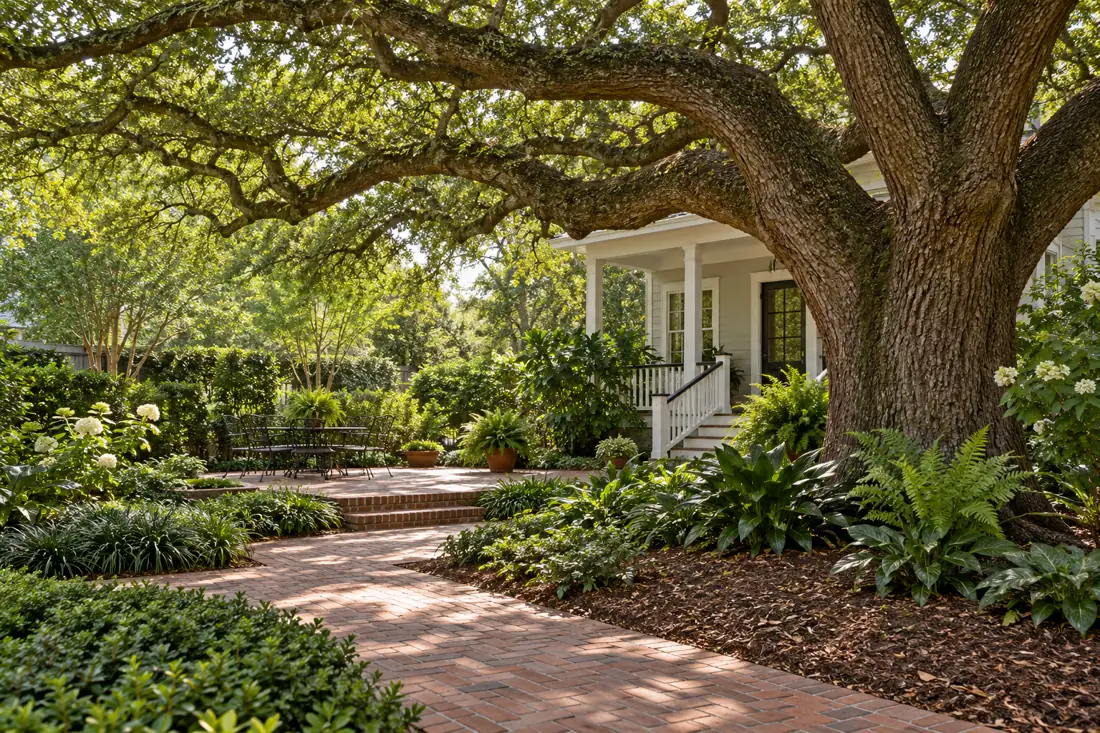
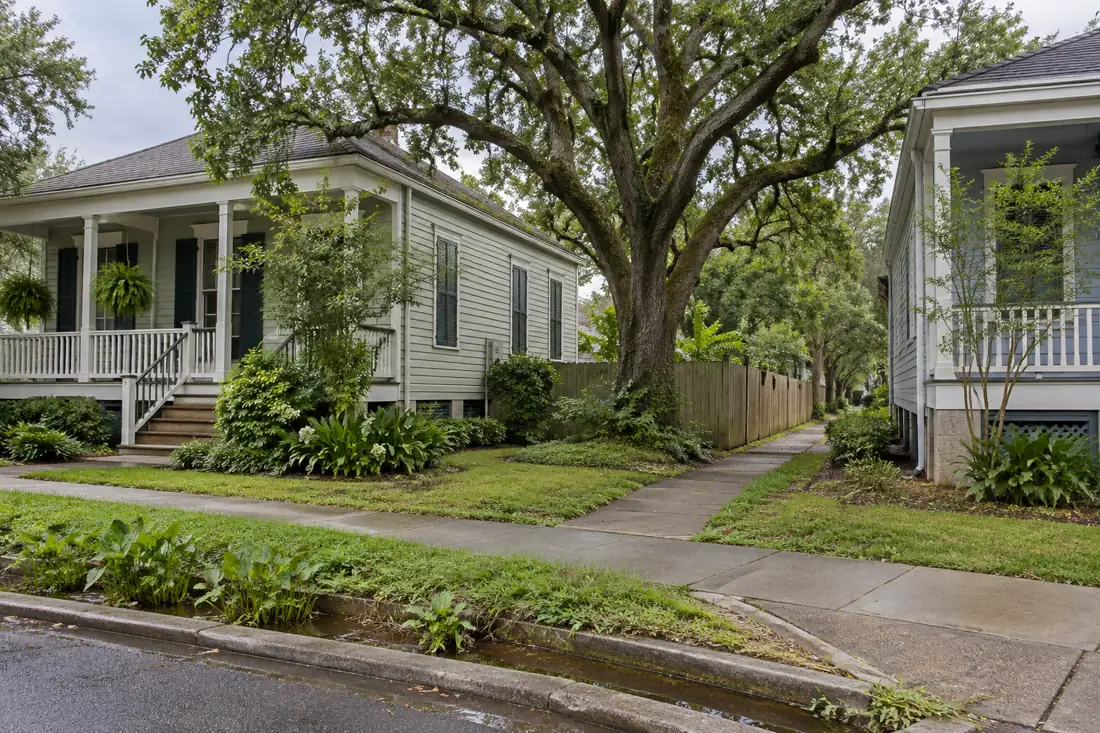
A small lot may place the house, fence, neighbors and equipment route within the same work area. Provide photos that show those relationships and explain which trees you want to preserve. The removal or pruning method depends on the actual site. A clear scope should define access, hauling and the condition in which the yard will be left.
Site-specific planning checkpoint: For a small Westbank lot, draw a simple sketch showing the house, fence, neighboring structures, drainage inlets, utility lines and the only available gate or driveway. Identify the specific tree and whether its crown extends over adjacent property. Confirm where a truck can park and whether the crew has a separate place to stage wood without blocking residents. Low ground, saturated soil and confined paved areas may change acceptable equipment access; a small tree does not necessarily mean an uncomplicated setup. Share photographs from both street and backyard so the estimator can compare routes. Ask for a quote that separately describes pruning or removal, stump treatment, brush handling and final cleanup. Obtain permission for any access beyond the property and clarify ownership where uncertain. A carefully defined footprint matters more than assuming neighboring grass or a drainage strip is available.
Sketch the tree, gate clearances, adjacent fences, shared driveways, stairs, overhead services and any visible septic or drainage features.
Read the lot as one connected work area
Many residential lots on the Westbank place a home, paved driveway, fence, neighbor's structure, and mature canopy within a short distance. A wide tree may extend beyond the owner's property even though its trunk stands entirely inside the yard. Start with photographs showing the relationship of the tree to buildings, gates, street access, and nearby occupied spaces. A close-up of the trunk cannot tell the contractor where material might be controlled or how equipment could enter.
Measure clear side-yard and gate widths, document changes in grade, and identify air-conditioning condensers, utility meters, and patio roofs. Note whether the only driveway is used by multiple vehicles. Do not assume that a compact machine can reach a tree simply because a person can walk through the gate. A responsible estimate starts with an honest drawing of the physical constraints, not the convenience of a generic tree-size category.
Use the limited space on a Westbank lot deliberately
Sketch the tree, gate clearances, adjacent fences, shared driveways, stairs, overhead services and any visible septic or drainage features. A few feet of space can determine whether branches must be handled in short sections and where wood can be moved. If the legal boundary is uncertain, flag it for verification rather than treating an old fence as a survey.

Map access before moving equipment into a narrow lot
A Westbank yard may have a gate, fence, drainage swale, utility connection and neighboring structures within a small operating area. Begin with the actual entrance width, turning space and ground condition, then identify where material can be lowered or staged without blocking a shared route. A photograph taken from the street may hide the decisive constraints behind the house.
Ask for a scope that names which surfaces require protection and what happens if the planned equipment cannot safely reach the tree. Keep survey boundaries and underground-utility locations with the responsible professionals. The accompanying image provides general urban-canopy context; it is not a verified photograph of this property's access conditions.
Ask the estimator to identify one practical entrance and exit for people, materials and machinery. An attractive patio or paved path is not automatically suitable for heavy equipment. Mark fragile surfaces, garden beds, sprinkler heads and access that must stay open. If a neighbor's yard is needed, the owner should obtain permission before a quote assumes it is available.
Break the proposal into the actual tree work, debris movement, stump or root work and restoration by others. Discuss pets, parking and outdoor furniture through the approved property contact. Good estimate photos show the full tree and the passage beside it, not a close-up that hides the site restrictions.
Keep neighboring property and permission separate
Branches may cross a fence line while a proposed work route appears to pass through a neighbor's yard. The location of the trunk, ownership questions, and permission to enter are different issues. Do not direct workers to cross a boundary or place equipment on adjoining land without the appropriate authorization. If the tree has affected a neighbor's fence or roof, identify that concern in the project description without assigning fault or legal responsibility in the website inquiry.
Ask who may approve access and whether vehicles, pets, or landscaping need to be moved on either property. If an alternate route is unavailable, the contractor may propose a different sequence or handling method. A neighbor's willingness to cooperate should be documented by the responsible parties before it becomes an assumption in the quote. Tree Huggers can assess the work scope; property-rights disputes need their own appropriate resolution.

Use street space cautiously rather than as a default staging area
A small front yard can make the street look like the obvious place for a truck, chipper, or crane. Public curb space, sidewalks, traffic sight lines, overhead lines, drainage inlets, and parking rules can complicate that choice. The contractor must determine what can be done there and which permissions or traffic controls may be required. A homeowner should not promise that a public travel lane or neighbor's parking area will be free when the crew arrives.
Photograph the street from safe positions showing overhead lines, nearby intersections, sidewalk space, and any tight turns. Mention trash collection days, school arrival periods, or other regular access conflicts. This information helps planning but does not substitute for contractor inspection or any agency approvals. If public space cannot be used, ask about feasible private-property alternatives before treating a particular machine as part of the agreed scope.
Build a Westbank lot plan around the actual limits, not the neighborhood label
A small lot on the Westbank can combine a narrow side gate, closely spaced houses, overhead services, soft soil, back fences and a tree with branches extending toward several occupied spaces. Being on the Westbank does not establish equipment access, storm risk or a single appropriate pruning method.
Begin with the individual tree and the outcome sought: safe clearance, limb reduction, condition review, removal or stump work. Take views from the street and backyard that show how material could be handled, with the tightest passage and utilities clearly visible.
Measure the gate without forcing it open or digging near pipes; distinguish the width at the top, bottom and any pinch point created by handles or steps. Identify where trucks can load wood, where crew members can move without crossing neighbors' land and whether pets or children need a separate household plan.
A compact grinder shown on another page is not a promise that one will fit this property. The stump-grinding service is the right next step when the only remaining problem is an accessible stump; broader tree removal may require a different work sequence and quote.
Treat a small Westbank lot as a whole-site access puzzle
On a tight Westbank parcel, the fence, driveway, side-yard drain, neighbor's roof and the tree may all occupy the same practical workspace. Measurements should include the usable gate opening rather than just the lot width shown on a tax map. Ask for safe photos from the street and rear yard; a low branch or uneven sidewalk may eliminate a route that looks generous on an overhead image.
Where crew and residents must share one driveway, plan a clearly identified staging and access window rather than discovering the conflict as wood is carried out.
Protect narrow drainage paths and Louisiana ground conditions
Westbank properties can have low ground, soft soils, shallow drainage features, and areas that remain wet after rain. A side yard that supports foot traffic may not support equipment or repeated loads of logs. Point out drainage swales, French drains, catch basins, irrigation, and recent fill. Explain where water tends to stand and whether a utility or landscape project recently disturbed the ground. Heavy equipment protection requires a site-specific plan.
Ask what the crew intends to use for access and whether soil conditions could require postponing or changing the method. Do not promise that mats prevent every rut or settlement. If the project involves grinding a stump near paving or drains, discuss machine access and the intended depth separately. Restoring sod, grading, or drainage may require an additional agreement and should not disappear inside an ambiguous cleanup line.

Match the tree decision to the occupied targets
A large live oak on a small lot can provide valuable shade and neighborhood character while also extending over occupied spaces. The presence of branches above a driveway does not automatically call for removal, and the absence of visible damage does not prove a tree has no risk. Ask what problem the owner is trying to solve: clearance, deadwood, storm damage, a specific defect, or a long-term construction conflict. Assessment and tree work are related but different services.
If a limb is hanging, a trunk has newly shifted, or a crack is visibly opening, keep people away and seek professional guidance. Do not climb a fence, enter a neighbor's yard, or stand beneath suspect wood for photographs. When the objective is routine trimming, discuss whether selective work can satisfy the clearance need without unnecessary canopy loss. The site and tree condition should lead the method.
Organize Tree Work on a Small Westbank Lot
On a compact Westbank lot, a tree can stand only a few steps from a fence, house wall, neighbor's roof and drainage strip. Before asking for removal or pruning, identify the actual problem: a limb above a roof, loss of clear walking space, dead wood, or concern about the tree's condition. Clear photographs from the driveway, side gate and backyard give a more reliable view than a closeup of a single branch. Avoid trimming or climbing to obtain better pictures.
Measure the usable gate opening if it can be done safely, and note any fixed air-conditioning unit, hose connection or raised planter that narrows it. A site may have ample vertical canopy room but too little horizontal space to bring ordinary equipment in. The contractor may need to dismantle sections and move material by a protected route. An adjoining property is not automatically available for access simply because its driveway is wider; obtain the appropriate permission before it becomes part of a plan.

Use the little available space deliberately
Small yards also leave little space to stage branches while keeping entrances open. Discuss whether a load can be taken out as it is cut, whether a safe temporary stack can fit on the property, and what happens to small debris between fence posts. Protect downspout outlets and shallow swales; blocking them with chips or branches can turn a finished tree job into a drainage problem during the next rain. Specify where debris will leave the site and which surfaces should remain undisturbed.
The estimate should separate the tree treatment, sectional handling, access preparation, stump or root work and final cleanup. Ask the contractor to explain what the small-lot constraints change, rather than accepting a one-line price with no scope. If the tree is retained, clarify how the canopy will be managed without excessive pruning merely to make equipment fit. Record the agreed finish with realistic access assumptions so the property is usable again when the work is complete.
Plan movement of people, pets, and everyday vehicles
On a compact lot there may be no alternate route between the front door and the back gate. Agree on which entrance will stay available and which portions of the yard must be closed while tree work is active. Arrange vehicles before the crew arrives instead of asking workers to move them during an operation. Pets should have an enclosed location separate from the work area, and household members must not cross the drop or equipment zone to retrieve belongings.
Tell the contractor about deliveries, home healthcare visits, or other unavoidable access needs before the schedule is set. A worker cannot safely keep a cutting operation underway while people repeatedly pass through the same area. A different work window or a staged operation may be more appropriate. Clear communication prevents the homeowner's normal routine from being mistaken for permission to enter an active hazardous area.
Define material handling when storage space is scarce
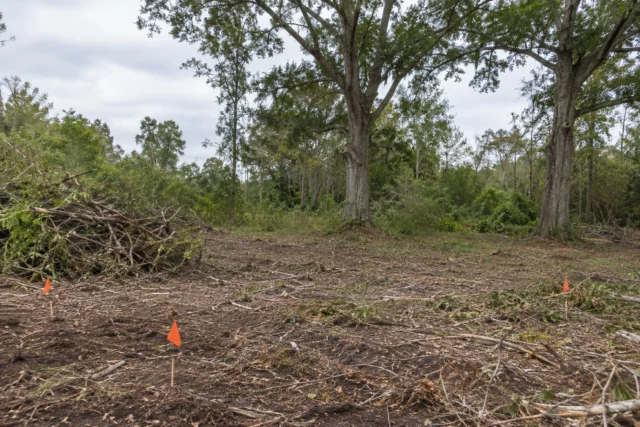
Logs, branches, chips, and stump grindings take space before they are removed or distributed. On a small lot a stack of wood can block a gate, drainage inlet, or sidewalk. Decide in advance whether the owner wants any logs or chips retained and where they can be placed without creating a new obstruction. If everything is to leave the site, ask whether processing, loading, and hauling are included in the quoted scope.
A stump may be near a fence or concrete edge where grinding access and debris containment require separate planning. The finish should describe stump height or grinding objective and the fate of grindings. A quote for tree removal should not automatically be interpreted as a promise to replace turf, repair a fence, or level the whole yard. These details can be specified rather than discovered after equipment leaves.
Take a careful approach to storms and urgent conditions
After strong wind or heavy rain, tree owners may notice hanging limbs, a newly tilted trunk, or soil movement near the base. On a small lot, these conditions can affect occupied homes or common access routes, so keep the potentially affected area clear. Do not try to cut loaded branches, remove a tree from a power line, or move a root plate yourself. The urgent question is whether people can be kept away while an appropriate professional response is arranged.
Provide the observed change, when it occurred, and what property may be affected. An urgent request is not proof that every damaged tree requires total removal; the feasible response depends on professional assessment and site hazards. Avoid insurance or response-time promises. If public utility infrastructure is involved, contact the responsible utility and follow its safety directions instead of treating it as an ordinary landscape job.
Create a quote that explains the Westbank access tradeoffs
Ask the estimator to identify the tree, scope, proposed equipment or handling approach, access route, and finished condition. Disclose the lot dimensions and known underground features, but allow the contractor to verify critical clearances rather than relying solely on owner measurements. Compare proposals on identical assumptions about hauling, stump treatment, surface protection, and permissions. A price without that context is difficult to use and easy to misunderstand.
When contacting Tree Huggers, send safe photographs from the street, front yard, and accessible side yard along with a whole-tree view and the issue you want addressed. Say whether this is routine work or a recent hazard. The outcome should be a realistic plan for a tightly arranged property, with clearly stated uncertainties and no invented proof of previous jobs or guaranteed results.
Start the small-lot plan at the street and work back toward the tree
On a tight Westbank lot, the principal cost and safety question may be how the debris exits, not how the first branch is cut. Walk the street-to-tree route past gates, fences, condenser units and roof edges. Identify the size of material that can turn each corner without contacting adjoining property. Ask whether brush, logs and stump grindings need different exit methods. Neighbor entry, a temporarily removed fence and use of a shared drive require separate authorization instead of being assumed in a generic removal price.
- Measure corners, gate openings and turning restrictions.
- Distinguish tree-handling areas from routes for people and pets.
- Confirm which debris material will be chipped, hauled or left.
- Keep shared-property access conditional on written permission.
Questions about this project
What access information helps an estimator?
Send the narrowest opening, overhead obstacles, turns and the distance between the tree and the loading area. Include photos of the entire route and identify steps, soft ground or features that must remain protected.
Should I remove a fence before the visit?
First ask the contractor to assess access and agree on any temporary opening. Identify who owns the fence, who can authorize the change and who will reinstall it. Do not assume the opening is necessary or included.
Can the contractor use my neighbor's yard?
Only after the required permission and suitable access arrangements are in place. Identify the proposed route and who can authorize it. A quote accepted by one owner does not automatically grant access to someone else's land.
Does a tree estimate determine the property boundary?
No. Resolve an uncertain boundary or ownership question using appropriate property information and professionals. The tree contractor needs an authorized scope and access plan, but a visual work estimate is not a survey or legal determination.
Which property features should I point out?
Identify buildings, vehicles, fences, fixed fixtures, landscape features, utilities and occupied routes. Explain what can move and what must remain. Include existing damage and any buried features you know about along the access route.
Should people remain inside the work area?
The contractor and site contact should establish an exclusion area and access arrangements appropriate to the work. Keep children, pets, visitors and other workers outside the active zone until the responsible parties say it can reopen.
Can the removal method be selected from a photo?
Photos help prepare the discussion but may not show defects, ground conditions or usable access. The contractor may need an on-site assessment before confirming the method, equipment and final scope for the property.
What if the tree changes before the appointment?
Tell the contractor about a new split, failed branch, changed lean or other visible change. Keep clear of the affected area. Changed conditions may require a different assessment, priority or work plan before the crew proceeds.
What should I compare besides the price?
Compare tree identification, work objectives, access assumptions, hauling, stump treatment, site finish and exclusions. Ask whether permits or other coordination are part of the scope and who can approve changes if conditions differ.
Does an online request book the crew?
No. A request starts the estimate conversation. The company still needs to discuss scope, availability and any site assessment. For a dangerous or urgent condition, call 504-458-8336 rather than relying on a form response.
What should I tell Tree Huggers about tree work on a small westbank lot?
Explain the property address, the work you want and the specific concerns: close targets, neighboring access, cleanup finish. Send safe photos of the tree, surroundings and access route. The contractor can then discuss the assessment and scope needed for this situation.
How do I request an estimate for this work?
Call 504-458-8336, text photos or use the estimate form on this page. Include the address, desired outcome and any timing constraints. The company will need to review scope and availability; an online request does not confirm a price, appointment or emergency dispatch.
Get a scope for your property
Share safe photos showing both fence lines, the side gate and the driveway, and describe any areas that must stay accessible.