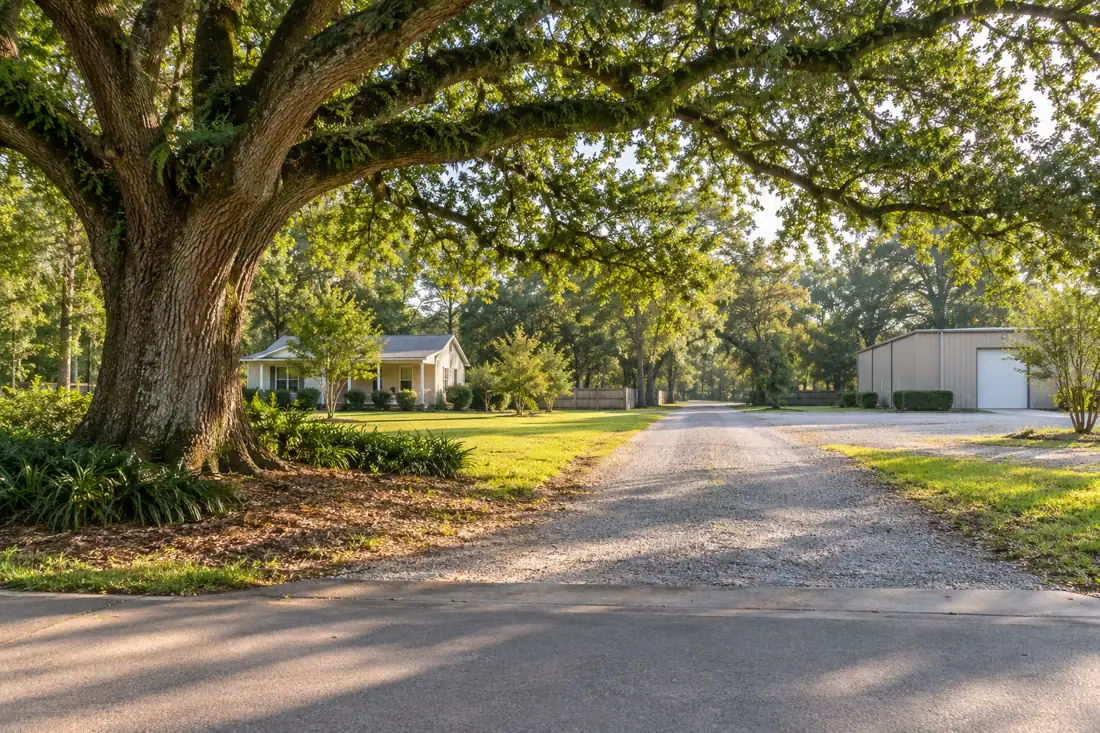
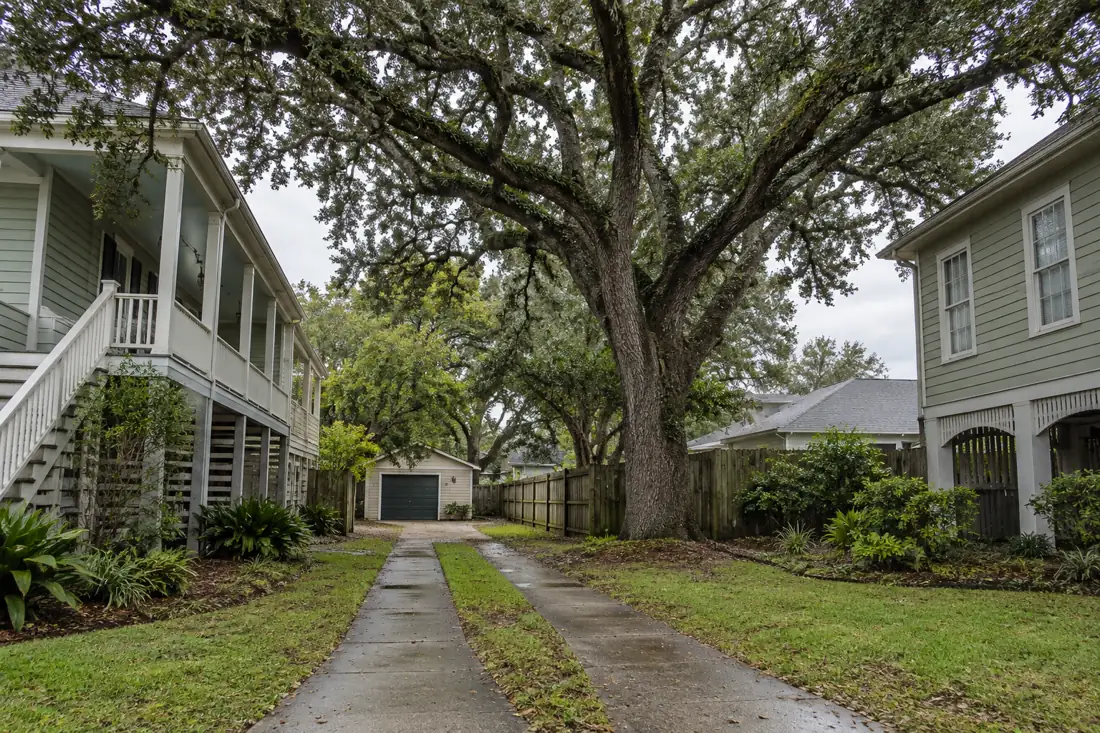
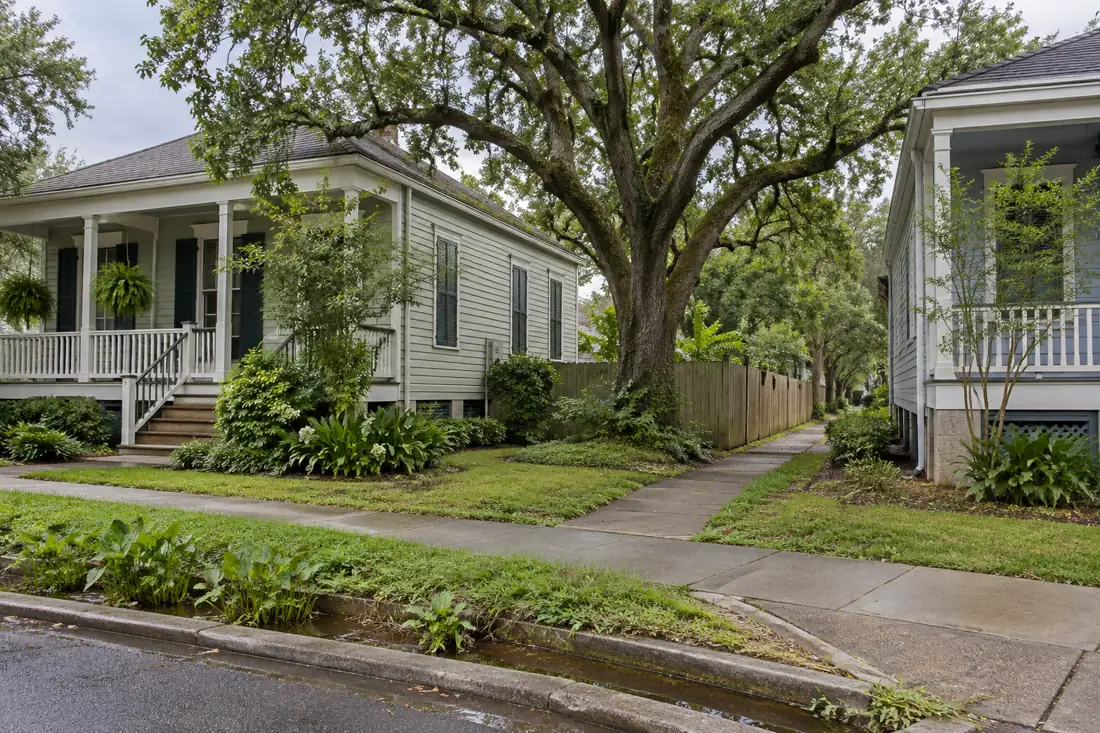
A narrow street can limit truck setup, loading and access for neighbors or emergency vehicles. Tell the estimator about parking, deliveries and any known restrictions. The plan should identify the responsible authority for public-space arrangements. Tree work may need a carefully selected work window and coordination beyond the property owner.
Site-specific planning checkpoint: On a narrow New Orleans street, record the travel lane width, parking pattern, driveway openings and any designated pedestrian route before selecting equipment. Consider where chip trucks, outriggers, trailers and debris loads could stand without blocking fire access or trapping neighbors’ vehicles. Overhead lines and street trees introduce separate clearance and authorization questions; utility coordination is not solved by moving a truck a few feet. Ask who will obtain any necessary curb, sidewalk or traffic-control permissions and who will notify affected occupants. Deliveries, school traffic and refuse collection may affect the work window. Avoid treating a quiet morning as proof a public lane can be occupied. The estimate should identify a workable setup, an alternative if parking is unavailable and how brush will be carried or lowered to the loading point without creating a public hazard.
Document the narrowest part of the block, both approach directions, parked vehicles, intersections, driveways, drainage inlets, low cables and pedestrian routes before discussing equipment.
Understand the street before choosing equipment
A narrow New Orleans street can make the curb the most important part of a tree-work plan. Delivery vehicles, parked cars, pedestrians and street trees may occupy the same few feet a contractor would need for loading or a truck-mounted tool. Show the estimator the whole block and the route to the tree, not just the driveway entrance. Identify when parking typically fills, where residents enter and whether a corner limits turning.
Do not assume a large truck can simply double-park or that the owner can close a lane. Street occupation and traffic restrictions belong to the responsible public authority. Ask what access conditions the quote assumes and whether the crew may need a different setup or work window if those conditions are unavailable.
Street access is a separate part of the tree-work scope
Document the narrowest part of the block, both approach directions, parked vehicles, intersections, driveways, drainage inlets, low cables and pedestrian routes before discussing equipment. Photographs from safe, permitted positions should show the whole approach rather than only the target canopy. A truck that fits a private driveway may still be unable to turn or unload on a New Orleans neighborhood street. Ask the estimator to describe the actual loading route and what site measurements still need verification.
Distinguish access on the client's property from work that may affect a public sidewalk, curb or traffic lane. The owner cannot authorize a public-space closure by signing an estimate. Ask who will check applicable approvals, restrictions and coordination with the responsible authority. Specify whether neighboring driveways must remain available and how the plan changes if street parking or deliveries prevent the assumed setup.
Before work begins, identify the proposed debris exit, the surfaces needing protection and a safe boundary for people not involved in the job. Agree on what is included when wood is moved, chipped or hauled, and which conditions require a renewed estimate. A careful scope describes these decisions; it does not promise an unverified lane closure or a guaranteed completion time.

Keep public and private permissions distinct
A property owner can discuss access to their yard, but cannot grant permission to block a public sidewalk, roadway or someone else's driveway. If the operation may affect public space, identify that early and ask which permits, notifications or coordination must be verified for this specific location. Requirements depend on the actual activity and authority, so avoid blanket claims about what is allowed across the city.
Where an adjacent business or resident might be affected, communicate the proposed activity and access limits before scheduling. A neighbor's agreement to move a vehicle is not the same as official authorization for traffic controls. Keep confirmed permissions with the scope and leave unresolved items clearly marked as conditions rather than assuming approval will arrive.
Draw the full loading path
Follow the likely material path from the canopy to a truck or staging point. A narrow street may permit no room for a separate wood pile, chipper and equipment vehicle at once. Discuss whether branches will be processed on private land, carried through a gate or loaded in phases. The contractor must judge its own safe method against the actual available space.
Measure accessible gates and note stairs, low wires, signs, parked trailers and overhanging roofs. Do not request that a crew move utility cables or use a pedestrian path as a loading area without review. The chosen approach should account for people approaching from outside the property, including visitors who do not know work is occurring.

Identify the real pedestrian conflict
Sidewalks near homes, schools, shops and bus stops can remain busy even when traffic is light. Explain who commonly passes the tree and which entrances lead directly into the proposed work zone. A branch being handled above the sidewalk can affect people who are not part of the project. Ask how the contractor intends to establish and supervise the work area, with any public controls appropriately authorized.
A homeowner's hand-written sign is not a substitute for professional work-zone planning or official traffic arrangements. If an accessible alternative route is needed, that should be part of the verified plan. Never promise that pedestrians can squeeze past workers during active operations because an obstruction appears small.
Plan the curb lane and the overhead work zone together
A narrow New Orleans street creates two distinct constraints: where a vehicle can stop and what happens above pedestrians, parked cars and adjacent buildings. A truck might fit at the curb while the load path still crosses an unsafe occupied area. Record utility drops, balconies, awnings, street signs, drainage openings and the direction emergency vehicles normally approach.
Mark a possible staging location on a photo, but treat it as a proposal until the contractor verifies street controls and any required authority approvals. Never promise that traffic can remain open through the work boundary.
Street width is not the only limit on a New Orleans tree crew
A narrow street adds parking, delivery access, pedestrians, storm drains, service drops, street trees and curbside maneuvering to the tree-work plan. A truck may fit the paved width yet still block a safe pedestrian route or prevent another vehicle from passing. Provide the address, tree position and honest photographs of the ordinary street condition, including parked cars and any overhead lines.
Do not assume cones or a parked truck automatically authorize control of a public travel lane. Work-zone approvals or utility coordination may belong to the relevant authority and must be confirmed for the actual project.
Identify where brush, wood and equipment can be staged without occupying a drain, sidewalk or neighbor's entrance. If travel-lane restrictions or parking changes are needed, include the responsible approval and contact rather than promising an unrestricted arrival. This guide addresses residential street logistics, while the overhead-service-drop guide helps distinguish utility clearance from ordinary branch pruning.
Keep the scope clear about what the tree contractor handles and what the city, utility, property owner or separate traffic-control provider must arrange. The safest approach may be to change the work window, not force a large machine through an unsuitable curbside gap.
Treat electrical and overhead clearance separately
Narrow streets often carry utility lines and service drops near roofs or the tree canopy. Tell the estimator about visible wires but do not try to measure clearance by approaching them, moving branches or using a ladder. Electrical hazards require coordination with the appropriate utility or qualified personnel. The availability of a clear parking space does not establish a safe overhead work envelope.
Ask whether street signs, balconies, shutters and second-floor porches create additional restrictions. Vehicle height, turning radius and boom reach must be considered together rather than from a single photograph. A responsible contractor may need a different machine or may defer the operation until the right conditions are established.

Plan Tree Work Along a Narrow New Orleans Street
Tree work along an older New Orleans street begins with a practical access question: where can the crew safely stage equipment, and who else uses that space? Photograph the tree from a legal sidewalk or property entrance so the contractor can see the curb, driveway, parked vehicles and building frontage. Note the approximate street width and any one-way or loading restrictions you already know. Avoid blocking traffic or entering the road to take closer photographs.
Overhead communication or electrical lines, low balconies and closely spaced houses can constrain work methods. Any line contact or required utility clearance belongs in the planning discussion with the appropriate provider; do not touch or move conductors yourself. A crane or lift may not fit even when the actual tree is easy to reach. Explain whether there is rear-yard access, a gate or a neighboring driveway that might be available only with permission.

Treat traffic, overhead clearance and neighbor access as real constraints
Public rights-of-way, parking restrictions, sidewalk closures or traffic-control requirements can trigger approvals that differ by location and work type. Ask the responsible local authority what applies rather than assuming every permit is included in a tree estimate. A contractor should identify staging needs and any professional traffic-management dependencies before finalizing the scope. Keep pedestrian access in view, particularly for people who cannot easily step into the street to get around equipment.
At scheduling, confirm which vehicles need moving, how residents will be informed through authorized channels and where cut material will be loaded. Establish a plan for emergency access and unexpected delays without offering an unsupported arrival or completion guarantee. When the project is finished, inspect curb access, sidewalk clearance and debris collection as separate closeout tasks. Tight neighborhood work succeeds when the access plan is as specific as the proposed cuts.
Coordinate household and commercial schedules
A proposed tree-work date can conflict with garbage collection, moving trucks, deliveries, school drop-off or business opening times. Collect recurring restrictions and known events before requesting a firm appointment. Ask whether setup, cutting, loading and cleanup can all fit the available period. A short cutting stage does not mean the public edge will be clear immediately afterward.
If the property shares frontage with tenants or neighboring shops, name one person who will notify them of confirmed changes. Weather or a newly identified site constraint can shift the schedule. Do not guarantee a completion hour to a delivery driver when it has not been accepted by the crew.
Define cleanup at a tight curb
Where there is little off-street staging, wood and brush handling may need to be planned so material does not accumulate in a public travel path. Ask what hauling is included, whether large logs or chips will remain and how the curb and sidewalk will be left. Stump work is a separate potential operation and should not be assumed from the removal price.
Photograph visible preexisting curb, fence and paving damage from safe positions. If a separate repair is contemplated, distinguish it from ordinary debris cleanup. An owner should not infer that a swept sidewalk means unrelated pavement or root-related defects have been inspected and corrected.

Use a clear authorization and change process
Include the tree location, affected street edge, proposed equipment access and any pending public approvals in the work file. Ask whom to contact if vehicles prevent the planned setup on the morning of service. A crew should not be expected to improvise a public closure or enter another lot simply because the customer wants the job completed that day.
A revised method or work window can change scope and cost. Confirm the adjustment with the authorized decision-maker before treating it as agreed. Keep dated photos and project notes together without misrepresenting hypothetical planning imagery as a completed local job.
Send useful street-context photos
Provide a wide view from each approach to the tree, the curb space, any shared gate and the nearest overhead obstacles. Mention known parking or delivery restrictions and whether the property is residential, commercial or mixed use. Avoid posting license plates, occupants or private details unnecessarily. If public authorization is uncertain, say so rather than asserting that a street may be blocked.
Tree Huggers can review the tree-work objective and access information through the estimate process. A site-specific plan may require additional inspection or coordination. The form does not reserve public space, issue permits, confirm a response time or guarantee a particular machine can be used.

Make a curb-use checklist
Before the site visit, note the nearest cross street, one-way restrictions if present, ordinary curb use, likely delivery periods and whether a school or business generates peak pedestrian traffic. Capture photos from safe locations that show the full block rather than a narrow view of the tree. These observations help the contractor identify which access and public-space questions require confirmation.
Treat the checklist as planning information, not a permit. If a loading area or sidewalk closure might be needed, ask the responsible authority for the applicable process and keep the result with the work order. Do not ask a contractor to enforce a private reservation of public parking using cones that have no legal authorization.
Discuss a backup plan before mobilization
A parked vehicle, an unanticipated delivery or an overhead conflict can make the proposed street setup unavailable. Ask whether the contractor has an appropriate alternate approach, different date or different access route in mind, and which changes would require a revised quote. A last-minute decision should not sacrifice safe pedestrian separation or send heavy equipment through an unapproved neighboring driveway.
Choose one decision-maker who can be reached during the work window. If public authorization is conditional, do not treat a tentative date as final until those conditions are met. A good fallback plan is sometimes to defer the job rather than create a traffic or property conflict on a crowded block.
Treat equipment staging and public-street permission as separate tasks
A narrow street can be blocked by a chipper, truck, parked cars or cut material long before a large tree is reached. Photograph both approaches and locate drainage inlets, overhead conductors, hydrants, intersections and usable parking. Do not assume that requesting a tree estimate grants authority for a lane closure or use of the sidewalk. Have the contractor identify its intended site footprint, the party responsible for any required traffic coordination and an alternate setup if deliveries or parked vehicles obstruct the first plan.
- Show the truck and debris loading zones on the same street sketch.
- Confirm separate authority for public-space controls where required.
- Keep cut material out of storm inlets and pedestrian routes.
- Choose a fallback method when the planned staging position is unavailable.
Review public sidewalk access when the work meets pedestrians
Questions about this project
Can the crew block a public sidewalk or road?
Required arrangements must be coordinated with the appropriate authority. Identify public routes and restrictions before scheduling. A private work agreement should not be treated as automatic permission to occupy or close public space.
When should parked vehicles be moved?
Set the timing and responsible contact before the work window. Vehicles may need to leave the tree zone, equipment route and loading area. Confirm where access must remain available during each phase.
Can the contractor use my neighbor's yard?
Only after the required permission and suitable access arrangements are in place. Identify the proposed route and who can authorize it. A quote accepted by one owner does not automatically grant access to someone else's land.
Does a tree estimate determine the property boundary?
No. Resolve an uncertain boundary or ownership question using appropriate property information and professionals. The tree contractor needs an authorized scope and access plan, but a visual work estimate is not a survey or legal determination.
What access information helps an estimator?
Send the narrowest opening, overhead obstacles, turns and the distance between the tree and the loading area. Include photos of the entire route and identify steps, soft ground or features that must remain protected.
Should I remove a fence before the visit?
First ask the contractor to assess access and agree on any temporary opening. Identify who owns the fence, who can authorize the change and who will reinstall it. Do not assume the opening is necessary or included.
How should extra work be approved?
Use the agreed approval process and identify the change, reason, scope, price or schedule effect as applicable. Confirm who has authority before treating an additional tree or task as part of the original job.
What completion records are useful?
Keep the agreed scope, tree or area identification, authorized changes, invoice and labeled photos where appropriate. Include unresolved items and a contact. Contract-specific records should follow the buyer's stated requirements.
What should I compare besides the price?
Compare tree identification, work objectives, access assumptions, hauling, stump treatment, site finish and exclusions. Ask whether permits or other coordination are part of the scope and who can approve changes if conditions differ.
Does an online request book the crew?
No. A request starts the estimate conversation. The company still needs to discuss scope, availability and any site assessment. For a dangerous or urgent condition, call 504-458-8336 rather than relying on a form response.
What should I tell Tree Huggers about tree work along a narrow new orleans street?
Explain the property address, the work you want and the specific concerns: narrow roadway, curb access, public-space coordination. Send safe photos of the tree, surroundings and access route. The contractor can then discuss the assessment and scope needed for this situation.
How do I request an estimate for this work?
Call 504-458-8336, text photos or use the estimate form on this page. Include the address, desired outcome and any timing constraints. The company will need to review scope and availability; an online request does not confirm a price, appointment or emergency dispatch.
Get a scope for your property
For street-front tree work, share safe curbside photos showing parked-car space, sidewalk width, overhead lines and tree location.