Gulf Coast tree work requires storm-aware planning
Wind exposure, saturated soils and repeated tropical weather can create structural changes that are not obvious from a distance. New lean, root movement, broken tops, cracked unions and hanging limbs deserve priority after severe weather.
Tree Huggers evaluates Houma-area work based on scope, travel, access, equipment and schedule. Larger removals, multiple-tree projects, commercial work and storm-response scopes are especially suitable for review.
Start with project fit and the actual locations
Tree Huggers is based in Marrero and evaluates Houma-area inquiries according to scope, travel, access, resources and timing. Larger removals, multiple-tree work, commercial projects and storm-related scopes can be submitted for review. This page does not establish a Houma office, a reserved response crew or a promise to schedule every small task in the area. Describe the actual project so the company can discuss whether a regional arrangement is practical.
Provide each address and a coordinating contact, especially where one purchaser has several properties. The service-area hub explains the distinction between core coverage and regional inquiries. State whether the request is preliminary budgeting, a defined work list or a current response need. A useful first brief gives the company enough information to review the task without treating a broad location name or a preferred date as a completed scope and scheduling agreement.
Build a tree list that can be checked in the field
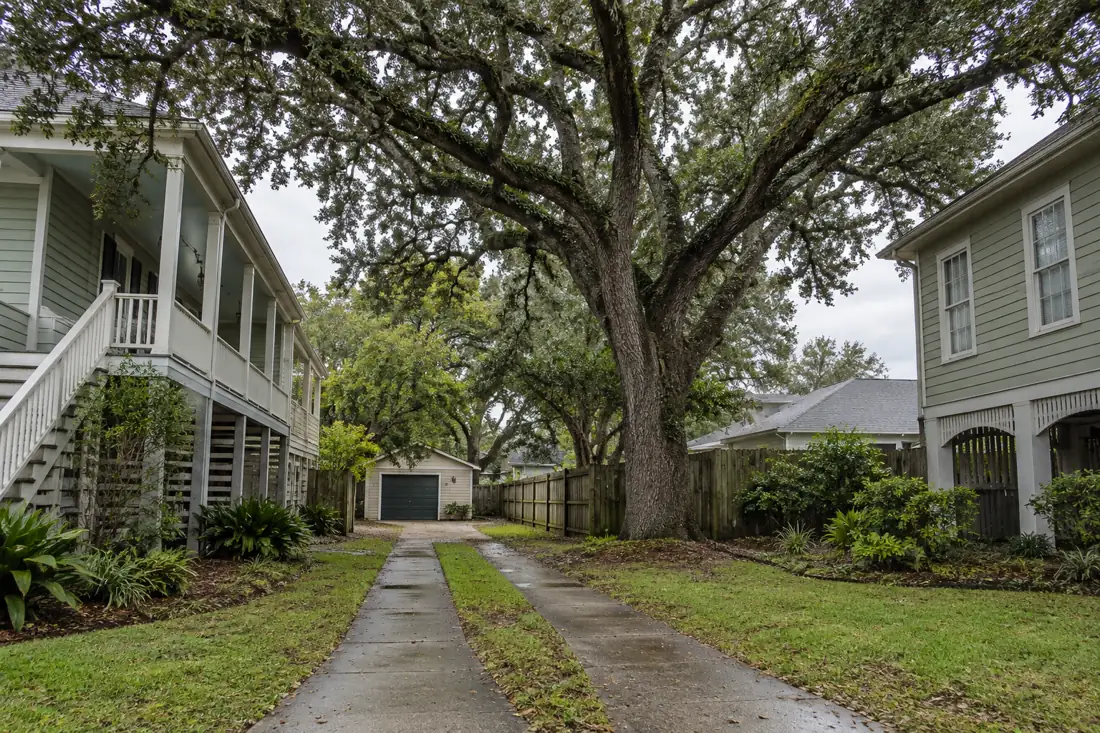
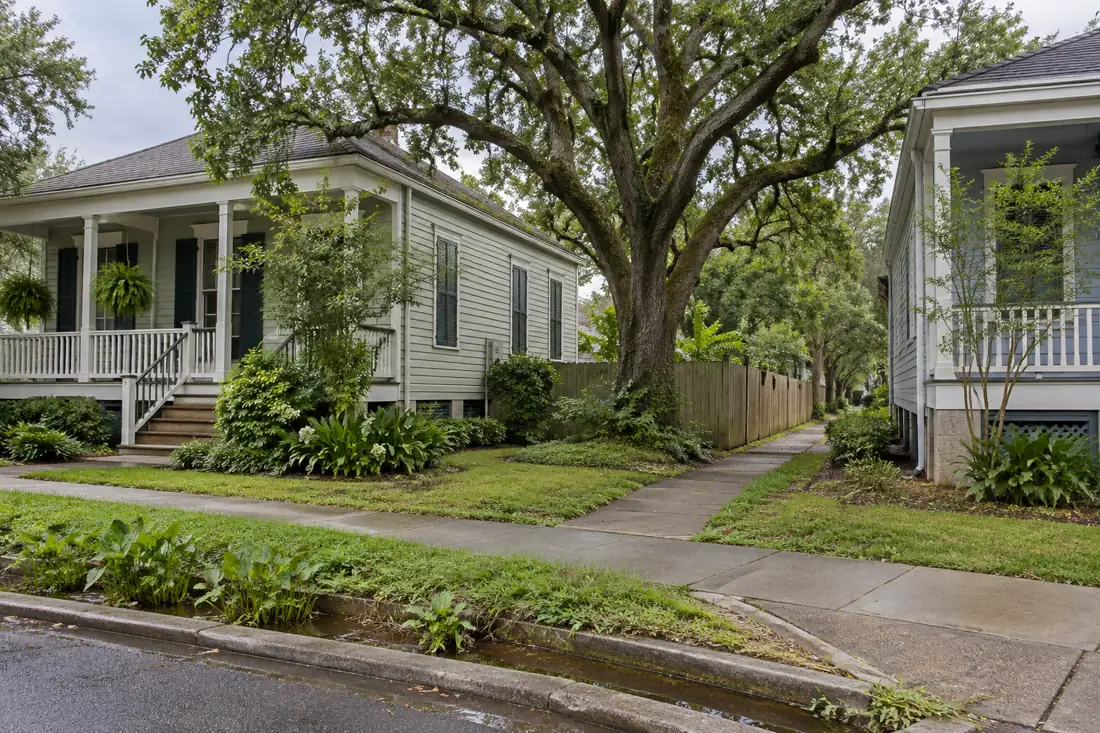
Use agreed identifiers or map references for individual trees and work areas. Tie photographs to those locations and distinguish removals, pruning, existing stumps and material already on the ground. If quantities are approximate, say so and explain what still needs confirmation. A count of visible trunks in one image is not necessarily the same as the accepted task list for a property with several entrances, structures or groups of trees.
For commercial sites, the commercial planning hub helps organize the brief. Identify which entries are selected tasks and which are condition concerns awaiting review. Keep reported observations separate from an assumed property-wide assessment. The same identifiers should appear in the inquiry, accepted proposal and completion record so an owner, purchaser and field contact can discuss the work without reconstructing it from disconnected messages or differently labeled photos.
For an existing debris pile, provide wider views and explain how any stated quantity was estimated. Separate a reported tree count from an approximate material amount, and identify conditions that photographs cannot establish. Do not convert an informal pile description into a guaranteed load count or production rate. The company can discuss what further review is needed before the accepted scope, resources and hauling assumptions are tied to a quantity the purchaser may otherwise have treated as exact.

Explain the full approach and current ground conditions
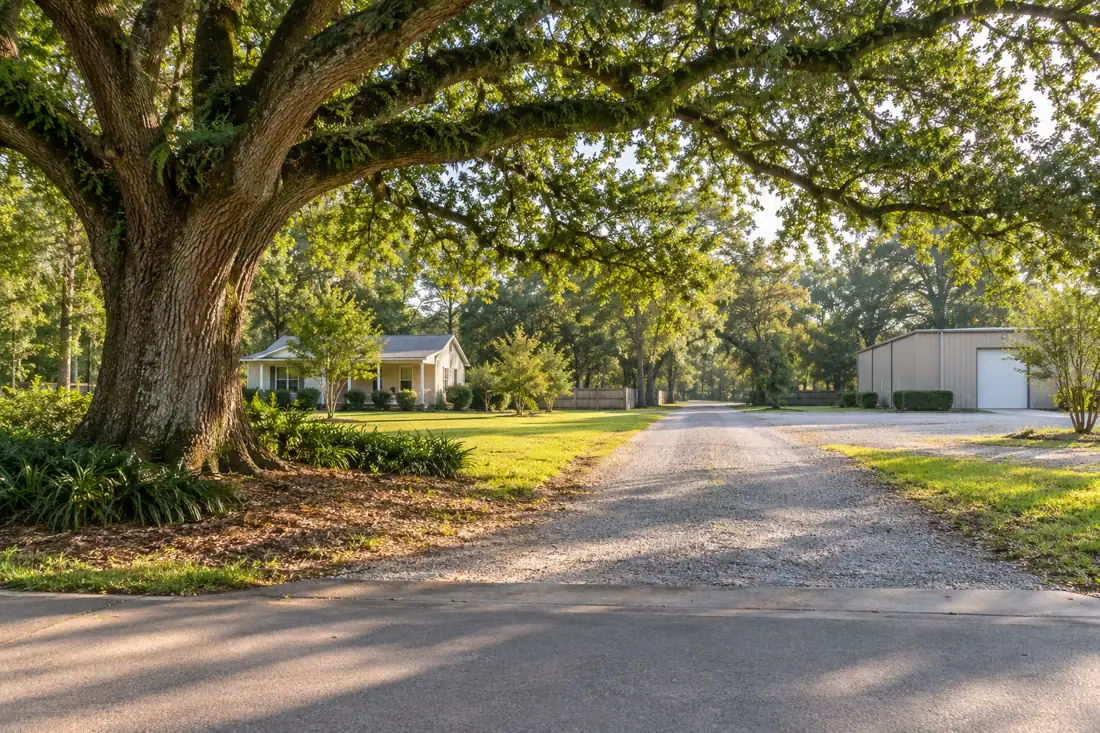
Show the public approach, property entry, gate, turns, surfaces and available setup or loading area. Include the route between the task and the material destination. A broad commercial yard or open lawn may still have a restrictive entry or an area with changed support conditions. Describe what is current after weather or site work rather than relying only on an older photograph made when the route was easier to use.
The equipment guide connects method selection with the task, support and surroundings. State known overhead and buried-feature information together with its limits and the responsible contact for confirmation. A particular machine should not be assumed appropriate or available because it appears in a company photograph. Regional planning is more useful when travel and resources are discussed after the basic site assumptions are visible rather than being committed before the property has been adequately described.
Match the operating window to the property's activity
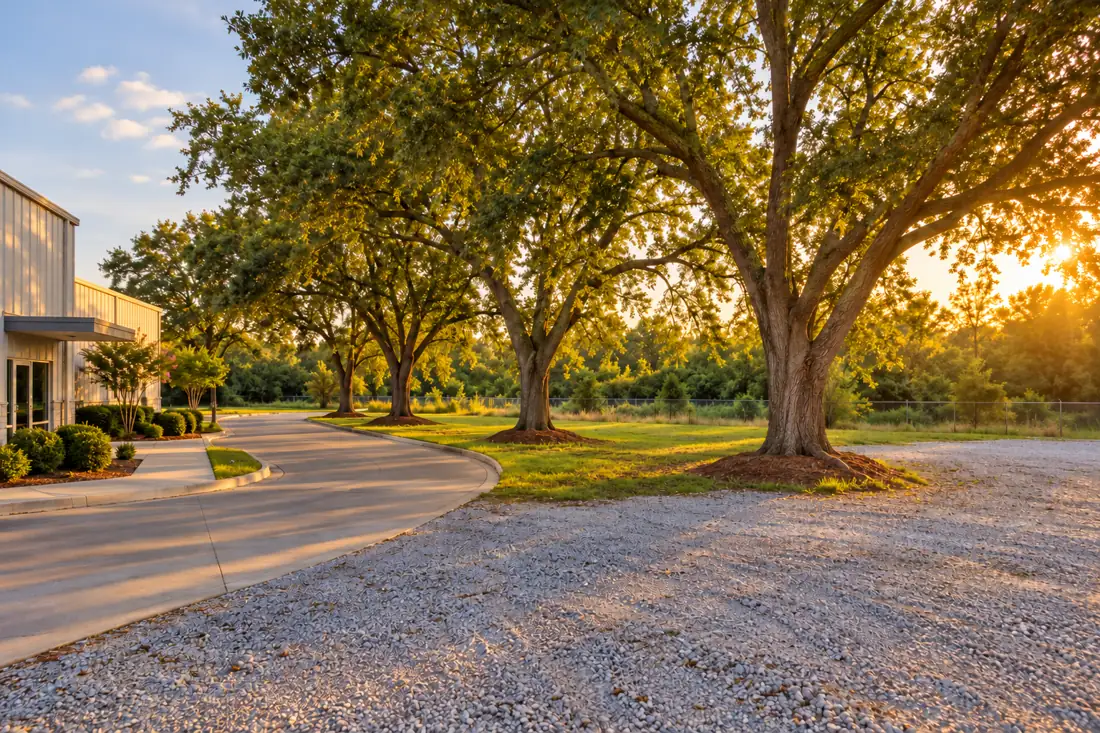
Explain occupied buildings, staff or visitor routes, deliveries and other contractors who use the area. Identify who can make the accepted work area and material route available. An apparently quiet location in a photo does not establish a workable window for setup, tree handling, processing and hauling. If several sites are involved, give each one’s actual restrictions rather than assuming one operating arrangement applies to every address in the project.
Houma: separate condition from regional availability
After a storm, report what changed rather than only what the canopy looks like now. A newly tilted trunk, disturbed soil at the base or a fresh broken limb matters if actually observed. Keep clear of unstable trees, and contact emergency or utility responders where the situation requires it.
For a project outside the ordinary service core, ask about actual mobilization and crew availability. Provide an address, safe wide photos, approximate tree count, access measurements and schedule. A website request does not confirm regional dispatch.
On multi-property or commercial work, identify who can authorize access and changes on each parcel. Keep vegetative debris separate from mixed storm waste, and define loading, hauling and finish responsibilities before committing to the scope.

The contractor service page provides related sequencing context when tree work supports another trade. State the condition the next provider needs and who coordinates that dependency. Availability, travel and the final sequence need direct confirmation. If a site or schedule changes before deployment, provide the update so the company can review the original assumptions instead of arriving under a plan that no longer describes the access, task or work window.
Give wood and debris a definite destination
Identify the material included and whether the request covers cutting, processing, moving, loading or hauling. Explain any proposed receiving location, operating hours and acceptance requirements. A nearby open parcel or existing pile should not be treated as an approved destination by default. The material-handling guide helps connect the tree task with the route and final placement so the proposal covers a recognizable result.
If material stays on the property, agree on processing and location before the work is accepted. Share mixed material or inaccessible piles as separate scope conditions rather than describing everything as ordinary tree debris. A regional project’s logistics can change when the destination or required finish changes. Keep those assumptions with the accepted proposal, including the party responsible for later work, so the purchaser can compare quotations for the same material flow instead of comparing totals that leave different tasks unassigned.
Separate tree removal from future ground use
For removals, identify the intended trees and ask what happens to stumps, grindings and roots under the proposed scope. Explain whether the area is to remain open, become lawn or planting, or support a later contractor’s work. The stump guide addresses related decisions. Removal of standing trees does not automatically establish excavation, construction-ready ground or the surface condition needed by a following trade.
Share available relevant utility, irrigation and drainage information with its source and limits. Identify who handles required confirmation and any separate ground work. If grading, backfill, repairs or restoration are needed, state them explicitly and assign the responsible party. A practical handoff helps the site contact recognize which phase is complete, even when the purchaser discusses the overall project as one large tree-service request involving several separate operations and providers.
Organize storm priorities without assuming deployment
After weather, use safe observations and current map references to identify fallen trees, hanging material, changed standing trees and blocked routes. Keep people clear. Call 504-458-8336 about current availability; an online request does not confirm dispatch or regional mobilization. Immediate threats to people or electrical involvement require the appropriate emergency or utility service. Do not ask site staff to approach unstable material or cut supported wood for a more complete photo set.
The mobilization overview addresses larger regional inquiries. Explain which locations have an immediate operating priority and who can authorize work. Separate the first accepted access or tree task from wider debris processing, hauling and later repairs. A large reported quantity is not a deployment agreement. Current resources, the actual scope, access, destination and operating arrangements still need direct review before a buyer relies on a particular response plan.
Keep regional arrangements and closeout in one record
Request current project documents directly when the purchaser needs specific insurance, qualifications, forms or reporting. The capability overview describes service categories without establishing a particular registration, policy limit or contract eligibility. Keep the accepted locations, tasks, travel assumptions, work windows and approval process together. Name the person who can authorize additions and accept completion at each site so conflicting field instructions do not silently expand the project.
A planning example is several mapped removals at a commercial property, a defined material destination and later stump-area restoration by the owner’s contractor. Those tasks may justify a coordinated regional discussion while retaining distinct completion points. Send locations, quantities, safe photos, current access and the required result to begin a focused review of project fit and availability with Tree Huggers.
Tree Service Houma questions
Does Tree Huggers have a Houma office stated on this page?
No. Tree Huggers is based in Marrero and reviews Houma-area regional project inquiries.
What work should be submitted for regional review?
Describe the actual task; larger removals, multi-tree, commercial and storm scopes can be evaluated.
What should a multi-site request contain?
Provide addresses, mapped tree or area identifiers, photos, quantities and a coordinating contact.
Can quantities be preliminary?
Yes. Label estimates clearly and identify what still requires confirmation.
Does an open commercial yard guarantee equipment suitability?
No. The full approach, ground, setup, task and material route need review.
What operating information should be supplied?
Describe occupancy, routes, deliveries, other contractors and who can make each work area available.
Does an inquiry reserve a regional crew?
No. Confirm current resources, availability and arrangements directly.
What should be stated about the material destination?
Give the proposed location, requirements, hours and the responsible contact rather than assuming approval.
Does removing the standing trees include construction-ready ground?
No. Clarify stumps, grindings, excavation, backfill and the next provider's required finish.
How should storm priorities be organized?
Use safe current observations, mapped locations, affected routes and an authorized decision-maker.
Where should purchaser documents be requested?
Ask Tree Huggers directly for current project-specific evidence and requirements.
What should the final project record connect?
Locations, accepted tasks, travel and operating assumptions, material decisions, changes and remaining responsibilities.
Let’s plan your tree work.
Send the property address, safe tree photos and the result you need. Include access restrictions and the person who can approve the work.