Storm damage can remain in a standing tree
Inspect new change, not just fallen branches
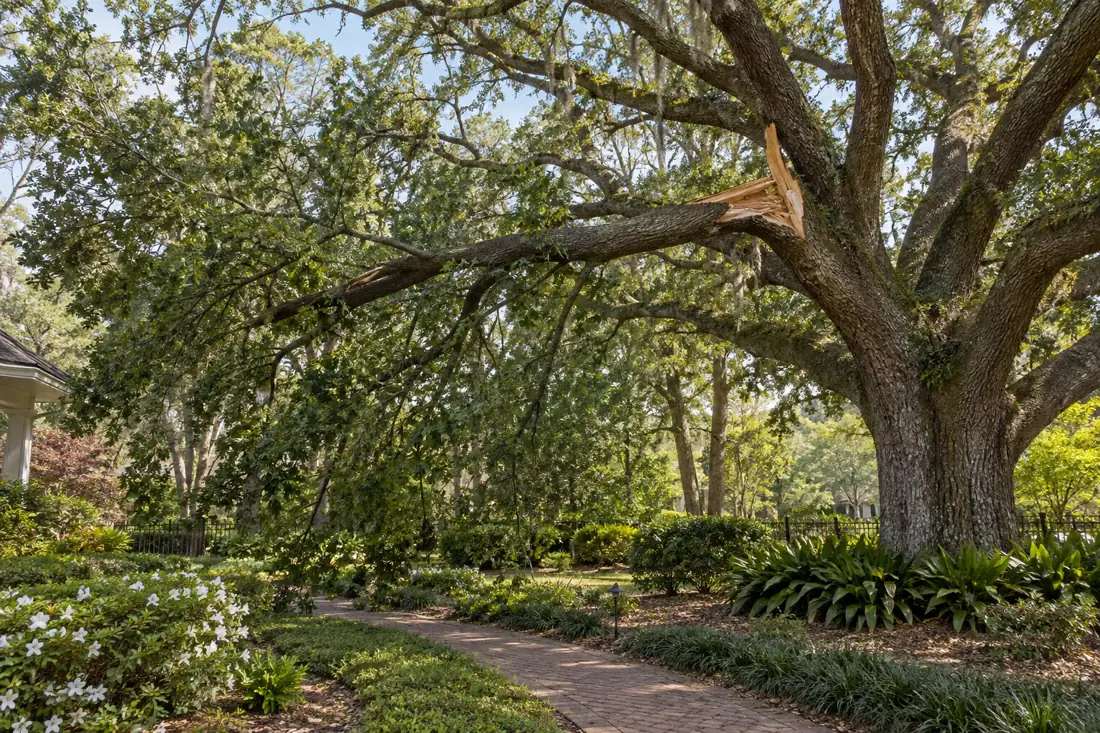
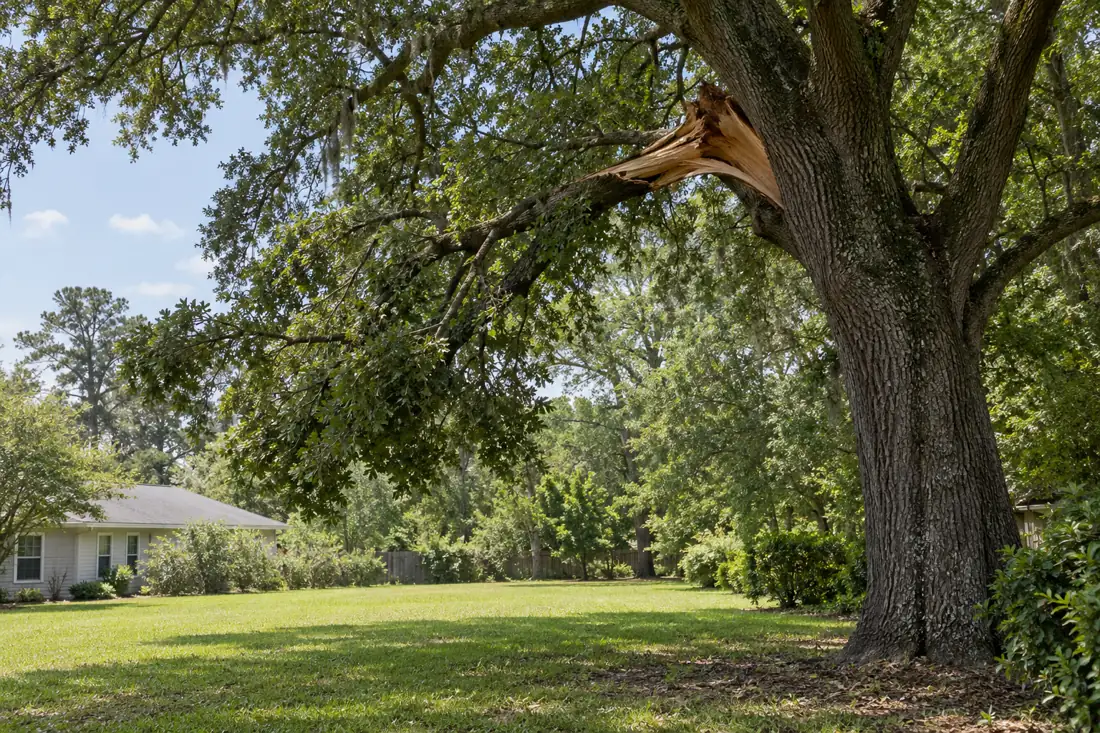
A standing tree can look familiar from one angle while a newly split leader, lifted soil or changed lean is visible from another. Compare safe observations before and after the weather event: fresh exposed wood, bark separation, unusual movement, crown loss and soil cracks around the base are useful information.
These observations do not by themselves diagnose failure probability. Note what the tree could strike and whether the area is normally occupied. Do not pull back loose bark, dig around moving roots or approach a hanging limb to create a closer picture.
Decide between assessment and removal scope
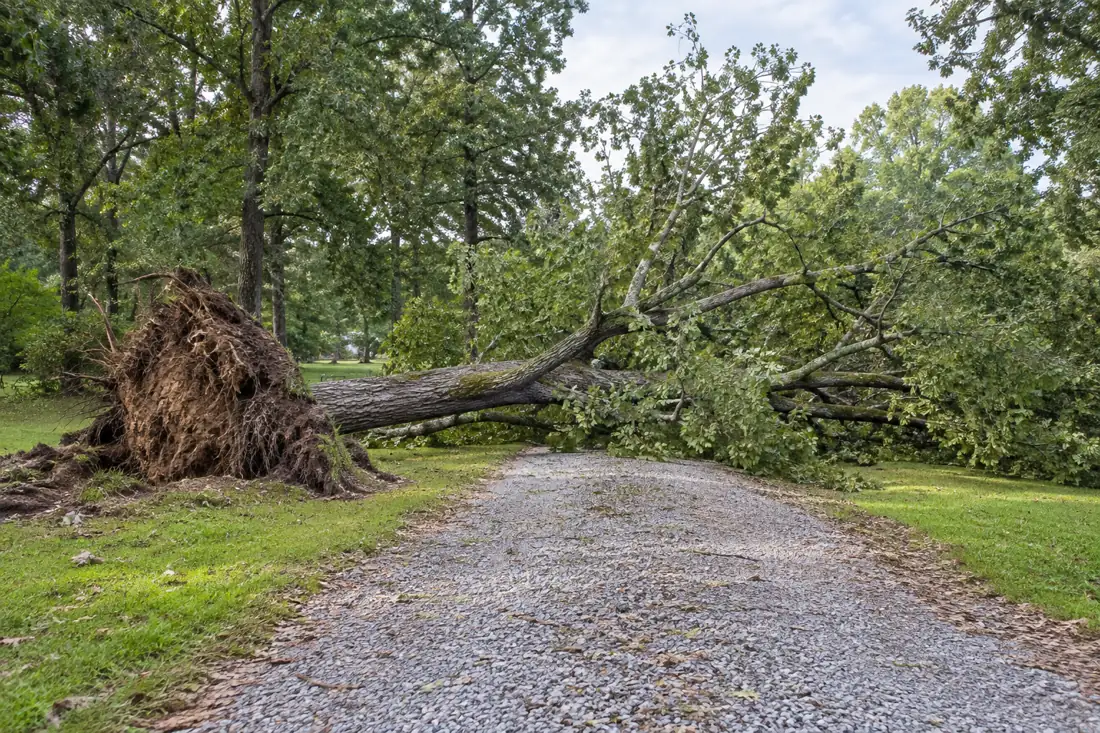
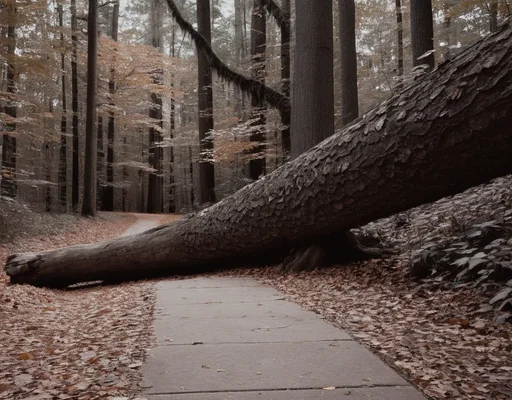
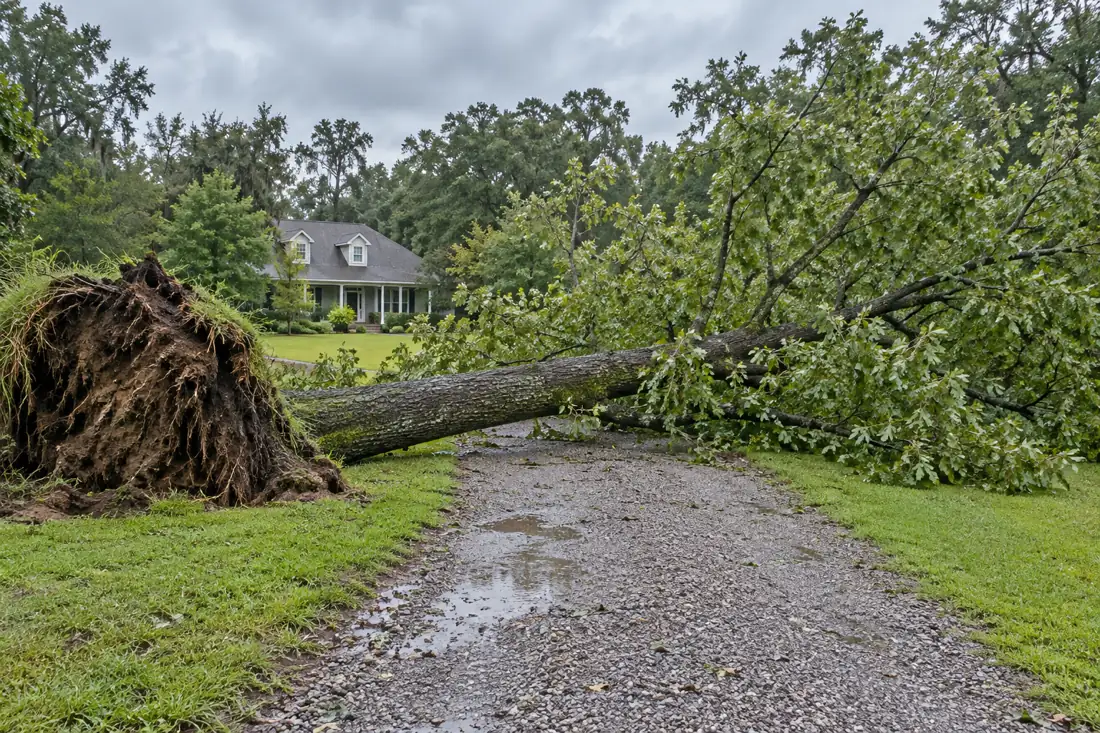
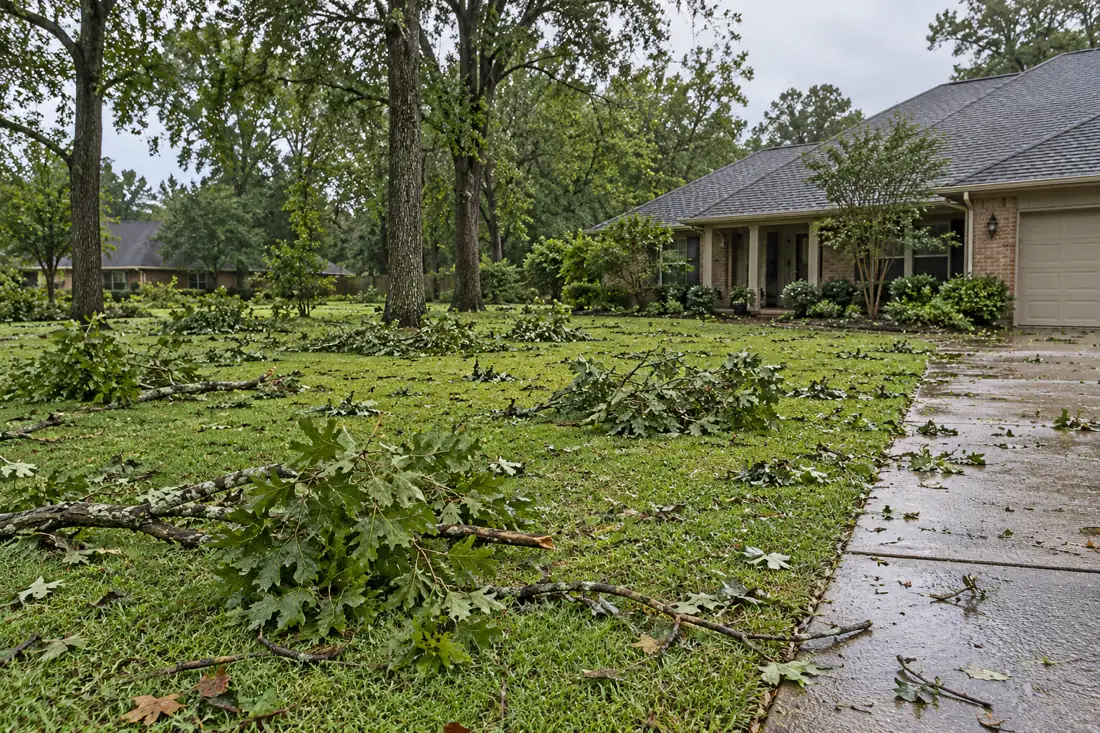
Some requests concern one hazardous component; others need a whole-tree condition review before choosing pruning, support or removal. Tell the estimator whether the priority is an immediate exposed target or a decision about retaining the tree. A tree already lying across a drive belongs with fallen-tree removal, while scattered brush with no unresolved hazards belongs with storm cleanup. Keep photographic documentation factual, without assuming a contractor can certify the condition of every tree from submitted images alone.
Storm damage changes the load path
After strong wind or impact, a tree may be standing but no longer stable. Root plate movement, new lean, cracks, broken leaders and partially attached limbs can change how weight is carried. That is why post-storm work begins with a fresh look rather than assuming the tree is safe because it did not fall completely.
Practical scope and safety guidance: After a storm, first separate immediate life-safety concerns from cleanup that can be scheduled after conditions are safe. Stay clear of leaning trees, cracked leaders, hung branches and vegetation touching electrical equipment. When it is safe to do so, document the tree from a distance, including the base, the affected canopy, nearby structures and the most practical access route. Photos help communicate visible conditions but cannot establish internal decay or determine whether removal is necessary.
For the service inquiry, note whether a road, entry, roof, utility line or shared property is involved and whether ownership or insurance documentation is needed. Ask the estimator to distinguish hazard mitigation, complete removal, stump work, hauling and later restoration. Do not promise that a photograph guarantees a diagnosis or that a particular response window is available. Any final method depends on conditions at the property and crew access.
Identify what is still loaded or supported
A broken tree that appears stationary may still be supported by another branch, a fence or a roof. Note the contact points and changing access conditions without touching the trunk. Document what is known for an assessment and leave equipment choice and controlled release sequence to professionals.
Identify immediate hazards, blocked access and trees threatening occupied areas.
Evaluate remaining structure, root stability, crown condition and targets.
Remove hazards, restore access and complete the agreed debris cleanup.
Some trees can be preserved
Storm damage does not automatically mean removal. Selective pruning, support systems or monitoring may be appropriate when the trunk, root system and remaining canopy are viable. Severe trunk splits, uprooting, major root failure or large unstable sections increase the likelihood that removal is the practical choice.
Related services
Report what changed instead of choosing a diagnosis
Describe a new lean, visible split, broken top, disturbed ground or hanging branch in ordinary language. Include when you first noticed the change and whether it followed the recent weather. You do not need to prove why the tree failed before contacting Tree Huggers. An accurate observation is more useful than selecting a cause from an online photograph of a different tree.
Keep people away from damaged areas while the next step is being arranged. Call 504-458-8336 about current tree-work availability. For immediate threats to people or electrical involvement, contact the appropriate emergency or utility service. The emergency service page explains that contact path. A form or photo message helps communicate a concern, but it does not confirm dispatch or establish that the surrounding property is safe to enter.
Connect each damaged tree to its surroundings
Tell the company what is beneath or beside the tree: a house, fence, parked area, entrance or unused lawn. Include damage on the neighboring side when it is visible from a safe position. A close view of a crack can hide the roof or walkway that makes the issue important to the customer. The assessment needs the tree and its surroundings together rather than a disconnected detail.
For several trees, use simple consistent identifiers such as front oak and rear pine. Keep those identifiers with the photos and accepted work list. Avoid assuming that two trees affected by the same storm need identical treatment. A fallen tree across a drive, a broken limb over a path and a standing tree with a new concern are different tasks. Clear locations let the discussion separate those conditions without losing sight of the property as a whole.

Understand the limits of a photo review
Safe wide images can show the complete crown, trunk, base and nearby structures. Add details only when they can be obtained without approaching damaged wood, unstable ground or electrical conflicts. Explain any view you cannot safely obtain. Do not climb, move material or enter a damaged structure to produce a more complete photo set. An information gap should be stated rather than filled by taking an unnecessary risk.
Photos help prepare questions and a possible visit; they do not reveal every internal defect, concealed attachment or root condition. The post-hurricane inspection guide provides related context. Tell the company about earlier failures, known construction or a condition that predates the storm, if known. Keep uncertainty honest. The aim is to support the review of this tree, not to turn a remote image into a guaranteed condition rating.
Separate immediate tree handling from preservation decisions
Addressing a broken limb does not always settle the future of the remaining tree. Ask what the proposed scope covers and whether a separate condition or risk assessment is needed. Pruning, support systems, observation and removal serve different objectives. The appropriate discussion depends on the actual tree and site, rather than assuming that all storm damage requires removal or that retaining green foliage establishes a favorable outcome.
The save-or-remove guide and assessment service organize those questions. Share the result you would prefer while allowing the review to explain limitations and alternatives. If a tree is retained, clarify any recommended follow-up and who will arrange it. A preservation decision should include the ongoing responsibilities the customer is accepting, not end with an undefined promise that the tree has been fixed permanently.
Show access under the current conditions
A route used before the storm may now be blocked, soft or affected by another damaged tree. Show the entrance, turns, surfaces and possible loading area as they exist now. Mention changes since the photos were taken. A clear front driveway does not describe the path to a tree behind a fenced yard, and an equipment approach used on an earlier job should not be assumed suitable for this one.
The company can discuss handling options after reviewing the site and task. The equipment hub explains why route, setup and ground conditions matter together. Include retained trees, beds and other features along the approach. If another property or shared entrance is involved, identify the appropriate access arrangements before relying on that space. This helps the work plan account for the complete movement of equipment and material, not only the damaged tree itself.
Keep utility and building work assigned
Report trees touching or close to wires without approaching to investigate. Electrical coordination belongs with the appropriate utility or emergency service. Tree handling should not be treated as permission to touch a conductor or as evidence that an electrical condition has been cleared. Describe what is visible from a safe position and let the relevant providers establish their responsibilities for the actual situation.
For material resting on a building, review the tree-on-house service and explain the contact at first communication. Tree removal, building evaluation, roof protection and repairs can involve different providers. Ask who is arranging each part before their work overlaps. A useful scope identifies what the tree company is handling and the condition at the handoff, leaving unrelated repairs visible instead of silently including them in a broad storm-damage request.
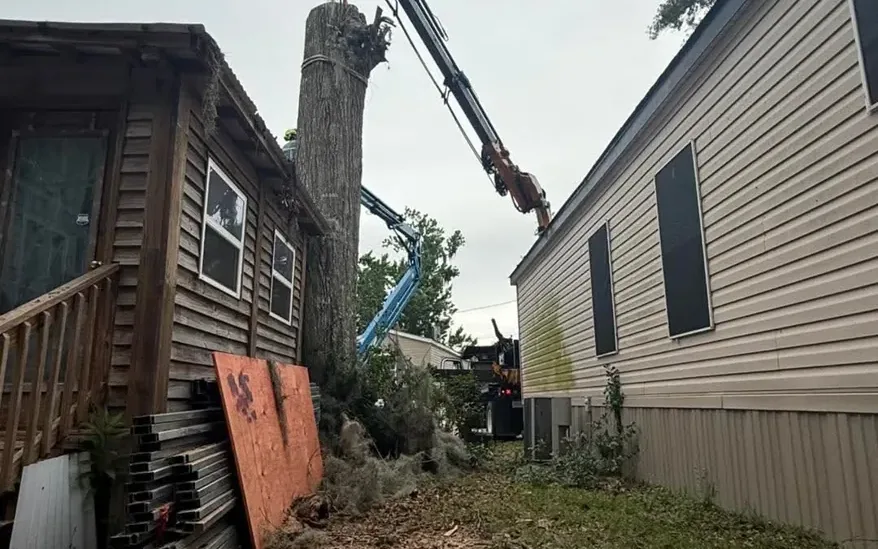
Define the cleanup that follows the tree task
Logs, branches, chips and an exposed stump are different parts of the finished result. Specify what leaves, what stays and where retained material belongs. If the property also contains an older brush pile or damage from another tree, identify that separately. The accepted work should connect the immediate tree concern to a practical material-handling boundary, so later cleanup is not left to assumptions.
The storm cleanup page and debris guide explain related decisions. Disclose mixed fencing, roofing or other non-tree items before hauling is arranged. Soil restoration, planting and property repairs require their own scope unless expressly included. Ask which remaining items need another visit or provider. A clear finish gives the customer a way to recognize completion without confusing removal of the main hazard with restoration of the entire property.
Keep the request current through approval
Send the address, tree identifiers, safe photos, observed changes and the contact who can arrange entry. If conditions change, tell the company rather than relying on yesterday’s description. For a managed property, identify who can approve the tree scope and how additional work is authorized. Private access information should stay in the agreed direct channel rather than broadly shared photographs or public notes.
A planning example is a damaged standing oak near a roof plus a separate fallen tree in an open lawn. They may require different review and handling even though both changed during the same weather event. Ask which tree task is proposed now, which decisions remain open and what follow-up is needed. That closes the gap between a general report of storm damage and a workable property-specific request.
Distinguish a storm-damaged tree from its immediate hazards
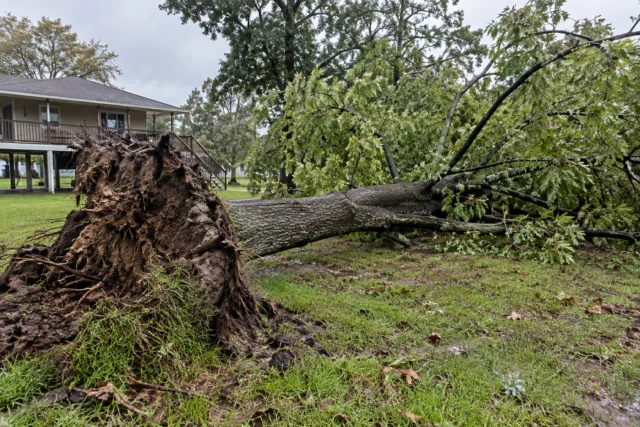
Storm calls are easiest to prioritize when the message distinguishes a tree that has already fallen from one still carrying damaged wood above an occupied area. A newly exposed crack, tipped root plate or partially attached canopy section can change the plan even if the yard looks relatively clear.
Describe what you can see from a safe distance and when the change occurred; do not pull branches, test the trunk by hand or approach a tree touching electrical infrastructure. The objective is a reliable first description, not a remote diagnosis.
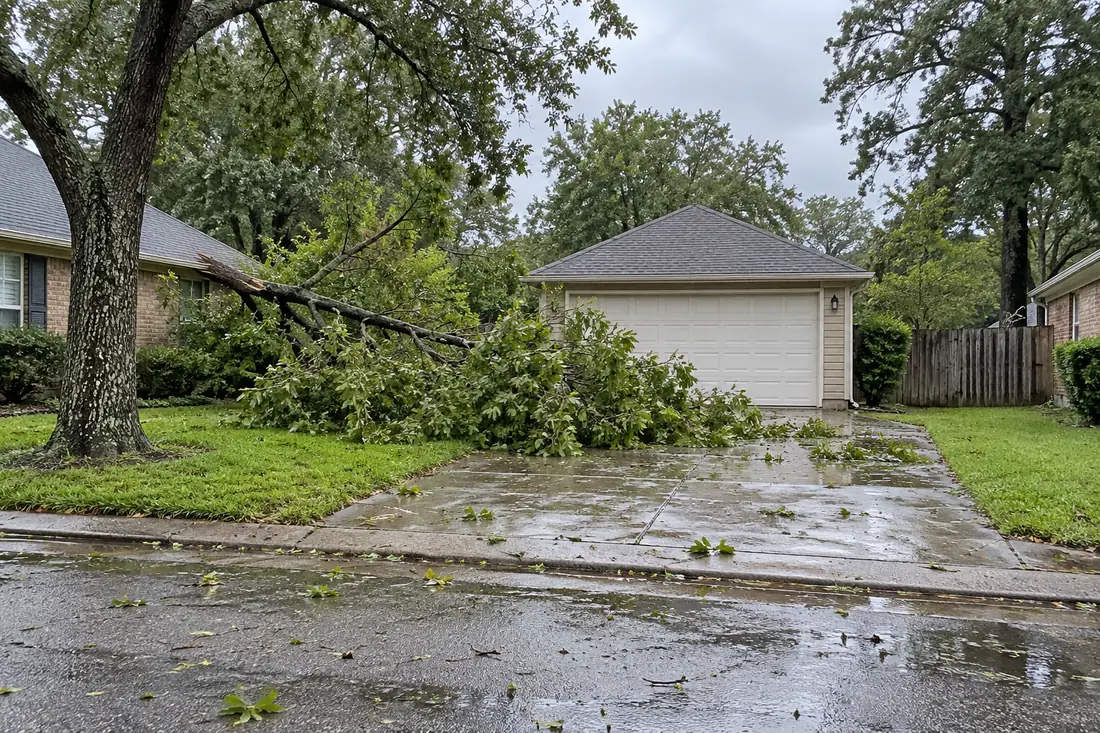
Separate life safety, property access and longer-term tree care when you request help. A driveway blocked by fallen material may be an access project, while a hanging limb over a walkway calls for an exclusion area until properly assessed. If a trunk is leaning onto a structure, the building may need its own safety review before tree work proceeds. Identify each affected tree and what lies beneath it, rather than submitting one general message that several trees were damaged.

Build a safe, verifiable storm-work scope
Photographs should connect a full-tree view with the affected part, the trunk base and any nearby roof, fence or route. Only use angles available from secure standing ground. Tell the team if conditions changed between the photos and the request, and provide a safe access contact who can describe gates, soft ground or obstacles. For a managed property, name the person who can approve changed work after the initial condition is understood. A site review may reveal different lifting, lowering or staging needs than a photograph suggested.
Once immediate hazards are addressed, ask for a clear breakdown of retained-tree decisions, removals, cleanup and stump work. Not every wind-broken tree has to be removed, but preservation should never be assumed from leaf color alone. Keep before-and-after project records tied to the actual work, not an invented structural certification. Follow-up needs may include a separate arboricultural assessment, a site-repair contractor or the owner’s own insurance documentation. This avoids promising that a single cleanup visit settles every question.
Storm Damage Tree Service questions
Does every storm-damaged tree need removal?
No single answer fits every tree. The actual condition, surroundings and appropriate review determine the discussion of preservation or removal.
Can a tree be a concern while it is still standing?
Yes. Report newly observed lean, cracks, disturbed ground, broken tops or hanging material without approaching to investigate.
What should I send after a storm?
Send the address, safe wide photos, tree identifiers, observed changes and the route into the property.
Can photos prove the tree is safe?
No. Photos introduce visible conditions but cannot establish every concealed attachment, internal defect or root condition.
Should I move broken branches before an assessment?
Do not alter damaged or supported material to prepare it. Explain the obstruction and leave the condition for appropriate review.
What if several trees were affected?
Label them consistently and describe each concern separately. Shared weather exposure does not make their work scopes identical.
Does removing a broken limb settle the whole tree’s condition?
Clarify what was reviewed. Limb removal and a broader condition or risk assessment are different tasks.
What if wires are involved?
Keep clear and involve the appropriate utility or emergency service. Do not touch the tree, conductor or connected objects.
Are roof repairs part of tree work?
Tree handling and building evaluation or repairs are separate responsibilities unless expressly arranged with the relevant providers.
Does the quote include all storm debris?
Specify the tree material, older piles, mixed waste, retained wood and finish. Broad cleanup wording can hide different tasks.
Does a form confirm an emergency crew is coming?
No. Call about current availability and use the appropriate emergency or utility service for immediate threats or electrical hazards.
What should be clear before approval?
Identify each tree, proposed work, access, material handling, remaining repairs and any follow-up assessment or care.
Let’s plan your tree work.
Send the property address, safe tree photos and the result you need. Include access restrictions and the person who can approve the work.