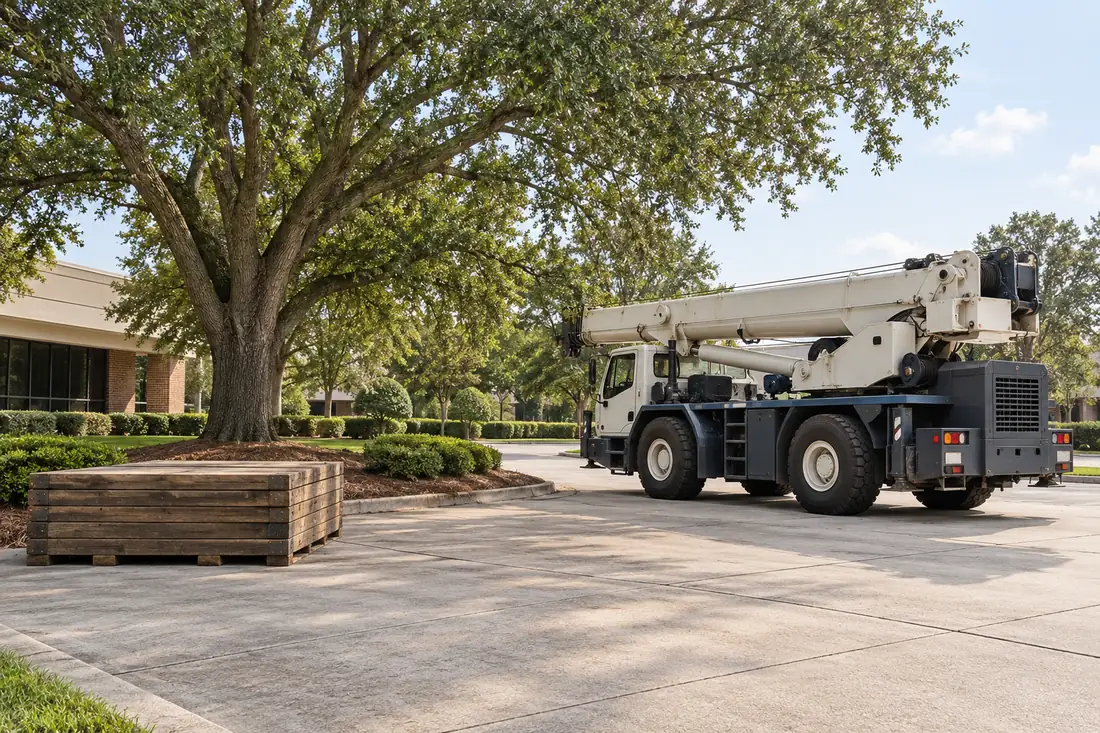
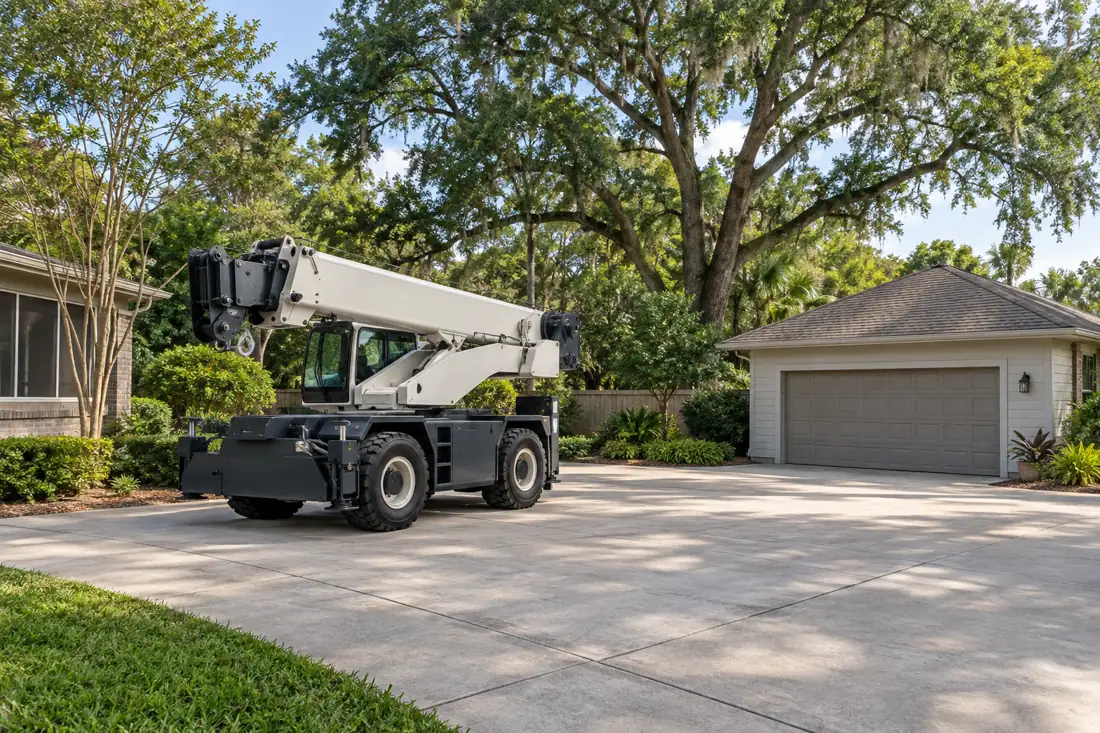
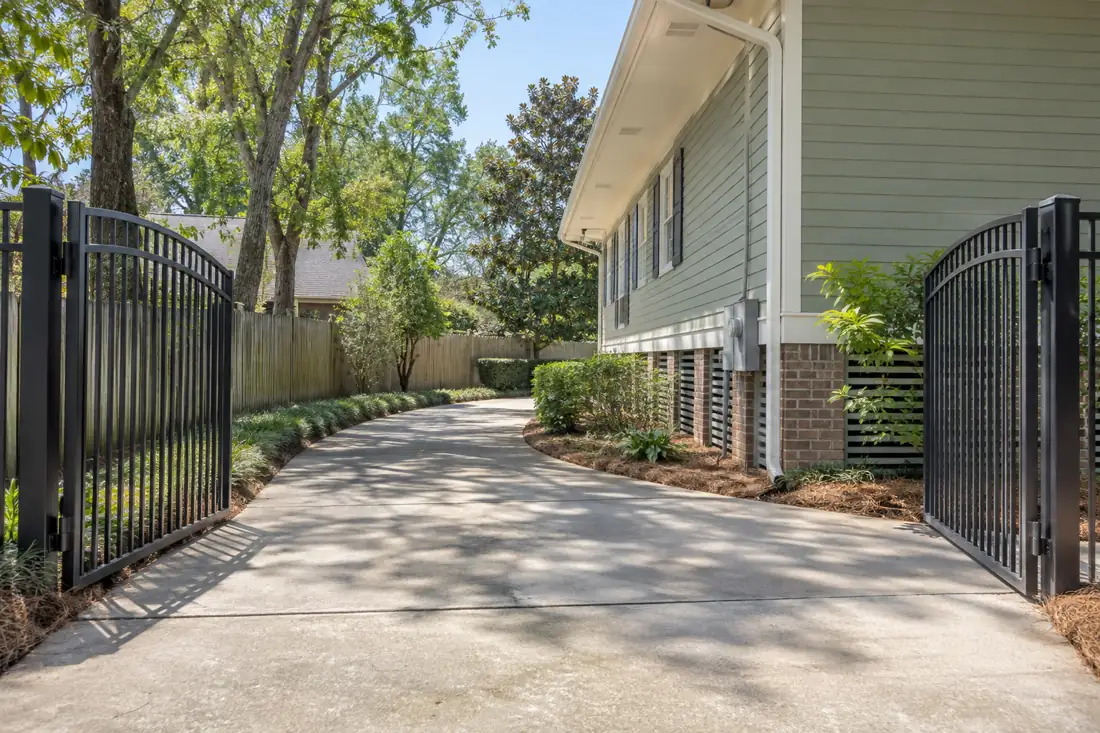
A service drop can lie within or near a canopy and should be treated as a utility hazard. Do not touch the tree or wires to investigate. Show the location from a safe distance and identify the utility contact where known. Coordination and qualified personnel are needed before work within the affected area is planned.
Practical scope and safety guidance: Treat the overhead drop as a separate dependency in the scope, not a branch that the crew can work around. From a safe position, record where the line runs, its building attachment, and which trees appear to overlap it. Never move a limb, ladder or pole toward a conductor to obtain a closer photo. The utility account holder and property manager may be different people; identify who is authorized to request any utility appointment.
Ask the estimator which operations must wait for authorization and whether the proposal includes utility coordination or expressly excludes it. A line that looks insulated or inactive must not be assumed safe. If a limb is resting on a wire, keep people away and contact the appropriate utility or emergency response service.
Put an outage or approval dependency, potential occupant notice and debris-removal sequence in writing. Do not publish a guaranteed clearance distance or promise a date before the qualified parties have reviewed the actual hazard.
Start with photographs taken from a safe location that show the tree, the property entrance, the pole or attachment point and the visible service line. Do not touch the line, move branches near it, use a ladder to inspect it, or assume that a narrow wire is inactive.
Distinguish an electrical service drop from communications wires only through an authorized determination; appearances are not a safe test. Describe whether the issue is routine pruning, a branch bearing on a line, storm damage or blocked access. The owner and contractor need to establish which utility controls the equipment and when any required disconnection, protection or clearance will occur.
The estimate should make the dependencies explicit: work permitted before utility coordination, work requiring utility authorization, possible service interruption, equipment staging and the final debris route. Ask who will notify occupants and who will confirm that clearance or isolation is in effect; never treat a homeowner's assurance as proof of de-energization.
If storm damage leaves a wire down or a branch in contact with electrical equipment, keep people away and contact the utility or emergency services as appropriate instead of asking for ordinary tree work around it. After authorized work, check only from a safe position that access, fencing and debris cleanup match the agreed scope.
Identify every visible electrical conflict
A service drop may run from a pole to a house, cross a driveway, or disappear through branches near the roof. Other overhead lines can be communications cables, but a homeowner should never assume that a wire is harmless based on appearance. From a safe ground location, note where lines cross the canopy, where the attachment enters the building, and whether a limb appears to contact or hang over them. Do not approach a damaged or low-hanging wire to get a better photograph.
Tree work near electrical conductors requires professional evaluation and possibly utility coordination before ordinary trimming or removal. The risks include direct contact and indirect contact through branches, tools, lifts, or equipment. A tree contractor should not treat a remote-control machine or a long tool as an exception to electrical safety requirements. Keep people, pets, and vehicles clear of suspected dangerous areas and contact the responsible utility when a line may be compromised.

Understand who controls the line and the work
Not every wire on private property belongs to the same company or falls under the same service arrangement. The utility, telecommunications provider, property owner, and tree contractor may have different responsibilities, so early clarification matters. The property contact should share available account or service-location details privately with the appropriate provider, not publish personal account numbers on the tree-service website. Ask who is arranging any needed isolation, clearance, or reconnection.
Do not assume that scheduling a normal tree crew automatically schedules a utility response. If specialized line-clearance work or a utility appointment is needed, the estimate and work calendar should reflect that dependency. The crew should identify what it is qualified and authorized to perform and what is outside scope. A clear sequence prevents workers arriving to find a live line conflict that neither side has addressed.
Treat all lines as energized until properly verified
A line that looks insulated, inactive, or small can still pose a lethal hazard. Homeowners should not touch it, move it with a ladder or pole, or pull branches away from it. If a tree or branch has fallen on a wire, keep clear of the tree and surrounding area and contact the utility or emergency services as appropriate. Do not attempt to assess whether a line is live by visual inspection or by watching for sparks.
Qualified professionals determine applicable electrical work practices and approach distances for the actual conditions. OSHA guidance distinguishes ordinary tree work from specialized line-clearance operations and addresses the hazards of tools and equipment near conductors. Rather than repeating a single distance as universal advice, ask the contractor to confirm its qualified process and utility coordination. Homeowners should report the location, not direct the electrical work.

Plan the work area around buildings and access
A service drop commonly runs close to eaves, gutters, roofing, windows, and the point where workers might otherwise stage ladders or lifting equipment. Show the estimator all sides of the tree and its relationship to the house, garage, and fence. Note whether the driveway is the only machine access and whether the electrical route crosses that path. A method that looks reasonable on the tree side may be incompatible with the line position.
The crew should evaluate where cut branches would travel and where they can be lowered or handled without entering a dangerous clearance area. Work may need to be sequenced differently after a utility establishes an appropriate condition. Ask whether the estimated service includes material handling and site restoration after the electrical portion is resolved. Do not clear brush directly beneath a suspect line yourself before the site is released as safe.
Treat the house service line as a distinct hazard
A service drop may cross a driveway, side yard or part of the tree canopy. Its relationship to communication cables and other utility lines is not always obvious from a photograph. Take a distant safe view showing the pole, house attachment and tree, but never touch wires, tree branches or hardware to identify the line.
If vegetation is contacting a conductor, the safest next step is to keep people and pets away and contact the responsible utility or emergency services as appropriate. A tree-service inquiry is not authorization to work near energized cables. Qualified parties determine the restrictions and required coordination.

Keep observation separate from utility clearance
Equipment that never cuts near a wire can still pass beneath it or move wood through its area. Include the approach route, proposed staging and potential material movement in the assessment. The contractor should distinguish utility responsibilities from routine pruning and record who arranges any needed authorization.
Send a property address, the tree objective and clear safe distant photographs. Mention known outages or previous utility concerns. Do not use a ladder or move a branch for a closer view. Maintain the electrical restriction in the written scope until the appropriate party confirms it is resolved.
Recognize storm damage as a different situation
High winds can change tree lean, loosen a service attachment, or leave a branch supported partly by a wire. A line may be hidden beneath foliage or debris after a storm. If you see sagging conductors, a damaged mast, sparks, or material resting on a line, keep away, prevent others from entering the area, and contact the appropriate utility or emergency service. Photographing storm damage from within a hazard zone is not worth the risk.
An emergency assessment and an ordinary scheduled trimming appointment are not the same request. Tell the contractor whether the hazard is active, whether access is restricted, and whether a utility has been contacted. Do not promise the work can be completed immediately if electrical coordination is unresolved. Record the provider's instructions and share them accurately with the contractor through established channels, without attempting repairs or cutting.

Use photographs without approaching the hazard
A useful image can show the complete tree, line path, pole or service attachment, roofline, and access route from a safe location. Wide context matters more than a close-up taken underneath the conductors. Explain where you were standing, which branches concern you, and whether the line appears changed after a recent event. Do not climb a ladder, stand on a roof, use a drone near wires, or lean over a railing merely to improve the picture.
If a photograph is too far away to show the detail, write a clear description instead. A qualified person can inspect the site under appropriate procedures. Limit photographs to information needed for an estimate, and avoid recording neighbors' private activities where possible. The project's photo intake exists to reduce unnecessary repeat visits, not to encourage homeowners to enter unsafe areas. State explicitly if the utility has already warned you to stay clear.
Treat overhead service drops as an electrical coordination issue
A cable running from a pole to a building can pass through branches at a height that looks convenient for pruning. It may remain energized after a homeowner turns off the main breaker, so do not touch, lift, cut around or measure it. If safe, photograph the larger relationship from well away from the wires.
Do not guess which cables are electrical when the property has multiple overhead services. Qualified parties and the utility must identify the hazard and decide how a tree crew may work nearby.
Before scheduling a crane or climber, ask who contacts the line owner and who manages any approved electrical arrangements. Utility scheduling, service needs and site-access restrictions may change the tree-work method. Note the electrical issue on the estimate rather than assuming workers can work around it as an incidental obstacle.
Keep residents and animals away from affected areas if a cable is damaged or down. The customer's role is to report the condition and coordinate access, not perform line clearance or supervise energized work.
Identify which line you are seeing before choosing any tree work
The line from a utility pole to a house may be a service drop, while other nearby conductors may belong to different electric or communications providers. Appearance alone does not establish whether a wire is energized or safe to approach. Record the visible route from a safe public or owner-authorized position, identify the addresses and utility equipment involved, and contact the appropriate provider about control, clearance or service interruption requirements. Never use a pole, ladder, pruning tool or branch to test a wire.
A quote should distinguish authorized tree work outside electrical exposure from any operation that must wait for the utility or qualified line-clearance personnel. Include pedestrian access, driveway closure, damaged limbs and weather-related changes in the plan, but avoid publishing precise private account information. Do not promise a fixed clearance distance based only on an illustration; the applicable work rules and actual energized installation govern the job.

Keep machine travel away from electrical conflicts
Lifts, cranes, chippers, trucks, and long-handled tools create different exposure paths around overhead wires. Even if the target cut is far from a conductor, equipment may have to travel under it or set up near the service attachment. Provide approximate gate and driveway details, but leave clearance measurements and operational decisions to qualified workers. A residential roofline can make overhead clearance more restrictive than ordinary vehicle height suggests.
Ask which setup locations are under consideration and whether the route requires utility coordination. Never move a service wire out of the way for a machine, even briefly. If a neighboring lot or street setup might be needed, identify permission and traffic questions before the work date. A contractor should be willing to revise or postpone its approach when a necessary electrical condition cannot be confirmed.

Define authorization and schedule dependencies
A written scope should identify the tree or branches to be addressed, the planned work area, the known line conflict, who contacts the utility, and what event allows the tree work to proceed. Do not assume the tree contractor can make a service drop safe by itself. Clarify whether the job requires a separate electrical contractor, a utility appointment, or a second tree-work visit. These dependencies can affect both timing and price.
When several parties are involved, name the property contact who can approve scope changes and receive updates. Keep all authorizations and revised dates together. Ask how completion will be communicated, particularly if the line must be reattached or service restored by another provider after tree work. There should be no ambiguity about who is responsible for which step, and no pressure to continue while the electrical hazard remains unresolved.
Consider the tree's health after safe clearance
Clearing a branch from a service line does not automatically mean the entire tree should be severely pruned or removed. Once electrical safety is addressed, a qualified tree professional can assess the tree's structure, growth pattern, and options for maintaining appropriate clearance. Poorly located cuts may create future defects or vigorous sprouts that return to the line. Avoid requesting arbitrary topping solely to make the problem disappear for a season.
Discuss whether the goal is targeted clearance, structural pruning, or full removal, and ask what can realistically be maintained as the tree grows. Future maintenance may require further coordination with the utility; this should be explained rather than concealed. A good plan protects the electrical infrastructure while respecting tree health where retention is practical. The scope should make the chosen objective and limits clear to the owner.

Confirm cleanup and preserve the project record
After the qualified parties have completed their responsibilities, verify from safe areas that branches and debris are removed as specified, access is restored, and any temporary barriers are gone. If a wire, attachment, or electrical enclosure appears damaged, do not touch it; report the concern to the proper provider. The tree crew's completion does not establish that the electrical utility's work is complete unless that has been confirmed through the appropriate process.
Keep photographs, the estimate, change approvals, and utility instructions in one record for future maintenance. Tell the contractor if a retained tree has a recurring growth conflict that should be reviewed later. The objective is a stable, coordinated outcome with no homeowner improvisation around energized infrastructure. An accurate description of what was and was not performed is more useful than a vague statement that every wire issue has been fixed.
Questions about this project
Can I identify a safe wire by looking at it?
No. Do not approach or touch wires, a tree contacting them or connected objects to investigate. Keep clear and contact the utility or emergency services when there is an immediate electrical hazard.
Does a tree estimate include utility disconnection?
Only if the appropriate coordination and responsibilities are explicitly arranged. Utility work may require the service provider or another qualified party. Confirm those arrangements before assuming the tree crew can proceed near affected services.
Which photos should I text first?
Send a wide tree view, the base if safely visible, nearby targets and the equipment route. Add the address, desired work and any recent change. Identify each tree clearly if the request involves several.
Can photos confirm that a damaged tree is stable?
No. Photographs may omit defects, support conditions and other important details. Use them to prepare for the contractor's assessment, and avoid entering hazardous areas to obtain a better view.
Does a machine's maximum reach prove it can do my job?
No. Loaded reach, configuration, section handling, obstacles and setup conditions all affect suitability. A contractor needs to evaluate the particular tree and property before confirming an equipment plan.
Can specialized equipment replace a site assessment?
It does not remove the need to assess tree condition, targets, access and support conditions. Ask how the contractor will confirm that the proposed machine and method fit the actual scope.
How should extra work be approved?
Use the agreed approval process and identify the change, reason, scope, price or schedule effect as applicable. Confirm who has authority before treating an additional tree or task as part of the original job.
What completion records are useful?
Keep the agreed scope, tree or area identification, authorized changes, invoice and labeled photos where appropriate. Include unresolved items and a contact. Contract-specific records should follow the buyer's stated requirements.
What should I compare besides the price?
Compare tree identification, work objectives, access assumptions, hauling, stump treatment, site finish and exclusions. Ask whether permits or other coordination are part of the scope and who can approve changes if conditions differ.
Does an online request book the crew?
No. A request starts the estimate conversation. The company still needs to discuss scope, availability and any site assessment. For a dangerous or urgent condition, call 504-458-8336 rather than relying on a form response.
What should I tell Tree Huggers about tree work around overhead service drops?
Explain the property address, the work you want and the specific concerns: service location, utility coordination, safe distance. Send safe photos of the tree, surroundings and access route. The contractor can then discuss the assessment and scope needed for this situation.
How do I request an estimate for this work?
Call 504-458-8336, text photos or use the estimate form on this page. Include the address, desired outcome and any timing constraints. The company will need to review scope and availability; an online request does not confirm a price, appointment or emergency dispatch.
Get a scope for your property
Do not approach, touch, pull or trim limbs entangled with an overhead electrical service drop. From a safe location, photograph the relation among tree, wire, meter entrance and building, and report any sagging wire, sparks or suspected electrical damage to the utility first. Note whether the line is a service drop or a different utility line; the qualified provider must make that determination.
Request a written tree-work scope that states which utility coordination, line clearance or de-energization is required before a crew enters the area. Include safe property access, affected gates or driveways, and how branches and debris will be handled afterward.