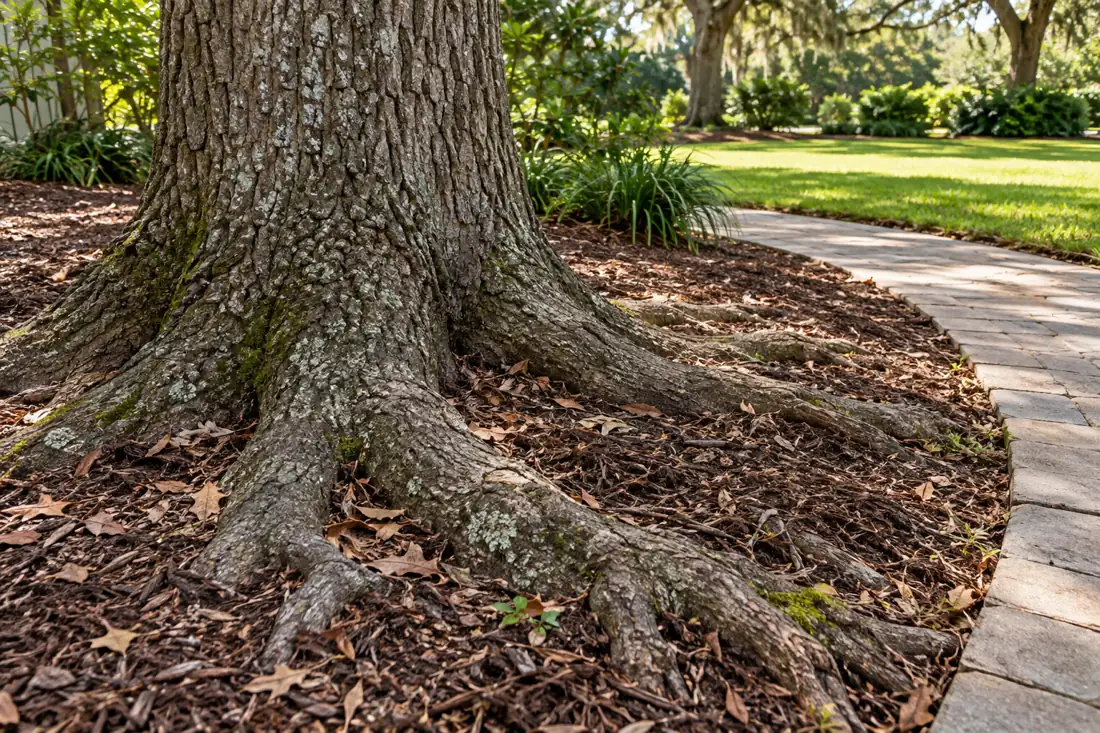
Fungal growth can raise questions about decay, but identification and tree condition matter. Photograph the growth and the surrounding base without disturbing unstable material. Explain any changes in lean, roots or canopy. An assessor may recommend additional investigation; the presence or absence of mushrooms alone cannot establish the tree’s structural safety.
Mushrooms at the base are a clue, not a stand-alone removal order
Fungal fruiting bodies can appear in soil, mulch, decaying buried wood or living-tree tissues. Their presence near a trunk deserves context: location, shape, recurrence, exposed roots, cavities, bark changes and whether the canopy has declined. Photograph the mushrooms and the whole tree before they disappear, without digging around the base to find their source.
Some fungal conditions are associated with decay, but identification and inspection matter. The relevant risk is not simply whether a mushroom is present; it is whether structural wood or roots have lost strength where loads are carried. A professional may examine the trunk flare, surrounding soil and known defects, and recommend further assessment when the evidence is inconclusive. Removing the visible mushrooms does not reverse internal decay.
If a tree stands beside a play area, walkway, parking lot or building, describe that exposure in the service request. Keep people away when there is an accompanying crack, new lean or lifted root plate. Ask what the inspection actually established and which actions are justified: observation, access restriction, mitigation or removal. Avoid promises that all mushroom-bearing trees are unsafe or that every fungus is harmless.
Fungal growth near a trunk is worth documenting because location matters. Photograph the mushrooms in place, the root flare, surrounding soil and the tree from a safe distance. Note whether growth appears directly on woody roots, on buried mulch, in lawn soil or on a decaying stump nearby.
These settings are not interchangeable, and an above-ground mushroom cannot by itself prove either sound roots or a dangerous tree. Do not scrape growth away, dig into anchoring roots or rely on an identification app to decide whether the tree is safe.
Tell the assessor about recent saturation, altered grades, root cuts, recurring mushrooms and any new lean or lifting soil. Explain which structures, roads or gathering spaces could be affected if a large branch or stem failed. Ask what visible features justify further inspection and whether a specialized risk assessment is warranted.
Until a fresh structural concern is evaluated, avoid using the area beneath a suspect tree for play, parking or gatherings. A proposal should separate warranted safety action from elective landscape treatment and preserve a written record of findings.
Treat mushrooms as an observation, not a diagnosis
Mushrooms and other fungal fruiting bodies near a tree's base can arise from different sources. Some develop on decaying buried wood or mulch, while others may be associated with roots or the lower trunk. Their presence alone does not identify the organism or prove that a living tree will fail. Photograph where the structures emerge, how they relate to the trunk and whether the surrounding area contains old stumps or buried woody material.
Do not remove the structures before documenting them if an assessment is planned, unless keeping people or pets away requires a site-management response. Record when they appeared and whether similar growth has recurred after rain. Avoid tasting, collecting or handling unfamiliar fungi without suitable expertise; some can be hazardous. The tree question concerns the fungal association, woody tissue and site risk, which requires more than a casual identification from color.

Record the position relative to the trunk flare
A fruiting body growing directly from the root flare is not necessarily equivalent to mushrooms scattered through an irrigated mulch bed several feet away. Take a broad photograph that shows the root flare, the nearby ground and the crown, followed by a clearer view from a safe position. If the lower trunk is buried under soil or mulch, note that without digging into it. The context helps a qualified assessor focus the inspection.
Describe whether the fungi appear on bark, a visible root, a cut piece of wood or the surrounding soil. Remember that underground root systems can extend well beyond the trunk, so distance alone cannot prove the growth is unrelated. Likewise, mushrooms at the base of a dead stump do not automatically mean a neighboring healthy tree has a disease. A site-specific evaluation should keep those possibilities distinct.
Report where fungi are growing, not just that they exist
Take clear ground-level photographs showing whether mushrooms emerge from mulch, lawn soil, an exposed woody root or the trunk base. Note how often they recur, recent saturation, changes in grade, and any new lean, cracking or root-plate movement. Do not remove a fruiting body merely to make the photograph look cleaner, and do not taste or handle unidentified fungi.
Ask an appropriate tree professional whether further investigation of roots or the lower trunk is warranted and whether nearby paths or gathering areas should remain restricted. A mushroom sighting alone is not a decay diagnosis.
Distinguish a mushroom observation from a structural conclusion
Fungal fruiting bodies near a tree can arise from decaying mulch, buried wood, dead roots or material associated with the living tree. The precise location matters: mushrooms in distant lawn soil are not the same finding as brackets attached to the trunk or emerging near a root flare. Take photographs showing both the fungi and their position relative to the tree. Do not break open a cavity or scrape living bark to investigate.
Different fungi have different implications, and appearance alone may not identify the organism reliably. Document recent storms, standing water, nearby excavations, and any changes in canopy condition. A mature tree can have internal decay without obvious outward decline, while a flush of harmless soil mushrooms may have no structural significance. Avoid declaring the tree safe or doomed on the basis of one photograph.

A fungal finding is a prompt for assessment, not an automatic removal verdict
Fruiting bodies around a trunk or root flare can be meaningful, but identification and location matter. Photograph the fungi in place together with the tree's entire base, surrounding soil and canopy, without disturbing the area or standing under a questionable limb. Include recent changes, such as a new lean, sinking soil, dead branches or repeated waterlogging, because these observations can alter urgency.
Do not assume every lawn mushroom is decaying the tree, and do not assume that removing a mushroom eliminates the condition that produced it. A qualified assessment may consider the tree species, rooting environment, defects and exposed targets before deciding whether additional testing, monitoring or removal is appropriate. Keep pets and children from handling unidentified fungi.
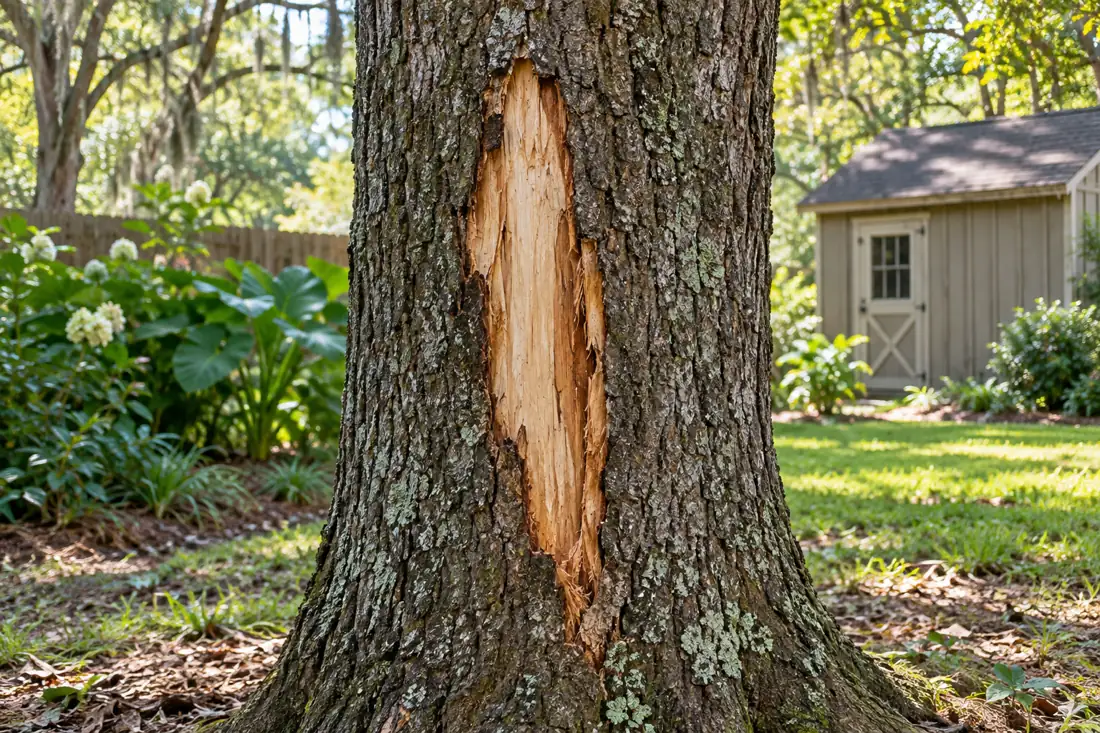
The accompanying image is a general example of wood deterioration, not a diagnosis of fungi at this property's tree. Ask for clear documentation of the actual observations and limitations so a next decision can be reviewed rather than based on the appearance of a single photograph.
Consider decay without assuming imminent failure
Some wood-decay fungi are relevant to structural condition because they break down wood over time. A fruiting body can be one clue, but the extent and location of any associated decay are not visible from the mushroom cap. A mature tree may retain substantial functional tissue despite an internal defect, or it may have hidden weaknesses not suggested by its green canopy. Neither outcome can be guaranteed from photos alone.
Ask the assessor what the observation suggests and what additional evidence would change the conclusion. Relevant factors can include cavities, cracks, response growth, the root plate, species, site exposure and previous damage. Do not treat a firm-looking trunk as proof that the base is structurally sound. At the same time, avoid removing a valued tree solely because a mushroom appeared after wet weather without a competent appraisal of condition and risk.
Separate fungal identification from the tree's structural decision
Record the fungal growth without destroying evidence. Capture a close image showing the cap, underside if safely visible without uprooting, and surrounding material, plus a wide photograph placing it relative to the trunk and major roots. Note whether the growth is in soil, old mulch, buried wood or attached bark. Many organisms fruit briefly after rain, so the same site may look different by the time an assessor arrives. Identification can matter, but do not assume every mushroom is a wood-decay species.

Record Fungal Growth Without Naming the Tree's Disease
Mushrooms near a tree can arise from dead buried wood, mulch or decaying roots; a photograph alone does not prove that the standing trunk is structurally compromised. The location, attachment point, repeat appearance and other symptoms all matter when describing the concern.
Take a wide photo that shows the trunk base and surrounding property, then a closer view from a safe spot if appropriate. Do not dig into the flare, strike the fungus or remove material simply to obtain a cleaner image. Preserve notes about recent storms, soil disturbance, moisture and whether the canopy has changed.
Ask a qualified tree professional to evaluate the entire condition and decide whether further investigation is appropriate. A useful estimate request explains the observed growth and occupied areas nearby, without assigning a disease name or claiming that removing the fungus would treat a structural problem.
Look for changes that alter the urgency of an assessment: fresh soil cracking, newly exposed structural roots, an unexplained increase in lean, fresh cracks or major crown changes near places people use. Avoid probing the trunk with sharp tools or removing sound bark to search for rot.
A tree may have both healthy living wood and localized decay, and neither an ordinary canopy nor a few mushrooms alone establishes its stability. The question is the condition of the whole tree relative to its use and targets.
Discuss the ground environment as well as the fungus. Constant irrigation against the trunk, deeply piled mulch, buried root flares, historic grade changes and old buried stumps can change where fruiting bodies appear. Improving drainage or correcting a mulch volcano may be useful maintenance, but it should not be sold as a cure for internal wood decay without evidence. Removing visible mushrooms does not remove an established organism in soil or wood. Ask the assessor what is known and what remains uncertain.
If the tree is near a house, driveway, playground or public walkway, describe those exposures in the inquiry so a qualified professional can prioritize inspection. Ask whether additional assessment methods would materially change a retention, monitoring or removal decision. Retain photos and written findings with the property file because future fruiting events are easier to compare against a recorded baseline. Never label a tree 'safe' or 'doomed' based only on the presence or disappearance of mushrooms.
[/fusion_text][/fusion_builder_column_inner]
Fruiting bodies: identify the site risk question before removal
Mushrooms at the base deserve attention because some fungi are associated with decay, but appearance alone cannot establish internal loss of wood strength. Take a safe photograph showing where the growth emerges relative to the trunk, exposed roots and adjacent ground. Describe whether the crown, trunk lean, soil or nearby use has changed since the last observation.
Do not scrape or dig into the root collar to chase the mushroom. Removing the visible fruiting body does not address the underlying organism. Where vehicles, playgrounds, occupied buildings or walking routes may be affected, request an appropriately qualified tree-risk assessment with stated limitations.
Use the finding to guide an appropriate site assessment
If a fruiting body emerges directly from major structural roots or the trunk, or there are new cracks or movement, keep people away from potential fall zones and arrange qualified review. The assessor may consider defects, load, occupancy and inspection limits. Record what can actually be observed without promising that visual inspection will establish the full extent of internal decay. Do not use home-applied chemicals as a substitute for diagnosis.
For a service inquiry, send a wide view locating the tree, a close view of the fungal growth and the history of any recent grade or drainage work. Include nearby targets such as a house, sidewalk or play area. The response might involve monitoring, further assessment, access restriction or other work depending on evidence. Keep identification and treatment decisions distinct from general yard cleanup.

Review recent site changes and water patterns
Fungal growth may follow wet periods, irrigation adjustments, drainage problems or disturbance of buried organic material. Note whether the yard has experienced standing water, recent fill, trenching, excavation or mulch changes. A chronology can help distinguish a seasonal observation from a longer-running root or soil problem. If the yard stays saturated, document where water collects rather than assuming the fungi themselves caused the drainage issue.
Do not cut irrigation entirely or dig trenches around a large tree in response to an unconfirmed fungal problem. Water management should reflect the species and site soil, and extensive digging could injure roots. If plumbing or drainage infrastructure is suspected, involve the appropriate provider. The tree professional can consider how soil conditions interact with observed defects while keeping water, disease and structural questions separate.
Look for other changes in tree condition
A useful inspection considers the entire tree, not just the ground-level growth. Photograph the crown for dead branches, thin foliage or recent dieback; note unusual leaning, new cracks or root-plate movement only from a safe location. If the tree overhangs a home, walkway or playground, include that context. These observations can affect the urgency of evaluation even when the fungus itself has not been identified.
Do not climb, probe a cavity or pull loose bark away to look for more evidence. If there are hanging limbs or signs of sudden movement, restrict access beneath the potential fall zone. The professional may need more detailed tools or a follow-up visit to judge hidden defects. A set of consistent, contextual photographs is more useful than a close-up mushroom image with no way to identify which tree or area it came from.

Understand why mushroom removal is not a tree treatment
Picking or mowing over a visible fruiting body does not necessarily remove the fungal network within wood or soil. Similarly, applying a general-purpose chemical to the surface is not a reliable remedy for an unconfirmed decay process. Ask for a diagnosis and an explanation of management options before considering treatment. A product that makes mushrooms disappear temporarily should not be mistaken for restoration of structural wood.
Some trees may be monitored, some need targeted work, and others may require removal when conditions and exposure warrant it. The choice depends on findings, risk tolerance and feasible site management. If a professional recommends a treatment, request its specific purpose, limitations and expected observations. Do not equate a fungus-control proposal with a guarantee that a tree is stable or that decay has been reversed.
Assess targets and practical access restrictions
The consequences of a tree defect depend partly on what could be struck and how often that area is used. Identify occupied rooms, parking spaces, playgrounds and primary walkways beneath major limbs. A temporary change to site use can sometimes reduce exposure while the assessment proceeds. Where a public route or neighboring property is involved, coordinate restrictions with the person or authority controlling that space.
Keep the tree location, access route and photo reference in the estimate request. If the base is surrounded by a deck, raised bed or fence, an assessor may not be able to inspect it fully without additional arrangements. Do not dismantle structures or excavate roots in advance merely to facilitate a quick opinion. A good scope identifies inspection limitations and explains whether further assessment would be valuable.

Ask the right questions of a professional assessor
The key questions are where the fungus is associated with the tree, whether decay is suspected in structurally important wood, and what observations support the proposed next step. Ask whether the fruiting body can be identified confidently and whether identification would materially affect management. If advanced testing is suggested, ask what decision it would help resolve, what it cannot determine and whether the potential benefit justifies it.
A written note should identify the tree and inspection date, summarize findings and distinguish observed evidence from inferred conditions. Request any recommended risk-reduction work as a separate scope with access and debris handling addressed. If removal is advised, the reason should be documented rather than simply saying the tree has mushrooms. This allows the owner to compare options and seek a focused second opinion when appropriate.
Monitor changes safely if retention is recommended
When an assessment supports monitoring, keep photos from consistent viewpoints and a log of new fruiting bodies, crown changes or visible trunk defects. Mark the dates and actual weather conditions if known. Do not decide that the fungus has disappeared permanently because fruiting bodies are absent during a dry period. Their visibility can vary independently of any underlying wood condition.
Agree on triggers for contacting the assessor again, such as new cracking, obvious movement, major crown loss or another observed change. The interval and observations should match this tree rather than a universal calendar rule. Prevent unnecessary root injury from equipment and landscaping in the meantime. Monitoring is an active management choice supported by records, not a declaration that the tree can never fail.

Prepare an inquiry that keeps the issue clear
When contacting Tree Huggers, identify the property, the tree and how the mushrooms relate to its base. Include an overview, a closer image, and safe photos of any associated cracks or crown concerns. Explain if the area is heavily used or if a recent storm or excavation changed the site. Do not enter a hazardous area merely to satisfy a photo request; an incomplete safe photo is preferable.
Ask whether a qualified assessment or referral is appropriate before committing to pruning or removal. Separate the diagnostic question from the eventual work estimate and clarify what each service includes. An online inquiry is the start of a conversation, not proof of fungal identification, a guaranteed work date, insurance coverage or emergency dispatch. Document the agreed next step and who will make the decision.
Distinguish fungal fruiting bodies from a diagnosis of internal decay
Mushrooms emerging in mulch, litter or nearby soil do not by themselves prove that the standing tree is structurally unsound. The appearance, location, persistence and relation to the trunk or exposed roots can matter, but a photograph rarely identifies the organism confidently. Do not remove fungal growth or scrape wood simply to make an online image look clearer; record observations from a safe position.
If fruiting bodies appear on the trunk, exposed root flare or a wound, note that location for a qualified assessment alongside visible cracks, cavities, branch dieback and recent site disturbance. A tree-risk decision considers exposure and the whole tree, not just one mushroom photograph. Keep children and pets from handling unidentified fungi, and do not present a generated scene as a verified field diagnosis.
Questions about this project
Does a cavity automatically mean removal is required?
The appropriate response depends on the cavity, remaining structure, tree condition and nearby targets. Arrange an assessment rather than deciding from the opening alone. Keep clear if the condition appears unstable.
Can I fill a hollow to strengthen the tree?
Do not assume filling a cavity repairs the structural condition. Describe the concern and ask for an appropriate evaluation. The recommendation should address the actual tree and the limits of what can be established.
Is a free work estimate the same as a written risk assessment?
Not necessarily. Explain whether you need pricing, condition advice, a documented assessment or a combination. Ask what the visit includes, who provides it and what limitations apply to any findings or recommendations.
What history should I share?
Share known storm damage, prior failures, construction, root disturbance, flooding, pruning and recent changes. Include the timing and nearby property use. Useful history supports the evaluation without replacing inspection of the current tree and site.
Can I cut a surface root to flatten the lawn?
Do not assume that is harmless. The root may matter to tree condition or stability. Describe the conflict and ask for an assessment and appropriate options before cutting or excavating near the tree.
Does a nearby tree prove it caused a plumbing problem?
No. Use the plumbing provider's findings and identify the affected system. Coordinate any tree or root work with that information rather than assuming location alone establishes the cause or the right remedy.
Does healthy-looking foliage mean a tree is structurally safe?
No. Leaves do not establish the condition of roots, trunk or branch connections. Explain visible defects and recent changes, and ask for an assessment appropriate to the tree and nearby targets.
Should I test a cracked branch or trunk?
Do not pull, shake, climb or cut damaged material to test it. Keep clear of the affected area and describe the condition from a safe location. Qualified assessment and an appropriate work plan are needed.
Which photos should I text first?
Send a wide tree view, the base if safely visible, nearby targets and the equipment route. Add the address, desired work and any recent change. Identify each tree clearly if the request involves several.
Can photos confirm that a damaged tree is stable?
No. Photographs may omit defects, support conditions and other important details. Use them to prepare for the contractor's assessment, and avoid entering hazardous areas to obtain a better view.
What should I tell Tree Huggers about mushrooms around a tree base?
Explain the property address, the work you want and the specific concerns: fungal growth, base condition, structural context. Send safe photos of the tree, surroundings and access route. The contractor can then discuss the assessment and scope needed for this situation.
How do I request an estimate for this work?
Call 504-458-8336, text photos or use the estimate form on this page. Include the address, desired outcome and any timing constraints. The company will need to review scope and availability; an online request does not confirm a price, appointment or emergency dispatch.
Get a scope for your property
Mushrooms at a tree's base can occur on soil, buried wood or living and dead tissue, so their presence alone does not determine whether a tree is dangerous. Photograph the fungus in place and the whole trunk from a safe position; include the season, approximate duration and whether growth returns in the same place.
Note any visible cavity, trunk crack, root damage or new lean. Do not break off fruiting bodies or excavate around the base to seek more evidence, particularly where the tree could affect people or buildings.
Ask for a qualified tree assessment that considers the identification and location of the growth together with the tree's structure, vigor and targets. If there is fresh soil movement, splitting or an overhanging failed limb, restrict access and describe that urgent concern separately. A written plan may recommend monitoring, further testing or risk reduction, but should not declare removal necessary from a mushroom photo alone. Capture the actual condition accurately and avoid replacing evidence with a dramatic stock image.