What to look for from the ground
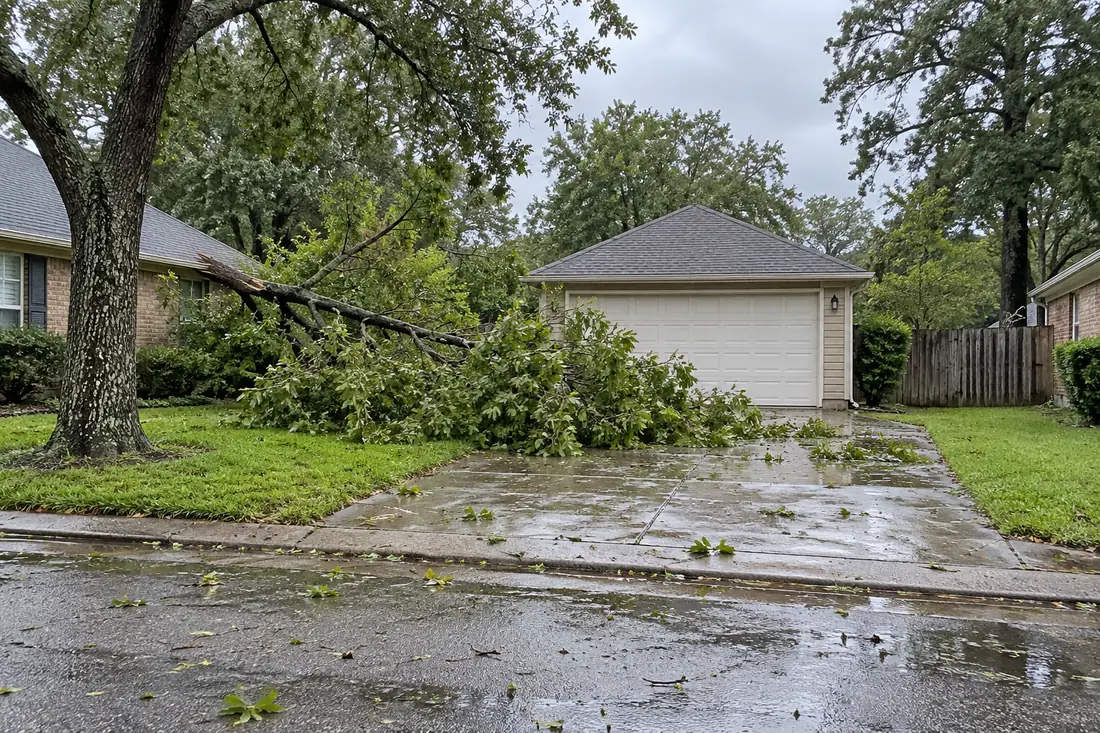
Dead branches over roofs, driveways and occupied areas are a practical pruning priority.
Pre-hurricane tree inspections should produce an actionable property map
Start with the places people must use during and after a storm: front doors, escape routes, driveways, parking, access for emergency vehicles and service lines. For each tree, record known cracks, dead branches, previous damage, ground movement and its proximity to those routes. Use a sketch or numbered photographs so a contractor can tell which tree is being discussed. A maintenance request is clearer when it names the target at risk.
Prioritize inspection and planning before severe weather makes equipment access and disposal unpredictable. Routine topping or aggressive reduction is not a substitute for defect-based pruning; it can create weak regrowth and damage healthy trees. When work is recommended, ask which limbs or defects are involved, how debris will be handled, and whether utilities, neighboring property or road controls affect access.
Keep an emergency contact plan and establish which areas should remain off limits after high wind until they have been checked. Never approach a hanging limb or a tree touching a power line to gather a photograph. A pre-storm inspection can reduce identifiable hazards but cannot make a tree stormproof. Written observations and an accessible site map help owners decide what can be addressed now and what requires post-storm assessment.
Site planning detail: An inspection before hurricane season should emphasize changes since the last calm-weather visit. Note hanging or dead limbs, co-dominant stems with cracks, newly exposed or heaving roots, recent trenching and branches that threaten frequently occupied areas. Trees can fail without obvious external symptoms, so a checklist reduces missed observations but cannot certify safety. Photograph the whole tree and key defects from a safe distance, then record the date and whether a professional evaluation is warranted.
Do not cut large limbs hastily just before a storm; improper pruning creates fresh wounds and may worsen structure. Move vehicles and outdoor equipment away from concerning trees where practical, and follow local emergency instructions. If a tree touches electrical conductors, leave the area and contact the utility instead of a general cleanup crew.
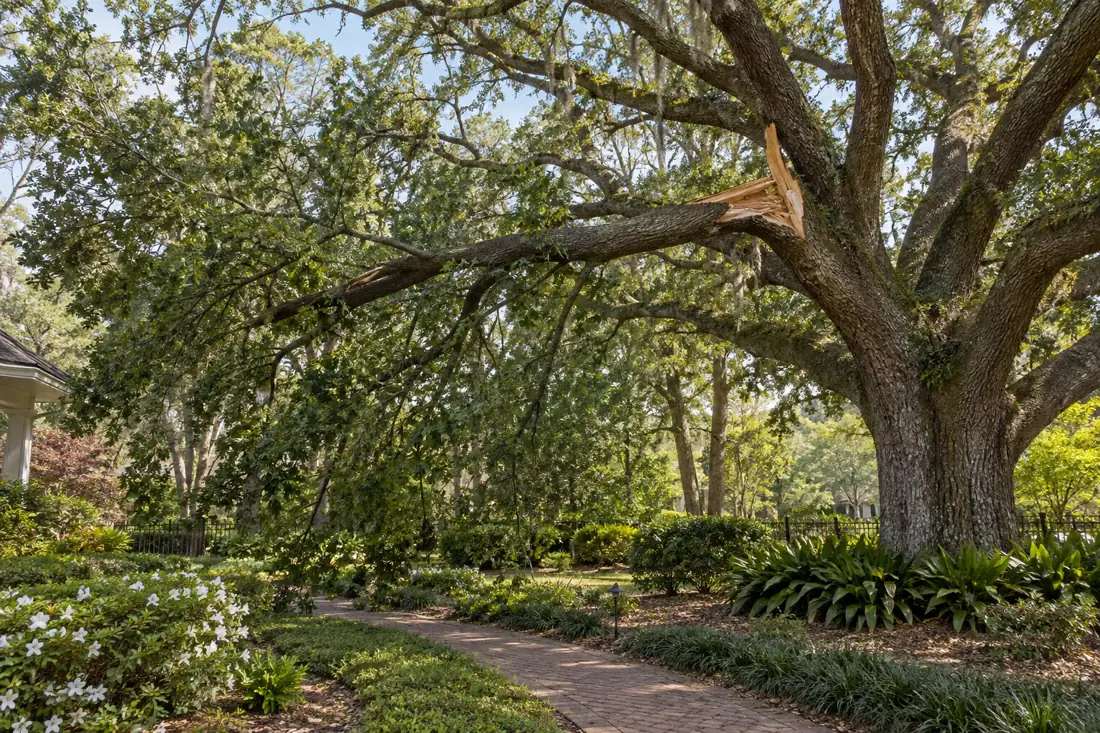
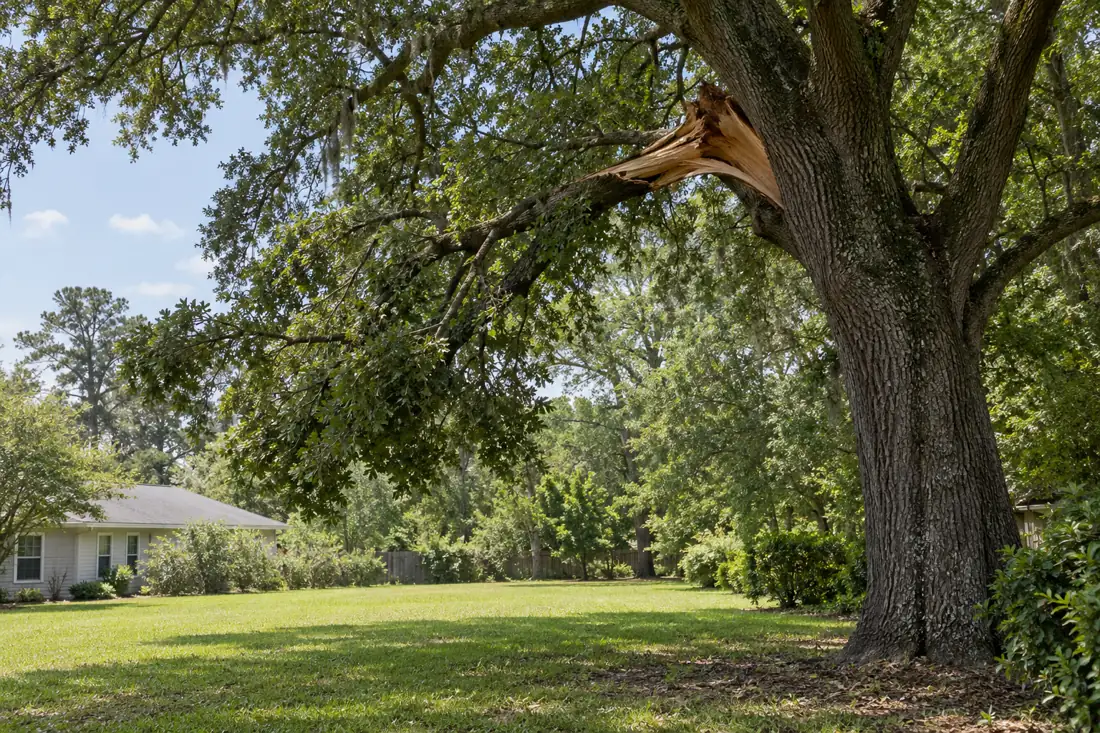
Open seams and movement at major attachments can indicate structural weakness.
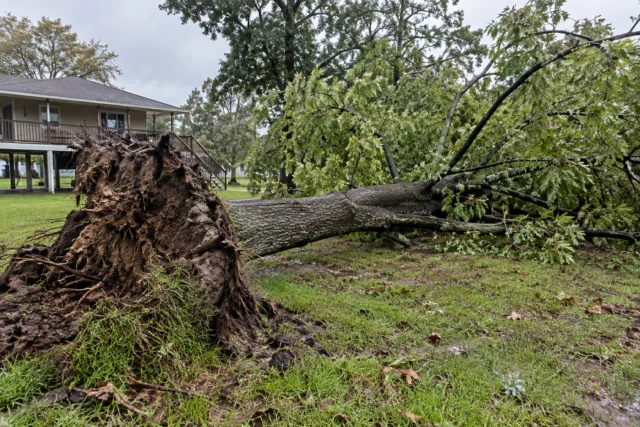
Exposed roots, construction damage, soil lifting or drainage changes can affect stability.
Look up, then look down
Homeowners often focus only on the canopy. The trunk base and root zone are equally important. New cavities, fungal growth, soil movement and severed roots can change the risk picture even when the leaves still look normal.
Compare with older photos
Photos from previous years can help reveal a new lean, canopy thinning or a branch that has moved closer to a structure. Change over time can be more informative than one snapshot.
Related resources
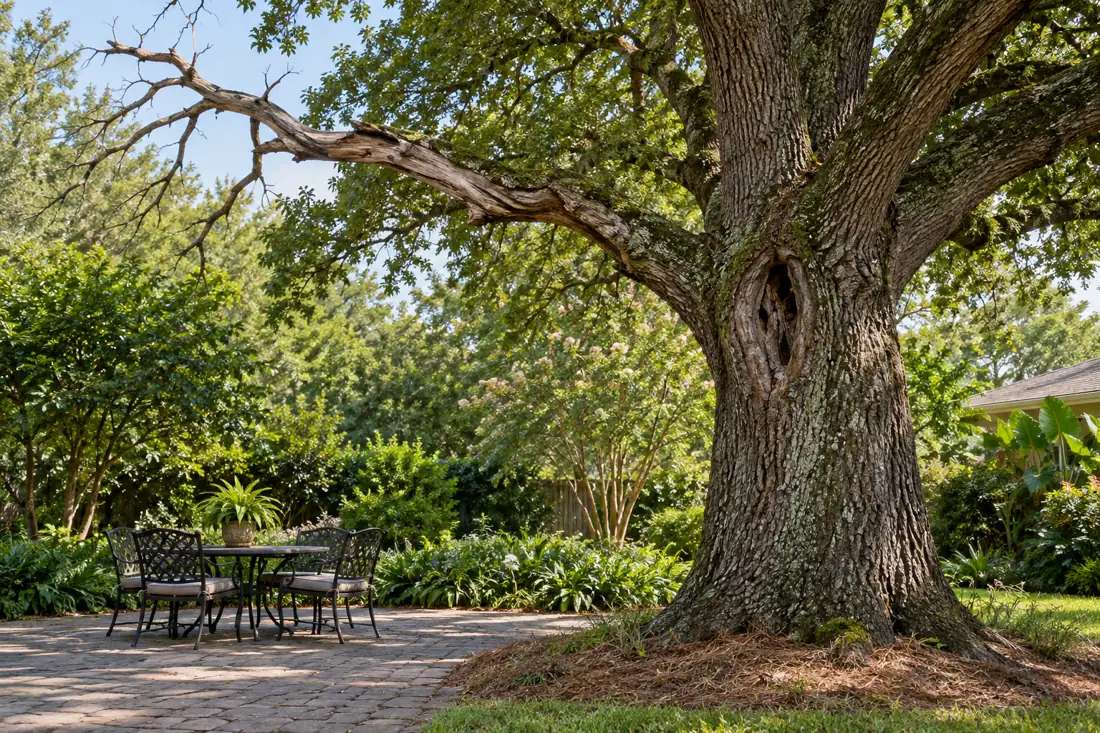
Signs a Tree Is Dangerous
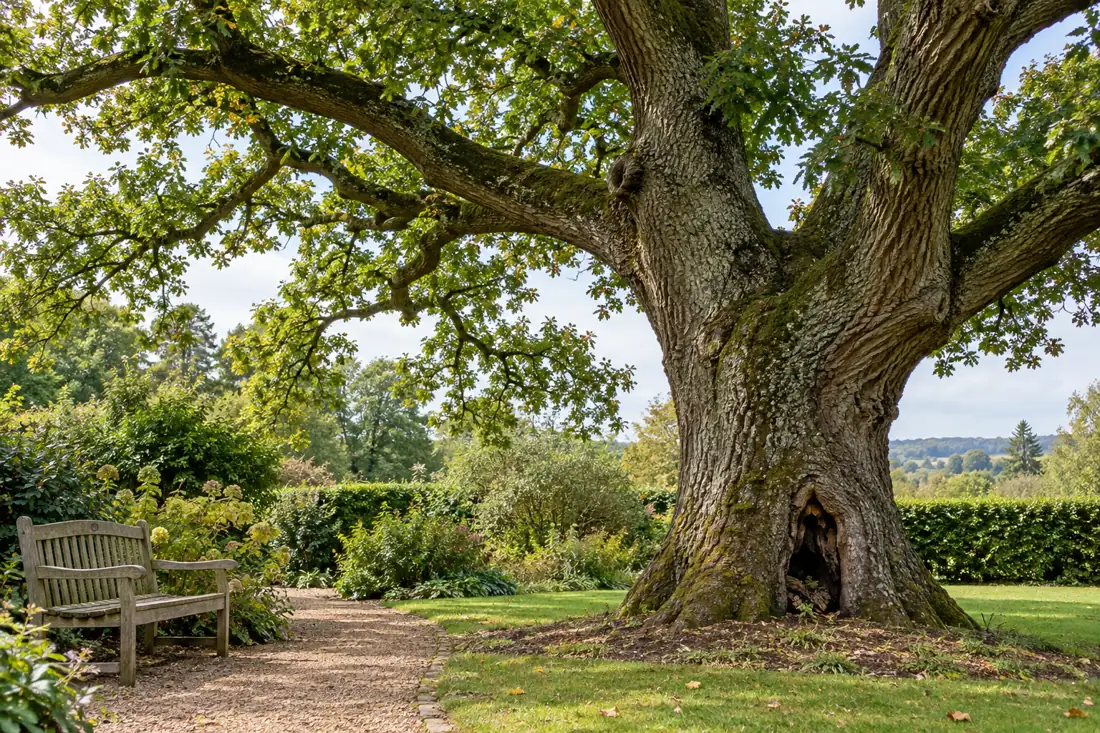
Risk Assessment
Storm Resource Center
Define the purpose of a preseason inspection
A pre-hurricane inspection is not a certificate that a tree will remain standing in extreme weather. It is a structured effort to find defects, understand what could be damaged and decide which conditions warrant work before the season becomes urgent. Start by listing the trees that shade a home, border a road, overlook a play area or threaten the only safe exit.
For each, record a simple number and a photograph that shows the trunk, crown and surrounding structures. A repeatable record lets a professional distinguish long-standing shape from new movement.
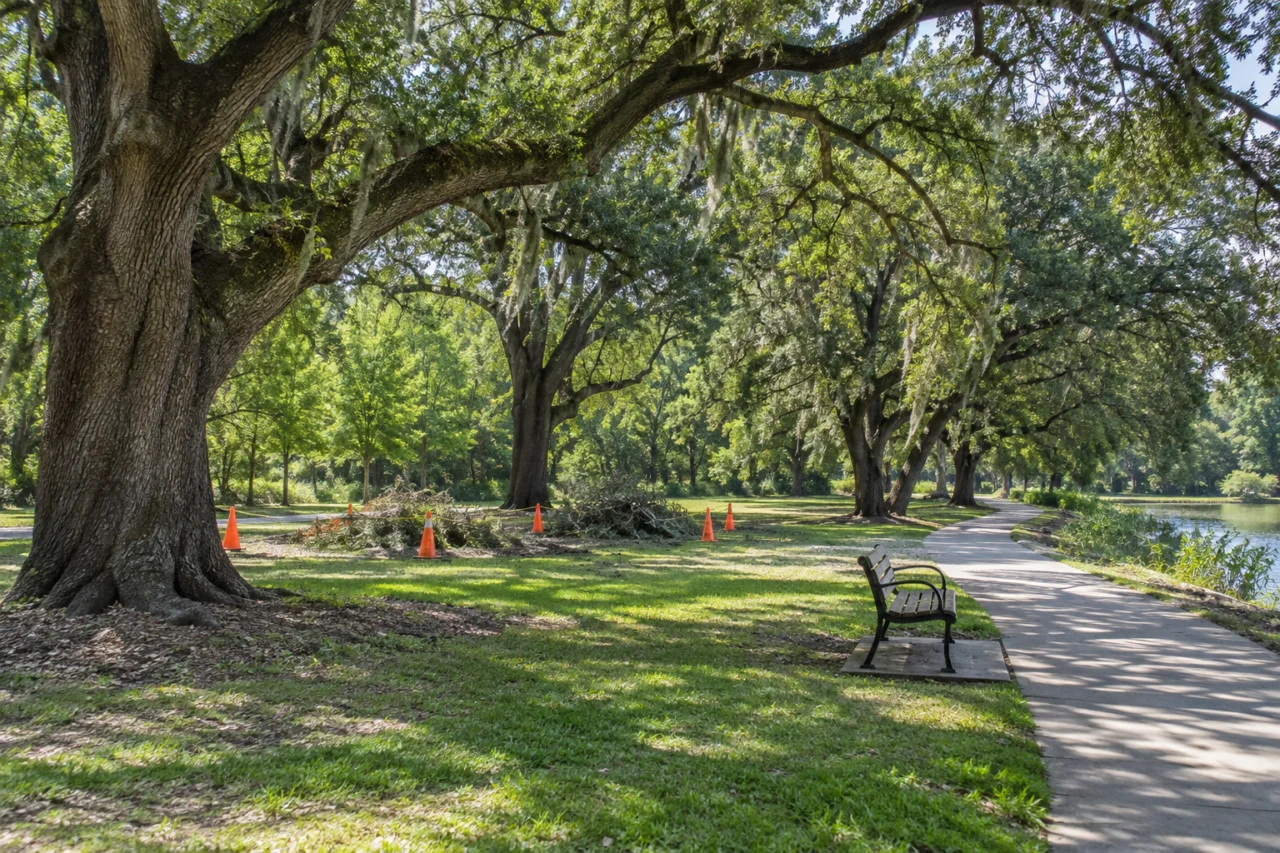
The inspection should separate observation from diagnosis. A homeowner can notice a broken branch or fresh mound of soil without determining internal decay, root strength or safe removal technique. A qualified arborist may recommend additional assessment, targeted pruning, monitoring or removal depending on defects and targets.
A healthy-looking crown does not guarantee an intact root system, and a hollow area does not by itself mean the tree is beyond saving. Put the question in writing: what is the concern, what evidence supports it and what reasonable action reduces the risk?
Study the crown from more than one angle
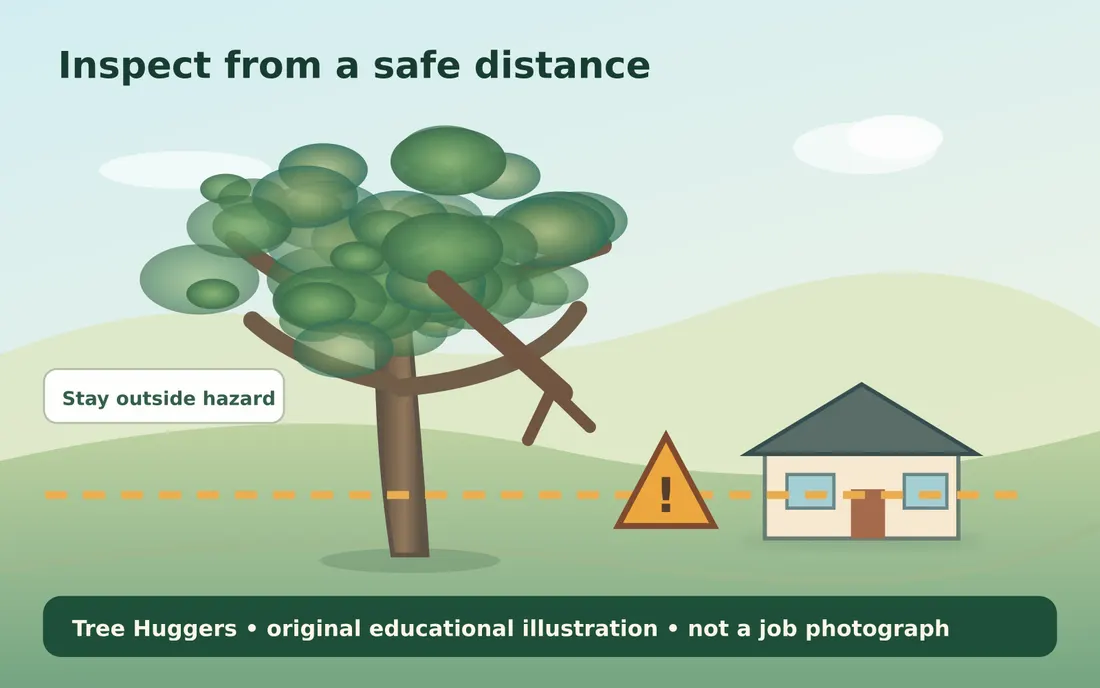
Stand where you can see the canopy without stepping beneath obvious hazards. Look for dead branches, recently broken tips, hanging wood, unusual gaps, branches crossing over the house and asymmetry that has changed since your previous photographs. A naturally broad live oak can carry weight differently from a narrow ornamental tree; an uneven silhouette is not automatically a defect. The issue is whether a specific branch has poor attachment, damage, decay or exposure that matters for the occupied area beneath it.
Look at where major limbs join rather than focusing only on the outer leaves. Tight forks with included bark, long unsupported horizontal limbs, old wounds and clusters of vigorous sprouts following past topping can merit closer review. Avoid drawing firm conclusions from a distant photo.
A professional may need to assess branch unions from another safe vantage point or use appropriate access equipment. Deadwood above a driveway may justify a different priority from similar deadwood above an unused wooded area. Record both the condition and the target.

A tree inspection is a comparison, not a photo diagnosis
Start with what has changed: soil lifting near the trunk, fresh cracks, a newly broken branch, unusual dieback or a new target beneath the canopy. Record where the concern is located and what could be affected if the condition worsens. Weather and camera angles can make an unchanged tree look different, so use comparable views when possible.
Qualified inspection may require more than a photograph, particularly when roots, decay or internal structure are in question. Do not drill, probe deeply or climb to collect evidence for an estimate.
Turn observations into a work-priority map
Inspection photos become useful when each tree has a stable identifier, a location and an explicit question. Number trees consistently on a rough property sketch, and list the nearest house, driveway, play area, road or utility line. Note recent soil disturbance or grading, but do not probe root systems, climb branches or remove loose bark for the sake of a better picture.
The result should be a decision record, not merely a count of trees visited. Distinguish what was visually observed from testing that was not done and from work that still needs a separate authorization.
Read the trunk and primary branch connections
Inspect the trunk for fresh splits, vertical cracks, large open cavities, decay around old wounds, detached bark and fungal growth. Note the position and approximate height without probing the tree with tools. Some cavities and scars persist for years while the tree continues growing, but recent cracking accompanied by movement can signal serious structural change.
Photograph suspicious locations from a distance and add something in frame for scale only if that can be done safely. Never climb or strike the tree to see whether a limb moves.
Pay attention to changes at the point where the trunk branches, especially when two large stems form a narrow junction. A weak union, internal decay or a new crack may require a risk assessment beyond ordinary maintenance pruning. You cannot establish remaining sound wood from photographs alone.
Depending on the case, a professional may use detailed visual assessment, sounding, resistograph testing or other methods, and even those findings must be interpreted alongside species, loads and targets. Ask what information will change the decision before paying for additional testing.
Check the root collar and the surrounding soil
The ground around the trunk carries important evidence. Look for newly raised soil on one side, depressed soil on the opposite side, exposed or severed roots, recent trenching, soil fill against the bark and signs of erosion. A root plate moving after a storm is very different from the gentle swelling of exposed roots that has existed for years.
Keep away from a tree that appears to be lifting or shifting. If a recent construction project crossed the rooting area, include the excavation date and location in your notes.
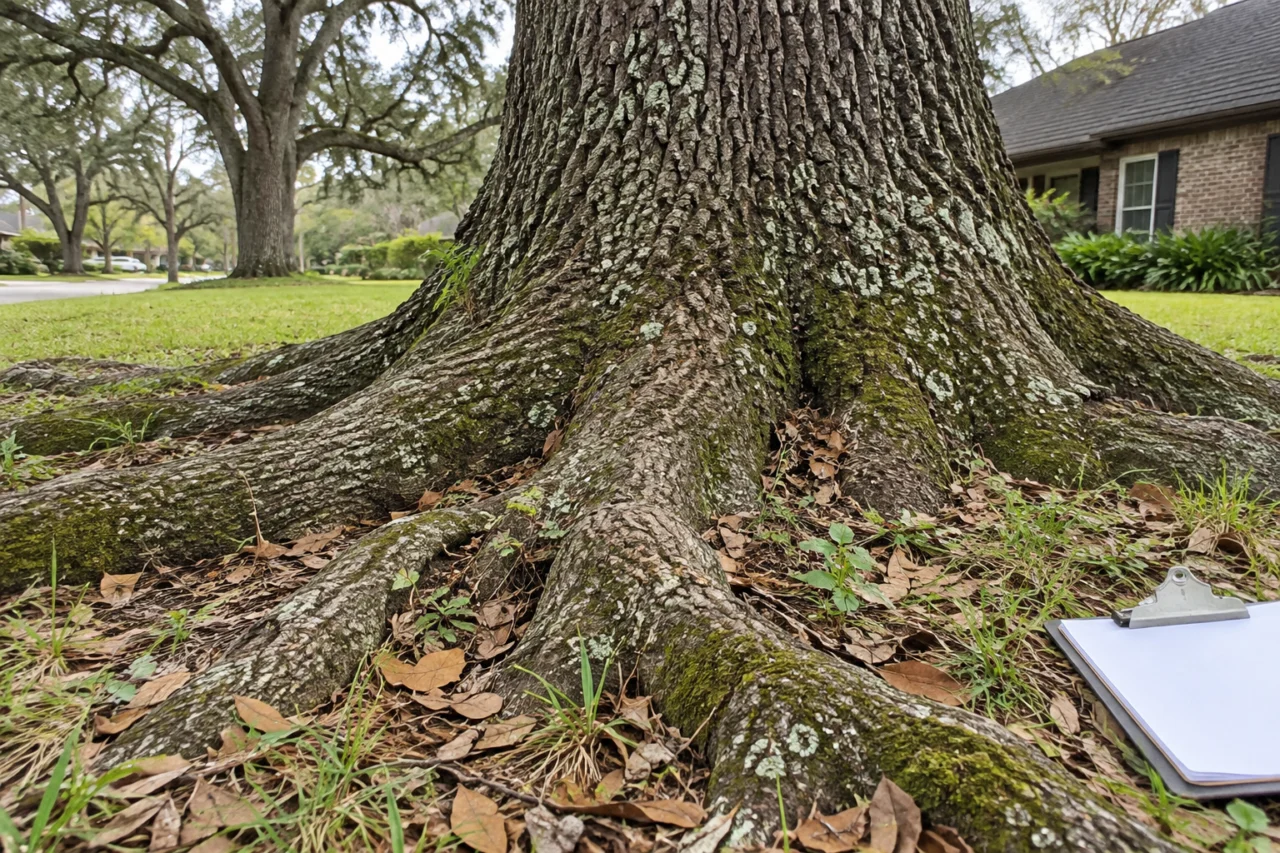
Consider drainage and soil condition without assuming water is the sole cause of failure. Saturated soils can change support and access, but a surface puddle does not prove root decay. Long-term compaction from vehicles, landscaping equipment and material piles can affect tree health. Note whether the site has been regraded or whether a fence, driveway or foundation was recently installed near major roots.
A professional assessing root risk should understand those site changes. Do not sever roots to inspect them or attempt to correct a leaning tree yourself.
A ground-level pre-hurricane inspection checklist
Begin at a safe distance and look at the whole tree rather than a single branch. Compare the trunk alignment with previous photographs, examine the crown for major dead limbs, and observe whether large forks have visible separation. Fresh wounds, fungal growth, or soil movement can be reasons to request a closer professional examination, but their meaning depends on species, location, and other structural evidence.
Look around the base without digging or pulling at roots. New soil lifting, erosion, persistent standing water, and changes around paving can affect the questions asked during an inspection. Some surface roots are normal, and not every crack in hardscape is caused by a dangerous tree. Report what you see rather than assigning a diagnosis from a photo alone.
Record changes without entering a hazardous tree
Assess what the tree could strike. A branch extending over a bedroom, a playground, a business entrance, or utility lines has different consequences from one extending into open landscaping. Photograph targets and access conditions from several safe angles. Do not stand beneath a cracked attachment to obtain a better image, and never use a ladder to inspect storm-weakened limbs.
Your inspection notes should lead to a prioritized request: specific tree, visible concern, nearby target, recent change, and any history of pruning or construction. Ask whether the next step is routine maintenance, a qualified risk assessment, or urgent isolation of an area. The checklist helps communicate facts; it is not a certification that a property will withstand a storm.
Match each defect to a realistic consequence
Risk combines a possible failure with the likelihood that something valuable will be struck. Mark the occupied rooms, parked vehicles, sidewalk, playground, roadway, utility service and neighbor’s home beneath each major limb or tree. Consider whether people occupy that area frequently or only occasionally. A damaged limb over an accessible walkway is a different situation from a limb of comparable size deep inside a restricted woodland. This target-based approach helps prioritize limited budgets without treating every tree as equally dangerous.
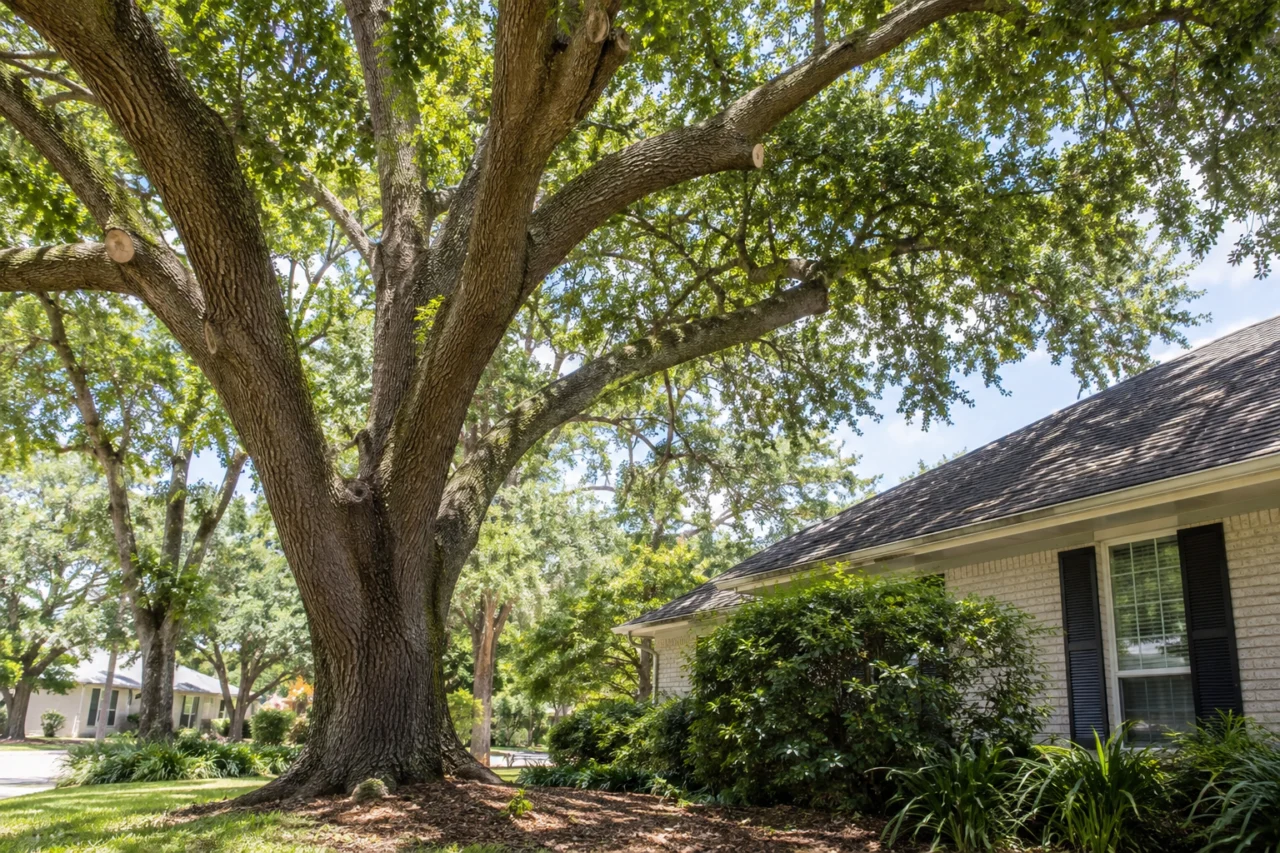
Also distinguish maintenance priorities from immediate hazards. A small dead branch in an otherwise healthy crown may fit a routine pruning schedule. A fresh root-plate lift next to a bedroom may warrant immediate restricted access and specialized evaluation. Ask for an explanation of both the condition and the recommended response.
If a contractor recommends removing a large tree, request the specific observed reasons, not a blanket statement that all trees near homes are unsafe. If the assessment is uncertain, a second qualified opinion can be valuable before irreversible work.
Know when an ordinary checklist is insufficient
A visual ground inspection has limits. Dense leaves conceal defects, large cavities may be internal and one side of a tree may not be visible from the yard. Some species drop branches unexpectedly even without obvious outward signs. If the structure is complex, a qualified specialist may need a more formal tree risk assessment with a defined time horizon and level of inspection. Ask whether the inspection is intended to identify obvious hazards, evaluate an individual structural concern or produce a documented recommendation for management.
Do not let inspection tools become a substitute for professional judgment. A phone app, tape measure or simple tap test cannot certify storm survival. Advanced techniques are useful only when the operator is trained and the result answers a specific question. Photos should document what was seen, not exaggerate the likelihood of collapse.
When an arborist recommends monitoring rather than removal, ask what change would trigger reassessment: a larger crack, branch dieback, new lean, construction near roots or another significant storm. An inspection has value when it leads to a workable decision.
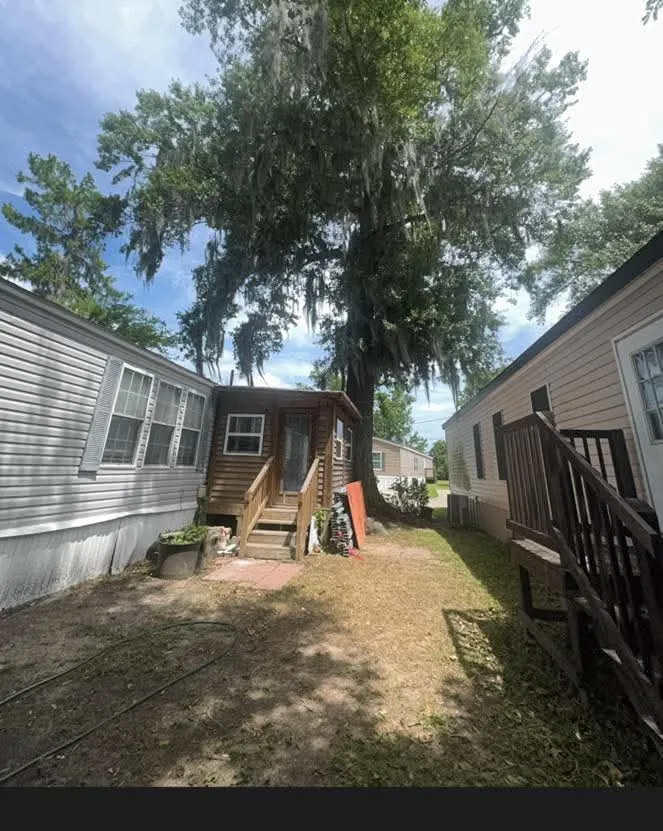
Resolve utility, access and permission questions early
Look above and around the tree for electric lines, low service drops and communication cables. If branches are contacting or close enough to threaten energized conductors, contact the utility and do not attempt self-service cutting. Wet branches and pruning tools can create electrical hazards. Make a note of the problem from a safe location and explain it when requesting an assessment. Utilities and tree crews may have different responsibilities depending on the line and work location; confirm rather than assume who will handle the issue.
Access can change the feasibility and cost of a recommended treatment. Note the width of gates, steep slopes, soft ground, septic systems, parked vehicles and any neighboring property needed for a safe work zone. If a crane, bucket truck or grapple saw is being considered, the contractor should verify actual positioning, reach, loads and protection requirements.
Have ownership and right-of-entry questions resolved before work is scheduled. A good assessment is not complete when it identifies a cut but ignores how that cut can be accomplished without creating greater risk.
Turn inspection findings into a clear scope of work
Ask for a written list that identifies each tree, the concern, the recommended action and what the job includes. Appropriate outcomes may be targeted deadwood removal, clearance pruning, reduction of a particular limb, closer investigation, a future reinspection or removal when retention risk is unacceptable. Distinguish a recommended action from optional cosmetic trimming. The estimate should also describe disposal, hauling, ground protection and cleanup where relevant. This prevents a broad phrase like ‘storm trim’ from hiding major differences in what contractors plan to do.
A photo record can be linked to the work order so everyone knows which limb or tree is in question. Preserve useful prior assessment notes rather than commissioning the same diagnosis again. If the tree is subject to local protection rules, historic-property requirements, homeowner-association restrictions or other permits, ask which approvals are needed. Avoid assuming that a storm forecast automatically waives them. Keep the chosen work proportional to the actual concern. Removing healthy crown without a reason may create problems rather than solve them.
Schedule rechecks and know when to stay away
Complete routine inspections in calm conditions, then review them after substantial storms or major site changes. A tree that was acceptable in spring may need attention after a lightning strike, excavation or new split. Conversely, a long-standing cavity may remain manageable with monitoring. Keep the inspection date, recommendations and follow-up interval. The hurricane preparation guide covers the broader property plan, while the post-storm checklist helps record new conditions after weather passes.
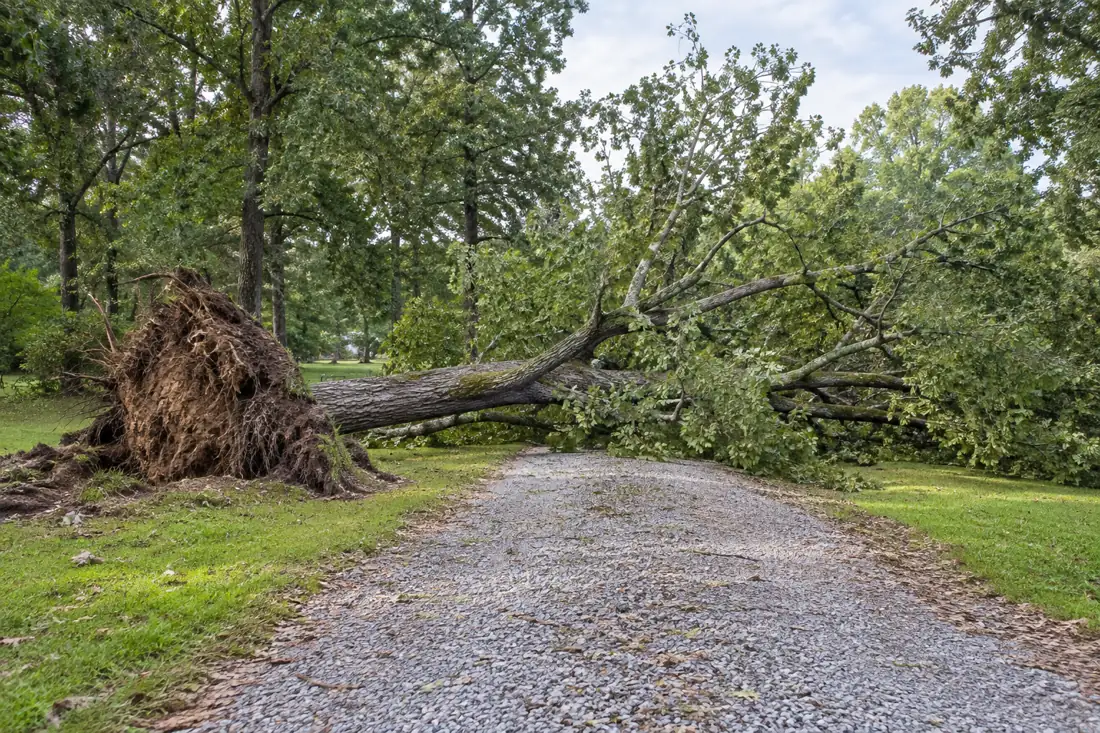
If branches are hanging under tension, the trunk is splitting, the root plate is visibly lifting or the tree is entangled with a power line, do not conduct a close inspection. Restrict access and get appropriate emergency help. No photograph, estimate or pruning task is worth standing beneath a potentially failing structure.
When conditions allow a safe visit, give the specialist your notes, dates and photos so their work begins with useful context. The strongest result of a preseason inspection is a clear understanding of which trees need action and which can be preserved with informed care.
When this is a preseason inspection, not a post-storm response
Before a storm, the useful deliverable is a dated baseline: which trees were observed, what was visible from safe ground, which structures or walkways could be affected, and which questions need a qualified inspection. A green canopy does not establish that roots or branch unions are sound. A pre-hurricane review also cannot predict how a tree will withstand every wind speed.
Use consistent wide, medium and detail photographs when it is safe to do so. Mark observations that were already present and keep recommendations separate from work that has actually been authorized. If a storm has already brought down limbs, changed a tree’s lean or lifted soil, stop using a routine preparedness checklist as the decision tool. The companion post-storm guide starts with hazard isolation and new damage.
- Record the tree number and the date the concern was first visible.
- Keep the walkway, roof or other target identifiable in the safe overview.
- Do not climb, probe unstable roots or approach utility conflicts for pictures.
Questions about Pre-Hurricane Tree Inspection
What are the most important signs to look for?
From a safe distance, note large dead limbs, fresh cracks, new ground heave, suspended wood and decay clues. A professional must interpret the findings.
Can I inspect a large tree myself?
You can safely document visible conditions from the ground, but do not climb, probe damaged wood or treat your observations as a certified risk assessment.
Does a hollow trunk mean a tree must be removed?
Not automatically. Remaining sound structure, other defects, species, root support and nearby targets determine whether further assessment or work is justified.
What does fresh soil lifting near roots mean?
New ground heave can indicate root-plate movement and possible instability. Keep away and seek prompt qualified evaluation.
Should I inspect trees during strong wind?
No. Do not stand beneath damaged crowns or near unstable trees during hazardous weather. Wait for safe conditions or request emergency help.
What is included in a professional tree assessment?
The scope can include visual inspection, site and target review, defect evaluation and documented management options. More advanced testing may be proposed when useful.
Why do occupancy and nearby buildings matter?
A defect over a frequently used walkway has different consequences than one above an unused area. A risk assessment considers the target as well as the tree.
Can a green canopy hide structural problems?
Yes. Some root or trunk defects may not immediately affect foliage. A healthy-looking crown is not proof of mechanical stability.
Are old pruning wounds dangerous?
Not every old wound is hazardous, but decay or weak regrowth near a major connection may warrant closer assessment. Context matters.
How do I document a potential hazard?
Take dated photographs from safe angles, record the tree location and note what changed. Avoid approaching hanging limbs or suspected moving roots.
What if branches are close to a utility line?
Stay clear and contact the utility or qualified line-clearance provider. Do not touch, pull or cut the branch yourself.
How often should a tree be reassessed?
Ask the assessor for an interval based on condition and targets. Recheck after significant storms, excavation or newly observed structural change.
Get a scope for your property
For a pre-season inspection, provide the whole-tree view, a separate image of each suspected defect, and enough surroundings to understand what a branch could strike. State when changes were first noticed and whether ground conditions have shifted. This helps route the request for routine care, risk evaluation, or immediate area isolation.