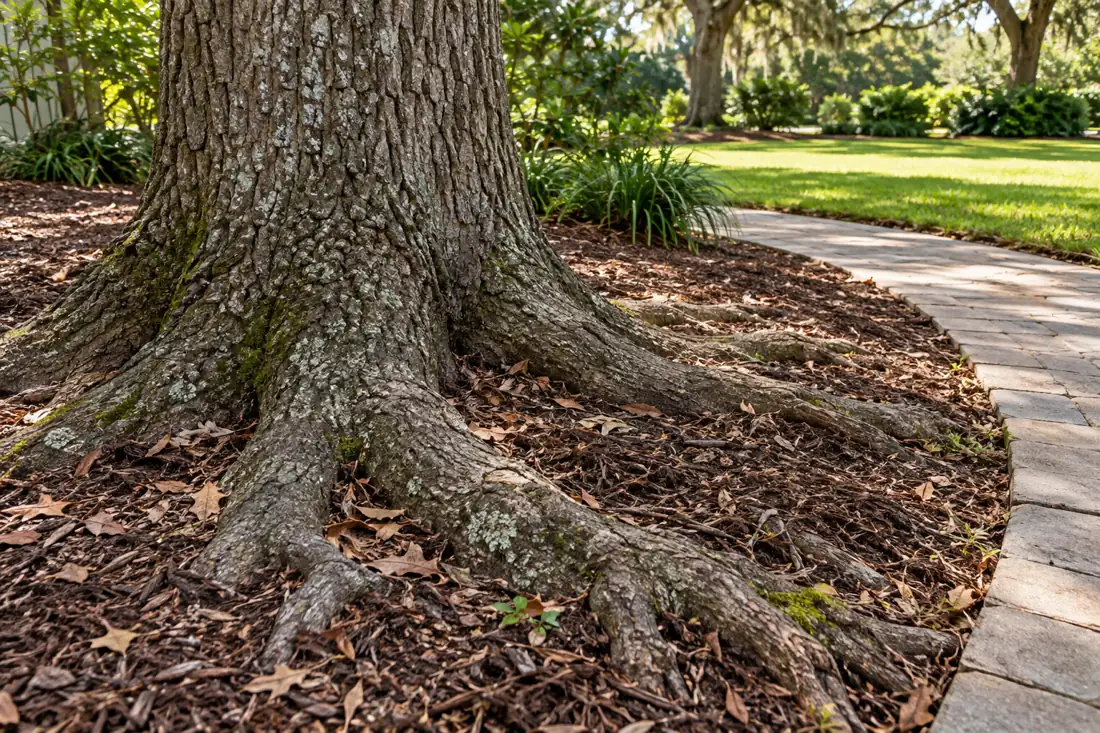
Fence posts, trenching and equipment traffic can affect roots and trunks. Mark retained trees and discuss the proposed line before holes are dug. The tree professional and installer may need to coordinate around roots instead of cutting through them by default. Access permission and ownership questions should be resolved separately.
Protect retained trees during fence construction
Lay out planned posts, gates, excavation and material storage before work begins. Identify large visible roots and the expected root zone of trees the owner intends to keep.
Ask whether adjusted alignment or post spacing could avoid major roots while satisfying fence construction requirements. Do not authorize arbitrary root cutting when installers encounter an obstruction.
Assign a stop-work contact for unexpected roots and utility conflicts. Record the final alignment and retained roots, and keep boundary approval and utility locating separate from tree evaluation.
Sketch the proposed fence line with the tree trunks, visible root flare, large surface roots, grade changes and any known underground services. Post-hole digging, trenching, soil piles and equipment traffic can harm roots even when no branch is cut. Photograph the site before work and ask whether post positions can shift to reduce disturbance. Do not sever an obvious structural root simply because it crosses the preferred fence alignment. Mark the intended gate and any temporary access route for equipment.
Coordinate the fence contractor and tree assessor before stakes become permanent. Ask how existing roots will be identified, whether hand excavation or alternate foundations are appropriate, and how soil compaction and fill will be controlled. Confirm property-line permissions and utility-location requirements with the responsible parties. The estimate should describe constraints rather than promise that every post can be installed on the original line regardless of roots. After installation, monitor the tree and drainage rather than masking altered grade with extra soil or mulch.
Establish the boundary and the trees worth protecting
A new fence often begins with a survey, a desired property line and a budget, but mature trees introduce constraints that cannot be solved by measuring panel lengths alone. Identify which trees lie near the proposed alignment and whether they belong to the owner, a neighbor or a public right of way. Confirm the legal boundary and applicable permission requirements with the appropriate professionals before cutting roots or moving existing fencing.
Take wide photographs that show the trunk, proposed fence line, gates, nearby pavement and any visible root flare. Assign simple tree labels that can be used by both the fencing contractor and the tree professional. Avoid assuming a root belongs to the nearest trunk, especially where several mature trees overlap. The first useful decision is whether the alignment can be adjusted to retain healthy trees without creating unnecessary encroachment or maintenance problems.

Plan the protected root area before materials arrive
Tree roots often extend well beyond the visible canopy, and important roots can lie shallow beneath lawn or garden beds. A fence crew may damage them while digging posts, grading the line or driving equipment even when the trunk is several feet away. Ask a qualified tree professional to review which areas should remain undisturbed and what access routes are practical. Mark those areas before the first delivery rather than after post holes have already been excavated.
Protection needs to be visible and workable. A temporary barrier should separate the important soil and root area from stockpiled materials, mixers, spoil piles and parking. The exact size and configuration depend on the tree, soil, project and property restrictions; do not use a fixed distance as a guarantee that roots are absent. If the fence line crosses the protected area, ask for an alternate method or alignment that can be evaluated before any irreversible cutting.
Move the fence layout before forcing it through a root zone
Fence replacement often starts with an assumed line of posts, yet mature lateral roots may occupy that exact trench or auger path. Identify the tree and approximate root flare, then mark the proposed gate, post locations and digging limits. Ask whether a small shift in the line, a different footing layout or another construction detail could reduce root disturbance. The legal property line and the best tree-protection route are not always the same decision.
Before excavation, check underground utilities and local approval requirements through the appropriate channels. A fence contractor should not guess at buried lines or cut major roots just to keep post spacing uniform. If significant roots appear, pause and get advice before widening a hole. Repeated cuts along an entire fence line can create a different level of stress from a carefully located isolated post.
Check post locations against the actual root flare
Fence plans may place deep holes at regular intervals, but a root system rarely respects that grid. A post beside a mature trunk can encounter large structural roots or old roots from a removed tree. Do not sever a major root just to keep post spacing uniform. Repositioning a post, changing the span or using a different approved foundation approach may be more responsible after the site conditions are understood.
Discuss how the crew will respond if roots appear during excavation. Workers should stop and seek an agreed decision instead of chopping through unknown woody material. The root's size, location, condition and relationship to the trunk matter, and the effect of cutting may not be apparent immediately. A photograph of the obstruction with a clear location label can help the tree professional and fence designer decide whether an adjustment is feasible.

Design the fence route around a living root system
A privacy fence changes how a yard is divided, but its post holes, trenching and vehicle access can interfere with nearby tree roots. Start with the proposed fence line, gate locations, post spacing and the actual position of mature trunks and visible surface roots. Ask the installer where digging will occur and whether posts can shift without compromising boundary requirements or function. Do not infer legal property boundaries from the tree location; obtain a survey or other authorized documentation when required. A narrow trench next to a mature oak can be more disruptive than the visible fence itself.
The tree-care question is not merely whether branches touch the fence. Root protection and crown clearance should be reviewed separately. Fence crews may need room for augers, panels or material carts, while tree roots should not be cut automatically to match an arbitrary post location.
Where roots are encountered, stop and seek qualified guidance before altering them. Utility lines and irrigation should be identified through the appropriate locate and site procedures. If the fence will be close to a trunk, allow for continued trunk expansion rather than fitting rigid hardware tightly against bark.
Discuss access and material staging before approving work. A protected root zone can be damaged by driving repeatedly across it, storing posts and concrete bags there, or washing construction residue into nearby soil. Ask for a route that avoids obvious roots and landscape features, with an authorized person designated to handle unexpected conflicts.
For a shared fence, obtain agreement from the responsible owners before moving the line or cutting branches across a boundary. The tree company should not be asked to resolve ownership disputes through pruning.
Photograph the final fence and tree from consistent positions, noting post locations and any roots that required special attention. Future branch growth may affect clearance, and trunk growth may require adjustments even where the initial installation succeeded. A maintenance record is more useful than a promise that the fence and tree will never interact. If the tree already shows decay, root disturbance or unusual lean, request separate professional assessment instead of treating the fence project as proof of tree stability.
Coordinate the fence layout before cutting roots
Provide the fence installer and tree assessor with the same sketch of post locations, property boundaries, gates and trees intended to remain. Ask for utility location procedures before digging and identify any proposed trench or posthole near large roots. A survey or other proper boundary evidence should resolve ownership questions; the visible fence alone does not establish permission to cut another owner's tree.
Discuss rerouting a post, adjusting a span or using a less disruptive method where feasible. Keep responsibility for fence construction distinct from tree protection and later plant-health monitoring.

Compare alignment and foundation options
A straight fence is not always the most successful fence near a valuable tree. A modest jog, a change in post spacing or a gate relocation may protect roots while preserving privacy and access. The contractor should explain how the revised design meets structural, material and local requirements. If a fence must follow a surveyed line, alternate footing approaches may need project-specific engineering or review rather than an improvised installation.
Document who approves an alignment change, especially when neighbors share a fence or the proposed work borders public property. Do not treat a visual sketch as proof of property ownership. If the fence meets a retaining wall, driveway or drainage structure, evaluate those interfaces together. The chosen solution should protect both the tree and the fence's long-term function, including adequate room for the trunk to grow without pressing against rails or panels.
Place fence posts without treating roots as disposable obstacles
A new fence line can cross a tree's active rooting area even when the trunks are well away from the property boundary. The main choices should happen before post-hole equipment arrives: locate the survey line, utility marks, gate swings, large roots, and the anticipated digging depth.
Marking a root on the surface does not reveal the full system beneath the soil, and repeated small holes can do significant damage if they cluster near a mature tree. Avoid letting a crew shift posts casually into a neighbor's property or cut a root simply because the auger meets resistance.
Ask the fence installer and a qualified tree professional to coordinate locations and investigate appropriate alternatives. Slight changes in post spacing or panel design may preserve critical roots while still respecting the boundary and structural requirements; other obstacles may make redesign necessary. In sensitive areas, careful excavation can help identify roots, but the decision to disturb or cut them still requires professional judgment.
Protect the remaining ground from pallets, concrete washout, and heavy equipment. Confirm whether the fence contractor restores soil and surfaces, who repairs irrigation, and what happens if unforeseen roots or utilities force a layout change. The best installation prevents a disagreement while the holes are still empty.
Fence replacement: settle post locations before excavation
A survey line, fence drawing and tree-protection area answer different questions. Bring them onto one dated sketch and flag posts proposed near large woody roots before ordering panels. Shifting one post or changing span geometry may reduce disturbance, but a fence crew should not improvise structural spacing without a revised design.
Check whether the temporary opening exposes pets, children or neighboring property during removal. Arrange secure containment and written permission for any shared access. The tree contractor can describe root concerns; the fence installer remains responsible for a structurally suitable fence and its footing details.
Keep construction debris and vehicle pressure away from the trunk
Protect nearby lawn, drainage swales and accessible roots from soil piles, heavy trucks and cement washout. A tree that has stood beside a fence for decades may already have limited rooting space, so the contractor needs a practical staging area outside the sensitive zone. Define how old fence panels, nails and broken concrete will be separated from woody debris and collected. A cleanup crew should not use the trunk as a stacking wall.
After installation, record any exposed or injured roots and monitor the tree for changes over subsequent seasons. New leaf loss is not automatic proof that one post hole caused decline, but the work history is useful to an assessor. Keep photographs of the original line, changed post locations and final conditions. If the fence is shared with a neighbor, establish access and approval before the workday rather than solving it with unplanned tree cuts.
Keep heavy traffic and storage away from sensitive soil
Even when every post hole avoids major roots, repeated vehicle passes can compact the surrounding soil. A delivery truck, skid steer or pallet of panels may occupy the only open lawn area beneath the tree. Plan a staging zone on suitable existing pavement when possible and establish a route for workers and materials that reduces traffic over root zones. If equipment must cross a sensitive area, discuss appropriate protection rather than assuming plywood is sufficient.
Root impacts can be cumulative. Soil compaction, trenching for irrigation, material storage and changes in drainage may occur in separate parts of the same job. Ask who is responsible for each activity and how damage will be reported. A simple diagram showing the access gate, protected tree areas and material laydown locations can prevent the fencing contractor from needing to improvise after the crew arrives.

Coordinate careful digging and excavation limits
Hand digging or specialized excavation can sometimes expose roots with less damage than aggressive machine trenching, but neither method makes digging risk-free. The appropriate technique depends on soil, utilities, root locations and the contractor's capability. Confirm how excavated soil will be handled so it does not pile against trunks or cover the root flare. Avoid leaving uncovered roots to dry while unrelated work continues.
If the work exposes a large or damaged root, protect the area and request guidance before cutting, backfilling or pouring concrete. Uncontrolled root severance can affect tree stability and health. The tree professional should explain any conditions requiring a different design or the abandonment of a proposed post location. Do not promise that one particular digging method can guarantee zero root injury across the entire fence installation.
Locate buried utilities and preserve site drainage
Property owners should arrange appropriate utility locating and coordinate any private lines that public marking services do not cover. Fence crews can encounter electrical, communication, irrigation, gas or drainage infrastructure near trees. Root systems and pipes may run alongside one another, so a digging plan must account for both. Do not let a tree-protection recommendation override utility safety requirements, and do not ask workers to expose unknown energized or pressurized services casually.
A fence can also redirect surface water if grading, retaining borders or solid panels change the site. Note existing low spots, culverts, downspouts and drainage easements before installation. Do not bury the tree's base in fill to level the fence line. When drainage or engineering questions arise, involve the appropriate specialist so the tree and fence plans are compatible with how water actually moves across the property.

Allow for trunk growth, movement and severe weather
A living trunk increases in diameter and can move in wind. Tight-fitting boards or wires that press into bark may eventually injure the tree or become displaced. Plan clearance around the trunk and consider future access for pruning, inspection and fence repairs. The precise allowance depends on species, size and design; it should be agreed on with the property owner rather than improvised by cutting panels flush against the bark.
In exposed locations, the fence's wind resistance and the tree's movement can affect one another. A rigid panel fastened to a trunk is not a substitute for an independently designed fence support. Ask how the installation will avoid attachments that damage bark or restrict growth. If the tree has existing cracks or weak limbs above the proposed fence, address that condition separately; relocating posts does not remove an overhead hazard.
Inspect the site before backfilling and final payment
Before holes are concealed, document any exposed roots, changed post locations and utilities discovered. The finish check should confirm that temporary barriers, unused materials, concrete debris and machinery have been removed from protected soil. Look for buried root flare material, ruts, soil mounds, damaged irrigation and blocked drainage paths. Some problems are much easier to correct before panels are fully installed and the work zone is demobilized.
Ask the contractor to explain deviations from the original drawing and who approved them. If a root was cut or a substantial tree condition was found, retain a clear record for future assessment. A finished fence that looks straight from the street may still have buried impacts. Photographs should represent the real site and not be replaced by illustrative images claiming to show the contractor's completed work.

Build a shared maintenance and reporting plan
The property owner should know which trees were protected, where the fence approaches critical roots and whether ongoing monitoring was recommended. Save the survey, final alignment drawing, tree notes, installation photographs and any change approvals together. If a gate begins to bind or soil subsides after construction, investigate the actual cause rather than automatically blaming roots. The tree and fence may both change over time, and maintenance should recognize that relationship.
For a Tree Huggers inquiry, provide the proposed alignment, safe property photographs, available access routes and any concern about a particular trunk or root. Explain whether construction is still being planned or excavation has already revealed an obstacle. A request can start a discussion about appropriate tree assessment and site protection, but it does not establish boundary ownership, replace utility locating or guarantee that no roots will be affected.
Questions about this project
When should tree work be discussed on a building project?
As early as practical, while the footprint, access, excavation and staging can still be coordinated. Identify retained trees and share drawings before clearing or other site activity creates avoidable conflicts.
Does stump grinding complete construction site preparation?
Not necessarily. Excavation, root removal, base preparation, compaction and grading may require separate work and acceptance criteria. Coordinate the tree scope with the contractor responsible for the next construction phase.
Is leaving the trunk untouched enough to protect a tree?
No. Roots, soil conditions and nearby work can matter even when the trunk is not cut. Identify retained trees before planning access, excavation and storage, and ask what site-specific protection is appropriate.
Can pruning undo construction-related root damage?
Do not assume it can. Share the work history and ask for an assessment of the current tree and site. Pruning, monitoring or other recommendations should address an identified need rather than substitute for protection planning.
Can the contractor use my neighbor's yard?
Only after the required permission and suitable access arrangements are in place. Identify the proposed route and who can authorize it. A quote accepted by one owner does not automatically grant access to someone else's land.
Does a tree estimate determine the property boundary?
No. Resolve an uncertain boundary or ownership question using appropriate property information and professionals. The tree contractor needs an authorized scope and access plan, but a visual work estimate is not a survey or legal determination.
Will a utility locate show every private line?
Do not assume it will identify all irrigation, pet-fence, drainage or other customer-owned systems. Provide available plans and ask what additional locating or coordination is needed for the actual work and access area.
Who should arrange utility-related preparation?
Set that responsibility before scheduling. The property contact, contractor and relevant providers need to identify who handles locating, disconnection, relocation or separate repair work. Uncertain utility information should be resolved rather than guessed.
What should I compare besides the price?
Compare tree identification, work objectives, access assumptions, hauling, stump treatment, site finish and exclusions. Ask whether permits or other coordination are part of the scope and who can approve changes if conditions differ.
Does an online request book the crew?
No. A request starts the estimate conversation. The company still needs to discuss scope, availability and any site assessment. For a dangerous or urgent condition, call 504-458-8336 rather than relying on a form response.
What should I tell Tree Huggers about protecting trees during fence installation?
Explain the property address, the work you want and the specific concerns: post holes, retained roots, boundary line. Send safe photos of the tree, surroundings and access route. The contractor can then discuss the assessment and scope needed for this situation.
How do I request an estimate for this work?
Call 504-458-8336, text photos or use the estimate form on this page. Include the address, desired outcome and any timing constraints. The company will need to review scope and availability; an online request does not confirm a price, appointment or emergency dispatch.
Get a scope for your property
A fence layout can appear harmless until post holes, trenched footings or machinery cross the roots of a valuable tree. Show the proposed line on a sketch and identify trees whose trunks or visible roots are near it. Note whether posts will be dug, driven or set in concrete, and where panels, spoils and equipment would be staged.
Provide safe photographs of the route, any exposed roots and the space for maneuvering around the trunk. Obtain the appropriate utility location and property-boundary information from the responsible parties before any digging.
Ask for a coordinated plan that identifies protection for trunks and root areas, where the fence contractor may need alternatives to standard post placement, and what pruning is actually necessary to move materials. A tree professional can assess likely conflicts, but cannot confirm a property boundary or underground line solely from a photo.
Keep heavy materials and machinery away from protected soil where feasible, and avoid indiscriminate root cutting. The written scope should clarify who performs each part of the work and who approves changes along the route.