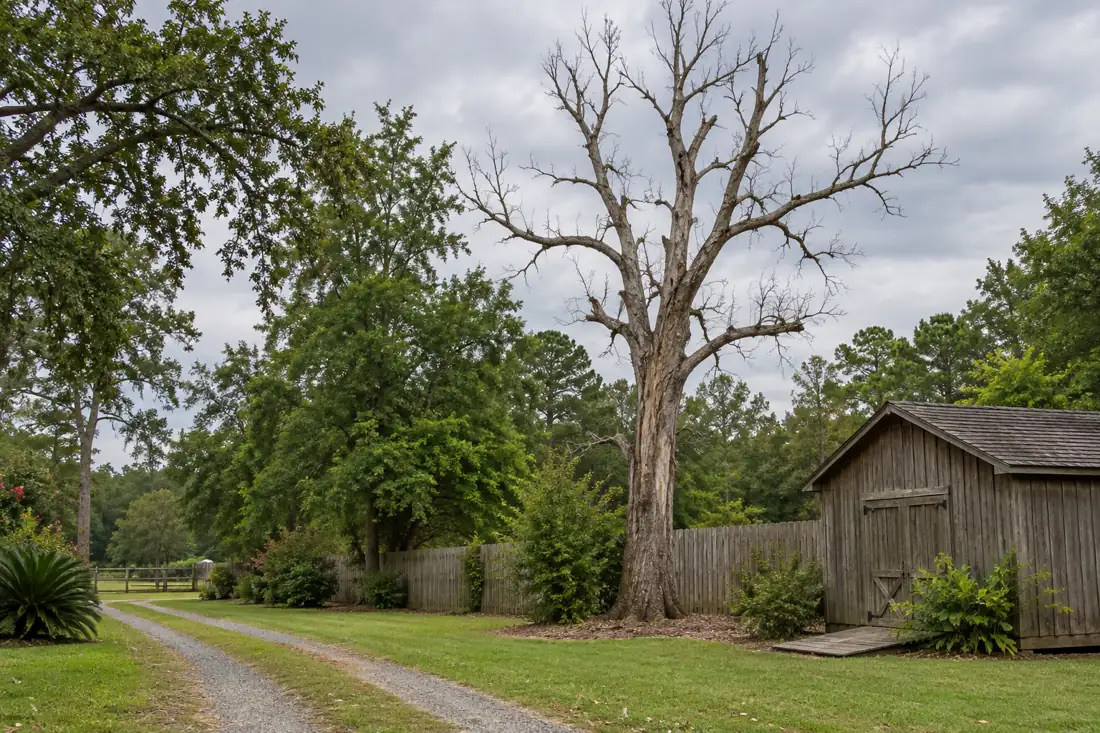
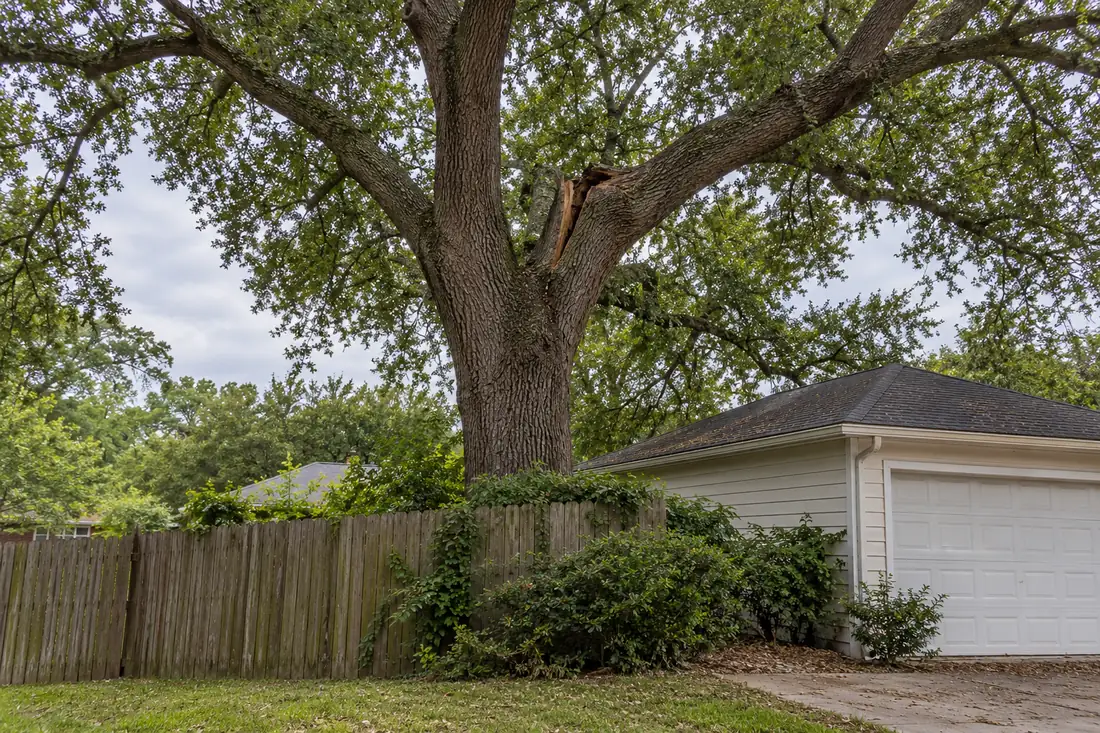
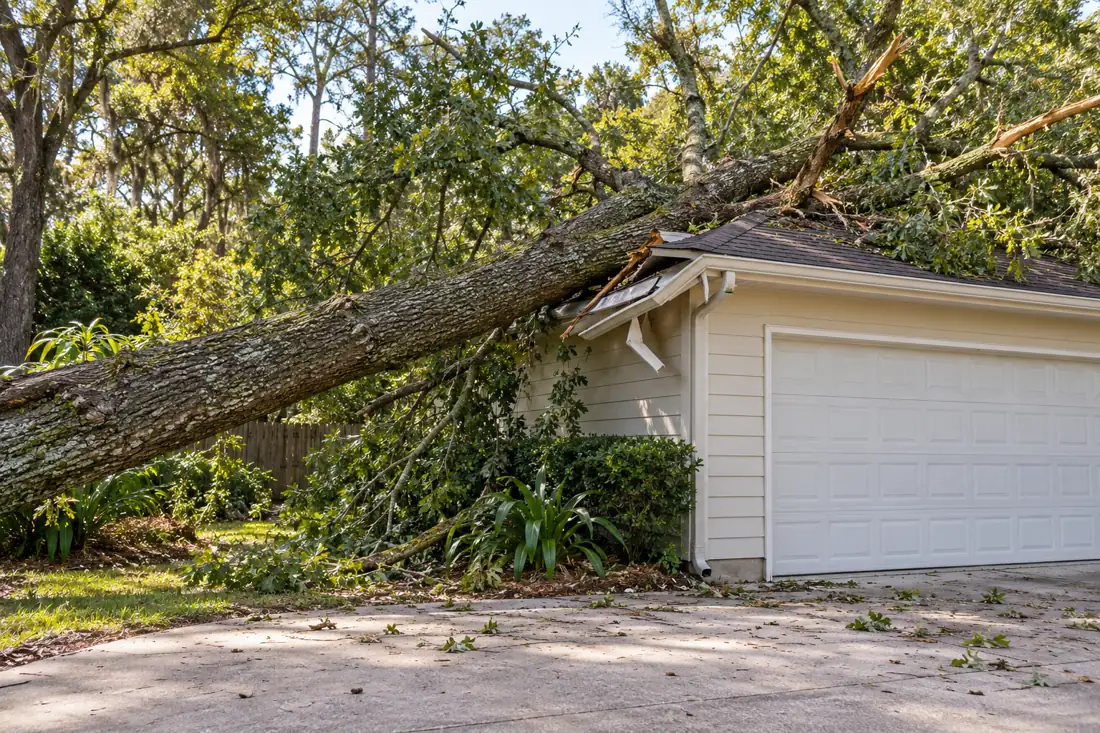
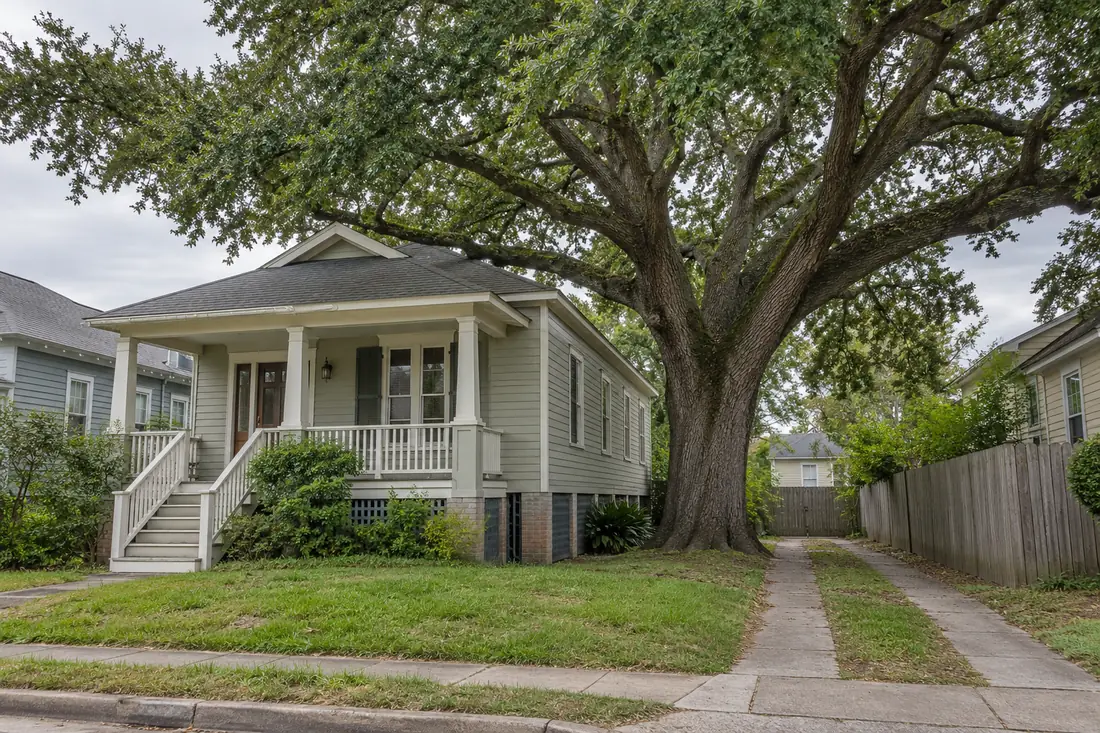
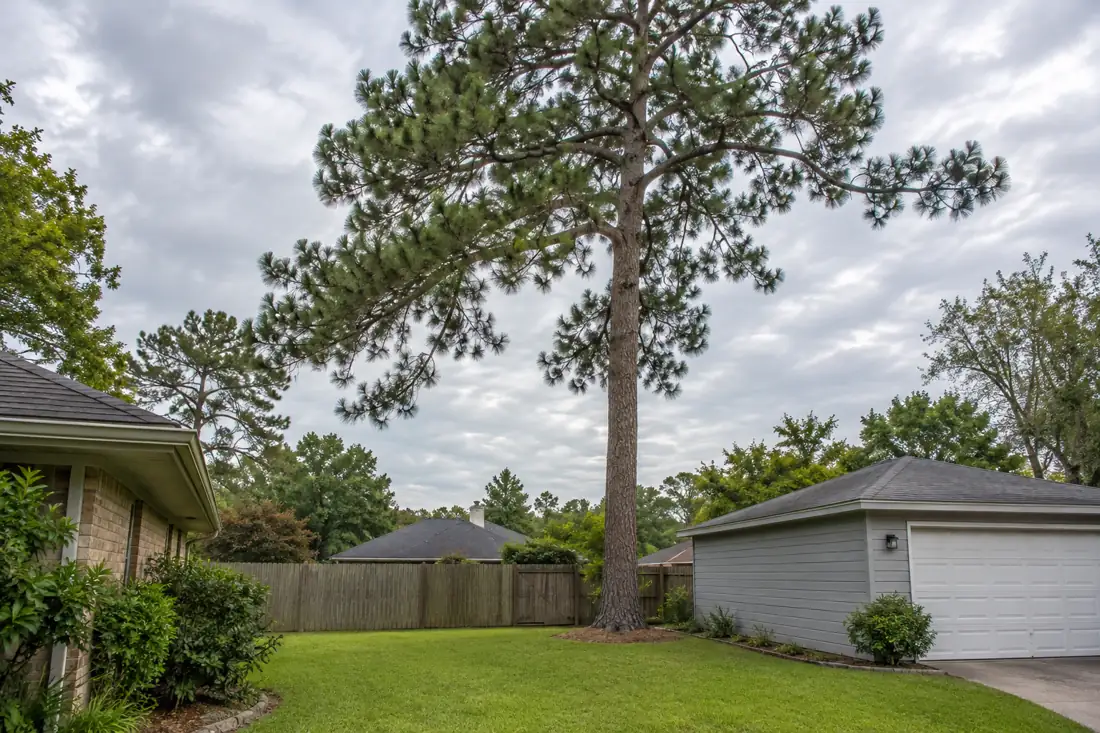
A multi-stem tree raises questions about how the trunks are connected and how weight is distributed. The visible stems should be evaluated together, including unions, included bark, existing splits and anything beneath the canopy. A photograph showing one stem is not enough to plan the entire removal or decide which portions can remain.
Count the structural stems before discussing a selective removal
A multi-stem tree is not necessarily a group of independent trees. Photograph the shared base from several safe angles and mark the specific stems on a simple sketch. Look for included bark, open unions, decay or soil movement as issues to report, but do not infer internal strength or removal feasibility from a photograph alone.
If the requested outcome is to keep one stem and remove another, ask what happens to the shared trunk, root support and canopy balance. Selective stem removal may leave a large wound and change loads on the retained structure. A professional assessment should decide whether preservation is defensible and what follow-up monitoring would mean.
An estimate should identify the exact stems, not merely say remove one trunk. Include whether the base remains, how wood is rigged around surviving branches, and whether access or utility limitations prevent work from one side. That specificity protects the owner from an unexpected whole-tree scope and the crew from ambiguous field directions.
Identify every visible stem from the base upward before asking for a removal price. A cluster of stems from one root system may behave differently from several nearby independent trees, and branch unions can carry loads that are not apparent in a single photograph. Give each stem an identifier on a wide image and note whether your intention is complete removal, reduction, assessment or retention of selected stems.
Do not assume removing one stem will leave the remainder structurally unchanged. Ask the assessor to examine the unions, existing splits, canopy weight and any recent failure, then explain how the proposed sequence protects the retained portions. If only some stems are authorized for work, record them individually in the estimate and marking plan. Clarify whether debris, grinding and follow-up review apply to all stems or only those included in the approved scope.
Take photos that show the union at the base and the full crowns from more than one angle. Several stems emerging together can share a root system and have connections that affect loading, while closely spaced independent trees may require different removal or preservation decisions. Document cracks, included bark, fungal growth and changes in movement without attempting to probe unstable unions. A professional assessment should explain whether the proposal concerns one stem, several stems or the entire tree.
If one stem is intended to remain, ask how that choice may affect balance, future growth and exposure of previously sheltered wood. Clarify the exact cut locations and whether a retained trunk will need follow-up inspection or maintenance. Compare estimates by the number and location of stems, access requirements and disposal volume rather than counting every trunk as a separate standard tree. Photograph the intended final condition for the written scope, including what stump material remains.

Inspect branch unions, visible cracks, and decay signs
Important observations include fresh openings at a fork, displaced bark, cavities, fungal bodies, previous limb failures and changes in trunk position. A crack between leaders may indicate a problem with the shared attachment, but its severity cannot be established from a cropped phone image. Document when a change was first noticed and whether recent wind, lightning, excavation or pruning affected the tree. Do not insert tools into cracks or climb to examine a union.
If a stem appears actively split or is hanging, keep people away from the potential impact area and request appropriate professional help. A qualified assessor may consider the tree, its targets, and the likely consequences together. The objective is to make an informed decision rather than assign a risk category based on the number of trunks alone.
Evaluate each trunk and its shared attachment. Two visible trunks do not necessarily act like independent trees. Examine the union, included bark, cracks, decay, lean and shared root plate. A cut can redistribute load to the remaining stem. Ask the estimator to distinguish ordinary multi-stem form from serious defects and describe how each stem will be supported.
Understand whether the stems share one root system or distinct bases
A tree that looks like several trunks may have multiple stems arising from one base, stems fused together over time, or separate trees growing so close that they appear connected. That distinction affects both assessment and removal planning. Photograph the entire canopy and the lower trunk area from safe sides, showing where stems diverge and how they relate to buildings or paths. Do not assume that the stems can be cut as independent ordinary trees without reviewing their attachments and support.
A tight union may contain included bark or other defects, while a wide connection can still have decay or damage. The appearance of a fork is not a complete structural diagnosis. Ask what the professional can determine from ground-level observations and whether more detailed evaluation is warranted. The tree's present condition matters more than a generic rule about how many trunks it has.
Record which stems are being considered for removal
Some owners ask to remove one stem and keep the others; others want the entire multi-stem tree removed. The choice needs a clearly identified plan. Removing one substantial stem can alter wind loads, exposure and balance on the remainder, and a cut at a shared base may affect another stem. A contractor should not promise that the retained portion will remain structurally sound without evaluating the consequences.

Describe the stem junction before assuming one trunk can simply be removed
Multi-stem trees have different junctions, from well-connected stems to narrow unions with included bark or visible separation. Having two trunks alone does not establish a defect or mean removal is necessary. Record which stems appear to arise from one base, where the largest limbs extend, whether there has been a recent change, and any cracks visible from a safe position. A qualified on-site evaluation remains essential when structural risk is suspected.
When an estimate addresses only one stem, ask how removing it affects the remaining structure, crown shape and work zone beneath the junction. Cutting one side can change loading and the method used to lower sections. Identify exactly which stems and stump components are included, where material will be moved, and who will assess retained stems afterward. Keep observers out of the fall zone; do not touch the junction or attempt to test movement by hand.
Evaluate each trunk and the shared union
A tree with several trunks may appear to be one wide tree from the street, but the condition of the junction changes how removal should be planned. Identify every stem, the direction of its lean, and any targets beneath it. A pair of tall stems can share a root base while having very different branch structures and areas of exposure.
A ground-level photograph showing the complete union and another showing the whole crown help distinguish structural questions from simple size. Do not climb under separated stems or try to pull apart a cracked union to get a better view. A qualified site inspection is needed before anyone decides a remaining stem can be retained safely.
The written removal scope should make the fate of each stem explicit. Ask whether the job involves sectional lowering, rigging near a roof, or equipment staging away from fragile surfaces. The crew should identify where heavy wood can be landed and how the last stem is handled once other stems are removed.
Clarify whether a shared stump will be ground and whether chips, logs and branches will leave the property. If partial removal is offered, ask what it does and does not establish about the remaining tree's condition; a tidy cut is not a guarantee against future failure. Record fences, service drops, irrigation and planting areas that affect the sequence.
Use annotated photographs or a simple drawing to identify each stem and the work requested. Explain if a stem overhangs a roof, another property, a parked car or a frequent route. Do not authorize major cutting based only on the observation that one side looks heavier. The purpose of the project and the condition of the shared structure must guide the scope.
Consider how each stem contributes to canopy load
Multiple stems can carry different amounts of foliage and branch weight. A long horizontal stem over a structure may have a different load path than a more vertical stem in open space. Old pruning can create an unbalanced crown, while storm loss on one side may have changed how wind acts on the remaining stems. Removal planning should examine the connected parts, not just the trunk that the owner wants gone.
Some trees may be candidates for selective pruning or ongoing management, depending on their condition and goals. Other defects may require removal of one or more stems or the entire tree. The provider should explain what is being retained, how it will be affected, and what uncertainty remains. Avoid treating reduction pruning, cabling and removal as interchangeable remedies for every fork.
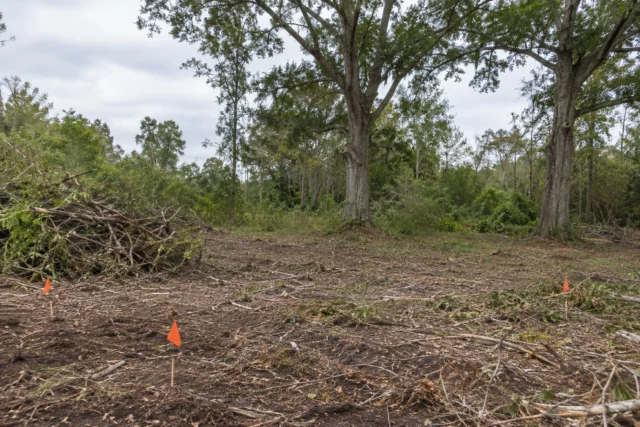
Choose a material handling method for connected trunks
A multi-stem removal can involve more than one cutting direction and a complex arrangement of heavy material. Sections may have to be controlled around roofs, fences, or the remaining stems, with ground crew positions and exclusion areas established by the professionals. The homeowner should not dictate that each trunk be dropped whole simply because the site has an open lawn. Site conditions, structure, equipment access and targets determine feasible operations.
Ask where material will be staged and how trucks or smaller machines will reach it. Low branches, overhead lines, buried utilities and soft ground may influence the plan. If a crane or rigging system is proposed, request a clear explanation of the site assumptions and the overall scope rather than relying on a machine label as proof of suitability.
Removing a Tree With Multiple Trunks
Several stems rising close together may form one tree with codominant trunks, a cluster of independent trees, or a growth pattern that is difficult to classify from a front-view picture. This distinction matters because load paths, bark unions, root support and feasible work methods may differ. Ask the assessor to explain the tree's form rather than relying only on the number of visible trunks.
Tight unions can sometimes conceal included bark or structural limitations, but appearance alone does not establish failure risk. Record visible changes such as widening seams, deadwood, recent movement, cavities or fresh cracks from a safe position. Do not probe the union with tools or climb into it to get closer photos; a professional should determine whether further assessment is warranted.

Distinguish several stems from several separate trees
If removal is recommended, discuss whether each stem can be handled independently, whether remaining stems would be exposed to new wind loads, and how the shared base affects stump work. Partial removal is not automatically the lower-impact choice. Conversely, a healthy multi-stem tree should not be removed solely because a generic online list labels all forks dangerous.
Ask for a written explanation of the goal, the affected targets and any suitable alternatives, including selective pruning or monitoring when appropriate. Obtain a scope covering debris, access and residual trunk material. Wide photographs of the entire silhouette, a midrange view of stem separation, and a safe view of the basal flare give an estimator useful context.
Preserve accurate boundaries and neighbor communication
Multi-stem canopies may extend into several yards even though the shared base lies on one property. Work can affect access, vehicles, windows and rooflines beyond the owner's fence. Identify neighboring targets and any route requiring permission. Do not assume a contractor can position equipment in a neighbor's driveway or cut across a boundary without the necessary authorization. Property ownership and tree biology are separate questions.
If a retained stem will remain over an adjoining building, the property owner should understand that the scope must address it specifically if relevant. A quote for one stem does not automatically include inspection, pruning or support for all other stems. Discuss any concerns with the appropriate parties before the crew arrives and record the authorized scope without making legal conclusions on behalf of the contractor.
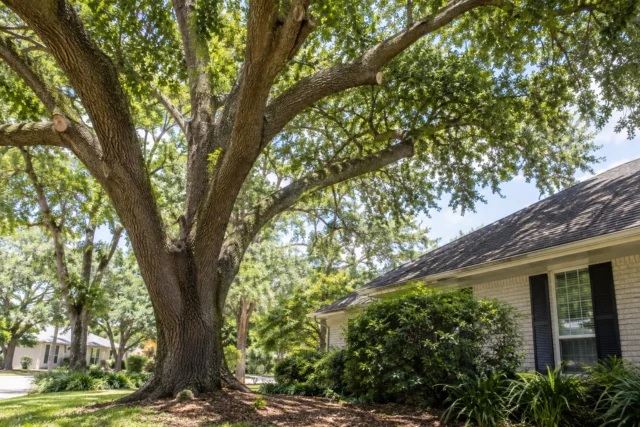
Separate above-ground removal from the shared stump
When all stems are removed, the remaining base may be wide, irregular or fused, which can affect stump grinding and material handling. If only one stem is removed, grinding near the shared base could damage the retained tree and may not be appropriate. The stump objective should therefore follow the choice about which stems remain. Ask about access, grinding depth, chips and nearby services before assuming the ground will be ready for planting or pavement.
A large shared base can produce substantial material. Decide whether logs and chips will be hauled, stacked or retained, and where they can be placed without obstructing drainage or paths. Turf restoration and grading are separate responsibilities unless included. The finished condition must be described in relation to the actual stems treated, not just the generic term removal.
Use site photographs that show relationships, not just diameter
A single tape measurement of one trunk is not enough to estimate multi-stem work. Send wide views showing all stems and their canopy, a safe base photograph, the trees' relationship to buildings, and access from the street. Note visible defects and the date they were observed. An assessor may need to inspect attachments or concealed conditions before choosing among pruning, partial removal, or whole-tree removal.
The estimate should identify which stems are included and whether separate tasks, such as deadwood removal from a retained stem, are being priced. Ask how the provider handles changes if an unexpected structural condition appears. A transparent scope is more useful than a universal price based on stem count, and it avoids implying that all similarly shaped trees require the same treatment.
Make the completion record stem-specific
After the work area is released, compare the actual remaining tree or stump to the authorized plan. The record should identify which stems were removed, what remains, whether debris was hauled and what stump or grinding task was performed. Photographs of real finished work can help the owner track later changes. They do not certify the stability of retained stems forever or substitute for a qualified tree risk assessment where one is needed.
When contacting Tree Huggers, describe the multi-stem structure, your objective, visible concerns, nearby targets and available access. Ask whether a site visit or further assessment is required before a firm work method can be agreed. Honest documentation protects a valuable retained tree when preservation is feasible and clarifies the extent of removal when it is not.
Questions about this project
Does healthy-looking foliage mean a tree is structurally safe?
No. Leaves do not establish the condition of roots, trunk or branch connections. Explain visible defects and recent changes, and ask for an assessment appropriate to the tree and nearby targets.
Should I test a cracked branch or trunk?
Do not pull, shake, climb or cut damaged material to test it. Keep clear of the affected area and describe the condition from a safe location. Qualified assessment and an appropriate work plan are needed.
Can the removal method be selected from a photo?
Photos help prepare the discussion but may not show defects, ground conditions or usable access. The contractor may need an on-site assessment before confirming the method, equipment and final scope for the property.
What if the tree changes before the appointment?
Tell the contractor about a new split, failed branch, changed lean or other visible change. Keep clear of the affected area. Changed conditions may require a different assessment, priority or work plan before the crew proceeds.
Which property features should I point out?
Identify buildings, vehicles, fences, fixed fixtures, landscape features, utilities and occupied routes. Explain what can move and what must remain. Include existing damage and any buried features you know about along the access route.
Should people remain inside the work area?
The contractor and site contact should establish an exclusion area and access arrangements appropriate to the work. Keep children, pets, visitors and other workers outside the active zone until the responsible parties say it can reopen.
Is a free work estimate the same as a written risk assessment?
Not necessarily. Explain whether you need pricing, condition advice, a documented assessment or a combination. Ask what the visit includes, who provides it and what limitations apply to any findings or recommendations.
What history should I share?
Share known storm damage, prior failures, construction, root disturbance, flooding, pruning and recent changes. Include the timing and nearby property use. Useful history supports the evaluation without replacing inspection of the current tree and site.
What should I compare besides the price?
Compare tree identification, work objectives, access assumptions, hauling, stump treatment, site finish and exclusions. Ask whether permits or other coordination are part of the scope and who can approve changes if conditions differ.
Does an online request book the crew?
No. A request starts the estimate conversation. The company still needs to discuss scope, availability and any site assessment. For a dangerous or urgent condition, call 504-458-8336 rather than relying on a form response.
What should I tell Tree Huggers about removing a tree with multiple trunks?
Explain the property address, the work you want and the specific concerns: stem unions, canopy loading, retained stems. Send safe photos of the tree, surroundings and access route. The contractor can then discuss the assessment and scope needed for this situation.
How do I request an estimate for this work?
Call 504-458-8336, text photos or use the estimate form on this page. Include the address, desired outcome and any timing constraints. The company will need to review scope and availability; an online request does not confirm a price, appointment or emergency dispatch.
Get a scope for your property
For a multi-trunk tree, photograph the full crown and the stem unions from a safe ground-level position, plus any visible cracks or included bark. Note whether one stem leans over a target and ask for a condition-based recommendation rather than automatically assuming the entire tree must be removed.