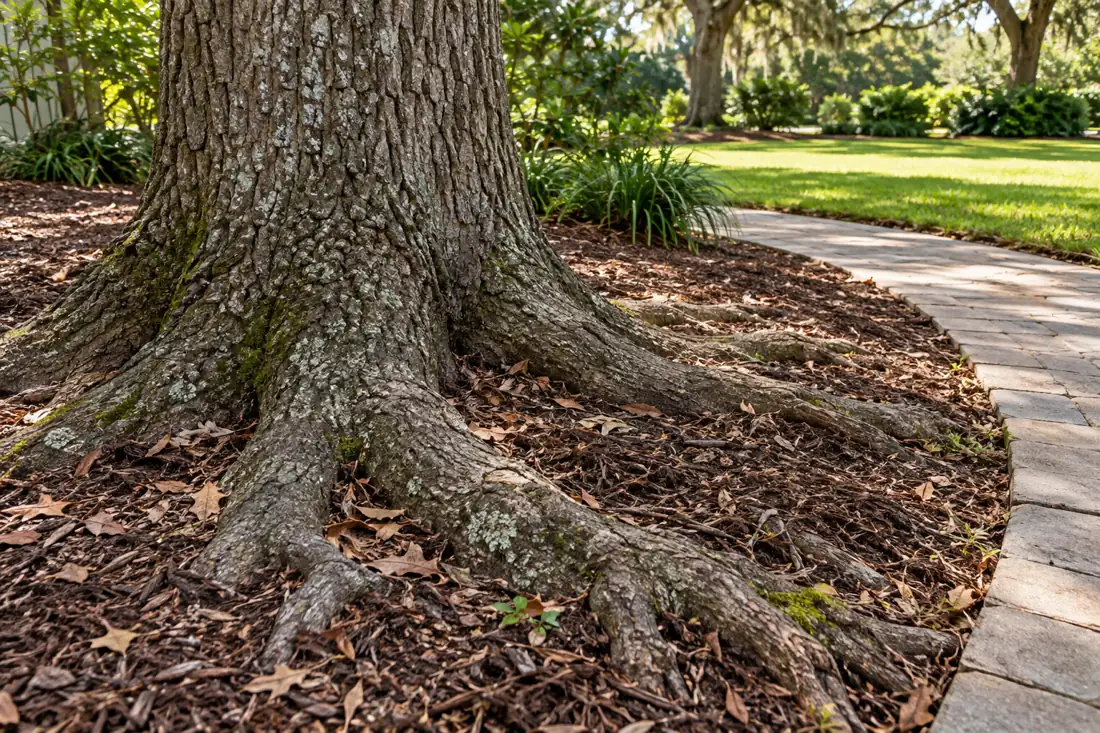
Cabling can help support selected tree structures, but it is not a cure for every dangerous tree. The choice between support and removal depends on condition, targets and how much risk can reasonably be reduced.
Compare two different outcomes rather than two line-item prices
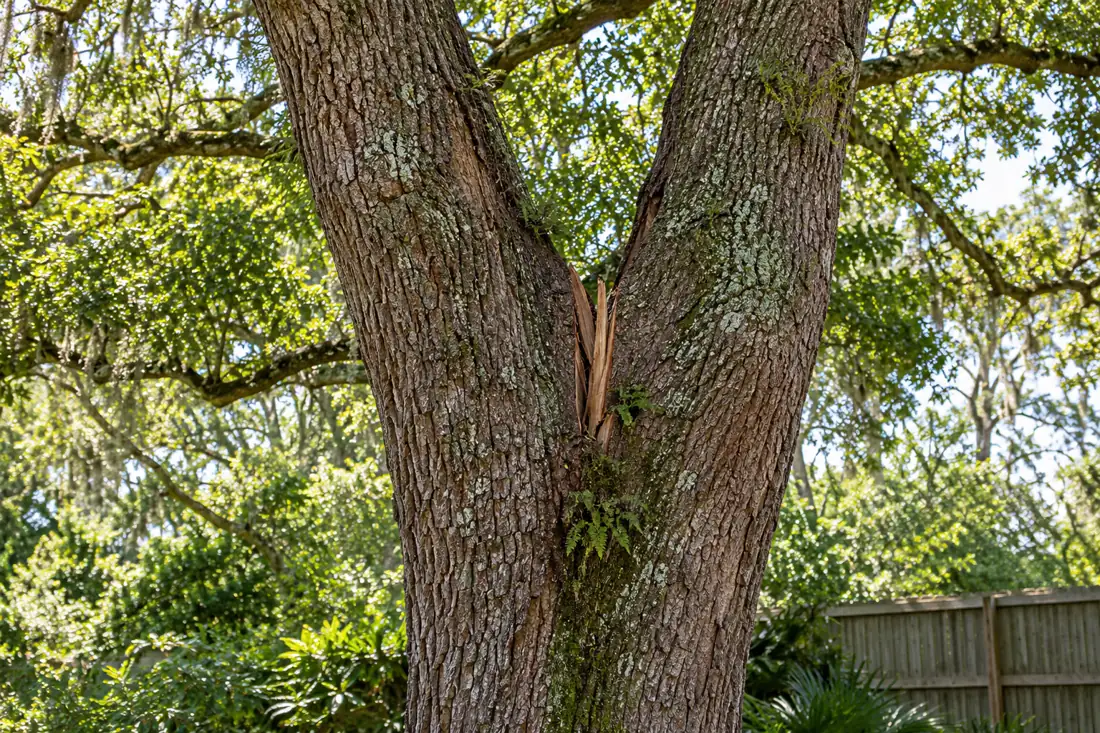
Ask first whether the tree has a specific union defect, a broad decline in condition or a location that makes exposure unacceptable. Support hardware may address selected mechanical concerns in otherwise suitable trees; it does not restore rotten roots or erase the need to monitor the tree. Removal eliminates that tree’s risk but creates another set of site and landscape consequences.
A cabling proposal should state the intended purpose, system type, inspection or maintenance expectations and any recommended pruning. A removal proposal should explain rigging, access, stump treatment and debris disposition. Comparing only the initial price ignores future inspection responsibility on one side and replacement planting or shade loss on the other.
Where preservation is the owner’s preference, ask the evaluator what changes would trigger reconsideration. The answer should be specific enough to observe without suggesting that the owner perform a dangerous inspection. Both options deserve an evidence-based discussion, and neither should be marketed as a universal answer for every split or leaning tree.
When cabling may make sense
A valuable tree with a manageable weak union and otherwise acceptable structure may benefit from supplemental support combined with pruning.
When removal may be better
Extensive decay, severe root failure or major structural loss may leave too little sound wood for support to make sense.
Begin with the condition the proposal is meant to address
Cabling and removal are not interchangeable answers to every tree concern. Ask what finding prompted the recommendation and which part of the tree is involved. A proposal should identify the tree and the objective, whether that is managing a particular connection, addressing a broader condition or removing a tree that no longer fits an acceptable management plan. The owner needs enough explanation to understand the decision, without being expected to design a support system or choose an installation method.
State whether you need a work estimate, an assessment or a written recommendation for a manager or other reviewer. Those deliverables may differ. A price for a cable does not establish the suitability of the whole tree, just as a removal price does not explain every reason removal might be considered. If the assessment has limits, keep them with the proposal. Comparing options starts with an honest account of what has been evaluated and which important conditions remain uncertain.
Ask what makes the tree a support candidate
The provider should explain why support is appropriate for the actual tree and defect. Ask whether related pruning, further investigation or management of the area below is part of the recommendation. Avoid treating the mere presence of a fork or a crack as proof that hardware will be suitable. The condition of the rest of the tree and the nearby targets belong in the discussion as well.
The ISA tree-owner risk resource describes support as one possible management measure with limitations. Use that distinction when reviewing a promise of preservation. Ask the provider to describe the intended benefit and what it cannot assure. If a second opinion is useful, share the existing recommendation and ask an open question about the condition rather than requesting approval of the outcome you prefer. A sound comparison is based on the tree, not on selecting the answer that sounds least disruptive.

Treat support as an ongoing management commitment
Ask what inspection and follow-up the proposed system requires, who will perform it and how the owner will know when to arrange the next review. Include questions about changes after storms, visible hardware concerns and alterations to the tree or property. Keep the provider’s actual guidance rather than adopting a generic inspection interval from an unrelated installation. The type of system and tree condition need to guide the maintenance arrangement.
An absent owner or property manager should confirm that access for future visits will remain available. Identify who retains the records and who reports a change if management staff or tenants change. The system should not become an unexplained line in the canopy that nobody remembers authorizing.
Do not adjust, climb to inspect or remove hardware yourself. An existing system is part of the tree’s assessment history and needs appropriate professional review when concerns arise, even if it has been present for years without a reported problem.
Compare removal by the result it actually delivers
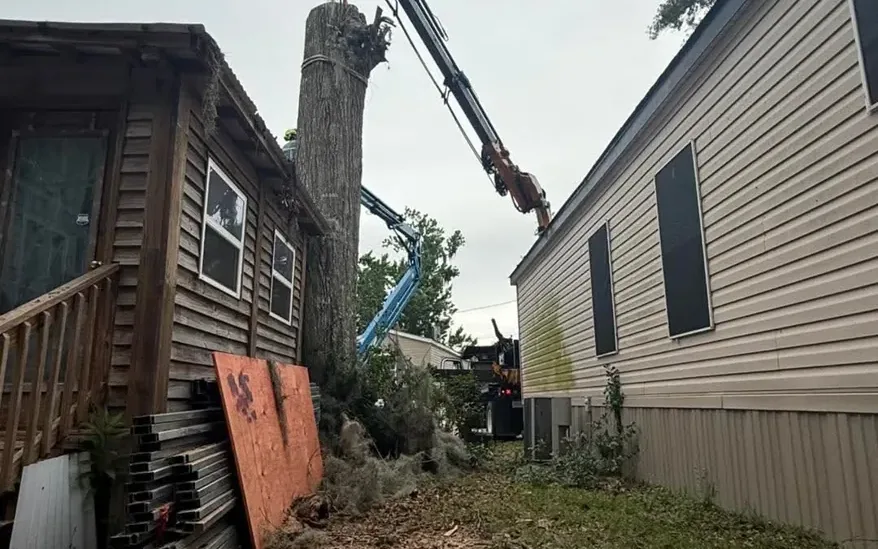
A removal proposal should describe the tree, access, material handling and site finish. Ask whether the stump remains, is ground or requires additional excavation for a future project. Identify retained trees and landscape features that need protection during access. Removal changes the property and eliminates that standing tree from the location, but it does not automatically include new soil, sod, a replacement tree or repairs to unrelated structures.
Treat structural support as a continuing choice
A support proposal should name the specific concern it intends to manage and the limits of the hardware. Ask who will inspect the attachment, what evidence supports candidacy and how future pruning or changes in tree condition affect the plan. Hardware that cannot be seen from the ground still creates an ownership and inspection responsibility.
A removal proposal needs an equally complete finish description: cutting limits, material handling, stump treatment and surrounding-property protection. Comparing an initial support price with a full removal quote without those assumptions can make one option look simpler than it really is.
Use the tree's location and how people use the area to discuss tolerable restrictions during any work and follow-up. Neither cabling nor removal of selected limbs can promise that all future conditions are eliminated. Keep the professional recommendation and monitoring responsibilities with the property file.

The owner may need to coordinate another trade after the removal, such as a landscaper or builder. Tell each provider the intended handover condition. A proposal that includes hauling and grinding is different from one that leaves logs and a stump, even if both say remove tree. For a fair comparison with support, use a complete description of the desired removal result. Do not compare a fully specified preservation plan against a removal price that omits the cleanup and restoration you already know you will need.
Include the way the property is used now
Identify bedrooms, occupied outdoor spaces, entrances, play areas and neighboring property around the tree. Explain how often those areas are used and whether future construction or a change in occupancy is planned. A support decision should fit the actual setting and the owner’s ability to follow the recommended management. A low-use corner becoming a daily gathering area is relevant context even when the tree looks unchanged.
A movable target may be part of the management discussion, but moving furniture is not a homeowner certification of safety. Ask what interim restrictions are appropriate while assessment or work is pending. Confirm who can authorize changes on a shared or managed property. If an overhead line, public tree or disputed boundary is involved, the relevant authority or provider may need to participate. A signed tree-work proposal does not replace those permissions or resolve questions outside the contractor’s agreed responsibilities.
Compare support and removal on the same decision sheet
An owner comparing cabling with removal should first identify the particular defect or structural concern that prompted the conversation. Supplemental support may be evaluated for a selected tree with remaining value, but it does not restore decayed wood or turn a structurally compromised tree into a risk-free object. Ask the qualified assessor to describe what the proposed support is intended to accomplish and which conditions would make the proposal unsuitable.
Define the people and property at risk before interpreting the recommendation. A specimen shading a seldom-used field has a different exposure pattern from one over a classroom entrance or frequently occupied patio. Note recent failures, major construction, altered drainage and any visible changes at the root collar or unions. Avoid treating a green canopy as evidence that the trunk or branch attachments have been evaluated for every possible defect.

What continued ownership of a supported tree involves
A supported tree requires a plan beyond the installation date. Ask who will inspect the hardware and tree, what observations should trigger earlier review, and whether selective pruning or other management is also proposed. Do not assume a cable prevents breakage in every storm. The scope should identify any excluded branches and explain which elements need follow-up from a separately qualified specialist.
Compare proposals by their stated outcomes and obligations. A removal quote may or may not include stump grinding, hauling and restoration, while a support proposal may include future inspections or separate maintenance. The owner should see those distinctions rather than comparing only one upfront number. Retain dated records describing the original concern, selected work, limits of the recommendation and the conditions for reassessment.
If deciding between cabling and removal, request an assessment specifying the affected union, nearby targets, intended support outcome, follow-up responsibility and a separately defined removal scope if it is a realistic option.
Look at cost over the stated plan, not an invented forecast
Ask what the current proposal includes and what future inspections or related work are recommended. Request separate descriptions of required work and optional work. Do not invent a lifetime savings figure for a support system or assume that removal has no later property costs. The useful comparison is a transparent first scope plus the known responsibilities and uncertainties that follow it.
If several owners share the decision, put the alternatives in one short written comparison. Include the assessment basis, immediate work, follow-up, access needs and restoration assumptions. Keep speculative future charges identified as uncertain rather than adding them to make one option win. Ask how new findings during the visit or work will be handled and who approves any revision.
This gives the decision-maker a record that remains useful after the initial conversation, especially when the preferred option changes because of a condition that was not known at the estimate stage.
Understand when another assessment can help
A separate review may be useful when a major preservation decision has unclear findings, when several parties rely on the result or when the proposed intervention is not explained well enough to evaluate. Ask about the assessor’s relevant qualifications, the scope of the review and whether written findings are provided. A second opinion should address the tree and the actual question, not simply compare two prices for unrelated treatments.
Provide the same available history to each assessor: prior failures, construction, support work and current site use. Explain any contradictory recommendations accurately. Do not omit a concerning finding to obtain a more favorable answer. If the evaluations differ, ask what observation, assumption or limitation explains the difference.
Some uncertainty may remain even after a careful assessment. The owner can then make an informed decision about the stated options and responsibilities without expecting an evaluator to promise that a living tree or installed system can never fail.
Send the information that makes a comparison possible
For Tree Huggers, provide the address, safe whole-tree and concern views, any existing assessment and the result you are trying to achieve. Mention current support hardware, known major failures and recent site changes. Say whether the request is for a support discussion, removal pricing or a condition-focused review before choosing. Ask what can be assessed during the visit and what further service might be needed.
The tree-risk assessment service addresses the basis for the decision, while tree removal addresses a removal scope where appropriate. A meaningful comparison connects the actual condition, the use of the property and the owner’s follow-up capacity. It should leave you able to explain why an option was selected and what happens next, rather than simply choosing between the words save and remove on two estimates with different assumptions.
Tree Cabling vs. Tree Removal questions
Is a cable a substitute for assessing the whole tree?
No. Ask what condition was evaluated, why support suits the tree and what important limitations remain.
Does support guarantee that a tree will not fail?
No. A support proposal needs a clear purpose, limitations and appropriate follow-up rather than a permanent safety guarantee.
Should a support quote include inspection responsibilities?
Yes. Ask who performs follow-up, how it is arranged and what changes require earlier review.
Can I adjust an existing cable myself?
Do not climb, adjust or remove support hardware. Report the concern and arrange appropriate professional review.
Is the cheapest first price the whole comparison?
No. Compare the assessment basis, immediate scope, follow-up and property-restoration assumptions.
What removal items often need clarification?
Stump treatment, retained wood, hauling, grindings, access restoration and landscaping should be stated clearly.
Does changing property use matter?
Yes. Explain new occupied spaces, entrances, play areas or construction that affects the management decision.
Can a second opinion help?
It may help when findings or recommendations are unclear. Request an appropriate review with stated scope and limitations.
Should both assessors receive the same history?
Yes. Share prior failures, support work, construction and site use accurately so recommendations can be compared fairly.
Do I need a fixed annual hardware schedule from a website?
No. Follow the actual provider's guidance for the installed system and tree, including review after relevant changes.
Will a work estimate always include a written risk report?
Not necessarily. Confirm the required deliverable and what the visit includes before arranging it.
What should I send to start?
Send safe views, the address, existing reports or hardware history and the decision you need help comparing.
Let’s plan your tree work.
Send the property address, safe tree photos and the result you need. Include access restrictions and the person who can approve the work.