Commercial debris removal may need a work window, traffic control and a staging area that does not block operations. Identify the material, loading route and the person who can authorize the scope. If debris is mixed with other waste, describe that before pricing. Disposal and completion records can be included where required by the buyer.
Site planning detail: On a commercial lot, tree debris removal must accommodate business access rather than assuming the space can be closed all day. Photograph the pile alongside parking stalls, delivery routes, curb drains and pedestrian walkways. Identify fire lanes or loading zones that cannot be blocked, and who can authorize temporary restrictions. A clear scope distinguishes brush and logs from pallets, soil or construction material. Ask how chips and small fragments will be cleared from the pavement after loading and how vehicles or storefronts will be separated from the work zone.
Confirm whether the contractor handles traffic coordination or expects the property manager to arrange it. Completion should be checked against the agreed usable spaces and clear access, not just the disappearance of the main pile.
Commercial debris pickup needs a traffic and operations plan as well as an estimate. Mark the pile, truck route, loading zone and entrances on a site diagram. Confirm who can authorize temporary closures and whether deliveries, emergency access or tenant business hours limit the window.
Describe cut branches, brush, logs, chips and mixed construction debris separately because handling and disposal differ. Request the exact removal boundary, protection measures, cleanup standard and any disposal documents the property manager needs. Final photographs can show clear access and the cleaned site; they do not independently establish compliance with every disposal or environmental requirement.
Map circulation and business operations before scheduling
A commercial site may have several kinds of movement taking place at once: customers arriving, delivery trucks backing, staff walking from parking, and emergency vehicles needing an unobstructed route. Start with a marked property plan that separates public entrances, loading areas, dumpster access, service gates, and the actual debris locations. A fallen canopy beside a parking aisle is a different problem from brush stored behind a fenced utility yard, even if the volume appears similar in photographs.
Record the operating hours that matter to each access point, not simply the hours on the business website. A tenant may receive shipments before opening, a restaurant may have evening trash service, and a property manager may coordinate several occupants. Ask the tree contractor which work zones can be isolated safely and which require a planned interruption. A clear phasing plan is more useful than a general promise that the property will remain open throughout the operation.

Distinguish scattered vegetative material from a single pile
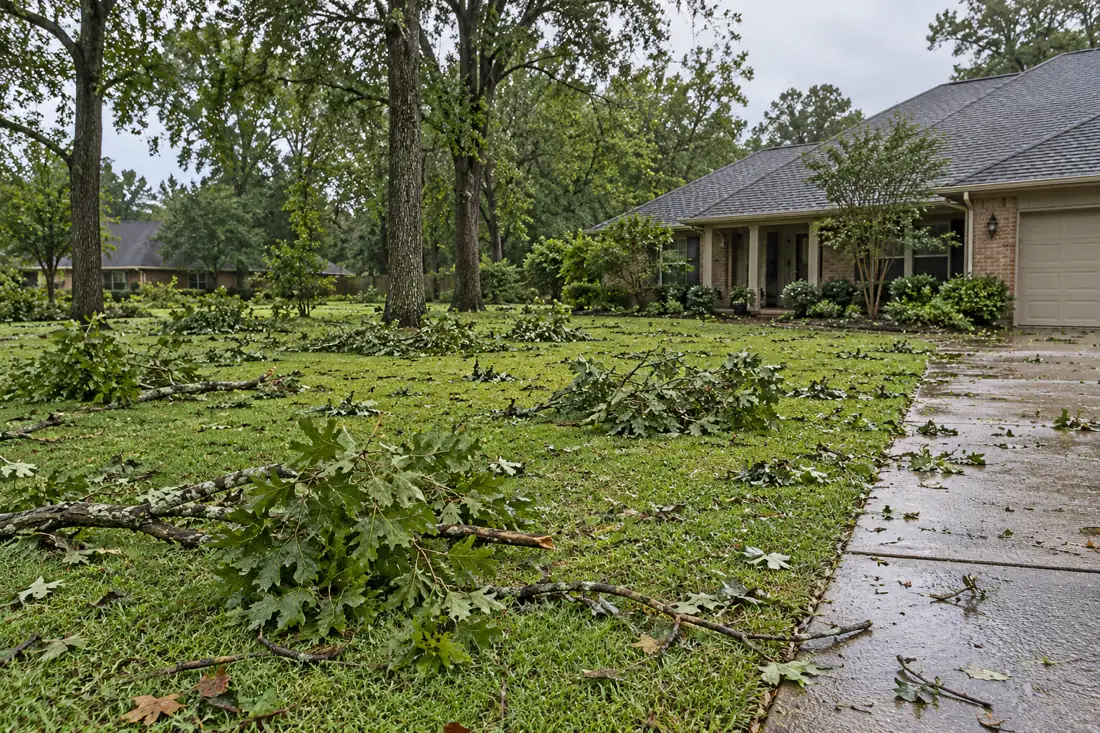
A storm can scatter branches across landscaped islands, curbs, roofs, drive lanes, and drainage inlets. Photograph each location from a wide angle and then closer up to show pieces that are pinned under other material. Note whether the debris consists of leafy branches, large wood sections, loose chips, or mixed material. These characteristics influence how crews stage material, select machinery, and keep traffic separated while the site is being cleared.
A single large pile may look easier than scattered branches, but confirm whether it can be reached without crossing irrigation, curbs, pavement joints, or overhead obstructions. Material placed against a fence or utility cabinet may need hand separation first. Mark the pile boundaries and the intended pickup location before trucks arrive; moving a pile twice consumes time and can damage landscaping or reopen an area that was already made safe.
Sequence commercial debris loading around occupied operations. Ask the site contact which drive lanes must remain open, when trucks can arrive and where equipment may stage without blocking customer access, loading docks or emergency routes. Identify the quantity and material types, especially large wood mixed with brush or nonvegetative waste. If material is against a wall, fence or utility cabinet, flag that before work is priced. Agree on disposal evidence, broom-level cleanup or surface repairs only if explicitly included. Photograph cleared sections from repeatable public vantage points without capturing unnecessary customer information.
Map the haul route before discussing truck size
A commercial lot may appear open from the street while containing low clearance, delivery lanes, speed bumps, storm drains, bollards and customer parking islands. Show the staging area and the permitted route from the debris pile to the exit, including any height or weight restrictions known to the site manager.
Distinguish cut branches, loose brush, logs and mixed waste, because equipment and disposal arrangements may differ. If the property has several tenants, identify who controls shared lanes and who can authorize temporary parking restrictions. A photograph of the debris alone cannot show whether a truck can safely reach it, so include wider access views.
Define whether cutting, loading or disposal is included
Hauling a pile left by another crew is not automatically the same scope as dismantling a standing tree. Note whether the material is already cut to manageable lengths, whether soil or trash has been mixed in, and whether branches are tangled beneath fences or around utility fixtures.
Ask how the contractor will handle oversized pieces, remaining stumps, raking and final sweep of travel surfaces. A written scope should distinguish removal from the property, approved on-site chipping, and stockpiling material for a separate pickup. Without those distinctions two estimates that both say debris removal may describe very different levels of work.
Separate tree debris from other waste streams
Vegetative debris should be identified separately from roofing material, signs, broken glass, fencing, pallets, and general trash. Mixed storm material can conceal sharp objects and can affect which destination will accept a load. Do not ask tree crews to handle unidentified demolition waste as though it were ordinary wood. If another contractor is working on the property, arrange distinct staging areas and mark who is responsible for removing each material category.
When photographing a pile, show any nearby dumpster, recycling bin, utility equipment, or construction stock so the contractor understands the boundary. Property managers should confirm local disposal rules and any hauling documentation their insurer or organization requires. A useful scope spells out whether small twigs, log sections, loose leaf litter, and wood chips are to be hauled, consolidated, or left in an approved on-site area.

Coordinate commercial tree debris hauling without disrupting site access
Map the work zone before scheduling a pickup. Identify parking aisles, customer entrances, loading docks, delivery windows, accessible routes, dumpster areas and the tree-debris staging location. Record whether there are separate property owners, tenants or managers whose permission is needed. Branches near active traffic should not become an informal obstacle course for customers or delivery drivers. A wide photograph from each approach direction gives the contractor more useful context than a close-up showing only a few cut limbs.
Ask how the crew will protect people and vehicles while loading, not merely which size truck will arrive. Collection may require cones, temporary parking restrictions, a spotter or a revised staging area, depending on the site. Do not promise a lane or sidewalk closure unless the appropriate property or public authority authorizes it. Consider overhead power and communication lines, covered entries, security cameras and low canopies along the haul route. Where landscaping islands are narrow, heavy equipment may need a firm separate setup surface.
The written scope should sort brush, logs, chips and unrelated waste and state what happens to each. A commercial tenant may be able to authorize hauling but not damage to common-area paving or curbing; verify the decision-maker. Note any special timing requirements without claiming guaranteed same-day or after-hours service.
If the debris resulted from another contractor's cutting, request an inventory of what they leave so duplicate hauling charges or gaps in responsibility do not arise. Keep tree-removal work and parking-lot restoration as separate scope items unless specifically included.
At handoff, walk the accessible route and inspect the loading footprint for loose sticks, nails, chips, damage to curbs and debris remaining in storm drains. Confirm that designated entries and accessible paths have been reopened. A site manager should record any exclusions, such as oversized logs awaiting separate equipment, rather than approving completion from a single distant photograph. Clear access records, scope notes and a final debris inventory are more defensible than a generalized assertion that the entire commercial property was cleaned.

Preserve drains, fire lanes, and accessible routes
Tree debris can obstruct low points where stormwater enters a catch basin or flows along a curb. Before a crew starts moving material, identify drains, culvert entries, fire connections, hydrants, and accessible parking and walking routes. They are not convenient temporary storage spaces. If equipment must cross a drainage grate, the contractor should evaluate its capacity rather than assuming it is suitable for concentrated machine or truck loads.
Use temporary barriers and clear wayfinding only where the property manager can lawfully control the space. An alternative customer route must actually connect parking, sidewalks, and an entrance; pointing visitors toward an unfinished detour is not enough. If a work zone changes during removal, update tenants and delivery contacts. Check the entire route again after hauling, when fine chips and twigs may remain on concrete or within accessible surface transitions.
Document business circulation before accepting a debris truck
Commercial debris removal needs a site-use plan in addition to a pile description. Identify operating hours, delivery windows, accessible paths, fire lanes, occupied parking, drainage inlets and underground services that may be affected by loading. Photograph the debris from safe public or authorized access points, and note which material is vegetative versus construction or general waste.
Ask who controls traffic and temporary closures while the vehicle is loading, and whether specialized lifting is needed for large trunk sections. A clear scope distinguishes collection, additional cutting, disposal records and final cleaning of the loading area. It also identifies the person authorized to approve a change when the material or access differs from the original description.
Keep commercial debris hauling clear of tenant operations
A commercial lot may have space for a truck but little room to load safely when employees, deliveries or customers are present. Show which lanes, docks and pedestrian paths must remain available. Identify debris piles, large logs and any landscape or drainage structures close to the loading area. A map can help the estimator choose an approach without promising that normal operations will be uninterrupted.
Ask whether the job requires a time window, temporary barriers or property-manager authorization. Commercial hauling can also involve mixed waste and tenant-owned materials that should not be taken without approval. Clarify who identifies items to remove and whether the site needs broom-clean paving, chip removal or simply removal of woody debris. Any disposal tickets or project closeout photos should describe what was actually removed rather than claiming a broader tree-service inspection.
Plan machinery around pavement and underground services
Identify known sprinkler lines, shallow electrical conduits, water service, gas features, and drainage structures before choosing a loading position. An apparently open landscape strip may conceal underground infrastructure. Existing site drawings are helpful but are not proof that every line is where shown. Where digging or ground penetration is planned, arrange the appropriate utility-location process and account for private lines that a public locator may not mark.
Ask how the crew intends to protect curbs, ornamental beds, concrete edges, and newly paved surfaces from tracked equipment or repeated truck movements. Weight distribution and turning radius can matter as much as the width of a gate. If the only access is a narrow landscaped island, a smaller machine or additional manual handling may be safer than forcing full-size equipment through a vulnerable area. Record pre-existing pavement cracks before work.

Identify what trees and property features must remain
A cleanup order should not accidentally authorize pruning, removal, or disturbance of healthy retained trees. Mark trees scheduled for evaluation, trees explicitly outside the scope, and plants that need protection. Roots and low branches can be damaged by staging piles or maneuvering machinery even when the trunk is never touched. Discuss the intended clearance around the remaining trees and any nearby light poles, signs, cameras, or irrigation controllers.
Ask for a written distinction between loose debris pickup and any cutting of hanging limbs or standing material. Suspended wood requires a different hazard assessment from branches already on the ground. If there is uncertainty about structural condition after a storm, keep pedestrians out of the affected area until a qualified professional has examined it. Cleanup can be phased so routine material is removed while uncertain trees await that decision.
Coordinate tenants, vendors, and site contacts
Name one person authorized to approve changes, one person who knows the property utilities, and a contact for after-hours access. A contractor can lose valuable time when a locked gate, parked delivery vehicle, or tenant policy prevents entry. Before work, circulate the planned work zone and tentative interruptions to occupants who rely on the affected driveway or gate. Keep personal contact details in private job communications rather than posting them publicly.
When the site has multiple owners or tenants, make the work boundary visible on a simple map. Identify who may move parked vehicles and who can approve an alternate staging location if the original one is inaccessible. Include reasonable contingency plans for rain, another delivery, or unexpected buried obstacles. The goal is to avoid informal field decisions that affect a neighboring tenant or exceed the written scope without approval.

Define how clean the site should be at completion
The phrase remove debris may mean different things to a property manager and a hauling crew. Describe whether the scope includes carrying small twigs out of shrubs, collecting loose chips from sidewalks, removing all large wood, clearing drains of visible vegetative material, or simply eliminating the primary piles. Distinguish a practical outdoor cleanup standard from a promise that no leaf or chip will remain after wind and normal landscape activity.
A walk-through checklist should revisit each marked debris zone, public path, loading area, landscape island, and exit route. Photograph the same angles used before work to document the result without presenting them as proof of a specific customer job when used elsewhere. Confirm whether any material was left at the owner's request and where it is stored. Record unresolved risks, rather than treating a tidy appearance as evidence that every tree is structurally safe.
Document scope changes without inventing a price
If the crew discovers an additional pile hidden behind dumpsters or a limb still lodged in a tree, pause to document the difference from the initial site inventory. A new hazard or extra haul load may change crew requirements. The property representative should review the proposed adjustment before unrelated work expands. A clear change note includes the location, reason for the difference, photos when safe, and what was approved or deferred.
Avoid publishing a made-up per-load or per-hour price for commercial debris removal. Site access, separation requirements, equipment, haul distance, disposal rules, and time-of-day restrictions all affect a legitimate quote. When requesting an estimate, provide a rough site map, debris photographs, expected access window, and any operational limitations. That gives a contractor enough context to schedule an appropriate inspection or ask targeted questions.

Build a closeout record that is useful later
Keep the approved scope, any site maps, disposal or hauling documents if supplied, and the final walk-through notes together. This record helps a manager answer questions from tenants, maintenance teams, insurers, or a future contractor. Photos should be dated in the private job record based on their actual capture; do not attach fabricated camera metadata or claim a scene was photographed at the site if it is only an educational illustration.
After the immediate debris is removed, revisit the remaining tree inventory. Storm exposure may have revealed cracks, hanging branches, leaning stems, or newly exposed roots that cleanup alone does not resolve. Schedule a separate risk review when warranted, and keep hazardous areas restricted until evaluated. For a useful first inquiry to Tree Huggers, send the property location, safe access details, main debris zones, and a few clear photographs.
Keep business circulation and drainage available
Commercial sites need a plan for pedestrians, customers, delivery drivers and emergency access while machinery operates. Identify peak periods, accessible entrances and places where a temporary barrier could block a required route. Discuss cones, spotters or approved traffic controls based on the site, rather than assuming a crew can simply work around passing vehicles.
Keep catch basins and drainage inlets visible and avoid pushing loose chips into them. If debris is near a loading dock or dumpster enclosure, arrange with the authorized manager before relocating other businesses' equipment. No generic promise of a same-day reopening should replace a job-specific sequence.
Close out with evidence useful to a manager
Before work begins, record the existing debris, nearby curbs, landscape beds and any damage that is already present. On completion, compare the agreed hauling limits with the cleaned area, note exclusions and ask for a clear explanation of what remains. Keep invoices, approved changes and site photos in the property file rather than presenting staged illustrations as actual job evidence.
If a new tree problem is discovered during pickup, treat its assessment and approval as separate from the hauling assignment. A practical estimate request includes the address, contact authority, material types, approximate area, access limits and the desired finish.
Questions about this project
Does vegetative-debris hauling include building waste?
Do not assume it does. Describe mixed roofing, fencing, soil or other material before pricing. Ask what is accepted in the scope and what needs a separate provider or handling arrangement.
Why does access affect a debris-removal price?
The route, loading position, carrying distance and obstacles affect how material can be handled. Send photos of both the pile and the access, and identify any remaining tree or utility hazards.
Can the crew block a public sidewalk or road?
Required arrangements must be coordinated with the appropriate authority. Identify public routes and restrictions before scheduling. A private work agreement should not be treated as automatic permission to occupy or close public space.
When should parked vehicles be moved?
Set the timing and responsible contact before the work window. Vehicles may need to leave the tree zone, equipment route and loading area. Confirm where access must remain available during each phase.
Can a business stay open during tree work?
That depends on the site and scope. Discuss occupied routes, exclusion areas, loading and work windows with the contractor and property representative. Do not assume normal access can continue through the active work zone.
Who should communicate with tenants or visitors?
Agree on that responsibility with the property representative. The contractor needs a clear site contact, while the owner or manager should use the property's established process to communicate access changes and work windows.
How should extra work be approved?
Use the agreed approval process and identify the change, reason, scope, price or schedule effect as applicable. Confirm who has authority before treating an additional tree or task as part of the original job.
What completion records are useful?
Keep the agreed scope, tree or area identification, authorized changes, invoice and labeled photos where appropriate. Include unresolved items and a contact. Contract-specific records should follow the buyer's stated requirements.
What should I compare besides the price?
Compare tree identification, work objectives, access assumptions, hauling, stump treatment, site finish and exclusions. Ask whether permits or other coordination are part of the scope and who can approve changes if conditions differ.
Does an online request book the crew?
No. A request starts the estimate conversation. The company still needs to discuss scope, availability and any site assessment. For a dangerous or urgent condition, call 504-458-8336 rather than relying on a form response.
What should I tell Tree Huggers about tree debris removal from a commercial lot?
Explain the property address, the work you want and the specific concerns: loading route, operating hours, disposal records. Send safe photos of the tree, surroundings and access route. The contractor can then discuss the assessment and scope needed for this situation.
How do I request an estimate for this work?
Call 504-458-8336, text photos or use the estimate form on this page. Include the address, desired outcome and any timing constraints. The company will need to review scope and availability; an online request does not confirm a price, appointment or emergency dispatch.
Get a scope for your property
Commercial-lot debris hauling needs to accommodate people and vehicles that may continue using the property. Photograph each pile with an identifiable parking aisle or loading dock in the frame, then document truck turning space, curb cuts, drains, lighting poles and overhead services. State whether the site houses retail customers, deliveries, tenants or employees who need safe passage during work. Identify any piles containing lumber, packaging, fencing or other nonvegetative waste, and do not invite anyone to walk beneath a compromised tree to gather photos.
Request a written scope that groups the piles by location and distinguishes tree-debris loading from additional cutting, tree hazard mitigation and sweeping. Coordinate the preferred work window, who can close bays or direct vehicles, where trucks may stage and how full containers leave without crossing an active pedestrian route.
Ask what disposal documentation can be provided if your property manager needs it, without assuming that formal load tickets are part of every small job. The acceptance check should cover the agreed piles, access reopening and any pavement damage observed before work.