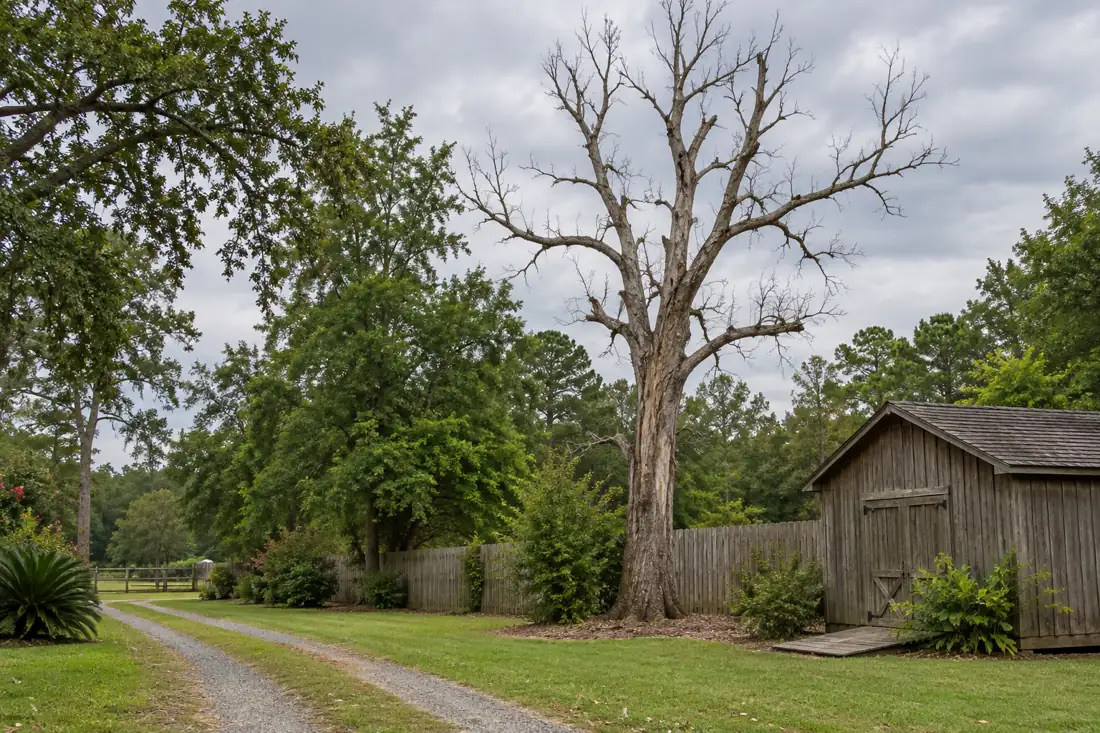
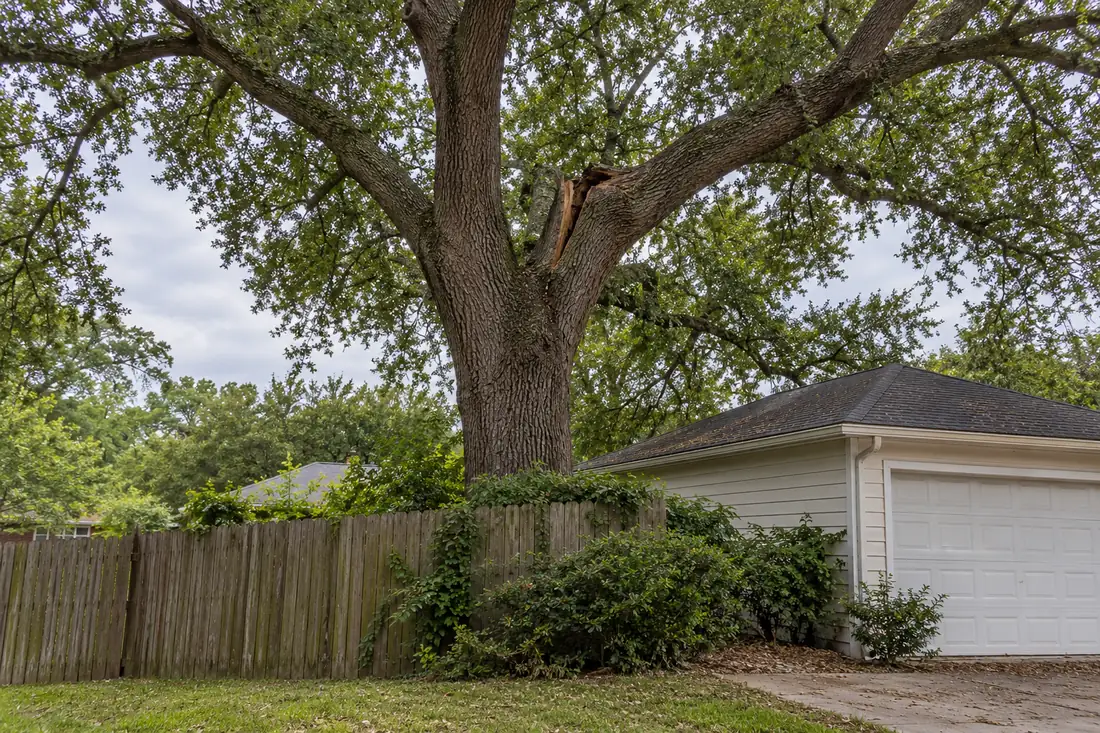
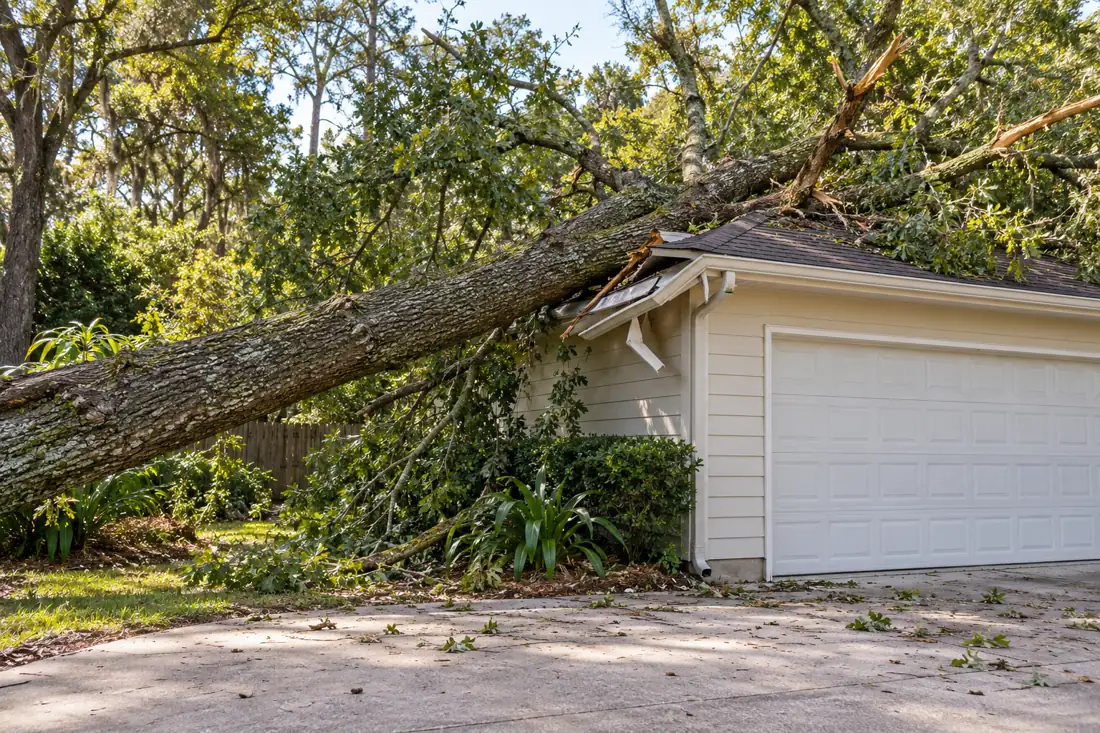
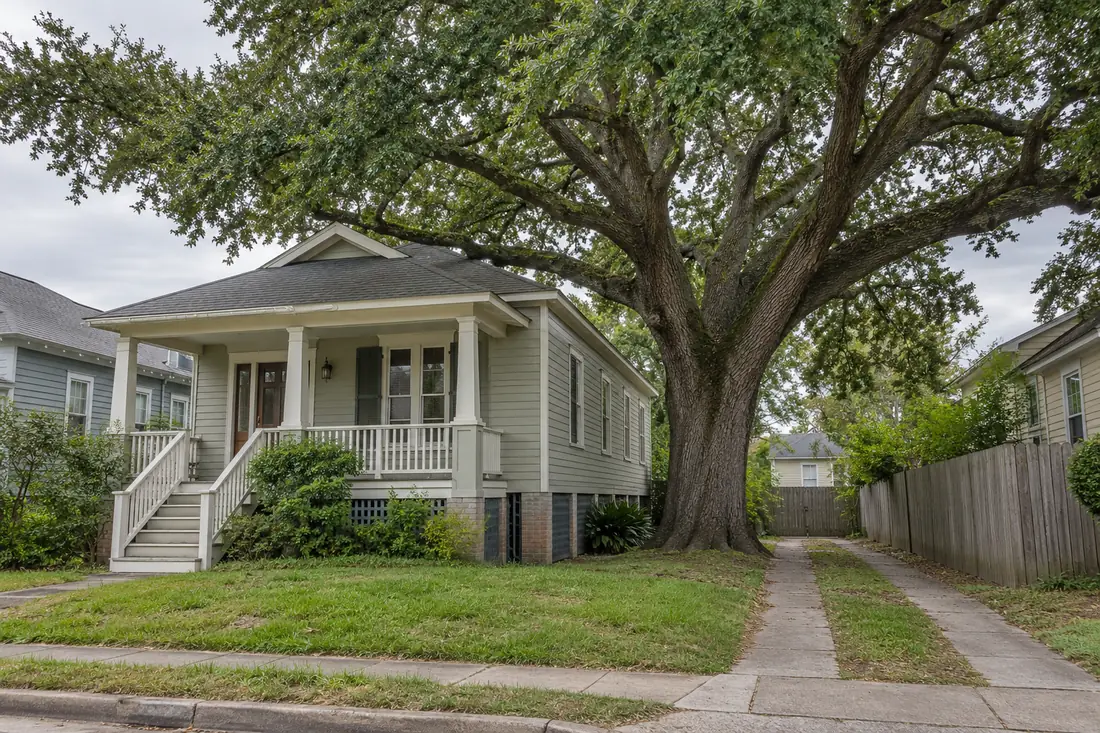
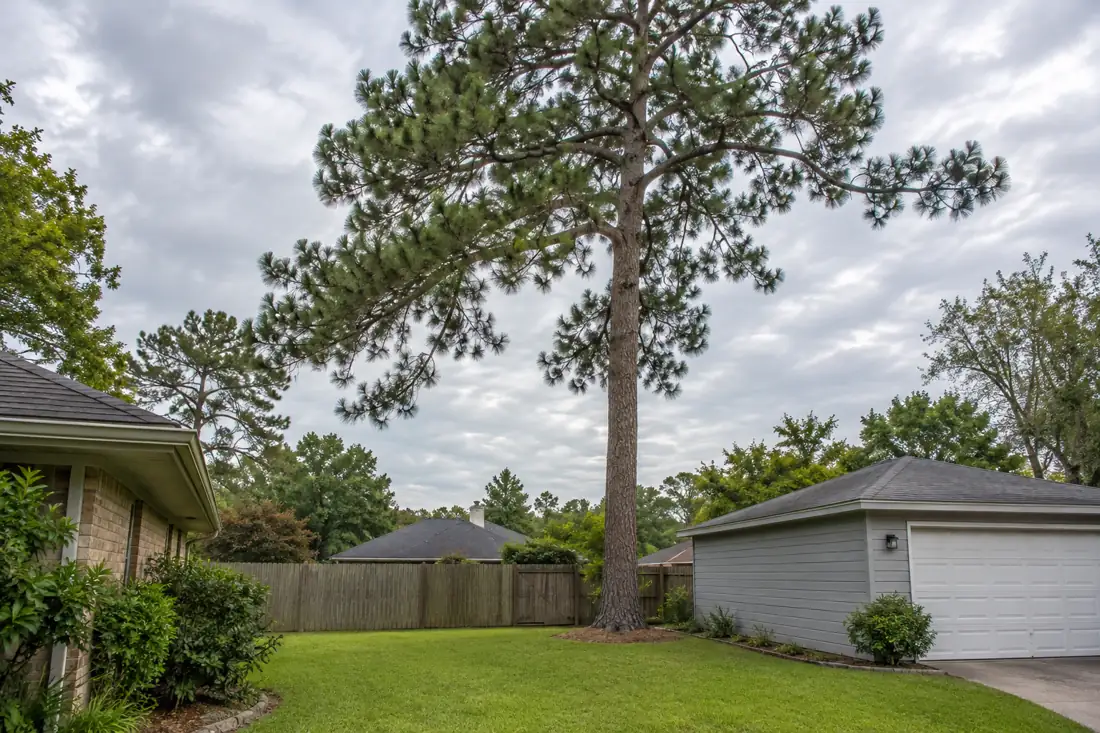
Sheds often occupy the only available route to a backyard tree. A small structure may also have electricity, stored tools or a foundation that cannot tolerate equipment loads. Tell the estimator whether access can be changed and whether contents can be removed. A plan based on an empty yard will not fit a yard filled with fixed obstacles.
Check the workshop and its contents before setting a cut sequence
A backyard shed may contain fuel, ladders, power tools, solar wiring or fragile stored materials even when the roof looks sturdy. Ask the property owner to identify electrical feeds and any equipment that must be moved or secured before tree work. A picture of the shed’s interior doorway can reveal a circulation route the crew should not obstruct.
Photograph both roof slopes and the gap between branches and the structure. A limb that could be cut away from a house may require smaller controlled sections over a lightweight shed or attached awning. The estimate should say whether the shed stays operational, whether access is blocked and which protective measures are included.
Finish by agreeing how the area will be left: roof free of debris, doors unobstructed, utility connections undisturbed and downspouts clear. Do not assume a debris-haul quote includes repair of old sheet metal or leveling a settled shed. Those conditions require separate evaluation rather than promises in a tree quote.
Begin with the workshop or shed's footprint, roof condition, doors and any electric feed or extension route. A detached building can contain stored tools, fuel containers, fragile contents or equipment that the tree contractor should not be expected to move without permission. Photograph where branches approach the roof and where logs could realistically travel after they are lowered. A short distance between tree and shed may conceal a difficult turn to the street.
Before the site visit, tell the estimator whether the building is occupied, in active use or connected to overhead or buried services. The owner should secure loose contents and arrange specialist disconnection when needed; tree work authorization does not include altering electrical installations. Ask how the crew will protect roof edges, gutters, doors and nearby work surfaces. Make separate decisions about access changes, debris hauling and repairs to any preexisting damage.
Map the tree relative to the workshop roof, gutter, doors, windows, stored lumber and exterior electrical feeds. If a shed has an extension cord or buried supply rather than a standard building circuit, identify that separately; a tree crew cannot safely infer its status. Photograph the eaves and interior valuables where appropriate, and clear any flammables or fragile tools that the owner can move safely. Don't assume that a small shed is structurally strong enough to serve as a work platform or rigging anchor.
Agree on whether the structure may be temporarily inaccessible and how the crew will keep the doorway clear. Ask where branch sections and logs will be placed, how they will leave the property and whether the shed foundation limits equipment access. Note existing roof damage or settlement in the pre-work record. Any roofing, wiring or shed reconstruction should be explicitly excluded or separately contracted so the final walkthrough has a realistic completion checklist.

Map the Building Envelope and Contact Points
Walk the site with the shed or workshop owner and identify every place a trunk, limb, or suspended section could reach. Look beyond the roof edge: gutters, vents, ridge caps, skylights, wall cladding, doors, exterior lights, and attached awnings can all be vulnerable. Record existing dents, rot, loose panels, and roof leaks with dated photographs. That record helps distinguish pre-existing conditions from new damage and gives the tree crew a practical reference for choosing a removal sequence.
Ask the contractor to explain how the tree’s limbs will be kept from dragging across the roof or pushing into a wall. A plan may call for controlled lowering rather than allowing pieces to fall, but the method depends on the tree, structure, access, and overhead hazards.
Clarify whether the shed can bear any temporary contact or rigging load; do not assume its framing is sound enough to serve as an anchor. Agree on a no-contact objective and a process for stopping work if conditions differ from the assessment.
Protect the workshop's access, utilities and stored contents. Describe the shed or workshop as an active part of the property, not merely an obstacle in a photo. Ask about electricity, nearby water lines, roof overhangs, weak slab edges and combustible or fragile contents before a crew proposes staging. Decide whether occupants can move stored items and whether doors must remain usable. If equipment cannot safely pass beside the structure, a different rigging or removal plan may be necessary. The written estimate should state which surfaces receive protection and which building repairs, if any, are excluded.
Protect a workshop as an occupied work area, not just an obstacle
A shed may contain people, tools, fuel, fragile roofing or hidden electrical wiring. Before removal, clarify whether anyone uses the workshop during the day, which exits must remain accessible, and whether power reaches it from a nearby building or overhead line. Tree sections that can pass an empty yard may have no safe route around a narrow wall, fence or overhang. Identify where material can be staged without blocking the workshop exit.
Separate temporary building protection from the final condition of the site. A written proposal should identify whether stored contents need relocation, whether a licensed specialist must handle utilities, and who addresses any preexisting roof damage. Do not climb onto a shed for estimate photographs. A ground-level view of the trunk, roofline, gates and possible equipment approach is safer and more informative than an isolated picture of bark or branches.

Tree Removal Around a Shed or Workshop
A tree beside a detached shed or workshop presents a different planning problem from one standing in an open yard. The building may contain fuel, batteries, lawn equipment, solvents, sharp tools, or stored materials that complicate access and raise the consequences of an impact. In southeast Louisiana, saturated ground, sudden storms, and soft yard surfaces can further constrain where people and equipment can safely work. Start by identifying what is inside, who uses the space, and which doors, windows, and paths must remain protected.
Do not enter the tree’s fall area to inspect it closely or attempt to cut, climb, or rig it yourself. From a safe location, note the tree’s lean, visible dead limbs, contact with the structure, nearby conductors, and narrow approaches, then share those observations with a qualified tree professional. Ask how the building contents and occupants will be protected, when the workspace must be emptied, and whether the proposed work requires the shed to be inaccessible for part or all of the job.
Inventory Power Feeds Before Planning Cuts
Detached buildings may receive power through an overhead service, a buried cable, or a feed routed through a conduit that is difficult to see beneath grass, paving, or stored materials. Trees can also grow around conductors or press branches against them. Treat every power line as energized, including a line that appears abandoned or damaged. Keep people away from contact points and do not move a branch, ladder, tool, or piece of equipment near a line to test whether it is live.
Identify the utility serving the property and ask the tree professional who will coordinate any required line clearance or service interruption. Only the appropriate utility and qualified line-clearance specialists should determine how conductors are handled. A tree crew should explain how its work boundary accounts for the shed feed and any lines entering the main house.
If a line’s route or status is uncertain, pause that part of the project until the responsible utility or qualified specialist has addressed the uncertainty; do not treat a verbal guess as clearance.

Measure the Gate and Every Route to the Work
A very narrow gate can rule out a chipper, lift, or truck even when the tree itself seems accessible. Measure the clear opening, including latch hardware and posts, and note turns, low branches, overhead wires, soft ground, steps, and changes in grade along the route. Check whether the access path crosses a septic feature, drain, irrigation line, or fragile paving. In Louisiana yards, recent rain can make apparently firm ground unsuitable for heavy equipment or concentrated wheel loads.
Ask the contractor to identify the actual equipment that can pass through the route and how removed material will travel out. Options might include hand-carrying brush, cutting and carrying manageable sections, or staging equipment outside the gate, but each affects labor, exposure, and site disturbance.
Confirm how the crew will protect fences, garden beds, neighboring property, and the shed’s doors. Decide in advance whether temporary fence-panel removal is acceptable and who will reinstall it; a narrow gate is a planning constraint, not a reason to improvise during cutting.
Document the workshop as an active building, not just a roof target
A shed used as a workshop may contain fuel, battery chargers, compressed gases, tools and electrical circuits even when it looks small from outside. Before the site visit, tell the contractor whether the building is occupied during the day, has fixed power and can be emptied safely.
Photograph the roof, doors, overhead wire approach and the passage between the tree and workshop. Where hazardous materials are stored, arrange suitable handling with the responsible owner rather than expecting the tree crew to sort them out. Avoid entering or moving unstable contents beneath a damaged tree.
Clear egress routes and keep people out of the structure during any overhead work affecting its roof or access.
The removal proposal should make explicit whether the shed stays in place and how sections will be controlled around it. An old outbuilding may have brittle siding, shallow footings or a deteriorated roof that cannot support accidental contact or equipment loads. Ask whether the crew needs a different equipment position, smaller sections or an alternate transport route.
If temporary dismantling of a fence or workshop appendage is discussed, identify separate authorization and restoration before starting. Stump grinding next to a slab or foundation deserves its own careful scope. During final review, compare visible walls, door movement, roof edges and surrounding ground with pre-work records, and leave structural assessment to qualified professionals when concerns arise.
Choose a Removal Sequence for Confined Space
When branches overlap the shed, a single ground-level fall may be neither possible nor appropriate. A professional may need to remove the canopy in controlled sections, manage each piece’s direction, and keep loads away from the roof, walls, utilities, and people. Lifting equipment can help in some sites, but its reach, setup footprint, ground-bearing needs, and overhead clearance must fit the actual yard. In tight spaces, the safest workable sequence may be slower and involve smaller pieces rather than fewer, heavier lifts.
Ask the tree professional to describe the sequence from first access through the final trunk sections, including where each load will be lowered and where it will land. Find out what could change the plan, such as hidden decay, a shifting crown, wet ground, or an unexpected conductor.
Do not accept a vague promise that the tree will simply be lifted over the shed. The crew should identify exclusion zones and communication roles, and should stop if people, pets, or other trades enter the controlled work area.
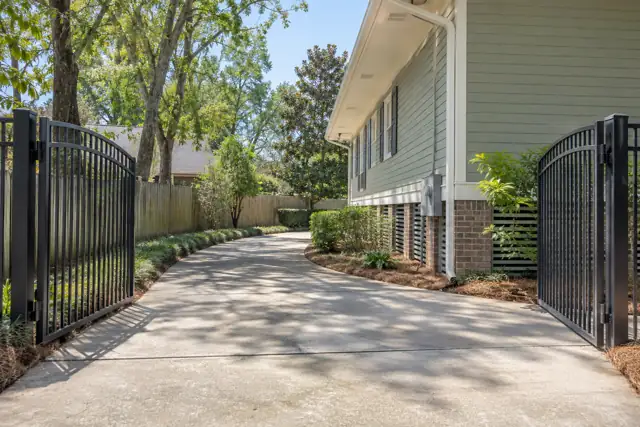
Protecting a Working Shed or Detached Workshop
A backyard building may store fuel, blades, paint, power tools or pressurized containers. The crew does not need a complete inventory of private belongings, but the owner should identify any hazardous materials and secure or remove them before work. If the workshop remains occupied or in use, agree on an isolation period and make sure no one can enter under an active lowering zone.
A shed's roof and walls are often lighter than those of the main house. A plywood roof deck, shallow foundation or attached awning can be damaged by far smaller branches than an experienced owner might expect. Do not estimate structural strength from appearance. The removal method should be chosen around keeping sections away from the building rather than treating it as a temporary landing surface.
The contents may create a second hazard
Check for hidden power: extension cords, a buried feeder, low-voltage cables, motion lighting and solar accessories may approach from different directions. The workshop's overhead service, if present, deserves utility-provider coordination. Disconnecting a tool at a receptacle is not equivalent to making an external supply line safe, and improvised pulling of cables by the tree crew is inappropriate.
The cleanup should leave a safe route to the building, clear the doorway and separate wood chips from screws or workshop scrap. If removal uncovers loose siding or roof damage that existed already, document it without assuming the tree contractor caused it. A short condition record with wide and close-up photographs protects both parties and clarifies any later repair trade.

Control Section Weight and Lifting Loads
A cut section can be heavier than it looks, especially when wood is wet, limbs hold water, or the piece includes a large branch union. Its weight and shape affect how it swings, rotates, or loads a rope, machine, roof, or wall. A shed roof is not a landing platform, and its framing should not be assumed capable of receiving even a short impact. The same caution applies to a workshop floor, lean-to, fence, or temporary staging surface near the tree.
Ask how the crew will estimate and control section size, where loads will be supported, and what prevents a piece from striking the building as it is lowered. The answer should account for the tree’s condition and the available room, not rely on a generic maximum piece size.
Confirm that lifting and rigging equipment is selected and operated by qualified people for the site conditions. If a proposed load must pass over occupied space, a vehicle, or fragile property, agree on how that area will be cleared and secured before work begins.
Clear Occupants, Tools, and Combustible Contents
Before work starts, move people, pets, vehicles, and movable items out of the work zone and establish who may authorize re-entry. Remove or secure tools, ladders, fuel cans, compressed-gas cylinders, batteries, and chemical products where practical. A falling branch can puncture containers, damage electrical equipment, or scatter sharp debris through an open doorway. If the shed cannot be emptied completely, identify what remains and ask the contractor how that affects access and impact protection.
Lock or block shed doors that open toward active work, and tell the crew about hidden rooms, lofts, crawlspaces, alarm sensors, or equipment that must not be disturbed. Protecting contents is not the same as guaranteeing that the building will remain undamaged; agree on realistic limits before authorizing the work.
Set a clear boundary that occupants and other contractors must respect, and choose a responsible site contact who can communicate changes. Keep children and visitors away even when cutting pauses, because suspended loads and unstable limbs can remain hazards.

Protect Ground, Access, and Neighboring Property
Plan where workers, equipment, brush, and logs can travel without blocking emergency access or forcing crews beneath unstable branches. Mark delicate paving, drains, septic components, irrigation, garden edges, and any soft or recently repaired ground. Ask how the contractor will respond if rainfall turns the route muddy or if equipment begins to rut the yard. A timber mat or alternative route may reduce surface damage in some situations, but protection must be matched to the ground and equipment rather than assumed to make any route safe.
Notify neighbors when work could affect shared access, a boundary fence, parked vehicles, or nearby structures, and establish a contact method for the work period. Confirm where trucks may park and whether any temporary closure or gate opening is needed. Make sure the crew can maintain a controlled drop zone without cutting off the only safe exit from the property. If the site cannot provide a workable exclusion area, reconsider timing, equipment, or scope with the contractor instead of asking workers to operate around passersby.
Separate Clean Wood from Mixed Construction Waste
Tree debris from a shed or workshop area can become mixed with roofing, insulation, siding, wire, fasteners, plastic, or damaged storage containers. Once branches and wood are combined with construction debris, sorting and disposal can be more difficult, and some materials may require separate handling. Ask the contractor what materials are included in the tree-removal scope and what happens if cutting exposes damaged building components. Do not assume that a brush pile, log load, or hauling container is suitable for every material on site.
Agree on separate staging areas for clean vegetation, reusable logs or firewood if requested, and any contaminated or mixed debris that must be assessed. Keep chemicals, fuel, batteries, and unknown containers out of ordinary vegetation piles; damaged or leaking products need appropriate handling, not concealment under brush.
Clarify who is responsible for hauling each category and where it will go, without assuming that every disposal site accepts mixed loads. Photograph unusual debris before it is moved, and pause if a suspected hazardous material or concealed building damage changes the work.

Inspect the Site and Hand Off Structural Repairs
After the crew finishes, inspect the shed exterior and access route with the responsible site contact, comparing visible conditions with the earlier photographs. Look at roof edges, gutters, wall panels, doors, lights, fence lines, paving, and any utility route that was exposed or approached. Keep people out of areas with hanging branches, damaged wiring, fresh roof openings, or unstable debris. Ask the tree professional to identify remaining hazards and confirm that the agreed tree work and debris disposition are complete before reopening the workspace.
Tree removal and building repair are separate scopes. If inspection reveals a puncture, displaced flashing, cracked panel, water entry, or electrical damage, document it and arrange assessment by the appropriate roofer, builder, electrician, or utility rather than asking the tree crew to make an unqualified repair.
Have repairs address weather protection promptly, since Louisiana rain can turn a small opening into interior damage. Close out the project by recording what was removed, what debris left the property, any unresolved hazards, and who is responsible for each follow-up action.
Questions about this project
What access information helps an estimator?
Send the narrowest opening, overhead obstacles, turns and the distance between the tree and the loading area. Include photos of the entire route and identify steps, soft ground or features that must remain protected.
Should I remove a fence before the visit?
First ask the contractor to assess access and agree on any temporary opening. Identify who owns the fence, who can authorize the change and who will reinstall it. Do not assume the opening is necessary or included.
Which property features should I point out?
Identify buildings, vehicles, fences, fixed fixtures, landscape features, utilities and occupied routes. Explain what can move and what must remain. Include existing damage and any buried features you know about along the access route.
Should people remain inside the work area?
The contractor and site contact should establish an exclusion area and access arrangements appropriate to the work. Keep children, pets, visitors and other workers outside the active zone until the responsible parties say it can reopen.
Can I identify a safe wire by looking at it?
No. Do not approach or touch wires, a tree contacting them or connected objects to investigate. Keep clear and contact the utility or emergency services when there is an immediate electrical hazard.
Does a tree estimate include utility disconnection?
Only if the appropriate coordination and responsibilities are explicitly arranged. Utility work may require the service provider or another qualified party. Confirm those arrangements before assuming the tree crew can proceed near affected services.
Can the removal method be selected from a photo?
Photos help prepare the discussion but may not show defects, ground conditions or usable access. The contractor may need an on-site assessment before confirming the method, equipment and final scope for the property.
What if the tree changes before the appointment?
Tell the contractor about a new split, failed branch, changed lean or other visible change. Keep clear of the affected area. Changed conditions may require a different assessment, priority or work plan before the crew proceeds.
What should I compare besides the price?
Compare tree identification, work objectives, access assumptions, hauling, stump treatment, site finish and exclusions. Ask whether permits or other coordination are part of the scope and who can approve changes if conditions differ.
Does an online request book the crew?
No. A request starts the estimate conversation. The company still needs to discuss scope, availability and any site assessment. For a dangerous or urgent condition, call 504-458-8336 rather than relying on a form response.
What should I tell Tree Huggers about tree removal around a shed or workshop?
Explain the property address, the work you want and the specific concerns: access obstruction, stored contents, workshop power. Send safe photos of the tree, surroundings and access route. The contractor can then discuss the assessment and scope needed for this situation.
How do I request an estimate for this work?
Call 504-458-8336, text photos or use the estimate form on this page. Include the address, desired outcome and any timing constraints. The company will need to review scope and availability; an online request does not confirm a price, appointment or emergency dispatch.
Get a scope for your property
Include views of the shed roof and doorway, any visible overhead cable, and items that can be moved safely before a contractor visit.