Solar panels and their associated wiring add equipment and roof-access considerations. Identify panels, conduits and any customer restrictions without touching or altering the system. The tree contractor should plan clearances with the property contact; electrical work belongs with the appropriate qualified provider. Avoid assuming a small branch is harmless because the panel surface looks durable.
For this project, separate roof array, wiring route and coordination with solar provider. These details help the contractor understand what must be protected, what information needs confirmation and what result you want from the work. A clear request is more useful than an assumed method or a price based only on tree size.
Trace the tree's canopy near panels, racking, conduit, inverters and roof access points. Solar wiring can remain energized in daylight despite ordinary switches, so neither a tree crew nor a homeowner should assume the array is harmless after changing a breaker. A qualified solar professional may need to advise on isolation, protection or temporary removal of modules. Get that responsibility in writing before the tree work, including who handles any panel warranty or reconnection checks.
Ask the estimator to specify a controlled handling method rather than treating the panel surface as a landing area. A rope path across a roof may endanger glazing or flashing even if a branch never touches the modules. Identify where cuttings will be carried, how roof access will be controlled, and how debris will be cleared without scraping glass or walking on unsupported equipment. Distinguish the tree-removal scope from solar inspection and repair; take before-and-after photographs of visible modules and conduits.
Tree Removal Near Solar Panels: Start With the Site, Not the Saw
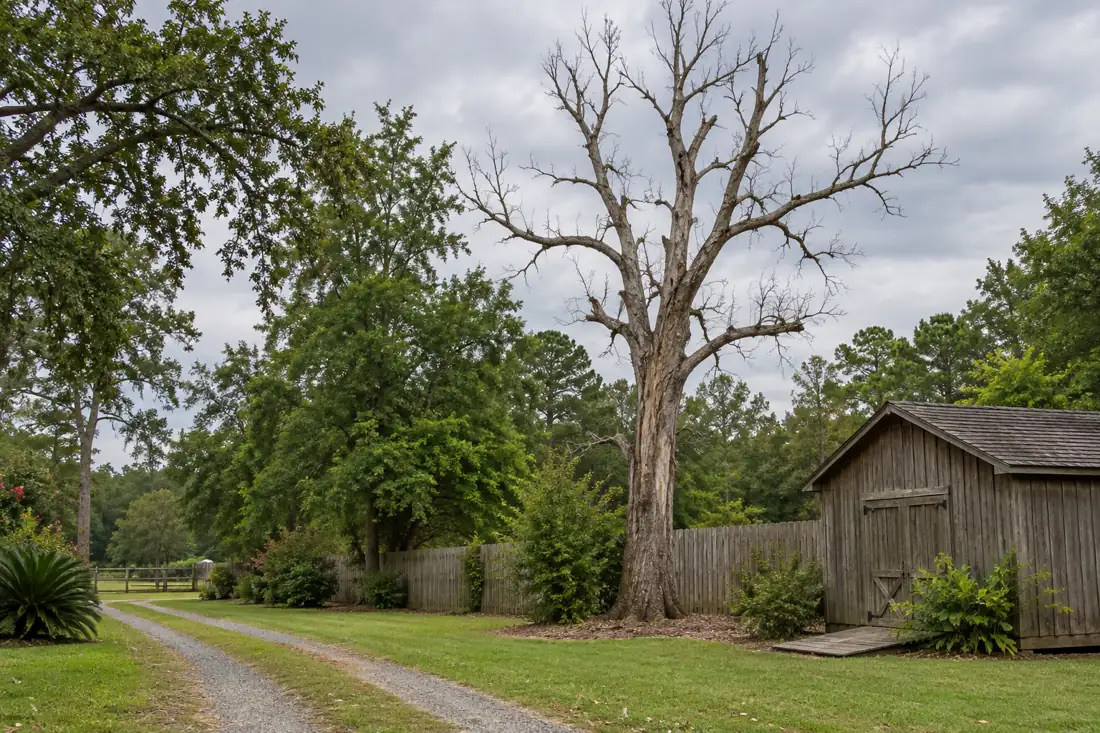
In southeast Louisiana, a tree near rooftop solar can pose several connected risks: branches may strike glass modules, a shifting crown may sweep across the array, and removal equipment may approach service wires or damage gutters. Begin by identifying the tree, the full outline of its crown, the roof faces carrying panels, and the likely travel path of each large limb. Photograph the area from the ground. Do not climb, cut, or lean a ladder against the roof to investigate.
Also note site conditions that can change during a job. Soft ground after rain, saturated soil, narrow side yards, drainage ditches, fences, and overhead wires can limit where a lift, bucket truck, or rigging anchor can safely go. Record gates, overhead obstructions, and places occupants or neighbors regularly walk. This first survey is for planning, not a substitute for a qualified tree professional’s inspection. Your immediate decision is whether the site can be evaluated safely without anyone entering the tree or approaching energized equipment.

Map the Crown’s Reach and Likely Movement
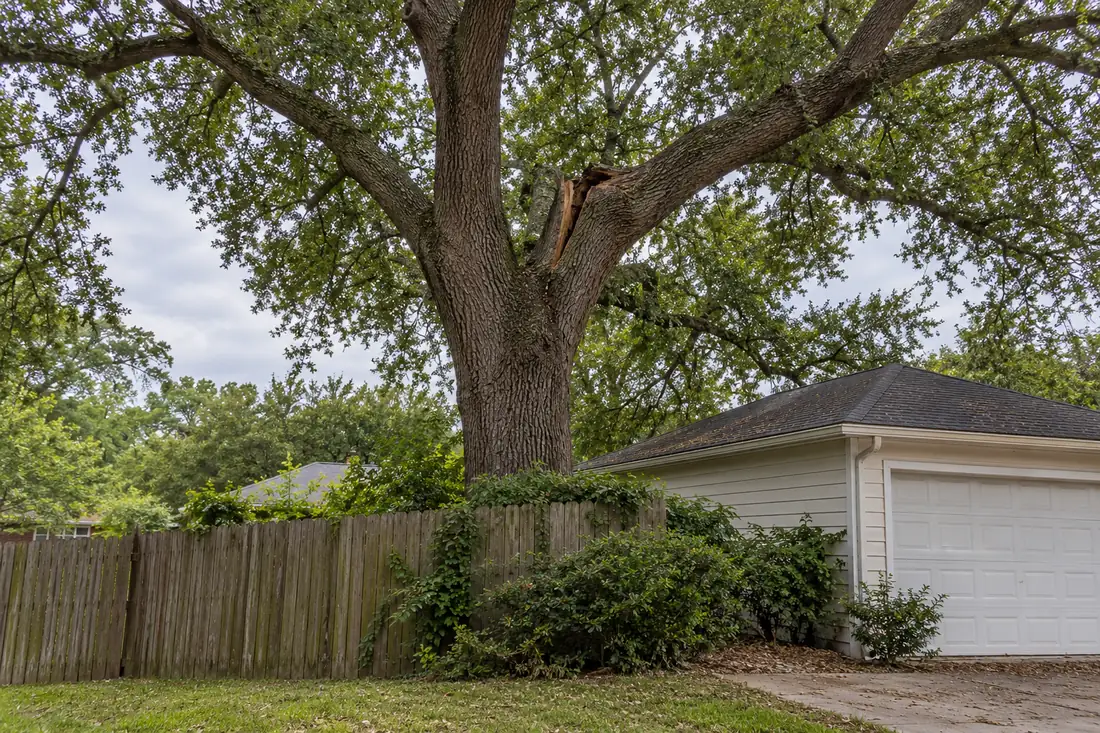
A tree crown does not fall as a neat circle around the trunk. Long limbs can bend, rotate, rebound, or swing as their weight changes, and wind can move branches toward panels even when the trunk is well away from the roof. Deadwood, included branch unions, storm damage, and uneven growth may affect how a tree responds to controlled cutting. Ask the tree professional to describe which limbs could reach the array during removal and how the proposed sequence limits that movement.
Make the discussion specific to the structure: identify roof edges, panel corners, the ridge, skylights, gutters, and any lower roof that could catch a falling limb. In Louisiana, gusts, thunderstorms, and wet conditions can make a planned operation less predictable; a responsible crew should reassess conditions and pause when they exceed its working limits.
Do not accept “it’s outside the drip line” as a complete risk assessment. The project decision is whether the crown can be removed in controlled pieces without relying on a free fall near the house.
Treat Solar Circuits as Live in Daylight
Turning off a building’s main breaker or disconnecting the utility does not necessarily make rooftop solar wiring safe. In daylight, modules can produce direct-current electricity, and conductors on the array side of equipment may remain energized. Shutdown features vary by system and do not make glass modules, connectors, or wiring safe for unqualified contact.
A tree crew should not unplug, move, cover, or test solar components. Keep workers and falling material away from the array and have electrical questions handled by qualified solar or electrical specialists.
Ask the property owner or site manager to locate the system’s plans, shutdown instructions, inverter information, and emergency contact details before work begins. The installer or a qualified electrician can explain which equipment can be isolated, what remains energized, and whether any system-specific work is needed.
Do not assume a switch, monitoring app, or cloudy sky confirms zero electrical hazard. Agree in advance on who can authorize a shutdown, who may operate it, and how the crew will be told that the agreed procedure is complete.

Coordinate the Tree Crew and Solar Specialist
Tree removal and solar-system work are different specialties. Arrange a conversation between the tree contractor and the solar installer or a qualified electrician before scheduling removal, especially if branches touch modules, wiring, conduit, or racking. Ask the tree professional to explain the cutting and rigging plan; ask the solar specialist to identify equipment that must not be contacted and any access restrictions. Each should understand the other’s role. One contractor’s presence does not automatically authorize the other to handle electrical equipment or alter the array.
Set a clear sequence in writing: site review, any electrical work or system shutdown, tree operations, debris removal, and solar inspection or restart if needed. Name the person responsible for communicating a changed condition, such as a newly exposed wire or a limb resting on a module.
Confirm who can stop work and how the crew will secure the area while a specialist is called. The practical decision is whether both trades can follow a coordinated plan, not whether one can improvise around the other’s equipment.
Keep solar-array electrical questions separate from tree-rigging questions
Roof solar systems can remain electrically active in daylight, and a tree estimate does not authorize anyone to disconnect or handle array wiring. Show the tree estimator the panel location, nearby conduit and roof access limitations from the ground or existing plans. If branches overhang the array, ask how suspended material would be supported or redirected without contact with glass, frames, cabling or roof edges.
Whether a panel must be isolated, removed or inspected is for the qualified solar provider to determine. A homeowner should not climb onto the roof to collect close-up photos or attempt to make the system safe for the tree crew. Provide the system installer or service contact early when coordination is likely.
A good written scope distinguishes the tree-work outcome from solar electrical work. It should explain the proposed physical exclusion zone and who will communicate any provider instructions before the removal begins. Ask what happens if unexpected branches or rigging constraints make the planned approach unsuitable; the decision should be to stop and reassess, not to use the roof array as a landing surface.
After the tree work, review accessible visible conditions from the ground and contact the solar provider for performance or electrical concerns. Do not infer a system is undamaged solely because the panels look intact. Keep any warranty, electrical diagnosis and roof repair matters assigned to the proper party.
Choose Controlled Rigging Instead of Unplanned Drop Zones
Where a tree stands beside solar glass, the removal plan should address how each hazardous limb will be controlled from cut to landing. Depending on the tree and site, a qualified crew may use ropes, suitable rigging points, a bucket, or lifting equipment to lower sections away from the roof.
These methods require trained workers, appropriate equipment, and an assessment of forces on the tree and anchors. They are not do-it-yourself techniques. Ask how the crew will prevent a cut piece from swinging, bouncing, or dragging across modules and gutters.
A crane or other lift is not automatically safer: setup space, ground bearing, overhead conductors, reach, load, and the route of a suspended piece all matter. Ask where the machine will sit, what it may contact, and whether the operation introduces new risks to the house or utility lines.
The crew should explain what happens if a limb cannot be controlled as planned, including when it will stop and reassess. Choose the proposal that accounts for actual landing zones and clearances rather than promising that nothing can move.

Solar Array Protection During Canopy Work
Branches above an array present a different problem from ordinary roof clearance because the modules, mounting rails and wires form a system. Sunlight can keep parts of a solar installation energized even when a household breaker is off. A tree contractor should not assume that a switch makes every conductor safe. Coordinate access, isolation procedures and inspection responsibilities with the solar installer or appropriately qualified electrician.
Map the roof as a series of protected zones: the glass surfaces, panel edges, cable runs, roof penetrations, gutters, and places where a lowered piece could pivot or swing. A branch that does not pass directly over a module may still strike it during rotation. The proposed lowering path and tag-line positions deserve as much thought as the initial cut location, especially when the crown is broad.
Electrical coordination is different from branch clearance
Temporary panel covering can protect from dust or tiny debris in some circumstances, but covering is not a substitute for controlling falling wood. Never place a tarp or object against an energized component without technical approval, and do not allow a protective covering to trap heat contrary to manufacturer guidance. The safest approach is usually to maintain clearance, exclude people and keep the load off the roof entirely.
When the crew finishes, take ground-level pictures that show the new branch clearance and document whether the solar provider completed a post-work inspection. Loss of production, damaged connectors and hidden roof penetrations are not things an ordinary tree-removal visual check can certify. Keep any solar-service report alongside the written tree scope for future reference.

Protect Glass, Racking, Roof Edges, and Gutters
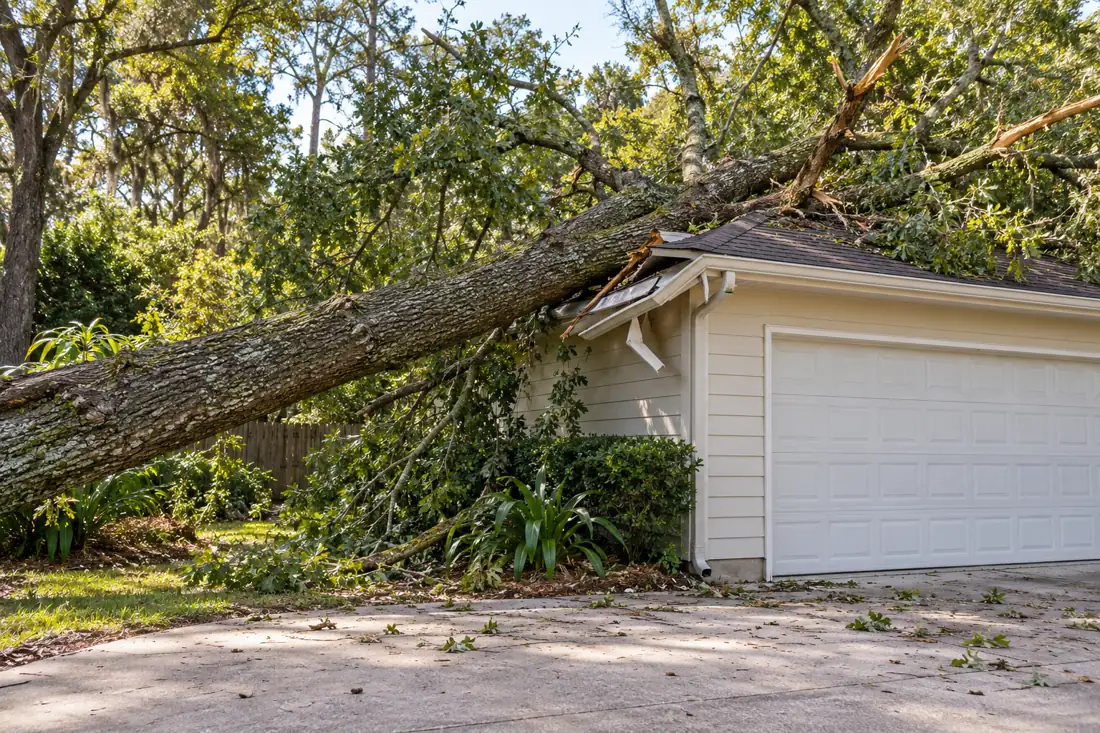
Solar modules are glass-fronted electrical equipment mounted on a rack, not a work platform or a place to store cut limbs. Impact, concentrated pressure, scraping, or a falling twig may crack glass, bend framing, loosen attachments, or damage wiring without an obvious break from the ground. Gutters and roof edges can also be bent or torn by branches, ropes, tools, or debris. Ask the contractor to identify these vulnerable surfaces in the work plan and to explain how limbs and equipment will be kept off them.
Protection should not depend on laying boards, tarps, or padding across modules; added weight or movement can create further damage and electrical hazards. Do not let workers walk on panels or use the array as an anchor. Discuss safe exclusion zones and any protection methods appropriate to the roof with the relevant professionals.
If the tree’s position makes reliable clearance impossible, consider whether staged removal, temporary access changes, or a different schedule is needed. Decide before work begins who will stop the job if contact becomes likely.
Plan Access, Exclusion Zones, and Occupant Safety
Agree on where the crew and equipment will enter, park, and operate, and how that route avoids the house, solar wiring, overhead services, and fragile landscaping. Mark a ground-level exclusion area where limbs, tools, or equipment could land; keep residents, visitors, pets, and unrelated workers outside it. Do not stand beneath cutting, rigging, or lifting operations to watch. For multi-unit properties or active sites, tell tenants, staff, delivery drivers, and neighboring occupants when access will change and which entrances or paths are temporarily closed.
Ask who controls the boundary and how workers will communicate if a person enters the hazard area. Check whether gates can accommodate equipment and whether wet, soft, or sloped ground changes the access plan. Keep emergency vehicle routes and required building exits clear; if temporary closures are unavoidable, arrange an appropriate alternative before work starts.
A tree contractor should not gain access by stepping onto solar panels or crossing exposed electrical equipment. Your decision is whether the site can be controlled for the full operation, including setup and cleanup.

Treat Every Overhead Line as Energized
A branch near a service drop or utility line adds a separate, potentially fatal hazard. Treat every overhead conductor as energized, even if it appears insulated, quiet, or disconnected. Do not touch a branch, ladder, rope, tool, or piece of equipment that contacts a line, and do not attempt to separate it. Notify the utility when its facilities may be involved and follow its direction. Tree workers should use qualified specialists and the appropriate utility coordination for work near conductors; solar shutdown does not de-energize utility wires.
Before scheduling, point out service drops, transformers, and wires crossing the property, and ask the tree contractor who will assess and coordinate work near them. If a limb is already on a wire, keep people away and contact the utility or emergency services as appropriate.
Never assume that a contractor’s equipment, gloves, or experience makes a wire safe for unqualified contact. Confirm which specialist must clear or manage the line hazard and what conditions require postponing the job. No tree-removal schedule should override a safe utility process.
Put Scope and Damage Procedures in Writing
Before authorizing work, request a written description of the tree, the intended removal method, access route, debris handling, and how the crew will avoid the array, roof, gutters, and conductors. Identify who is responsible for contacting the solar installer or electrician and for any separately arranged inspection. Ask how the contractor documents pre-existing conditions and how concerns are reported if damage is suspected. Read the agreement for its actual terms; do not rely on verbal assurances about responsibility, insurance, or guaranteed protection.
Take dated photographs from safe ground positions before work and keep copies of relevant solar-system records. Ask the contractor what documentation it can provide about its own qualifications and insurance, then verify details directly with the issuing parties when needed. No document eliminates the possibility of damage or confirms that a particular loss will be covered.
Specify a process for pausing work, notifying the property contact, and arranging assessment by appropriate specialists after an incident. Your decision should reflect the written scope and limits, not an informal promise that the panels will be untouched.

Inspect the Site and Solar System After Removal
When cutting and hauling are complete, keep the exclusion area in place until the crew confirms equipment and overhead hazards are clear. From the ground, look for fallen fragments, disturbed gutters, damaged roof edges, displaced conduit, and visible changes to panels or wiring. Do not climb up, touch a damaged module, handle a loose connector, or investigate a suspected electrical fault yourself. If anything appears struck, cracked, shifted, or exposed, keep people away and contact the solar installer or a qualified electrician for assessment before relying on the system.
Ask the tree contractor and solar specialist to document their respective observations and any follow-up needed. A ground-level visual check cannot rule out hidden glass, rack, attachment, roof, or electrical damage. Follow the system maker’s and qualified specialist’s instructions for inspection, shutdown, repair, and return to service; do not assume that normal monitoring or power production proves the array is undamaged.
Save photographs, work records, and communications together. Close the project only after debris is removed, access is restored safely, and appropriate professionals have addressed any concern.
A Solar-Clearance Handover Between Two Trades
Photovoltaic modules and DC wiring can remain energized when exposed to daylight, including when a familiar household breaker has been opened. The tree crew should never be assigned to unplug connectors, cover live components without a specialist's plan, or lift panels to create a shortcut for debris. Identify the solar installer's contact, visible wiring runs, inverter location and roof access restrictions before the estimator chooses a handling sequence. Any proposed system shutdown, removal or recommissioning belongs to a qualified solar or electrical provider.
A final tree-service photo from the ground can establish where limbs and equipment were moved; it does not certify module glazing, roof penetrations, cable insulation or system output. Ask both contractors to describe their respective inspections and responsibility for any follow-up. When a branch is mainly causing shade, distinguish selective pruning from complete tree removal and document the expected clearance rather than assuming more cutting always improves the system's economics or the tree's health.
- Request the solar provider's protection or isolation instructions before scheduling difficult overhead work.
- Keep the electrical provider's scope and the tree crew's scope in separate written items.
- Do not treat monitoring-app output alone as a post-work damage inspection.
Compare another job where access, not only canopy size, governs the method
Questions about this project
Which property features should I point out?
Identify buildings, vehicles, fences, fixed fixtures, landscape features, utilities and occupied routes. Explain what can move and what must remain. Include existing damage and any buried features you know about along the access route.
Should people remain inside the work area?
The contractor and site contact should establish an exclusion area and access arrangements appropriate to the work. Keep children, pets, visitors and other workers outside the active zone until the responsible parties say it can reopen.
Can I identify a safe wire by looking at it?
No. Do not approach or touch wires, a tree contacting them or connected objects to investigate. Keep clear and contact the utility or emergency services when there is an immediate electrical hazard.
Does a tree estimate include utility disconnection?
Only if the appropriate coordination and responsibilities are explicitly arranged. Utility work may require the service provider or another qualified party. Confirm those arrangements before assuming the tree crew can proceed near affected services.
Can the removal method be selected from a photo?
Photos help prepare the discussion but may not show defects, ground conditions or usable access. The contractor may need an on-site assessment before confirming the method, equipment and final scope for the property.
What if the tree changes before the appointment?
Tell the contractor about a new split, failed branch, changed lean or other visible change. Keep clear of the affected area. Changed conditions may require a different assessment, priority or work plan before the crew proceeds.
How should extra work be approved?
Use the agreed approval process and identify the change, reason, scope, price or schedule effect as applicable. Confirm who has authority before treating an additional tree or task as part of the original job.
What completion records are useful?
Keep the agreed scope, tree or area identification, authorized changes, invoice and labeled photos where appropriate. Include unresolved items and a contact. Contract-specific records should follow the buyer's stated requirements.
What should I compare besides the price?
Compare tree identification, work objectives, access assumptions, hauling, stump treatment, site finish and exclusions. Ask whether permits or other coordination are part of the scope and who can approve changes if conditions differ.
Does an online request book the crew?
No. A request starts the estimate conversation. The company still needs to discuss scope, availability and any site assessment. For a dangerous or urgent condition, call 504-458-8336 rather than relying on a form response.
What should I tell Tree Huggers about tree removal near solar panels?
Explain the property address, the work you want and the specific concerns: roof array, wiring route, coordination with solar provider. Send safe photos of the tree, surroundings and access route. The contractor can then discuss the assessment and scope needed for this situation.
How do I request an estimate for this work?
Call 504-458-8336, text photos or use the estimate form on this page. Include the address, desired outcome and any timing constraints. The company will need to review scope and availability; an online request does not confirm a price, appointment or emergency dispatch.
Get a scope for your property
Include roof and panel photographs taken safely from the ground, the array provider's contact information, and the tree section that causes concern; never climb onto the roof to document it.