Start with the reason the tree is struggling
Thin canopy, pale leaves or poor growth can result from many causes: root damage, compaction, drainage, drought, construction disturbance, pests, disease or nutrition. Fertilizer only helps when it addresses a real need and the tree still has the capacity to respond.
Practical scope and safety guidance: Tree fertilization should follow a reasoned diagnosis instead of a routine calendar application. Yellow foliage, sparse growth and dieback can also result from drought, flooded roots, compacted soil, injury, pests or changes in grade. Describe when the symptoms started, the species if known, recent irrigation or construction changes, and the pattern of affected branches. Provide photos from the same safe location in different seasons when available.
A soil test or site evaluation may be appropriate before selecting nutrients, application method or timing. Adding fertilizer to a stressed tree without understanding the cause can waste money and may worsen some conditions. Ask whether a proposal covers diagnosis, soil management, treatment, follow-up observation or several separate services. Any treatment recommendations should reflect site conditions and applicable product directions rather than claiming a guaranteed recovery or universal formula.
Look at canopy density, leaf color, recent growth and site history.
Drainage, compaction, grade changes and root disturbance can be as important as nutrients.
Use a targeted strategy and reassess the tree over time.
Fertilization is one part of tree care
A stressed tree may need pruning, irrigation changes, soil improvement, root-zone protection or pest treatment instead of — or in addition to — fertilizer. The treatment plan should match the actual limiting factor.
Describe the symptoms before choosing a product
Tell Tree Huggers what changed, when it began and whether one tree or several plants show the same issue. Photos of the whole canopy, foliage, trunk base and surrounding ground can help organize the inquiry. Note whether the change followed weather, construction, altered watering or another treatment. A product name alone gives little information about the actual problem you want the tree-care visit to address.
The tree health service connects related condition questions. Explain the result you want: a review of an existing concern, advice about nutrition or a proposed treatment for a known issue. Healthy trees may not need fertilizer, and poor performance can have causes that fertilizer does not solve. Ask how the proposed service establishes an appropriate need before committing to an application based only on leaf color or a broad claim of stress.
Use soil information to support the decision
Share any existing soil or foliage test report with its date, sampling location and the tree it was intended to inform. Avoid sending an isolated number without its units, laboratory interpretation or context. Ask whether the available information is suitable for the current question or whether additional testing is recommended. The goal is a useful treatment decision, not collecting a test that no one connects to the actual root area and symptoms.
NC State Extension’s fertilization guide emphasizes diagnosis and soil information before application. Nutrient availability involves more than adding a larger quantity of fertilizer; soil conditions and root function also matter. Ask what the findings support, what they leave uncertain and who will explain the recommendation. A soil report is helpful evidence, but it should not be treated as a complete structural or disease assessment of the tree.

Tell the story of the ground around the tree
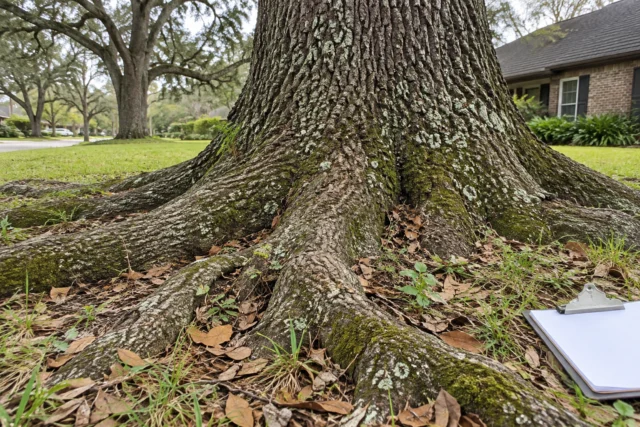
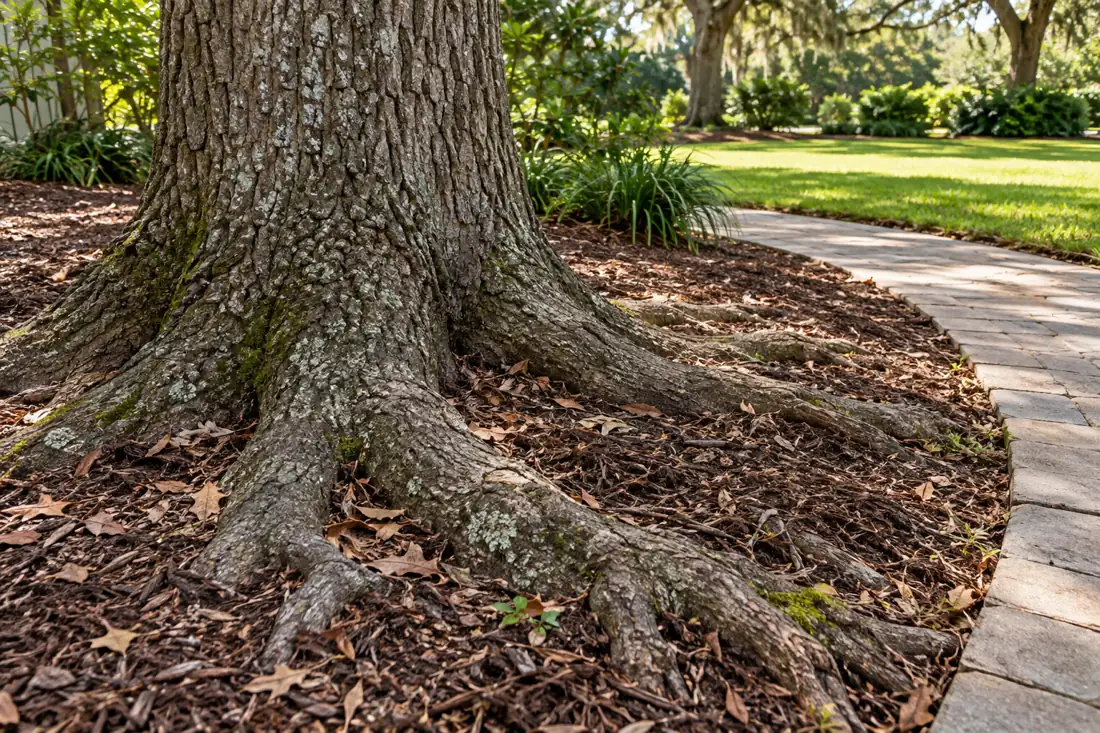
Report recent fill, digging, paving, drainage changes, vehicle traffic or material storage near the tree. Include what is known about watering and whether the root area stays wet or becomes unusually dry. A close foliage photograph can omit the part of the site most relevant to the care discussion. Show the transition from the tree base to lawn, beds, hardscape and any recently altered area from safe positions.
The preservation planning hub gives related context for retained trees. Explain whether the site change is complete or more work is planned. Nutrition, soil care, drainage and root protection are different questions even when they arise together. A fertilizer visit should not be assumed to correct compaction, severed roots or an ongoing water problem. Ask which observed issue the proposed treatment addresses and what other action remains necessary.
Include existing lawn and landscape care
Provide the products, dates and treated areas you know about, including lawn fertilizer and work by another landscape provider. Send a clear label or existing service record when available rather than guessing the formulation from a bag color. Shared information helps the tree-care conversation account for the care the site has already received and avoids treating the tree as if it stands in an unrelated, untreated landscape.
University of New Hampshire Extension notes that existing landscape fertility and organic matter belong in fertilization decisions. Discuss relevant overlap with the person caring for the lawn or beds. A separate tree service should have a defined purpose, rather than automatically adding another application to every existing program. Do not stop, double or mix treatments based solely on a website description; ask the responsible provider to coordinate the actual plan.
Ask for a treatment scope you can understand
If fertilization is appropriate, ask which trees and area are included, what need the treatment addresses, the proposed product and method, and any preparation or aftercare. The recommendation should relate to the actual tree and site rather than relying on a universal package name. Ask what information informed it and what result can reasonably be monitored afterward. A treatment description should make its purpose understandable to the owner or grounds team.

Trace decline conditions before selecting a fertilizer program
Yellow leaves or sparse growth do not by themselves establish a nutrient shortage. Before discussing fertilizer, record when symptoms began, which parts of the crown are affected, recent construction or grading, waterlogging, drought exposure and changes in irrigation. A single product applied to an unidentified problem may add expense without addressing compacted soil, damaged roots or a drainage condition.
Where soil testing is appropriate, interpret the result alongside species, season and site history. Take care not to mistake an ornamental bed’s chemistry for the entire rooting area, especially where concrete, fill or different soils meet. Ask what the proposed nutrient treatment is intended to correct, how the recommendation was reached, and whether adjusting irrigation, mulch depth or root-zone protection would be more relevant first.
Keep a baseline photo set from repeatable angles and agree on what follow-up observations will be useful. Tree responses can be gradual and may reflect weather and disease as well as soil conditions. Avoid promising canopy recovery or using a five-star internal image rating as evidence that any treatment works. The decision should remain tied to the diagnosed site problem and realistic maintenance steps.
Clarify who performs the work, what current qualifications or other requirements apply, and what records you will receive. This page does not prescribe a rate, diagnose a deficiency or commit to a product for an unseen property. Keep application details tied to the accepted professional recommendation and applicable product instructions. If the site or tree changes before the visit, provide an update so an earlier plan is not carried out on outdated assumptions.
Distinguish fertilization from other treatments
A tree injection, a fertilizer application and a structural assessment are not alternate names for the same service. The injection page addresses a separate treatment inquiry, while risk assessment concerns the tree and nearby use under an agreed evaluation scope. Ask what problem each proposed action is intended to address before combining services or comparing prices based only on treatment names.
Where several actions are recommended, ask about their sequence and responsibility. A hypothetical care plan might begin with reviewing soil information and correcting an identified site issue, with nutrition discussed only if the findings support it. This example is not a diagnosis or a documented client result. The owner should be able to understand why each step is included, what is still uncertain and which part of the concern remains outside the fertilization scope.
Prepare the property for the agreed visit
Identify access, gates, pets, routine yard use and known irrigation or buried features relevant to the proposed work. Ask what the provider needs before the visit and how the work area should be coordinated. Do not expose roots, dig holes or change the ground to demonstrate symptoms unless the responsible professional has specifically established an appropriate preparation task. Safe photos and accurate history are more useful than improvised investigation.
If the concern includes new movement, hanging branches or other potentially unstable material, treat that as a separate tree condition requiring direct discussion. Call about current availability rather than relying on a routine care form for an urgent response. Fertilization is not a substitute for reviewing an immediate structural concern. Keep people clear of affected areas and involve the appropriate emergency or utility service where immediate threats or electrical involvement exist.
Agree on the follow-up before calling it complete
Ask what will be recorded after the visit and how the recommendation will be reviewed over time. Useful records identify the tree, work date, actual treatment and any aftercare or follow-up instructions. If photographs are used for comparison, label them and use a comparable view when practical. A single treatment should not be described as a promise of recovery, a permanent cure or proof that every cause of poor performance has been resolved.
Keep the care record with soil information and later site changes so the next discussion starts with evidence instead of memory. Tell the provider if the condition changes or the agreed aftercare cannot be followed. To begin, send the property location, safe tree and root-area photos, symptoms, timing and existing treatment information. Tree Huggers can then discuss the appropriate next step and current availability for the actual tree-care question.
Check growing conditions before fertilizing a tree
Pale foliage, thinning canopy and slow growth can come from drainage, drought, soil compaction, root cuts, pests or nutrient imbalance. Those symptoms do not diagnose a deficiency by themselves. Document which branches are affected, when changes appeared and whether nearby construction, watering or landscape treatments changed. Applying several untested products at once can make the cause harder to understand and can introduce new stress.
When soil testing is appropriate, ask what area the sample represents. A general turf test may not describe a tree’s entire rooting environment, especially where imported soil or disturbed ground varies across the site. Drainage, oxygen access and root health can matter as much as nutrient readings. The provider should explain how the information supports an actual recommendation rather than treating fertilization as the default treatment for every unhappy tree.

Make treatment recommendations evidence-based
Inspect the surrounding care practices in the discussion. Deep mulch against bark, persistent ponding, heavy traffic over roots or recent herbicide use should not be ignored. If roots were severed during trenching, no amount of fertilizer can simply replace them. Do not describe treatment as a cure for structural decay or a guarantee of canopy recovery. Ask about suitable diagnosis and practical alternatives before selecting any application.
If treatment is chosen, keep the goal, application area, product precautions, aftercare and follow-up observations in the record. Follow product and provider instructions concerning children, pets and entry to treated areas. Compare the tree over time rather than declaring success after a few leaves emerge. A sound plan documents the reasoning and its limitations, not an unverified promise.
Tree Fertilization questions
Does every mature tree need fertilizer?
No. The decision should follow the tree’s needs and site information rather than an automatic application.
Can pale leaves alone diagnose a nutrient problem?
No. Share symptoms, timing and site history and ask how the cause will be evaluated.
What soil information should I send?
Send the complete report with its date, sampling location and intended tree or area.
Does a soil test establish structural safety?
No. Soil information and structural evaluation address different questions.
Should recent digging or paving be mentioned?
Yes. Describe the location, timing and extent of ground changes near the tree.
Why share lawn fertilizer records?
Existing landscape applications and treated areas can matter to the tree’s nutrition plan.
Is more fertilizer always better?
No. Ask for a recommendation based on an identified need and the actual site.
What should a proposed treatment describe?
The included trees and area, purpose, product, method, preparation, aftercare and follow-up.
Is injection the same as fertilization?
No. Ask what specific problem and treatment each proposed service addresses.
Should I dig around roots before requesting help?
Do not improvise investigation. Send safe photos and ask what preparation is appropriate.
Will one treatment guarantee recovery?
No. Discuss realistic monitoring, remaining causes and the next review instead of assuming a cure.
How do I start a fertilization inquiry?
Send the location, tree and root-area photos, symptoms, timing, site changes and existing care records.
Let’s plan your tree work.
Send the property address, safe tree photos and the result you need. Include access restrictions and the person who can approve the work.