Start with the cause, not the product
Yellowing leaves, thinning canopy and dieback can come from many different causes including root stress, drainage, compaction, construction damage, drought, insects or disease. Injection is useful only when the treatment matches the actual problem.
Practical scope and safety guidance: Injection and other targeted tree-health treatments should follow a diagnosis, not precede it. Similar-looking leaf loss or canopy thinning can arise from insects, disease, soil compaction, root disturbance, poor drainage or drought stress. Record the tree species if known, the timing and progression of symptoms, recent landscaping changes and any treatment already applied. Images of foliage, trunk flare and the whole canopy can help frame the inquiry, but sampling or an onsite examination may be necessary.
Ask what problem a proposed treatment targets, how success or failure will be evaluated, and whether soil or irrigation changes are more appropriate. Any pesticide or treatment must comply with its actual label and applicable requirements, and follow-up care should be described without promising recovery. Do not confuse preventative maintenance with evidence that a particular tree needs injection.
Review canopy condition, trunk signs, root-zone changes and recent site history.
Determine whether injection, soil work, pruning or another approach is appropriate.
Tree-health work often requires follow-up because response develops over time.
Why direct delivery can be useful
When injection is appropriate, it can place material inside the tree rather than relying on broad surface application. That can be useful on certain sites and conditions, but treatment choice, dose and timing still depend on the tree and objective.
Related services

Bring the problem before the product
Yellowing leaves, a thinning crown or branch dieback describe changes, not a complete diagnosis. Tell the company what you noticed, when it began and whether the condition affects the whole tree or a particular area. Include relevant site changes and any earlier care. Injection should be discussed because an identified problem and suitable treatment objective support it, rather than selected simply because the tree looks stressed.
Tree Huggers can review the request and discuss the evaluation and service scope appropriate to the situation. The tree-health overview introduces related care options. A product name should not replace an explanation of what is being treated and why. If further diagnosis or testing is needed, clarify that step before assuming a treatment appointment is the only or immediate answer to the concern.
Show symptoms in their whole-tree context
Safe photographs should include the entire canopy, trunk base, affected leaves or branches and surrounding ground. A leaf close-up can be useful, but it does not show whether the change is isolated or follows a pattern across the crown. Identify the tree using a fixed landmark or marked photo if several similar trees stand nearby.
Avoid stripping bark, drilling holes, cutting roots or applying something to demonstrate the problem before the assessment. Do not approach a hazardous crown for better images. The decline guide helps organize the concern, while the actual diagnosis needs appropriate review. Tell the company if the tree also has a new split, major failure or structural contact so that issue is not overlooked during a request framed only as a foliage or treatment question.

Explain the site history that may matter
List known excavation, paving, altered drainage, flooding, dry periods, root disturbance or changes in how the area is maintained. Include timing where known and label uncertainty honestly. If another provider has treated the tree, provide the product or service record through the agreed channel if available. Do not guess a chemical or dose from memory and present it as a confirmed treatment history.
The preservation hub connects tree condition with surrounding projects. A change in the root area can matter even when no one cut the trunk. Site information helps the assessment consider the real conditions instead of treating symptoms as an isolated canopy problem. The purpose is to support diagnosis and a proportionate care decision, not to establish a cause from a single event merely because it happened around the same time.
Understand injection as a particular treatment route
Tree injection involves delivering a selected treatment into the tree for an appropriate objective. Ask the provider to explain the identified issue, the proposed material and why that delivery approach suits the tree and site. The method should be reviewed in relation to the actual condition rather than presented as a universal substitute for other care or a cure for every form of decline.
The Florida Department of Agriculture’s tree-health guidance emphasizes diagnosis before injection. For your property, discuss relevant treatment limits and any further evaluation directly with the qualified provider. Targeted delivery should not be interpreted as risk-free, chemical-free or automatically suitable. This page does not prescribe a product, dose or do-it-yourself installation procedure; those decisions need the identified problem, applicable product requirements and professional review.
Keep structural concerns separate from treatment goals
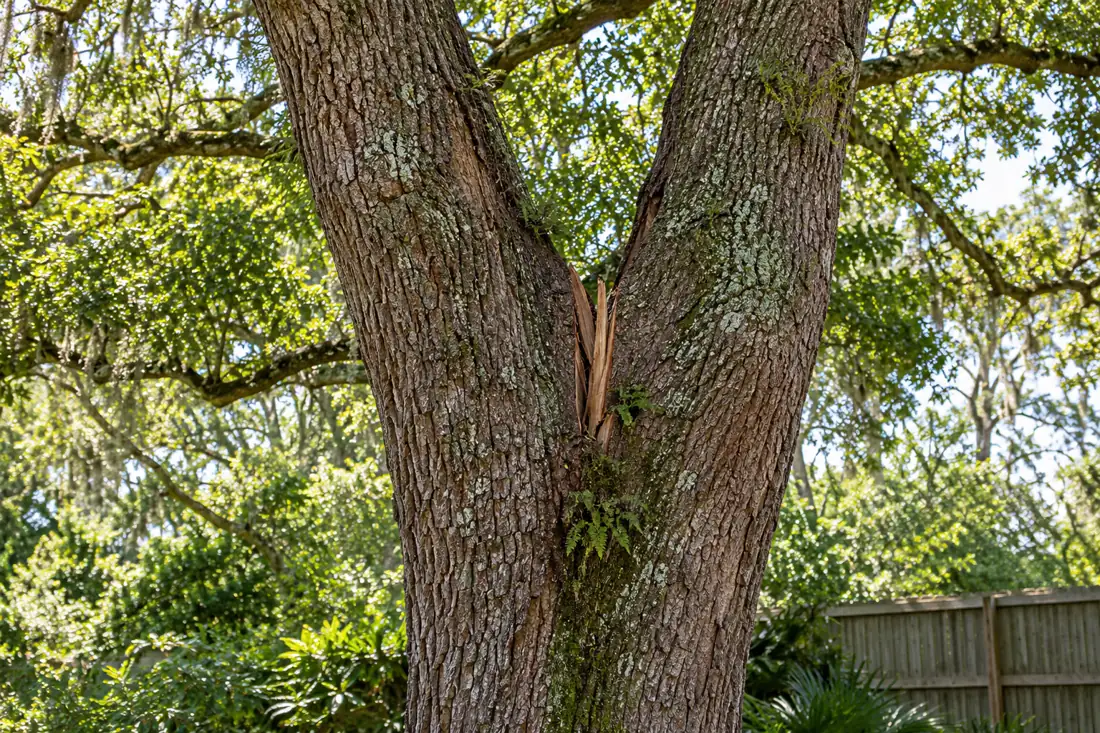
A tree can have foliage symptoms and a distinct structural concern. Tell the company about cracks, major branch failures, changed lean, visible root movement or other recent changes. A treatment intended for an identified health problem should not be assumed to correct every structural defect or make a damaged tree safe to retain. Those concerns may require a different assessment and management decision.
The assessment service and support-system page introduce different scope conversations where relevant. Do not choose among them by product name alone. Ask which question each proposed service answers and what it cannot establish or change. If there is a newly dangerous condition, keep clear and call about the next step rather than waiting for a routine treatment estimate to address an unrelated urgent hazard.
Ask for the treatment and follow-up scope in plain terms
Before accepting a proposal, understand which tree is included, the identified treatment objective and any evaluation still needed. Ask what site preparation, access or occupant arrangements the provider requires. If product-specific instructions apply, obtain them directly and keep them with the work record. Do not infer handling or use restrictions from a general statement that injection is targeted.
Discuss what response can reasonably be evaluated and how follow-up is arranged. A living tree’s appearance can change over time, and an immediate visual change is not a universal measure of every treatment. The proposal should not imply a guaranteed recovery or automatically renewed appointment unless that is actually the agreement. Keep observation, treatment and later review distinct so the customer understands what the current work includes and what would require another decision.
Coordinate care with the people using the property
Tell the provider about children, pets, occupied routes, landscaping and other work planned near the tree. Those details help establish the appropriate site arrangements for the proposed service. Keep sensitive access information private and identify the person who can answer questions or approve a change during the visit. For a managed site, make sure the owner’s care objective and the on-site contact’s instructions agree.
If pruning, soil work or another task is proposed separately, clarify how it relates to the treatment objective and which provider performs it. The fertilization page is a related discussion, not an assumption that every stressed tree needs nutrients. Record the actual tasks rather than approving a vague bundle of tree-health services whose individual purpose and follow-up are unclear. Clear interfaces make later assessment of the plan more useful.
Keep a record that supports the next decision
Save the identified tree, supplied findings, accepted treatment description, date and follow-up instructions. Keep useful before and later photographs accurately labeled without changing the conditions shown. Report new symptoms or changes in the site to the provider rather than assuming that another round of the same treatment is automatically appropriate. If the question remains unresolved, ask what additional evaluation is needed.
To begin, send the address, safe whole-tree and symptom photos, known history and the result you are seeking. Explain prior treatments when the record is available. The company can discuss assessment needs, suitability and current service availability. A good injection request begins as a tree-health question and ends with an understandable, specific care decision—whether that involves injection, another approach, further diagnosis or a different plan for the tree.

Confirm a diagnosis before discussing tree injection
Tree injection should not be treated as a default response to yellow leaves, thinning branches or an internet diagnosis. Similar visible symptoms can come from different causes, including soil conditions, root disturbance, seasonal change and pests. Start with the tree species, when symptoms appeared, the affected parts of the crown and any recent grading, irrigation or chemical activity nearby. A qualified diagnosis is needed before selecting a product or delivery method.
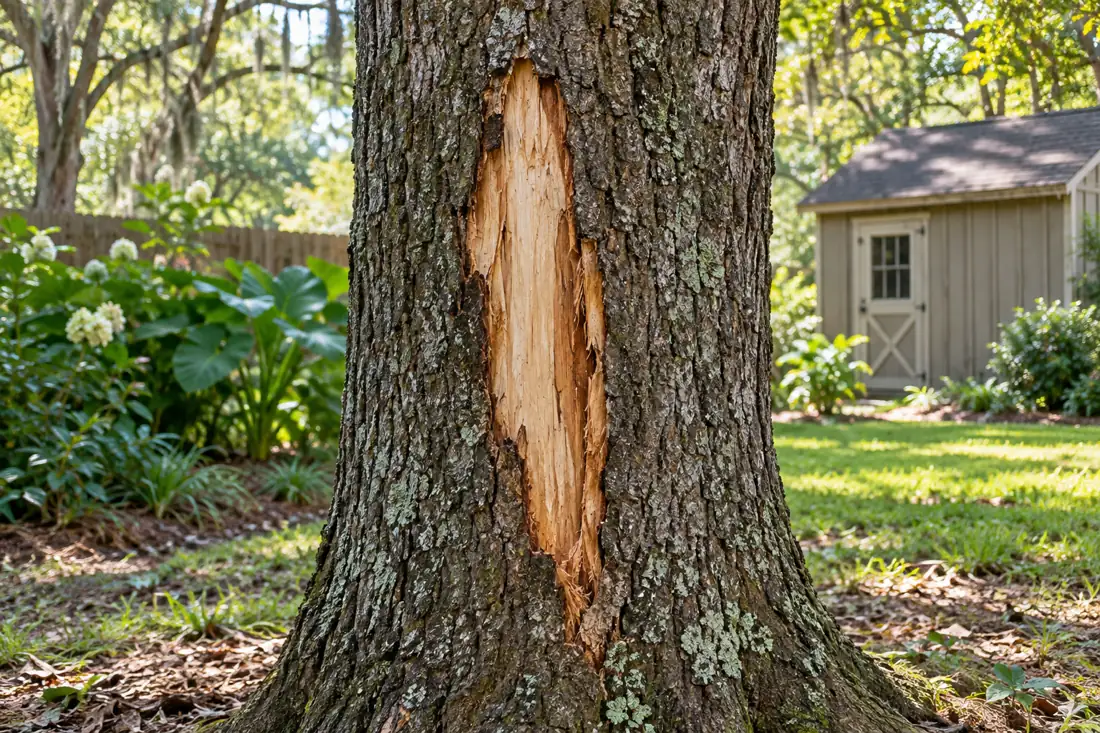
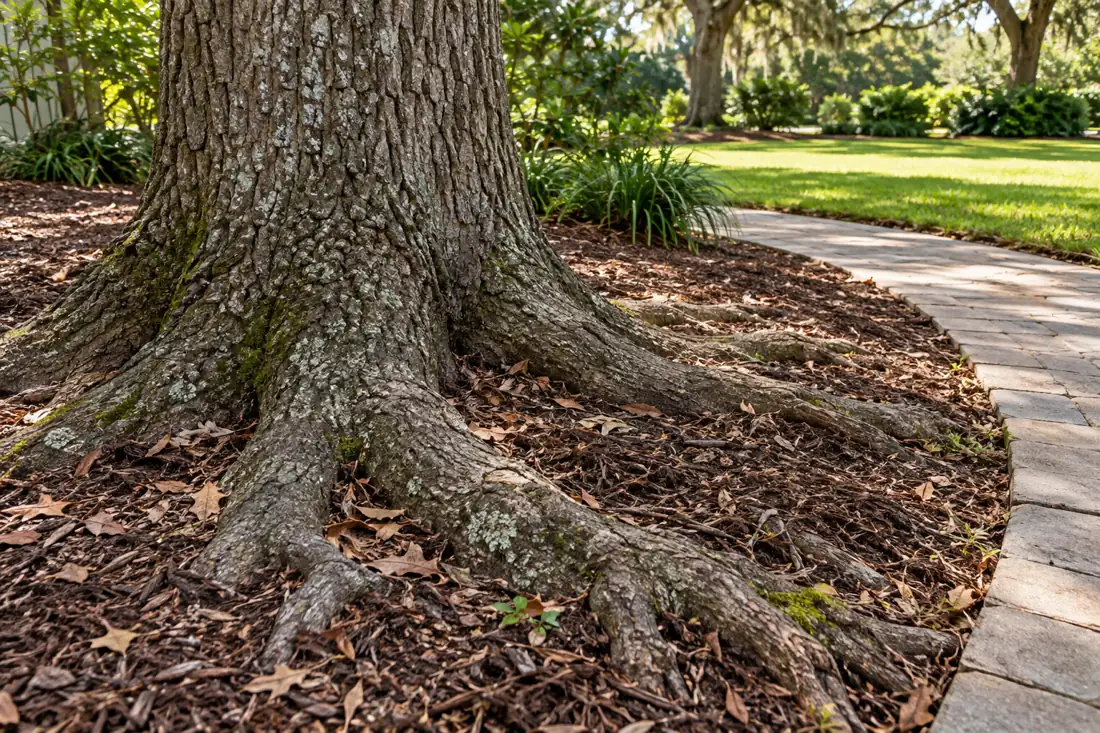
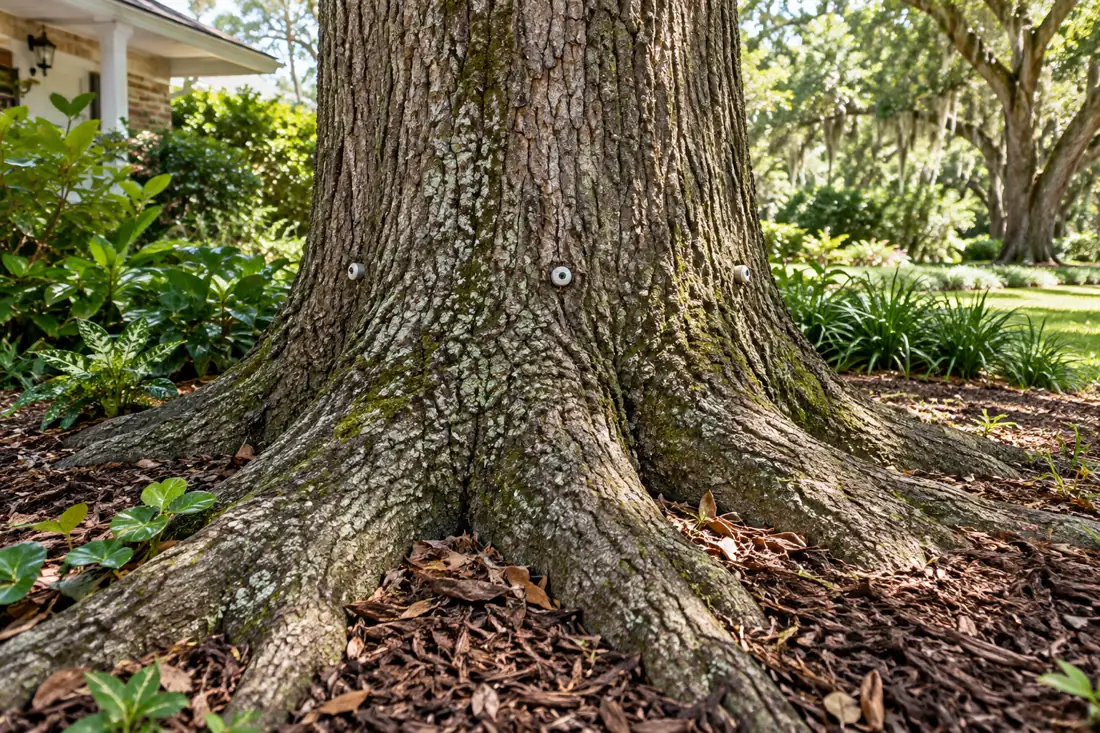
If treatment is considered, ask what problem has been identified, how the proposed intervention addresses it, and what alternatives or monitoring options exist. Product labels, application qualifications and local requirements matter, and timing or suitability may depend on the actual tree and pest. An illustrative photograph of bark or root flare is not evidence of a particular pathogen or a demonstration of an approved injection procedure.
A useful written service scope identifies the purpose of treatment, the findings supporting it, relevant site constraints and how results will be evaluated. Ask what changes would warrant follow-up or a different approach. Where decay, a broken branch or unstable roots present a structural concern, a treatment conversation does not replace a safety assessment. Preserve realistic expectations without offering unverified effectiveness guarantees.
Questions to resolve before deciding that injection is appropriate
A visible canopy symptom is a reason to investigate, not proof that a tree needs an injected product. Ask what diagnosis or documented concern the proposed treatment addresses, how other explanations were considered, and what evidence would support a useful outcome. Soil compaction, drainage changes, drought exposure, construction injuries, species-specific pests, and existing decay may call for different actions. A tree with a significant structural defect also needs separate risk evaluation; a treatment proposal should not substitute for it.
Before authorization, request the product or treatment category, why that delivery method was selected, which trees are included, and any relevant label, application, or property-access restrictions. Where pesticide use is involved, it should be handled by appropriately qualified people under applicable requirements and the product label. Ask what openings or equipment the process creates, what nearby landscape features need protection, and whether other work must occur first. Avoid selecting a technique from an internet image or an unsupported general claim.
Make the follow-up measurable without inventing a guaranteed cure. Record the tree location, starting symptoms, date and scope of work, seasonal conditions, and realistic observation interval that the provider recommends. Ask which changes would be encouraging, which changes could have another cause, and what would trigger another assessment. This gives the owner a decision trail and helps distinguish a treatment objective from promises about future canopy growth or tree survival.
Tree injection: diagnosis before delivery method
Thin foliage, crown dieback or unusual leaf symptoms can relate to pests, disease, soil compaction, drainage, drought or construction injury. Begin with symptom timing and site history rather than assuming an injectable product is the solution. Show the whole tree, root flare and symptom pattern without entering unsafe areas.
Ask what evidence supports the proposed diagnosis and why direct delivery is appropriate. Product selection, application timing and label compliance matter. Injection cannot be promised to cure every disease, restore a failed structural limb or replace ongoing root-zone management. The treatment objective and uncertainties should be explained.
Report earlier treatments and construction or drainage changes so the same problem is not repeatedly treated without review. The tree health guide covers broader contributing conditions; the risk guide addresses structural concerns that choosing a product cannot resolve. Agree on what observations would prompt follow-up.
Three details to settle before an estimate
- Provide symptom timing and site history
- Request a reasoned treatment objective
- Document uncertainties and follow-up
Tree Injection questions
Should I request a product before assessment?
Start with symptoms, timing and site history. A selected treatment should address an identified problem and suitable objective rather than a product preference alone.
Do yellow leaves establish the cause of decline?
No. They describe a symptom. Whole-tree condition, site changes and appropriate diagnosis are needed before selecting a care approach.
Which photos help a treatment review?
Show the canopy, trunk base, affected areas and surrounding ground from safe positions. Add detail photos without losing the whole-tree context.
Should I drill or expose roots before the visit?
No. Do not investigate through drilling, cutting or applying material yourself. Describe safe observations and share available history.
What previous treatment information is useful?
Provide reliable product or service records and dates where available. Label missing or uncertain information rather than guessing materials or doses.
Is injection suitable for every stressed tree?
No. Suitability depends on the identified problem, tree and site. Further diagnosis or a different approach may be appropriate.
Does targeted delivery mean chemical-free or risk-free?
No. Ask about the actual proposed material, requirements and limitations. Do not infer handling or site instructions from a general delivery-method description.
Can treatment correct every structural defect?
No. Report splits, failures, changed lean or root movement separately. Those concerns may need a different assessment and management decision.
Should recovery be guaranteed in the proposal?
No universal recovery promise is appropriate. Discuss the treatment objective, expected evaluation and limitations for the actual tree and problem.
Does one treatment include automatic follow-up visits?
Only if agreed. Clarify how review is arranged, what it includes and what observations should prompt another contact.
What property-use information should I share?
Describe children, pets, occupied routes, access and other planned work near the tree. Obtain service-specific preparation instructions directly.
How do I request a tree-injection discussion?
Send the address, safe tree and symptom photos, timing, site history and prior records. Ask what assessment is needed before treatment is selected.
Let’s plan your tree work.
Send the property address, safe tree photos and the result you need. Include access restrictions and the person who can approve the work.