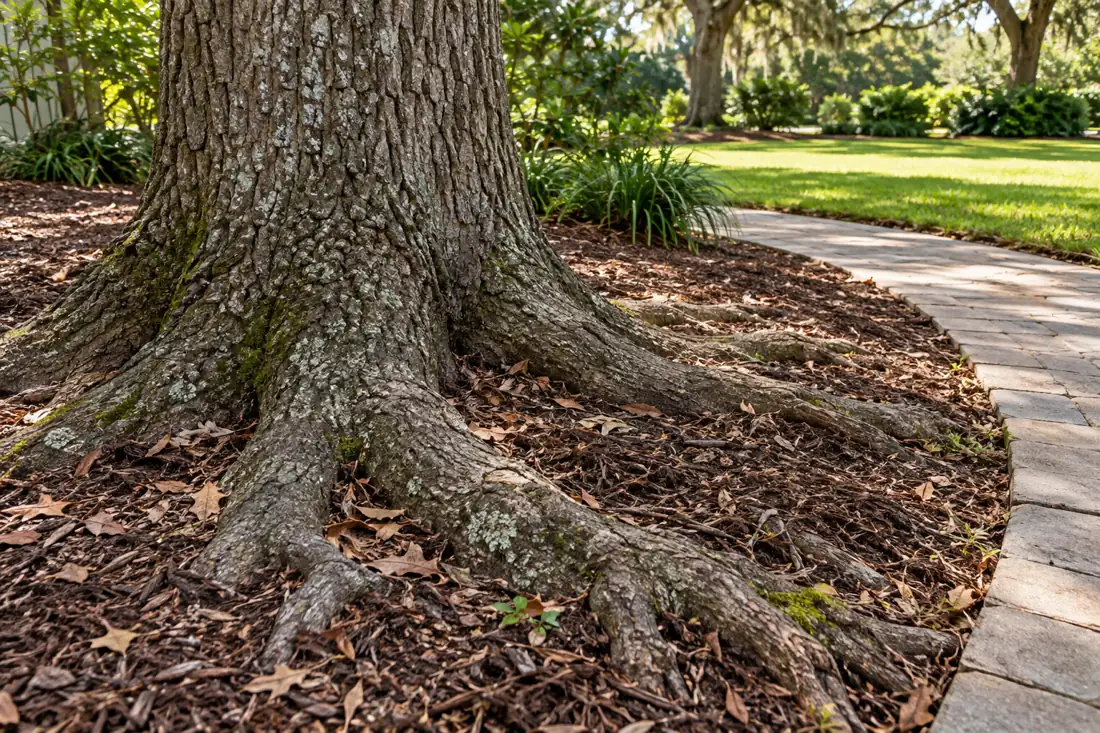
Live oaks are among the most valuable and recognizable trees in New Orleans, so removal should not be the automatic response to every broken limb or cavity. The key question is whether the tree can continue to occupy the site at an acceptable level of risk.
When a live oak concern deserves a closer assessment
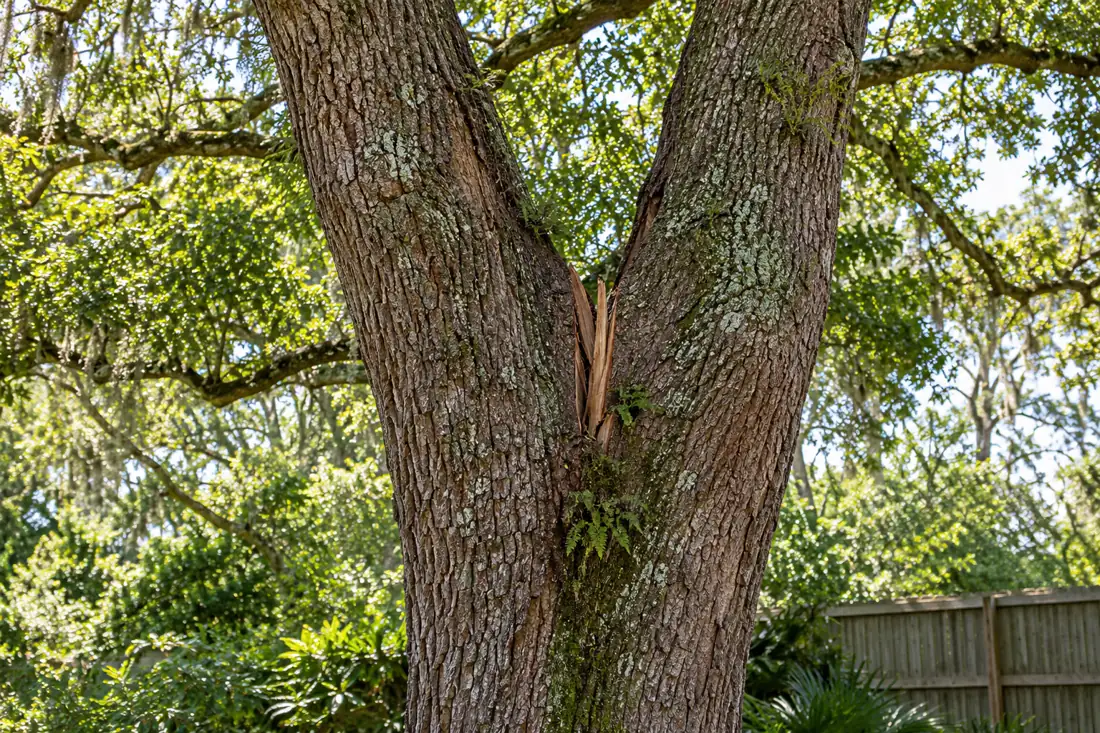
A mature live oak can have dead peripheral twigs, old pruning wounds or seasonal leaf turnover without needing immediate removal. More consequential warning signs may include newly exposed roots, rapidly changing trunk lean, large fresh cracks, recent root excavation or major limbs with unstable attachments.
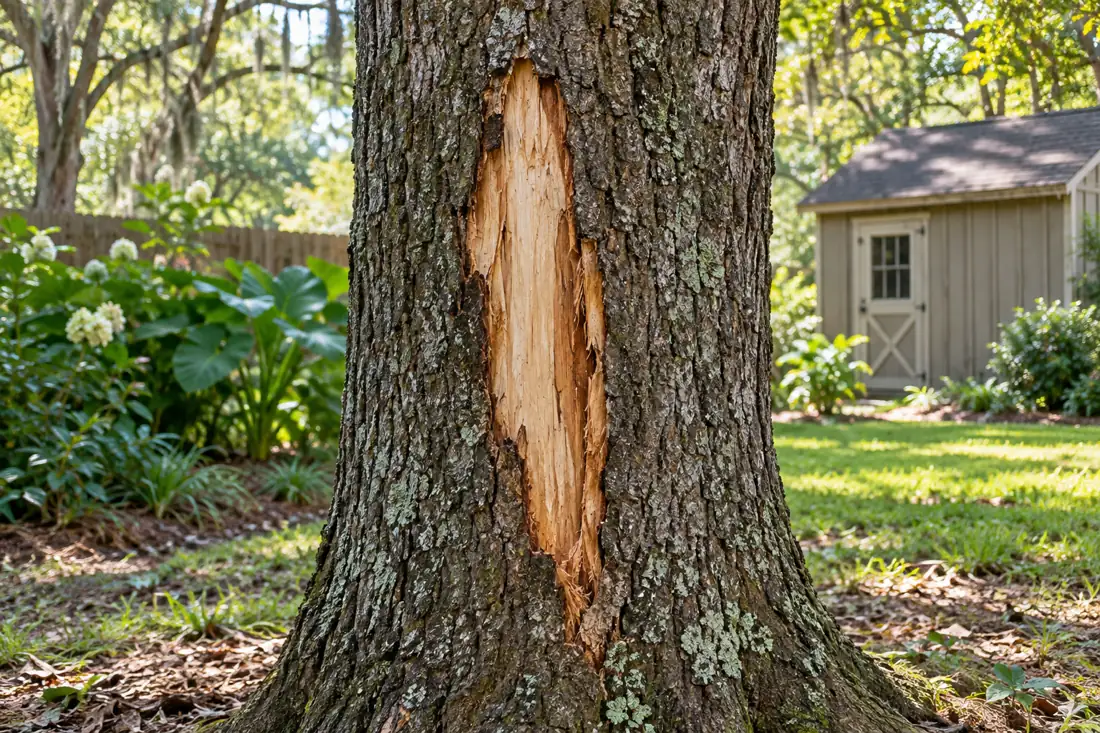
Do not rely on a single close-up photograph to decide whether a tree is safe; the location of the defect, likely targets and entire tree structure matter. Keep people away from an apparently unstable area while a qualified assessment is arranged.
Before authorizing removal, ask what specific risk is being addressed and whether isolation, targeted pruning or ongoing monitoring would reasonably reduce it. If removal is recommended, document the reasoning, any permits or ownership questions and the access requirements. A large oak close to a home may require specialized rigging and protection even when its visible canopy appears manageable. Replanting plans should account for the future mature size and root space of the replacement rather than using the stump location automatically.
Reasons removal may be considered
Major trunk decay, severe root failure, recent uprooting, extensive canopy dieback, failed main unions and repeated large-limb failures can all push the decision toward removal. Targets matter too.
Preservation may still be possible
Structural pruning, cabling, treatment and monitoring may be reasonable when the main structure remains sound enough. See our tree health services and high-risk removal.
Start with the reason you are considering removal
Owners often arrive at the same question from very different situations. One tree has a newly opened crack, another conflicts with a building project, and a third drops small twigs over a patio. Explain the actual reason for the request before choosing the outcome. An assessment of a defect, a clearance-pruning estimate and a removal proposal answer different questions. Tell the company which decision you need help making, rather than asking whether every large oak is dangerous.
Write down what you first noticed and whether it is changing. If the concern began after construction, describe where digging, paving or heavy traffic occurred. If a major part has failed, identify what fell and what remains above the affected area from a safe viewpoint. A useful history includes dates or approximate time periods without inventing certainty. Ask what can be assessed during the visit and whether a written tree-risk evaluation is separate from a routine work estimate.
Look at the tree and the places people use together
The same visible defect can present different management questions beside an occupied house, above an unused corner of a yard or over a busy entrance. Identify the buildings, routes and gathering places around the oak. Include a neighbor’s property when branches extend across the boundary. The assessor needs to understand actual use, not just the distance from the trunk to your own front door. Changes in use can matter even when the tree itself looks familiar.
A removable target may offer an interim management choice. For example, a picnic table or parked vehicle may be relocated while an assessment is arranged. That is not permission to approach an unstable tree or assume that the remaining area is safe. Ask how the affected area should be managed until the recommendation is made. Do not treat a generic radius or a reassuring canopy photograph as a substitute for a site-specific review of the tree and the people or property it could affect.

Ask what the visible defect means for this oak
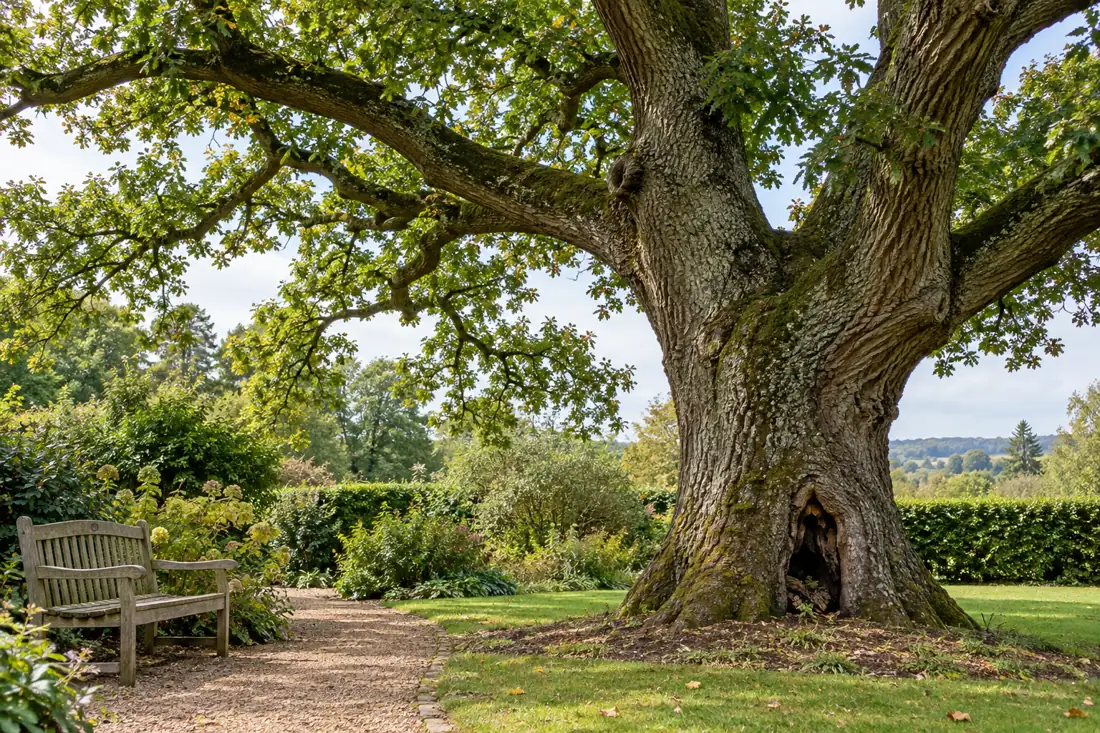
A cavity, seam or low sweeping limb is an observation, not a complete removal decision. Ask which part of the tree is involved and what additional information is needed. Green foliage can coexist with structural concerns, while an unusual shape may have been present for many years. The assessor should distinguish a recent change from an old feature where the available history supports that distinction. Explain what you know and be candid about what you do not know.
Do not scrape out cavities, drill the trunk or climb into a fork to investigate. Ask the professional whether the agreed assessment is visual or includes other investigation, what limitations remain and how those limitations affect the recommendation. A report should not suggest that every internal condition was measured when it was not. This is especially useful for an absent owner who will review the decision through photographs and written notes rather than attending the site visit.
Compare preservation choices by the problem they address
Pruning, moving a target, installing a suitable support system, changing site use and removing the tree are different responses. The ISA tree-owner risk guidance describes several management options and makes clear that support hardware is not a guarantee against failure. Ask which option addresses the identified concern and why other choices were ruled out. A lower initial price does not establish that an option fits the condition.
Compare the next decision, not just the photograph
An owner deciding whether to remove a live oak should separate the reason for concern from the action requested. Record whether the issue is a changed lean, a branch over a roof, decay suspected at a specific attachment, construction near roots or a future space requirement. Different concerns call for different evidence and may not have the same answer.
Ask which parts of the property have regular occupancy and which temporary restrictions are practical while the tree is evaluated. A visual inspection may identify a concern that requires a more detailed assessment. An image showing a large canopy or the tree close to a building does not itself establish a removal recommendation.
Put preservation, monitoring, pruning and removal alternatives beside the actual reason the owner raised. Identify any follow-up inspection or site-use condition associated with a retention plan. If removal is chosen, define stump treatment and surrounding-property protection separately so the next decision does not disappear inside a general quote.

For a preservation proposal, request the intended result, limitations and follow-up responsibilities. Ask whether ongoing access for inspection will be practical and who will arrange it. If removal is recommended, ask what findings support that recommendation rather than assuming the recommendation was based on age alone. Keep the comparison specific to this oak. A neighbor’s tree retained with a cable or removed after a storm is useful background for a conversation, but it does not establish the right response for a different structure and site.
Consider the site before investing in another intervention
Discuss planned driveway work, additions, drainage changes or utility projects before paying for treatment intended to retain an oak. The tree-care decision and the future property plan need to fit together. Show the assessor the actual proposed work footprint and identify which parts are still flexible. A preservation recommendation based on today’s open lawn may need reconsideration if excavation will occur beside the tree next month.
This conversation should include people beyond the tree contractor when their work affects the outcome. A designer, builder or excavation contractor may need to clarify project requirements, while the appropriate authority addresses any tree-related approvals. Do not assume a large oak is privately controlled simply because its trunk is beside your fence. Confirm ownership and applicable requirements for the actual address. The owner can then compare realistic options before committing to work that depends on permissions or site arrangements that have not yet been checked.
If removal is chosen, preserve the rest of the property
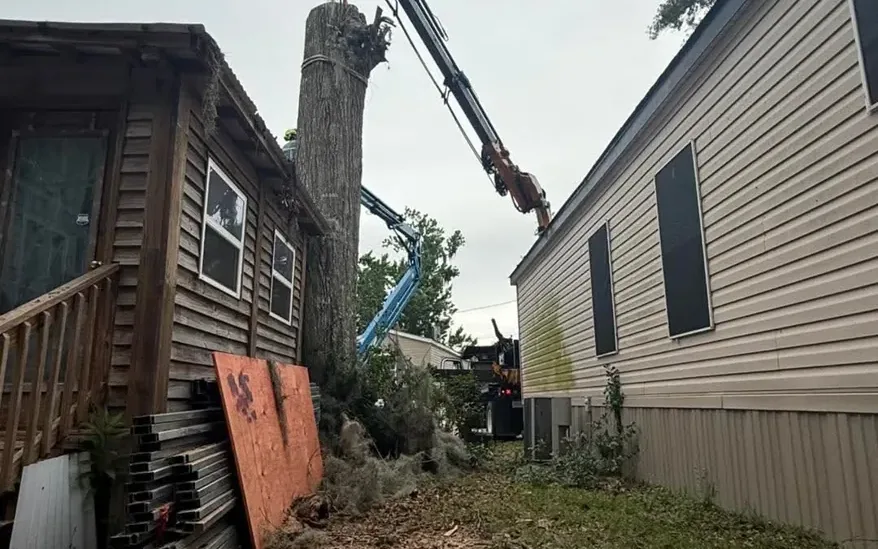
An oak-removal scope should identify the exact tree, surrounding features and access route. Include retained trees, gardens, gates, utilities and the surfaces equipment may cross. Ask how the contractor will review the tree’s condition when selecting a handling method. Large limb spread, limited landing space and nearby structures can affect the plan independently of the trunk’s diameter. Do not choose equipment solely from a picture of a similar job.
Decide what happens to the stump, logs and chips before accepting the agreement. A removal price may leave a stump; a grinding price may leave grindings. If another landscape contractor will restore the area, agree on the handover condition and timing with that provider. Describe existing damage and fixed features in the access corridor. These details help the contractor quote the requested result and help the owner compare proposals that would otherwise appear to describe the same removal but leave different unfinished work.
Use a written recommendation as a decision record
A useful record identifies the tree, the concern, the work or further assessment recommended and the limits of the review. Ask for the form of documentation you need when arranging the appointment. A property manager seeking a written assessment should not discover after a pricing visit that no assessment report was commissioned. If you need the document for another professional or organization, explain that intended use without asking for a predetermined conclusion.
Record the reasons for the choice you make, including any interim restrictions and follow-up actions. If monitoring is selected, ask what changes should trigger an earlier review and who will be responsible for reporting them. Monitoring should have a practical meaning beyond forgetting about the tree until the next storm. Store before photographs with the assessment and work notes. Later owners and contractors can then see which condition was being managed and which parts of the property or tree have changed since the decision.
Prepare a useful live-oak consultation request
Send a whole-tree view, the area of concern and a view showing the nearest building or occupied space, all from safe positions. Give the address, describe the timing of the change and say whether your goal is preservation, removal pricing or a documented assessment. Include known root disturbance, previous support hardware and prior major failures. Safe photographs help prepare a visit but cannot establish the soundness of concealed wood or roots.
Explore tree-risk assessment when you need a condition-focused discussion and high-risk removal when a removal scope must account for difficult surroundings. If the oak appears actively unstable, keep people out of the affected area and call about the current condition. For a nonurgent decision, allow time to compare a reasoned recommendation with the needs of the property. The best starting point is a clear question and an honest description of the oak, rather than a promise to save or remove it before anyone has assessed it.
A removal decision record for a mature live oak
Start with the part of the property the oak affects. Mark the house, driveway, neighboring structures, overhead lines and areas where people regularly walk or park. Then distinguish an observed condition from a prediction: a fresh crack at a major union is an observation; a statement that the tree will fall during the next storm is a prediction that needs professional evaluation. Photograph the trunk flare and the complete canopy from a safe distance, and keep a note of when changes first appeared.
Ask the assessor to explain which management options were considered before removal. Selective pruning, target relocation, periodic monitoring or an engineered support system may be appropriate in some cases, but none is automatically a substitute for removing a tree with unacceptable risk. Conversely, an old or large oak is not inherently a removal candidate. Request a written description of defects, affected targets, residual risk and the limits of the inspection rather than relying on a single alarming photograph.
Before authorizing work, separate the tree decision from logistics. Confirm ownership and boundary questions, accessibility for equipment, debris handling, stump expectations and any local permitting or protection requirements that apply to the specific tree and property. Keep the recommendation with dated images so a later owner or contractor can understand the reasoning. This is decision support, not a remote diagnosis of the tree.
Practical handoff checklist
- Record the precise defect and the date first noticed.
- Identify structures and occupied areas within potential reach.
- Request options, limitations and urgency in writing.
- Verify access, authorization and applicable protection rules.
For related context, see the tree risk assessment guide. This planning information is not a substitute for an on-site professional assessment.
When Should a Live Oak Be Removed? questions
Does an old live oak automatically need removal?
No. Age alone does not establish the current condition. The decision should address the actual structure, site use and findings of an appropriate assessment.
Is a cavity an automatic removal order?
No general rule settles every cavity. Ask what part is affected, what remains uncertain and how the finding relates to nearby targets.
Can a leafy oak still have structural problems?
Yes. Foliage does not establish the condition of every root, trunk section or branch connection.
Should I investigate a hollow trunk myself?
Do not climb, drill, scrape or enter a cavity. Describe it from a safe position and ask what professional evaluation is appropriate.
Can moving a patio table matter?
Moving a target may be part of managing site use, but it does not establish that the tree or surrounding area is safe.
Will a cable always avoid removal?
No. A support system must suit the actual tree and has limitations and inspection needs. It does not guarantee against failure.
Should planned construction be disclosed?
Yes. Show proposed excavation, paving, access and grade changes before a preservation recommendation or work scope is finalized.
Is a removal quote the same as a risk report?
Not necessarily. State whether you need pricing, condition assessment or a written report and confirm what the visit includes.
What should a removal quote say about the stump?
It should state whether grinding, chip hauling and restoration are included or separately priced.
Do photographs replace the site assessment?
No. They help explain the concern and prepare a visit but cannot reveal every internal or belowground condition.
What makes monitoring useful?
Agree on follow-up responsibilities, the review plan and changes that should trigger an earlier assessment.
What should I send for the first discussion?
Send the address, safe whole-tree and concern photos, change timing, known site history and the decision you need help making.
Let’s plan your tree work.
Send the property address, safe tree photos and the result you need. Include access restrictions and the person who can approve the work.