Roots and foundations are a site problem, not just a tree problem
Tree roots follow soil conditions and available moisture. Foundation movement can also be influenced by soil type, drainage, construction and moisture changes. That means the right decision often requires understanding the property condition rather than assuming every nearby root is the cause.
Separate foundation observations from root assumptions
Roots near a crack do not by themselves establish causation. Note crack direction and location, drainage, recent excavation, soil changes and the distance between trunk and structure. A foundation specialist may be needed for structural movement.
Ask a tree professional about root conditions and the impact of proposed cutting or trenching on the retained tree. Removing roots can weaken the tree; removing a tree may not resolve soil or drainage defects.
Coordinate building and landscape contractors before excavation. Put responsibility for tree work, engineering, root exposure and drainage repairs into distinct scope items rather than treating one recommendation as proof of another.
Site planning detail: Roots near a foundation deserve investigation before anyone cuts or excavates them. Document where the tree sits relative to walls, drains, paving and visible cracks, and note whether there are seasonal soil changes, recent plumbing work or changes in grade. Roots generally seek usable soil conditions; their presence alone does not prove they caused structural movement. Avoid stripping soil from the root crown or severing large roots based solely on proximity.
A foundation specialist may need to evaluate settlement, while a qualified arborist considers tree stability and likely effects of root loss. Ask both parties to distinguish observed evidence from possible mechanisms. If excavation is necessary, clarify whether protected work methods, a changed route or a root-zone barrier are feasible and who will supervise exposure of major roots. Keep the final decisions and any monitoring plan tied to actual findings rather than assumptions.
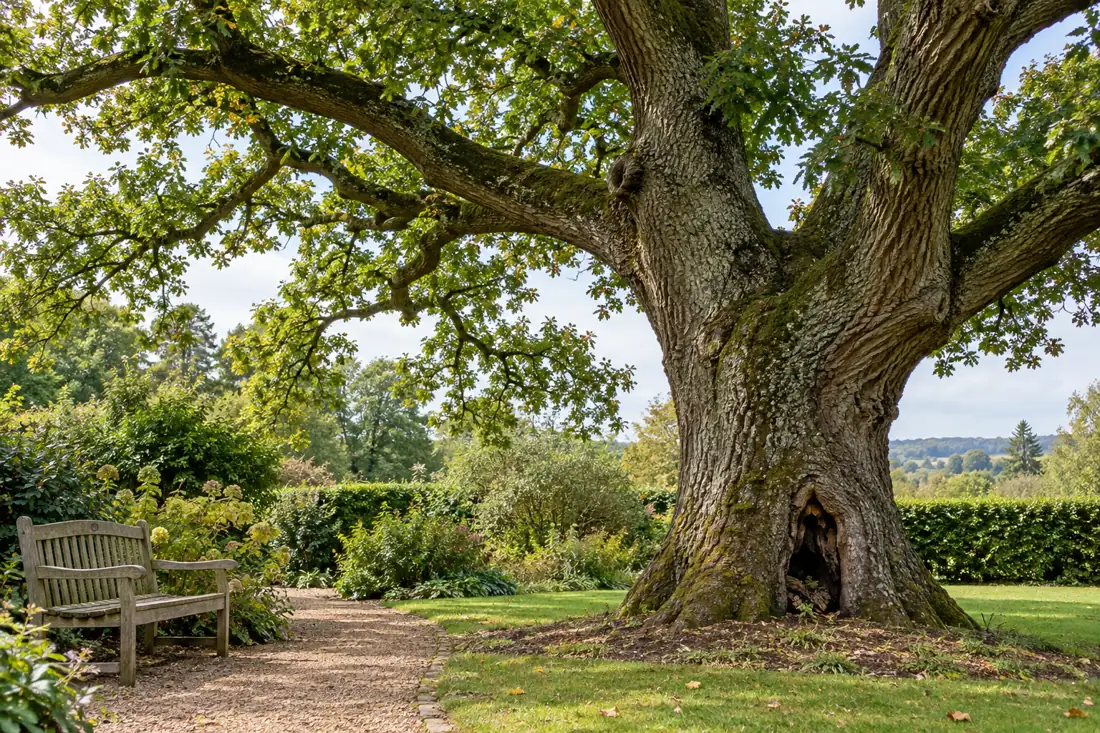
Large mature trees close to structures have larger root systems and more limited management options.
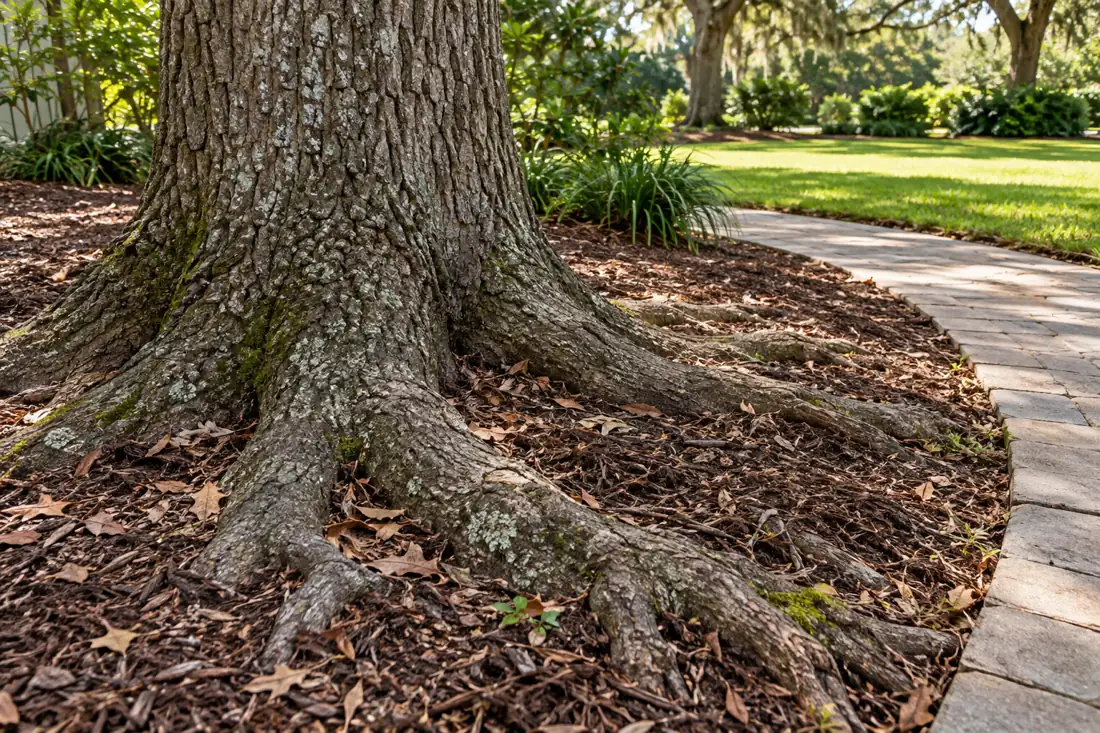
Raised paving, displaced edging and exposed structural roots can show where roots are interacting with hardscape.
Cutting major roots can create a tree-risk problem even if it solves a construction conflict.
Do not cut major roots without considering stability
Large roots near the trunk can be important to anchorage. Cutting them can reduce stability and create decay entry points. When root removal is necessary, the amount, location and tree condition should be considered before work begins.
Coordinate drainage, construction and root protection
Foundation cracks or lifted paving near a tree can have more than one cause. Moisture gradients, expansive soils, drainage changes, old construction defects and root growth may interact. Before approving root cutting, identify the actual building movement and the route of visible roots, if known. Cutting major roots for convenience can reduce tree stability even when the foundation problem remains unresolved.
A shared drawing for the engineer, owner and tree professional is more useful than an unsupported claim that a particular root caused the damage. Define who handles construction, root care and follow-up after the work.
Related resources
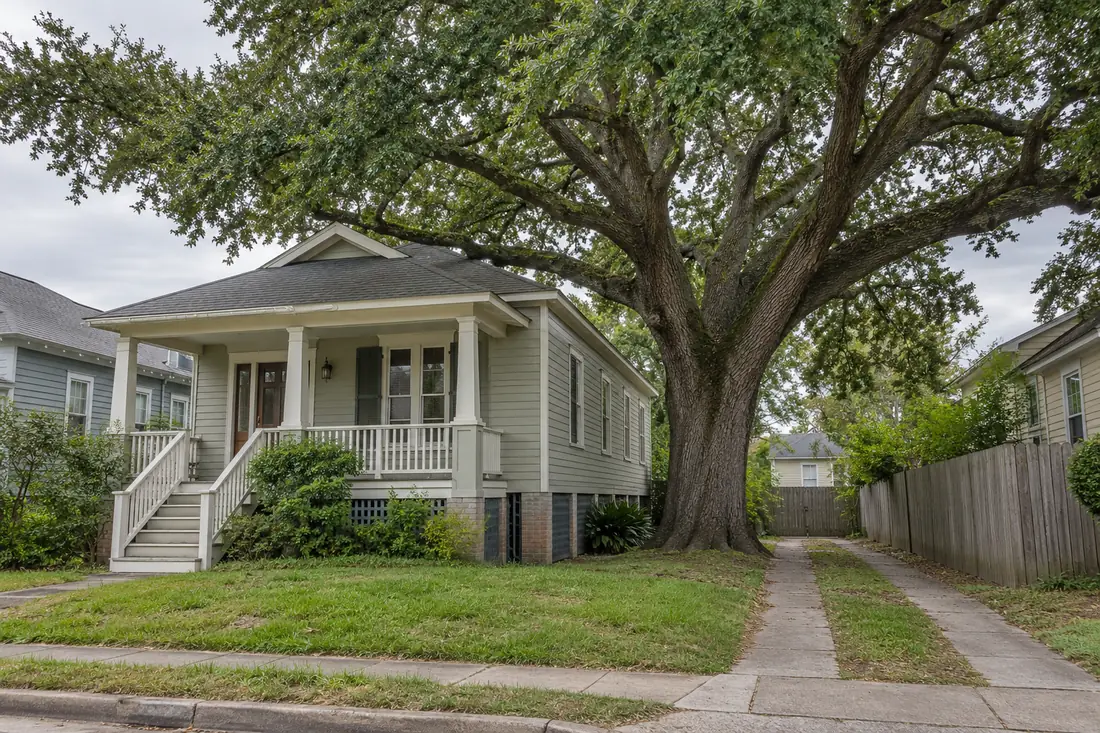

Start by distinguishing proximity from damage
Finding roots beside a foundation does not, by itself, explain a crack in a wall or slab. Roots usually expand into soil conditions that offer air, space and moisture. Their growth may take advantage of an existing opening, and large roots can influence nearby hardscape, but several other processes affect structures in south Louisiana.
Soil movement, drainage, settlement, prior construction and changes in moisture can all matter. An accurate assessment begins with what is actually moving or separating rather than assigning every symptom to the nearest tree.
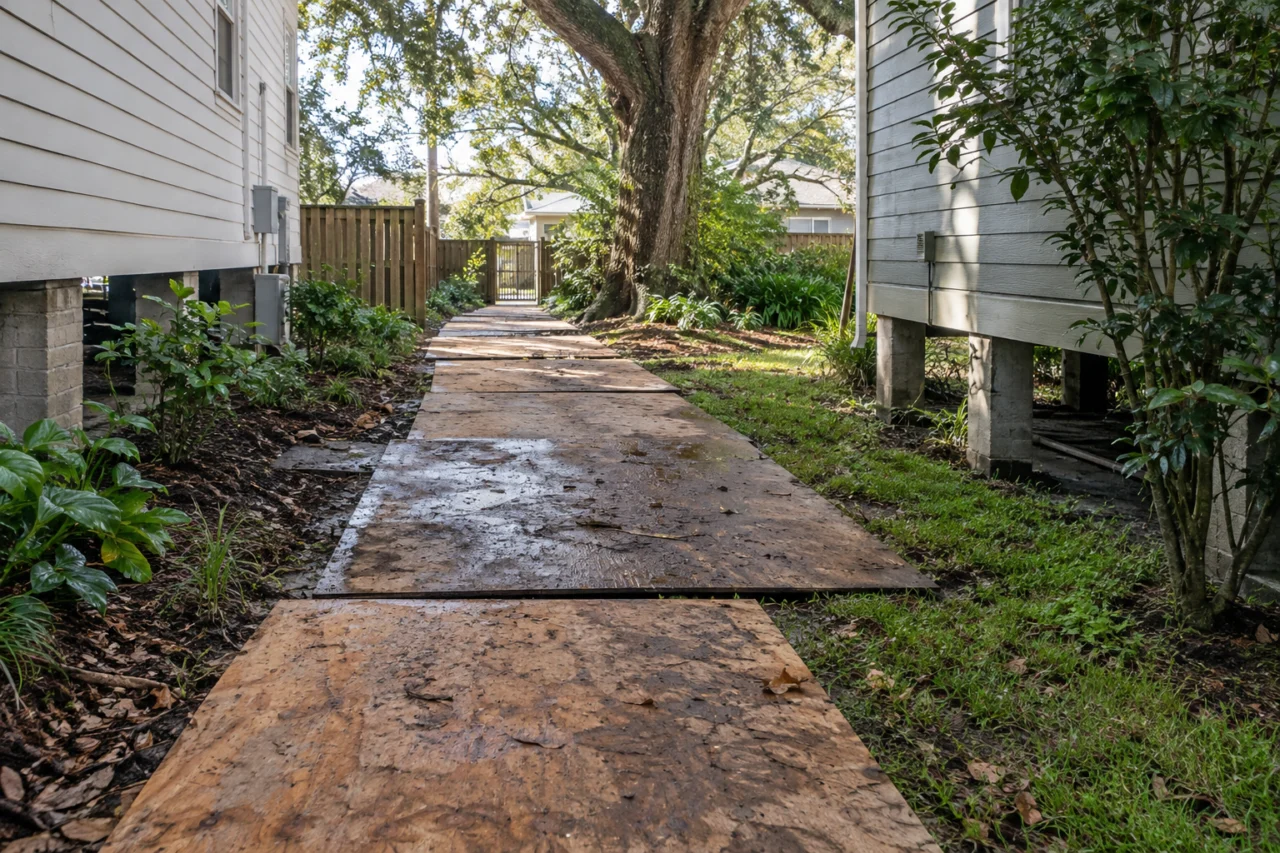
Photograph the foundation issue and tree in the same frame when possible. Record whether the concern is a lifted sidewalk, a displaced landscape border, a leaking drain, an uneven slab, cracked masonry or a root visible against the structure. These are different problems that deserve different expertise. A foundation contractor or structural professional may need to assess the building, while a tree professional evaluates the root system and consequences of possible work. A single photograph cannot establish cause, extent or the safest remedy.
Understand where roots grow before disturbing them
The visible trunk is only one part of the tree’s support system. Important roots can extend well beyond the canopy, especially where conditions allow them to spread laterally. They also share space with plumbing, irrigation, buried utilities, pavement and neighboring plantings. The ISA’s tree-planting and utility guidance explains why underground conflicts must be considered before work begins. An exposed root at the surface is not proof that all of the supporting roots can be seen or mapped.
Depth, soil texture and past grading affect where roots are found. Some roots occupy shallow layers even on tall trees, so a trench cut near the trunk can sever important support and water-conducting tissue. You should not assume roots run straight down beneath the trunk, nor that one neat saw cut will separate the tree from the house without consequences. Before any excavation or mechanical grinding, discuss the tree’s size, species, age, apparent health, lean and condition with someone qualified to assess the likely impact.

Avoid root-cutting shortcuts that transfer the risk
A common impulse is to cut every root visible near a wall. That approach can harm a tree, create a new stability issue or leave the structural cause unresolved. The danger is not limited to the amount of wood removed; the location and distribution of affected roots can be critical. A major root on one side of a leaning tree may matter differently from smaller roots in a distant bed. Without a site assessment, there is no reliable universal distance at which cutting suddenly becomes harmless.
Removing roots is also not the same thing as repairing a building. If the underlying issue involves drainage, leaking pipes or changing soil conditions, roots may return to favorable areas or another problem may persist. Compare root pruning, rerouting improvements, barrier choices, pavement adjustments, tree preservation and removal only after the relevant experts have described what each option is intended to achieve.
Ask who accepts responsibility for assessing tree stability afterward; do not accept an unsupported promise that cutting roots will leave a mature tree unaffected.
Separate the foundation investigation from the tree-work estimate
A useful first building inspection documents the type, location and apparent development of movement. If a foundation specialist recommends excavation or remediation, obtain the proposed depth, width and position of that work relative to the tree. Share that plan with the tree evaluator before a machine arrives. Conversely, if a tree contractor recommends root cutting or removal, the structural professional should understand the work before it is assumed to address the building condition. Coordination prevents an estimate from becoming a diagnosis by default.
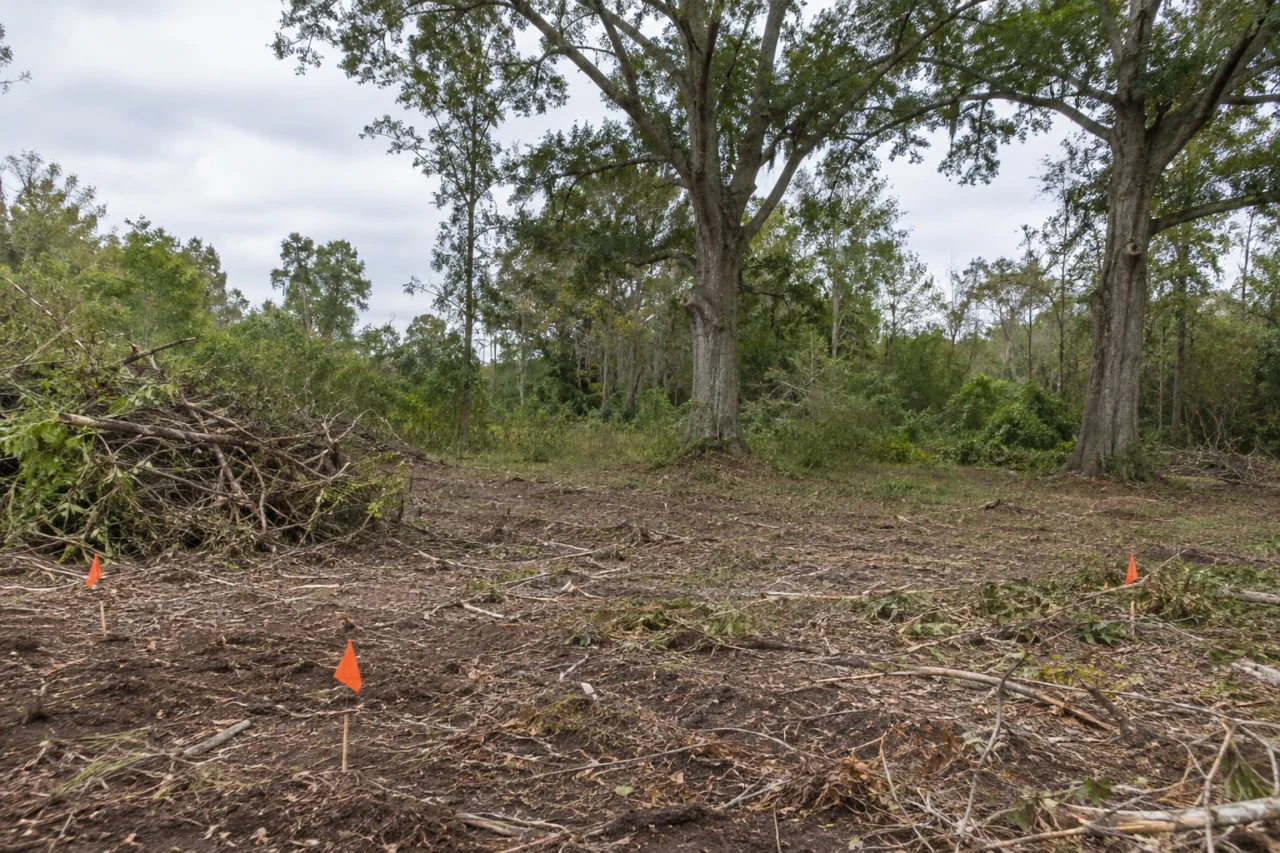
Ask each provider to state what it can and cannot conclude. Tree Huggers can assess tree-work access, discuss vegetation constraints and arrange a defined tree removal or trimming scope where appropriate. The company should not be presented as providing a geotechnical determination or guaranteeing the cause of a foundation crack. An engineer’s written conclusions, utility information and a site plan may be more useful than an unqualified verbal suggestion that the entire tree must go. Keep records from different disciplines clearly identified.
Louisiana moisture and construction history matter
New Orleans-area lots can experience intense rain, standing water, compacted fill and repeated landscaping changes. Drainage features may be hidden beneath sod or pavement, and a tree could have been growing for decades before a recent renovation altered the conditions around its roots. Review whether a new driveway, raised garden bed, buried drain or grading project preceded the concern. Those observations provide a timeline but are not proof of cause. Photograph water pathways after ordinary rain only from safe, accessible places.
Construction activity near a mature tree deserves special attention. ISA’s risk and construction guidance discusses soil compaction, severed roots, grade changes and tree protection during work. If a foundation repair requires heavy vehicles or a trench inside the root zone, plan access and protection before mobilization. A temporary route that crushes roots or compacts wet ground may impose a second problem even when the original crack is repaired. Ask about limits on traffic, spoil storage and working space.
Utilities and private lines need their own plan
Roots can share an excavation area with water, gas, sewer, electrical and communications systems. Utility marks and permits are not optional details to settle after equipment is parked. The appropriate locate process should occur before digging, and buried features owned by the property owner may not be covered by ordinary member utility markings. Louisiana 811’s private utility-locator resource explains why customer-owned facilities need separate attention. Never infer a pipe’s route from the position of a fixture.
Tell the contractor about known drains, landscape lighting, irrigation, pool lines and buried wiring, including additions made by previous owners. A tree next to a house might also be close to a shared service or neighboring fence footing. Explain where a root has been exposed and whether any excavation has already occurred. Do not probe the ground or pull roots to locate hidden systems. A written plan should establish what gets located, who performs the work and how unexpected features affect scope and approval.
Choosing among preservation, selective work and removal
Preservation can be reasonable when structure, site and tree conditions permit it. Sometimes an adjustment to hardscape, drainage or construction method avoids a major root loss. Sometimes a compromised or poorly situated tree cannot remain compatible with the necessary building repair. A preservation recommendation must address the likely impact of excavation, the remaining root support and follow-up expectations. The fact that a tree is valuable does not mean every nearby improvement is safe, and the fact that roots are present does not demand automatic removal.
If removal is chosen, discuss the entire operation, not just the saw work. Access in a narrow residential corridor, protection for a slab, nearby wires, hauling of large sections and the stump’s location against the foundation can influence methods. Stump grinding immediately beside concrete or buried lines may have different limitations from grinding in open lawn. Request an estimate that distinguishes trunk removal, debris handling, stump work and any landscaping finish. Structural repair remains a separate project with the appropriate provider.
Build a decision record that protects the property
Before scheduling, identify the tree, mark the affected structure on photographs and gather older images or contractor notes showing when the concern changed. Record whether the issue is active, stable, seasonal or uncertain, using only what you can actually observe. Ask the relevant professionals what evidence would change their recommendation and whether a monitoring period makes sense. This provides a basis for comparing proposals rather than a contest over who offers the quickest or cheapest tree cut.

Separate Root Proximity From a Foundation-Causation Claim
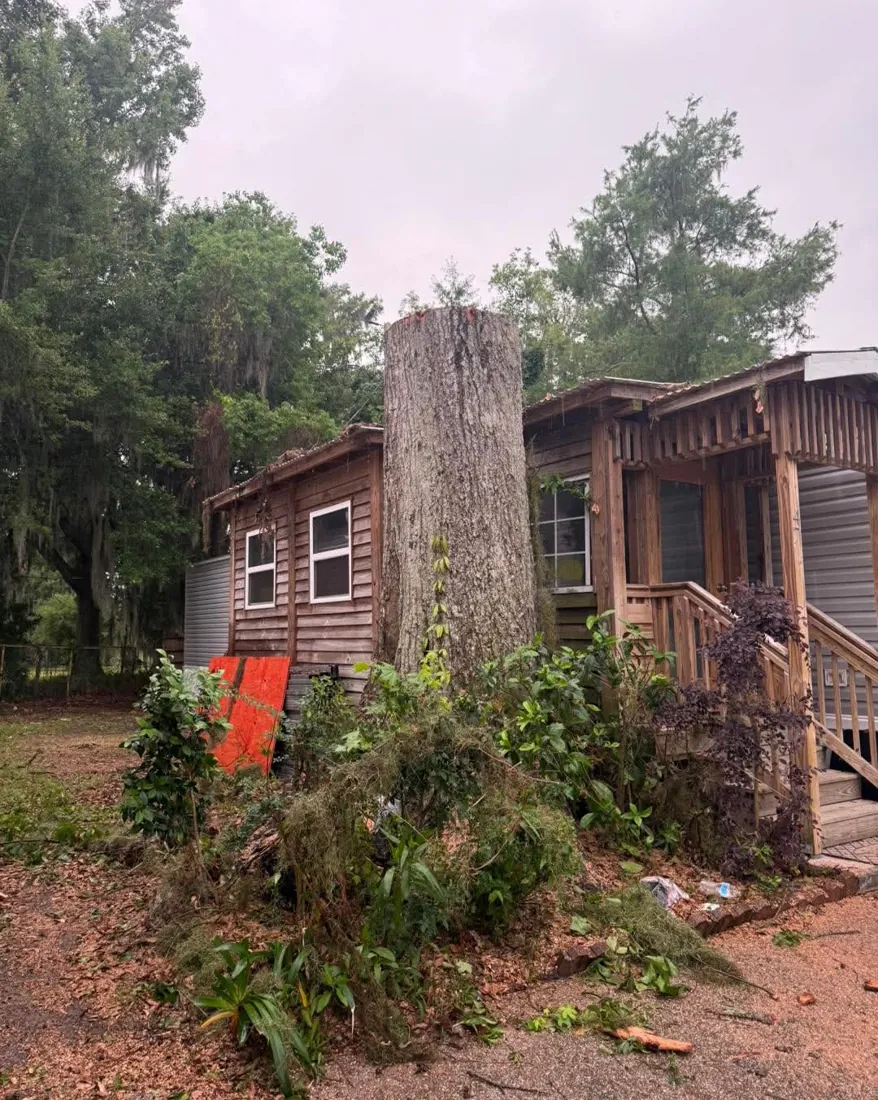
A large root near a foundation does not automatically prove that it caused a settlement crack. Roots, soil moisture, drainage, prior construction and the structure’s condition can interact. Start with clear photographs showing the tree, the foundation edge and the specific root or pavement concern in one relationship.
Avoid cutting a root simply because it is close to concrete. Cutting can create tree-health or stability consequences without resolving the source of movement. If the question concerns structural damage, the appropriate building or foundation professional may need to evaluate the structure while a tree specialist evaluates the tree and its root zone.
For an estimate, describe whether the goal is protecting the tree, opening a walkway, investigating a foundation complaint or planning construction. These are not interchangeable scopes. Keep the work request limited to observed conditions, known property boundaries and safe access; conclusions about structural causation need appropriate evidence.
For related services, review tree risk assessment, tree removal and tree health support. If work is appropriate, send Tree Huggers the property address, wide photos, visible root or foundation conditions and known access restrictions. State whether you have an engineer’s plan and what work is being considered. No website advice should replace a structural diagnosis, a utility locate or a tree-specific stability assessment. The safest solution is the one that addresses both the building and the living tree accurately.
Separate root proximity from proven foundation damage
Roots visible near a house can be alarming, especially when a sidewalk has lifted or a door begins sticking. Proximity alone does not prove that the tree caused a foundation problem. Ground movement, moisture, drainage, soil conditions and construction history may all be relevant. Keep the observations separate: where the roots are visible, where surfaces have changed and when the changes appeared. A tree-service assessment and a building evaluation answer different questions.
Do not cut large roots at the edge of a foundation simply because they are exposed. Unplanned cutting can affect tree stability or health without correcting an underlying building problem. Before considering excavation, identify buried utilities, drainage lines, irrigation and footings. Photograph the entire tree, the affected surface and the relationship between them from a safe position. Document any earlier trenching, filling or grading in the area.

Coordinate tree and building questions rather than guessing
A useful planning conversation includes what the property owner wants to achieve: protect a walkway, investigate drainage, repair hardscape, preserve the tree or clear a space for construction. Those goals can require different specialists and separate permissions. A qualified building professional should evaluate structural movement; the tree provider can discuss the feasibility and consequences of tree or root work within that broader plan.
Ask for a scope that states which tree-related work is actually included and what remains the responsibility of another contractor. Avoid promises that stump removal or root pruning will stop settlement or make a foundation safe. Record any surfaces that need protection, access limits and restoration exclusions. Good coordination is more useful than a quick decision to remove a tree because its roots appear near the house.
Questions about Tree Roots Near a Foundation
Do tree roots cause every foundation crack?
No. Soil, drainage, settlement and prior construction may also contribute. A qualified structural professional should evaluate building movement, while a tree professional assesses the tree and potential impact of root work.
Should I cut a root touching concrete?
Do not cut major roots without evaluating the tree’s stability and health. Location, size, distribution and existing defects matter, and a quick cut may create a new hazard.
Do roots only grow as deep as the tree is tall?
No. Root architecture varies by species, soil and moisture. Many roots spread outward through favorable soil, so trench depth or distance from the trunk alone cannot establish safe cutting.
Will removing the tree automatically repair my foundation?
No. Tree removal does not correct existing structural movement, drainage or leaking pipes. Keep building repairs and tree work as distinct scopes informed by the appropriate specialists.
Who should assess a crack in the slab?
A qualified building or foundation professional can investigate structural movement and causes. A tree specialist can explain how proposed excavation, removal or root cutting might affect the tree.
Can a root barrier help beside an existing tree?
A barrier may be considered in some settings, but installing one often requires excavation and could sever supporting roots. Its location and potential effects need a site-specific plan.
What if my driveway is lifted by roots?
Photograph the lifted area and tree together. Discuss practical hardscape options and the impact of any root work; fixing one slab panel should not unintentionally compromise tree stability.
Do I need utility locating before root excavation?
Yes, an appropriate utility-locate process is important before digging. Customer-owned systems such as irrigation or private electrical lines may require additional identification beyond ordinary member utility markings.
Could new construction affect roots even if I keep the tree?
Yes. Trenching, grade changes, fill and heavy equipment can injure roots or compact soil. Coordinate construction and tree protection plans before work starts.
What should I tell Tree Huggers about the building?
Describe the location, symptoms, known inspection findings and work being proposed by the foundation contractor. Include access limits, underground systems and safe photographs.
Is stump grinding near a slab always possible?
No single answer fits every site. Concrete edges, footing depth, buried lines and equipment access affect whether and how a stump can be treated. Ask for a separate stump-work scope.
Can root damage make a standing tree unstable later?
Significant root injury can affect stability and vigor. Ask the evaluator what roots are likely to be affected, whether the work should change and what follow-up signs require attention.
Get a scope for your property
Roots near a slab are not automatically the cause of a foundation crack. Water movement, soil type, construction details and previous grading can all affect a building. Photograph visible root and pavement conditions from safe areas and document when cracks or changes were noticed. Avoid cutting major roots, pouring chemicals or excavating next to foundations to investigate on your own. If the issue concerns structural movement, seek a qualified building or foundation professional as well as appropriate tree expertise; each discipline evaluates different risks.
Before planning tree work, identify the location of underground utilities, drainage, irrigation, sidewalks and access routes. Ask which roots might be encountered, whether exploratory work needs supervision and how a proposed pruning or removal method could affect tree stability. A written scope should not promise that removing a tree will repair a foundation or that root pruning is harmless. It should name the decisions requiring further assessment and distinguish work on the tree from separate structural or drainage repairs.