Live oaks need targeted work, not indiscriminate cutting
New Orleans live oaks can carry enormous lateral limbs over roofs, drives, sidewalks and streets. Good pruning starts with a specific objective: remove deadwood, improve clearance, reduce an identified defect, address storm damage or support long-term structure. Topping or stripping the interior canopy can create new problems instead of solving the original one.
Site planning detail: Large live oaks are long-lived landscape assets whose broad crowns and wide root systems deserve measured decisions rather than routine hard cutting. Observe changes in lean, soil movement, deadwood distribution, bark wounds and the relationship between the root zone and recent construction. Roots may extend well beyond the canopy, so protecting only the trunk is rarely a complete construction plan. Mature trees should not be topped to reduce height or heavily stripped inside the crown; discuss selective work and long-term consequences with a qualified professional.
Where branches approach power lines, do not attempt homeowner pruning. A New Orleans-area property may also involve historic landscapes, sidewalks or local protections, so verify applicable requirements for the actual location. Send safe overview photos and describe the goal before assuming removal is necessary.
Tree Huggers evaluates branch unions, old wounds, cavities, deadwood, canopy balance, roof and street clearance, trunk condition, root-zone changes and access before recommending a scope. Mature trees often benefit from selective work rather than broad canopy reduction.
When removal may be the better option
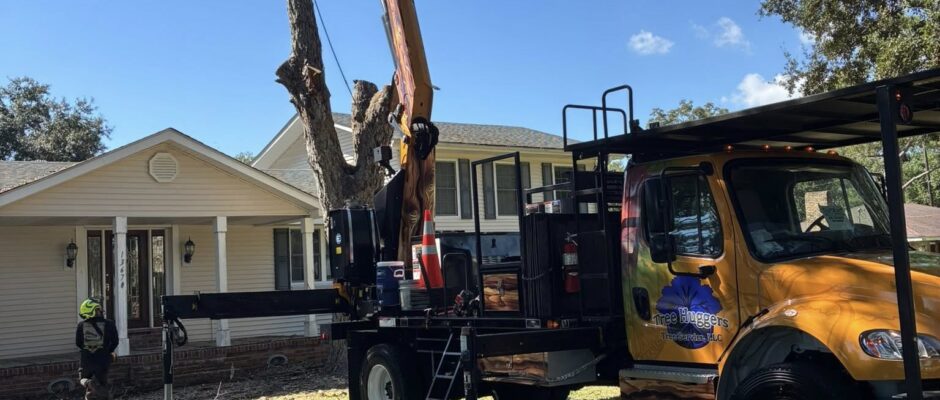
Some live oaks are no longer reasonable candidates for retention because of severe decay, major structural failure, root instability, irreversible construction conflicts or repeated storm damage. Large removals near buildings can require controlled rigging, aerial access, crane support or a combination of methods to keep sections under control.
What to expect from an estimate
Send photos showing the whole tree, base, major limbs, nearby structures and access points. For mature trees with complex defects or tight targets, an on-site inspection may be needed before a final scope is established.
Protect a live oak's root space when planning canopy work
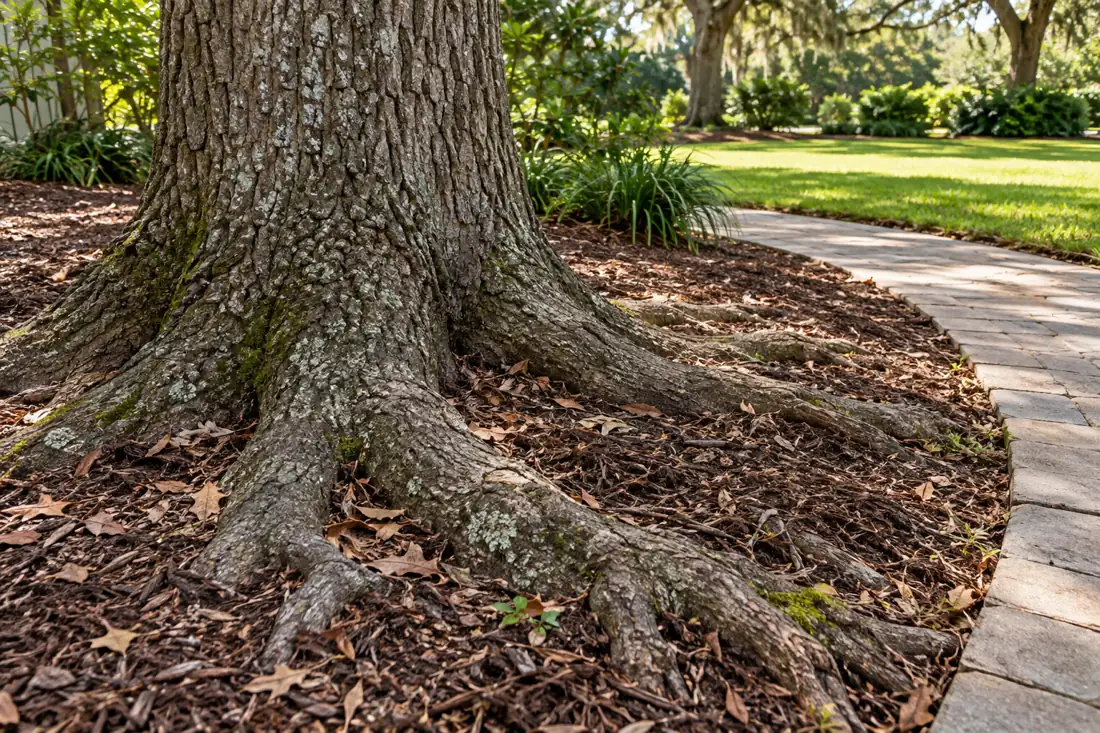
A live oak's sweeping branches often attract attention while the soil beneath the canopy receives little notice. Photograph the trunk flare, major surface roots, pavement and recent grade changes as well as overhead clearance. Soil buildup, repeated vehicle parking or trenching can affect a tree even when the branches look full. Protecting the rooting area may deserve more urgency than removing healthy lower limbs for appearance.
Protect mature live-oak roots during nearby construction
Large live oaks often extend lateral roots well beyond the trunk. For a planned driveway, patio, trench or grading change, map the intended excavation and equipment path before authorizing root cutting. A visible surface root affecting paving and an anchoring root near a proposed trench are not automatically the same problem. Cutting substantial roots without assessment can alter stability while leaving the original pavement issue unresolved.
Pruning should answer a particular concern: a broken limb, a documented weak union, rubbing against a roof or necessary access clearance. Request limits on living-branch removal and describe the occupied spaces and other trees below the crown. Broad stripping for appearance is not equivalent to selective structural pruning.
Describe the actual conflict rather than requesting an arbitrary percentage of canopy removal. A low branch above a walkway, a rub point near a roof and a limb crossing a street each have different clearance needs. Discuss targeted cuts and structural implications with a qualified professional, especially on mature trees where large cuts cannot be reversed. Historic or protected-tree rules may also govern work in certain locations.
Where a walkway or driveway competes with roots, involve the appropriate design or construction professional before specifying excavation. Ask whether a less disruptive surface detail or route could meet the practical need. Preserve repeatable photographs and maintenance notes so future pruning requests can build on the tree's history rather than start a new round of unnecessary cutting.

Read the shape of a live oak before recommending a cut
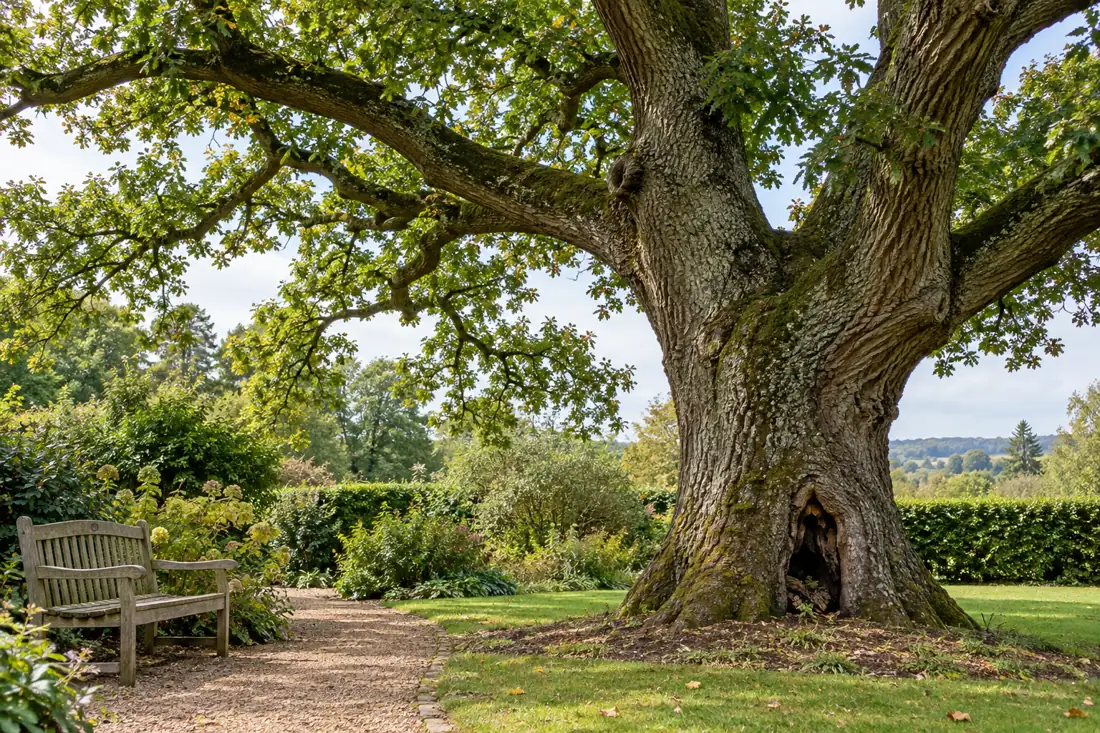
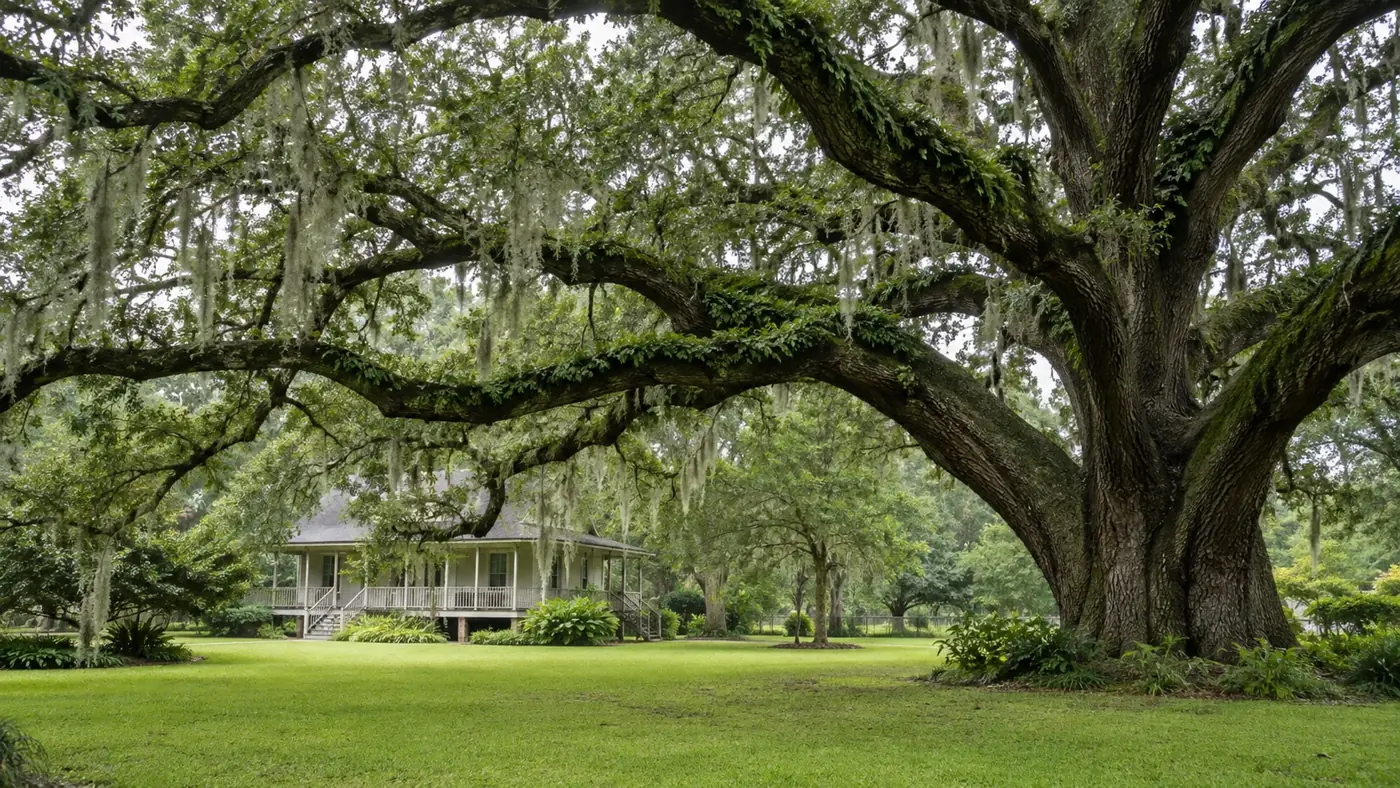
A mature Southern live oak is not simply a round green canopy that needs to be kept small. Long, spreading lateral limbs and a low, wide architecture are characteristic features, especially on old trees in New Orleans neighborhoods. The first useful assessment is to stand where the complete tree can be seen and identify how its main branches are supported, where they divide, and what lies below them.
A low branch arching across an open lawn is a different situation from the same-size branch directly over a bedroom or heavily used sidewalk.
Do not judge condition by the quantity of Spanish moss or the number of leaves on the ground alone. Live oaks routinely exchange older foliage around spring, and some seasonal shedding is normal. Instead, compare crown density, leaf color, recent dieback, wounds, branch attachments and changes from photographs taken in previous years.
A tree that looks asymmetric because of historic competition may be stable; a newly displaced limb or fresh split requires a different response. Write down observations before calling for pruning so the estimate addresses an actual need.
Protect the spread of the root system
Live oak roots can extend well beyond the outline of the canopy, which makes underground changes easy to overlook. New sewer work, a driveway expansion, grade changes, repeated parking and a trench for utilities can injure roots even when the tree still has a vigorous crown. Before digging near a mature oak, mark the proposed route and have the impact reviewed. In older neighborhoods with narrow lots, shifting the trench or using a less intrusive installation method may protect substantial roots without stopping the project.
Keep construction materials, fill soil and compacting equipment away from the root area when practical. Do not bury the trunk flare under a new raised bed or pile mulch directly against bark. A broad layer of organic mulch over appropriate portions of the root zone can limit mower injuries and reduce competition from turf, but the trunk should remain visible and dry at its base.
If soil has been excavated or roots were cut recently, mention those facts in the tree assessment; they may be more important than a cosmetic pruning request.

Develop good structure early instead of correcting it late
The most economical long-term live oak care often begins with a young tree. Look for a main leader, appropriately spaced structural limbs and branch unions without major defects. Training pruning when branches are still comparatively small can avoid the difficult decision of removing an enormous limb decades later. A newly planted live oak also needs establishment watering, adequate space and periodic observation, not an annual instruction to shave the crown into a ball. The desired result is a durable tree with a natural architecture.
As the tree matures, the pruning strategy changes. Broad lateral branches may already be an important part of its shape and structural balance; cutting them back indiscriminately creates large wounds and can invite vigorous replacement shoots. Discuss whether the goal is pedestrian clearance, reduction of a particular branch end, removal of dead wood or treatment of a weak union.
A professional should explain the exact cuts and what remains. The LSU AgCenter emphasizes a prominent leader for younger live oaks and cautious canopy management for established trees.
Address roof and street clearance with precision
Branches near the roof deserve attention, but proximity alone does not establish that an entire limb should go. Identify where contact occurs, what movement is likely, whether there is an existing wear mark, and whether a limited reduction cut can provide a practical gap. A contractor should consider how the branch moves in wind, how much living foliage the proposed cuts remove, and whether the work leaves a safe structure. Never ask a crew to make an unsupported flush cut solely to maximize daylight.
Clearance for sidewalks, school routes, delivery trucks and city streets has different needs from clearance for shingles or gutters. Establish the permitted and practical clearance envelope before selecting cuts. In a historic neighborhood, a large spreading oak may cross property boundaries and public rights-of-way; coordinate permissions before equipment or limbs cross those boundaries.
If a branch is near an electrical conductor, involve the utility rather than attempting a private cut in the energized space. Tree clearance is a safety and logistics issue, not just a visual preference.
Care for wide-spreading live oak branches without guesswork
A mature live oak may spread farther across a yard than its trunk height suggests. Before discussing clearance, determine whether a limb is healthy, declining, damaged, or merely close to a structure. Branch size and attachment matter because a substantial cut can change load distribution and create a large wound. The objective is to solve a specific conflict while preserving a reasonable crown.
Live oak roots and soil conditions deserve equal attention. Repeated vehicle traffic, trenching, new paving, and grade changes can affect the root zone even when no branches are removed. Before installing a patio or replacing a driveway, ask how excavation and compaction will be limited. Cutting major roots solely to flatten a hardscape surface can create structural concerns.

Respect the crown and the root environment together
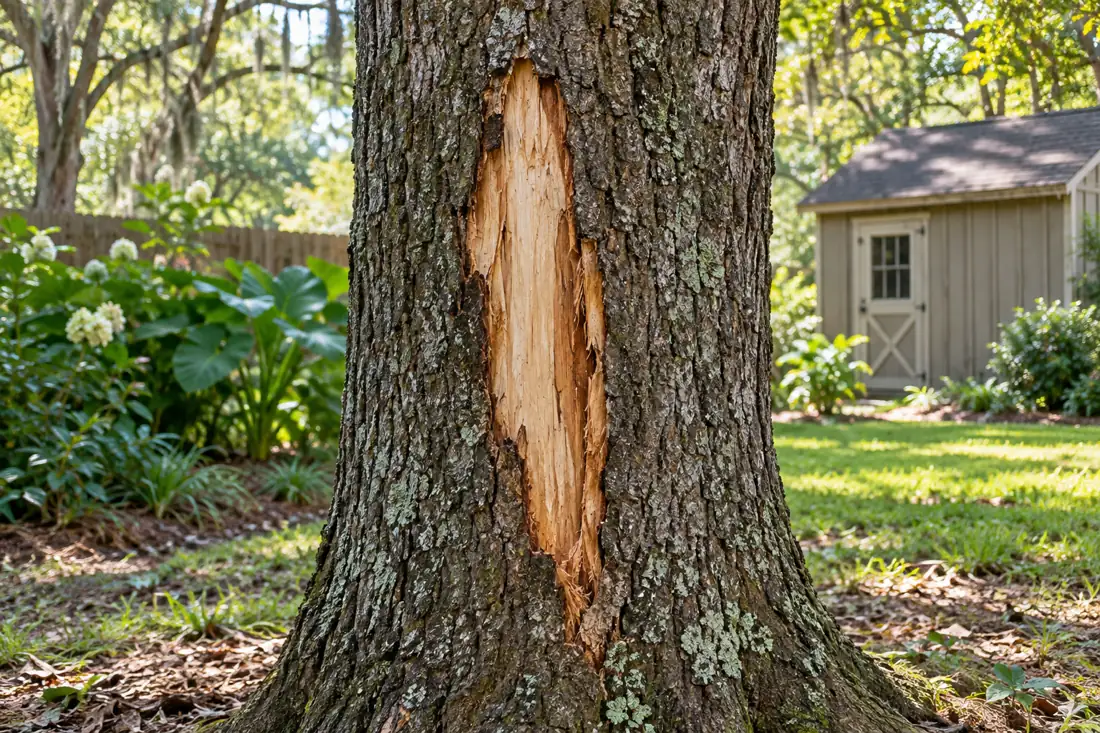
Early symptoms such as sparse foliage or localized deadwood should be evaluated in context. Nearby drainage changes, buried fill, old injuries, and disease can produce overlapping signs. Avoid confusing an old scar with proof of current decay or assuming every surface root indicates a failing tree. Photographs from multiple seasons help distinguish sudden change from normal variation.
When seeking a live oak estimate, provide photos of the full canopy and the particular limb, building, fence, or paved feature involved. Clarify whether the objective is clearance, deadwood management, construction coordination, or a professional assessment. Ask how the proposed work will preserve appropriate branch structure and how site protection is handled.
Inspect branch unions, old wounds and supported limbs
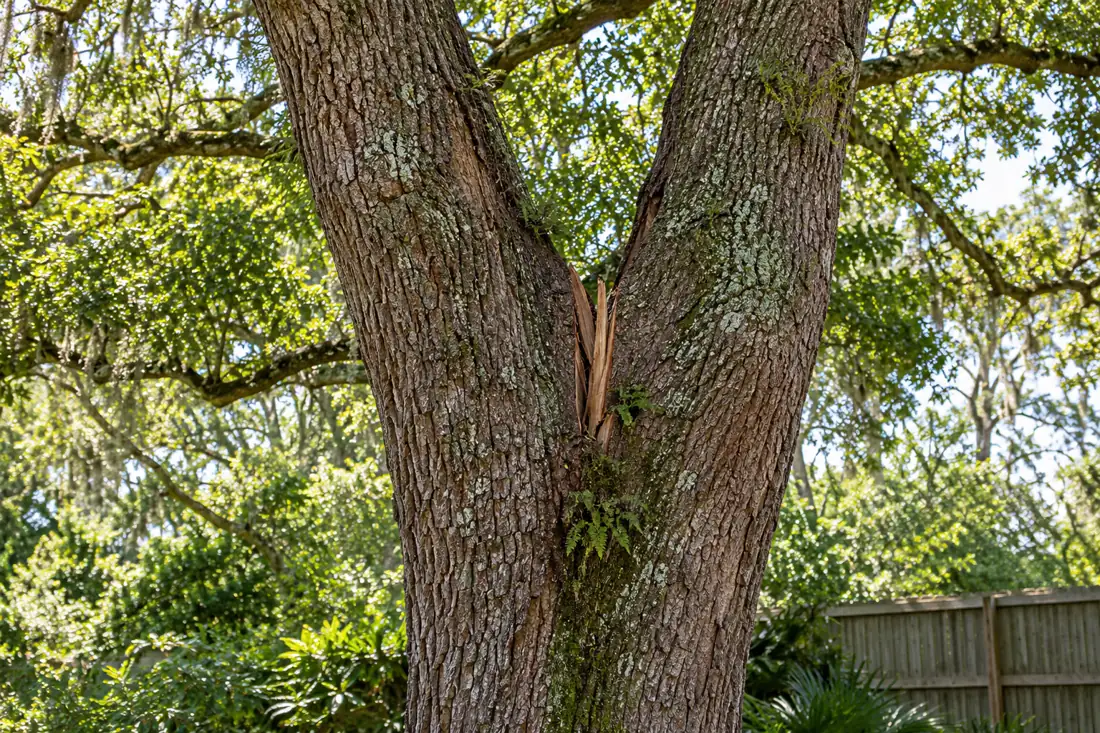
A heavy limb deserves closer evaluation when it has included bark, a visible split, a large cavity, dead sections or a history of crack growth. A broad branch can have an old scar without being an immediate hazard, and a leafy branch can have a serious structural defect. The deciding question is how the remaining wood, attachment and load relate to the nearby targets. Photographs from different angles help document an issue, but a qualified arborist may need an on-site inspection or advanced assessment.
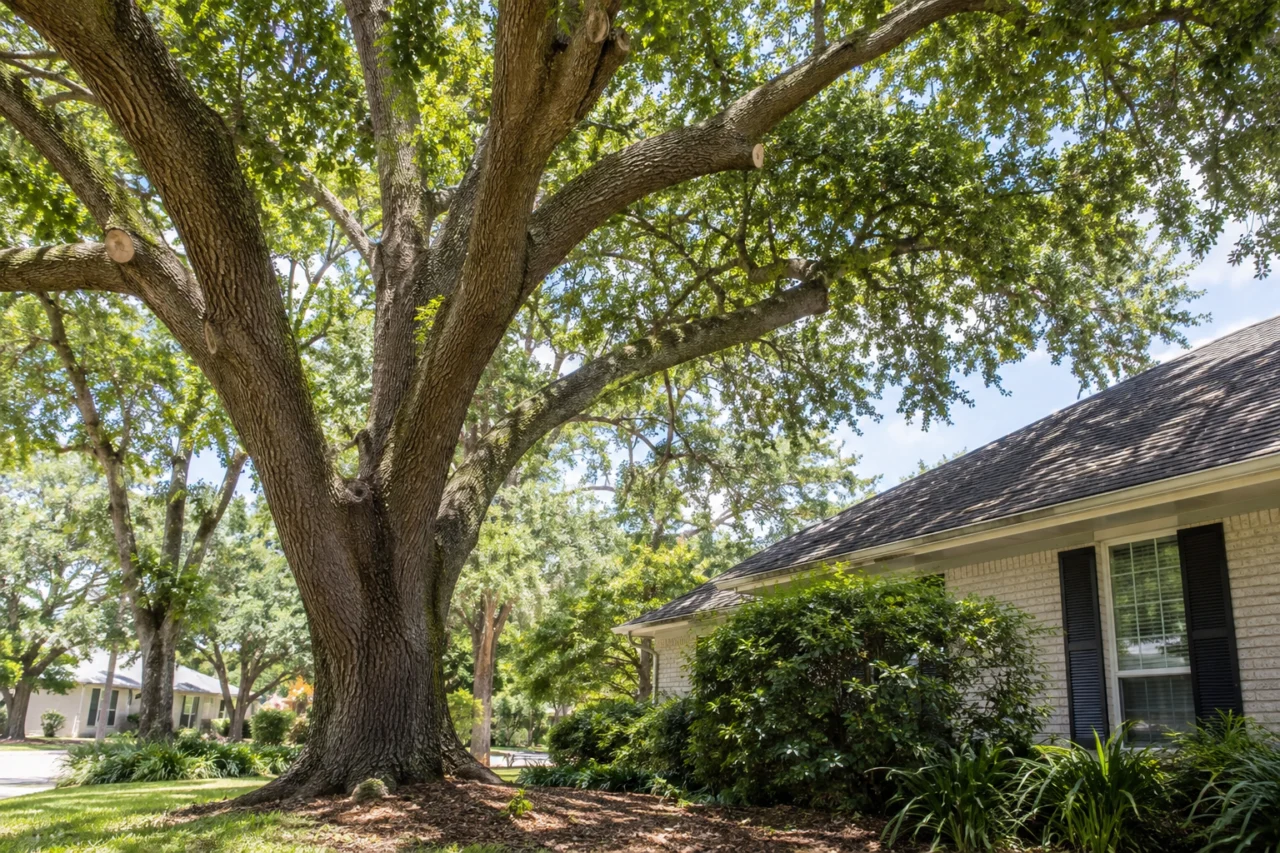
Some iconic live oaks have limbs resting on the ground or supported by properly engineered structures. These arrangements should not be altered casually. Posts, braces, cabling and other support systems need a defined purpose, design, inspection history and maintenance plan; improvised props can shift loads or damage bark.
If existing hardware is present, tell the inspecting professional when it was installed and whether it has been checked. Do not pull at a sagging limb, climb a support, or assume a cable makes every part of the canopy safe.
Plan carefully for hurricane exposure
Live oaks often perform comparatively well in Gulf South wind studies, but this does not make any individual specimen hurricane-proof. Root injury, hollowed stems, poor attachments, heavy overextended limbs, surrounding building changes and wet soil still matter. A maintenance plan should distinguish preventable defects from risks that no pruning practice can eliminate. Excessive crown thinning or topping may undermine health and structure while giving a false sense of preparation. The right intervention may be limited pruning, deeper assessment, monitoring or no cutting at all.
Evaluate targets before the busiest part of storm season. A mature oak over the only driveway may deserve faster attention than a similar tree whose branches reach into unused open space. Agree on the exact branch or condition and the safe access method; limb size and nearby structures may require rigging or a crane rather than ground-level cutting.
Once winds rise, postpone nonemergency work and follow public safety instructions. If any limb contacts a line or hangs after a storm, keep people clear and call the appropriate trained responder.
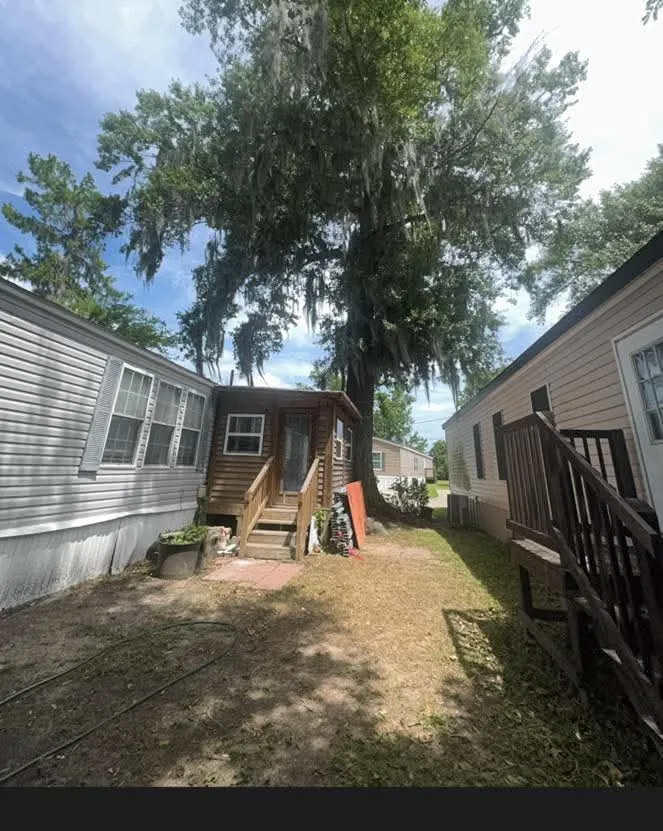
Preserve the tree during home improvements
Foundation work, drainage regrading, paver installation and major landscaping create hidden live oak challenges. Roots do not observe property lines or proposed patio edges, and trees respond slowly to some injuries. Ask the contractor to identify a tree-protection zone before machines arrive. Where appropriate, choose permeable surfaces, bridge over roots, adjust the footprint or explore utility routing that avoids cutting major woody roots. Do not assume a tree will recover simply because the branches remain green immediately after construction.
Pruning to move a crane or delivery truck through a branch corridor also deserves a planned scope. Temporary access needs should be compared with permanent tree damage, especially when the opening would require removing a principal limb. Keep dated photos of grade, trunk flare and visible roots before construction. Following the work, watch for delayed canopy thinning, unusual sprouts, changes in vigor and progressive dieback; these observations may take seasons to appear. Involve a qualified specialist early rather than after expensive site work is completed.
Distinguish routine aging from a true emergency
Every large live oak contains dead twigs, leaves and small branch losses at times. Routine cleanup and scheduled maintenance are not the same as an unstable trunk, sudden ground movement or a newly suspended major limb. If a branch has split or soil is lifting around the root plate, move people away from the potential fall zone before attempting photographs.
If a tree has fallen onto a building, keep out of affected areas until the structure and utilities are assessed. No landscaping appointment is worth entering an unsafe collapse area.
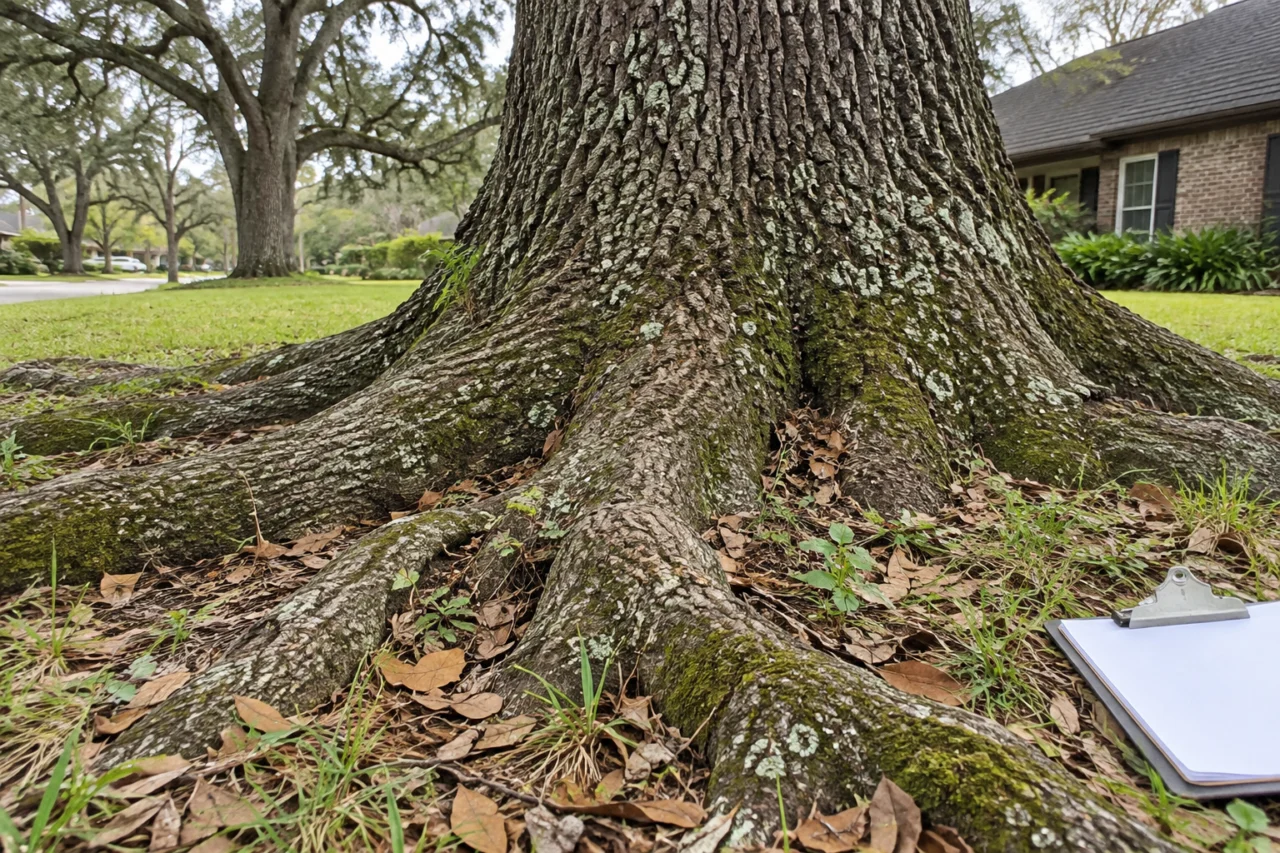
An ordinary estimate can be supported by photographs of crown shape, old wounds and access, but those pictures cannot guarantee a diagnosis. Ask a professional to describe observed defects, the consequence of possible failure, reasonable alternatives and what can be monitored. When a significant concern is confirmed, the options may include selective pruning, a properly designed support system or removal. An attractive historic tree has great value, but that value should be discussed alongside demonstrable structural condition and exposure.
Request an estimate that protects both tree and property
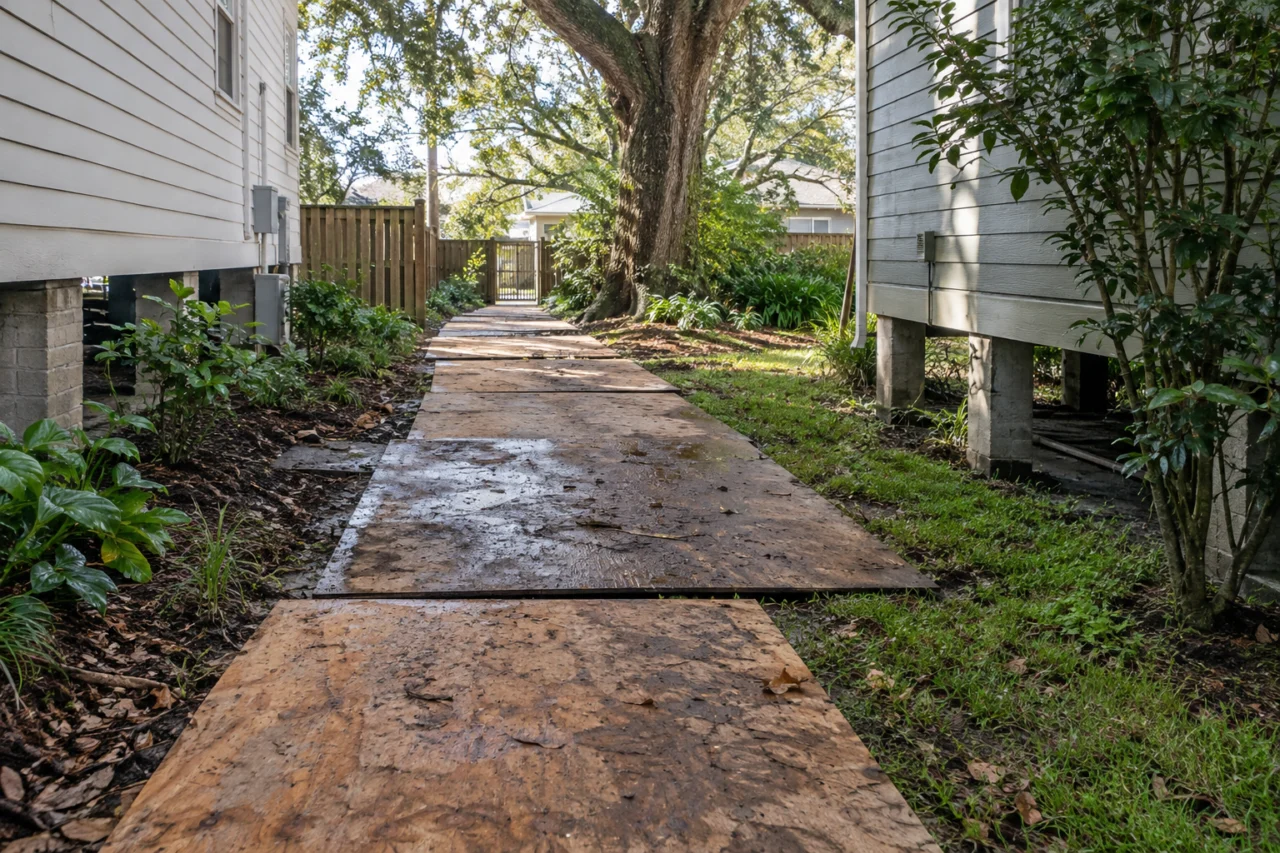
A good live oak quote names the specific tree and work objective. It should identify whether the work is deadwood removal, clearance, an assessment recommendation or removal, and how branches will be lowered near roofs, fences and plantings. Confirm whether the price covers debris hauling, large wood, site cleanup and any stump work; these items are not interchangeable. Ask what access the equipment requires, whether mats or lawn protection are planned and whether the work crosses a neighbor or public boundary.
Choose qualified, appropriately licensed and insured professionals for significant Louisiana tree work, and request a written scope before agreeing. Tree Huggers can discuss access and the services it offers, while specialized tree-risk diagnoses may warrant an ISA-qualified arborist. Retain dated photos, findings and an invoice after completion. For additional educational guidance, see LSU AgCenter guidance on live oak canopy management and the pre-hurricane tree inspection guide. Neither source replaces an evaluation of the actual tree.
Questions about Live Oak Tree Care in New Orleans
Are live oaks safer than water oaks in hurricanes?
LSU extension guidance generally rates live oak more wind-resistant, but actual defects, roots and exposure determine a particular tree’s risk.
Should a mature live oak be topped to keep it short?
No. Topping produces large wounds and can encourage poorly attached regrowth. Plan appropriate, limited structural pruning instead.
Can I cut a large live oak root near my driveway?
Do not cut substantial roots without qualified assessment. Root loss can reduce anchorage and health long before the crown shows symptoms.
Is Spanish moss proof that my live oak is dying?
No. Moss alone does not diagnose decline. Look at crown vigor, branch defects and other changes, and seek professional evaluation where needed.
Why is my live oak dropping leaves in spring?
Live oaks commonly shed older foliage as new growth emerges. Unusual dieback or sudden thinning should still be investigated.
How close can a live oak branch grow to my roof?
There is no one universal clearance distance. Inspect actual contact, movement, roof wear and whether targeted pruning can establish suitable separation.
Should a low sweeping limb be removed?
Not automatically. It may be part of the tree’s natural form. Consider target use, structural soundness and any real access conflict.
Can a live oak be supported with a cable?
Some trees may be candidates for engineered support, but the system needs qualified design, ongoing inspection and a defined structural objective.
Does a cavity always require removing the oak?
No. A professional evaluates remaining wood, attachments, roots and targets. The size of the opening alone is not a complete risk assessment.
Should I prune my live oak during drought?
Avoid unnecessary live-wood pruning during significant stress. Address genuine safety hazards through appropriately qualified professionals.
What photos should I send for a live oak estimate?
Send a whole-tree view, trunk base, concerning limb attachment, nearby roof or target and the likely crew access route, taken from safe ground.
Who should assess an old heritage live oak?
An ISA-qualified arborist or suitably qualified local tree-risk professional can evaluate condition and alternatives before significant work.
Get a scope for your property
A live oak inquiry should identify which long limb, clearance conflict, or root-zone activity has prompted concern. Add the proposed paving or construction footprint if relevant. Ask for a scope that addresses the specific exposure while limiting needless branch and root disturbance; large living trees deserve more than a generic cut list.