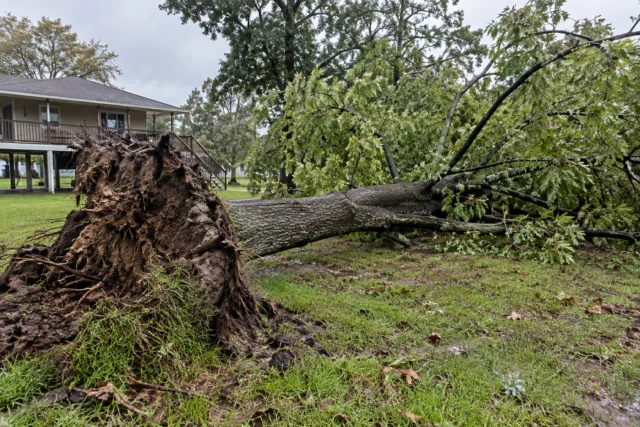
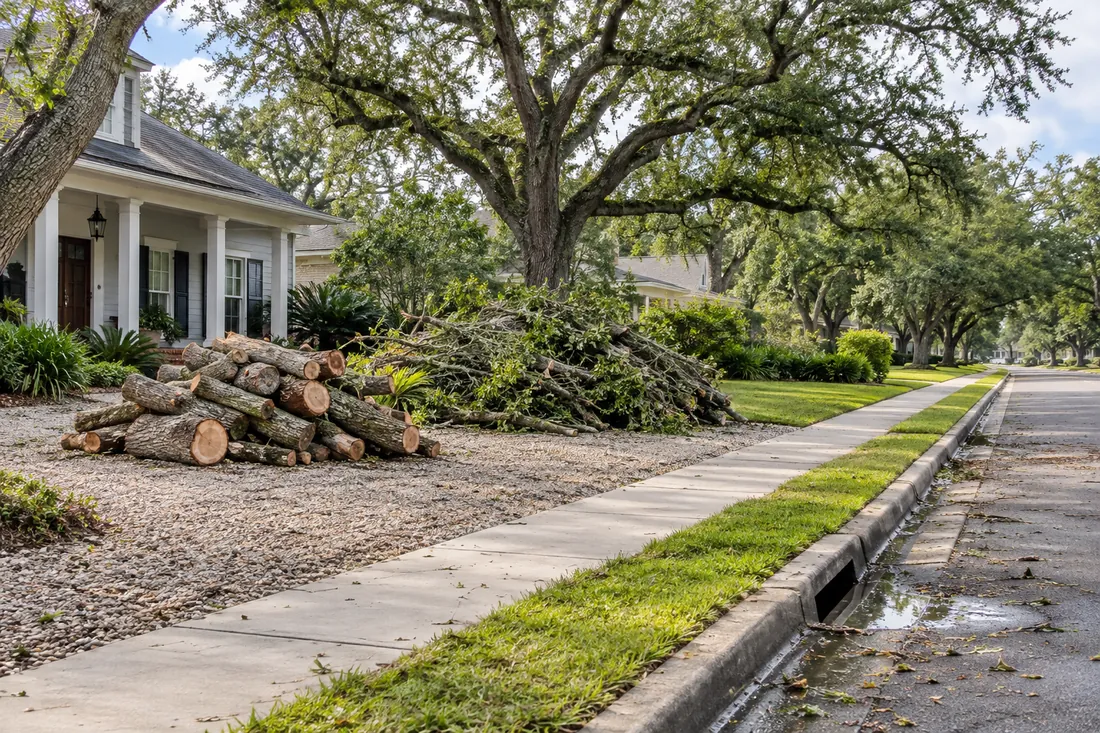
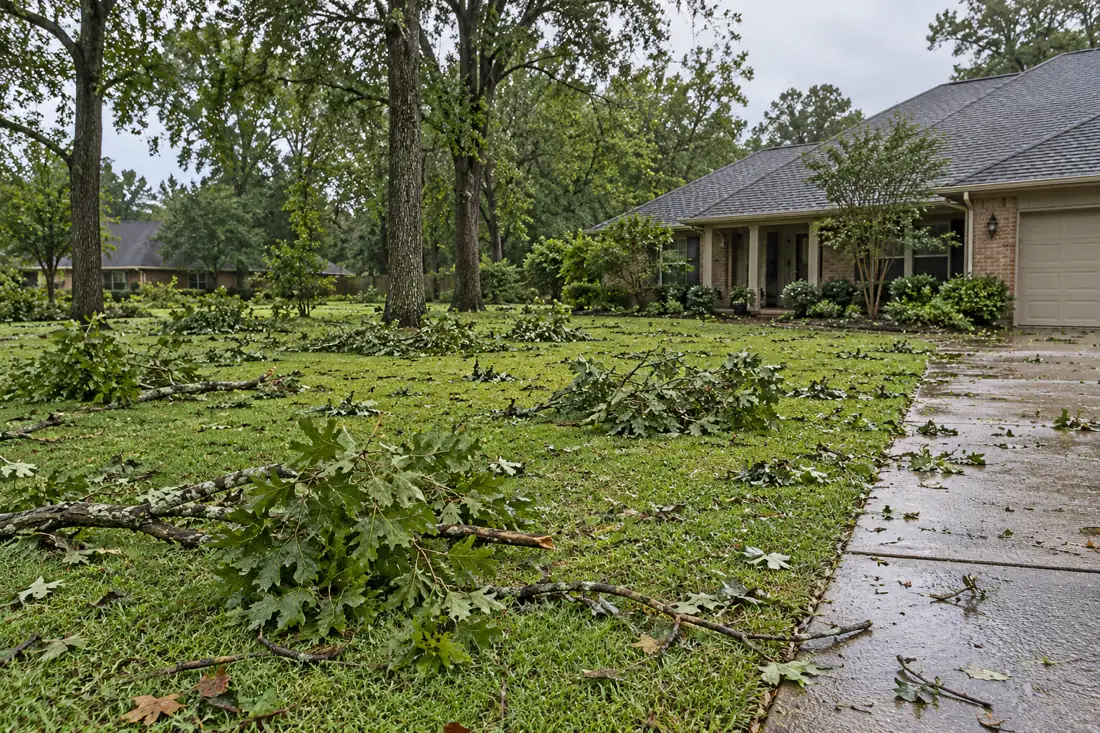
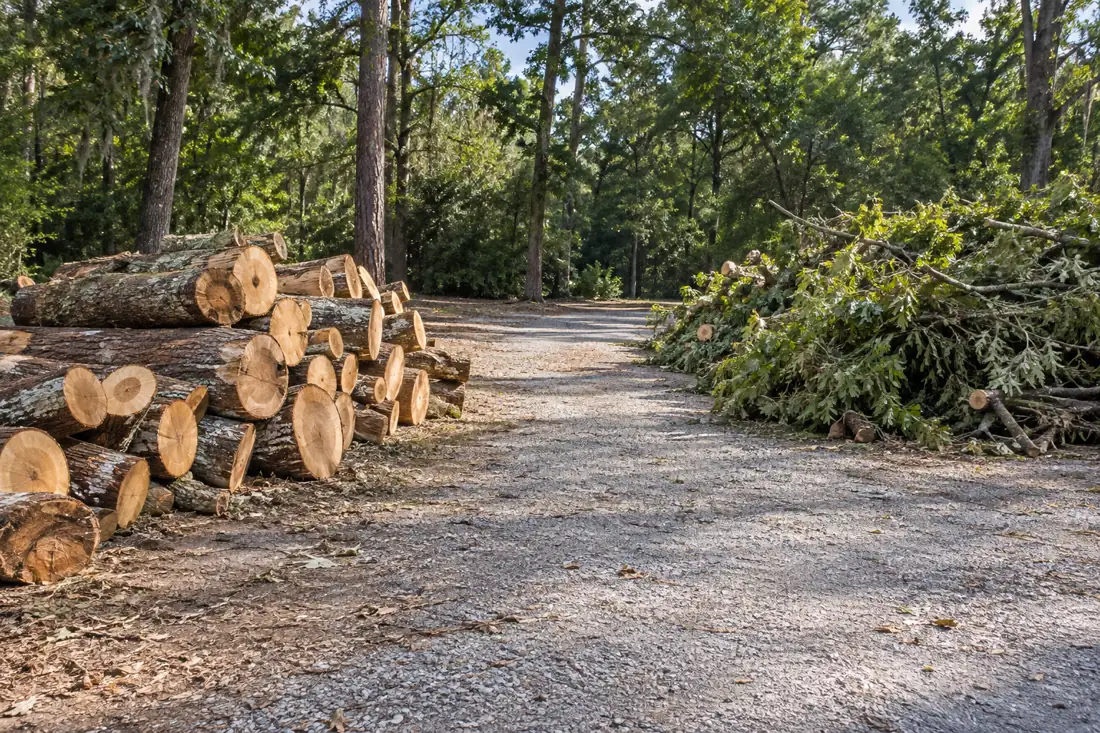
Previously cut material still needs an assessment for access, loading and any remaining standing hazards. Show the pile and its contents clearly. Do not assume a hauling quote includes further cutting of unsafe trees or removal of mixed construction waste. Identify whether the wood can be reached by equipment and what cleanup is expected.
Site planning detail: Before requesting hauling after homeowner cutting, separate branches and logs already lying safely on the ground from anything still caught overhead or supported by a damaged tree. A debris crew should not be sent under an unstable limb on the assumption that loading includes hazardous cutting. Photograph the pile, the narrowest access point and the route to the truck without moving heavy pieces. Describe mixed lumber, nails, fencing or other nonvegetative waste separately.
Confirm whether large logs will be cut down for loading, and whether raking, sawdust cleanup and lawn protection are within the quoted scope. Agree on a clear end condition: what remains, what is hauled, and whether restoring disturbed soil is a separate service.
Before hauling after DIY cutting, distinguish wood lying safely on the ground from hanging limbs, unstable trunks or partially supported pieces. A hauling crew should not be directed to pull wood from beneath a hazardous tree without a separate tree-work assessment. Photograph the pile from a safe position and describe log diameters, branch lengths, approximate volume and truck access.
Identify fencing, metal, treated lumber or construction debris rather than assuming everything qualifies as green waste. Ask whether loading, cutting large sections, sweeping, disposal and lawn protection are included. Keep the scope to agreed debris; do not let an uncertain cutting project become unplanned hazardous removal.
Make a safe inventory of what has already been cut
A homeowner may have a stack of branches after routine pruning, a fallen limb broken down on the ground, or sections of trunk left from a do-it-yourself project. These piles are not interchangeable. Before requesting hauling, describe the material types, approximate pile dimensions, whether pieces are tangled, and where the material is located.
Take photos from a stable position without climbing on the pile or moving heavy logs to make the image look smaller. A clear inventory prevents a hauling estimate from overlooking the bulkier components.
Do not continue cutting unstable material simply to prepare for collection. Trees or limbs under tension can shift when cut, and partly attached or suspended pieces warrant professional assessment rather than a routine debris pickup. Tell the service provider if any branches remain hung overhead or supported by another tree. The hauling crew needs to know whether the request involves loose ground material only or unresolved hazards requiring a different kind of tree-work operation.

Separate woody vegetation from unrelated waste
Tree debris hauling generally means branches, brush, logs, and similar vegetative material, but a DIY cleanup pile can accumulate plastic bags, nails, fencing, soil, pots, and household trash. Identify these separately before quoting. The contractor's disposal options may depend on whether the load contains clean wood or mixed waste, and some materials require special handling. Do not hide paint cans, fuel containers, or treated construction timber in the middle of a branch pile.
If the pile includes storm-damaged fencing or lumber, ask whether those items are accepted and how they will be priced or excluded. The same applies to root balls carrying substantial soil and stone. Photograph questionable items next to the vegetative material so the estimator understands the boundary. A well-defined load protects disposal workers and avoids last-minute disputes when a truck arrives expecting only clean tree debris.
Describe what has already been cut and what remains
A debris pickup after do-it-yourself tree cutting is not the same as a tree removal contract. Take safe photographs of the material from outside unstable piles and list heavy logs, limbs, leaves and any non-vegetative waste separately. Note whether any attached, hanging or tensioned wood remains; that may require professional tree work before hauling can begin.
Provide the narrowest access dimensions and whether hand-carry or machinery would be needed, without attempting to lift or roll heavy logs for a photograph. Confirm who is responsible for sorting, loading, disposal and cleanup of small material. This avoids a quote based solely on a pile photo that conceals access, weight and hazard differences.
Estimate volume without guessing the number of truckloads
A loose pile with long branch tips can occupy considerable space but compress differently from dense trunk rounds. Photo scale helps: show a wide view with fixed reference objects and a separate view of the thickest pieces. Measure the approximate length, width, and height of the pile if safe to do so. Avoid promising a particular truckload count from those dimensions alone. Actual loading capacity depends on density, shape, handling method, vehicle limits, and disposal rules.
If material is spread throughout the yard, count the separate collection points instead of describing everything as one pile. Hauling from a curb differs from retrieving branches behind a home, particularly across steps or soft turf. Ask for a quote that specifies the pickup areas and any machine loading needed. An estimate based on a conveniently photographed front pile can be misleading if other logs remain in the backyard.

Define a safe hauling scope after do-it-yourself tree cutting
Start by separating what has actually been cut from what may still need skilled tree work. A branch pile on the ground can be a straightforward hauling question, while a hanging limb, partially attached trunk or tree under tension is not simply debris. Do not enter beneath suspended wood or finish a risky cut solely to make the pile easier to collect. Photograph the pile from two angles with an object for scale, and show the path from the material to the driveway or loading location. List whether the debris consists of small brush, heavy rounds, long limbs or mixed landscape waste.
Identify hidden materials before asking anyone to load the pile. Wire, nails, fencing, rope, soil, rocks, lumber and household rubbish should not be represented as clean tree debris. If a branch extends into a public sidewalk or traffic lane, flag the obstruction without promising that the contractor may lawfully close the lane.
Ask whether limbs must be cut to manageable lengths before pickup and who performs that work. A stack of short branches, a tangled brush heap and a pile of heavy trunk sections can involve very different equipment and loading times.
Clarify the destination and loading agreement in writing. The estimate should state whether brush and logs are included, whether chips are retained, and whether the crew loads from the ground or a preapproved staging area. Do not assume municipal curbside pickup rules apply to privately generated debris, and verify local collection requirements separately.
Discuss access to gates, fragile driveways, overhead wires and parked vehicles before the day of service. A photo with a measuring tape near the largest log makes a remote estimate more useful than an unsupported guess about pile volume.
At completion, check the original pile location, the haul route and the curb for sharp cut ends, loose branches, wire or escaped fragments. A clean pickup area does not always mean that buried roots, sawdust or every small leaf was included. Distinguish ordinary small residue from items expressly promised for removal.
If a heavy log or contaminated material is excluded, document it before the truck departs and arrange an appropriate next step. This prevents a debris-only inquiry from being treated as a full tree-removal or land-restoration contract.


Flag heavy logs and awkward pieces individually
Trunk rounds and large limb sections may be too heavy or bulky for safe manual carrying. Identify their approximate lengths and diameters, whether they sit in a hole or against a fence, and whether the wood shows signs of decay. Wet wood and soil-covered pieces can be heavier than expected. Do not ask household helpers to roll rounds down a slope or across a driveway merely to simplify a collection request. The hauling provider should determine suitable lifting and transport methods.
Some pieces may require additional cutting, mechanical handling, or a separate tree-service operation. If a log is pinned beneath another object or remains connected to a damaged standing tree, disclose that circumstance. An ordinary hauling quote should not be treated as approval to perform hazardous cutting or rigging. Clear documentation distinguishes removable ground debris from material that requires specialized assessment before it can be loaded.
Define debris from do-it-yourself cutting without overstating the load
A pile of owner-cut branches may contain mixed sizes, wire, fencing, soil, vines or household waste. These conditions affect safe loading and disposal. Photograph the entire pile from a clear position and add a second image for the largest trunk segment. Estimate the pile footprint rather than claiming an exact truckload; wet brush and compacted logs can occupy different space and weight than loose leafy branches.
Confirm whether the requested job is hauling from the curb, carrying material out of the backyard, or cutting oversized pieces before loading. Ask whether logs must be moved across grass, a gate or a shared driveway, and whether municipal collection rules matter for materials set near the street. Keep children and pets away from unstable stacked wood. A debris estimate should identify what is accepted and what requires separate handling; the cleanup crew is not automatically evaluating overhead trees for hazards.
Describe vehicle access from street to pile
The distance between the debris and a legal loading position often matters as much as volume. Map the gate width, drive surface, stairs, slopes, overhead branches, and narrow turns along the proposed route. A truck may need to remain at the street while material is carried out, or a smaller loader may need a clear path. Show parking restrictions, school drop-off traffic, and drainage structures that could affect a temporary loading area.
Permission to use a neighbor's driveway or shared alley should be confirmed, not assumed. If the pile is behind a locked gate, explain how access will be arranged without giving unnecessary private details in an online form. The contractor should plan for safe worker movement and keep sidewalks and emergency access routes open. These practical notes reduce delays that would not be visible from a photo of the branches alone.

Keep pathways, utilities and drainage clear
DIY cutting sometimes leaves branches over irrigation valves, storm drains, utility covers, or a narrow walking route. Tell the hauler what lies underneath or beside the pile. Moving debris can reveal concealed sharp objects or unstable ground; do not assume the crew can drag a heavy tangle over a known sprinkler line without risk. Mark drains and surface fixtures in photographs and clear an alternative walking route for household use if it can be done safely.
Vegetative material should not be pushed into a street gutter or ditch while awaiting pickup. Loose leaves and small chips can restrict runoff, especially ahead of heavy rain. Ask whether the service includes collecting scattered twigs and raking the immediate footprint of the pile. That is different from repairing turf, restoring a ditch bank, or removing buried roots. Identifying the desired finish makes the cleanup more useful.
Check local disposal and collection expectations
Some communities offer limited vegetative collection, while others have size, bundling, placement, timing, or contractor-debris restrictions. Rules may vary by municipality and collection program. Confirm current local guidance rather than relying on a neighbor's experience from another parish or an outdated social-media post. If a private contractor removes the pile, ask who is responsible for accepted disposal and whether mixed material changes the handling plan.
Avoid moving debris onto a public right-of-way unless the applicable rules permit it and the location does not obstruct visibility, sidewalks, drainage, or traffic. A roadside pile that seems convenient for collection can become a hazard. Keep the estimate centered on lawful collection from the agreed location. The contractor should not promise special disposal privileges or a municipal pickup date that has not been verified.

Choose what should remain for beneficial reuse
Some homeowners want branch chips for paths or a few clean logs for firewood, while others need the entire pile removed. Decide before loading. Separate desired material into an identified area that is accessible without crossing the active hauling route. Wood retained for burning should be handled and seasoned appropriately, and diseased or treated material may not be suitable for every reuse. The hauling crew should not have to decide which pieces matter to the owner during loading.
If the material will be chipped, confirm whether a chipper is part of the quote, whether suitable branch dimensions can be processed, and where chips will be deposited. Chipping and hauling whole brush are different operations. Keep chips away from drains and living trunk flares. If the goal is a clean yard for mowing, ask specifically about leftover chips, bark fragments, and the final condition around the original cutting area.
Compare hauling estimates by scope rather than only price
A complete quote should identify the collection points, accepted material, treatment of heavy rounds, loading method, expected finish, and what is excluded. It should state whether additional cutting or machine work is anticipated and how unforeseen debris beneath the pile would be handled. When comparing providers, ask both to estimate the same material and cleanup boundary. A low figure that assumes curbside pickup is not equivalent to a quote for retrieving logs behind a fence.
Request clear communication about schedule changes without inventing a guaranteed arrival window. If neighbors or a property manager need advance notice of truck access, record that as a logistical requirement. An estimate with transparent assumptions makes it easier to decide whether to consolidate piles, retain usable wood, or authorize full haul-off. Price discussions become more meaningful once the actual labor and disposal scope is defined.

Walk the cleared area and close out hazards
After loading, inspect the footprint from firm ground for leftover sharp wood, exposed holes, and damage that may have been hidden beneath the debris. Do not touch suspected utility lines or enter an unstable area. If a fallen tree left a root plate or suspended branch, that hazard requires its own evaluation; removing loose brush does not make a compromised tree safe. Compare the finished scene with the agreed collection locations rather than expecting unrelated landscape restoration.
Keep the before-and-after photos and a copy of the scope. They help document which piles were removed and whether the owner retained logs or chips intentionally. If sod repair, stump grinding, or drainage cleanup is still needed, note those as separate next steps. A satisfactory DIY debris haul ends with the specified loose material removed, safe access restored, and clear documentation of anything deliberately outside the haul.
Questions about this project
Does vegetative-debris hauling include building waste?
Do not assume it does. Describe mixed roofing, fencing, soil or other material before pricing. Ask what is accepted in the scope and what needs a separate provider or handling arrangement.
Why does access affect a debris-removal price?
The route, loading position, carrying distance and obstacles affect how material can be handled. Send photos of both the pile and the access, and identify any remaining tree or utility hazards.
Does cleanup include every root and wood chip?
That depends on the written scope. Tree removal, stump grinding, chip hauling and root excavation are different tasks. Ask what material is removed, what remains and whether soil or landscape restoration is separately included.
What should a final walk-through check?
Compare the identified trees and tasks with the agreement. Check agreed debris handling, stump treatment, access openings and any listed restoration. Record unresolved items clearly instead of relying on a general impression that the property looks finished.
What access information helps an estimator?
Send the narrowest opening, overhead obstacles, turns and the distance between the tree and the loading area. Include photos of the entire route and identify steps, soft ground or features that must remain protected.
Should I remove a fence before the visit?
First ask the contractor to assess access and agree on any temporary opening. Identify who owns the fence, who can authorize the change and who will reinstall it. Do not assume the opening is necessary or included.
Which photos should I text first?
Send a wide tree view, the base if safely visible, nearby targets and the equipment route. Add the address, desired work and any recent change. Identify each tree clearly if the request involves several.
Can photos confirm that a damaged tree is stable?
No. Photographs may omit defects, support conditions and other important details. Use them to prepare for the contractor's assessment, and avoid entering hazardous areas to obtain a better view.
What should I compare besides the price?
Compare tree identification, work objectives, access assumptions, hauling, stump treatment, site finish and exclusions. Ask whether permits or other coordination are part of the scope and who can approve changes if conditions differ.
Does an online request book the crew?
No. A request starts the estimate conversation. The company still needs to discuss scope, availability and any site assessment. For a dangerous or urgent condition, call 504-458-8336 rather than relying on a form response.
What should I tell Tree Huggers about tree debris hauling after diy cutting?
Explain the property address, the work you want and the specific concerns: material contents, loading access, remaining hazards. Send safe photos of the tree, surroundings and access route. The contractor can then discuss the assessment and scope needed for this situation.
How do I request an estimate for this work?
Call 504-458-8336, text photos or use the estimate form on this page. Include the address, desired outcome and any timing constraints. The company will need to review scope and availability; an online request does not confirm a price, appointment or emergency dispatch.
Get a scope for your property
Tree debris from a homeowner's cutting project can range from a small brush pile to heavy trunk sections that cannot be handled like ordinary yard waste. Photograph the full pile with a safe size reference, show access for a truck or loading equipment, and describe whether the pieces are loose, stacked or partly trapped against a fence.
Say whether the material contains leaves, soil, nails, rope or other non-wood items. Keep people away from logs that may roll or shift, and do not move a hung or tensioned branch to make the pile appear smaller.
Request a written hauling scope that addresses log size, brush volume, loading route, surface protection and where debris will be taken. Clarify whether cutting oversized pieces, removing embedded hardware or collecting sawdust and smaller fragments is included. If there are damaged trees or suspended branches still on site, separate that hazard from the hauling request because removal of a ground pile does not resolve overhead risk.
Give realistic gate and driveway dimensions, and agree on the final condition of the collection area without assuming unrelated property cleanup is included.