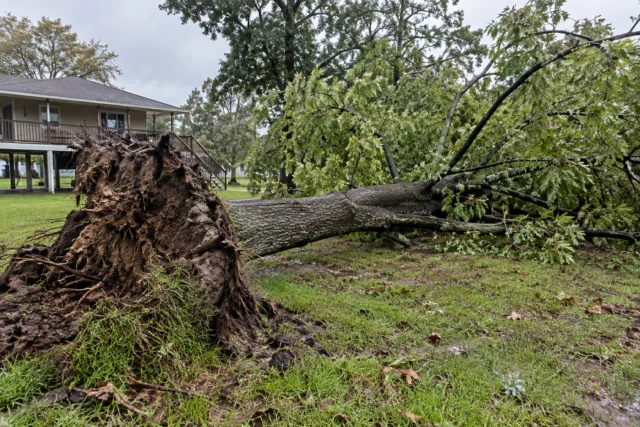
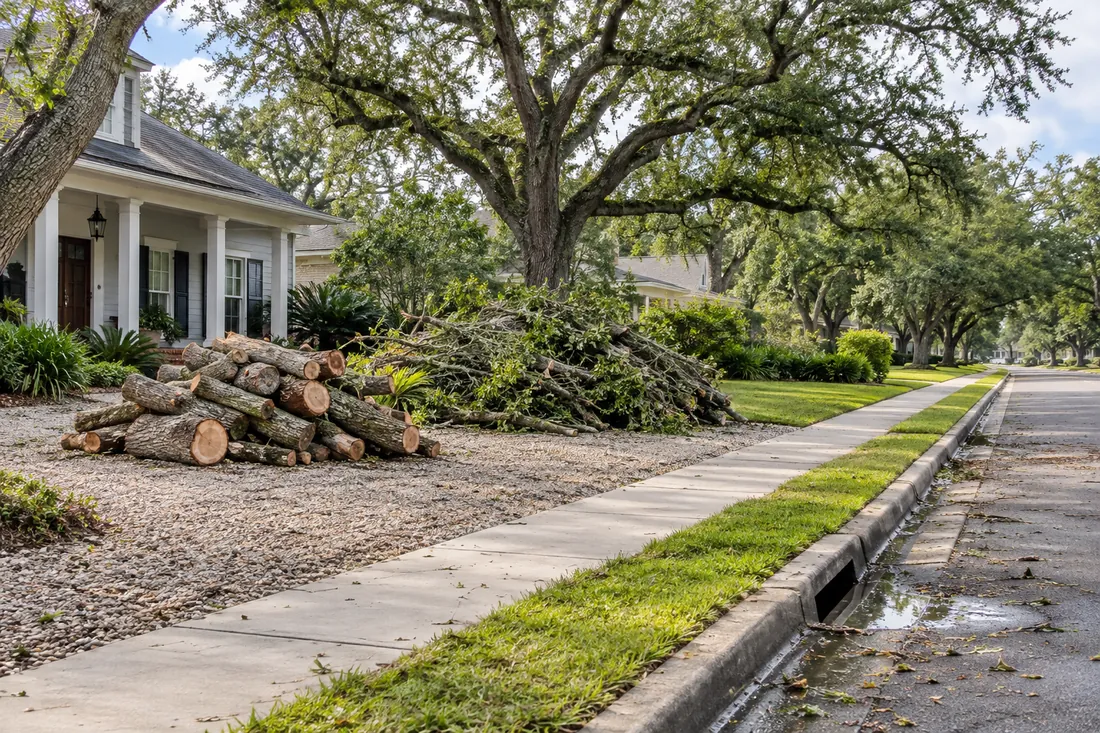
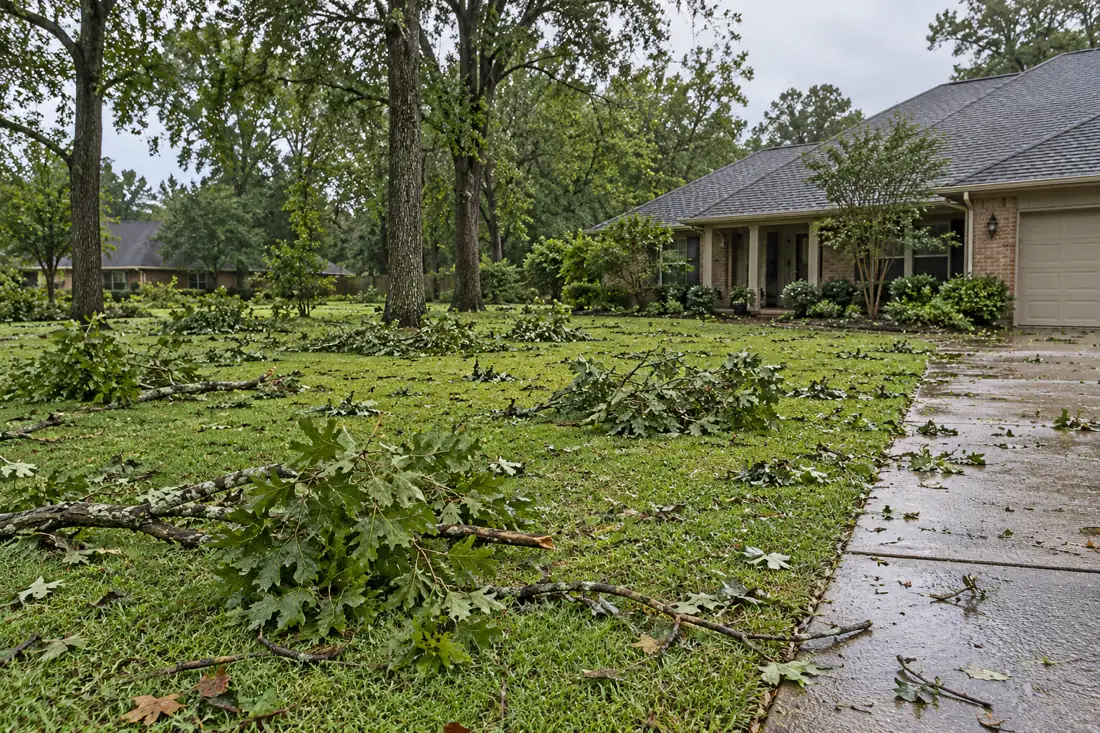
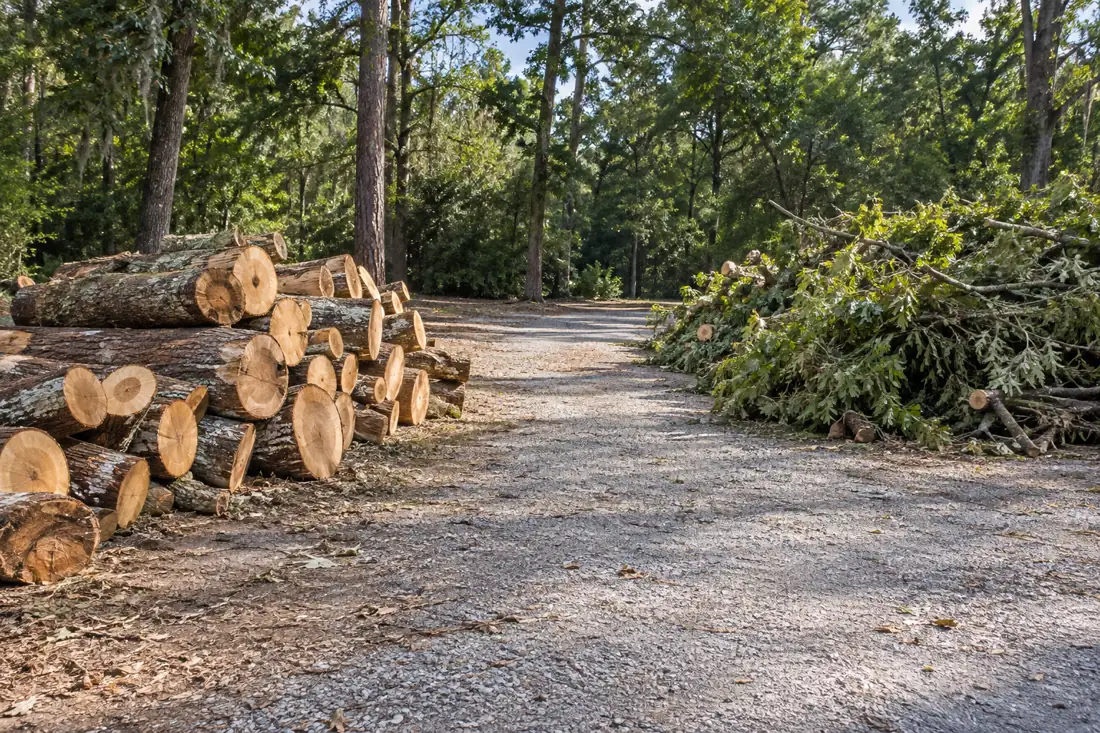
Cleanup can mean removal of major wood, removal of agreed branches and chips, or a more detailed finished surface. Ask the contractor to describe the standard in the quote. Landscaping, soil repair and stump grinding may be separate items. A final walk-through should compare the result with the agreed scope.
Site planning detail: The phrase ‘clean up the yard’ needs an agreed checklist. Identify which logs, branches, chips and sawdust are to be removed, which wood stays and where equipment can travel. Take before photos of existing ruts, cracked paving, damaged sprinkler heads and vulnerable planting beds where relevant. Ask what level of raking and hard-surface sweeping is included; a brush-free lawn is not necessarily a graded or reseeded lawn.
Soft ground may still rut despite precautions, so the contractor should explain access limitations and possible weather delays. Keep people and pets out of the work area until equipment and sharp fragments have cleared. A brief final walkthrough can distinguish an overlooked item within the contract from optional repair or landscaping work.
A tidy yard can mean different things to different people. Before tree work, identify whether the job includes hauling large logs, removing brush, collecting small twigs, raking accessible lawn areas and restoring temporary access protection. Photograph patios, garden beds, gates and outdoor furniture that require particular care. Ask how far equipment must travel and whether soft ground or rain could leave temporary impressions. Do not assume that removing a tree includes restoring turf, replacing plants, power washing concrete or repairing unrelated pre-existing defects.
The estimate should explain who handles stump grindings, sawdust, wood chips and oversized timber, if produced. Identify where the crew may stage material and which areas must be usable at the end of each work period. If a final walkthrough is possible, compare the agreed scope with the actual finish and photograph concerns before everyone leaves.
Discuss a separate written plan for any restoration that cannot occur the same day. Clear boundaries help customers evaluate completion without promising a perfectly untouched lawn after heavy equipment is needed.
Define the finished yard before cutting begins
Tree removal and trimming produce material in many sizes, from large trunk rounds to fine sawdust. A homeowner may picture a perfectly raked lawn while a contractor may mean the large wood and brush will be hauled away. Before work starts, identify which material will be removed, which will be retained, and which areas should be left undisturbed. A clearly written scope helps prevent disputes after equipment has left the property.
Walk the yard and photograph existing beds, sidewalks, fences, gutters, play spaces, and decorative surfaces. Make note of areas that are already damaged or waterlogged, because cleanup crews need to distinguish pre-existing conditions from effects of the work. Ask how branches will move from the tree to the loading point and where material can be staged without blocking your family’s entrance or an essential drainage route.

Separate cutting, hauling, grinding, and restoration
A proposal to remove a tree does not automatically include grinding the stump, removing buried roots, replacing sod, repairing irrigation, or hauling every fine wood chip. Treat these as separate scope elements and ask what is included. If you want the stump removed below a particular grade for future landscaping, describe that purpose so the contractor can assess the depth, access, and utility considerations before equipment is scheduled.
Similarly, brush pickup, log hauling, and sweeping hard surfaces may be included at one level while detailed garden-bed debris removal is another. A crew may be able to protect a planting bed without reaching every leaf inside it. Agree on practical outcomes for each area. A written list such as remove large wood, clear driveway and path, collect visible branches, and leave stump grindings in place is much less ambiguous.
Plan the route for wood and machinery
Look at the entire path between the tree and the loading vehicle. Identify gate width, step-downs, narrow side yards, air-conditioning lines, low branches, pavers, and fragile borders. Even when no large machine enters the yard, crews need room to carry and roll sections safely. For a wet backyard, repeated trips can compact soil or leave ruts, so discuss ground protection, temporary mats, or staged hand removal where appropriate.
Consider the route again from the perspective of someone carrying a heavy log. The shortest path might pass a fragile drain cover or require an unsafe turn. Mark sprinkler heads and any private buried lines you know about. Ask the crew what they need moved before arrival, but keep household members out of the operational zone. Pets, furniture, and vehicles should be relocated ahead of cutting, not during active rigging.
Agree on what a finished residential tree-work site should look like
Before work begins, identify areas that matter to the homeowner: front walk, driveway, lawn, planted beds, gutters, pool deck, neighboring side and the machine approach. Photograph fragile borders and places where debris could collect. The term cleanup means different things to different people; some expect logs and branches removed while others expect fine sawdust eliminated from every blade of grass.
Ask for the written scope to state which surfaces are raked, swept, blown or left with normal organic residue. A clear baseline is better than arguing over an undefined word afterward.
Separate vegetation handling from landscape restoration. Cutting and removing a tree may produce chips, minor twig fragments, stump pieces, compacted paths or temporary mat marks, even when a crew works carefully. Removing visible branches is not the same as repairing sod, pressure washing paving, filling stump holes or reseeding soil.
If those items matter, put them into the quote as individually defined services or exclusions. Also identify whether wood is retained for firewood, mulch remains or all debris is hauled, so the client and crew do not make conflicting assumptions on site.
Discuss access and cleanup timing with the crew before it arrives. Keep vehicles, toys and movable furniture outside the approved working area; arrange safe separation for children and pets. Ask how debris will be staged so that it does not block the sidewalk, damage shrubs or drift into storm drains.
If an area is wet or protected landscaping prevents full machine access, there may be an agreed exception. Avoid treating a photograph taken before the crew has finished final loading as proof of poor cleanup; confirm when the walk-through should take place.
At final inspection, start with the agreed surfaces and work outward. Check driveways for sharp fragments, the lawn for large pieces, gutters and drains for displaced debris, and fences or shrubs along the access path for damage. Note any remaining sawdust, stump chips or logs intentionally excluded.
Take matched photos without suggesting that a photograph alone proves the condition of concealed utilities or roots. If a correction is needed, describe the exact area and expected result. A specific punch list works better than an unqualified statement that the whole yard should look untouched.


Keep stormwater paths and surfaces usable
Branches and sawdust can collect near a curb inlet, patio drain, or shallow swale. Tell the crew about drainage paths even if they are dry on the inspection day. A cleanup that leaves a hidden mat of chips across a drain can cause problems at the next heavy rain. Keep discharge points visible, and check that large piles are never staged where runoff would carry debris into a neighbor's lot.
Hard surfaces deserve a separate final inspection. Fine wood particles can make a wet deck or driveway slippery, and small branch fragments may remain along edges. Ask for a practical broom or blower cleanup appropriate to the surface, without creating dust exposure or blowing chips into landscaping that was just cleared. After work, check accessible paths, gates, and sidewalk transitions before telling family members the yard is ready for normal use.
Define a usable yard at the end of tree work
Tree removal, stump grinding, branch chipping and debris hauling are different scopes. An estimate for removal may leave a stump, while grinding can leave a mound of wood chips and a depression that will settle. Tell the estimator how the space will be used immediately afterward: walking route, pet yard, parking area, lawn or future construction. A clear outcome helps the contractor explain which tasks are included and which require another trade.
Walk the site safely before and after work, noting existing damaged paving, irrigation heads, fences and drains. Do not enter active equipment zones for photographs. Ask whether sticks, sawdust, ruts and cut sections will be removed, whether loose soil is included, and how the crew documents unexpected damage. Avoid treating a visibly swept surface as proof that underground roots or subsurface settlement have been addressed.
Set realistic expectations for the lawn
Ground conditions affect how much temporary disturbance tree work can produce. A very soft lawn, steep slope, or narrow corridor may not support conventional hauling equipment without tracks or compaction. The contractor should discuss available protection methods and limitations honestly rather than promising an absolutely untouched lawn. If you have newly installed sod or buried irrigation, emphasize that before equipment choice and access planning.
Photograph sensitive turf and edges before work, and note whether any restoration will be handled by the tree crew or a separate landscaper. A tree-service scope may include raking disturbed areas but not grading, soil remediation, or re-sodding. Do not treat naturally falling leaves after the crew leaves as evidence of incomplete service; focus the walk-through on material and effects attributable to the completed operation.

Decide what happens to useful wood
Some homeowners want a few logs for seating, a natural garden border, or future firewood. Others want no material left. Decide before the crew begins cutting whether trunk sections will be retained, their desired lengths, and the safe location where they can be placed. Large rounds remain heavy and may roll, so keeping wood can require more planning than simply leaving it somewhere near the tree.
Wood chips and stump grindings are different materials and should be identified separately. If chips will be used as mulch, designate the receiving area and how much you can reasonably use. If you request all material hauled away, confirm whether that includes fine chips produced by a chipper and loose grindings from the stump. A photograph of your preferred storage or disposal zone helps avoid last-minute misunderstandings.
Protect garden plants, structures, and utilities
Before cutting, identify plants you want preserved and objects that can be moved. Fragile shrubs, raised beds, garden lighting, irrigation controllers, and low-voltage cables may sit directly in the removal path. A contractor may use lowering lines, temporary protection, and staged cutting to reduce exposure, but that does not mean risk disappears. Discuss specific constraints instead of assuming every object under the canopy will remain unaffected.
Where a trunk is near a house, fence, or electrical service, the tree professional should assess how the site changes the work plan. Do not direct a crew to pull material over a roof or under a wire just to avoid a temporary staging pile. The safest operation may involve specialized equipment, coordination with an appropriate utility, or a different schedule. Make those decisions before treating the cleanup as a simple haul-away job.

Document what the final walk-through covers
Walk the property with the original scope in hand. Start at the loading area and follow the path back toward the tree. Check for large debris left behind a fence, chips collected on sidewalks, branches hidden in shrubs, and gates or utility covers that were moved. Verify that agreed retained material is grouped in its designated place and that the work area is clear of tools and temporary barriers.
If you identify a remaining concern, describe it by location and scope item instead of announcing that the yard is not finished. A photo from a safe position can help the contractor resolve the issue. Some conditions, such as a tree defect discovered during cutting, may require a new assessment rather than additional sweeping. Keep those issues separately documented so the cleanup closeout does not conceal a real safety question.
Plan access and communication on workday
Ask which entrance the crew will use, whether vehicles need to be moved, and how you will be told if access changes. A homeowner should not need to stand in the work zone to supervise routine activity. Choose a safe place for any conversations and keep a phone available for decisions that genuinely require approval. If neighbors share a fence line, notify them of foreseeable noise and temporary access restrictions when appropriate.
Do not assume that a crew can stop an active lift or branch-lowering sequence to answer a minor question. Agree on check-in points before work starts and identify one authorized decision-maker for scope changes. If rain makes the site too soft or introduces new hazards, rescheduling or changing the equipment plan can be better than pressing forward. Record changes before new work is performed, especially if they affect restoration or retained material.

Create a useful aftercare checklist
Once equipment is gone, inspect the soil around remaining trees, disturbed landscape edges, and any irrigation heads within the work route. Watering and tree care should be based on the condition of the retained plants rather than on a generic rule that every yard needs extra fertilizer after removal. If you plan to replant, evaluate the shade, space, roots, drainage, and remaining stump before selecting a new tree.
For your estimate request, share a wide photograph of the tree, the most restricted access point, the loading location, and any surfaces that must be protected. Explain what cleanup means to you in plain words: all debris hauled, wood retained, stump ground, or landscape restoration considered separately. Tree Huggers can then review the actual scope rather than rely on a picture that shows only the canopy.
Describe cleanup acceptance by surface and material, not appearance alone
Set a separate end condition for lawn, paved walkways, parking, planting beds, fences and any access route affected by tree work. Specify whether logs remain, whether chips are spread or removed, how small branches and litter will be collected, and whether ruts, broken edging or turf repair are included or excluded. A clean-looking overview photograph cannot establish that every agreed task is finished.
Some generated educational images show wood residue gathered around a trunk. That is not a recommended mulch installation detail: excessive mulch piled against bark can trap moisture and should not be represented as the finished standard. Document the desired treatment and protected root zone separately, and keep storm debris, stump grindings and general yard restoration as distinct line items when comparing scopes.
Questions about this project
Does cleanup include every root and wood chip?
That depends on the written scope. Tree removal, stump grinding, chip hauling and root excavation are different tasks. Ask what material is removed, what remains and whether soil or landscape restoration is separately included.
What should a final walk-through check?
Compare the identified trees and tasks with the agreement. Check agreed debris handling, stump treatment, access openings and any listed restoration. Record unresolved items clearly instead of relying on a general impression that the property looks finished.
How should extra work be approved?
Use the agreed approval process and identify the change, reason, scope, price or schedule effect as applicable. Confirm who has authority before treating an additional tree or task as part of the original job.
What completion records are useful?
Keep the agreed scope, tree or area identification, authorized changes, invoice and labeled photos where appropriate. Include unresolved items and a contact. Contract-specific records should follow the buyer's stated requirements.
Does stump grinding remove the entire root system?
Grinding normally addresses an agreed stump area and depth. It should not be assumed to extract every underground root. Describe your future use of the site and ask what additional work or coordination is needed.
Can the area be paved or planted immediately afterward?
That depends on the intended project and the agreed finish. Chips, remaining roots, excavation and soil preparation may need separate attention. Coordinate the grinding scope with the installer who is responsible for the next phase.
Which property features should I point out?
Identify buildings, vehicles, fences, fixed fixtures, landscape features, utilities and occupied routes. Explain what can move and what must remain. Include existing damage and any buried features you know about along the access route.
Should people remain inside the work area?
The contractor and site contact should establish an exclusion area and access arrangements appropriate to the work. Keep children, pets, visitors and other workers outside the active zone until the responsible parties say it can reopen.
What should I compare besides the price?
Compare tree identification, work objectives, access assumptions, hauling, stump treatment, site finish and exclusions. Ask whether permits or other coordination are part of the scope and who can approve changes if conditions differ.
Does an online request book the crew?
No. A request starts the estimate conversation. The company still needs to discuss scope, availability and any site assessment. For a dangerous or urgent condition, call 504-458-8336 rather than relying on a form response.
What should I tell Tree Huggers about tree cleanup expectations for a residential yard?
Explain the property address, the work you want and the specific concerns: cleanup definition, exclusions, final walk-through. Send safe photos of the tree, surroundings and access route. The contractor can then discuss the assessment and scope needed for this situation.
How do I request an estimate for this work?
Call 504-458-8336, text photos or use the estimate form on this page. Include the address, desired outcome and any timing constraints. The company will need to review scope and availability; an online request does not confirm a price, appointment or emergency dispatch.
Get a scope for your property
A residential yard can look tidy from the street while still holding small limbs, chips, sawdust and ruts that matter to the homeowner. Before requesting work, photograph the tree and the surfaces underneath it: lawn, flower beds, driveway, fencing, drainage channels and play areas. Say whether access is through a narrow gate or across a soft yard, and identify any objects that need to be moved with permission.
Separate the tree-work objective from later lawn or hardscape repairs; removing a tree does not inherently return an area to its original condition.
Ask for a written cleanup definition rather than the vague phrase 'leave it clean.' Specify whether the crew hauls logs and brush, rakes small branches, removes or retains chips, blows hard surfaces and checks for visible debris near the work area. Clarify stump height, whether stump grinding is separate, the treatment of existing beds and who addresses equipment ruts or damaged edging.
A final walk-through can compare the agreed scope with visible results. It cannot guarantee discovery of every wood fragment hidden in soil or mulch.