A residential driveway may not have been designed for the equipment proposed for a tree job. Existing condition, pavement edges, buried features and support requirements need attention. Tell the contractor what is known and what is uncertain. Surface protection and restoration expectations should be discussed without assuming mats make every setup acceptable.
Site planning detail: A driveway may look like convenient equipment access yet lack adequate edge support or have buried services beneath it. Photograph its width, surface, apron, drain covers and any existing cracks, and note whether vehicles can be moved during the project. Do not infer that a truck driving onto a surface means outriggers can safely bear a lift there. Ask the contractor how ground support will be assessed and which protective mats or barriers are practical for the equipment involved.
Make room for safe pedestrian and vehicle circulation without inviting people into the operating area. Before completion, inspect the approach for displaced objects, sawdust and obvious new distress, while keeping unrelated paving repair outside the estimate unless specifically agreed.
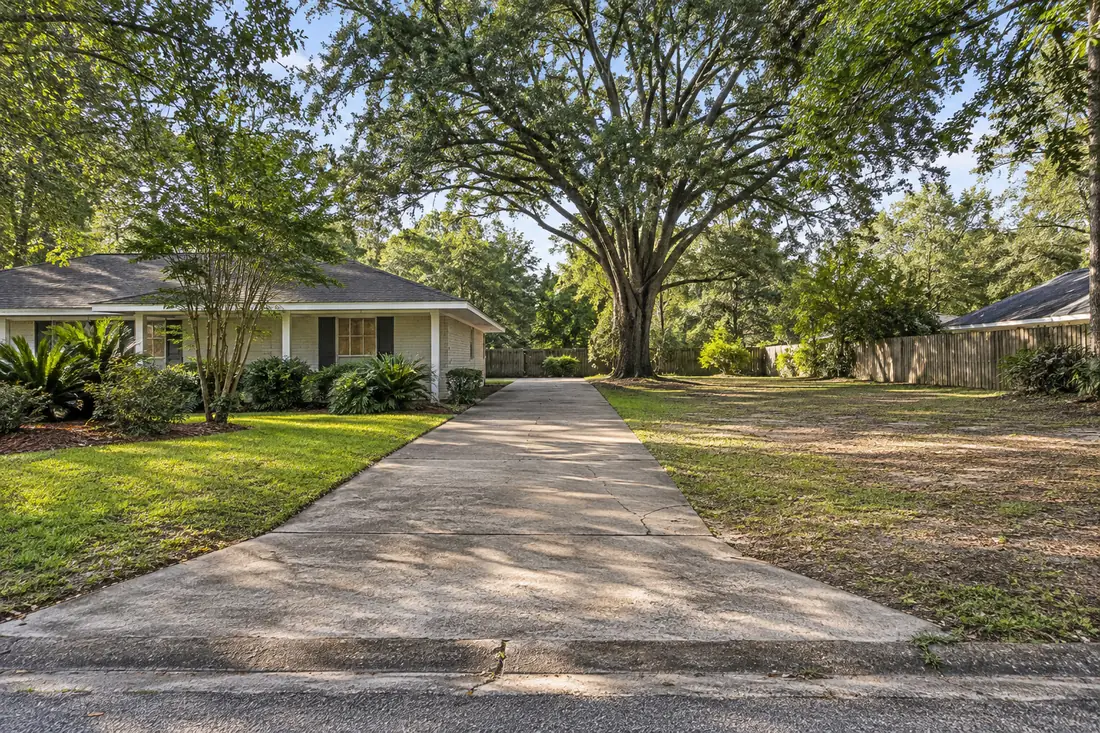
A residential driveway may appear solid while concealing thin edges, aging concrete, voids, weak subgrade or buried piping. Photograph existing cracks, joints, slopes and adjacent planting strips before the proposed equipment visit. Identify where vehicles would turn, park and extend stabilizers rather than assuming only the wheel path matters.
Ask whether the contractor needs information about pavement construction or has a practical route that avoids the driveway entirely. Neither the driveway's appearance nor the equipment's total weight alone determines whether the surface can safely support an operation.
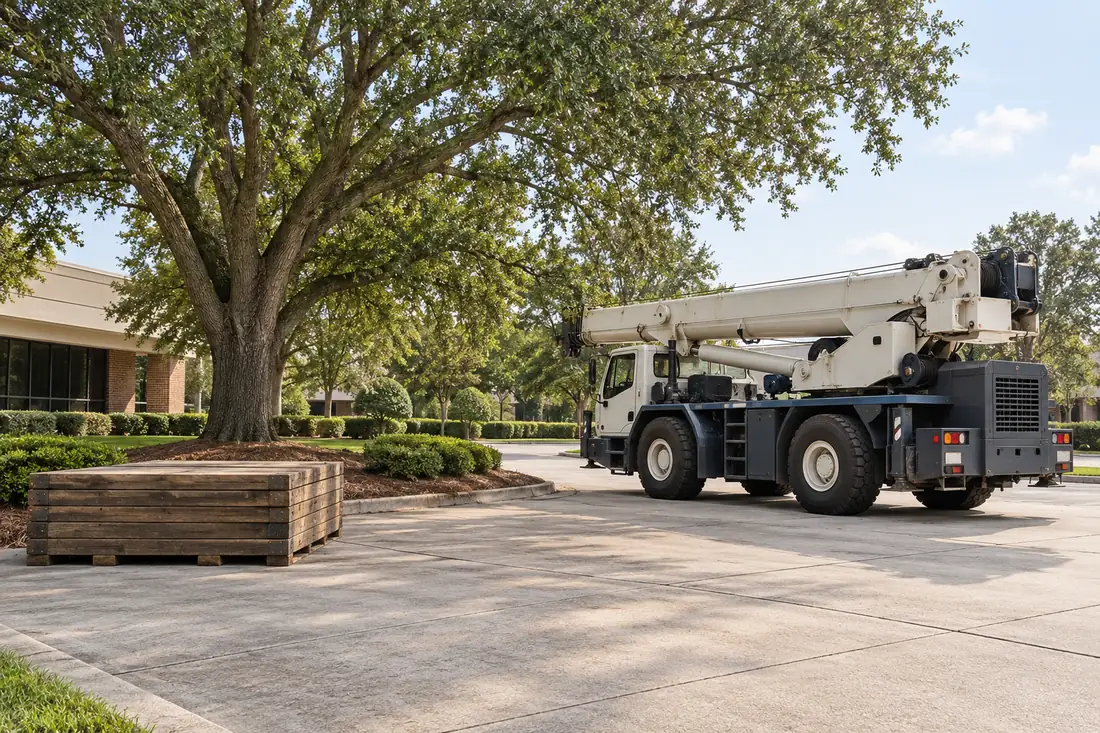
Discuss load-spreading mats, temporary protection, alternate staging and what is excluded from surface restoration. Mark drain covers, irrigation valves, sewer cleanouts and known private utilities. If a crane or other stabilized equipment is proposed, the setup requires its own appropriate ground-support assessment. Agree on a baseline condition record and a reasonable method to document any new damage after the work. A clear access plan protects the homeowner and helps the crew avoid last-minute changes or unplanned work across the lawn.
Assess the driveway as a working surface, not empty parking
A residential driveway may look like an ideal place for a crane, chip truck, lift, or other tree-removal vehicle, yet its suitability depends on construction, thickness, underlying soil, age, slope, drainage, and concentrated support loads. Ordinary daily car parking is not evidence that it can carry heavy equipment or outriggers. Before work, describe the driveway surface and known history to the contractor, including repairs, cracks, and buried features.
Take photographs from the street through the intended work area, showing the full width, curb apron, slope changes, retaining edges, nearby drains, and the clearance around the house. If the drive is shared, verify ownership and required permissions. Equipment selection and protective measures belong to qualified personnel evaluating the actual loads, not to a homeowner interpreting a generic machine weight from the internet.

Identify different driveway materials and vulnerabilities
Poured concrete, asphalt, pavers, gravel, and decorative coatings behave differently under wheels, tracks, and stabilizer supports. Concrete may crack at weak edges or joints; asphalt can be more susceptible to deformation under concentrated loads in heat; loose pavers may settle or shift. These observations are reasons to evaluate the surface, not a blanket rule that one material always supports a particular truck.
Ask the contractor to inspect known weak sections, utility trench patches, steep transitions, and any drainage culvert under the entrance. A recently repaved surface may conceal older support issues. If the driveway cannot be evaluated adequately, use a different equipment position or method rather than assuming temporary boards will solve the problem. Protecting the surface must be incorporated into the actual machine and load plan.
Check the street approach and turning clearance
The truck must reach the driveway without striking an overhanging limb, mailbox, fencepost, roof eave, or utility cable. A narrow street and tight curb radius can make access difficult even where the driveway itself is long. Document on-street parking patterns, culverts, and nearby intersections that affect turning. Do not ask a driver to mount a curb or use a neighbor's lawn without a qualified review and permission.
Photograph both directions along the street, the driveway apron, and any constrained turn. If a lane or sidewalk must be used temporarily, the contractor should identify applicable permits and traffic controls. A successful entry does not establish that the vehicle can leave safely after equipment is deployed or debris is loaded. Review the full route for arrival, operations, loading, and departure.

Consider support loads and underground structures
Some tree-removal equipment transfers force through stabilizers or outriggers, creating pressure very different from ordinary tire loads. The location of supports relative to slab joints, edges, drainage boxes, buried utility trenches, and septic structures can matter. Qualified operators must determine acceptable support and whether engineered mats or another setup are needed for the specific lift.
Ask the owner to identify known water, gas, sewer, irrigation, and electrical lines beneath or alongside the drive. Public utility-location processes may not identify every private line. Do not place supports over uncertain covers or voids simply because they are flush with the pavement. If the support condition is unknown, professional investigation or a revised work plan may be necessary before the equipment arrives.
Assess a driveway as a supporting structure
A residential driveway can serve as an entry route, a staging platform or both, and these uses impose different demands. Width does not reveal concrete thickness, soil strength, buried drains, older voids or weakness near an edge. Photograph preexisting cracks, pavers, joints, shoulders, utility boxes and landscaping before the site visit. Identify whether equipment will turn on the slab, cross it, park on it or apply concentrated support loads; none of those conditions can be approved from a photo alone.
Discuss who evaluates support and selects protective mats or another approved setup. Surface mats may limit scrapes but do not guarantee an inadequate slab will carry the load. A street approach can introduce overhead clearance, curb restrictions and parked-vehicle issues. Ask that the scope document which surfaces are protected and which repairs or restoration are excluded. If a driveway is unsuitable, a different access route or machinery choice is preferable to an unsupported promise that the heavy equipment will not cause damage.
Protect the house, garage, and adjacent features
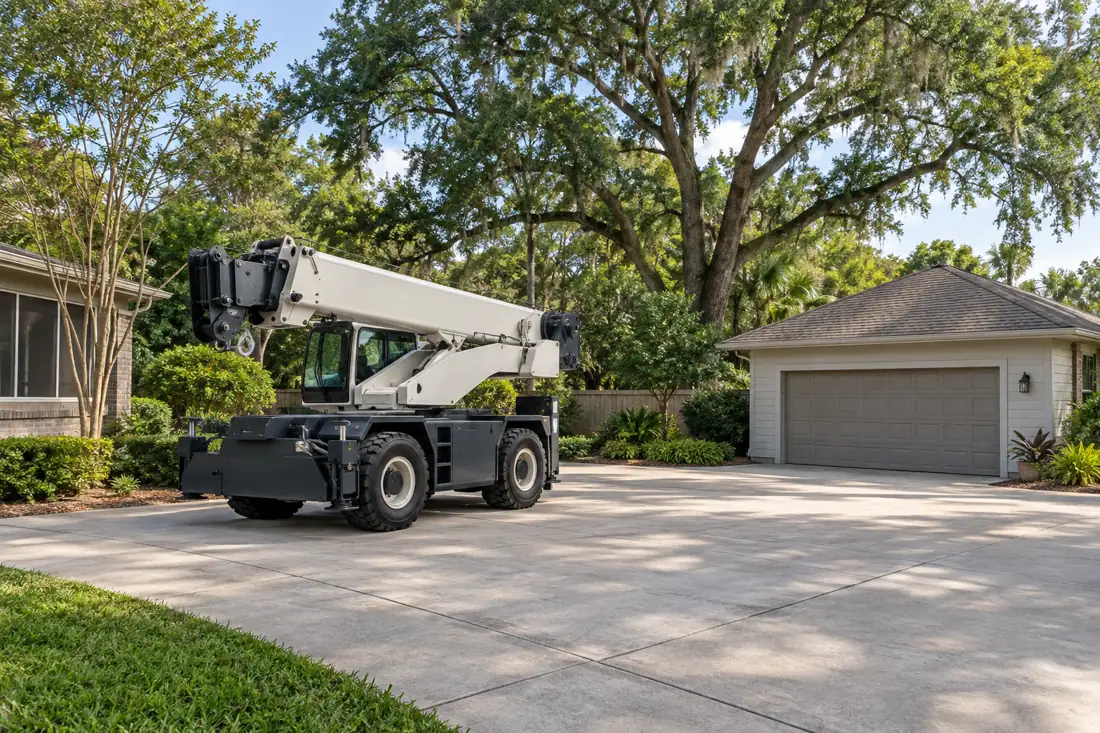
A machine parked near a garage door or eave can still require room for boom movement, material loading, or workers carrying wood. Mark gutters, low balconies, security cameras, light fixtures, decorative planters, and air-conditioning equipment near the route. Equipment must not be positioned where its movement or handled tree sections could strike occupied structures. The crew should establish the controlled work area before setting up.
If vehicles need to be moved from the garage, arrange that before the work zone closes. Avoid walking between the house and operating machinery to retrieve forgotten items. Keep children, pets, and visitors out of the route while lifts, cutting, or loading are active. Temporary inconvenience is preferable to an uncontrolled passage beneath suspended material or a conflict with moving equipment.

Choose a sensible landing and loading area
Removing a tree generates logs, brush, chips, and sometimes stump grindings, each requiring different handling. The driveway may be used for chipping or loading, but that does not mean large rounds can be dropped or dragged across it without consequence. Ask where pieces will be lowered, cut further, and transferred to the truck. The landing area must be selected for safe handling, not merely to minimize carrying distance.
If you want to retain firewood or wood chips, designate a location away from the driveway's active movement path and confirm whether moving material there is included. If all wood will be hauled, ensure the route to the vehicle does not cross fragile steps or garden walls. A written cleanup standard should address loose debris and hard-surface sweeping without promising a perfectly spotless outdoor surface after every gust of wind.
Record the condition of a driveway before equipment arrives
A driveway suitable for everyday cars is not automatically suitable for heavy tree machinery. Existing cracking, slab edges, slope and buried utilities may matter more than its appearance in a photograph. Record obvious patches, drains, meters and joints before work. Tell the contractor what is known about underground service runs and previous settlement, without pretending unknown subsurface conditions are verified.
Look at the turning route as well as the straight approach. Concentrated loading at pavement edges, turns or equipment supports can create a different risk from normal driving. Ground mats and protective materials have limits; they do not provide a blanket guarantee against cracks or damage to buried infrastructure. The qualified operator must approve setup conditions.

A visible outrigger pad or ground mat is only one part of driveway protection. It cannot certify pavement thickness, buried utilities, soil capacity or a vehicle's loading arrangement. Before equipment arrives, document the driveway condition, known underground features and any existing cracks; the contractor must determine an appropriate setup and protection plan for the actual machine.
Protecting the surface begins below the concrete
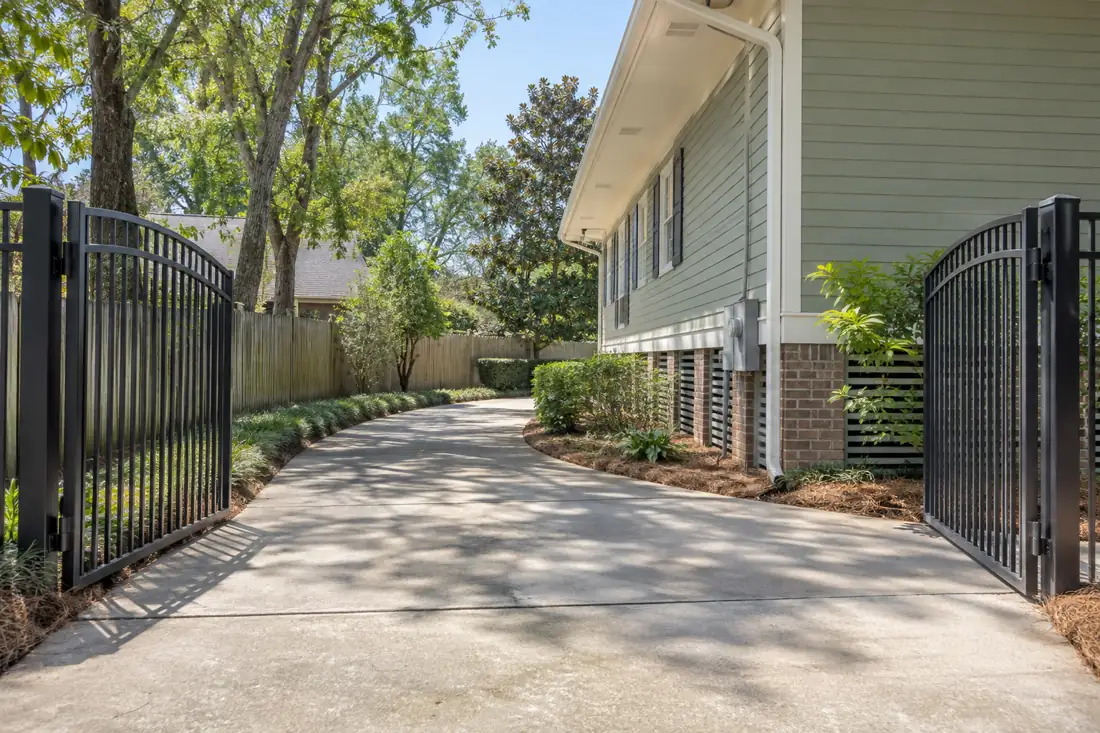
Clarify whether the proposed route includes the full driveway, adjacent grass or shared access. Mark what must remain usable for residents and neighbors. The estimate should distinguish protective measures, temporary removals and restoration exclusions. The wood-hauling truck may need a different staging area from the cutting equipment.
After the area is released, compare accessible pavement, drains and lawn edges with the pre-work photographs and agreed scope. Record concerns promptly without entering an active work zone. This is factual documentation, not a promise that no property damage can occur or that unspecified repairs will be provided.
Plan around rain, slope, and drainage
Water can soften the support beneath a driveway or make adjacent ground less reliable. A steep apron changes how vehicles approach, while drainage channels along the edge may be vulnerable to repeated wheel loads. Show the contractor places where water pools or runs after storms, even if the inspection occurs during dry weather. Unknown subsurface conditions may require a different setup or additional assessment.
If rain arrives before the planned job, ask whether the equipment and access plan remain valid. Do not assume an asphalt or concrete surface makes weather irrelevant, since the ground immediately beneath and beside it may still be saturated. Any temporary matting or protection should respect runoff and keep drains open. A professional postponement can be appropriate where bearing or traction has materially changed.

Document existing condition and protection measures
Before machinery arrives, photograph the driveway from several angles, including joints, cracks, stains, edging, curb, and any known weak points. This protects both the owner and contractor from disputes about pre-existing conditions. Agree on the areas equipment may use and whether temporary surface protection, staging restrictions, or vehicle relocation are necessary. Do not invent a universal guarantee that mats prevent every possible mark or crack.
If the contractor proposes an alternative route, document the change before use. A route across the lawn may avoid one driveway concern but expose irrigation and roots to other risks. The best choice depends on site-specific conditions and equipment capabilities. Keep the plan practical and identify a contact authorized to approve a material change if a support position proves unsuitable on the workday.
Complete a driveway-focused final inspection
After equipment leaves, review the access path and work zone in daylight when possible. Check for loose wood, chips, displaced drainage covers, new rutting at edges, and changes to visible joints or pavers. Compare the same photographic angles taken before work. If the scope included moving planters, temporary mats, or gate sections, confirm those items have been returned as agreed before the driveway resumes normal use.
If a concern appears, document its location and describe it without assuming its cause before review. Some conditions are pre-existing or related to drainage, while others may need contractor attention. A practical closeout record distinguishes confirmed damage, cleanup items, and unrelated maintenance. Do not claim that an unchanged surface appearance proves every buried service is intact; investigate any reported leak or operational fault separately.

Request an estimate that reflects the entire route
Send Tree Huggers safe photographs of the tree, the driveway from street to garage, the narrowest access, overhead cables, nearby structures, and where removed wood could be handled. Explain the surface type, age if known, previous repairs, slope, and drainage concerns. Mention any shared access or restrictions on blocking vehicles. This information can help the first review but cannot replace a qualified onsite equipment assessment.
Ask the proposal to specify the planned equipment approach, access protections, cutting and hauling scope, stump work, and any separate restoration obligations. If the equipment cannot be safely supported on the driveway, the contractor should discuss a feasible alternative rather than promise to proceed regardless. A clear work plan protects the property and avoids choosing a removal technique solely because a vehicle appears to fit in the available space.
Questions about this project
Does a machine's maximum reach prove it can do my job?
No. Loaded reach, configuration, section handling, obstacles and setup conditions all affect suitability. A contractor needs to evaluate the particular tree and property before confirming an equipment plan.
Can specialized equipment replace a site assessment?
It does not remove the need to assess tree condition, targets, access and support conditions. Ask how the contractor will confirm that the proposed machine and method fit the actual scope.
Can tree equipment use any driveway?
No general assumption should be made. Pavement condition, edges, support, buried infrastructure and the proposed equipment all matter. Ask the contractor to assess the intended setup and route for the particular property.
Do mats guarantee there will be no ground damage?
Ground protection is one part of a site-specific plan. It does not remove every load, soil or access limitation. Discuss the proposed measures and any restoration responsibilities in the written scope.
Will a utility locate show every private line?
Do not assume it will identify all irrigation, pet-fence, drainage or other customer-owned systems. Provide available plans and ask what additional locating or coordination is needed for the actual work and access area.
Who should arrange utility-related preparation?
Set that responsibility before scheduling. The property contact, contractor and relevant providers need to identify who handles locating, disconnection, relocation or separate repair work. Uncertain utility information should be resolved rather than guessed.
How should extra work be approved?
Use the agreed approval process and identify the change, reason, scope, price or schedule effect as applicable. Confirm who has authority before treating an additional tree or task as part of the original job.
What completion records are useful?
Keep the agreed scope, tree or area identification, authorized changes, invoice and labeled photos where appropriate. Include unresolved items and a contact. Contract-specific records should follow the buyer's stated requirements.
What should I compare besides the price?
Compare tree identification, work objectives, access assumptions, hauling, stump treatment, site finish and exclusions. Ask whether permits or other coordination are part of the scope and who can approve changes if conditions differ.
Does an online request book the crew?
No. A request starts the estimate conversation. The company still needs to discuss scope, availability and any site assessment. For a dangerous or urgent condition, call 504-458-8336 rather than relying on a form response.
What should I tell Tree Huggers about tree removal equipment on a residential driveway?
Explain the property address, the work you want and the specific concerns: pavement condition, buried features, support. Send safe photos of the tree, surroundings and access route. The contractor can then discuss the assessment and scope needed for this situation.
How do I request an estimate for this work?
Call 504-458-8336, text photos or use the estimate form on this page. Include the address, desired outcome and any timing constraints. The company will need to review scope and availability; an online request does not confirm a price, appointment or emergency dispatch.
Get a scope for your property
Driveways can conceal weak edges, hollow base areas, drain lines, expansion joints and surfaces never designed for heavy equipment. Before tree work, photograph existing cracks and the connection to the street, garage, walkway and landscaping. Note the pavement type, age if known, visible settlement and any culverts or utility covers. Tell the contractor about narrow corners, decorative paving, steep grades and shared drive rights. Avoid assuming that an intact-looking slab can support a crane, truck or loaded trailer; equipment weight and support need site-specific evaluation.
Request a plan identifying the proposed vehicle route, where equipment would park or deploy supports and who checks ground-bearing and buried features. Clarify whether protective mats are suitable and what existing damage will be documented before the job. A written scope should distinguish routine cleanup from actual driveway repair and address safe access for residents, visitors and emergency vehicles. If the route is unsuitable, ask about alternate staging or work methods rather than treating the driveway as a default equipment pad.